
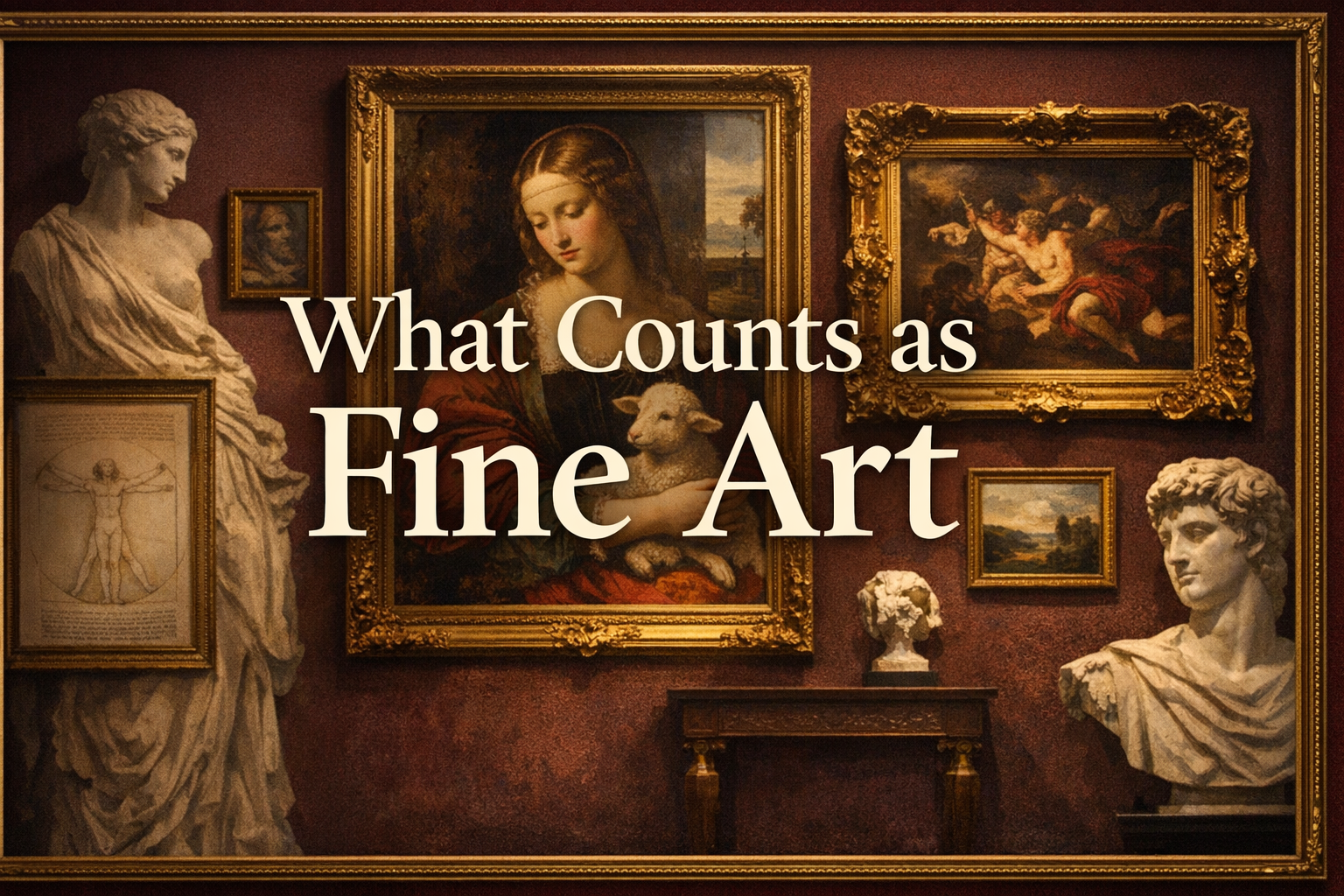
Fine art exists to be admired for its beauty, emotion, and intellectual power. Applied art serves a practical function. This guide explains exactly what qualifies as fine art, outlines the traditional forms, and breaks down the visual elements that make up a masterpiece. You will leave with a clear framework for analyzing art on your own terms.
Walking into a gallery often feels like crashing an exclusive club where everyone knows a secret language. You look at a canvas painted entirely blue and wonder what counts as fine art anyway. The difference between a museum piece and a coffee mug comes down to intention. Artists create fine art for aesthetics and intellectual stimulation. They don’t create it for practical daily use.
If you want a fine art comprehensive guide, you have to look past the price tags. You have to look at why the object exists in the first place. When I teach beginner watercolor classes, my students always stress over whether their work is “real art.” I tell them to stop worrying about labels. Just focus on the visual elements in front of you. Once you understand the basic criteria, the intimidation factor disappears entirely.
What Counts as Fine Art?

Fine art is any creative work produced primarily for aesthetic appreciation and intellectual expression rather than practical utility. It exists to communicate emotion or ideas. A painting hanging on a wall is fine art because its only job is to be experienced.
People overcomplicate this definition. A functional object solves a problem. A piece of fine art starts a conversation. Art speaks to the soul and captures a moment without serving a physical purpose. You can’t drive a sculpture to work. You can’t wear a sonnet to a dinner party. The value lies entirely in the human experience it provokes.
What Are the 7 Forms of Fine Arts?
The seven traditional forms of fine art are painting, sculpture, architecture, literature, music, theater, and film. These categories represent the historical pillars of creative expression recognized by scholars to capture the human experience.
This list evolved over centuries. Historians and critics grouped these seven disciplines because they all prioritize aesthetic value and imagination. Painting is usually the first thing people picture. Whether an artist uses oil, acrylic, or watercolor, they are participating in one of the oldest traditions on earth. Film is the newest addition to the group. Some argue video games belong on this list now. The categories will keep shifting as technology changes.
Fine Art vs. Applied Art: Knowing the Difference
Let’s clear up the confusion between fine art and applied art. Applied art makes daily life look better. Fine art exists independent of daily chores.
Think about a beautifully designed wooden chair. A master carpenter crafted it. It looks gorgeous. But you still sit on it. That makes it applied art. Applied arts are meant for everyday use while fine arts are intended strictly for display and emotional connection. Graphic design and fashion fall into the applied category. They serve a commercial or functional master.
What Qualifies Art as Fine Art?
Art qualifies as fine art when it demonstrates originality, intentional craftsmanship, conceptual depth, and aesthetic value. The creator must deliberately aim to express an idea or evoke a feeling rather than just manufacture a useful product.
You don’t need an art history degree to figure out what makes paintings valuable or culturally significant. Critics look for a unique perspective. They want to see the artist’s hand at work. Experts assess fine art based on craftsmanship and meaning instead of how well it functions in a living room. A mass-produced poster lacks that original intention. A clumsy sketch by a master holds more weight because of the thought behind the pencil strokes.
Understanding the 7 Basic Elements of Fine Art
Every masterpiece is built from the same basic parts. The basic elements of art include line, shape, form, space, color, value, and texture. Artists use these visual tools to build their work from scratch.
These seven elements shape the mood and composition of every piece you see in a gallery. A painter manipulates color to make you feel cold. A sculptor uses texture to make hard bronze look like soft skin. Clever use of negative space and value gives a flat canvas the illusion of three-dimensional volume. Even radical abstract artists rely on this toolkit. Abstract expressionists heavily utilized line and space to prove these rules apply far beyond realistic portraits.
Stop overthinking what belongs in a museum and start trusting your own eye. You now know the criteria that separate an expressive masterpiece from a decorative object. You understand the elements artists use to manipulate your attention. The next time you walk into a gallery, you can ignore the confusing placards and look directly at the work. Make your own judgments. Better yet, grab some supplies and start making those judgments on your own canvas. You don’t need anyone’s permission to participate in this tradition. Check out our guide on getting started with watercolors and put paint to paper today.
Frequently Asked Questions
What is not considered fine art? Commercial illustration, industrial design, and mass-produced crafts are not considered fine art. They serve a functional or commercial purpose first.
Is fine arts the same as painting? No. Painting is just one specific discipline within the broader category of fine arts. Fine art also includes music, theater, and sculpture.
What are the 7 pillars of art? The seven pillars usually refer to the basic visual elements. These are line, shape, form, space, color, value, and texture. They act as the physical building blocks used to create a piece.
How do you assess the value of fine art? Value comes from the artist’s originality, the historical context, the craftsmanship, and the conceptual depth of the work. It is never based on practical utility.
Why is architecture considered a fine art? Architecture goes beyond building basic shelter. It requires profound creativity and aesthetics to shape structures that reflect human culture and time.

Olly
Olly Farmer M.Sc, B.Sc, PGCE 25 years experience of Watercolor Painting and AI Art; teacher for 13 years; Creator of Art Tools; Art Gallery Contributor of Art Articles to Medium.com, LinkedIn and Facebook
Continue exploring


PROMINENT PAINTING
Keep your creative momentum
Get new painting guides, practical techniques and artist stories delivered without the noise.
Occasional emails. Unsubscribe whenever you like.