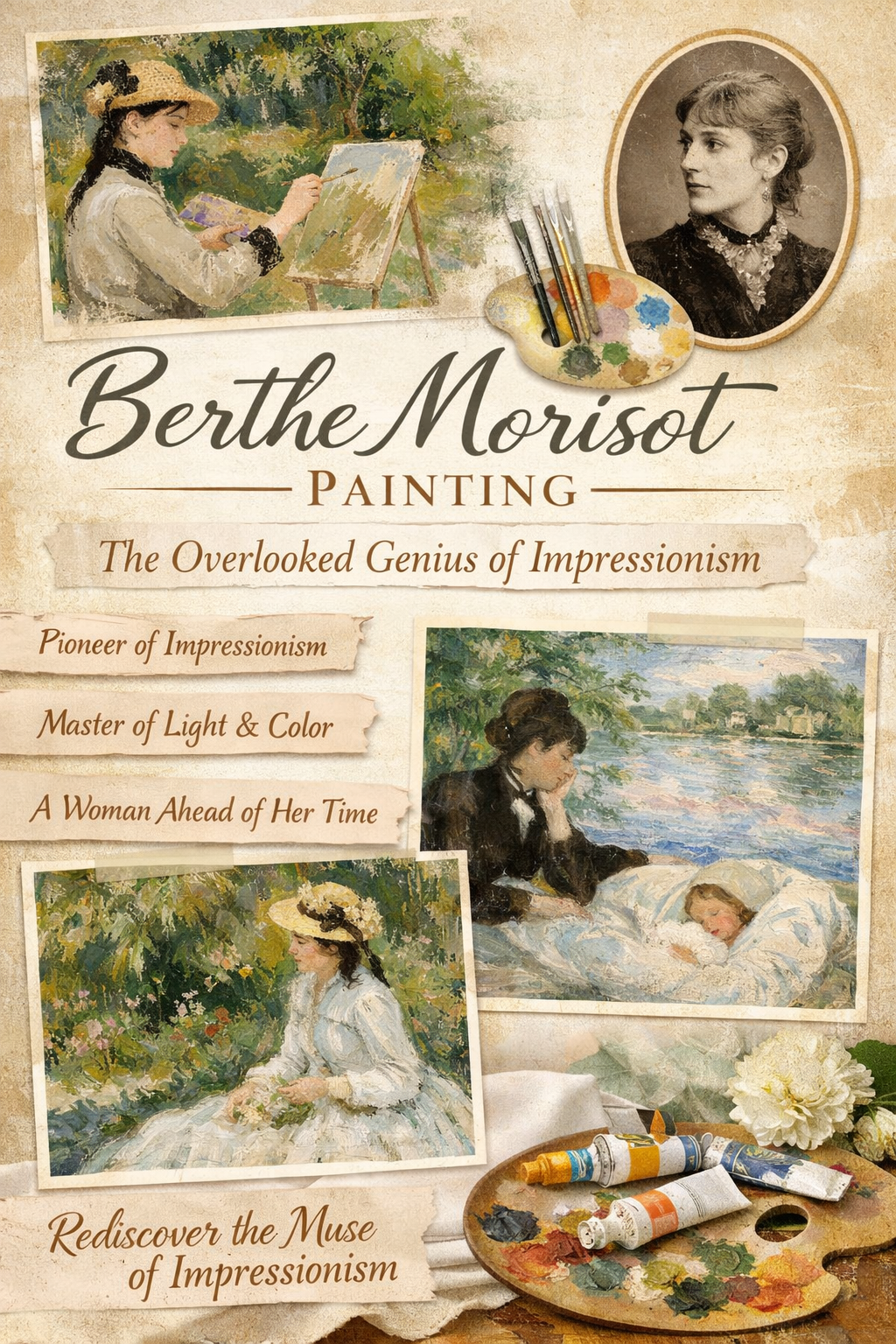
Berthe Morisot paintings offer a breathtaking look into the daily lives of women in the 19th century. This post explores her vital role as a founding member of the Impressionist movement. You will discover the secrets behind her quick brushstrokes and learn why her legacy was overlooked for decades. Whether you are a beginner or a seasoned artist, study her work to find fresh inspiration for your own creative journey.
Have you ever looked at a famous piece of art and wondered who was left out of the history books? When we think of Impressionism, names like Claude Monet and Edgar Degas usually come to mind. But one of the most talented founders of the movement was actually a woman.
Her name was Berthe Morisot, and her art completely changed the world. Berthe Morisot paintings are famous for their bold energy and delicate colors. She painted the private, quiet moments of women and children. For a long time, male critics dismissed her work as just “charming” or “delicate.” They ignored the powerful skill and deep emotion behind her brush.
As an arts educator, I often see beginners feel intimidated by the old masters. But Morisot’s story is different and highly relatable. She defied the strict rules of her time to paint what she loved. By exploring her unique techniques, we can learn how to capture raw emotion on canvas. Let us dive into her fascinating life, her unique painting style, and the incredible legacy she left behind for modern artists.
Who Was Berthe Morisot?
Berthe Morisot was a pioneering French painter and a founding member of the Impressionist movement. Born in 1841, she broke societal rules to become a professional artist, famous for capturing everyday life with quick, loose brushstrokes and bright, pastel colors.
Growing up in a wealthy family, Morisot and her sister Edma took art lessons early on. While girls were only expected to paint as a quiet hobby, Berthe wanted a real career. She studied under famous painters like Jean-Baptiste-Camille Corot. He taught her the magic of painting outdoors. This is a brilliant practice you can try when learning oil painting for beginners.
She later met Édouard Manet. He was a famous artist who became her close friend and mentor. They shared ideas, and she eventually married his brother Eugène. Morisot worked extremely hard to be taken seriously by her peers. A recent historical overview notes that she exhibited her work at the prestigious Paris Salon starting in 1864. She showed her art there regularly before deciding to carve her own path.
How Did She Shape the Impressionist Movement?
Berthe Morisot shaped the Impressionist movement by helping organize its very first independent exhibition in 1874. She brought a unique focus on light and everyday domestic life, proving that informal, rapidly painted scenes deserved as much respect as traditional, historical artwork.
Morisot was the only woman to show her art at that first famous exhibition. The new group faced harsh criticism from the public. Reviewers mocked their art for looking unfinished and messy. But Morisot did not let the critics stop her from painting. Out of the eight total exhibitions the group held, she proudly participated in seven of them. She only missed one show in 1879 because she had just given birth to her daughter.
Her absolute dedication helped keep the group together during difficult times. Today, she is remembered as a true leader among impressionist artists. She proved that passion and persistence could overcome massive social barriers.
The Secret Behind Her Fleeting Brushstrokes
If you want to how to appreciate art, looking closely at a painter’s brushwork is always a great start. Morisot painted with incredible speed and confidence. She wanted to capture a single, passing moment before it disappeared entirely.
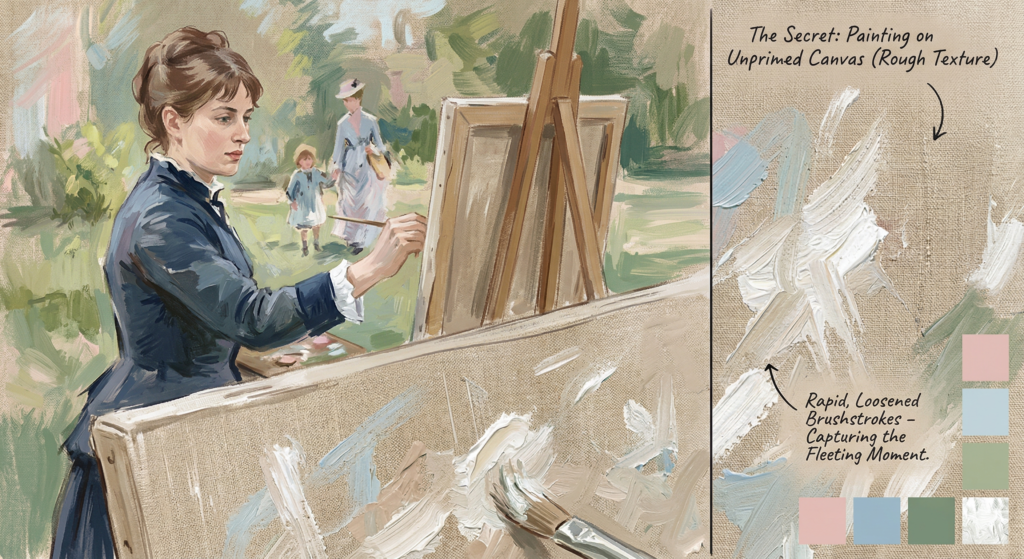
Her strokes were exceptionally loose and energetic. Instead of making her surfaces flat and perfect, she let the paint build up naturally. Around 1880, she even began experimenting by painting on unprimed canvas. This heavy, rough fabric caught the paint in unique ways. It made her strokes look even more sketchy and alive.
When I teach watercolor and acrylics, I always encourage my students to loosen up. You do not have to paint every single detail perfectly. Morisot used a limited palette of soft pinks, light blues, and bright whites. If you are exploring color theory in art, her work shows exactly how fewer colors can create a strong, unified mood. She managed to say so much with just a few swift movements of her brush.
What Were Her Most Famous Subjects?
Berthe Morisot mostly painted women and children in private, indoor settings or relaxing in local parks. Because 19th-century social rules prevented women from wandering the city alone, she focused on the intimate, domestic world she knew best.
While her male friends painted busy cafes and lively streets, Morisot turned her limits into an advantage. She painted her sisters, her nieces, and her daughter Julie. She showed women reading a book, getting dressed, or simply resting on a sofa. These paintings feel incredibly personal. They give us a rare, honest look into the lives of women in art during that specific era.
Her intense focus on quiet moments made her paintings deeply emotional. The subjects in her art rarely look directly at you. They are usually lost in their own thoughts. This gives her work a psychological depth that many older critics totally failed to understand at the time.
Breaking Records at Auction
For a very long time, Morisot’s work was valued far less than paintings by her male peers. But the art world has finally started to wake up. Modern collectors now recognize the brilliant skill present in all her canvases.
In February 2013, her stunning 1881 painting titled “Après le déjeuner” went to auction. It sold at Christie’s in London for an incredible $10.9 million. At the time, this massive sale set a brand new world record for any female artist at auction.

This dramatic price jump shows how much our understanding of what is impressionism has grown over the years. We now know the movement would not exist without her brave contributions. Her rising financial value proves that true talent eventually gets the spotlight it deserves.
Why Did History Forget Her?
History largely forgot Berthe Morisot because she was a woman in a male-dominated society. After her death in 1895, art historians focused almost entirely on her male colleagues, labeling her brilliant, energetic work as merely “feminine” or delicate instead of revolutionary.
Her family also chose to downplay her professional success after she passed away. In fact, her official death certificate listed her as having “no profession.” It is a truly heartbreaking detail. Yet, it shows the massive uphill battle she fought every single day for respect.
Thankfully, modern museums are now correcting this historical mistake. Major exhibitions globally celebrate her genius. When we implemented new history lessons for our students, we saw their confidence grow after learning about her struggles. Morisot shows us that creating art is a brave act of defiance.
Conclusion: Berthe Morisot was far more than just a muse or a simple student. She was a fierce, independent creator who helped invent a completely new way of painting. By embracing quick brushstrokes and focusing on everyday life, she captured the fleeting beauty of the world around her perfectly.
Her difficult journey reminds us that art is truly for everyone. You do not need a perfect studio or a traditional background to make something meaningful. You just need the courage to pick up a brush and share your unique view of the world.
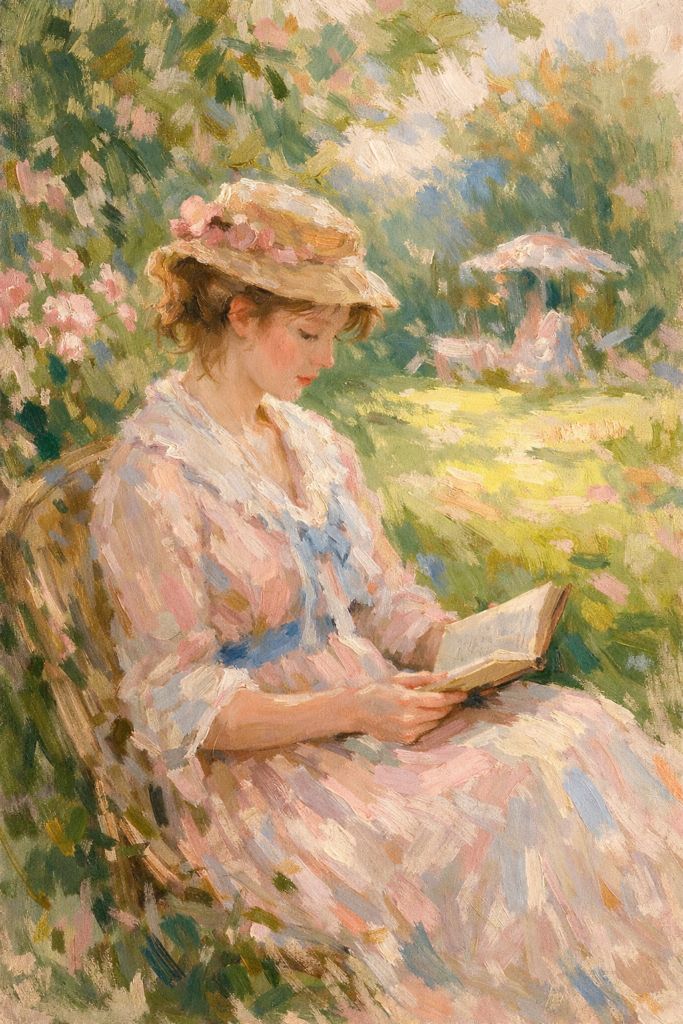
Are you ready to start your own creative journey? Grab your paints, find a quiet spot in your home, and try painting the simple things around you.
Frequently Asked Questions
- When was Berthe Morisot born? Berthe Morisot was born on January 14, 1841, in Bourges, France. She grew up in a wealthy family that supported her early art lessons. She eventually became a professional painter despite the strict social rules of her time.
- Did Berthe Morisot marry another famous artist? She did not marry a famous painter, but she did marry Eugène Manet in 1874. Eugène was the brother of the celebrated artist Édouard Manet. Édouard and Berthe were close friends who deeply influenced each other’s painting styles.
- What technique is Berthe Morisot known for? She is famous for her quick, loose brushstrokes and her use of bright pastel colors. Around 1880, she began painting on unprimed canvas, which gave her strokes an even more textured and sketchy appearance.
- Why did she mostly paint domestic scenes? In the 19th century, it was not considered proper for a respectable woman to walk around the city alone. Because she could not easily visit bars or cafes, she painted the private, domestic spaces and gardens that she had access to.
- What is her most expensive painting? Her 1881 painting titled “Après le déjeuner” holds the record. It sold for nearly $11 million at a Christie’s auction in 2013. This historic sale set a record for the highest price ever paid for a female artist’s work at the time.