Discover the secrets behind Rembrandt painting techniques and learn how he brought subjects to life on canvas. We will explore his dramatic use of light and shadow, his unique canvas preparation, and the specific pigments that made his portraits powerful. By understanding these timeless methods, you can apply master-level magic to your own modern painting practice today. Grab your brushes and let us get started!
Have you ever stood in front of a Rembrandt painting and felt like the subject was actually breathing? His work has a lifelike quality that still captivates us centuries later. Rembrandt revolutionized portraiture. He turned flat images into deep and emotional stories. You might think his methods are too complex to learn. However, Rembrandt painting techniques are built on foundational skills that any artist can practice. We will break down his exact process in this guide.
You will learn about his specific earthy palette and his clever layering methods. We will also dive into his legendary mastery of light and shadow. You do not need to be a 17th-century master to use these ideas. Whether you are just starting oil painting for beginners or looking to refine your style, these classic tricks will help you paint with more confidence. Let us explore how you can bring a touch of the Dutch Golden Age into your own studio.
How Did Rembrandt Prepare His Canvas?
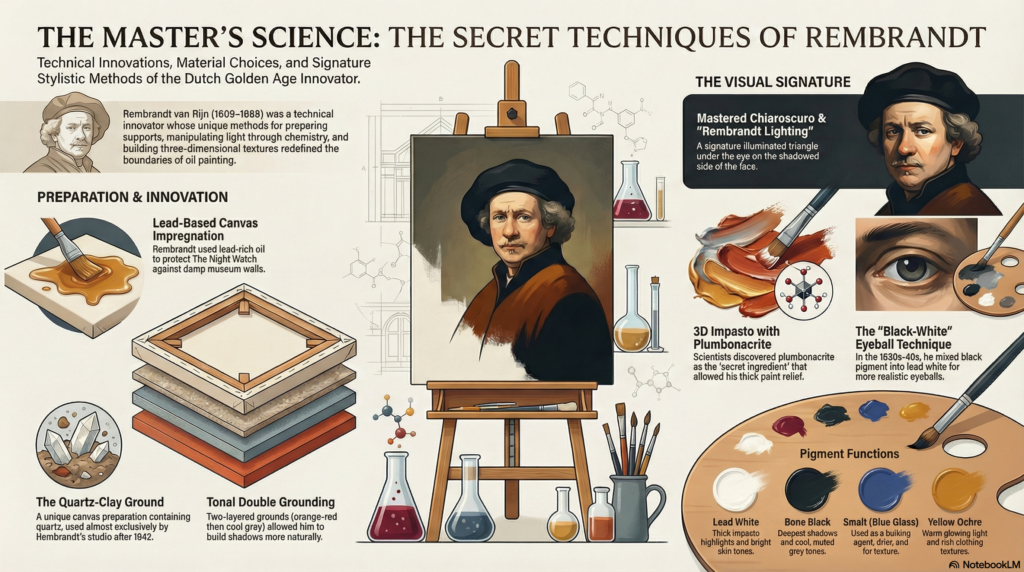
Rembrandt prepared his canvas using a unique double-ground method instead of a standard white base. He applied a mixture of chalk and glue first. Then he added a thin topcoat of lead white and umber to create a warm mid-tone background.
This mid-tone ground was a massive advantage. Italian painters often used bright white gesso. Rembrandt chose a brownish base because it helped him build shadows naturally. He could let the dark background show through in the shadow areas of his portraits. According to research on historical methods, artists using a double-ground technique save time when establishing deep shadows.
When I teach my beginner students to tone their canvases, we see amazing results. Staring at a bright white canvas is intimidating. A warm mid-tone removes that fear immediately. You can easily see your light and dark values right from the start.
What Is Chiaroscuro in Rembrandt’s Paintings?
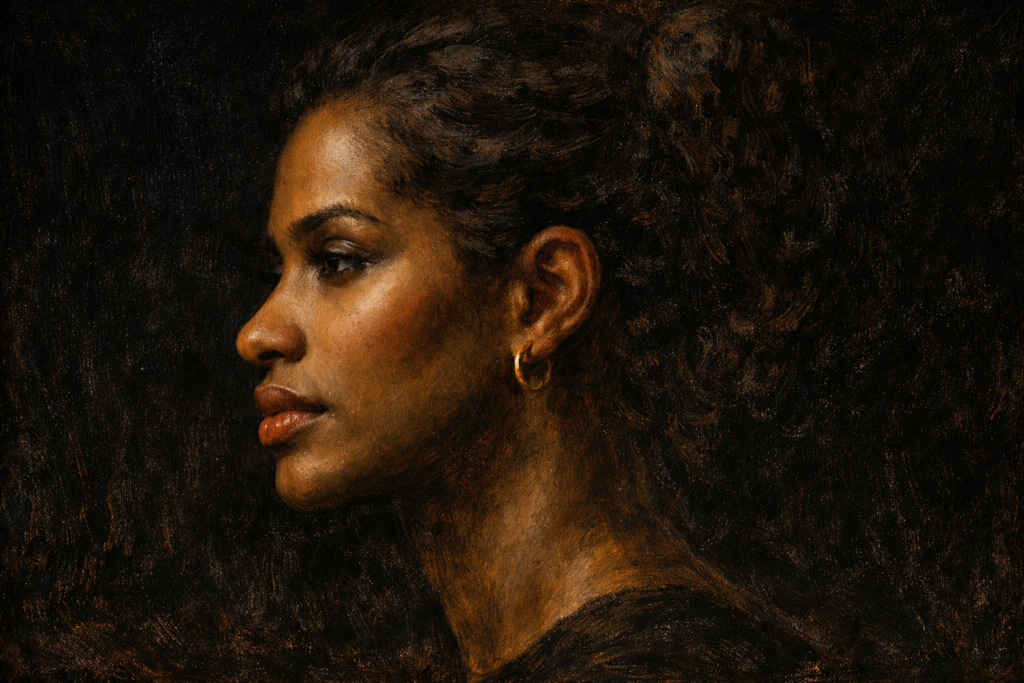
Chiaroscuro is the dramatic contrast between light and dark areas in a painting. Rembrandt used this bold technique to create a three-dimensional effect and draw the viewer’s eye exactly where he wanted it. It adds deep emotion and mystery to his work.
He is famous for a specific lighting pattern. We often call this “Rembrandt lighting” today. It features a small triangle of light on the shadowed cheek of a face. This setup creates a moody and realistic look. You can learn more about this in our guide to light and shadow.
He used shadows to hide details and reveal pure emotion. You do not need every detail to make a painting feel real. Sometimes, what you leave in the dark is the most important part.
The Secret to His Texture and Mastering Impasto
Rembrandt did not just paint flat colors. He built up thick layers of opaque paint to physically catch the light in a room. This technique is called impasto. He applied thick blobs of paint for highlights on jewelry, noses, and wrinkled skin. It made these areas literally stick out from the canvas. Historians note that he built physical texture to mimic the way real objects catch light.
After the thick paint dried, he glazed over it. Glazing means adding a thin and transparent layer of dark paint. The dark glaze would settle into the cracks of the thick paint. This created an incredibly lifelike and aged appearance. It is a fantastic way to add realism art details to your portraits. Try using a palette knife or a stiff brush loaded with thick paint for your brightest highlights.
Which Pigments Did Rembrandt Use in His Palette?
Rembrandt used a restricted palette focused heavily on warm earth tones. His primary colors included yellow ochre, bone black, lead white, and raw umber. He rarely used bright blues or greens. He focused instead on deep reds and glowing yellows to create harmony.
His limited color choices forced him to focus on value rather than bright hues. Experts studying his self-portraits found that his earthy palette created a unified and moody atmosphere. However, modern science is still uncovering his secrets. A recent 2024 study revealed that he used a rare arsenic sulfide pigment to create shimmering gold effects.
He was highly experimental with his materials. Advanced imaging also showed his experimental use of artificial orpiment in his later works. Another 2025 analysis proved that he mixed yellow lakes with opaque pigments to enrich his deep shadows.
| Pigment Name | Color Category | Common Use in His Paintings |
| Lead White | White | Thick impasto highlights and bright skin tones |
| Bone Black | Black | Deepest shadows and cool, muted grays |
| Yellow Ochre | Yellow/Brown | Warm glowing light and rich clothing textures |
| Vermilion | Red | Soft blush on cheeks and lips |
| Raw Umber | Brown | Canvas grounding and dark background bases |
How Did Rembrandt Mix and Contrast Colors?
Rembrandt used a trick called simultaneous contrast to make his colors pop. He would place a warm, bright color directly next to a cool, dark color. This optical illusion makes the same exact pigment look like two different colors depending on its surroundings.
He did not need a massive box of paints to get amazing results. A 2025 study confirmed that he used simultaneous contrast to manipulate how viewers perceive his colors. It is a clever way to stretch a limited palette.
You can explore this concept deeply in basic color theory in art. By putting a neutral gray next to a warm red, the gray suddenly looks slightly green. He mixed his colors right on the canvas sometimes, blending them while they were still wet.
Applying Rembrandt’s Methods to Your Art
You can easily bring these historical techniques into your modern studio. Start your next painting by toning your canvas with a thin wash of burnt umber. Let it dry completely before you begin. Focus entirely on the light and dark values first. Do not worry about the exact colors.
Use thick paint for your lightest areas and keep your shadow areas very thin. This creates a beautiful contrast in texture. Remember to practice your blending painting technique to soften the edges where light meets shadow. Above all, be fearless with your darks. Let the shadows swallow the unnecessary details so your main subject shines.
Conclusion
Rembrandt’s genius did not come from magic. It came from intentional layering, a simple earthy palette, and a fearless use of contrast. He understood that light needs dark to truly glow. You can use these exact principles to elevate your own artwork today. Try starting with a mid-tone ground in your next session. Limit your palette to just four or five colors. You will be amazed at how much harmony you can create.
Would you like me to create a step-by-step tutorial on mixing these specific earth tones? Let me know in the comments, and be sure to share your Rembrandt-inspired paintings with us!
Frequently Asked Questions
1. Did Rembrandt use a medium with his oil paints?
Yes, he often mixed his oil paints with linseed oil and sometimes small amounts of egg tempera. This helped him create thick textures for highlights. It also allowed him to thin his paint for dark, transparent glazes.
2. How long did it take Rembrandt to finish a painting?
It varied greatly depending on the size and detail of the piece. Some smaller portraits took a few weeks, while large commissions took months or even years. He built his paintings in many layers that required significant drying time between sessions.
3. What is the “Rembrandt lighting” triangle?
It is a specific pattern of light on a subject’s face. The light source comes from above and to one side. This casts a shadow from the nose that connects to the cheek shadow, leaving a small triangle of light on the darker cheek.
4. Did Rembrandt varnish his paintings?
Yes, he applied a final layer of varnish to protect the surface and bring out the depth of his dark colors. Varnish evens out the final finish. It makes the rich shadow areas look glossy and incredibly deep.
5. Why are Rembrandt’s backgrounds so dark?
He used dark backgrounds to eliminate distractions and force the viewer to look at the main subject. This intense contrast is the core of chiaroscuro. The dark background makes the lit face appear to glow intensely from within.