If you want to understand Marc Chagall’s art style, you are in the right place. This post breaks down his magical blend of bright colors, floating figures, and emotional storytelling. You will learn how he mixed early modernism with his own memories. By the end of this guide, you will have a clear grasp of what makes his work so special. Grab a cup of tea and let us dive into his colorful world.
Have you ever looked at a painting and felt like you were stepping into a dream? That is the exact feeling Marc Chagall brings to his canvas. Understanding Marc Chagall’s art style can feel a bit overwhelming at first glance. His paintings often feature flying goats, floating couples, and bright blue skies.
In my years as an arts educator, I always love introducing students to Chagall. When we look at his work in my watercolor classes, it immediately shows beginners that art does not have to be perfectly realistic to be beautiful. His approach gives you permission to paint your feelings and memories without worrying about strict rules.
Chagall moved to Paris in 1911, which was the center of the art world at the time. He soaked up the newest trends but kept his unique voice. In this guide, we will explore the core pieces of his style. You will see exactly why his magical paintings still capture our hearts today.
What Is Marc Chagall’s Art Style?
Marc Chagall’s art style is a unique blend of early modern art movements. He combined the fragmented shapes of Cubism with the bold colors of Fauvism to create a deeply personal style. His paintings rely on dream-like logic to share stories of his Jewish heritage and Russian childhood.
While many artists at the time focused on strict rules, Chagall painted from the heart. He is often viewed as a pioneer of modernism. If you look closely at his work alongside other famous painters and paintings, you will notice he never quite fit into just one box.
He created a visual language that was entirely his own. This makes him a fantastic inspiration when you are expressing feelings through art. You do not need perfect perspective to make a masterpiece.
The Magic of Floating Figures and Memories
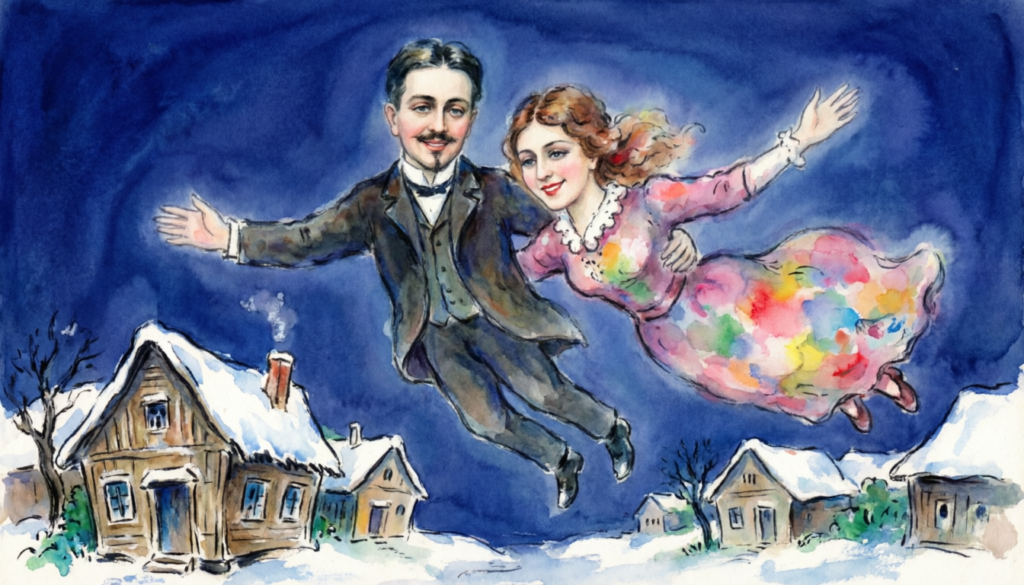
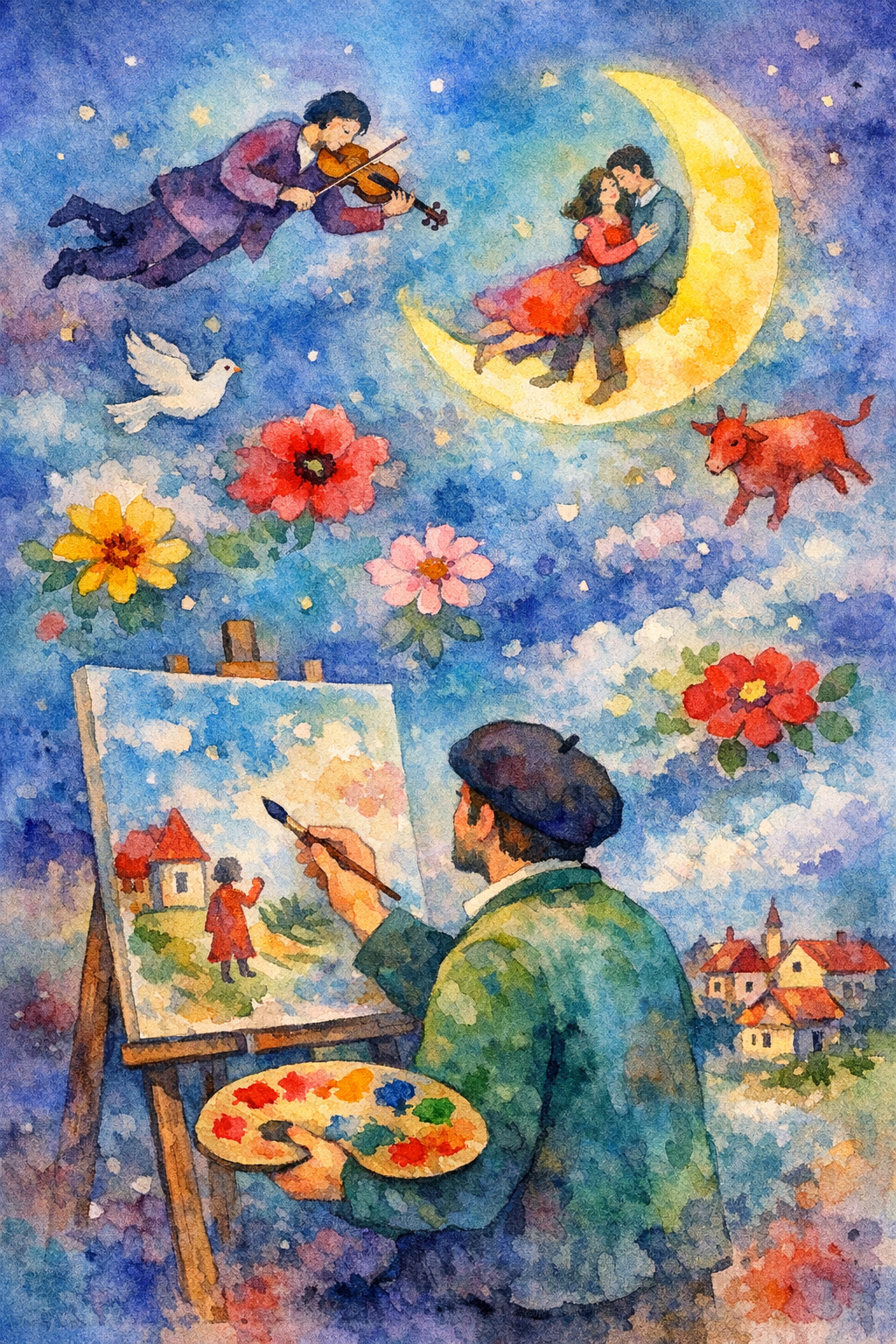
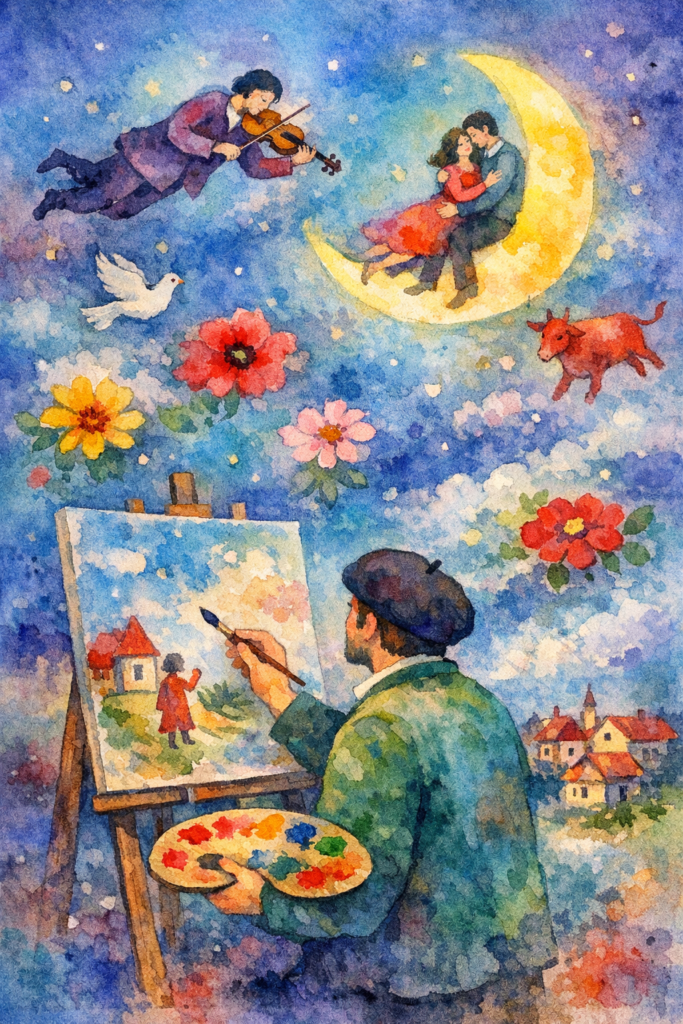
One of the most recognizable parts of Chagall’s work is his use of floating figures. You will often see lovers, violinists, and animals hovering above small villages. He did not care about gravity or realistic space.
Instead, he used these floating elements to represent strong emotions. A couple flying through the sky simply shows the light and joyful feeling of being in love. He based a massive amount of his imagery on emotional truth rather than physical reality.
These dreamscapes also draw heavily on understanding art symbols. He frequently included farm animals, violins, and clocks from his childhood in Vitebsk. These repeated symbols helped him process his memories and his identity.
What Mediums Did Marc Chagall Use?
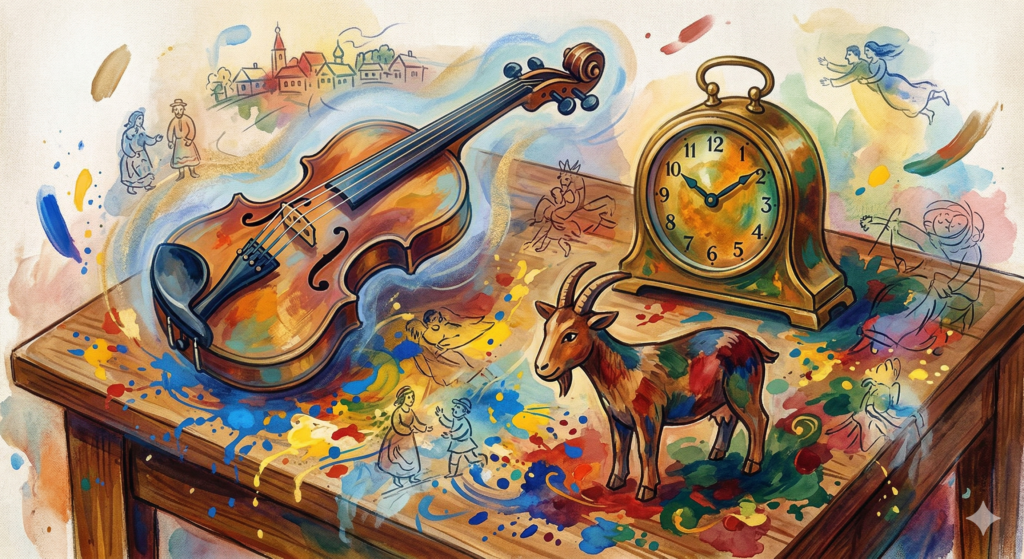
While best known for his oil paintings, Marc Chagall used many different artistic mediums throughout his life. He was highly skilled in printmaking, ceramics, tapestry weaving, and theatrical set design. He also created monumental stained glass windows for buildings around the world.
His ability to switch between tools is truly inspiring. In his later years, he even learned how to make lithographs from scratch with Parisian printmakers. Because color was so vital to his work, lithography became one of his favorite ways to produce prints.
This shows that you never have to limit yourself. Trying out new materials can actually help you grow your own famous artists and their styles inspired techniques.
A Master of Bold and Emotional Colors
Chagall is legendary for his fearless use of color. He did not paint a sky blue just because the sky is blue. He chose colors based on the mood he wanted to create.
For example, he often used deep blues to evoke spirituality, peace, and the heavens. On the other hand, he used bold reds to symbolize passion and love. Learning about his choices is a great way to improve your own color theory basics.
The artist Pablo Picasso once remarked that Chagall would be the only painter left who truly understands color. When you look at his stained glass work, the rich tones practically glow from within.
How Did Cubism Influence Chagall?
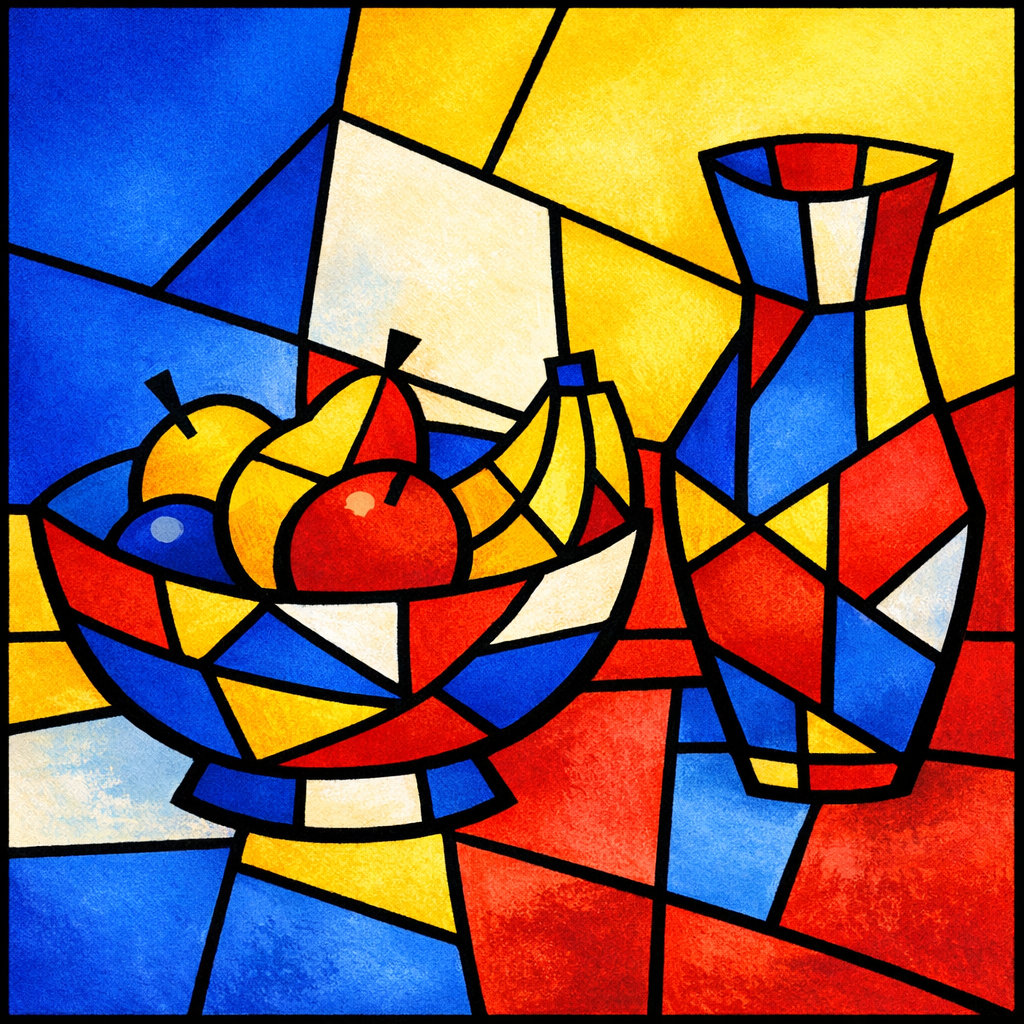
Cubism influenced Chagall by teaching him how to break down images into flat geometric shapes. However, he did not use this technique to make his art purely analytical. Instead, he used these fragmented shapes to give his emotional stories a modern and structured visual flair.
When he arrived in Paris, he lived alongside other avant-garde artists who were experimenting with new forms. If you are wondering what is Cubism, it is basically a way of showing multiple angles of an object at once.
Chagall borrowed this idea but kept his subjects soft and poetic. He proved that you can take a rigid, technical style and make it deeply personal.
The Value of Chagall’s Art Today
Chagall’s artwork remains incredibly popular and valuable in the modern art market. In the past twenty-seven years, his art has generated 1.66 billion dollars in cumulative sales at auction. Collectors still deeply value his unique vision.
Even in recent times, a 1982 painting by Chagall sold for over one million dollars. His universal themes of love and resilience continue to speak to people across the globe.
Conclusion: Marc Chagall shows us that art is truly limitless. He ignored the strict rules of perspective and realistic color to paint his inner world. By mixing his Russian memories with modern French techniques, he carved out a permanent place in art history.
I hope this guide gives you the confidence to trust your own creative voice. You do not have to paint exactly what you see. You can paint exactly what you feel.
Are you ready to try some expressive painting yourself? Grab your favorite colors and start playing with floating shapes today.
Frequently Asked Questions
What are the main characteristics of Marc Chagall’s art? His art is known for bright and expressive colors. He frequently painted dream-like scenes with floating figures and overlapping images. He also blended Jewish and Christian symbols into his work.
What art movement does Marc Chagall belong to? Chagall is considered a pioneer of early modernism. He was influenced by Cubism and Fauvism but never officially joined one specific movement. He preferred to maintain his own unique and poetic style.
What is Marc Chagall’s most famous painting? One of his most famous early works is “I and the Village” from 1911. This painting beautifully shows his modernist inspirations and his use of Cubist shapes. It also highlights the Russian folktales he grew up with.
Did Marc Chagall only paint on canvas? No, he worked in a wide variety of mediums. He created ceramics, tapestries, theatrical sets, and thousands of fine art prints. He is also famous for his massive stained glass windows.
Why did Chagall paint floating people? He used floating figures to express strong feelings rather than physical reality. A flying couple often represents the light and joyful feeling of romantic love. His imagery is based on emotional truth.