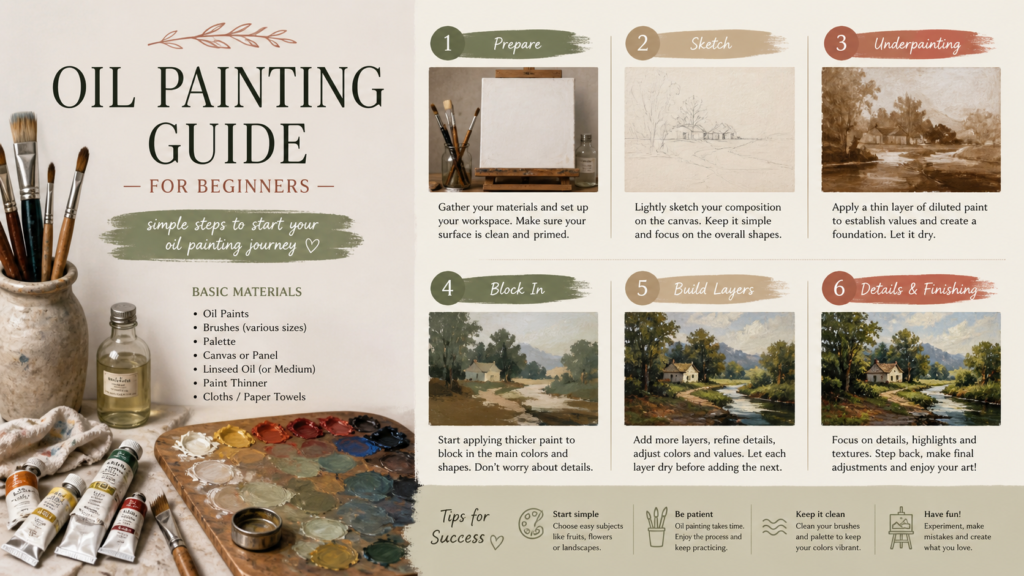
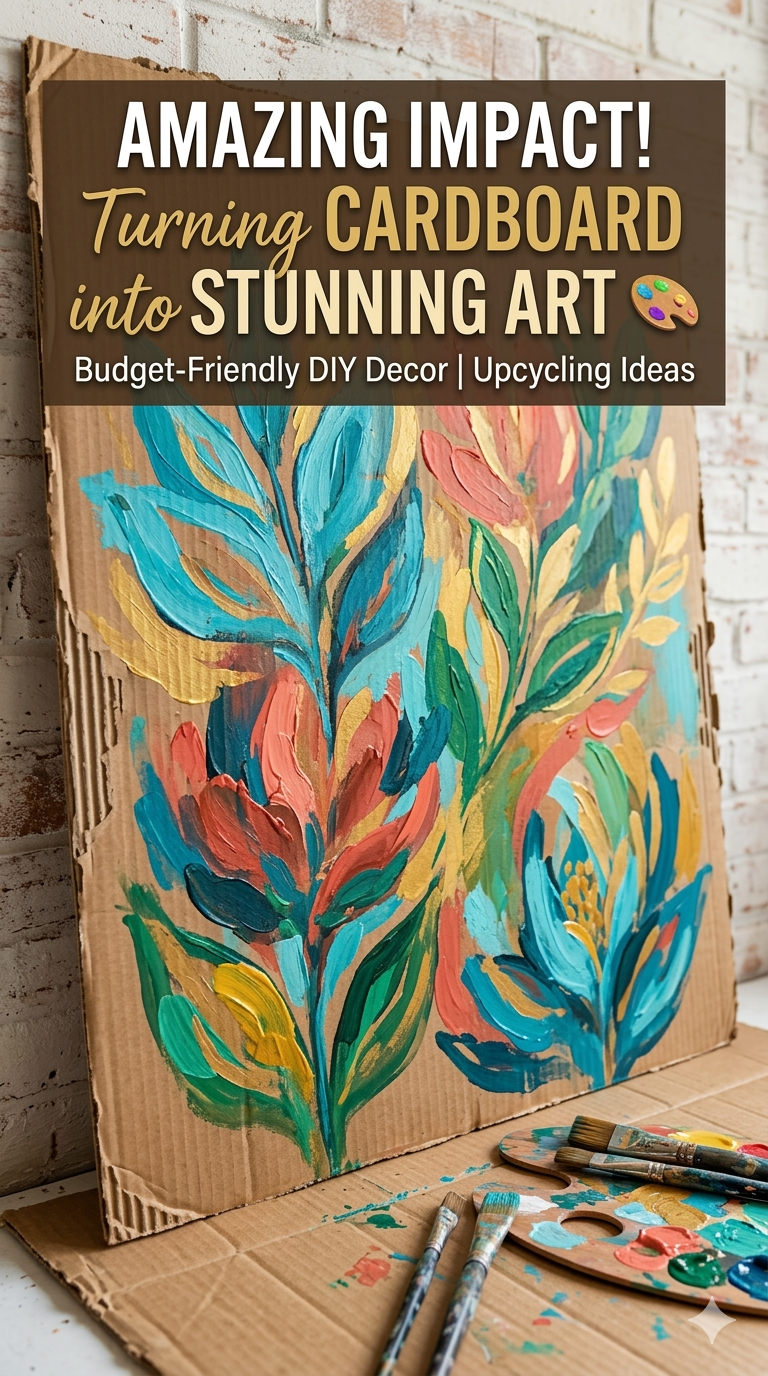
Yes, you can use oil paint on cardboard, making it a budget-friendly option for beginners. However, cardboard is highly porous and acidic. You must properly seal it with an acrylic size and prime it with gesso before painting. This guide shows you exactly how to transform raw cardboard into a reliable painting surface that will not absorb your oils or rot over time. Grab a box and let us get started.
Staring at a pristine, expensive white canvas can feel terrifying. The pressure to create a perfect masterpiece often stops people from even picking up a brush. So, can you use oil paint on cardboard instead? Yes, absolutely! Using cardboard is one of the best ways to practice oil painting for beginners without any fear of wasting costly materials.
When I first started teaching art, I noticed my students were afraid to make mistakes on expensive stretched canvases. The moment we switched to upcycled shipping boxes, their creativity exploded. Cardboard is the ultimate zero-pressure practice surface. It is free, easy to find, and highly forgiving.
However, you cannot just squeeze your expensive oil paints directly onto a raw Amazon box. If you do not prepare the material correctly, the oil will soak in, ruin the cardboard, and make your colors look dull. In this guide, I will show you exactly how to seal and prime your cardboard properly. This simple preparation process turns a regular recycling bin find into a fantastic, sturdy surface for your next painting adventure.
Can You Use Oil Paint on Cardboard?
Yes, you can use oil paint on cardboard, provided you properly seal and prime it first. Because raw cardboard is highly absorbent and acidic, applying a barrier layer like acrylic matte medium followed by gesso is essential. This prevents the oil paint from rotting the material and dulling your colors.
If you skip this step, the cardboard will soak up the linseed oil from your paint. This leaves the pigment dry and chalky on the surface. A recent guide noted that unprimed cardboard absorbs paint and dulls colors completely. By adding a proper ground layer, you keep your colors vibrant and fresh.
Why Unprimed Cardboard and Oil Paint Do Not Mix
Oil paint contains natural oils that react badly with raw paper products. When the oil seeps into unprimed cardboard, it creates an unstable surface that will eventually rot. Art restorers warn that unprimed canvas or paper leads to rotting fibers and flaking paint.
This rotting process takes time, but it will ruin your artwork. Furthermore, the porous surface acts like a giant sponge. It pulls the oil away from the pigment, causing a problem known as “sinking in.”
When paint sinks in, it loses its gloss and becomes very brittle. Experts agree that applying gesso protects paper products from this oil degradation. Proper preparation saves your hard work from falling apart.
How to Prepare Cardboard for Oil Painting
To prepare cardboard for oil painting, first cut it to your desired size. Apply one coat of acrylic size, like matte medium, to seal the porous surface. Once dry, apply two to four layers of acrylic gesso, brushing in alternating directions to create a rigid, toothy ground.
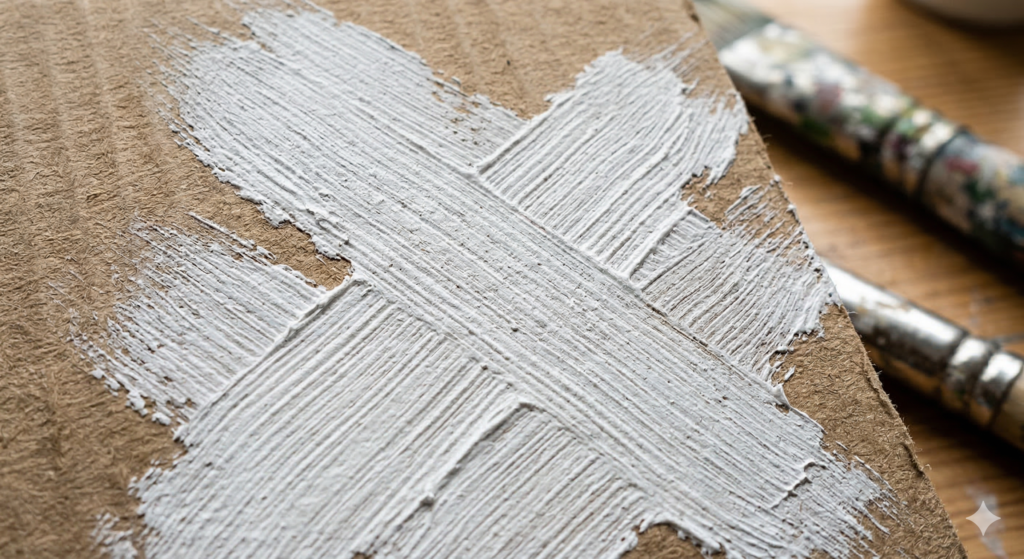
Start by finding a clean piece of cardboard. Brush the matte medium over the entire surface and let it dry completely. Next, you need to add your gesso.
Artists recommend applying at least four layers of gesso brushed in alternating directions. This cross-hatching technique builds a strong, textured surface that grips the paint beautifully. You can lightly sand between the layers if you want a smoother finish.
Sizing vs. Priming: What Is the Difference?
Sizing seals the cardboard to prevent oil from soaking into the fibers. You usually do this with an acrylic matte medium. Priming is done with gesso and adds a textured, chalky layer on top of the size. This gives the oil paint something to grip onto.
Understanding the difference between primers and gesso is crucial for any artist. Size acts as a protective raincoat for the cardboard. Painting experts explain that sizing prevents oil absorption, and matte medium is preferred over gloss.
Gesso, on the other hand, provides the “tooth” or texture. It makes the surface bright white, which helps your oil colors pop. You truly need both steps for the best results.
The Best Types of Cardboard for Art Projects
Not all cardboard is created equal. Flimsy, thin cardboard will warp easily when you apply wet gesso or paint. It is best to avoid cheap, pulpy dollar-store cardboard because it can turn to mush.
Instead, look for heavy-duty materials. Experienced painters suggest using sturdy double-walled shipping boxes or thick wine boxes for the best results. You can also use matboard scraps from picture framing shops.
Having the right art supplies makes the entire process much more enjoyable and successful.
| Cardboard Type | Sturdiness | Best Use |
| Double-Walled Box | Very High | Heavy oil painting practice |
| Matboard | High | Smooth, detailed studies |
| Cereal Box | Low | Quick acrylic sketches only |
| Dollar Store Box | Very Low | Avoid entirely for oil paints |
Does Painting on Cardboard Last Forever?
While properly sealed and primed cardboard can last for decades, it is not a truly archival painting surface. Changes in humidity and the natural acidity of the paper pulp mean it may eventually warp or degrade. It is best suited for practice rather than museum-quality preservation.
Cardboard is fantastic for learning, but it has limits. Even when properly primed, cardboard is not considered an archival surface that will last centuries. The acids naturally present in the paper will slowly break it down over time.
However, do not let that discourage you. Art archivists note that cardboard art can last decades if stored properly and sealed with acrylic mediums. If you want to create a family heirloom, consider exploring other painting surfaces like stretched canvas or solid wood panels.
Conclusion
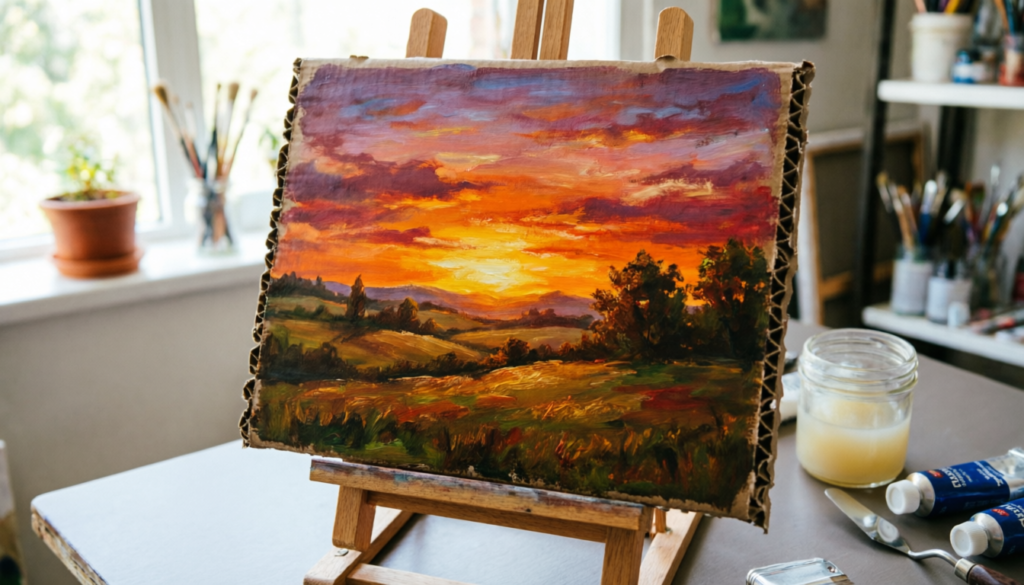
Cardboard is a wonderful, highly accessible surface for oil painting practice. As long as you take the time to seal it with a matte medium and prime it with gesso, you will have a sturdy and reliable canvas. This process removes the fear of making mistakes and lets you focus entirely on improving your skills.
Do not let expensive materials hold you back from creating. Go grab a sturdy shipping box, apply your gesso, and start experimenting today! If you are ready to gather your tools, check out our guide on choosing the best paints for beginners to get started. Happy painting!
Frequently Asked Questions
Do I have to gesso both sides of the cardboard?
Yes, it is highly recommended to gesso both sides of the cardboard. Painting an “X” on the back with gesso helps prevent the cardboard from warping as it dries. This creates a much flatter painting surface.
Can I use white acrylic paint instead of gesso?
No, white acrylic paint is not a substitute for gesso. Acrylic paint lacks the chalky texture that oil paint needs to grip the surface effectively. You should always use a proper acrylic gesso for priming.
How long should gesso dry before applying oil paint?
You should let each layer of gesso dry for at least one to two hours. However, it is best to let the final layer cure for a full 24 hours before applying oil paint. This ensures the ground is completely stable.
Will my cardboard painting warp over time?
Cardboard is prone to warping if it is exposed to high humidity or moisture. To minimize warping, use thick double-walled cardboard and seal both the front and back edges. Storing the finished painting in a dry room also helps.
Can I use water-mixable oils on cardboard?
Yes, you can use water-mixable oils on cardboard. You still need to prepare the surface with size and gesso just like traditional oils. This prevents the water and oil mixture from degrading the paper fibers.