
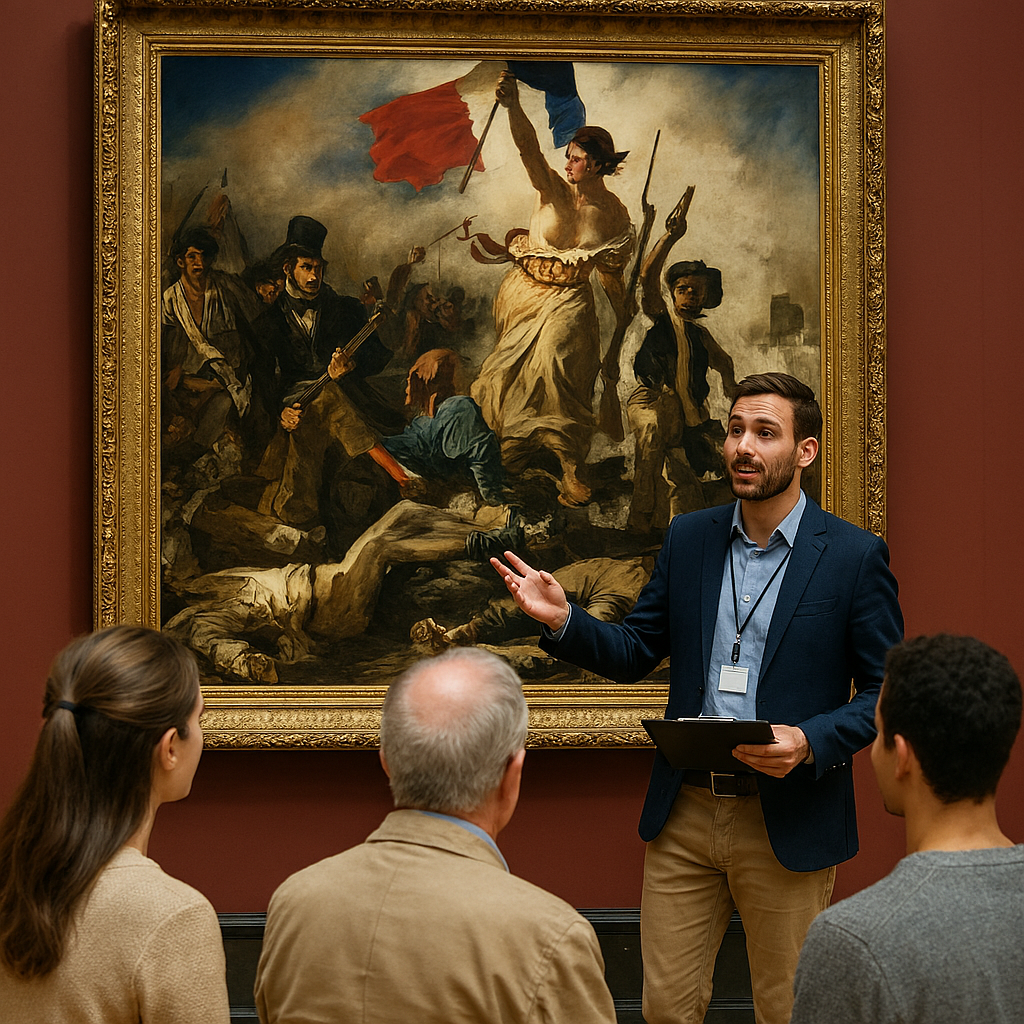
Imagine standing in front of a massive, swirling canvas at the Louvre or the Met. You know it’s famous. You know it’s worth millions. But when you look at it, you just see… shapes. You might feel a bit lost, or worse, bored. This is where Art Tour Guides step in to save the day.
Whether you are a traveler looking to unlock the secrets of the Vatican, or an aspiring professional dreaming of a career in the galleries, understanding the world of museum interpretation is key. A great guide does more than point at a picture; they bridge the gap between the artist’s intent and your eyes. They transform a silent room into a vibrant story.
In this deep dive, we will explore the history of the profession, the confusing legal differences between guides in Italy and the USA, the true costs of hiring an expert, and the “Visual Thinking Strategies” used to teach art.
Key Takeaways
- Terminology Matters: A “Docent” is usually a volunteer; a “Guide-Conférencier” is a government-licensed expert.
- Legal Warnings: In countries like Italy and France, hiring an unlicensed guide can result in fines for both of you.
- Cost vs. Value: Private tours range from $150/hour to thousands for after-hours access.
- Career Path: It is a competitive field requiring public speaking skills, history knowledge, and increasingly, digital savvy.
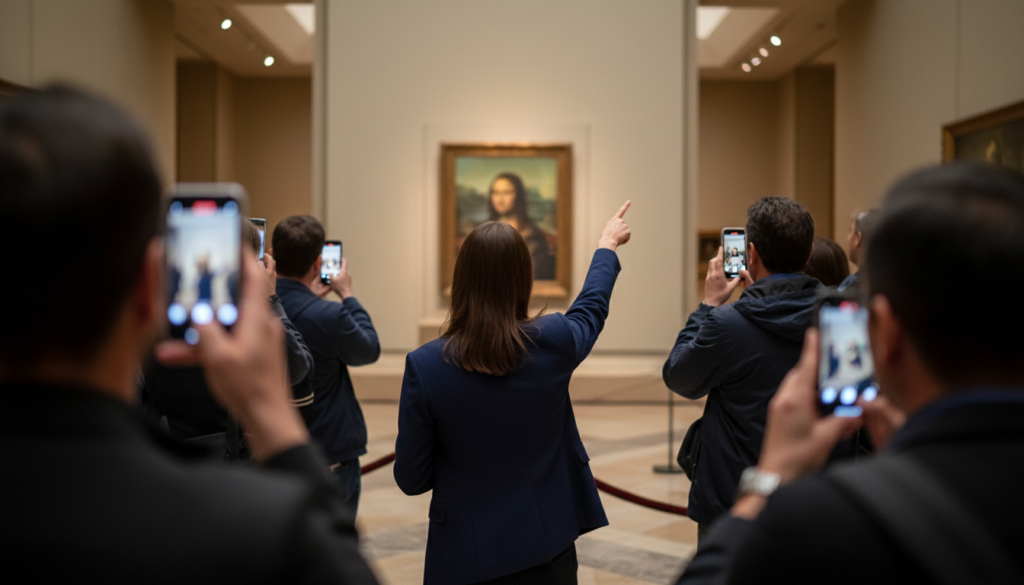
Introduction: The Art of Seeing
Why You Need a Guide (More Than Just Facts)
We live in an age where you can Google anything. You can stand in front of Van Gogh’s Starry Night and read its Wikipedia page in ten seconds. So, why do Art Tour Guides still exist?
The answer lies in curation and connection. A smartphone can give you dates and names, but it cannot read the room. It cannot see that your teenager is getting bored and suddenly pivot the conversation to the gruesome, Game-of-Thrones-style history of a Renaissance painting to get their attention. A human guide offers art appreciation techniques that are tailored specifically to you.
The “Skyscraper” Promise: From Casual Audio to PhD Experts
Think of the art guiding world like a skyscraper. On the ground floor, you have general admission and wall text. It’s accessible, but limited. As you go up, you find audio guides, then group tours, then private historians, and at the very top—the penthouse—are the curators and specialized scholars who charge a premium for deep, academic dives.
Knowing which floor you want to visit is essential for planning your trip and your budget.

The Spectrum of Guides: Who is Leading You?
Not all guides are created equal. The terminology changes depending on the museum and the country. Mixing these up can lead to awkward moments or disappointment.
The Volunteer Docent: Passion Over Paycheck
If you join a free tour included with your museum admission in the United States, you are likely being led by a Docent.
- Definition: The word comes from the Latin docere, meaning “to teach.”
- The Role: Docents are volunteers. They are often art enthusiasts, retired teachers, or students who undergo 6 to 12 months of training provided by the specific museum.
- Pros: They are incredibly passionate. They aren’t doing it for money; they do it because they love the art.
- Cons: Their knowledge is often specific to that one museum’s collection.
The Professional Tour Guide: Storytellers & Logistics Masters
These are the people you hire through travel agencies or platforms like Viator and Airbnb Experiences.
- The Role: They manage the logistics (tickets, skip-the-line access) and the storytelling. They are entertainers as much as educators.
- Scope: They often cover entire cities, meaning they might take you through the Colosseum in the morning and the Vatican Museums in the afternoon.
- Licensing: In Europe, they are strictly regulated (more on that later).
The Academic Expert (Art Historian/Curator)
For those who want to geek out on Renaissance art history or debate the nuances of brushwork, this is your tier.
- The Role: These guides often hold Master’s degrees or PhDs. They don’t just tell you what is in the painting; they explain the provenance (the history of who owned it) and the socio-political climate of the era.
- Cost: Expect to pay significantly more. These are often marketed as “Scholar-Led Walks.”
Audio & Digital Guides: The AI and App Revolution
We cannot ignore the digital shift. Apps like Bloomberg Connects and Smartify allow you to scan a painting and get instant info.
- The Robot vs. The Human: Early audio guides were dry and robotic. Modern art discovery apps now feature immersive storytelling, sometimes narrated by famous actors or the artists themselves.
- Pros: Go at your own pace. Pause whenever you want. Cheap or free.
- Cons: No Q&A. If you have a burning question about a symbol in a painting, the app can’t answer you.

Historical Context: The “Cicerone” and the Grand Tour
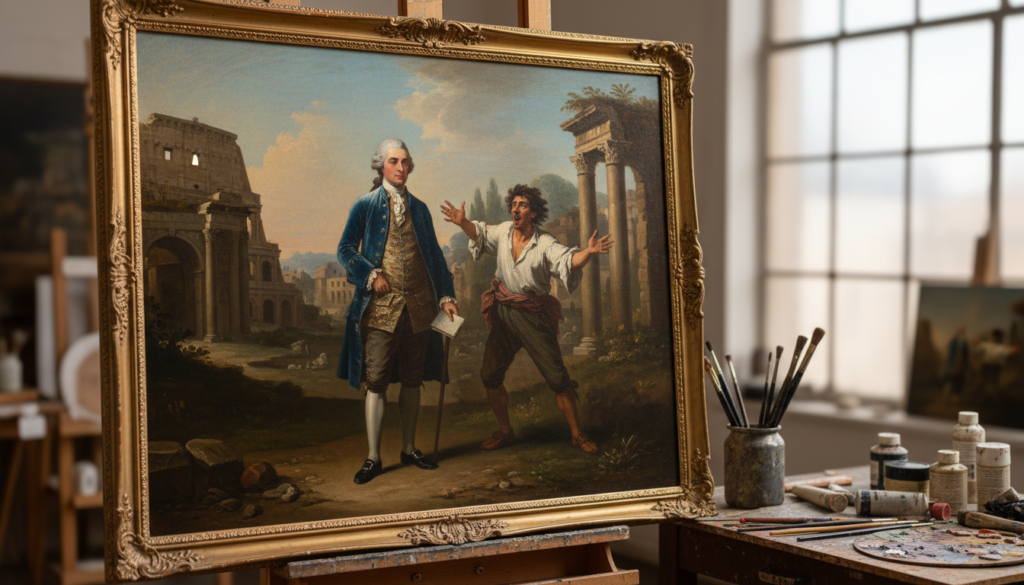
The concept of hiring a local expert to show you around isn’t new. In fact, it dates back to the 17th and 18th centuries during a phenomenon known as the Grand Tour.
Origins in the 17th Century Grand Tour
Young, wealthy aristocrats from England and Northern Europe would travel to Italy to finish their education. They sought to see the roots of Western civilization in Rome, Florence, and Venice. But they couldn’t navigate these chaotic cities alone.
They hired guides called Cicerones. Named after the Roman orator Marcus Tullius Cicero (known for his eloquence and learning), these guides were expected to be knowledgeable in antiquities, history, and the arts.
Evolution from Aristocratic Tutors to Modern Educators
The Cicerone was a mentor, a translator, and a bodyguard rolled into one. Today’s Art Tour Guides carry this torch. While the clientele has shifted from exclusively aristocrats to mass tourism, the core mission remains the same: to translate visual culture into understandable experiences.
Whether you are looking at Impressionist landscapes or ancient sculptures, you are participating in a tradition that is hundreds of years old.
Global Regulations: A Critical Warning for Travelers
This is the most important section for travelers to read. The rules for guiding change drastically depending on where you are. Ignoring them can ruin your trip.
Italy: The Strict “Licensed Tourist Guide” Laws
Italy takes its cultural heritage tourism very seriously.
- The Law: You cannot simply read a few books and call yourself a guide in Florence or Rome. You must pass a rigorous government exam covering History, Geography, Art History, and Foreign Languages (usually at a C1/B2 level).
- The License: Successful candidates receive a “Patentino di Guida Turistica.”
- Warning: If you hire a “guide” outside the museum who doesn’t have their badge visible, you might be interrupted by police. The guide can be fined thousands of euros, and your tour will end immediately. Unlicensed guides often try to hide by whispering or pretending they are just your “friend.”
France: The “Guide-Conférencier” Requirement
France has a similar system. To lead tours in National Museums (like the Louvre or Orsay) and Historic Monuments, one must hold a Carte Professionnelle de Guide-Conférencier.
- The Education: This usually requires a university degree in history, art history, or archaeology, followed by a professional license.
- Security: Museums like the Louvre have strict security. If a guide tries to lecture to a group without a license, security guards will intervene.
USA & UK: Deregulation vs. Museum Policy

The English-speaking world is generally more deregulated, but there are catches.
- UK: The “Blue Badge” guides are the gold standard and the only ones allowed to guide in certain sites (like Westminster Abbey). However, in many galleries (like the National Gallery), regulations are looser compared to Italy.
- USA: The government doesn’t license guides. However, private property rules apply. The Metropolitan Museum of Art (The Met) and MoMA have strict policies. External guides often must register with the museum, pay a fee, and limit their group size.
The Economics of Art Tours: Is It Worth It?
Is hiring a private guide a luxury or a necessity? Let’s look at the data. The Global Art Tourism Market is estimated at $45 Billion USD (2024), and people are willing to pay for access and expertise.
Cost Comparison Table (2024/2025 Estimates)
| Tour Type | Est. Cost (USD) | Pros | Cons |
|---|---|---|---|
| Audio Guide | $5 – $10 (or Free App) | Pace yourself, cheap, private | Can feel robotic, no Q&A |
| Group Tour (Museum) | $20 – $50 (+ Ticket) | Expert access, structured | Fixed pace, crowds, generic script |
| Private Guide (Standard) | $150 – $250 / hour | Custom itinerary, 1-on-1 attention | Expensive, variable quality |
| VIP / After-Hours | $1,000 – $5,000+ | Empty museum, exclusive access | Prohibitive cost for most |
The “Skip-the-Line” Myth vs. Reality
Many tour companies sell “Skip-the-Line” access. Here is the secret: The guide doesn’t have a magic wand. They simply bought the tickets in advance, just like you could have on the museum website.
- The Real Value: The value isn’t skipping the security line (everyone waits in that). The value is that the guide navigates the entrance chaos for you, knows which door is fastest, and ensures you don’t get lost finding the start of the exhibit.
When to Splurge: Private Viewings & After-Hours Access
If you are deeply interested in building a private art collection or simply hate crowds, after-hours tours are the ultimate luxury. Imagine being alone in the Sistine Chapel. It costs thousands, but for art lovers, the silence is priceless.
Methodology: How Great Guides Teach
The best Art Tour Guides don’t just lecture; they facilitate discovery. They often use a method called Visual Thinking Strategies (VTS).
Visual Thinking Strategies (VTS): The 3 Magic Questions
VTS is a method used in museums and schools to encourage visual analysis. You don’t need a guide to do this—you can try it yourself on your next visit.
- “What is going on in this picture?” (Open-ended observation).
- “What do you see that makes you say that?” (Requiring evidence for your opinion).
- “What more can we find?” (Encouraging deeper looking).
By using this loop, a guide helps you unlock the painting without telling you “the answer” right away.
Storytelling vs. Lecturing: The “Hook” Technique
A good guide knows that facts are boring. Stories are sticky.
- The Lecture: “This painting was made in 1606 by Caravaggio using oil on canvas.”
- The Hook: “The man who painted this was on the run for murder when he held the brush. Look at the deep shadows—that is the darkness of his own life reflecting on the canvas.”
This connects the biography to the visual style, such as the dramatic lighting of Chiaroscuro.
Adapting for Kids: Scavenger Hunts
Engaging children in museums is an art form itself. Professional guides often use scavenger hunts (“Find the dog in every room”) or sensory questions (“If you could jump into this painting, what would the weather feel like?”). This makes the educational experience active rather than passive.

Career Path: Becoming an Art Tour Guide
So, you love art and you love talking. How do you turn this into a job?
Required Skills: Public Speaking + Art History
You need a mix of hard and soft skills.
- Hard Skills: Knowledge of art history (periods like Baroque or Modernism), fluency in multiple languages (vital for Europe), and navigation skills.
- Soft Skills: Empathy, loud projection (without shouting), and the ability to read body language.
Salary Expectations
It is a “feast or famine” industry.
- Docents: Usually unpaid volunteers.
- Entry-Level Guide: ~$22,000 – $32,000 USD/year (often seasonal/gig based).
- Private Expert Guide: Freelancers can charge $50 – $225 USD per hour. If you build a personal brand, the sky is the limit.
Steps to Certification
- Education: A degree in Art History helps, but isn’t always mandatory if you are knowledgeable.
- Licensing: In Europe, check the local government website for exam dates. In the US, look for certification from the National Association for Interpretation (NAI) to boost your resume.
- Experience: Start by volunteering as a docent to build your “museum stamina” (standing and talking for 4 hours is harder than it looks!).
FAQs:
What is the tipping etiquette for museum guides?
In the US and Canada, tipping is standard. For a public group tour, $5-$10 per person is polite. For a private guide, 10-20% of the tour cost is customary. In Europe, tipping is less aggressive but highly appreciated; 5-10 Euros per person for a good tour is standard.
Can I guide my own group in the Louvre?
Technically, no. If you are not a licensed “Guide-Conférencier,” you are not allowed to speak to a group and explain the art in the galleries. You can walk with your friends and chat, but if you look like you are leading a tour, security will stop you.
Are private art tours worth the money?
If you are visiting a “bucket list” museum like the Uffizi or the Vatican, yes. The crowds are overwhelming. A private guide acts as a buffer, navigating the crowds and ensuring you see the top 10 masterpieces without wasting time looking at maps.
How do I find a guide who specializes in modern art?
Most platforms allow you to filter by specialty. Look for guides who mention expertise in Abstract Expressionism or Contemporary Art. Reading reviews is crucial—look for comments about their ability to explain difficult concepts simply.
What is the difference between a Curator and a Guide?
A Curator is employed by the museum to care for the collection, organize exhibitions, and conduct research. A Guide acts as the interface between that collection and the public. While some curators give tours (usually to VIPs), their primary job is behind the scenes.
Conclusion: Curating Your Own Experience
Whether you choose a free app, a volunteer docent, or a high-end academic cicerone, the goal remains the same: to connect with human creativity. Art museums are not just repositories of old things; they are living conversations about what it means to be human.
Next time you step into a gallery, remember that you don’t have to face it alone. There is a whole industry of passionate Art Tour Guides waiting to help you see the world a little differently. If you can’t hire one, use the VTS method, ask questions, and be your own guide. The art is waiting for you.