The Universal Language of Flora: From Caves to Canvas
When we stand before a canvas bursting with blooms, it is easy to be seduced solely by the aesthetic beauty—the velvety texture of a rose petal or the vibrant yellow of a sunflower. However, for centuries, artists have used flowers as far more than mere decoration. In the history of art, a bouquet is rarely just a bouquet; it is a complex sentence written in the language of petals and stems.
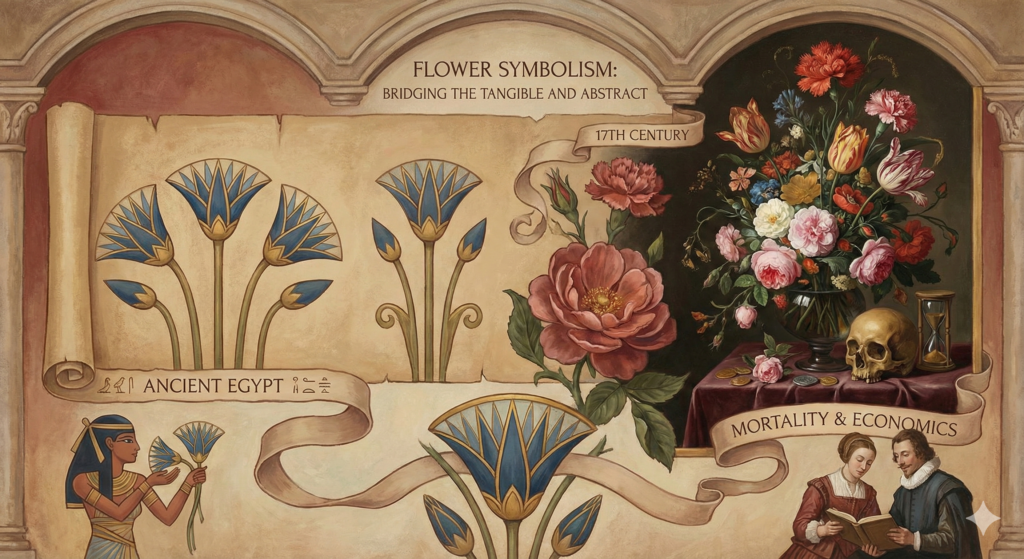
From the stylized lotuses of Ancient Egypt to the hyper-realistic bouquets of the 17th century, flowers have served as universal symbols. They bridge the gap between the tangible world and the abstract concepts of love, religion, mortality, and economics. For the art historian and the casual observer alike, understanding flower symbolism in art unlocks a hidden layer of narrative that transforms a pretty picture into a profound philosophical statement.
Thesis: The Code of the Canvas
Flowers in art function as a visual code. In the hands of a Renaissance master, a lily is a theological declaration. In a Victorian portrait, a held carnation is a relationship status update. In a Dutch Golden Age still life, a wilting tulip is a stern warning about the inevitability of death. To fully appreciate these works, one must learn to read the “Botanical Code.”
A Brief Overview of Floriography
While humans have always assigned meaning to plants, the codified study of these meanings is known as Floriography. While it reached its peak mania in the Victorian era, the roots of this language stretch back much further. Whether you are interested in discovering art for the first time or are a seasoned collector, understanding these symbols offers a new lens through which to view the masterpieces of history.
The Roots of Symbolism: Religious & Mythological Origins
Medieval & Renaissance: The Sacred Garden
Before flowers became symbols of romantic love or economic status, they were predominantly sacred. In Medieval and Renaissance art, the natural world was viewed as a mirror of the divine. Artists like Sandro Botticelli and Leonardo da Vinci utilized specific blooms to convey theological narratives to a largely illiterate public.
The Lily: Purity and the Virgin
Perhaps the most ubiquitous flower in Western religious art is the Madonna Lily (Lilium candidum). In almost every Annunciation scene—where the Angel Gabriel announces to Mary that she will bear the Christ child—white lilies are present. They symbolize the Virgin Mary’s purity and chastity.
- Symbolism of white lilies in Annunciation paintings: The white petals represent her spotless body, while the golden anthers represent the radiance of her soul.
- See more on religious art in our guide to Renaissance Art.
The Carnation: Love and Passion
While today we might associate carnations with simple boutonnieres, in the Renaissance, they were powerful symbols of betrothal and marriage. In portraits, if a sitter is holding a red carnation, it is often a subtle signal of engagement. However, the carnation also held religious weight; the red petals were sometimes associated with the nails of the crucifixion (the word “carnation” shares a root with “incarnation”), symbolizing pure love and sacrifice.
The Rose: A Dual Legacy
The rose has perhaps the most complex history of all. In ancient mythology, it was the flower of Aphrodite, linked to desire and physical beauty. As Christianity rose, the church adopted the symbol, transposing it onto the Virgin Mary (the “Rose without Thorns”).
- Red Rose symbolism in art: While often denoting romantic passion, in a religious context, the red rose symbolizes the blood of martyrs.
Eastern Philosophies: The Lotus and the Void
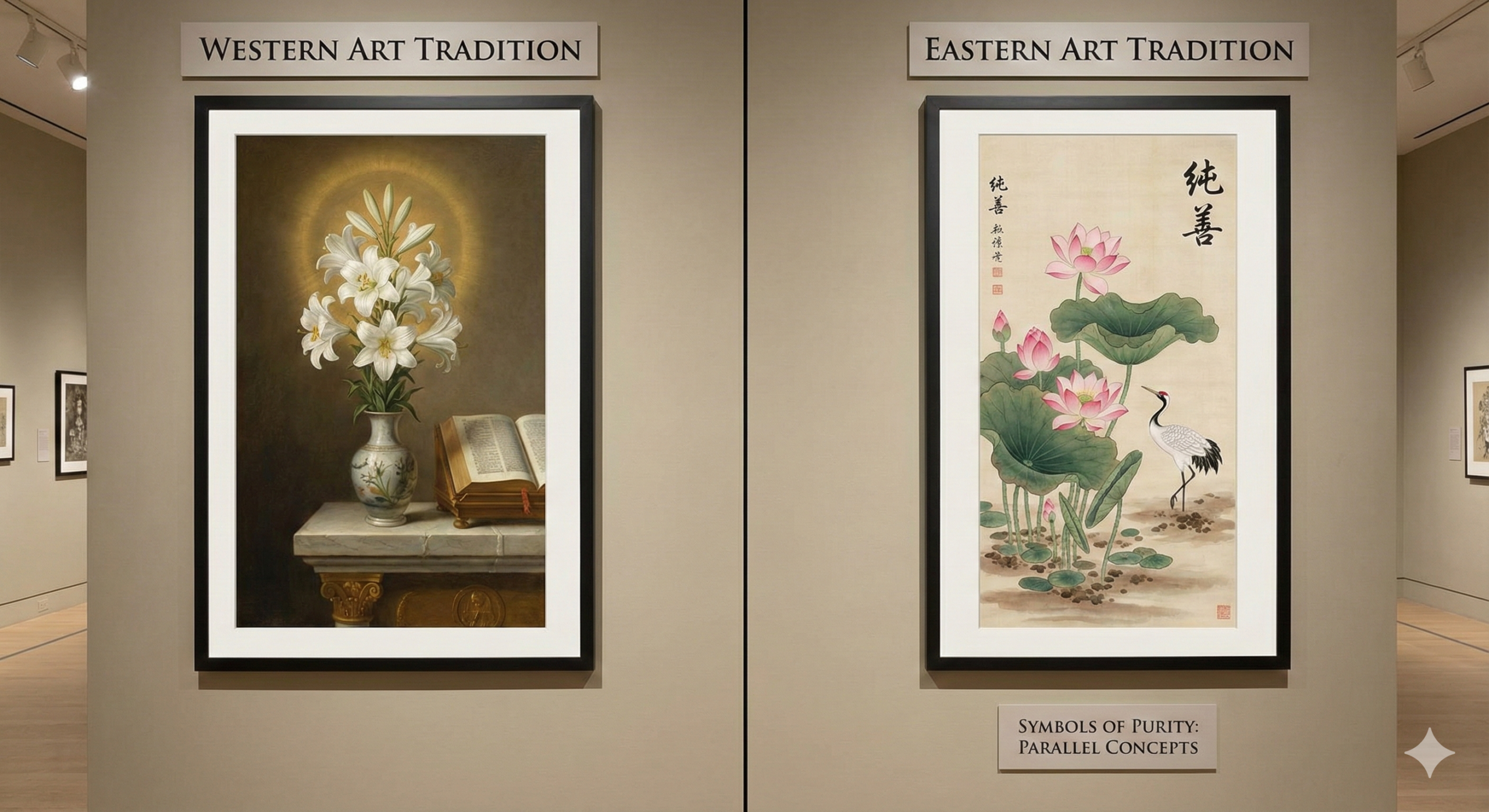
To truly understand the global context of botanical symbolism in paintings, we must look East. The difference between Eastern and Western flower symbolism is starkest when comparing the Lily to the Lotus.
The Lotus in Eastern Art
In Buddhism and Hinduism, the Lotus is the paramount symbol of spiritual unfolding. The flower roots itself in the mud (representing the suffering and materialism of the world), grows up through the murky water, and blooms immaculately clean on the surface.
- Lotus flower in Eastern art: It represents enlightenment, rebirth, and the triumph of the spirit over the senses. Unlike the cut flowers of Western still lifes, which are often shown dying, the Lotus is frequently depicted in a state of eternal perfection.
The Golden Age of Bloom: 17th Century Dutch Still Life
If there is a specific era that defines the history of floral still life painting, it is the Dutch Golden Age. This was a time when the Netherlands dominated global trade, science, and art. The paintings from this era are not just pretty arrangements; they are intellectual puzzles.
The Economic Context: Tulip Mania
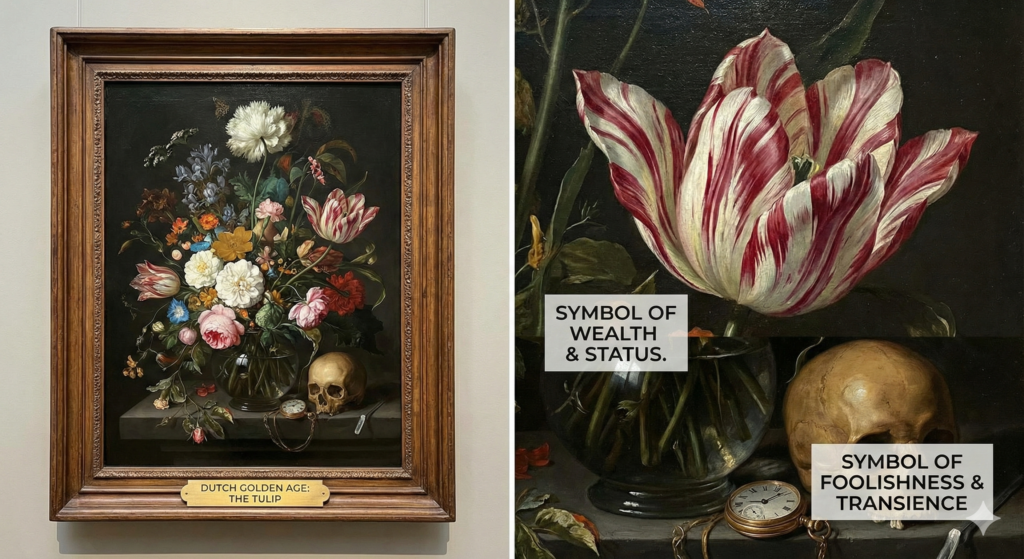
To understand Dutch flower painting, one must understand the tulip. In the 1630s, the Netherlands experienced Tulip Mania, the world’s first recorded economic bubble. Rare tulip bulbs were selling for the price of a canal house in Amsterdam.
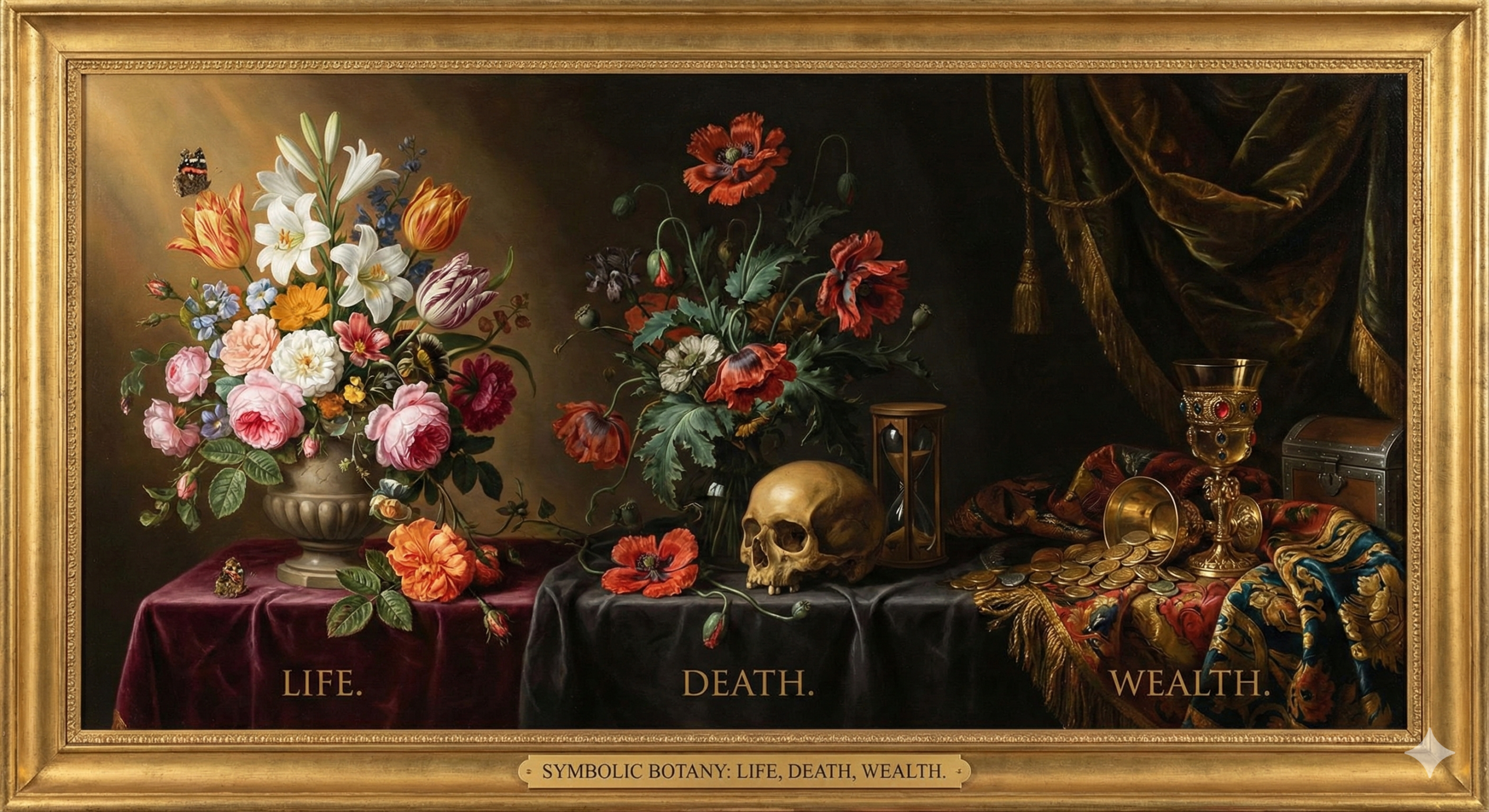
- Meaning of tulips in Dutch Golden Age art: Because of their immense value, a tulip in a painting was a symbol of wealth and status. However, because the market eventually crashed, the tulip also became a symbol of foolishness and the transient nature of earthly riches.
The ‘Vanitas’ & ‘Memento Mori’ Tradition
The Dutch were a deeply Calvinist society, uncomfortable with excessive displays of wealth without a moral lesson. This gave rise to the Vanitas genre.
- Vanitas painting symbols: These artworks are reminders of the emptiness of worldly possessions.
- Memento Mori: Literally “Remember you must die.”
Why Wilting Flowers Matter
In a painting by Ambrosius Bosschaert or Jan van Huysum, you will often see flowers that are past their prime. A drooping tulip or a rose losing its petals is a deliberate inclusion.
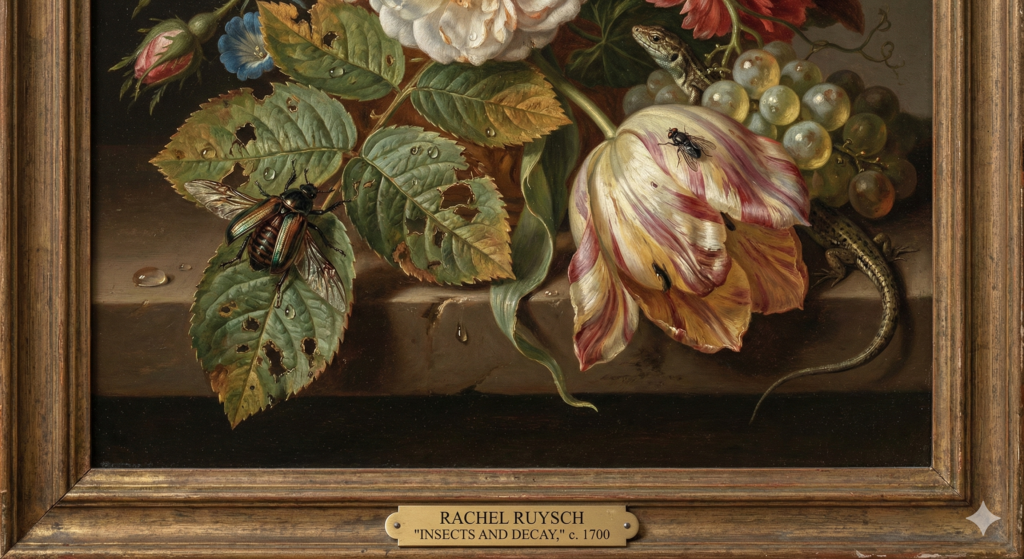
- What do wilting flowers represent in art? They signify the brevity of life. Just as the most beautiful flower fades quickly, so too does human beauty and life.
Insects and Decay
Look closely at a masterpiece by Rachel Ruysch, one of the most successful female artists of the Golden Age. You will find holes in the leaves, crawling beetles, flies, and lizards. These are not imperfections; they are symbols of decay consuming life. The insect is the agent of time, reminding the viewer that death is always present, even in the garden.
Case Study: Rachel Ruysch
Ruysch was unique because she combined scientific accuracy (her father was a botanist) with artistic flair. Her bouquets often feature flowers that bloom in different seasons, creating an impossible bouquet that could only exist in paint—a testament to the artist’s power over nature.
For those interested in the techniques used during this era, explore our article on The Timeless Allure of Still Life Painting.
The Victorian Code: Floriography in the 19th Century
By the 19th century, the symbolism of flowers shifted from religious and moralistic to romantic and social. This was the era of Floriography, or the “Language of Flowers.”
The ‘Language of Flowers’ Craze
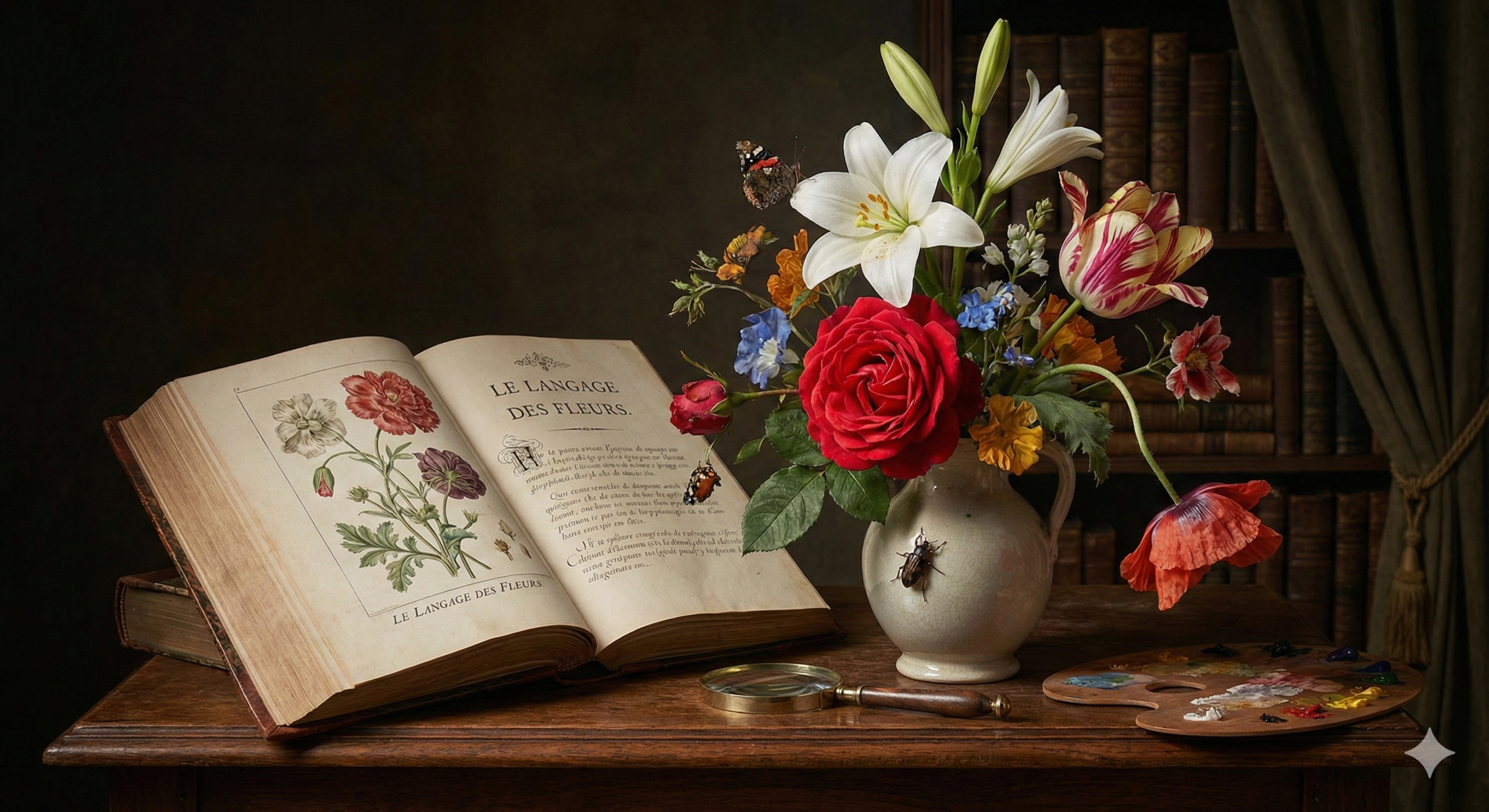
In 1819, Le Langage des Fleurs was published, sparking a craze across Victorian England and France. In a society where expressing open emotion was often taboo, flowers became the medium for secret communication. A suitor might send a bouquet of red tulips (declaration of love) and receive back a yellow carnation (rejection/disdain).
Pre-Raphaelite Brotherhood: Ophelia’s Garland
The Pre-Raphaelite Brotherhood (PRB) was obsessed with truth to nature and literary symbolism. The most famous example of botanical symbolism in paintings from this era is Sir John Everett Millais’ Ophelia.
- Depicting the tragic death of Shakespeare’s character, Millais includes a specific garland of flowers, each with a meaning drawn from the play and Victorian floriography:
- Poppies: Sleep and death.
- Violets: Faithfulness and early death.
- Daisies: Innocence.
- Pansies: Thoughts (love in idleness).
Hidden Messages in Portraiture
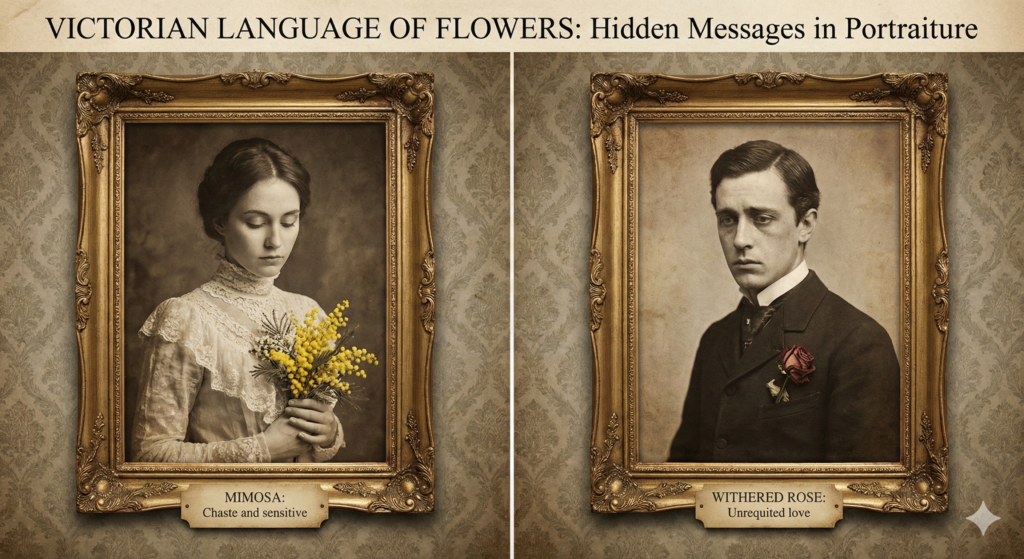
Hidden messages in Victorian flower paintings were common. A portrait of a woman holding a mimosa might suggest she is chaste but sensitive. A man wearing a withered flower might be signaling unrequited love. This added a layer of gossip and intrigue to gallery viewings of the time.
Breaking the Mold: Modernism & Abstraction
As art moved into the late 19th and 20th centuries, the strict dictionary definitions of flowers began to dissolve. The focus shifted to light, emotion, and form.
Impressionism: Monet’s Water Lilies
Claude Monet was less concerned with the symbolic meaning of a water lily and more obsessed with how light reflected off its surface. In his Impressionist garden paintings, specifically the Nymphéas series, the flower becomes a vehicle for studying color and atmosphere. The symbol is no longer the object, but the act of seeing itself.
- Learn more about this movement in our guide to Impressionist Artists.
Post-Impressionism: Van Gogh’s Sunflowers
Vincent van Gogh imbued his floral works with intense personal emotion.
- Why did Van Gogh paint sunflowers? For Vincent, the sunflower represented gratitude and friendship. He painted them to decorate his “Yellow House” in Arles in anticipation of his friend Paul Gauguin’s arrival. The vibrancy of the yellow was an attempt to capture the sun itself—a symbol of life and vitality, yet painted with a manic energy that hinted at his fragile mental state.
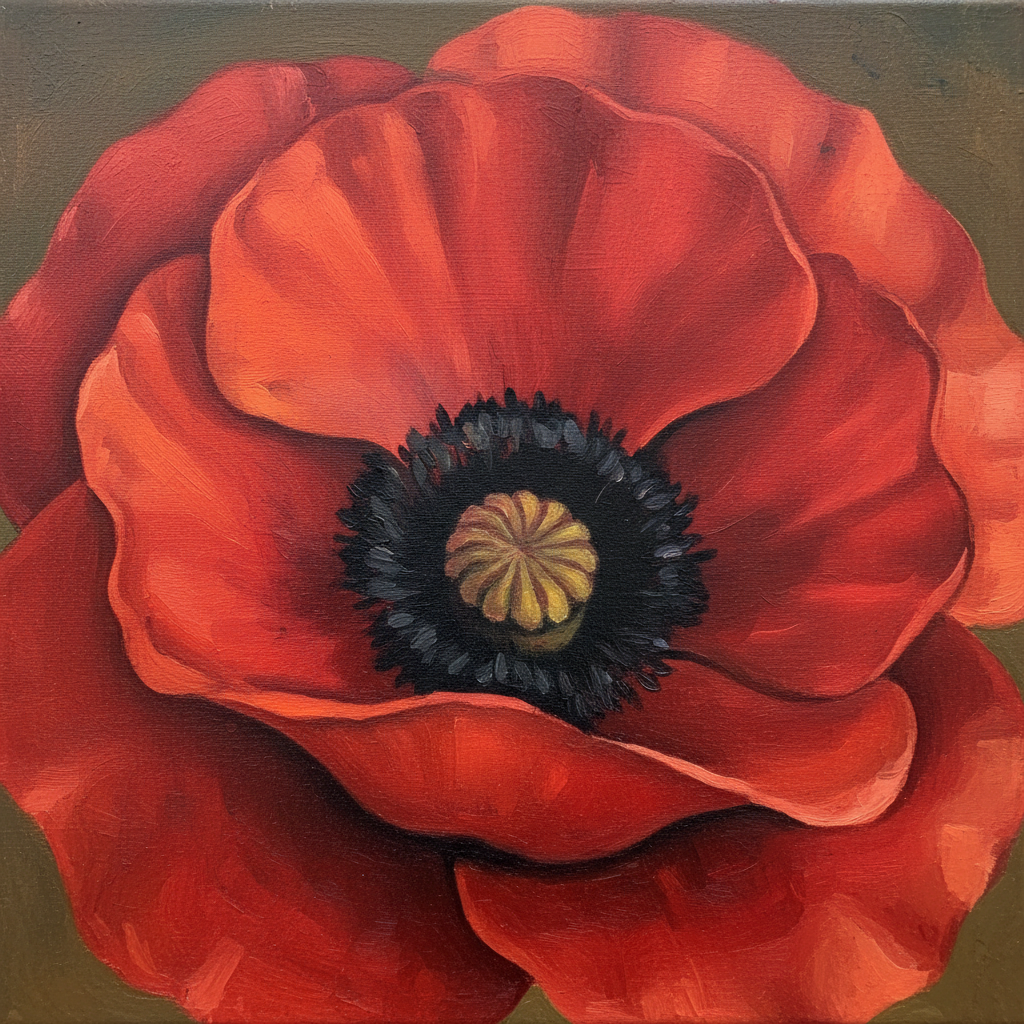
Modernism: Georgia O’Keeffe
In the 20th century, Georgia O’Keeffe revolutionized floral painting by zooming in. She removed the context of the vase and the table, forcing the viewer to confront the flower as a massive, architectural structure.
- Georgia O’Keeffe flower meanings: Critics famously interpreted her close-ups of irises and canna lilies as Freudian sexual symbols. O’Keeffe vehemently denied this, stating, “When you took time to really notice my flower, you hung all your own associations with flowers on my flower and you wrote about my flower as if I think and see what you think and see of the flower – and I don’t.” For her, it was about the majesty of form and nature.
Top 10 Flowers in Art & Their Meanings
For a quick reference when visiting a museum, here is a guide to the most common flora found in Western art history.
| Flower | Common Meaning | Key Art Movement/Era |
|---|---|---|
| Rose (Red) | Love, Passion, Martyrdom | Renaissance / Romanticism |
| Rose (White) | Purity, Virginity | Medieval / Renaissance |
| Lily (White) | Purity, The Virgin Mary | Renaissance (Annunciations) |
| Tulip | Wealth, Transience, Folly | Dutch Golden Age |
| Sunflower | Devotion, Loyalty, Gratitude | Post-Impressionism |
| Poppy | Sleep, Death, Remembrance | Symbolism / Pre-Raphaelite |
| Carnation | Betrothal, Love, Marriage | Renaissance Portraits |
| Violet | Modesty, Humility | Victorian Era |
| Iris | Faith, Wisdom, Valor | Art Nouveau / Modernism |
| Lotus | Rebirth, Enlightenment | Eastern Art / Buddhism |
| Peony | Honor, Wealth, Feminine Beauty | Chinese / Japanese Art |
The Business of Blooms: Market Value & Statistics
Flowers may be fleeting in nature, but in the art market, they are enduring assets. The “Floral” genre has produced some of the highest auction results in history. Collectors prize these works not just for their beauty, but for their historical significance and the technical mastery required to capture them.
Below is a breakdown of how floral masterpieces have performed on the global stage.
| Artist | Masterpiece | Sale Price (approx.) | Year Sold | Significance |
|---|---|---|---|---|
| Claude Monet | Meules (Haystacks – botanical context) | $110.7 Million | 2019 | Record for Impressionist work |
| Claude Monet | Nymphéas en fleur (Water Lilies) | $84.7 Million | 2018 | Defined the late Impressionist floral focus |
| Vincent van Gogh | Vase with Poppies and Daisies | $61.8 Million | 2014 | Painted weeks before his death |
| Gustav Klimt | Bauerngarten (Flower Garden) | $59.3 Million | 2017 | Peak of Vienna Secession floral landscapes |
| Georgia O’Keeffe | Jimson Weed/White Flower No. 1 | $44.4 Million | 2014 | World auction record for a female artist |
| Vincent van Gogh | Vase with Fifteen Sunflowers | $39.9 Million | 1987 | Tripled the previous world record for any art at the time |
Historical Context:
- 1637: At the peak of ‘Tulip Mania’ in Holland, single bulbs sold for 10x the annual income of a skilled craftsman.
- 1819: The publication of Le Langage des Fleurs codified floral meanings, changing portraiture forever.
- 250+: The sheer volume of ‘Water Lilies’ paintings created by Monet in the last 30 years of his life, proving the enduring obsession with botanical subjects.
Interested in the economics of art? Read our analysis on What Makes Paintings Valuable.
How to ‘Read’ a Bouquet Today:
Next time you visit a gallery, look closer at the floral arrangements.
- Check the species: Is it a lily (purity) or a poppy (sleep)?
- Check the condition: Is it fresh (youth) or wilting (mortality)?
- Look for guests: Are there insects eating the leaves (decay/time)?
- Consider the era: Is it a Dutch warning against greed, or a Victorian message of romance?
By decoding these symbols, you engage in a centuries-old conversation with the artist, proving that art—like nature—is very much alive.
Ready to start your own floral masterpiece? Check out our guide on Getting Started with Watercolors or explore the Best Paint Brushes for Beginners.
Final Thoughts
From the sacred lilies of the Renaissance to the exploding sunflowers of Van Gogh and the architectural petals of O’Keeffe, the history of floral still life painting is a journey through human consciousness. Flowers have never been just decorative; they are the vocabulary artists use to discuss the things that matter most: God, love, money, and death.
Frequently Asked Questions (FAQ)
Q: What do wilting flowers represent in art?
A: In the tradition of Vanitas and Memento Mori, particularly during the Dutch Golden Age, wilting flowers symbolize the transience of life, the inevitability of death, and the fading of earthly beauty.
Q: What is the symbolism of white lilies in Annunciation paintings?
A: White lilies represent the purity, chastity, and divinity of the Virgin Mary. They are almost always present in scenes where the Angel Gabriel visits Mary.
Q: Why did Van Gogh paint sunflowers?
A: Van Gogh painted sunflowers to express gratitude and to welcome his friend Paul Gauguin to his studio in Arles. He associated the color yellow with happiness and the sun with life.
Q: What is the difference between Eastern and Western flower symbolism?
A: Western symbolism (like the Rose or Lily) often focuses on purity, martyrdom, or romantic love. Eastern symbolism, particularly the Lotus, focuses on spiritual enlightenment, rising above the material world, and rebirth.
Q: Are there famous paintings with secret floral meanings?
A: Yes. Sir John Everett Millais’ Ophelia is a prime example, where every flower floating in the water (poppies, daisies, pansies) corresponds to a line in Shakespeare’s play or a Victorian meaning regarding death and innocence.
Q: Did Georgia O’Keeffe intend her flowers to be erotic?
A: No. While art critics in the 1920s interpreted her close-up floral paintings as representations of female anatomy, O’Keeffe consistently denied this, stating she was simply painting what she saw—the form and structure of the flower on a large scale.