You know that moment when you’re standing in the paint aisle, staring at fifty different blues, wondering why anyone needs that many options? I remember my first watercolor set – twelve little pans of color that seemed so straightforward until I actually tried mixing them. That afternoon ended with muddy puddles and a humbling realization: understanding color isn’t just helpful for painters, it’s absolutely essential. Explore our guide to colours in painting.
Key Takeaways:
- Physics vs. Chemistry: Why color theory fails if you ignore pigment properties.
- Decoded Labels: How to read tubes like a pro (finding PB29 and PY35).
- 2025 Pricing: A breakdown of Paint Series costs and where to save money.
- The “Mud” Cure: Scientific reasons why your mixtures turn brown and how to fix it.
- Drying Charts: Which colors dry overnight and which take weeks.
The Alchemy of Art
When we talk about colours in painting, we are usually talking about two different things simultaneously: light and matter. Physics tells us how light waves bounce off a surface to reach our eye. Chemistry tells us what that surface is made of.
For a digital artist, color is light. For a painter, color is dirt, metal, and oil. If you treat your physical paint like digital pixels, you will run into trouble. For example, mixing a “warm” red with a “cool” blue often results in a desaturated grey because of the way physical pigments absorb specific wavelengths of light (spectral sensitivity).
To paint like a master, you must become a part-time alchemist. You need to know which powders are heavy, which are transparent, and which will fade when exposed to the sun.

The Science of Pigments: What’s Inside the Tube?
Have you ever wondered why one tube of red costs $10 and another next to it costs $40? The answer lies in the pigment. Manufacturers like Winsor & Newton, Golden Artist Colors, and Gamblin categorize paints based on what is actually inside the tube.
Pigment Codes Decoded
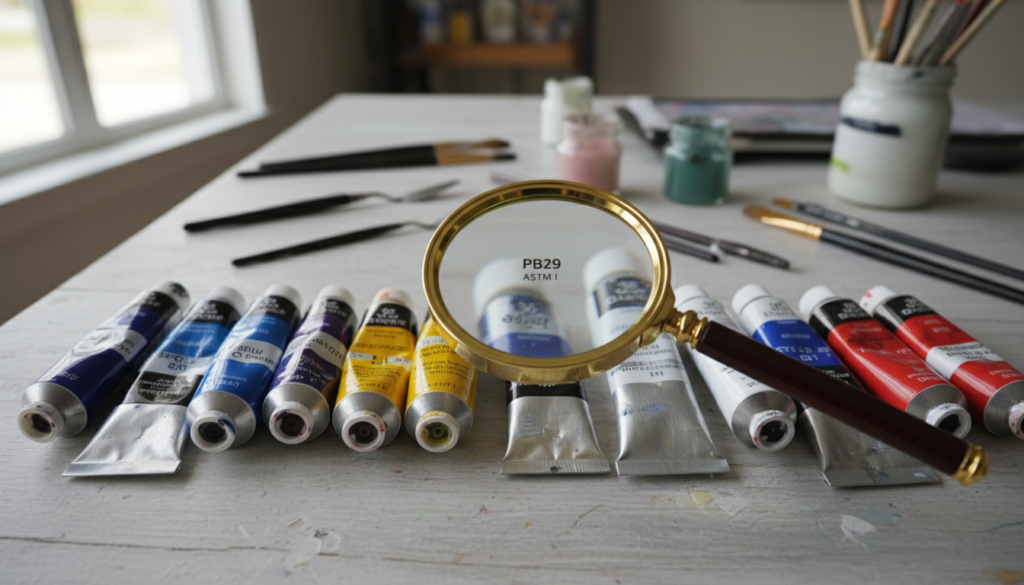
The most important text on a paint tube is usually the smallest. It is the Color Index Name (C.I. Name). This code tells you the chemical composition of the paint.
- PB29: Pigment Blue 29. This is Ultramarine Blue. It is chemically identical across brands.
- PY35: Pigment Yellow 35. This is genuine Cadmium Yellow.
- PR108: Pigment Red 108. This is Cadmium Red.
If you buy a tube labeled “Cadmium Red Hue,” check the code. It will likely say “PR254” or “PR112.” This means it is a modern synthetic substitute that looks like Cadmium but acts differently. Learning these codes helps you choose the best paints for beginners without getting tricked by marketing labels.
Organic vs. Inorganic
Pigments generally fall into two camps:
- Inorganic (Mineral): These are derived from metals and earth. Examples include Ochres, Umbers, Cadmiums, and Cobalts. They tend to be opaque, dense, and low-chroma (except for the heavy metals).
- Organic (Synthetic/Modern): These are created in laboratories. Examples include Phthalos and Quinacridones. These colors are often transparent like stained glass and have incredibly high tinting strength.
Binder & Vehicle
The pigment is the powder; the vehicle is the glue. In oil painting, the vehicle is usually linseed oil. In acrylics, it’s a polymer emulsion. The binder changes how light hits the pigment, known as the Refractive Index.
- Oil: Has a high refractive index, making colors look deep and wet even when dry.
- Acrylic: The polymer binder can be slightly milky when wet and clear when dry, causing a “color shift” (darkening) as it dries.
Lightfastness & Permanence
If you want your art to last, you must check the ASTM Rating.
- ASTM I: Excellent Lightfastness (Will not fade for 100+ years).
- ASTM II: Very Good Lightfastness.
- ASTM III: Not sufficiently lightfast for fine art.
Many “neon” or “opera” colors are fugitive, meaning they fade rapidly in sunlight. If you are interested in art market trends, knowing which paints survive archival storage is essential for selling work to collectors.
The Economics of Color: Series & Pricing
Professional paints are sold in “Series,” usually ranging from Series 1 to Series 7 (or higher). This isn’t about quality; it’s about the cost of the raw materials.
Understanding Paint Series (1-9)
- Series 1: Earth pigments. Iron oxides are literally dirt. They are cheap to mine and process. (e.g., Burnt Umber, Yellow Ochre).
- Series 2-3: Standard synthetics. Efficiently made in labs. (e.g., Ultramarine Blue, Phthalos).
- Series 4-5: Heavy metals. Cadmium and Cobalt are expensive metals. Processing them safely to the cost.
- Series 6+: Rare minerals or expensive modern synthetics.
Real-World Cost Analysis (2024/2025 Data)
Below is a breakdown of estimated pricing for a standard 37ml tube of professional oil paint as of late 2024.
| Paint Series | Example Pigment | Approx Price (USD) | Relative Cost |
|---|---|---|---|
| Series 1 | Yellow Ochre, Burnt Umber | ~$10 – $14 | 1x (Base) |
| Series 2 | Sap Green, Ultramarine | ~$16 – $18 | 1.4x |
| Series 4 | Cobalt Blue, Cadmium Red | ~$24 – $30 | 2.3x |
| Series 5+ | Cerulean Blue (Genuine) | ~$35+ | 3.0x |
Data reflects average professional-grade pricing (e.g., Winsor & Newton Artist’s Oil Color or Gamblin).
Student vs. Professional Grade
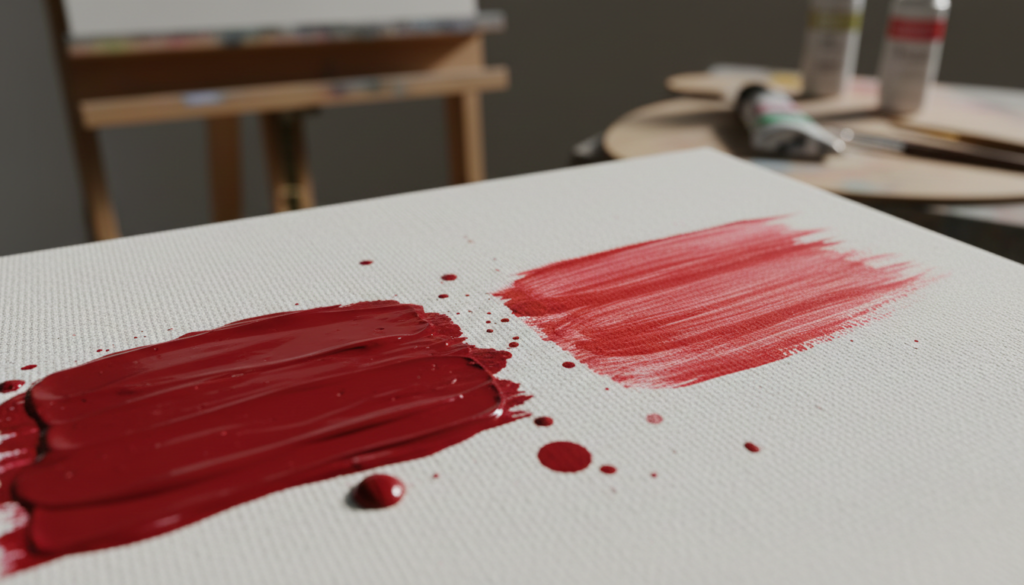
Is it worth buying expensive paint?
- Student Grade: Contains less pigment and more “fillers” like calcium carbonate (chalk). The color is weaker. You have to use twice as much paint to get the same coverage.
- Professional Grade: Pure pigment and oil.
- The Verdict: Stick to student grade for Series 4 colors (Cadmiums) to save money, but upgrade to Professional for Series 1 (Earths) because the price difference is small ($4-$5) but the quality jump is massive. For more on supplies, check our guide on essential painting supplies.
Technical Properties: Knowing Your Materials
To truly master colours in painting, you must understand how they behave physically.
Drying Time Dynamics
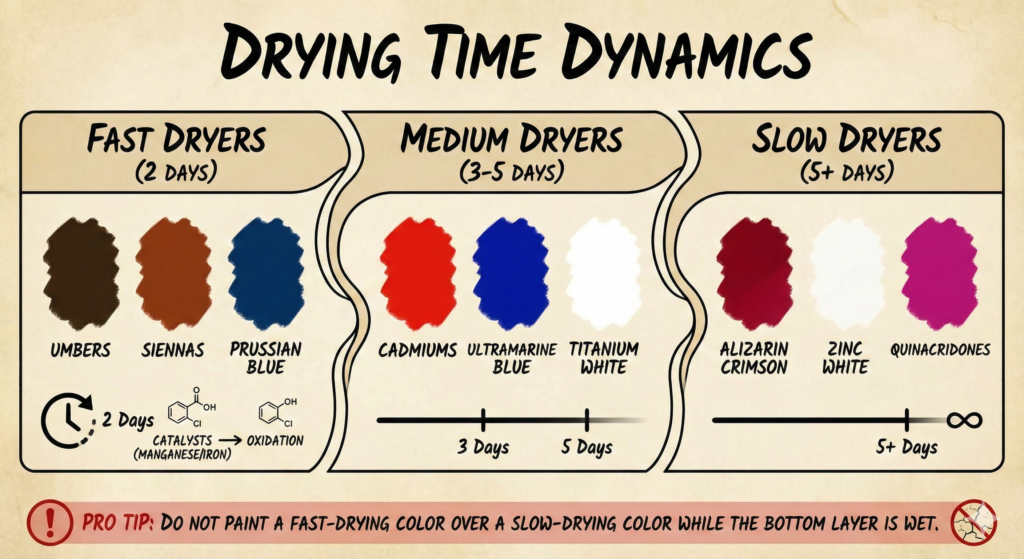
In oil painting, not all colors dry at the same speed. This is crucial for planning your layers.
- Fast Dryers (2 Days): Umbers, Siennas, Prussian Blue. These contain manganese or iron, which act as catalysts for oxidation.
- Medium Dryers (3-5 Days): Cadmiums, Ultramarine Blue, Titanium White.
- Slow Dryers (5+ Days): Alizarin Crimson, Zinc White, Quinacridones.
Pro Tip: Never paint a fast-drying color (like Umber) over a slow-drying color (like Alizarin) while the bottom layer is fresh. The top will dry, shrink, and crack because the bottom is still moving. This connects to the “Fat over Lean” rule, a staple in oil painting for beginners.
Opacity & Transparency
- Opaque: Covers what is underneath. (Cadmiums, Earths). Used for Impasto and direct painting (Alla Prima).
- Transparent: Lets light pass through to the canvas and bounce back. (Phthalos, Quinacridones). Used for Glazing.
Using a transparent color when you need coverage will result in a muddy, weak look.
Pigment Density (Specific Gravity)
If you mix fluid acrylics, you might notice some colors separate.
- Titanium White is heavy (Specific Gravity ~4.0). It sinks.
- Carbon Black is light (Specific Gravity ~1.8). It floats.
Understanding density helps you predict how paints will mix in pouring techniques or very fluid applications. To learn more about the science behind this, read our article on the science of pigments.
Color Theory for the Working Artist
Once you understand the materials, you can apply the theory. But forget the simple kindergarten wheel.
The Split-Primary Palette
A single red, yellow, and blue cannot mix all colors. Why? Because pigments have a “bias.”
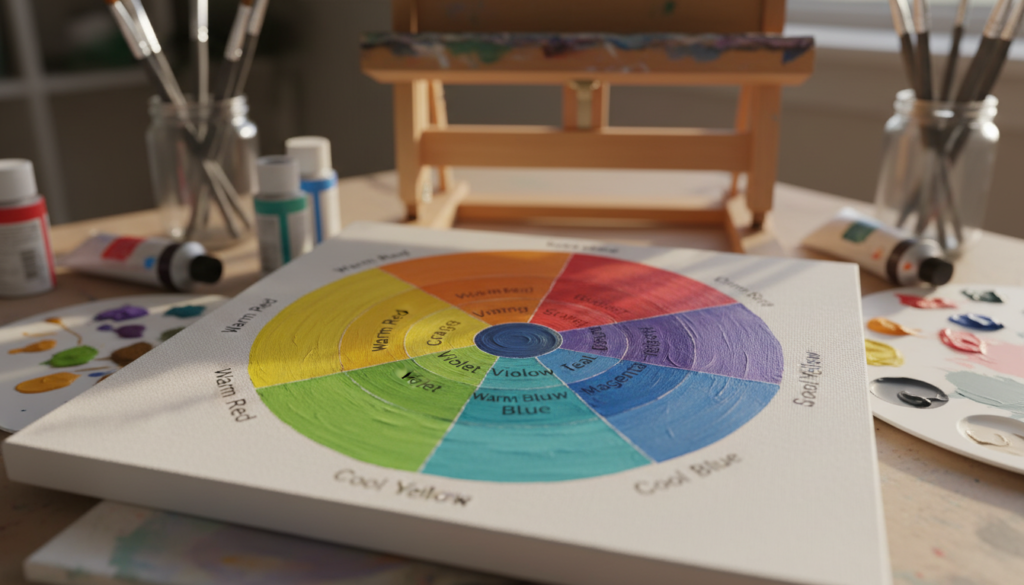
- Cadmium Red leans toward orange (Warm).
- Alizarin Crimson leans toward purple (Cool).
If you mix Cadmium Red (Orange-bias) with Ultramarine Blue (Purple-bias), the orange and purple clash, creating a dull maroon.
The Solution: Use a Split-Primary Palette. Have a warm and cool version of each primary. This gives you six starting colors and allows for clean, high-chroma mixtures.
Saturation & Chroma
Novices darken colors with black. Masters darken colors with complements.
If your red is too bright, add a tiny touch of green. This lowers the Chroma (intensity) without killing the color’s “soul.” Mixing with black often just makes the color look dirty. For a deep dive, check out our color mixing primer.
Value Hierarchy
There is an old saying: “Color gets all the credit, but Value does all the work.” You can paint a masterpiece with “wrong” colors as long as your lights and darks (values) are correct. If your painting looks flat, don’t buy more colors—check your contrast.
Troubleshooting: Why Your Colors Look Muddy
“Mud” is the most common complaint we see on forums like Reddit’s r/oilpainting. Mud isn’t a specific color; it’s a lack of intention.
Common Pitfalls
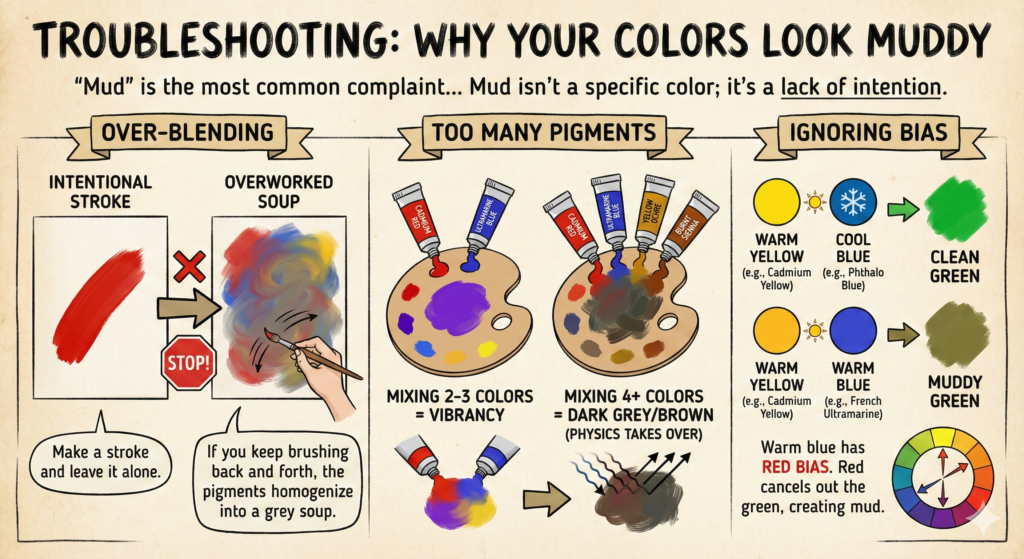
- Over-blending: If you keep brushing back and forth, the pigments homogenize into a grey soup. Make a stroke and leave it alone.
- Too Many Pigments: If you mix 4 or more tube colors together, physics takes over. Each pigment absorbs different light spectrums. Eventually, you absorb all the light, resulting in dark grey/brown.
- Ignoring Bias: Mixing a warm yellow with a warm blue makes a muddy green because the red bias in the warm blue cancels out the green.
The ‘Fat Over Lean’ Rule
In oil painting, “Lean” paint has more thinner (Mineral Spirits) and less oil. “Fat” paint has more oil.
- Start Lean: Thin washes.
- Finish Fat: Thick, oily strokes.
If you paint lean (fast-drying) over fat (slow-drying), the top layer will crack. This also affects gloss. If your painting looks patchy (some spots shiny, some dull), it’s called “sinking in.” This happens when the bottom layer sucks the oil out of the top layer. Oiling out or varnishing can fix this. For help with fixing these issues, see our guide on fixing painting mistakes.
Recommended Palettes (Data-Backed)
You don’t need 50 tubes of paint. Based on sales data and professional recommendations, here are three distinct arsenals.
The ‘Essential’ Beginner Palette
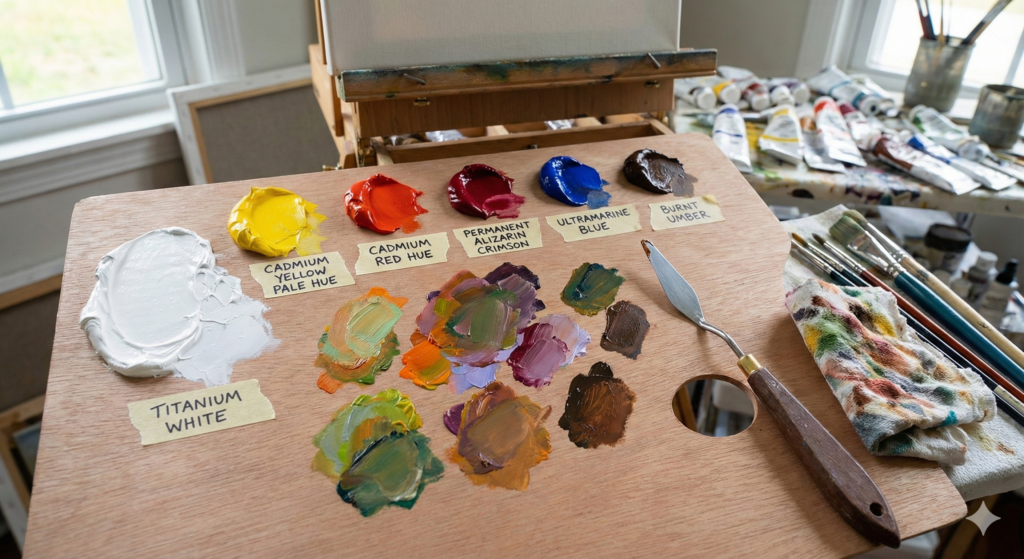
This setup allows you to mix 90% of the visible spectrum while keeping costs low.
- Titanium White (Large tube)
- Cadmium Yellow Pale Hue (Cool Yellow)
- Cadmium Red Hue (Warm Red)
- Permanent Alizarin Crimson (Cool Red)
- Ultramarine Blue (Warm Blue)
- Burnt Umber (For darkening and quick drying)
The ‘Old Masters’ Palette (Zorn Palette)
Used by Anders Zorn and many classical painters. It is incredibly harmonious because the gamut is limited.
- Yellow Ochre
- Vermilion (or Cadmium Red Light)
- Ivory Black (Acts as a cool blue when mixed with white)
- Titanium/Lead White
Note: This palette produces stunning skin tones and atmospheric effects.

The ‘Modern Vibrant’ Palette (CMY)
Based on printer ink theory (Cyan, Magenta, Yellow). This creates the brightest secondary colors.
- Phthalo Blue (Cyan)
- Quinacridone Magenta
- Hansa Yellow Light
- Titanium White
When you are ready to expand, you might explore limited palette painting to refine your skills further.
Final thoughts
Last month, I painted a simple vase of flowers using everything I’ve shared here. I chose an analogous scheme of yellows, oranges, and reds for the blooms. Used complementary blue-green for the background to make those warm flowers pop. Paid attention to value structure and color temperature. Mixed my own neutrals from complementaries.
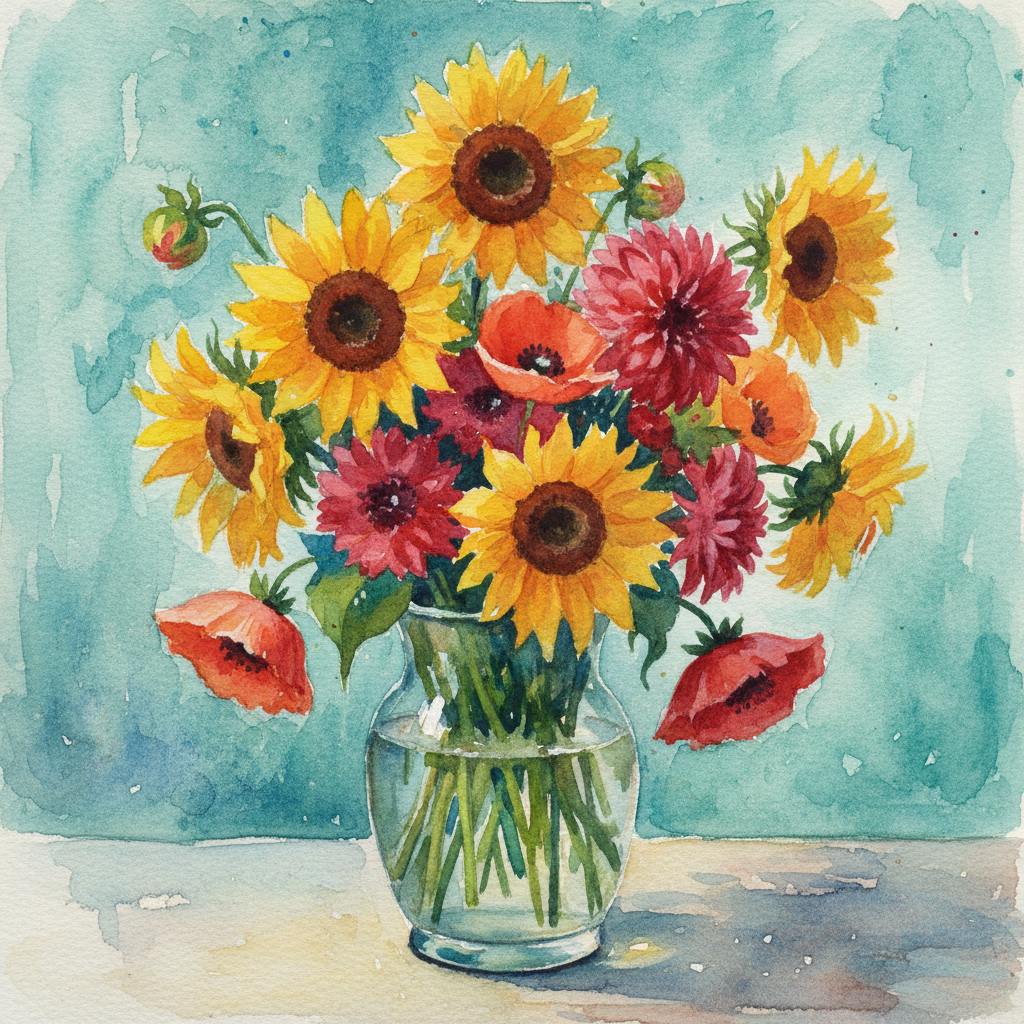
The painting wasn’t perfect – none of mine are – but it felt complete, harmonious, intentional. That’s what understanding colors in painting does. It doesn’t make you paint like Monet or Vermeer. It gives you the tools to make deliberate, effective choices that serve your vision. And that’s really what it’s all about—using color knowledge not to follow rules, but to break them confidently when you need to.
Start with one thing. Maybe it’s organizing your palette by color wheel position. Maybe it’s mixing just one perfect purple. Small steps, practical application, and patient observation. The colors will teach you the rest.
FAQs:
Q: Why does my oil painting look muddy?
A: Muddy paintings usually result from over-mixing on the canvas or combining too many colors at once. It can also happen if you mix a warm color with a cool color without realizing they are complementary. Try using a split-primary palette to keep mixtures clean.
Q: What is the difference between Series 1 and Series 4 paint?
A: The “Series” refers to the cost of the raw pigment. Series 1 paints use common earth pigments (like iron oxide) that are cheap to mine. Series 4 paints use expensive metals (like Cadmium or Cobalt) that are rare and costly to process. Series 4 is not necessarily “better” quality; it is just more expensive to manufacture.
Q: What are the best oil paint colors for beginners in 2025?
A: A split-primary palette is best. We recommend Titanium White, Ultramarine Blue, Cadmium Red (Hue), Alizarin Crimson, Cadmium Yellow (Hue), and Lemon Yellow. This covers almost all mixing needs.
Q: How do I read paint tube labels for ASTM ratings?
A: Look for the code “ASTM” followed by a Roman numeral on the back of the tube. ASTM I means excellent lightfastness (archival). ASTM II is very good. Avoid ASTM III for professional work as it may fade.
Q: Is student grade paint good for professionals?
A: Student grade paint is acceptable for underpainting or sketching, but it contains fillers that reduce color strength. For techniques like glazing or high-chroma work, professional grade is significantly better. However, buying student grade Earth tones (Series 1) is a common way to save money without losing much quality.