There is something undeniably magical about staring at a black canvas. While a white canvas feels like an empty room waiting to be filled, a black canvas feels like the night sky waiting for a star. If you are looking for Black Canvas Painting Ideas for Beginners, you have arrived at the definitive resource.
Painting on a dark background flips the traditional rules of art upside down. Instead of painting shadows, you are painting light. This shift in perspective allows for high-contrast, dramatic, and glowing effects that are almost impossible to achieve on standard white surfaces. Whether you want to paint a vibrant galaxy, a neon cityscape, or a mystical animal portrait, the black background does half the work for you.
In this guide, we will explore over 60 painting ideas, dive deep into the science of opaque pigments, and teach you how to avoid the dreaded “milky varnish” mistake that ruins dark art.
Key Takeaways:
- Contrast is King: Learn why neon and metallic paints are your best friends.
- The Opacity Rule: Why some expensive paints disappear on black canvas (and how to fix it).
- Technique Mastery: How to use “White Underpainting” to make colors pop.
- Budget Hacks: A cost breakdown of buying pre-primed canvas vs. DIY black gesso.
Why Paint on a Black Canvas?
Switching from white to black isn’t just a stylistic choice; it changes your entire workflow. Many beginners find it less intimidating because the “empty white void” is already filled with a rich, dark tone.
The Power of Negative Space
On a white canvas, you usually have to paint 100% of the surface to finish a piece. On a black canvas, the background is the painting. By leaving areas of the canvas untouched, you utilize negative space to create shadows and depth instantly. This is particularly useful for beginners who struggle with mixing dark, muddy colors.
Instant Contrast and Drama
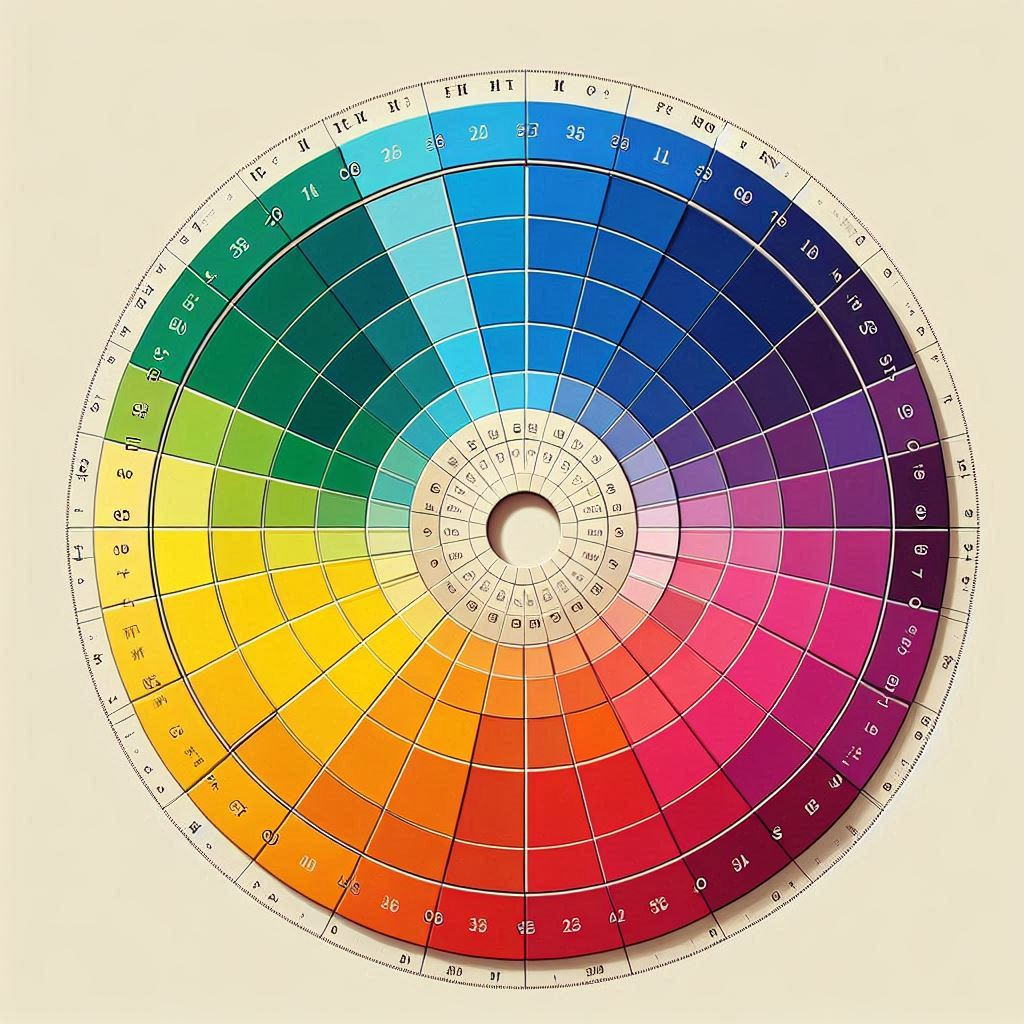
Black naturally makes adjacent colors look brighter. This is an optical illusion known as simultaneous contrast. A dab of Titanium White on a black canvas looks like a beaming light, whereas the same white on a pale blue background looks flat. If you love chiaroscuro (strong contrasts between light and dark), black canvas is your shortcut to achieving it.
Saving Time on Backgrounds (Nightscapes & Space)
If you want to paint a starry night like Van Gogh or a deep space nebula, starting with a white canvas means wasting tubes of black and blue paint just to cover the background. Starting black saves you paint, time, and drying capability.
Essential Supplies for Dark Art
Not all art supplies play nicely with dark backgrounds. That expensive tube of transparent yellow? It will vanish into the black void. Here is what you actually need.
Choosing the Right Canvas: Pre-Primed vs. DIY Black Gesso
You have two choices: buy a canvas that is already black, or paint a white one yourself.
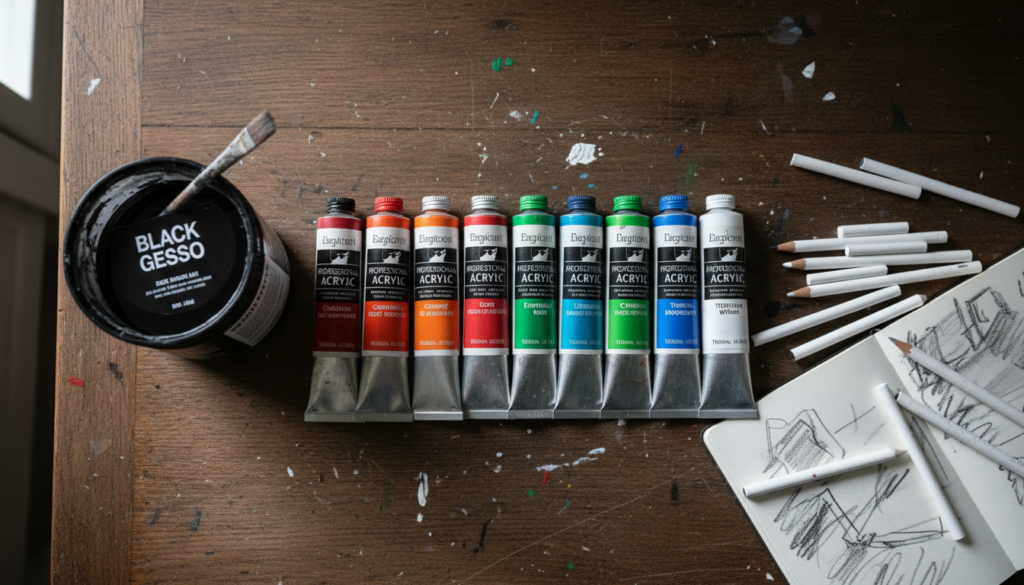
- Pre-Primed: Convenient but more expensive. The texture is usually smoother.
- DIY with Black Gesso: Cheaper and allows for texture control. Liquitex Black Gesso is a favorite among pros. It dries to a matte, “toothy” finish that grabs paint better than standard acrylic paint.
The Best Paints for Black Canvas (Opacity Matters)
The biggest frustration for beginners is painting a color and seeing it disappear as it dries. This happens because of pigment opacity.
Opaque vs. Transparent Pigments
To make your art pop, you need opaque colors or a specific technique to boost transparent ones.
Acrylic Paint Opacity Ratings
| Color | Opacity Rating | Note for Black Canvas |
|---|---|---|
| Titanium White | Opaque | Essential. The base layer for everything. |
| Cadmium Red | Opaque | Pops brilliantly on black without mixing. |
| Ultramarine Blue | Transparent | Will disappear; mix with white or use over white base. |
| Hansa Yellow | Semi-Transparent | Looks greenish/muddy on black unless underpainted. |
| Mars Black | Opaque | Best for covering mistakes (high coverage). |
| Carbon/Lamp Black | Semi-Opaque | Best for mixing nuances; has less covering power. |
Neon, Metallic, and Interference Paints
- Neon (Fluorescent): These are usually transparent. To make them glow, paint a silhouette in Titanium White first, let it dry, and glaze the neon over it.
- Metallics: Gold, silver, and copper look stunning on black because the dark background absorbs light, letting the metallic flakes reflect it.
- Interference Paints: These appear clear but shimmer with color (like a beetle’s wing) when light hits them. They are designed specifically for dark backgrounds.
Must-Have Tools
- White Transfer Paper (Saral Paper): Graphite transfer paper works on white canvas, but you won’t see grey lines on black. You need wax-free white transfer paper.
- White Charcoal Pencils: Perfect for sketching your design. Unlike graphite, white charcoal stands out and can be wiped away with a damp cloth.
- Posca Pens: These acrylic paint markers are fantastic for crisp lines and mandala art.
Critical Techniques for Beginners
Before we get to the ideas, you must master three techniques. Without these, your painting might look flat or muddy.
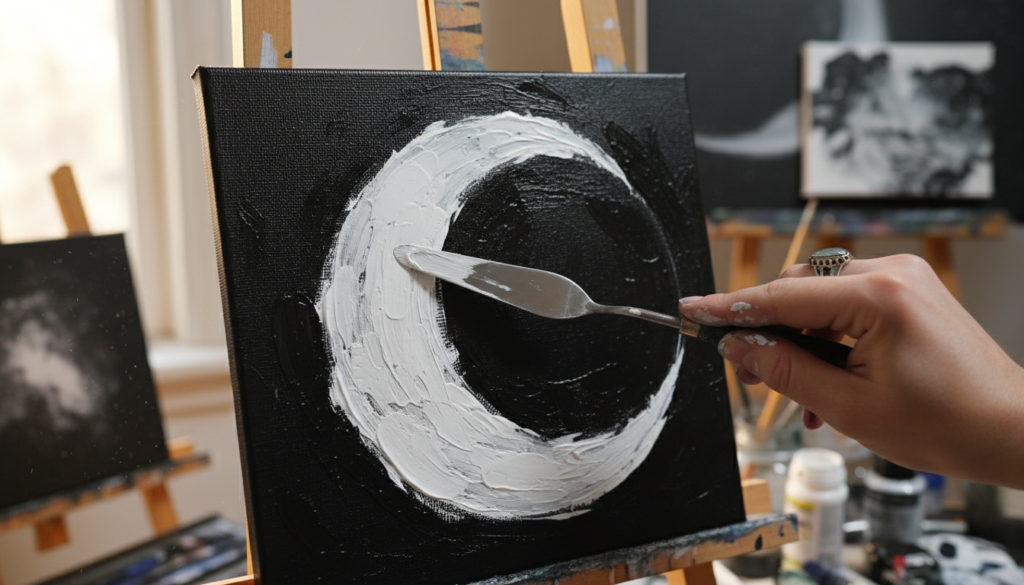
The “White Underpainting” Base Layer Rule
If you want a bright yellow lemon on a black canvas, you cannot just paint yellow. The black showing through will turn the yellow into a sickly olive green.
- Paint the shape in solid Titanium White.
- Let it dry completely.
- Paint your color (yellow, pink, bright blue) on top of the white.
This creates a “backlight” effect, making the colors vibrate.
Double-Loading Your Brush
For organic shapes like flowers or flames, dip one corner of your flat brush in white and the other in a color (e.g., red). When you make a stroke, the paints mix on the canvas, creating a natural gradient from bright (opaque) to dark (transparent).
Glazing: Creating Glowing Effects
To paint a neon sign or a firefly:
- Paint the center source of light pure white.
- Mix your color with a little Glazing Medium (or water, sparingly).
- Paint a transparent ring around the white center. The black canvas showing through the transparent paint creates a “fading glow” effect.
Splattering: Stars and Texture
Use an old toothbrush or a stiff hog bristle brush. Dip it in watered-down white paint (consistency of milk) and flick the bristles. This creates thousands of tiny stars instantly.
- Tip: Cover the parts of your painting you don’t want splattered with paper.
60+ Black Canvas Painting Ideas
Ready to paint? Here are categories of ideas optimized for dark backgrounds, ranging from easy acrylic ideas to intermediate challenges.
Nature & Landscapes
Nature transforms at night. These ideas focus on light sources within darkness.
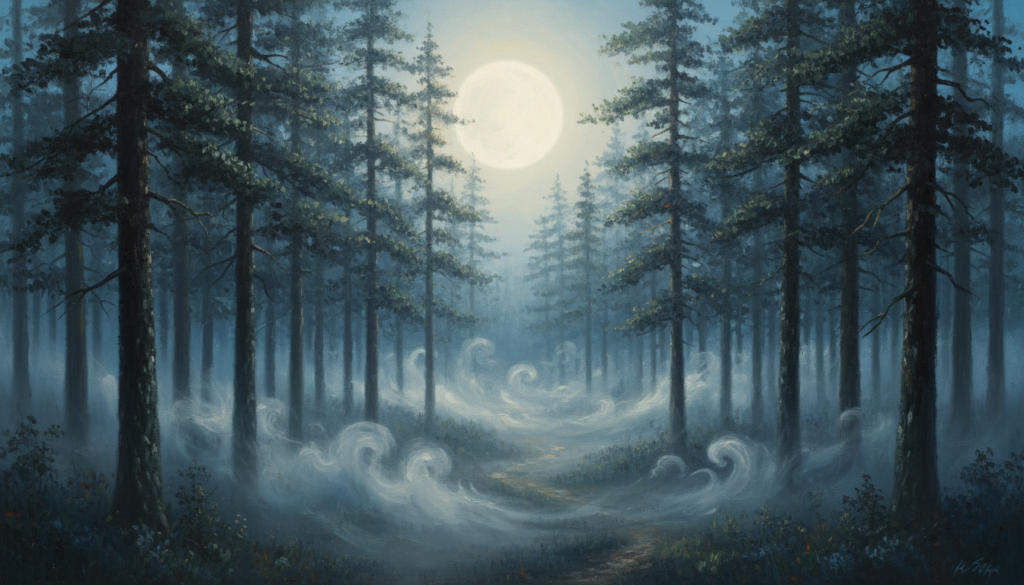
- Misty Moonlit Forest: Use a sponge to dab grey and white mist at the bottom of the canvas. Paint sharp black triangular pine trees on top.
- Fireflies in a Jar: A classic beginner project. Focus on the glow effect using the glazing technique mentioned above.
- The Northern Lights (Aurora Borealis): Swipe neon greens, teals, and purples across the sky using a dry brush technique to mimic the shifting lights.
- Silhouette Sunsets: Paint a vibrant gradient sunset (red, orange, yellow) in the middle of the canvas, but leave the edges black. Paint silhouette palm trees or a city skyline in the foreground.
- Lightning Storm: Sharp, jagged lines of white against a purple/black bruised sky.
Space & Celestial
Space is the most natural subject for black canvas.
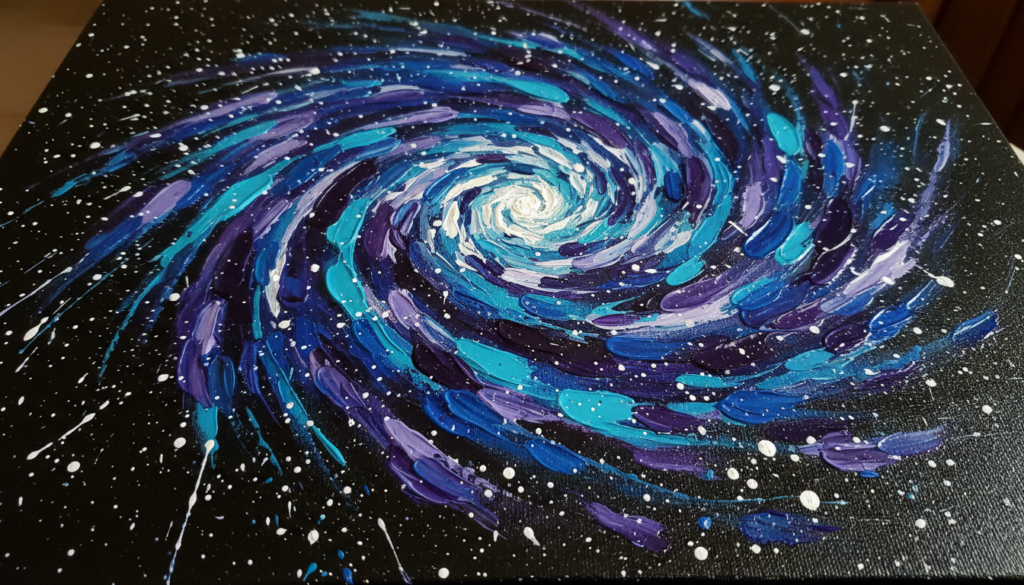
- Galaxy Spirals: Use sponges to dab magenta, violet, and blue in a spiral shape. Splatter white stars on top.
- Realistic Full Moon: Use a round sponge loaded with white and grey to stamp a moon. Use a small brush to add crater details.
- Astronaut Floating: A lone white astronaut tethered to a ship, surrounded by the vast black void.
- Zodiac Constellations: Very easy. Just paint the stars of your zodiac sign and connect them with thin white lines.
- Eclipse: A black circle with a glowing “diamond ring” of light bursting from one edge.
Abstract & Geometric
If you enjoy geometric art, the contrast of black canvas makes lines look razor-sharp.
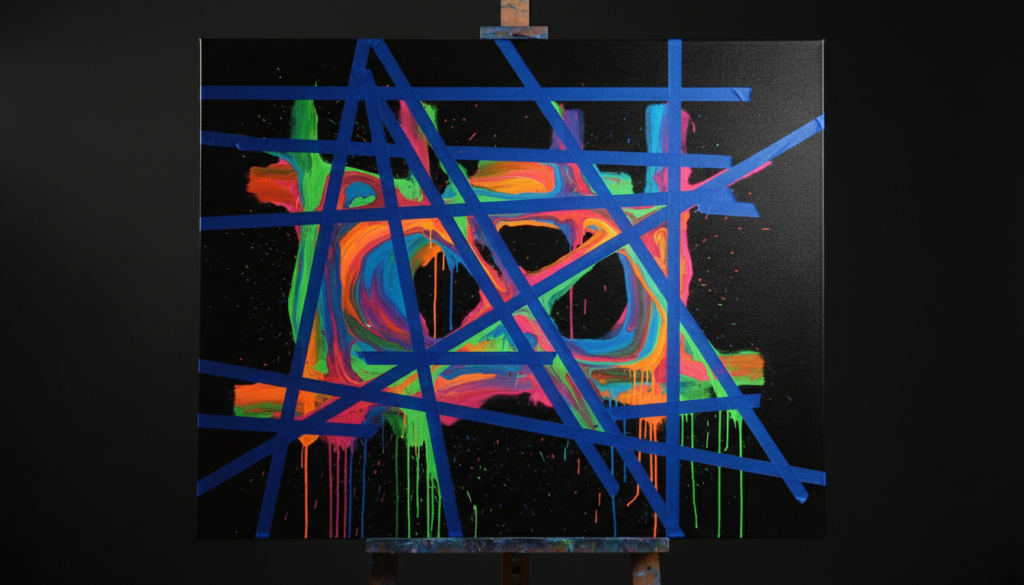
- Neon Geometric Tape Art: Apply masking tape in random geometric patterns. Paint the spaces with neon acrylics. Peel the tape to reveal crisp black lines.
- Gold Leaf on Black: Apply adhesive size in a brushstroke pattern and lay down gold leaf. The gold/black contrast is synonymous with luxury and Art Deco styles.
- Mandala Dot Art: Use dotting tools to create intricate circular patterns. Gradient colors (white to blue to dark blue) look mesmerizing.
- Fluid Art (Pour Painting): Use black as your “pillow paint” (base) and pour metallics or neons into it for a “cells in space” look.
Wildlife & Animals
Animals with reflective eyes or bioluminescence are perfect subjects.
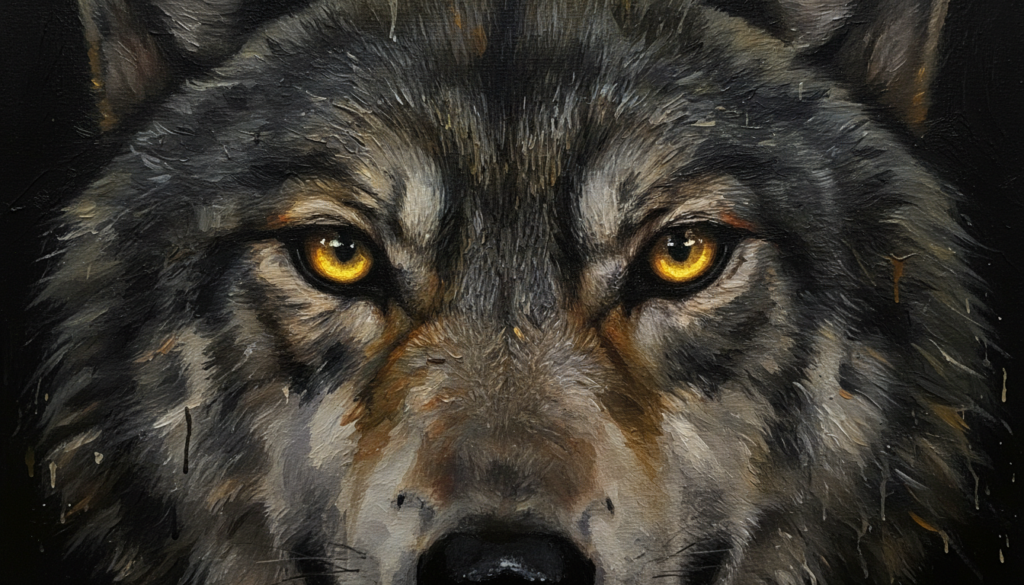
- Cat Eyes in the Dark: Paint two glowing yellow or green almond shapes. Use fur strokes to hint at the face without painting the whole cat.
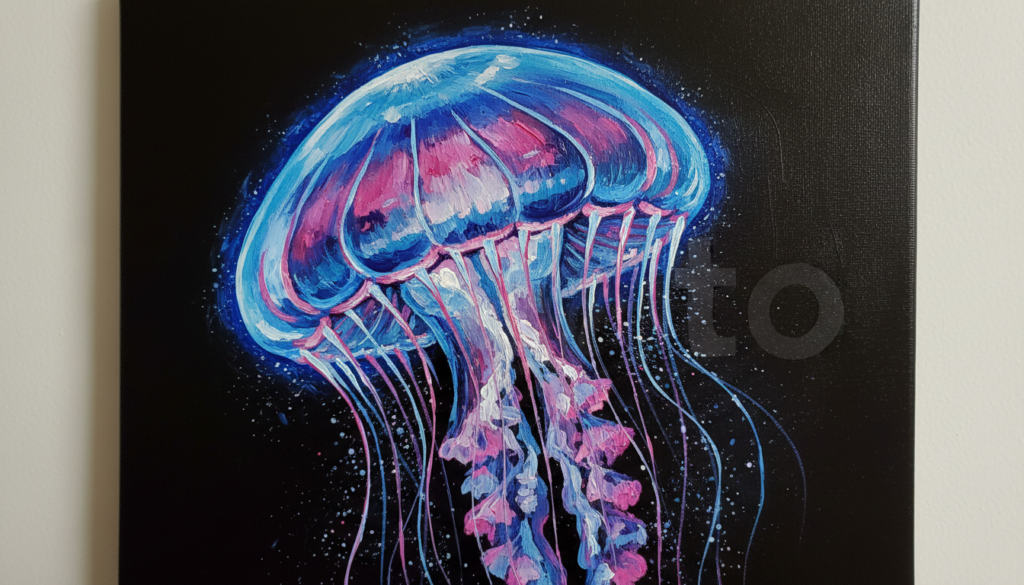
- Bioluminescent Jellyfish: Use translucent blues and pinks with long, flowing tendrils.
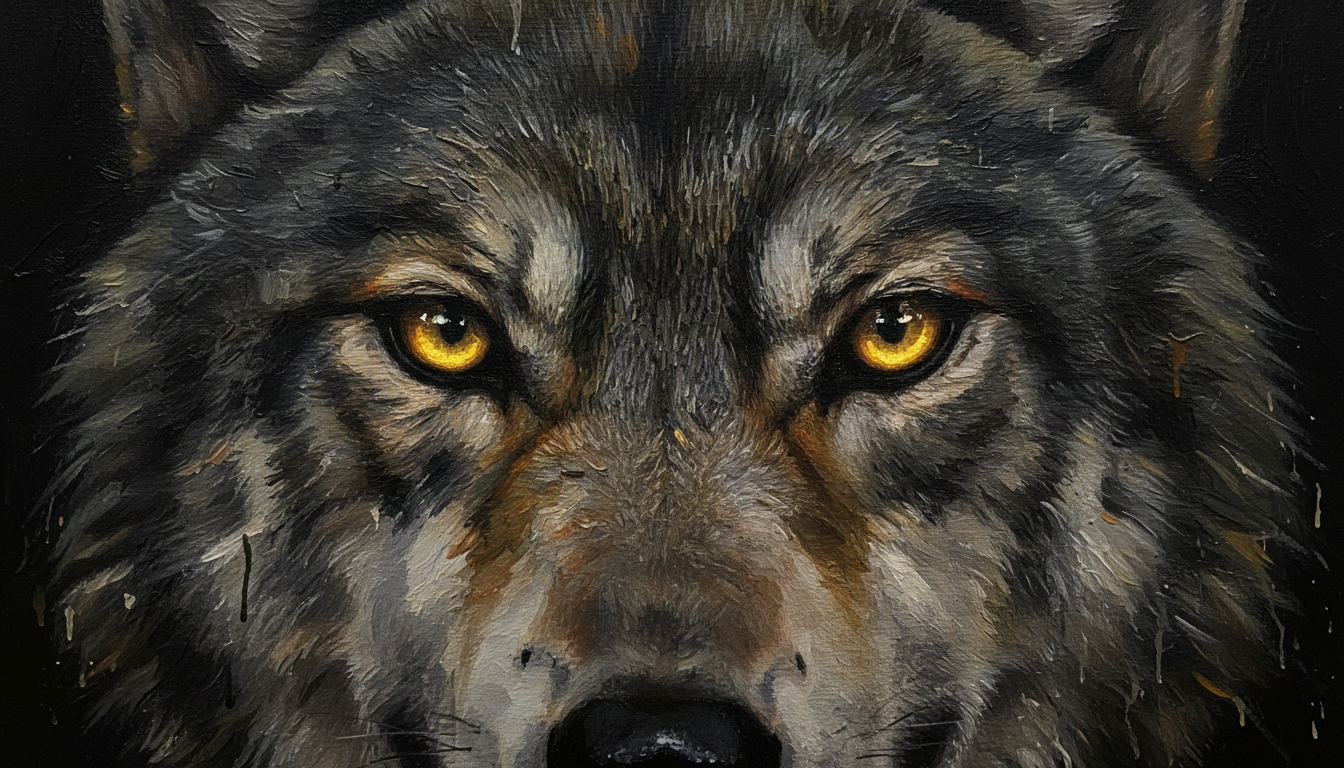
- Neon Wolf Portrait: Paint a wolf using non-realistic, neon colors (pop-art style) against the black background.
- Raven on a Skull: Use “Mars Black” mixed with blue to paint the raven, so it stands out against the “Carbon Black” background.
Still Life & Objects
- Burning Candle: A study in warm light. The flame should be the brightest point, fading into orange, red, and then nothing.
- Neon Sign Typography: Paint a word (e.g., “OPEN,” “LOVE”) in white, then glaze over it with red or pink to simulate a neon tube.
- Metallic Flowers: Paint roses using copper or silver paint.
Common Problems & How to Fix Them
Painting on black isn’t without its headaches. Here are the top three issues beginners face and how to solve them.
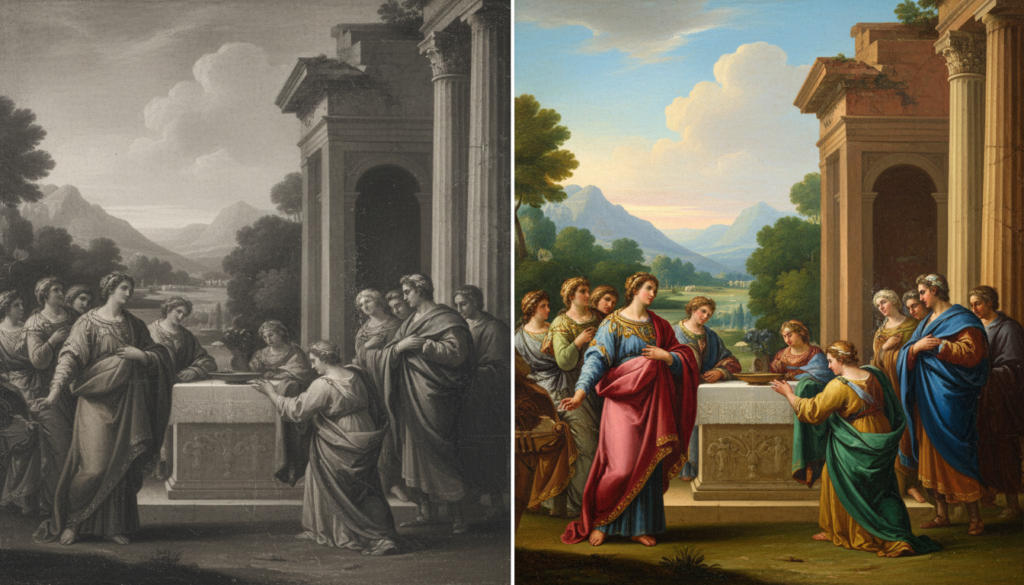
“My Colors Look Dull and Transparent”
The Fix: You skipped the underpainting! If you don’t want to paint everything white first, mix a tiny dot of Titanium White into your colored paint. This turns the paint into a “pastel” version, which is much more opaque. Once that dries, you can paint the pure color on top.
“I Can’t See My Pencil Lines”
The Fix: Stop using graphite pencils. As mentioned in the supplies section, use a white charcoal pencil.
- DIY Hack: If you don’t have white transfer paper, rub the back of your printed reference photo with white chalk. Tape it to the canvas and trace. The chalk will transfer onto the black surface.
“My Varnish Looked Cloudy/Foggy”
This is a specific chemical issue often called “Varnish Fogging.” It is heartbreaking to finish a masterpiece and ruin it with a milky finish.
- Why it happens: Matte varnishes contain matting agents (silica) that look white if applied too thickly or over dark colors. High humidity can also trap moisture.
- The Fix:
- Gloss First: Always apply a coat of “Gloss Varnish” or an “Isolation Coat” first. It dries clear.
- Matte Second: If you want a matte finish, apply a thin layer of matte varnish over the gloss. The gloss layer separates the matting agents from the dark pigments, reducing the fogging effect.
Technical Dive: Black Pigments Explained
Not all black paints are created equal. Understanding the chemistry helps you make better art.
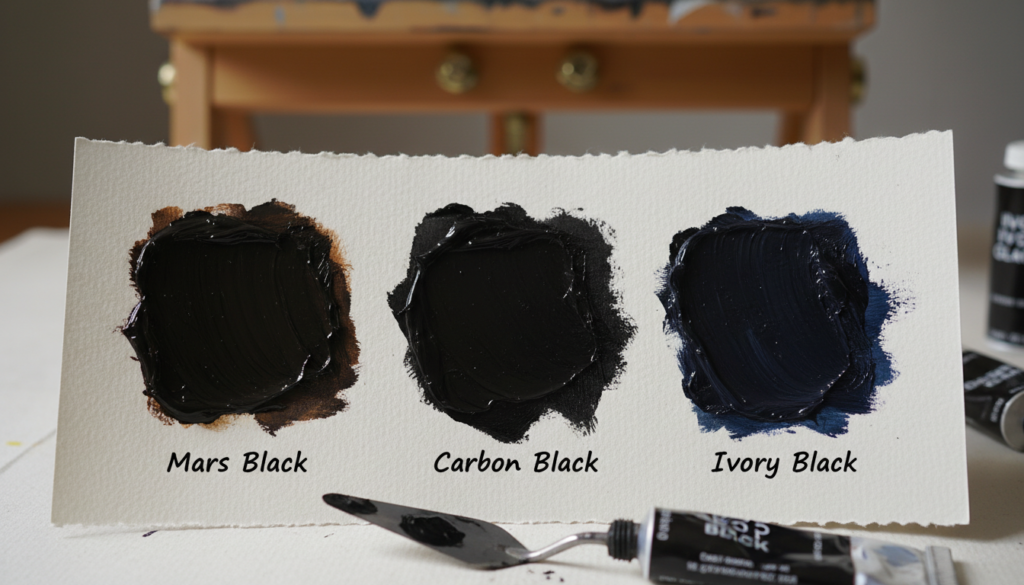
Mars Black vs. Ivory Black vs. Carbon Black
- Mars Black (PBk11): Made from Synthetic Iron Oxide. It is warm, brownish, and Opaque. It dries matte. Use this for blocking out shapes or covering mistakes.
- Carbon Black (PBk7): Made from burning gas (soot). It is cool, bluish, and Semi-Opaque. Good for mixing greys.
- Ivory/Bone Black (PBk9): Historically made from charred bones. It is warm, brownish, and Semi-Transparent. It is the darkest black but requires multiple coats to cover anything.
Which Black Dries Fastest?
Mars Black dries the fastest because iron oxide acts as a dryer in oil and acrylic binders. Ivory/Carbon blacks have finer particles and higher oil content, meaning they stay tacky longer. If you are painting a background that needs to dry quickly so you can paint over it, choose Mars Black.
Cost Analysis: Buying Black vs. Painting White Canvases
Is it cheaper to buy pre-made black canvases or make your own? Let’s look at the 2025 market data for a standard 16×20″ canvas.
Price Comparison Table
| Item | Avg. Cost (per unit) | Notes |
|---|---|---|
| Standard White Canvas | $2.60 | Bulk pack pricing. |
| Pre-Primed Black Canvas | $4.00 | ~54% markup over white. |
| DIY Black Gesso (0.6 oz) | $0.87 | Based on 16oz jar at ~$23. |
| Total DIY Cost | $3.47 | Cheaper than Pre-Primed. |
Is Black Gesso Worth It?
While the DIY savings (~$0.50 per canvas) seem small, the real value is in the quality. Pre-primed black canvases often have a slick, plastic-like surface. DIY Black Gesso provides a gritty “tooth” that grips paint significantly better, allowing for smoother layering and richer textures.
Conclusion & Next Steps
Painting on a black canvas is an exercise in seeing the light. By mastering the use of opaque colors, white underpainting, and contrast, you can create artworks that literally shine. Whether you are trying abstract art styles or realistic celestial bodies, the dark background is a forgiving and dramatic partner.
Your Next Steps:
- Buy a jar of Black Gesso (it’s better than black paint).
- Grab some Titanium White and Neon colors.
- Start with a simple “Fireflies” or “Galaxy” painting to practice your glazing and splattering.
Unlock the night. Your canvas is waiting.
FAQ: Black Canvas Painting
Q: How do I make colors pop on a black canvas?
A: The secret is an underlayer of Titanium White. Paint your shape in white first, let it dry, and then paint your color on top. This creates a backlit effect. Alternatively, use opaque colors mixed with a little white.
Q: Can you use graphite paper on black canvas?
A: No, standard grey graphite will not show up. You should use white transfer paper (like Saral paper) or rub white chalk on the back of your reference image to transfer the sketch.
Q: Is black gesso the same as black acrylic paint?
A: No. Black gesso contains chalk/calcium carbonate, giving it a gritty texture (“tooth”) that helps paint stick. Black acrylic paint dries to a smooth, plastic finish which can be slippery to paint over.
Q: How do I seal a black canvas painting without it getting cloudy?
A: Avoid applying thick layers of matte varnish directly on black. Use a “Gloss Varnish” or “Isolation Coat” first. If you prefer a matte look, apply a thin matte varnish over the dried gloss layer.
Q: What are good black canvas painting ideas for couples?
A: “Split” paintings work great. One person paints the left side of a moon/planet, the other paints the right. Or, paint a “City Skyline” where one canvas is the buildings and the other is the reflection in the water.