
Welcome to the vibrant and inspiring world of art and craft supplies! Whether you’re a seasoned artist, a budding hobbyist, or simply looking for ways to express your creativity, the right tools and materials can transform your ideas into tangible masterpieces. From the simple joy of coloring to the intricate challenge of sculpting, having access to a diverse range of supplies is the first step on any creative journey.
Key Points:
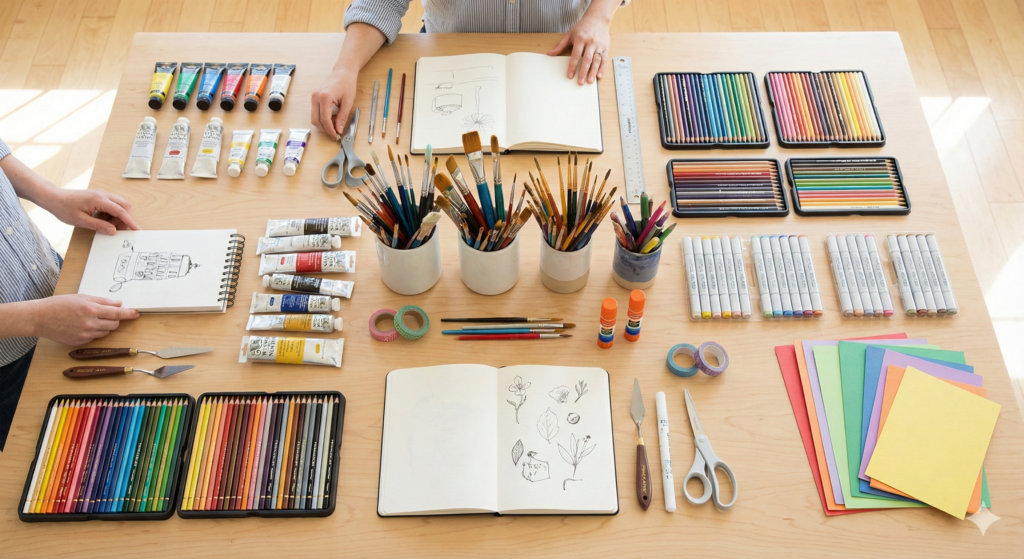
- Essential art and craft supplies vary by medium, skill level, and project type
- Beginners should start with versatile, affordable basics before investing in professional-grade materials
- Understanding different painting mediums (acrylic, watercolor, oil) helps you choose the right supplies
- Proper storage and organization extends the life of your materials
- Eco-friendly and non-toxic options are available for safe, sustainable creating
- Quality matters more than quantity when building your supply collection
This comprehensive guide will navigate you through the vast landscape of art and craft essentials. We’ll explore core categories, highlight must-have items for various skill levels, and even share tips on where to find the best deals and how to make sustainable choices. Get ready to uncover the perfect supplies that will ignite your imagination and help you bring your artistic visions to life.
Understanding the Core Categories of Art Supplies
Art supplies are broadly categorized by the medium and technique they support. Painting, for instance, involves canvases, various types of paints (acrylic, oil, watercolor), and brushes in different shapes and sizes. Drawing focuses on pencils (graphite, colored), charcoal, pastels, sketchbooks, and specialized papers. Each category offers a unique way to express yourself, from the bold strokes of an oil painting to the delicate lines of a charcoal sketch.
When you’re just starting your artistic journey, it helps to understand that different art forms require different tools. Sculpting materials like clay, plaster, and carving tools allow for three-dimensional creation, while printmaking utilizes inks, blocks, and presses to transfer images. Understanding these basic categories helps you narrow down your choices and find the tools best suited for the type of art you wish to create. Don’t be afraid to experiment and combine different mediums to discover new artistic possibilities.
Paint Types and Their Uses
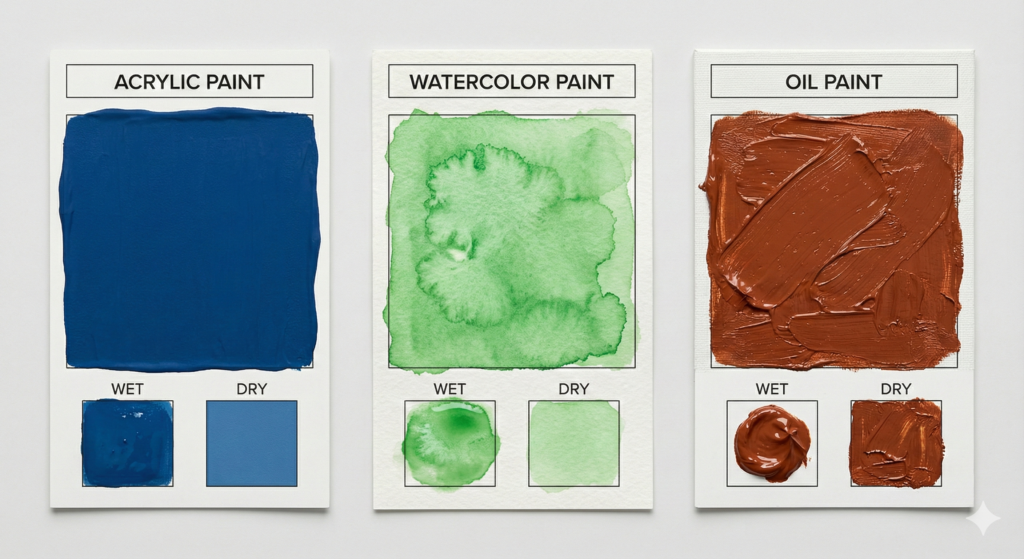
The world of paints offers incredible variety, and choosing the right paint medium can dramatically impact your creative process. Here’s what makes each unique:
Acrylic paints are the Swiss Army knife of the painting world. These water-based paints dry quickly, work on multiple surfaces, and clean up with just soap and water. They’re perfect for beginners because they’re forgiving and versatile. You can use them thick like oils or thin them down for watercolor-like effects. Many professional artists also prefer acrylics for their vibrant colors and fast-drying properties.
Watercolor paints create those beautiful, translucent washes you see in dreamy landscapes and botanical illustrations. They’re portable, relatively inexpensive, and offer a unique challenge in controlling water and pigment. Getting started with watercolors requires patience, but the luminous results are worth it.
Oil paints are the classic choice of the old masters. They have rich, buttery textures and take days or even weeks to dry, which allows for endless blending and reworking. While they require special solvents and proper ventilation, oil paints produce unmatched depth and vibrancy in finished artwork.
Exploring the Diverse World of Craft Materials
Craft supplies extend beyond traditional fine art, encompassing a myriad of materials for decorative, functional, and recreational projects. Paper crafts, such as scrapbooking, card making, and origami, rely on specialty papers, adhesives, stamps, and embellishments. Fabric crafts, including sewing, knitting, crocheting, and embroidery, require yarns, fabrics, needles, threads, and various textile tools. The possibilities in crafting are virtually endless, inviting you to create everything from personalized gifts to home decor.
Other popular craft categories include jewelry making (beads, wires, findings, pliers), model making (kits, glues, paints), and general DIY crafts which often utilize items like glue guns, glitter, pipe cleaners, googly eyes, and foam sheets. The beauty of crafting lies in its accessibility and the sheer variety of materials available, making it a perfect outlet for all ages and skill levels to enjoy hands-on creativity.
Essential Drawing Supplies
Drawing is one of the most accessible art forms, requiring minimal investment to get started. A basic drawing kit should include:
- Graphite pencils in various grades (2H to 6B) for different line weights and shading
- Quality sketchbooks with different paper weights and textures
- Erasers (both kneaded and precision erasers for different techniques)
- Colored pencils for adding vibrant hues to your work
- Charcoal sticks for bold, expressive marks
- Blending stumps to smooth and soften your shading
Drawing supplies are wonderfully portable and perfect for artists who want to create anywhere inspiration strikes. Whether you’re sketching in a coffee shop or working in a dedicated studio, having the right drawing tools makes all the difference.
Recommended Art and Craft Supplies by Skill Level
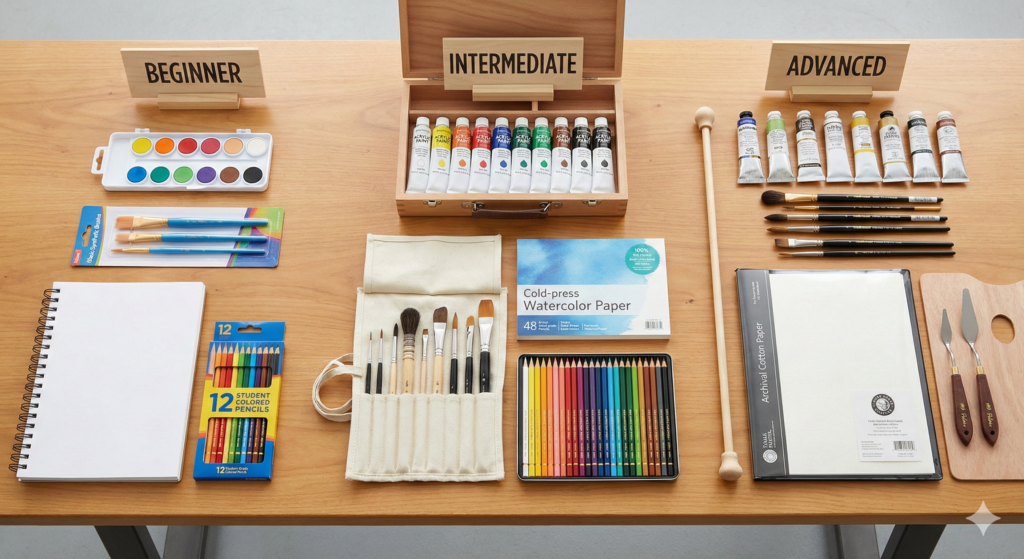
Choosing the right supplies for your skill level ensures you’re not overwhelmed (or underwhelmed) by your materials. Here’s a comprehensive breakdown:
| Skill Level | Recommended Supplies | Key Considerations |
|---|---|---|
| Beginner | Basic acrylic paint set, sketchpad, colored pencils, scissors, glue stick, construction paper, felt, pipe cleaners, polymer clay | Affordability, ease of use, non-toxic options, wide range of basic projects, encourages experimentation without worry |
| Intermediate | Expanded paint sets (watercolors, oils), diverse brush types, higher quality paper/canvas, carving tools, specialized fabric dyes, advanced modeling clay, pastels | Improved quality over quantity, specific project needs, better durability, wider color palettes, more specialized tools for developing techniques |
| Advanced/Professional | Professional grade pigments, archival papers, specialized canvases, airbrush equipment, kilns, intricate sculpting tools, custom-made fabrics, printmaking press | Archival quality, professional results, specific medium requirements, investment in durable and precise tools, specialized techniques for gallery-worthy work |
As you progress in your artistic journey, you’ll naturally want to upgrade your supplies. However, don’t feel pressured to buy everything at once. Start with quality basics and add to your collection as you discover what you truly enjoy creating.
Essential Brushes for Every Artist
Paint brushes are critical tools that can make or break your painting experience. Understanding brush types helps you achieve the effects you want:
Round brushes are the workhorses of any artist’s toolkit. They come to a fine point and work beautifully for detail work, outlining, and creating both thin lines and broader strokes. Sizes typically range from 0 (tiny) to 16 (large).
Flat brushes have square edges and are perfect for bold strokes, filling in large areas, and creating crisp edges. They’re essential for backgrounds and geometric work.
Filbert brushes combine the best of both worlds with their oval, tapered shape. They’re great for blending and creating soft, rounded strokes.
Fan brushes create unique textural effects, perfect for painting foliage, grass, or adding atmospheric details.
When selecting brushes, consider the bristle type:
- Synthetic bristles work excellently with acrylics and watercolors, they’re affordable and easy to clean
- Natural bristles (like hog hair or sable) are traditional choices for oil painting, holding thick paint well
“Quality brushes maintained properly will last for years. Clean them immediately after each use, reshape the bristles, and store them properly to protect your investment.”
Pro Tip
Where to Buy Your Art and Craft Essentials
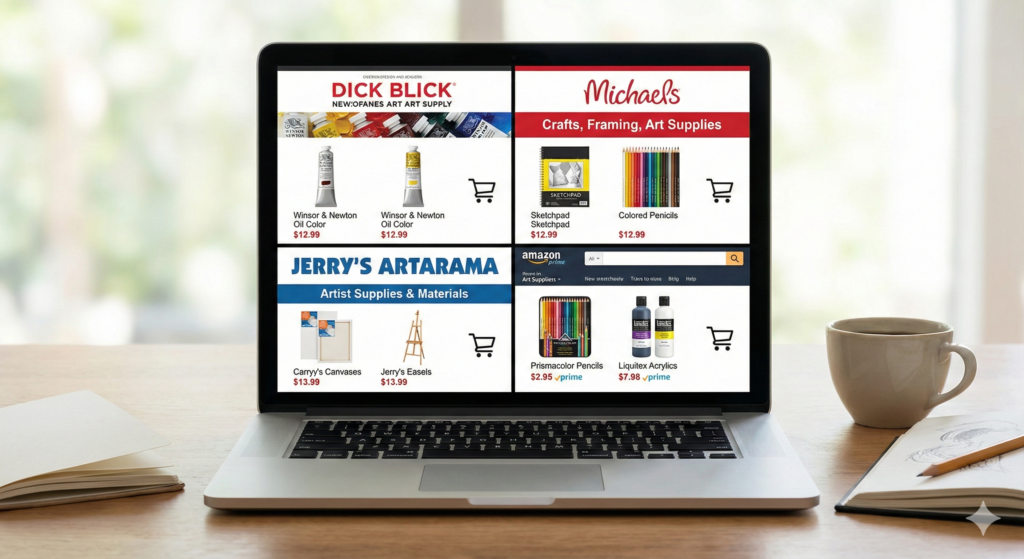
Finding the right place to purchase your art and craft supplies can significantly impact both your budget and the quality of your materials. Large chain retailers often offer a broad selection of general craft items and student-grade art supplies at competitive prices. These are great for stocking up on basics or for beginners exploring different mediums.
Specialty art supply stores, both online and brick-and-mortar, are ideal for professional-grade materials, unique tools, and expert advice. Online marketplaces provide convenience and a vast array of niche items, often with customer reviews that can guide your purchases. Don’t forget to check local independent craft shops; they often carry unique handmade items, support local artisans, and offer personalized service.
Top places to shop for art supplies:
- Dick Blick Art Materials – Comprehensive selection with regular sales
- Michael’s – Great for general crafts and frequent coupons
- Jerry’s Artarama – Professional-grade supplies at competitive prices
- Cheap Joe’s Art Stuff – Excellent for watercolor supplies
- Amazon – Convenient with vast selection and customer reviews
- Local art supply stores – Expert advice and immediate availability
Always compare prices and read reviews before making significant purchases. Sign up for email lists to receive notification of sales and exclusive discounts.
Organizing and Storing Your Creative Materials
Proper organization of your painting tools and craft supplies extends their lifespan and makes your creative time more enjoyable. Here’s how to keep everything tidy:
For paints: Store tubes upright in clear containers or organizers, grouped by color family or medium type. This prevents caps from drying shut and makes it easy to find what you need. Keep paints away from extreme temperatures and direct sunlight.
For brushes: Always store brushes with bristles pointing up after they’re completely dry. Use mason jars, brush rolls, or specialized holders. Never store brushes bristle-down, as this will ruin their shape.
For paper and canvas: Store flat in a dry location to prevent warping. Use portfolio cases for finished work and loose sheets. Keep different paper types separated to avoid transfer of texture or oils.
For small craft items: Clear plastic organizers with compartments work wonders for beads, buttons, embellishments, and small tools. Label everything clearly so you can find items quickly when inspiration strikes.
Regular maintenance is key. Set aside time weekly to clean tools, tidy workspaces, and take inventory of what needs replenishing. This habit prevents the frustration of starting a project only to discover you’re missing a crucial supply.
Tips for Choosing Eco-Friendly and Safe Supplies
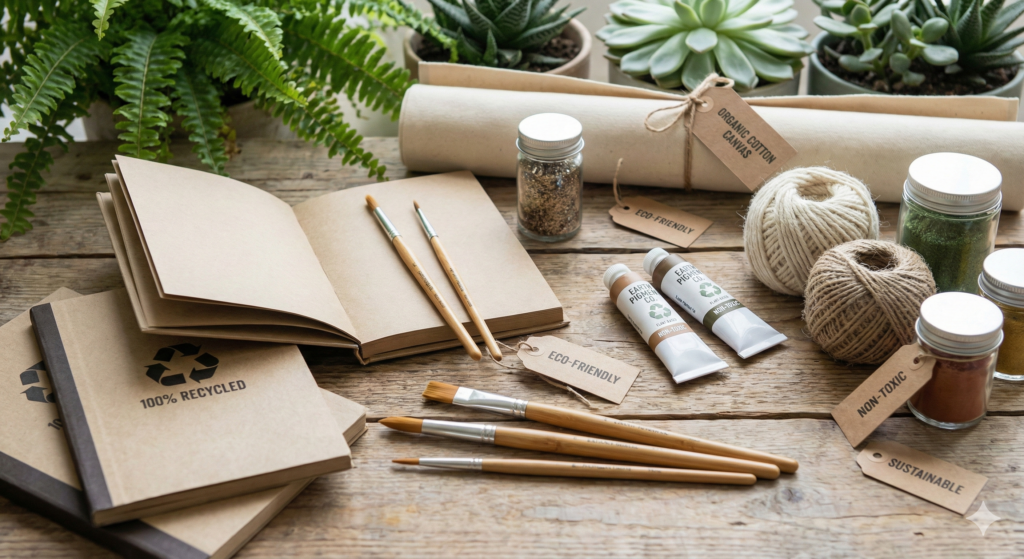
As we become more aware of our environmental impact, choosing eco-friendly art and craft supplies is becoming increasingly important. Look for products made from recycled materials, sustainable resources (like bamboo brushes or organic cotton fabrics), or those that are biodegradable. Many brands now offer non-toxic paints, glues, and markers, which are safer for both artists and the environment, especially when working with children.
Prioritizing supplies that are non-toxic and have low VOCs (Volatile Organic Compounds) ensures a healthier creative space. Look for certifications like:
- AP (Approved Product) Seal from the Art & Creative Materials Institute
- Non-Toxic labels from recognized safety organizations
- Eco-friendly certifications for sustainable manufacturing
Additionally, consider the packaging of the products you buy. Opt for items with minimal or recyclable packaging. Reusing and repurposing existing materials for your crafts is another excellent way to be more sustainable and can even spark new creative ideas. Old magazines become collage materials, glass jars transform into brush holders, and cardboard boxes can be sculpting surfaces. By making conscious choices, you can enjoy your artistic pursuits while also contributing to a healthier planet.
Budget-Friendly Ways to Build Your Collection
You don’t need to break the bank to start creating amazing art. Here are smart strategies for building your supply collection affordably:
Start with multi-purpose items. Acrylic paint works on canvas, paper, wood, and fabric. A versatile set of brushes serves multiple mediums. Focus on quality basics rather than buying everything at once.
Buy student-grade initially. Student-grade materials are formulated for practice and learning. They’re significantly cheaper than professional grades while still delivering good results. Upgrade to professional materials as you develop specific preferences.
Shop sales and clearance. Sign up for email lists from major retailers. They regularly offer 40-60% off coupons. Black Friday, back-to-school season, and January clearances offer excellent savings opportunities.
Try alternative brands. Store brands and lesser-known manufacturers often produce quality materials at fraction of premium brand prices. Read reviews and buy small quantities first to test.
Join art communities. Local art groups often organize supply swaps, share discount codes, and pool orders for bulk discounts. Online forums like Reddit’s ArtistLounge share money-saving tips regularly.
Create a supply wishlist. When friends and family ask for gift ideas, direct them to specific supplies you need. This helps you receive useful items while staying within budget.
Building Your Creative Workspace
Having a dedicated space for your art and craft projects, even if it’s just a corner of a room, makes creating more inviting and productive. Your workspace doesn’t need to be large or elaborate, but it should be functional and inspire creativity.
Essential workspace elements:
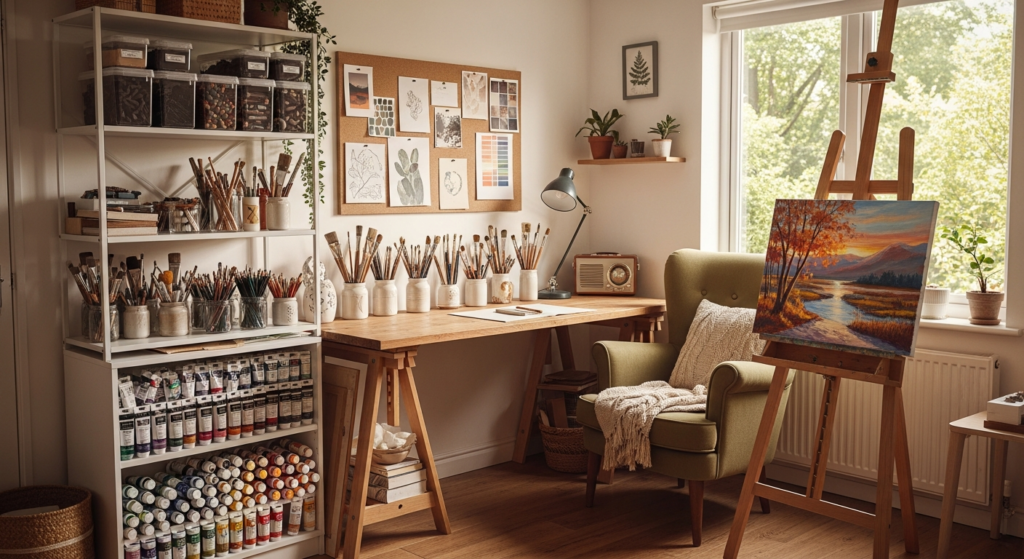
- Good lighting (natural light plus task lighting for evening work)
- Comfortable seating appropriate for your medium
- Easy-to-clean surfaces (consider plastic tablecloths for messy projects)
- Storage within arm’s reach for frequently-used supplies
- Ventilation for paints and adhesives
- Inspiration board or wall space for reference images
Mastering various painting techniques becomes easier when your workspace supports your creative flow. Organize supplies logically so you spend less time searching and more time creating.
Art and Craft Supplies for Different Age Groups
For Young Children (Ages 3-7): Safety is paramount. Choose washable, non-toxic markers, crayons, and paints. Large, chunky brushes are easier for small hands to grip. Tear-resistant paper and safety scissors prevent frustration. Focus on supplies that encourage exploration without worry about mess or mistakes.
For Kids and Tweens (Ages 8-12): This age group can handle more complex projects. Introduce different mediums like watercolors, colored pencils, and simple sculpting clay. Craft kits for specific projects (friendship bracelets, simple sewing, model building) help develop skills while maintaining interest.
For Teens: Teenagers often gravitate toward specific interests. Support their developing style with quality materials in their chosen medium. Abstract painting ideas or contemporary techniques often appeal to this age group. Invest in better-quality supplies as their skills develop.
For Adults: Adults appreciate quality materials that deliver professional results. Consider comprehensive art mediums guides to explore new creative directions. Don’t be afraid to invest in supplies that inspire you to create regularly.
Finding Inspiration for Your Next Project
Sometimes the hardest part of creating isn’t having supplies—it’s knowing what to make. Here are excellent resources for project inspiration:
Pinterest remains the visual discovery powerhouse. Search for painting ideas on Pinterest to find endless tutorials, color combinations, and step-by-step projects organized by skill level.
YouTube tutorials offer free, detailed instructions for virtually any technique. You can pause, rewind, and watch demonstrations as many times as needed.
Art prompt generators help overcome creative block by providing specific challenges or subjects to explore. These work especially well when you have supplies but lack direction.
Nature and everyday life provide constant inspiration. Keep a sketchbook handy to capture interesting shapes, colors, and compositions you encounter.
Art communities and social media connect you with other creators. Instagram, TikTok, and Reddit’s art communities showcase diverse styles and techniques while building supportive networks.

BUY your Arts and Crafts here
Frequently Asked Questions About Art and Craft Supplies
What are the most essential art supplies for beginners?
For beginners, essential art supplies include a basic set of acrylic paints (they’re the most versatile), a sketchpad, graphite pencils in various grades (2H to 6B), colored pencils, an eraser, and basic brushes in different sizes. For crafts, add scissors, craft glue, construction paper, and simple embellishments like felt or pipe cleaners. This foundation lets you explore multiple techniques without overwhelming investment.
How do I store my art and craft supplies properly?
Proper storage significantly extends the life of your materials. Keep paint tubes upright in airtight containers, store brushes clean and upright with bristles pointing up, and keep paper flat to prevent warping. Use clear bins or drawer organizers to keep items categorized and easily accessible. Protect delicate materials from dust, moisture, and direct sunlight, which can fade colors over time.
What’s the difference between artist-grade and student-grade supplies?
Artist-grade (professional) supplies contain higher pigment concentrations, superior binders, and offer better lightfastness and permanence. They produce more vibrant, durable artwork but cost significantly more. Student-grade supplies are formulated with less pigment and are designed for practice and learning, making them budget-friendly for beginners. As your skills develop, gradually upgrade to professional materials in your favorite mediums.
Can I use craft supplies for fine art projects?
While craft supplies are primarily designed for decorative or recreational use, many can enhance fine art projects, especially in mixed media work. They add interesting textures, unexpected elements, and experimental possibilities. However, for archival quality or gallery-worthy pieces, use art-specific materials known for permanence and stability. Craft supplies work wonderfully for practice, experimentation, and non-archival creative projects.
Where can I find free art and craft project ideas?
Numerous free resources exist online: YouTube offers countless tutorials, Pinterest provides visual inspiration with step-by-step guides, and websites like The Spruce Crafts and Martha Stewart Living share detailed projects. Your local library has extensive craft and art instruction books. Many art supply retailers also provide free project ideas and technique guides on their websites.
Are expensive art supplies worth the investment for beginners?
Not necessarily. Beginners should start with quality student-grade materials that perform reliably without premium costs. As you develop skills and discover your preferred mediums, then invest in professional-grade supplies where they make the most difference. Quality matters more than quantity—it’s better to have a few good brushes than dozens of poor ones.
How can I make my art supplies last longer?
Proper care extends supply lifespan dramatically. Clean brushes immediately after use with appropriate solvents or soap, reshape bristles while damp, and store properly. Close paint caps tightly and wipe threads clean before closing. Store supplies in temperature-controlled environments away from direct sunlight. Regular maintenance prevents dried-out paints, damaged brushes, and warped papers.
What art supplies are safest for children?
Look for products with AP (Approved Product) seals indicating they’re certified non-toxic. Choose washable paints and markers for easy cleanup. Avoid small items that present choking hazards for young children. Water-based products are generally safer than solvent-based ones. Always supervise children during art activities and ensure proper ventilation when using any paints or adhesives.
Can I mix different brands of art supplies?
Generally yes! Most acrylic paints mix well regardless of brand, as do watercolors and colored pencils. However, some materials perform better when kept within the same product line—particularly mediums, varnishes, and specialty products designed to work together. Experiment on test surfaces before combining brands in finished artwork.
How do I know when it’s time to upgrade my supplies?
Upgrade when you notice your current supplies limiting your expression or when you’ve mastered techniques with student-grade materials. If you’re frustrated by paint opacity, brush performance, or paper quality despite proper technique, it’s time to invest in better materials. Focus upgrades on your primary medium first—if you paint mostly in acrylics, upgrade those before exploring expensive watercolors.
Conclusion
The world of art and craft supplies is a boundless source of inspiration and creativity. From foundational tools for painting and drawing to specialized materials for intricate crafts, having the right supplies empowers you to explore new techniques, express your unique vision, and bring your imaginative projects to life. Whether you’re just starting your artistic journey or expanding your creative horizons, remember that the best art and craft supplies are those that inspire you to create regularly.
We hope this guide has equipped you with the knowledge to confidently choose and utilize the best art and craft supplies for your needs. Start with basics, invest gradually in quality materials, organize thoughtfully, and never stop experimenting. Your creative journey is uniquely yours—embrace it with the right tools and materials. So gather your supplies, let your imagination soar, and enjoy the fulfilling experience of transforming blank surfaces into something beautiful and meaningful.
Citations:
- Dick Blick Art Materials – Comprehensive art supply retailer
https://www.dickblick.com - The Spruce Crafts – Craft project ideas and tutorials
https://www.thesprucecrafts.com - Creative Bloq – Art news, inspiration, and techniques
https://www.creativebloq.com - Art & Creative Materials Institute – Safety certification information
https://www.acminet.org - Prominent Painting – Comprehensive painting guides and tutorials
https://prominentpainting.com