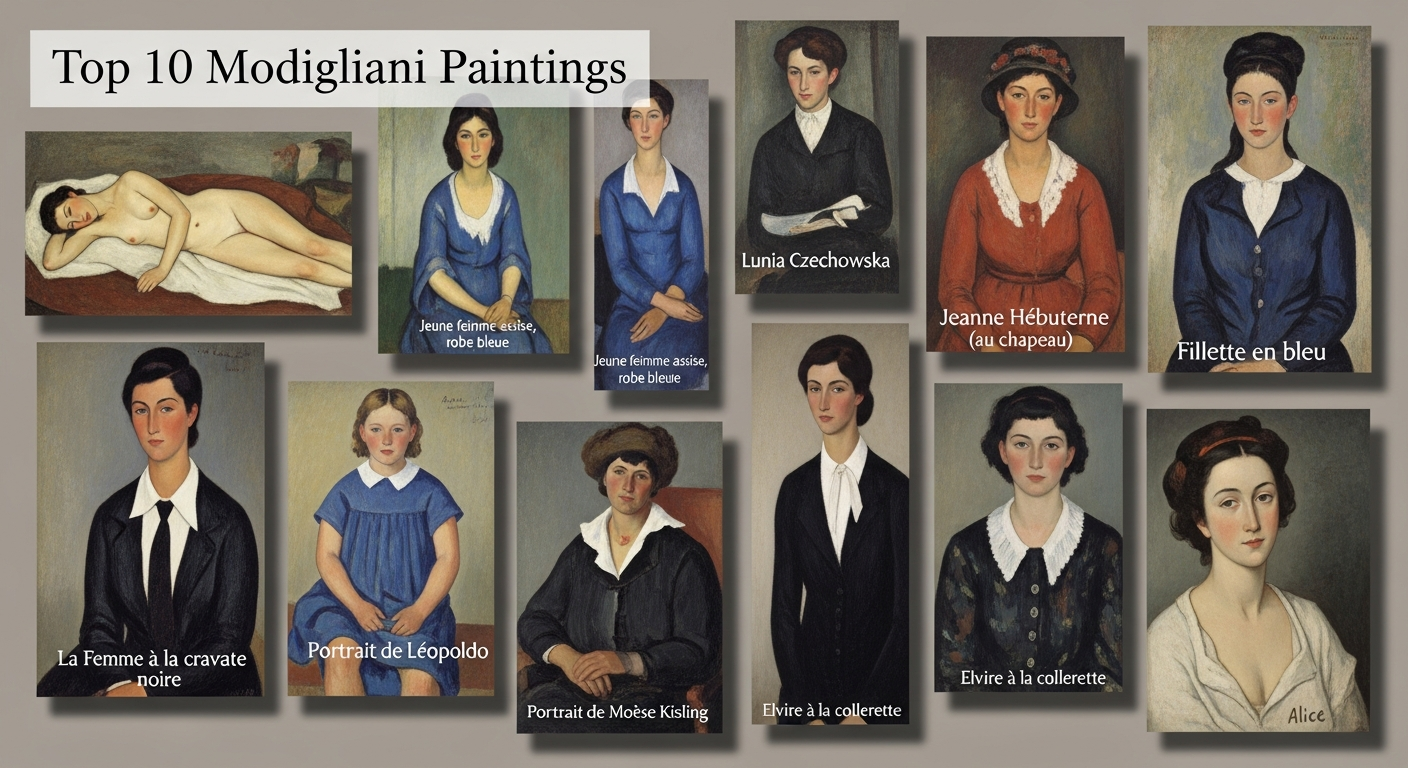
Ever seen a portrait where the person has a super long neck and blank, almond-shaped eyes? Chances are, you were looking at one of the famous Modigliani paintings. Amedeo Modigliani, an Italian artist who lived in Paris, had a style so unique you can spot it from a mile away. He wasn’t just drawing people; he was trying to capture their inner soul on the canvas. While he lived a short and difficult life, his work, especially his portraits and nudes, became some of the most iconic and beloved art of the 20th century. Let’s dive into the world of ‘Modi’ and explore his Top 10 Modigliani Paintings.
Nu Couché (Reclining Nude) (1917)
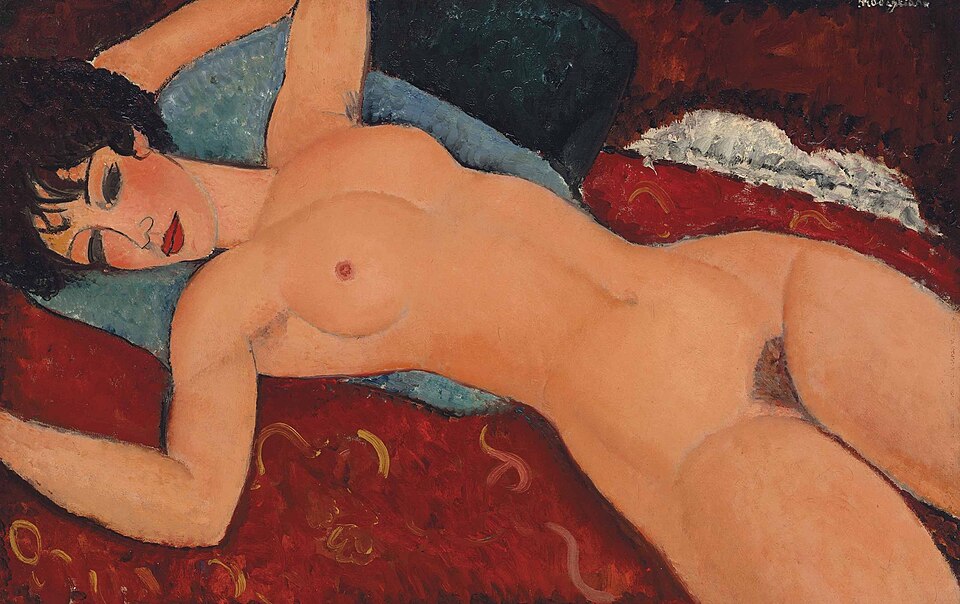
Description: This is perhaps Modigliani’s most famous and controversial work. It shows a reclining nude woman, unapologetically gazing at the viewer. At the time, it was so shocking that the police shut down Modigliani’s only solo exhibition! Today, it’s celebrated for its modern take on a classic subject, blending sensuality with elegant lines. This painting was part of a series of nudes commissioned by his dealer, Léopold Zborowski, who paid the artist a mere 15 francs per day for his work.
Painting Techniques: Modigliani used warm, rich colors and bold, flowing outlines to define the figure. The form is simplified and elongated, showing the influence of both African sculpture and Renaissance masterpieces on his unique style.
Location: Private Collection (Sold via Christie’s, New York)
Estimated Value: Sold for $170.4 million in 2015
Portrait of Jeanne Hébuterne (1918)
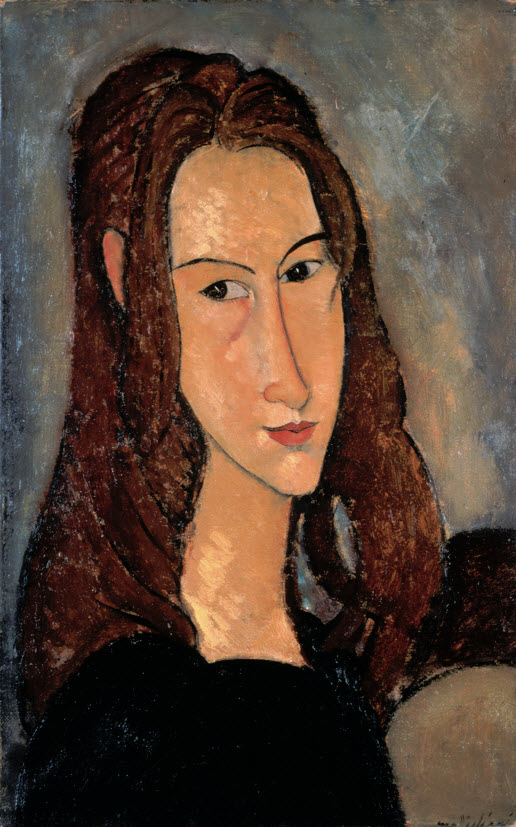
A tender ‘Portrait of Jeanne Hébuterne’ by Amedeo Modigliani, showcasing his signature elongated style.
Description: Jeanne Hébuterne was Modigliani’s final love and the mother of his child. He painted her many times, and this portrait is one of the most tender. Her swan-like neck, tilted head, and vacant eyes create a feeling of quiet melancholy and grace. It’s a love letter painted with brushes and oil. Tragically, Jeanne, who was pregnant with their second child, took her own life the day after Modigliani died from tuberculosis.
Painting Techniques: The painting showcases Modigliani’s signature style with its graceful, elongated neck and simplified facial features. He used a muted palette of earthy tones, allowing the elegant lines and the subject’s serene expression to take center stage.
Location: Metropolitan Museum of Art, New York City
Estimated Value: Priceless
The Little Peasant (Le Jeune Apprenti) (c. 1918)
Description: This painting depicts a young boy, likely a local worker or apprentice. Modigliani doesn’t just show us what the boy looks like; he captures a sense of his gentle spirit and innocence. The simple background and the boy’s direct gaze make the portrait feel intimate and powerful. The subject’s hands are clasped in his lap, a pose Modigliani often used to convey a sense of humility and introspection in his sitters.
Painting Techniques: Modigliani used a simple color scheme with blues, grays, and ochres. The boy’s figure is slightly distorted and asymmetrical, a technique Modigliani used to add emotional depth rather than just creating a realistic copy.
Location: Tate Modern, London
Estimated Value: Priceless

Woman with a Fan (Lunia Czechowska) (1919)
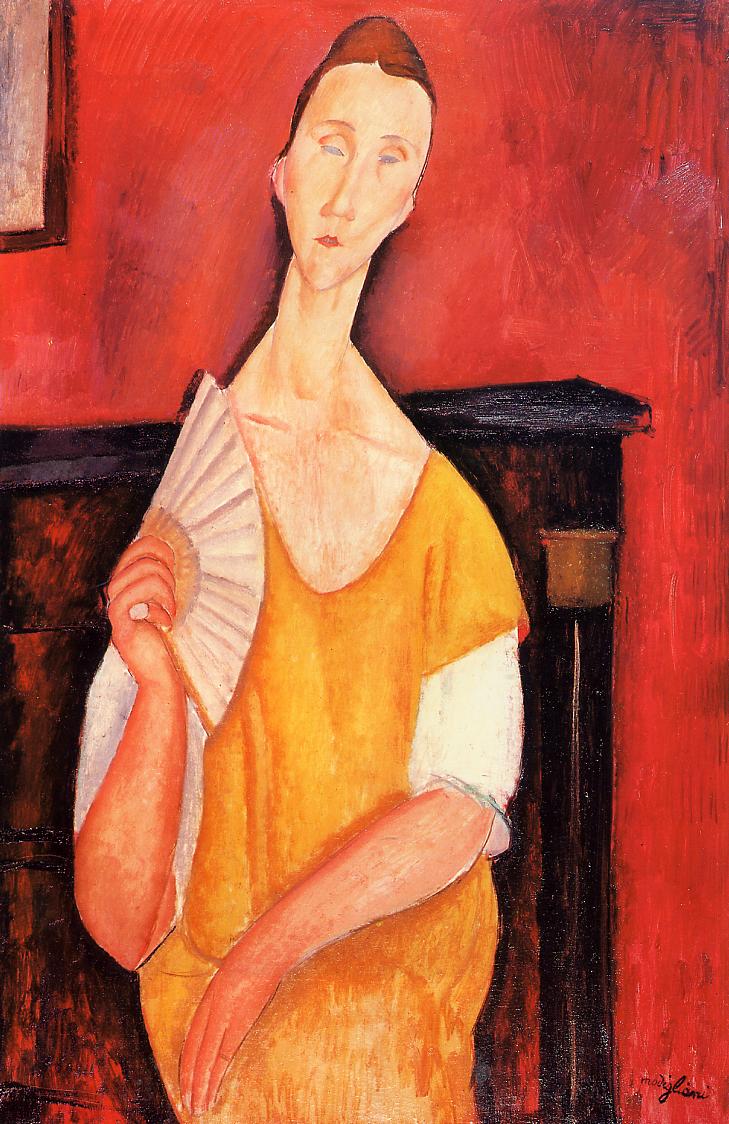
The elegant ‘Woman with a Fan (Lunia Czechowska),’ a classic Amedeo Modigliani painting.
Description: Lunia Czechowska was a close friend of Modigliani and his dealer. In this elegant portrait, she appears sophisticated and poised, holding a fan. The sharp angles of her body contrast with the gentle curves of her face and neck, creating a beautiful visual rhythm. Modigliani painted Lunia Czechowska more than a dozen times, capturing different facets of her personality in each portrait.
Painting Techniques: This work is a masterclass in line and form. Modigliani uses strong, dark outlines, almost like a sculptor carving into the canvas. The colors are applied smoothly, giving the surface a flat, stylized appearance reminiscent of ancient art.
Location: Musée d’Art Moderne de Paris, Paris
Estimated Value: Priceless
Portrait of Leopold Zborowski (1916)
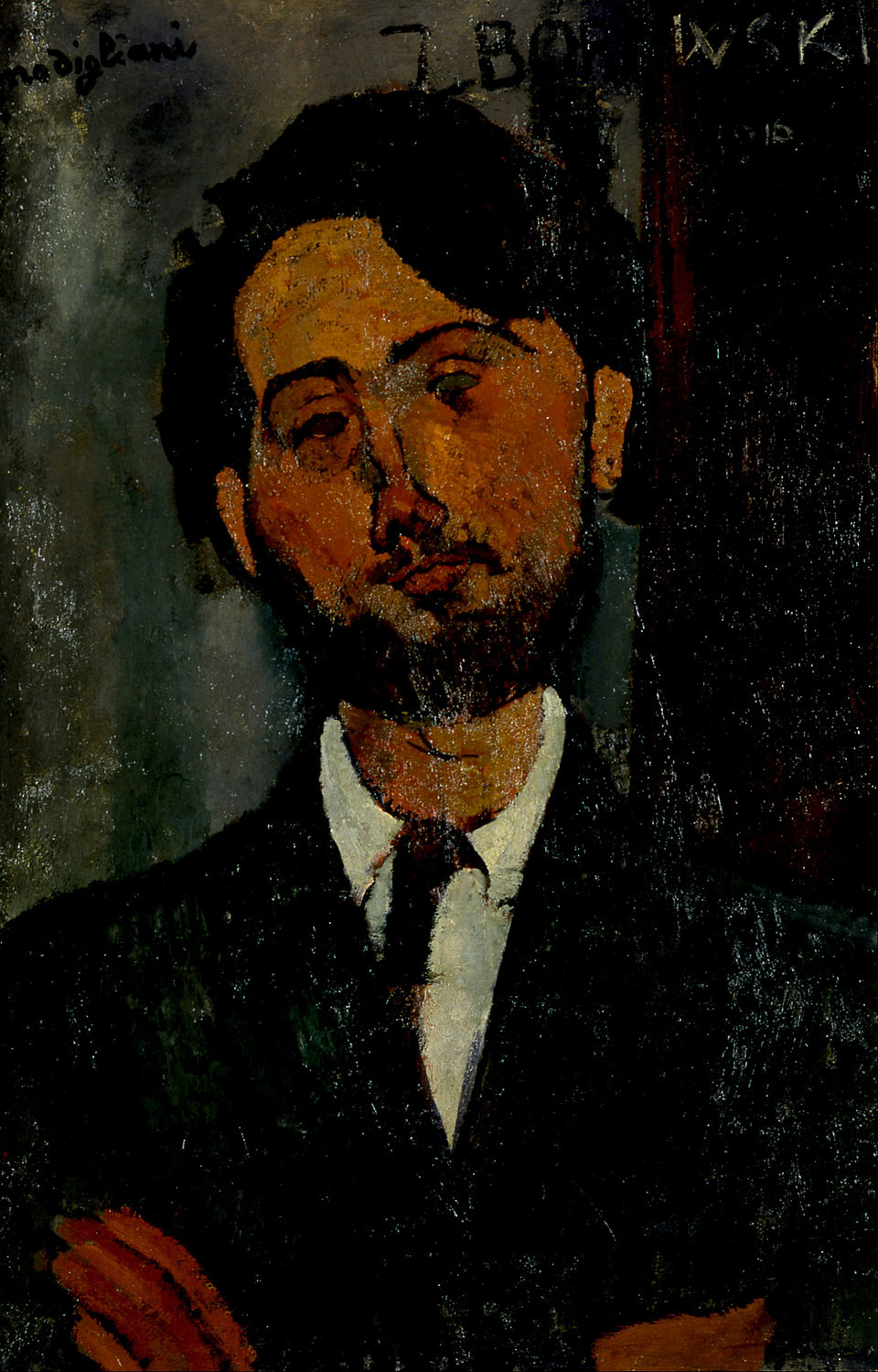
Amedeo Modigliani’s insightful ‘Portrait of Leopold Zborowski,’ capturing his supportive art dealer.
Description: Léopold Zborowski was Modigliani’s friend, dealer, and biggest supporter during his final years. This portrait shows Zborowski as a thoughtful intellectual. Modigliani uses mismatched eyes—one blank and one detailed—to suggest that the sitter is looking both outward at the world and inward at his own thoughts. Zborowski supported Modigliani financially, often providing him with studio space and art supplies, even when he could barely afford it himself.
Painting Techniques: The composition is asymmetrical, with the head tilted and placed off-center, adding a dynamic quality. The brushwork is visible and expressive, especially in the jacket, while the face is rendered with smoother, more defined lines.
Location: São Paulo Museum of Art, São Paulo
Estimated Value: Priceless
Alice (c. 1918)
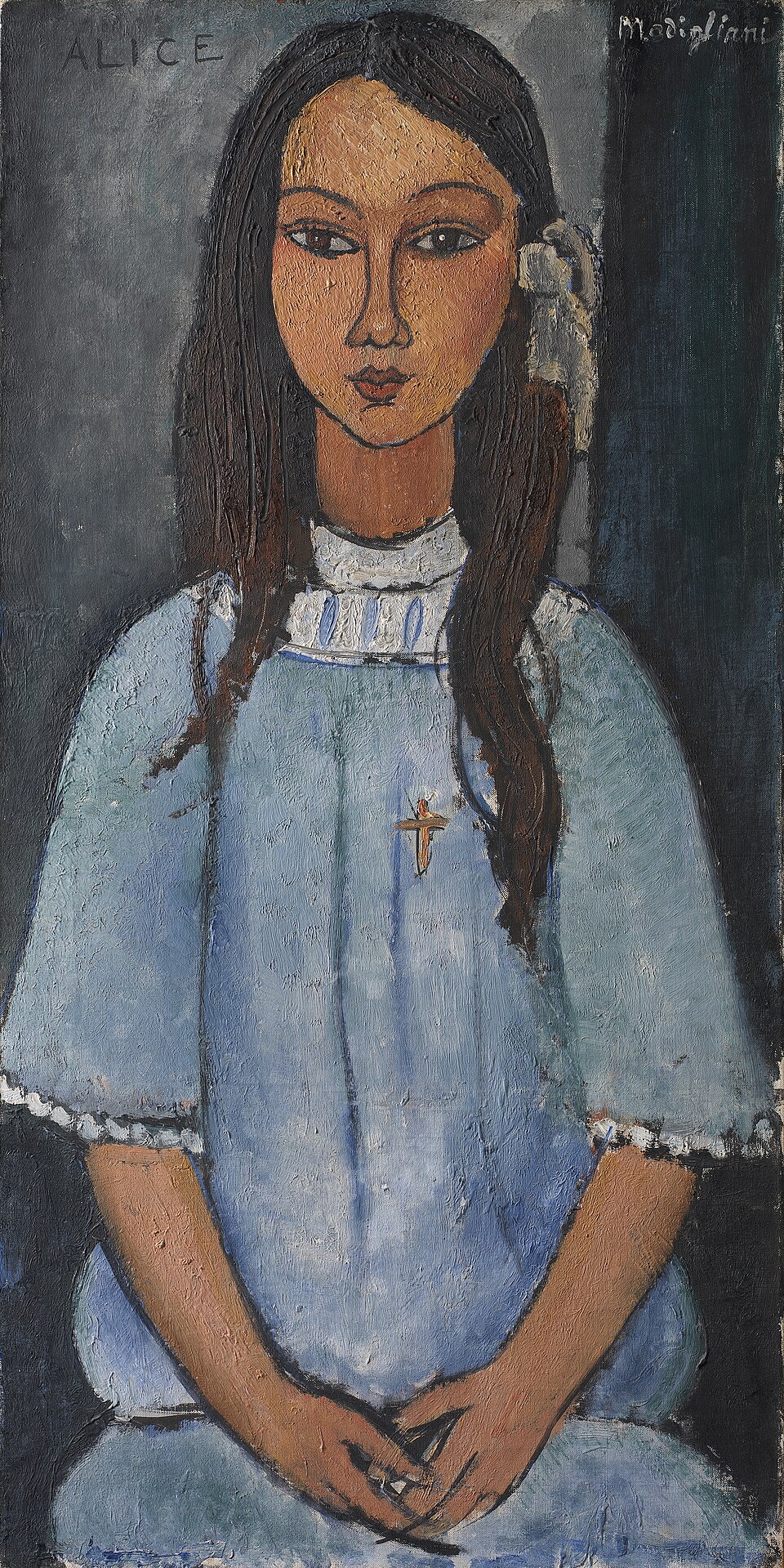
The charming portrait ‘Alice’ by Amedeo Modigliani, a beloved piece of art.
Description: This charming portrait of a young girl named Alice is one of Modigliani’s most endearing works. With her blue dress, neat bangs, and direct gaze, she looks like a classic doll. Modigliani captures the innocence of childhood but also gives her a serious, almost ancient wisdom in her almond-shaped eyes. The identity of the girl, Alice, remains a mystery, which adds to the painting’s enchanting and timeless quality.
Painting Techniques: Modigliani uses a simple but striking color palette, with the bright blue of the dress contrasting against the warm, earthy background. The girl’s features are stylized and elongated, turning a simple portrait into a timeless icon.
Location: Statens Museum for Kunst, Copenhagen
Estimated Value: Priceless
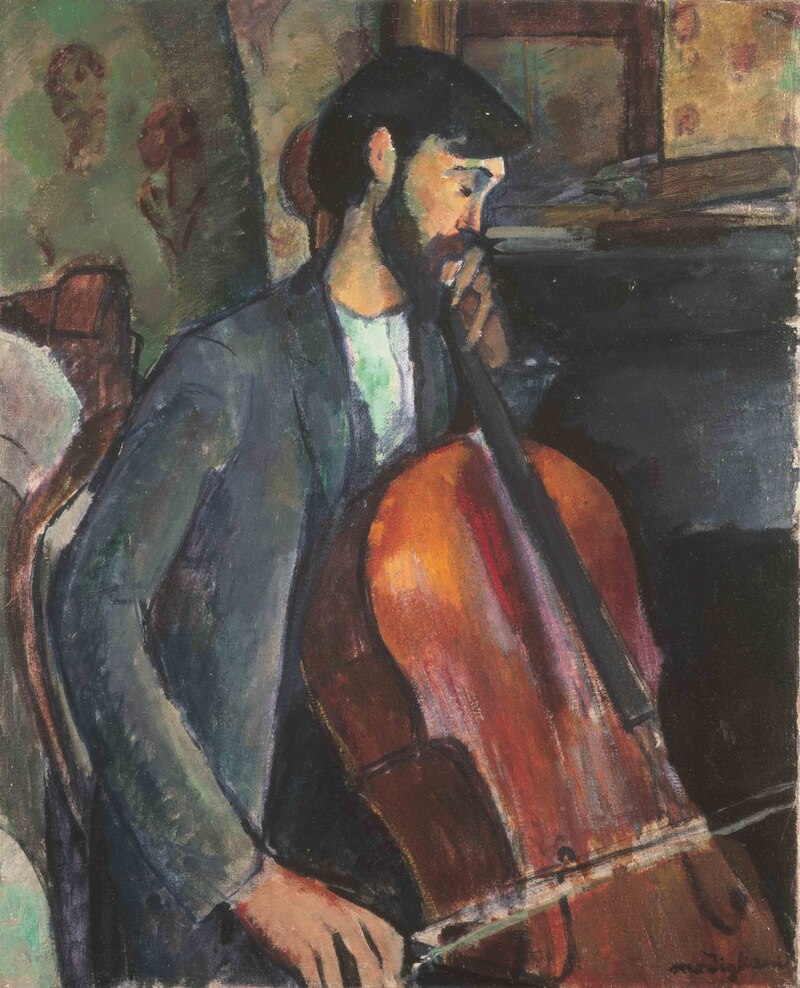
The Cellist (1909)
The expressive and emotional early work, ‘The Cellist,’ by Amedeo Modigliani.
Description: An earlier work, ‘The Cellist’ shows a different side of Modigliani. The style is less refined than his later portraits, with thicker, more energetic brushstrokes. You can feel the passion and movement of the musician as he plays, showing Modigliani’s early interest in capturing emotion over realism. This painting was created shortly after Modigliani moved to Paris and was still experimenting to find his unique artistic voice.
Painting Techniques: The influence of Paul Cézanne is strong here, seen in the geometric breakdown of forms and the textured brushwork. The color palette is darker and more somber than in his later, more famous Modigliani paintings.
Location: Private Collection
Estimated Value: Last sold for over $6 million in 2010
Gypsy Woman with a Baby (1919)
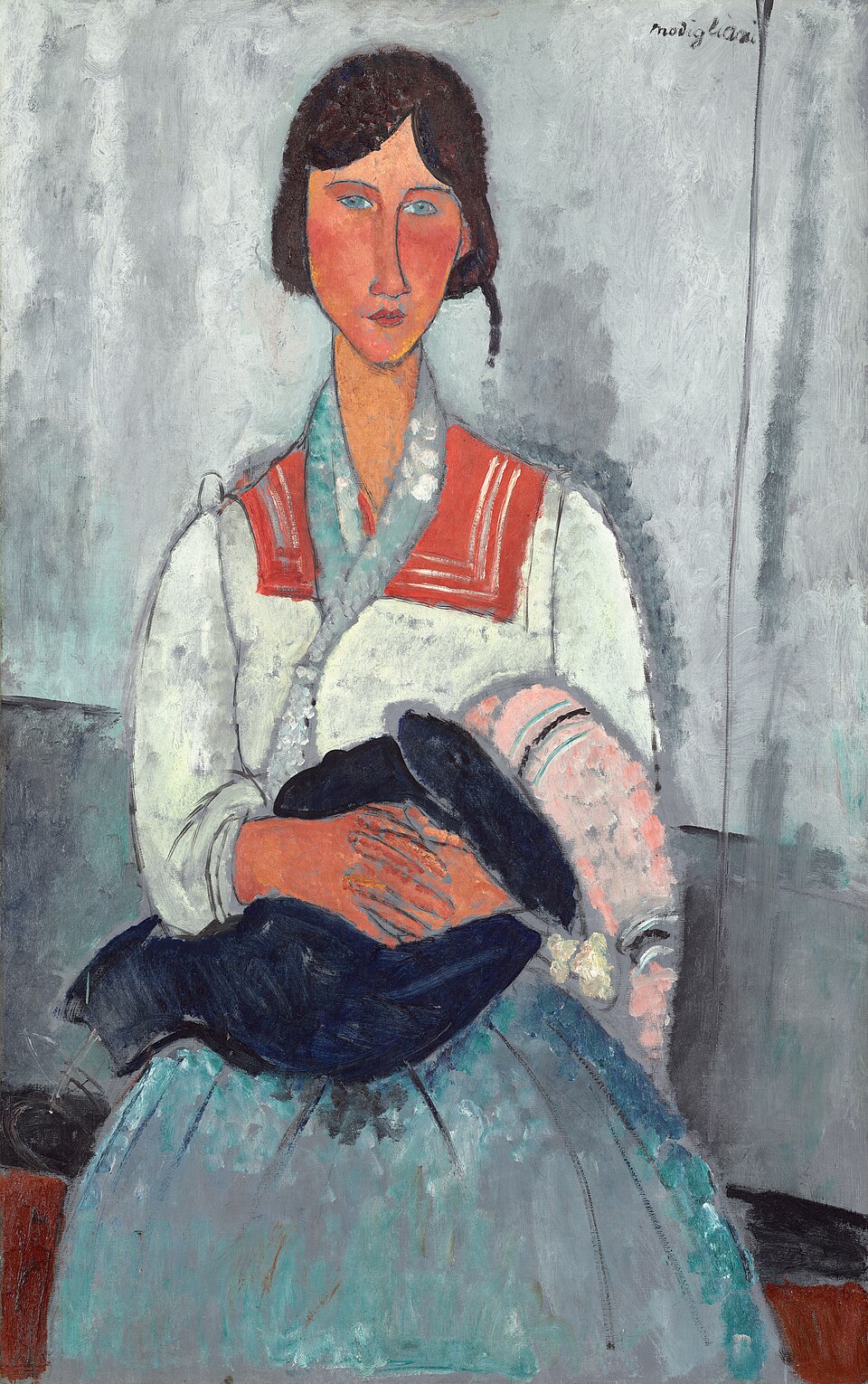
Description: This painting shows a mother and child with a profound sense of dignity and strength. Unlike traditional, sweet depictions of motherhood, this portrait is raw and powerful. The woman’s gaze is steady and direct, while her large, capable hands securely hold her baby. This was one of the last paintings Modigliani completed before his death in January 1920.
Painting Techniques: Modigliani used a palette of rich reds and deep earth tones to give the painting a warm, solid feel. The figures are rendered with his characteristic simplified forms and strong outlines, emphasizing their monumental presence.
Location: National Gallery of Art, Washington D.C.
Estimated Value: Priceless
Portrait of Chaim Soutine (1916)
Description: Chaim Soutine was another artist in Paris and one of Modigliani’s best friends. This portrait captures the intense and often troubled personality of his friend. The twisted perspective and restless energy in the painting reflect their close but stormy relationship. Legend has it that Modigliani painted this portrait in a single sitting, fueled by a long conversation with his friend.
Painting Techniques: The brushwork is more agitated and expressive than in many of Modigliani’s other portraits. The composition is deliberately off-kilter, enhancing the feeling of unease and psychological intensity, which perfectly suited Soutine’s own artistic style.
Location: National Gallery of Art, Washington D.C.
Estimated Value: Priceless

Portrait of Paul Guillaume (1916)
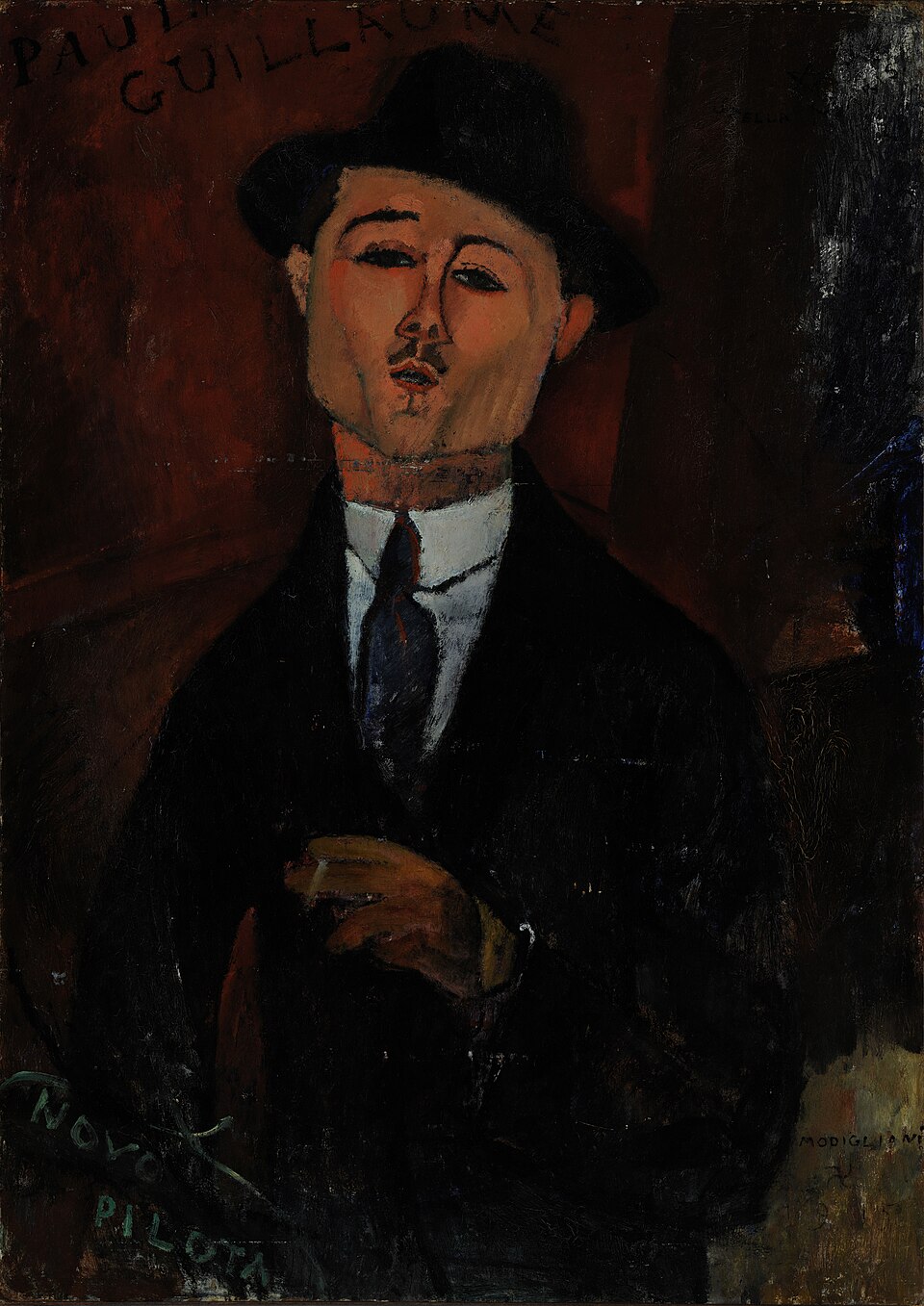
Description: Paul Guillaume was another of Modigliani’s art dealers and a major promoter of modern art. In this portrait, Modigliani presents him as a stylish and modern man of the new century. The inscription ‘NOVO PILOTA’ at the bottom means ‘new pilot,’ suggesting Guillaume was steering the course of modern art. Modigliani painted three portraits of Paul Guillaume, but this one is the most formal and symbolic of them all.
Painting Techniques: The portrait combines sharp, geometric lines in the background with the softer, curved lines of the figure. This contrast highlights the sitter’s modern sensibilities. The use of text within the painting was a very avant-garde technique at the time.
Location: Museo del Novecento, Milan
Estimated Value: Priceless
Inspiration and Legacy
Modigliani didn’t just invent his style out of thin air. He was like a chef mixing unique ingredients. He was heavily inspired by the simplified, elegant forms of ancient art, especially African masks and Cycladic sculptures he saw in Paris museums. He also looked up to artists like Paul Cézanne for his structure and Constantin Brâncuși, a sculptor friend, who encouraged him to simplify his lines. In turn, Modigliani’s legacy is immense. While he wasn’t part of a formal ‘movement,’ his focus on capturing the psychological essence of a person, rather than just their appearance, influenced many later artists. His unique approach to portraiture showed future generations that a painting could be more about a person’s inner ‘vibe’ than a perfect likeness.
Final Thoughts on Top 10 Modigliani Paintings
Amedeo Modigliani’s life was short, but his artistic vision was powerful and timeless. He created a unique visual language that feels both ancient and incredibly modern. Looking at Modigliani paintings is like looking into the souls of the people who lived in the bustling, creative world of early 20th-century Paris. His elegant lines and melancholic faces are unforgettable, securing his place as one of the true geniuses of modern art. The enduring appeal of Modigliani paintings lies in their ability to communicate deep emotion with beautiful simplicity.
FAQs about Modigliani
Why are the necks and faces so long in Modigliani’s paintings?
The elongated features are Modigliani’s signature style! It’s believed to be inspired by his love for African art, ancient sculptures, and the Italian Mannerist painters like Parmigianino, who also used elegant, long proportions. It was his way of creating grace and a spiritual feeling rather than a realistic copy.
Was Modigliani famous during his lifetime?
Sadly, no. Modigliani struggled with poverty and poor health his entire life. He sold very few paintings and was not well-known outside of his small circle of artist friends. His fame grew dramatically after his death at the age of 35.
What art movement was Modigliani part of?
Modigliani is often associated with the School of Paris, which wasn’t a formal movement but a name for the community of artists (many of them foreigners) living and working in Paris between the world wars. He was friends with Cubists like Picasso, but his style is so unique that it doesn’t fit neatly into any single category.
What does it mean when the eyes in his portraits are blank?
Modigliani famously said, ‘When I know your soul, I will paint your eyes.’ The blank, almond-shaped eyes in many of his portraits are not empty. For him, they were a way to suggest a person’s inner world or soul, which you can’t see with physical eyes. It makes the viewer focus on the person’s essence rather than their surface-level appearance.