Abstract painting often sparks debate: is it just random splatters, or is there a deeper meaning? For many, understanding abstract art can feel like trying to solve a puzzle without all the pieces. It challenges our conventional notions of beauty and representation, leading us to wonder, what makes a good abstract painting? While personal taste is always a factor, and abstract art is inherently subjective, there are indeed objective principles and qualities that elevate a piece from merely decorative to a profound work of art.
Key Points:
- Abstract art uses shapes, colors, forms, and marks rather than literal representation
- Good abstract paintings demonstrate strong composition, intentional balance, and purposeful color use
- Texture, originality, and the artist’s voice contribute to depth and meaning
- Understanding foundational elements helps viewers appreciate abstract art beyond “I could do that”
- Personal interpretation and emotional response are essential parts of experiencing abstract art
Understanding What Abstract Art Really Is
Before we can judge what makes an abstract painting ‘good,’ it’s helpful to understand what abstract art actually is. Simply put, abstract art does not attempt to represent external reality in a literal way. Instead, it uses shapes, colors, forms, and gestural marks to achieve its effect. This non-representational approach emerged in the early 20th century as artists sought to express ideas and emotions directly through visual elements themselves, rather than through recognizable subjects.
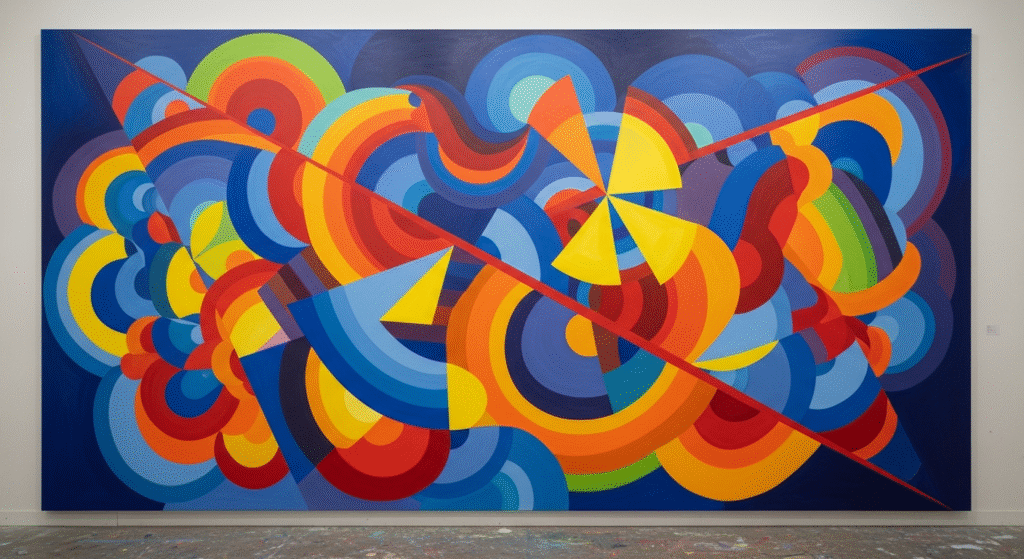
The shift away from literal representation is precisely why abstract art can be so perplexing yet so compelling. Without a clear subject to identify, viewers are prompted to engage with the artwork on a different level—one that prioritizes feeling, form, and the artist’s internal world. Pioneers like Wassily Kandinsky, Jackson Pollock, and Mark Rothko championed this movement, each bringing their unique perspective to non-representational art.
But even in this realm of freedom, certain artistic principles guide the creation of truly impactful pieces. Understanding these principles transforms how we appreciate abstract art and helps us move beyond the common misconception that “anyone could do that.”
The Foundational Elements: Composition and Balance
Good abstract art, despite its often spontaneous appearance, usually possesses a strong sense of composition. Composition refers to the arrangement of all the visual elements within the painting—how shapes, lines, colors, and textures interact to create a cohesive visual experience.
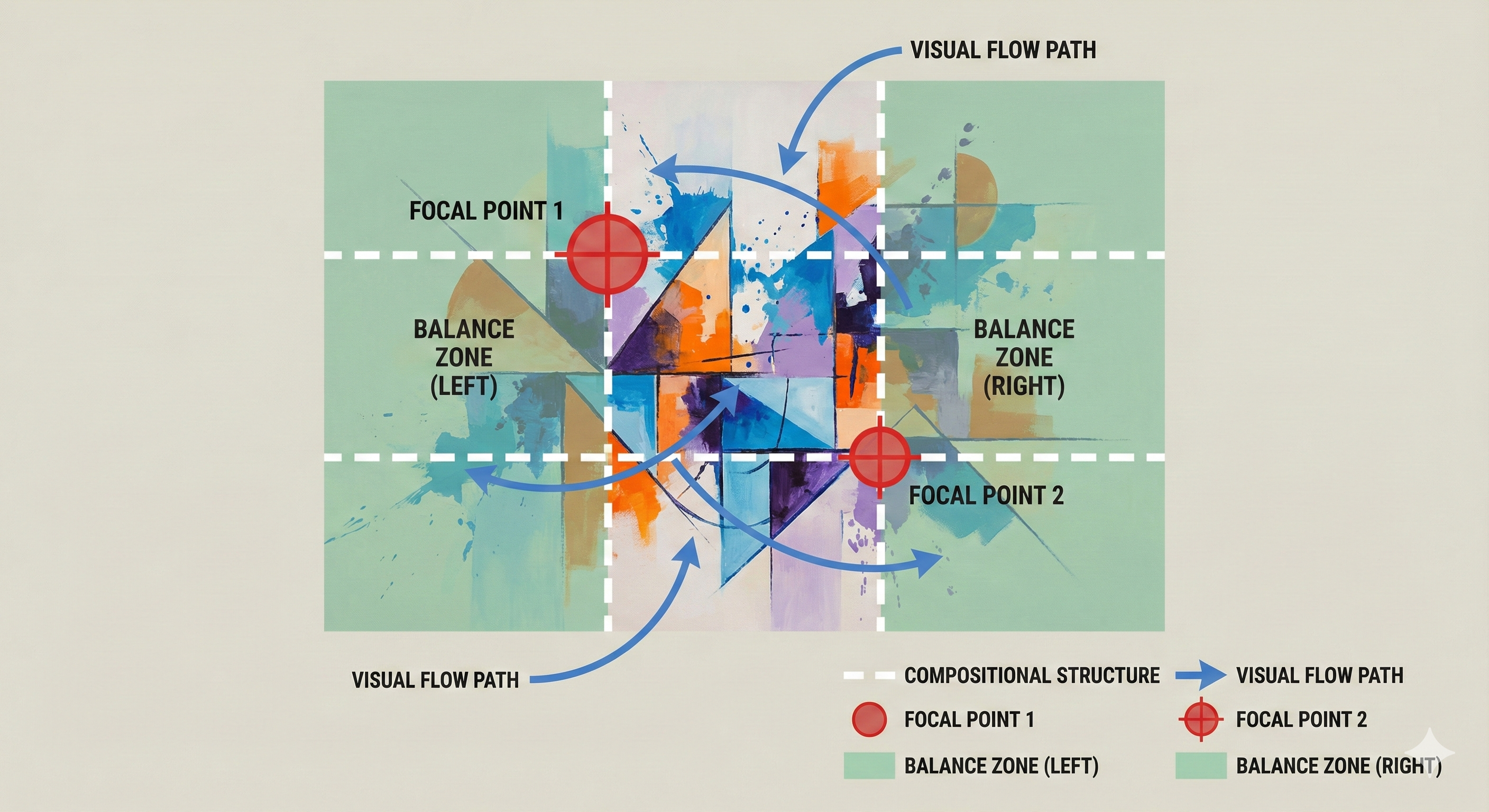
Even without a recognizable subject, a well-composed abstract piece will have an intentional structure that guides the viewer’s eye, creating a visual journey across the canvas. Think of it like music: even though individual notes don’t represent anything specific, their arrangement creates harmony, rhythm, and emotional impact.
Closely tied to composition is balance. This isn’t just about symmetry; it’s about the visual weight of elements. A balanced abstract painting feels stable and harmonious, even if it uses contrasting forms or colors. Understanding principles like the rule of thirds and the golden ratio can help artists distribute shapes, lines, and colors to create a sense of equilibrium or, sometimes, a deliberate tension that makes the piece dynamic and engaging.
The difference between a random scattering and a thoughtful arrangement is what separates amateur attempts from masterful abstract work. Even famous abstract artists understood that controlled chaos requires immense skill and intentionality.
Color Theory: Speaking Without Words
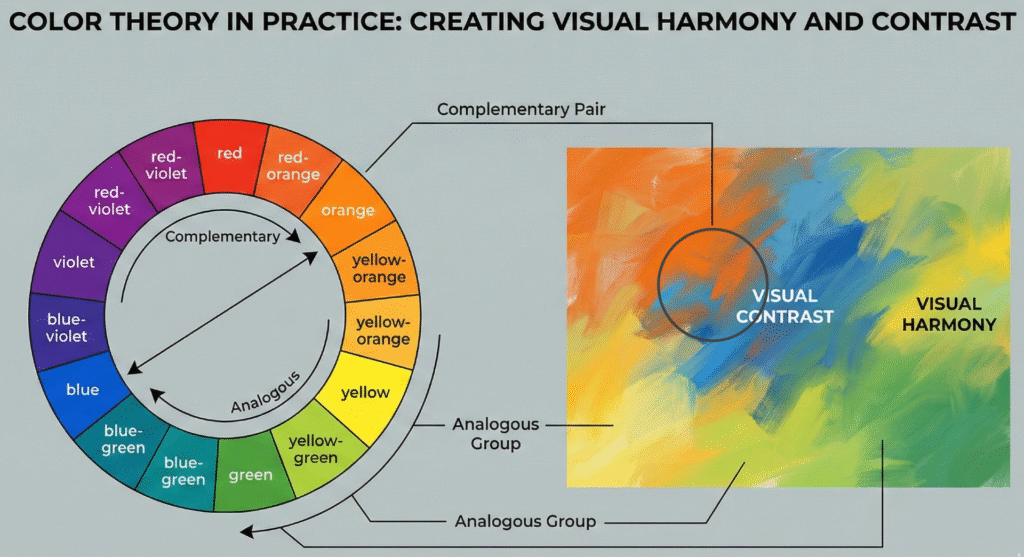
Color is a powerful language in abstract art. What makes a good abstract painting often comes down to how effectively it uses color to create mood, depth, and energy. Artists don’t use color just as decoration, but as a primary means of communication.
A skilled abstract painter might use:
- Complementary colors to create vibrancy and visual excitement
- Analogous colors for harmony and smooth transitions
- A limited palette to evoke specific feelings or maintain cohesion
- Bold contrasts to generate energy and movement
The interaction of colors can generate light, shadow, and a sense of movement, even in a static image. It’s about how colors ‘talk’ to each other on the canvas. Understanding color mixing and color theory principles are essential tools in an abstract artist’s arsenal.
Consider how Mark Rothko used color to create emotional depth, or how the Fauves employed bold, non-naturalistic colors to express feeling over form. These artists understood that color choice directly impacts the viewer’s emotional response.
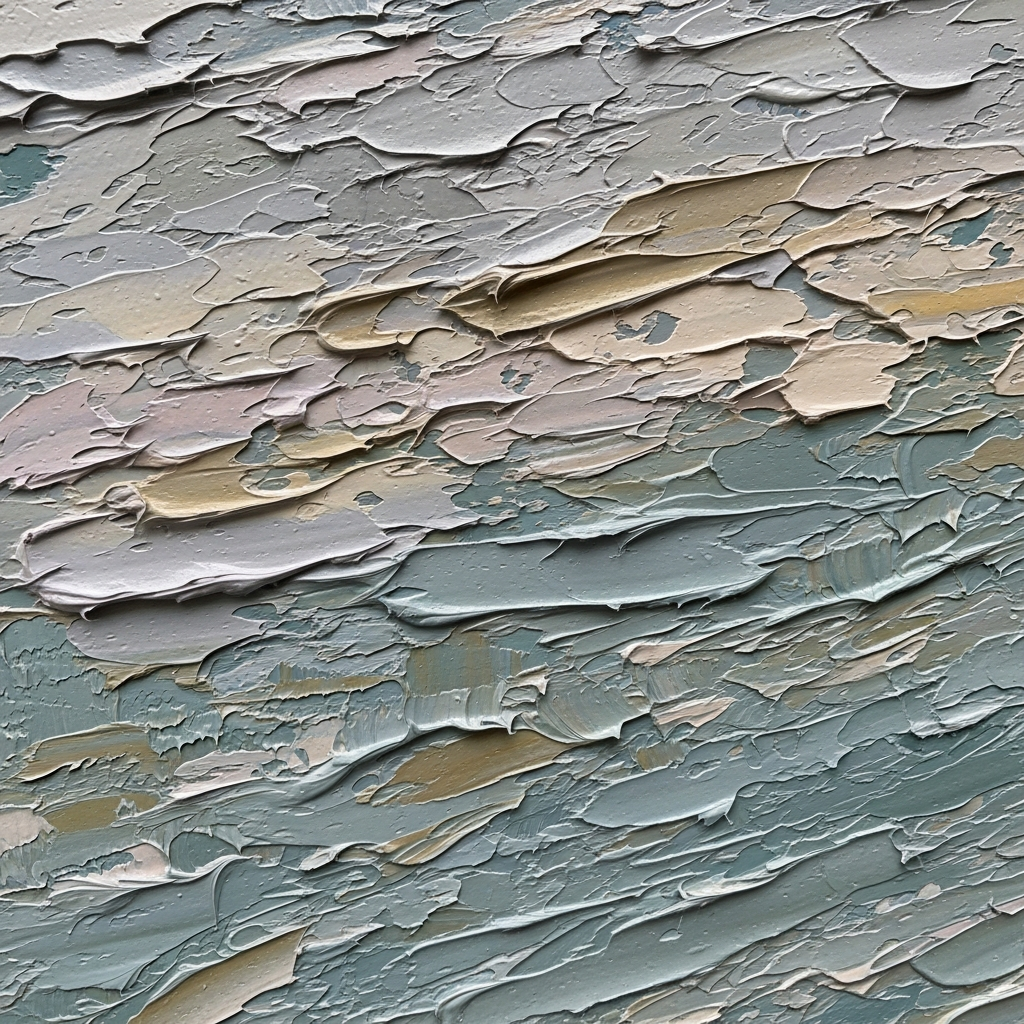
Texture: Adding Physical Presence
This tangible quality can enhance the emotional impact, add visual interest, and contribute to the overall narrative of the piece. Mastering various texture techniques allows artists to create depth and complexity that draws viewers closer to examine every detail.
Texture adds another dimension to abstract art, inviting both visual and tactile engagement. Whether through thick impasto, smooth glazes, dripping paint, or mixed media, texture gives the surface a physical presence that photographs can barely capture.
Together, color and texture work to evoke emotions, telling a story or conveying a feeling without a single literal image. They’re fundamental to understanding the characteristics of abstract art and what separates masterful work from amateur attempts.
What Makes a Good Abstract Painting vs. a Poor One
To help clarify the difference between effective and ineffective abstract art, let’s examine key characteristics:
| Characteristic | Good Abstract Painting | Less Effective Abstract Painting |
|---|---|---|
| Composition | Intentional, dynamic, guides the eye with purpose | Chaotic, random, lacks clear visual flow or focal point |
| Color Use | Harmonious or purposeful contrast, evokes strong mood/feeling | Muddled, arbitrary, visually jarring or bland |
| Texture | Adds depth, interest, or emotional weight strategically | Unconsidered, flat, or distracting without purpose |
| Originality | Unique vision, fresh perspective, transcends mere decoration | Derivative, generic, or copies without understanding |
| Intent/Voice | Conveys a clear (even if non-literal) artistic statement or feeling | Lacks purpose, appears unplanned or amateurish |
| Execution | Confident, controlled (even in ‘messy’ styles), thoughtful application | Hesitant, sloppy, appears unfinished or technically weak |
This comparison helps explain why abstract art can be ‘bad’—not all abstract paintings are created equal. Understanding these differences is crucial for both critiquing your own work and appreciating art created by others.
The Artist’s Voice and Intent
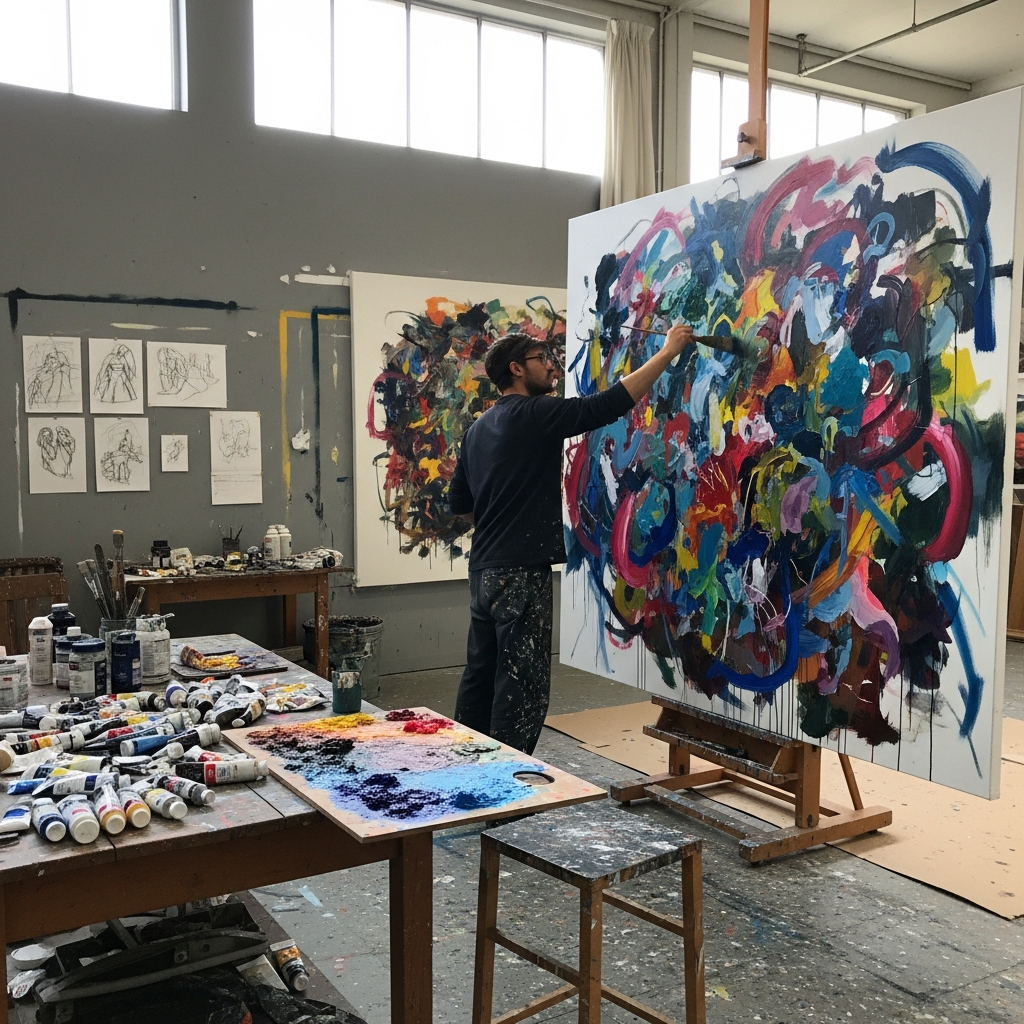
Even in abstraction, the artist’s voice and intent are crucial to what makes a good abstract painting. A good abstract painting often reflects a clear artistic vision, whether it’s an exploration of form, an emotional outpouring, or a philosophical concept.
“There is no abstract art. You must always start with something. Afterward you can remove all traces of reality.”
Pablo Picasso
The artist makes deliberate choices—from the first brushstroke to the final mark—that contribute to the overall impact and message, even if that message is non-literal. This intentionality is what gives the artwork its depth and integrity. Understanding the philosophy behind abstract art reveals how artists like Kandinsky, Pollock, and Rothko each brought unique perspectives to their work.
When you learn about famous abstract artists and their techniques, you begin to understand that what appears spontaneous often results from years of practice, experimentation, and refinement.
Your Role as the Viewer
Finally, your role as the viewer is paramount when determining what makes a good abstract painting. Abstract art invites personal interpretation—there’s no single ‘right’ way to experience it.
Instead of asking “What is it?”, try asking:
- “How does it make me feel?”
- “What does it remind me of?”
- “What emotions or thoughts does it provoke?”
- “How do the colors interact?”
- “What story could this be telling?”
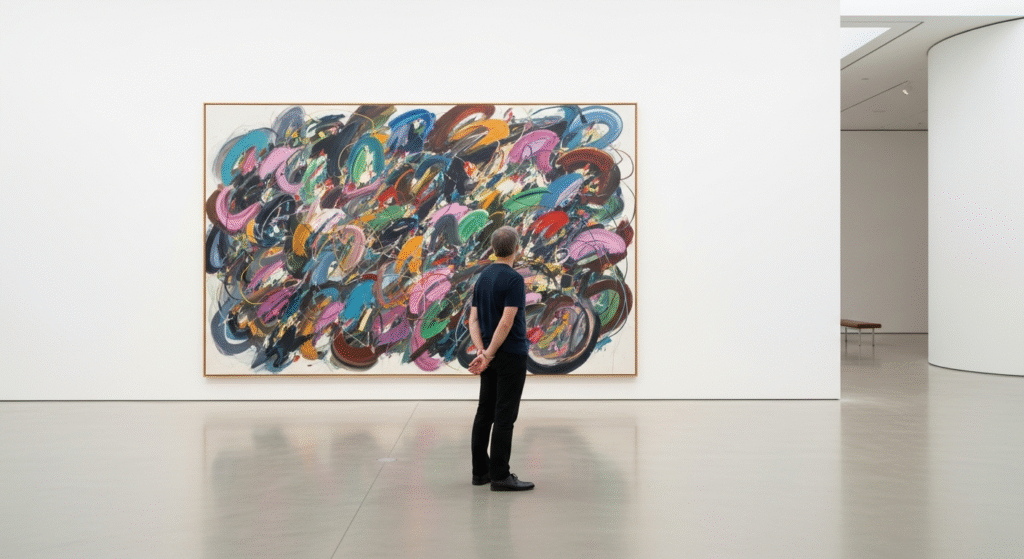
A truly good abstract painting sparks curiosity, evokes emotion, and encourages a unique, personal dialogue between the artwork and the observer. Embrace the ambiguity; that’s where the magic often lies. Learning how to appreciate art can transform your gallery visits from confusing to enriching.
This subjective element is what makes abstract art so personal and powerful. While we can identify technical principles and artistic skills, the emotional impact varies from person to person—and that’s exactly as it should be.
How Abstract Art Changed the Game
The abstract revolution fundamentally changed how we think about art. By breaking free from representation, abstract artists opened new possibilities for creative expression that continue to influence contemporary art today.
Understanding what makes a good abstract painting requires knowledge of this historical context. The movement didn’t emerge from nowhere—it evolved from earlier styles and represented a radical break from centuries of artistic tradition. The evolution of art movements shows how abstract art built upon and reacted against previous styles.
Different branches of abstract art emerged with distinct characteristics:
- Abstract Expressionism emphasized spontaneous, emotional creation
- Color Field Painting focused on large areas of flat color
- Geometric Abstraction used precise shapes and mathematical relationships
- Lyrical Abstraction combined spontaneity with harmonious compositions
Each approach offers different answers to what makes a good abstract painting, demonstrating the diversity within the movement.
Practical Tips for Creating Your Own Abstract Art
If you’re interested in creating your own abstract paintings, here are some practical tips based on the principles we’ve discussed:
- Start with intention: Even if you want spontaneity, begin with a mood, emotion, or concept in mind
- Study color relationships: Practice color mixing and understand how colors interact
- Experiment with tools: Try different painting techniques and brushwork to find your voice
- Consider composition: Use focal points to guide viewer attention
- Add variety in texture: Combine different application methods for visual interest
- Know when to stop: Overworking can muddy your vision—step back frequently
- Learn from masters: Study abstract painting ideas and techniques from established artists
Video: A deeper look at abstract art principles and interpretation
Remember, what makes a good abstract painting often comes from practice, experimentation, and developing your artistic voice. Don’t be discouraged if early attempts don’t meet your expectations—even famous artists faced challenges on their creative journeys.
Evaluating Abstract Art for Purchase
If you’re considering purchasing abstract art, keep these evaluation criteria in mind:
Technical Quality:
- Is the execution confident and skilled?
- Does it demonstrate mastery of materials?
- Is the surface properly prepared and finished?
Artistic Merit:
- Does it show originality and unique vision?
- Is there intentional composition and balance?
- Do color choices create emotional impact?
Personal Connection:
- How does it make you feel?
- Can you envision it in your space?
- Does it maintain interest over time?
Context and Value:
- Research the artist’s background and trajectory
- Consider what makes paintings valuable in the art market
- Understand current art market trends
Don’t be afraid to ask galleries or artists about their process, inspiration, and materials. Understanding the story behind a piece often deepens appreciation.
Conclusion
So, what makes a good abstract painting? It’s a combination of technical mastery, intentional composition, effective use of color and texture, originality, and the artist’s authentic voice—all filtered through your personal response as a viewer. While abstract painting may seem mysterious at first, a ‘good’ abstract painting is far from accidental. It’s a carefully constructed visual experience built upon foundational principles of composition, balance, color theory, and texture, all infused with the artist’s intentionality and emotional expression.
By training your eye to look beyond the literal and engage with these underlying elements, you can unlock a deeper appreciation for the beauty and profound impact of abstract art. The next time you encounter an abstract piece, remember to look for its structure, feel its colors, and allow your own emotions to guide your interpretation.
Understanding what makes a good abstract painting doesn’t diminish its mystery—it enhances your ability to experience the full depth of what these works offer. Whether you’re discovering your own painting style, building an art collection, or simply appreciating art in museums and galleries, these principles will serve as your guide to understanding and enjoying abstract art.
Frequently Asked Questions
Is abstract art just random splatters?
No, good abstract art is far from random. It involves deliberate choices regarding color, composition, texture, and form, often guided by deep artistic intent or emotion. What appears spontaneous typically results from years of practice and refined technique. Artists like Jackson Pollock demonstrated extraordinary control even in seemingly chaotic works. The apparent randomness often masks sophisticated understanding of balance, rhythm, and visual flow—much like a jazz musician’s improvisation is built on years of technical mastery.
How do I ‘understand’ abstract art?
Understanding abstract art often means moving beyond looking for a literal subject. Instead, focus on how the colors, lines, shapes, and textures make you feel or what thoughts they provoke. Allow yourself to experience it intuitively and emotionally rather than analytically. There’s no “correct” interpretation—your personal response is valid. Consider the emotional elements in art and how artists use visual language to communicate feelings. Learning how to appreciate art without overthinking can open new dimensions of enjoyment.
Can abstract art be ‘bad’?
Yes, just like any art form, abstract art can be evaluated on its merits. Paintings that lack intentional composition, harmony, originality, or a clear artistic voice might be considered less effective or ‘bad’ by critics and informed viewers, even if personal taste varies. Poor abstract art often shows technical weakness, muddy colors, lack of balance, or appears unfinished without intentional purpose. Understanding how to critique art helps distinguish between meaningful abstraction and random mark-making.
What should I look for when buying abstract art?
Look for pieces that resonate with you personally first and foremost. Beyond that, consider the artist’s technique, the quality of materials, the balance and composition, and whether the artwork feels cohesive and intentional. Research the artist’s background, check their exhibition history, and ensure proper documentation. Don’t be afraid to ask about the artist’s process or inspiration—understanding the story behind a piece often deepens appreciation. Consider how the work will fit in your space and whether it maintains visual interest over time. Understanding art market dynamics can also inform purchasing decisions.
Can anyone create good abstract art?
While anyone can create abstract art, making good abstract art requires understanding of fundamental artistic principles, mastery of materials, development of personal vision, and often years of practice. The common misconception that “anyone could do that” overlooks the intentionality, skill, and artistic knowledge required to create impactful abstract work. Starting your painting journey with proper instruction and practice is essential for developing these skills.
How has abstract art influenced contemporary painting?
Abstract art revolutionized artistic expression by proving that art didn’t need to represent recognizable subjects to be meaningful and powerful. Its influence extends to contemporary painting styles, design, architecture, and even digital art. The freedom and experimental spirit of abstraction opened possibilities that continue to inspire artists today. Understanding art movements throughout history shows how abstraction fundamentally changed artistic discourse and possibilities.
What’s the difference between abstract art and non-objective art?
While often used interchangeably, these terms have subtle differences. Abstract art typically starts with something recognizable from reality and then abstracts or simplifies it. Non-objective art (also called non-representational art) has no reference to the visible world at all—it’s purely about form, color, and composition. However, many people use “abstract” as an umbrella term for both approaches. What makes a good abstract painting applies to both categories, as both rely on the same foundational principles of composition, color, and execution.
Citations:
- The Art Story – Abstract Art: https://www.theartstory.org/movements/abstract-art/
- Tate Museum – What is Abstract Art?: https://www.tate.org.uk/art/guides/what-is-abstract-art
- MoMA Learning – Abstract Expressionism: https://www.moma.org/learn/moma_learning/themes/abstract-expressionism/