Got an old canvas you hate? You do not have to throw it away. You can paint over old canvases and give them a second life. This post explains exactly how to prep acrylic and oil surfaces so your new paint actually sticks. Grab some sandpaper and primer. Let’s fix that old painting.
Blank canvases are expensive. Staring at a failed painting is frustrating. Many beginners assume they have to throw the whole thing in the trash and start fresh. You do not. You can paint over old canvases and save your money.
The trick is knowing what sits underneath. You cannot just slap wet color over heavy dry texture and expect a clean result. Different paints react terribly to the wrong primers. If you prep a surface incorrectly, your new work will eventually peel off the canvas in sheets.
We are going to walk through the exact steps to fix this. You need to identify the original medium. Then you need to knock down the old brushstrokes. Finally, you must apply the correct base layer. This guide covers how to handle both acrylics and oils safely. Grab your supplies. Let’s get that canvas ready for something better.
Can You Paint Over an Existing Painting?
Yes, you can absolutely paint over an existing painting. The method depends entirely on whether the original artwork is oil or acrylic. You must sand down the old texture and apply the correct primer to ensure the new paint adheres properly.
Knowing the best practices for canvas preparation makes all the difference. If you skip the prep work, the old painting will ghost through. Ghosting happens when previous colors or thick brushstrokes show up under your new image. You want a flat, neutral starting point. Technical guides from Golden Artist Colors explain that acrylic paint is a polymer emulsion that remains somewhat flexible. This means it requires completely different handling than rigid, cured oil paints.
Preparing an Acrylic Canvas for Reuse
Acrylic paint is basically plastic. When it dries, it creates a flexible layer that is relatively easy to work over. You still need to prep it.
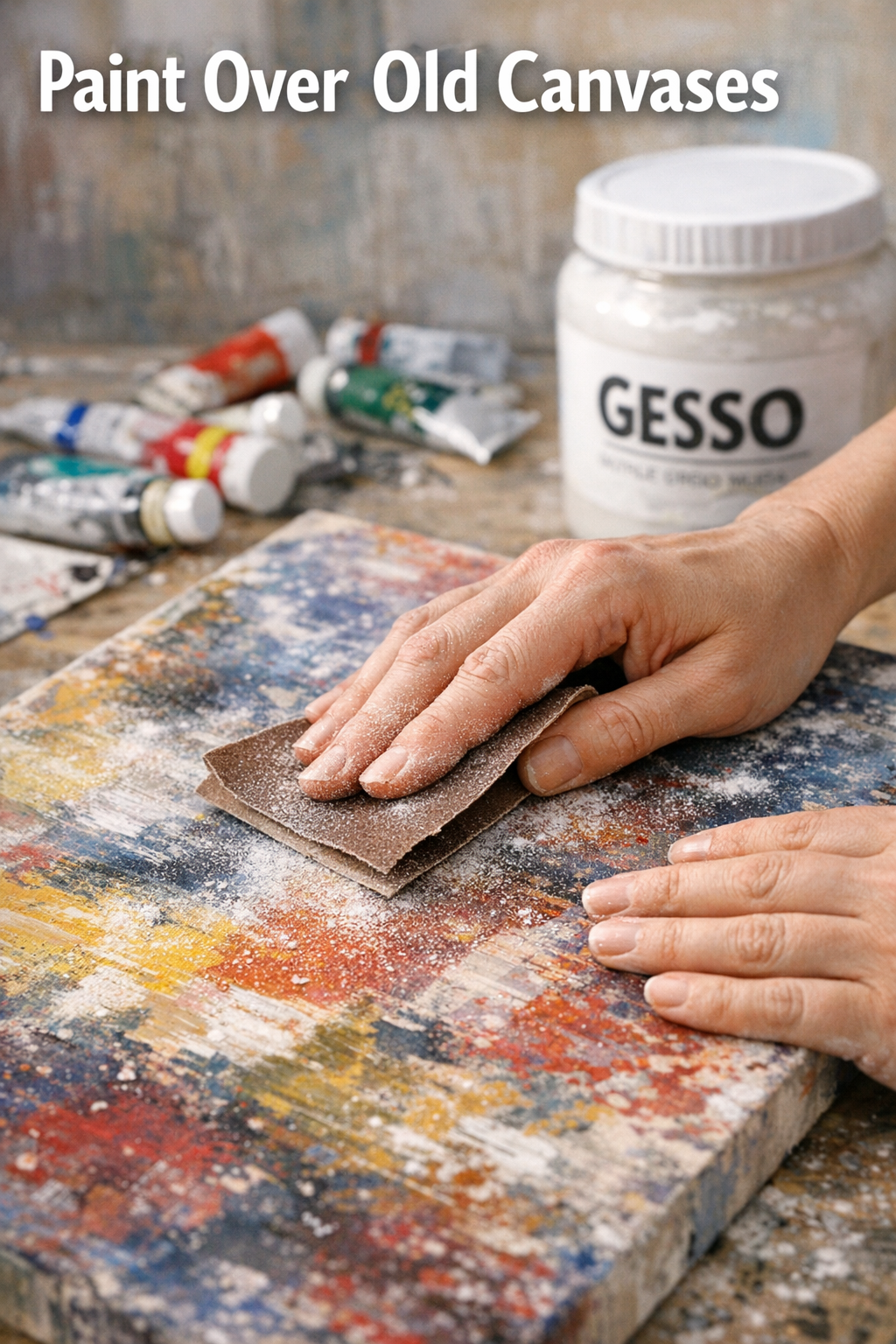
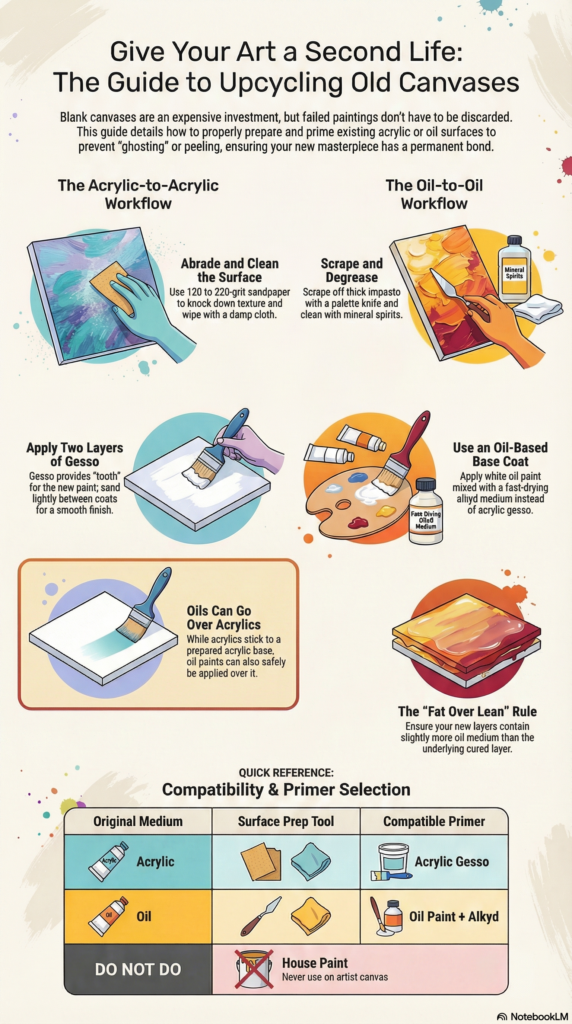
Start with medium-grit sandpaper. Abrasive experts at Norton Abrasives recommend 120 to 220 grit to safely rough up the surface without tearing the woven fabric. Rub down the entire painting to knock off heavy texture. Wipe away the dust with a damp cloth. Once the canvas is clean and dry, apply a layer of gesso.
Understanding the difference between primers and gesso is helpful here. Paint chemists at Liquitex note that gesso gives the surface enough microscopic tooth for the new paint to grab onto permanently. Let it dry completely before you start your new piece. Check out our guide on acrylic painting surfaces for more context on building grounds.
Can You Put Acrylic Gesso Over an Oil Painting?
No, you should never put acrylic gesso over an oil painting. Acrylic will not stick to oil permanently because the oil paint is too slick. Eventually, the acrylic gesso will crack and peel right off the canvas.
This is the biggest mistake beginners make. They assume gesso fixes everything. It does not. If you want to paint over an oil painting, you must use oil-based materials. The technical library at Winsor & Newton warns that water-based acrylics applied over cured linseed oil will inevitably delaminate. You are guaranteeing your new art will fall apart if you mix these incorrectly.
How to Safely Paint Over an Oil Canvas
Oils require more effort. The old oil paint is tough and often highly textured.
First, scrape off the thickest sections with a heavy palette knife. Retailers like Jackson’s Art Supplies stock heavy-duty scrapers specifically for leveling dried impasto. Then sand the surface to create tooth. Wipe the sanded surface clean with a rag lightly dampened with mineral spirits. Always follow the studio safety guidelines provided by Gamblin Artists Colors when handling solvents and cleaning up toxic dust.
Instead of gesso, apply a thin coat of white oil paint. You can mix this white paint with a fast-drying alkyd medium. Brands like Royal Talens formulate these mediums so you do not have to wait weeks for the layer to cure. This gives you a fresh, light surface to work on without risking peeling down the road.
What Is the Fat Over Lean Rule?
The fat over lean rule requires each new layer of oil paint to have more oil than the layer beneath it. This ensures the upper layers dry slower and remain more flexible than the bottom layers, preventing cracks.
When you paint over an old oil canvas, the original painting is fully cured. It is as lean as it will ever be. You can learn exactly how this works in our deep dive on the fat over lean rule. For long-term structural integrity, researchers at Natural Pigments confirm your new layers need to contain slightly more oil medium than a raw tube color.
You do not have to hoard failed paintings in a closet. Upcycling old canvases is a smart way to practice. Just remember the golden rule. Acrylic goes over acrylic, and oil goes over oil. Take the time to sand down the old texture. Apply the right base layer so your new work has a solid foundation.
If you find a small tear while sanding, you can repair minor canvas damage easily before you prime. Stop staring at that painting you hate. Get out your sandpaper and start over today.
Frequently Asked Questions
Do I have to use white gesso to cover an old painting? No. You can use black or clear gesso if you prefer a different base tone. White is just the most common choice because it hides dark colors best.
Can I use house paint to cover a canvas? It is a bad idea. House paint is not formulated to flex like artists’ acrylics. It will often crack or yellow over time.
How many coats of gesso do I need? Usually, two coats are enough to cover an old acrylic painting. Sand lightly between coats to get a perfectly smooth surface.
Can I paint oils over an acrylic painting? Yes. You can paint oils over acrylics safely. You just cannot do the reverse and paint acrylics over oils.
Should I stretch the canvas tighter before repainting? If the canvas is sagging, yes. Spray the back lightly with water or tap the corner keys to tighten it up before you apply your new primer.