In 2024, we marveled at how Artificial Intelligence could generate a photorealistic sunset in seconds. By 2025, those images flooded our feeds, becoming background noise. Now, as we step into 2026, a counter-revolution is underway.
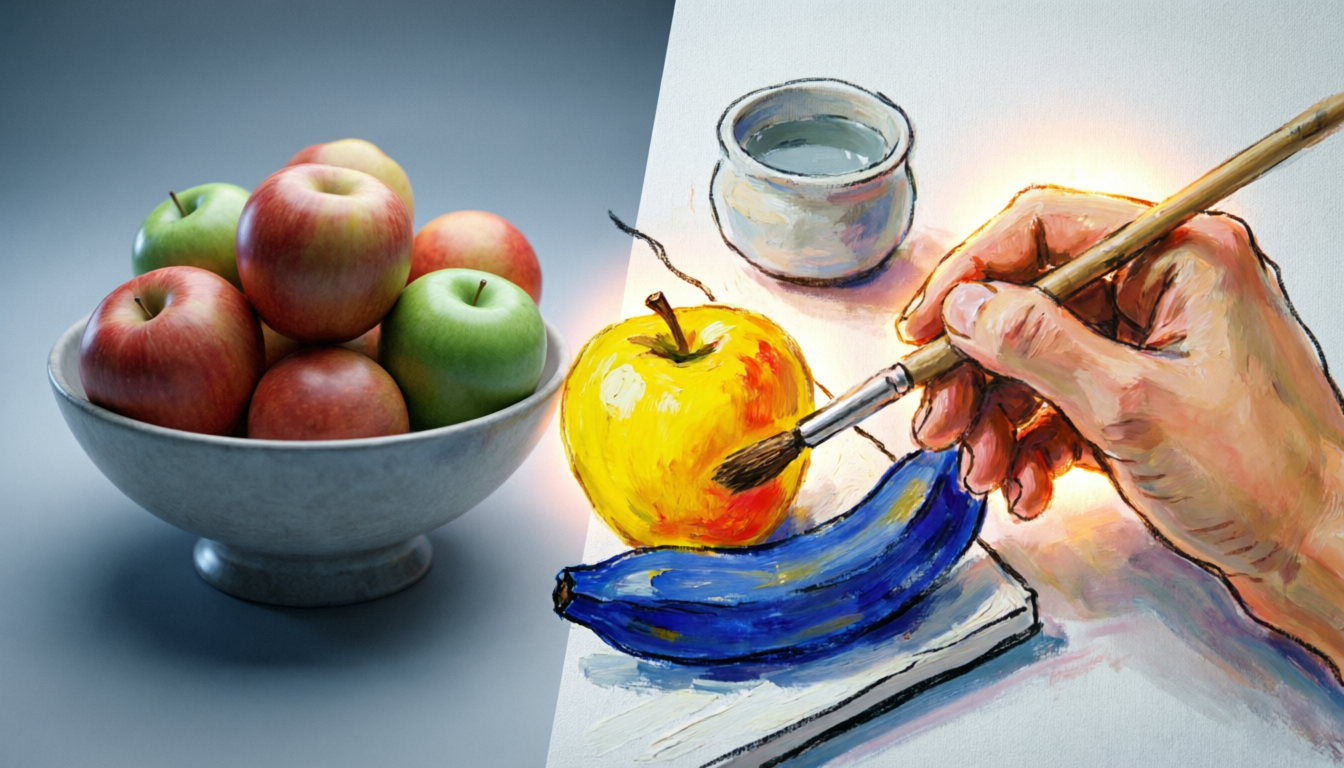
The era of digital perfection is dying. In its place rises something messy, wobbly, delightfully disproportionate, and undeniably human: Naïve Art.
For decades, “naïve” was an art historical term often used dismissively to describe work by self-taught artists lacking formal training—characterized by flat perspectives, bold colors, and a disregard for realistic proportions. Today, that same “lack of polish” has become the ultimate luxury good. In a world saturated with algorithmic smoothness, the human hand’s tremor is the new gold standard.
Here is why embracing the imperfect, the raw, and the “unskilled” is not just an aesthetic choice, but the smartest financial and cultural move you can make this year.
The Pendulum Swing: From Hyper-Realism to Raw Humanity
History shows us that art trends always swing like a pendulum. When photography became ubiquitous in the 19th century, painters didn’t try to paint more realistically; they invented Impressionism and Cubism to capture what cameras couldn’t: feeling and perspective.
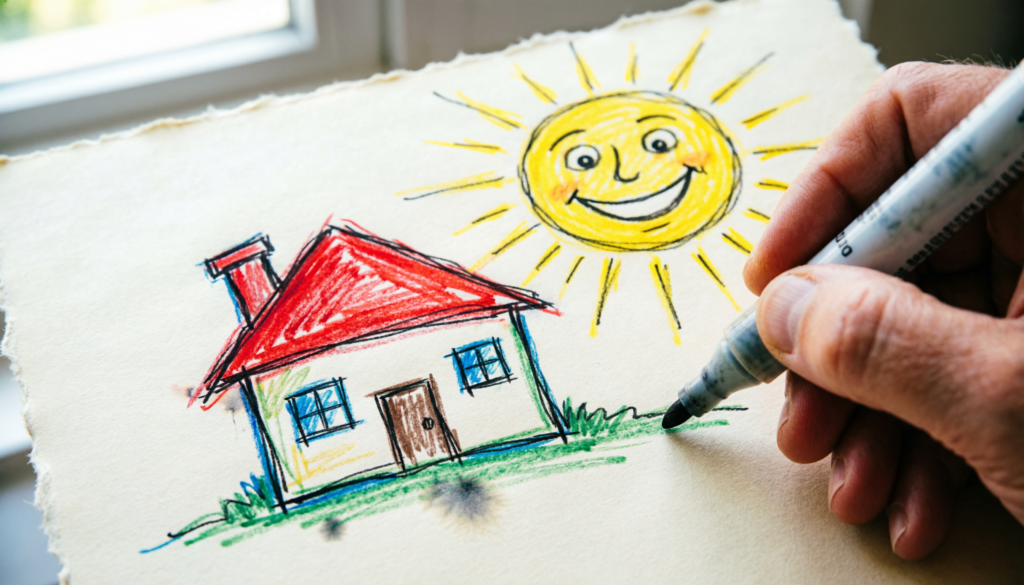
We are seeing the exact same shift today.
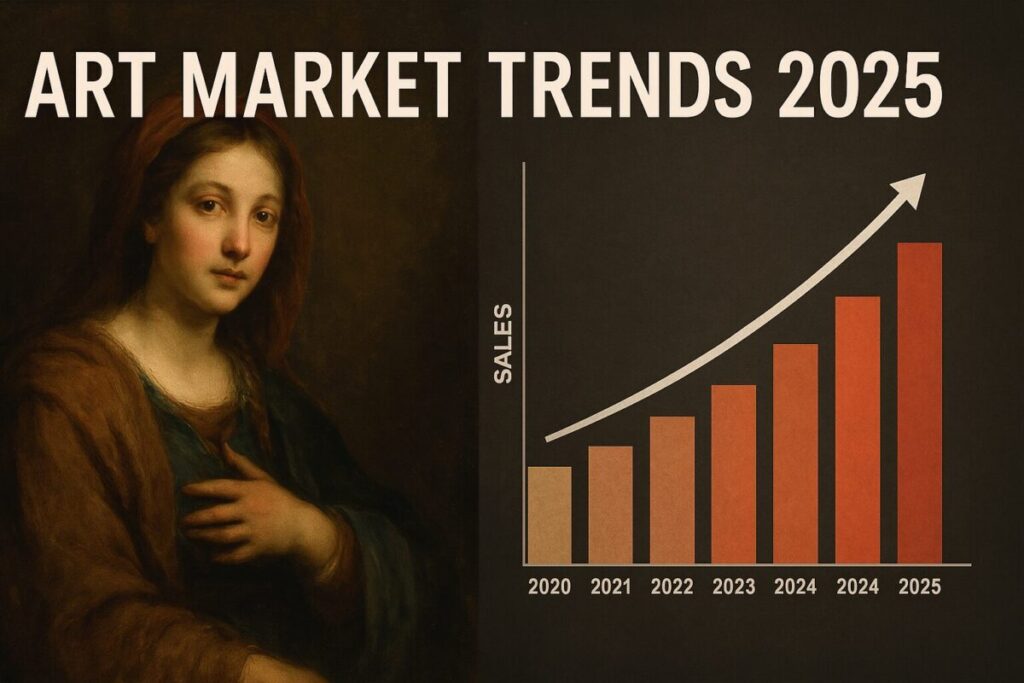
- 2020–2025: The age of the Filter. Everything was smoothed, color-graded, and optimized.
- 2026: The age of the Flaw. We crave texture, uneven lines, and the visible evidence of struggle.
When an AI creates an image, every pixel is mathematically perfect. There is no hesitation, no accidental drip of paint, no moment where the artist changed their mind mid-stroke. That absence of “process” makes the image feel cold. Naïve art, conversely, screams with life because it retains the fingerprint of its maker.
Why “Bad” Painting is Actually High-Value Investment
Collectors and interior designers are increasingly bypassing technically proficient academic art in favor of works that feel authentic and quirky. Here is the economics of the trend:
1. Scarcity of the Human Element
AI can generate infinite variations of a “cute cat.” It cannot replicate the specific, idiosyncratic way a human child or self-taught adult draws a cat with three legs and a smile that takes up half the face. That uniqueness creates scarcity. In economics, scarcity drives value.
2. The “Soul” Premium
Buyers in 2026 are looking for connection, not just decoration. A naïve painting tells a story of discovery. The wonky perspective suggests the artist was focusing on emotion rather than rules. This emotional resonance commands higher prices in galleries and online marketplaces.
3. Brand Differentiation
For businesses, using stock photos or AI-generated graphics makes you look like everyone else. Commissioning or creating naïve-style illustrations for your brand signals confidence, approachability, and humanity. It breaks the “corporate gloss” that consumers have grown tired of.
Defining the 2026 Naïve Aesthetic
What does this trend actually look like? It’s not just about copying folk art; it’s about adopting a mindset.
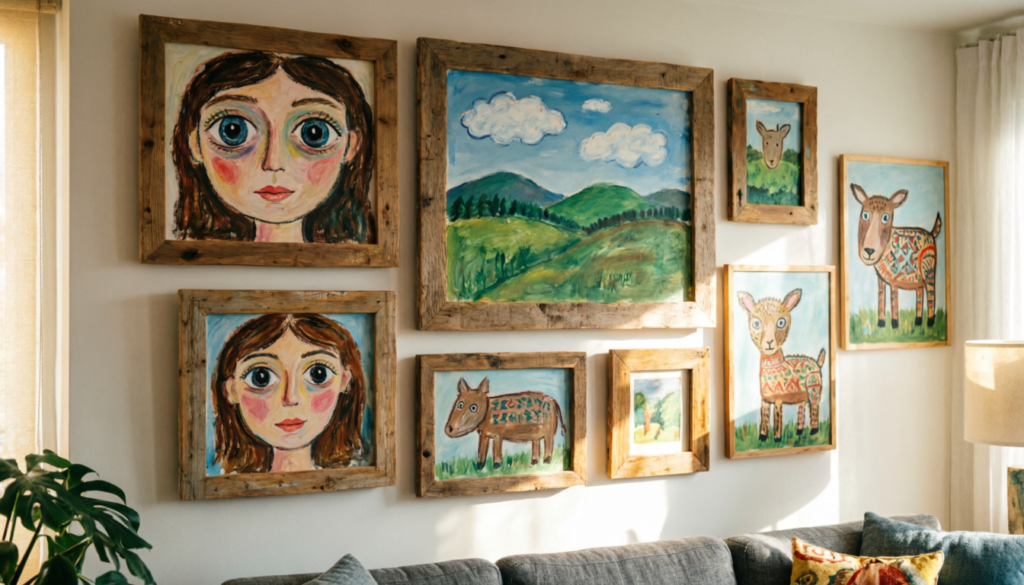
- Flattened Perspective: Objects don’t need to obey the laws of physics. A tree can be bigger than the house; a person can float above the ground.
- Bold, Unmixed Colors: Instead of subtle gradients, think solid blocks of vibrant red, electric blue, and sunshine yellow.
- Pattern Over Realism: Grass isn’t green blur; it’s individual distinct blades. Hair isn’t strands; it’s a pattern of swirls.
- Narrative Focus: The subject matter is often personal, storytelling-driven, or whimsical, rather than abstract or conceptual.
How to Embrace the Trend (Without Formal Training)
The beauty of the Naïve Art trend is that it democratizes creativity. You don’t need to know how to draw an eye perfectly to participate. In fact, trying too hard ruins the effect.
Step 1: Unlearn the Rules
Forget vanishing points. Forget anatomical correctness. If you want to paint a face, put the eyes where they feel right, even if that’s on the forehead. The goal is expression, not accuracy.
Step 2: Use Simple Tools
Complex brushes encourage blending and smoothing. Switch to:
- Markers or felt-tip pens (they don’t blend easily)
- House paint brushes (for thick, textured strokes)
- Your fingers (for direct tactile connection)
Step 3: Tell a Story
Naïve art is rarely abstract. Paint your dog, your morning coffee, your dream house, or a memory from childhood. Let the narrative drive the composition. If the table looks too small for the plates, leave it. That “mistake” adds character.
Step 4: Celebrate the “Oops”
Did the paint drip? Did you color outside the line? Keep it. In 2026, these aren’t errors; they are signatures of authenticity. They prove a human made this, in real time, with all their beautiful limitations.
The Future of Art is Imperfect
As technology advances, our definition of “quality” shifts. We used to value technical precision above all else. Now, we value intent and presence.
The rise of Naïve Art in 2026 isn’t a rejection of skill; it’s a reclamation of joy. It reminds us that art was never meant to be a test we have to pass. It was meant to be a language we speak to understand ourselves.
Whether you are an investor looking for the next big thing, a brand trying to connect with audiences, or simply someone seeking calm amidst the chaos of a hyper-digital world, the message is clear: Stop trying to be perfect. Start being real.
The market is ready. The collectors are waiting. And the most bankable asset you have right now is your own imperfect, unique, human hand.
Ready to start your own naïve art journey? Check out our guide on Painting for Stress Relief to let go of perfectionism, or explore our Beginner Painting Techniques to find your unique voice.