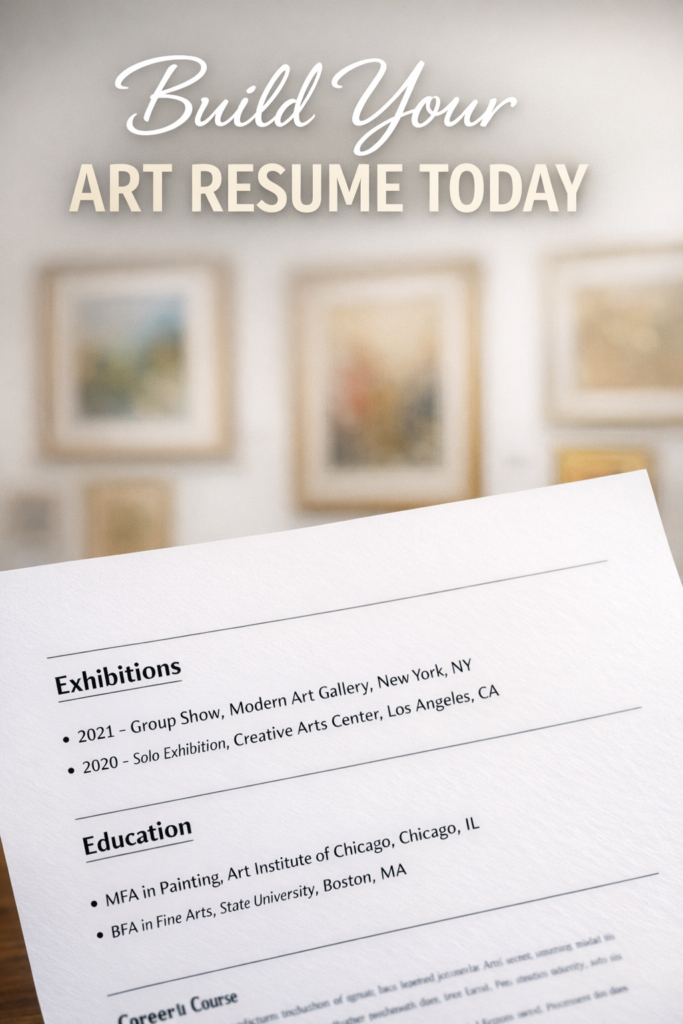
A professional painter CV organizes your artistic career into a standard format. It highlights your exhibitions, education and notable commissions so galleries and buyers can quickly assess your experience. Use this template to build a clear resume that gets your work noticed.
Building a professional CV feels disconnected from painting a canvas. Most artists hate the process. You spend hours mixing the perfect skin tones or mastering perspective. Then a gallery asks for your CV and you freeze.
A strong artist resume doesn’t need to be complicated. It just needs to follow a specific structure that curators expect. We will break down exactly what to include and give you a template to copy. Galleries read hundreds of these documents every month. They don’t want to hunt for information. They just want the facts presented clearly.
When I teach new painters how to start an art business, the CV is always the biggest mental block. Many painters think they lack enough experience to fill a page. We fix that today.
What Is the Standard Format for a Painter’s CV?
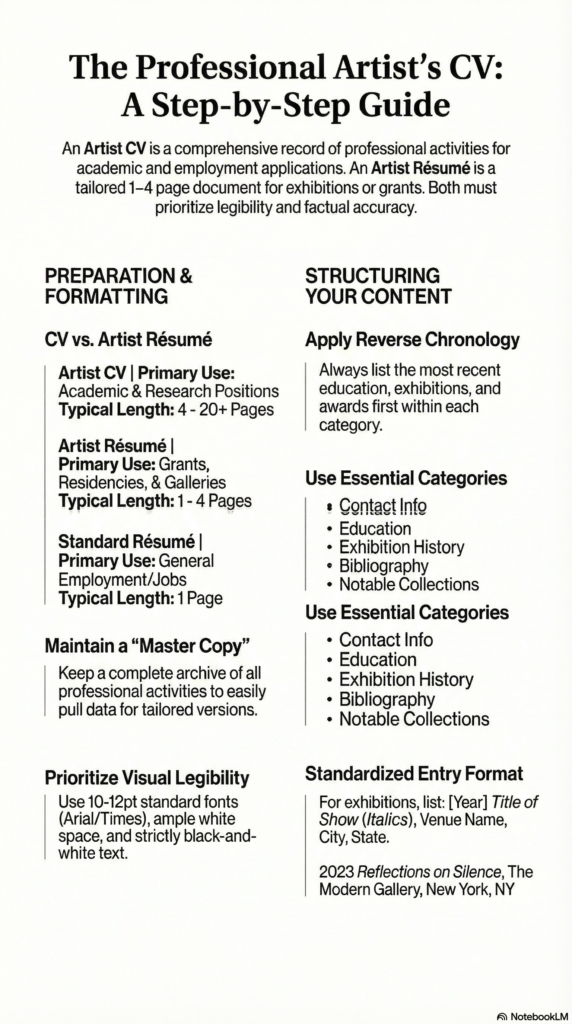
The standard format for a painter’s CV includes your contact information, education, solo and group exhibitions, awards and press. It organizes your artistic history chronologically so galleries can quickly read your accomplishments. This document focuses purely on your art career rather than unrelated day jobs.
You want to keep the layout incredibly simple. Black text on a white background works best. You need clear headings for each section. Standard formatting rules for artists say you put your most recent accomplishments at the top of each list. Think of your CV as a sibling to your art portfolio website. They both present your professional history without distraction.
Sample Professional Painter CV Template
Copy and paste this text to start your own document. Notice the clear spacing. Keep your font readable like Arial or Helvetica. A professional artist CV is different from a traditional job resume because it ignores your non-art employment history.
Jane Doe Email: jane@email.com | Website: janedoeart.com | City, State
EDUCATION 2023 BFA in Painting, State University, City, State
SOLO EXHIBITIONS 2025 “Colors of Home”, Downtown Gallery, City, State
GROUP EXHIBITIONS 2024 “Emerging Voices”, Main Street Arts, City, State 2023 “Spring Showcase”, University Gallery, City, State
AWARDS & GRANTS 2024 First Place, Regional Arts Council Grant
DOWNLOAD PROFESSIONAL CV TEMPLATE
How Do You List Exhibitions on an Art Resume?
You list exhibitions in reverse chronological order. Group your solo shows into one section and your group shows into another. Write the year first. Then write the title of the show in quotation marks. Follow that with the gallery name and the city.
Galleries want to see your most recent work first. If you have dozens of shows, you can pick the best ones. Experts advise putting solo before group exhibitions when space gets tight. Keep the formatting identical for every single entry. Consistency makes the page easy to scan.
Where Do Commissions and Collections Belong?
Commissions and collections belong in their own dedicated sections near the bottom of your CV. Label one section “Private Collections” and list the names of prominent buyers. Label another section “Commissions” for specific projects you created for corporate or public clients.
Only list private collectors if they give you permission. For public art, list the organization that hired you. Handling private collections and corporate commissions correctly shows galleries that people already invest in your work. This builds instant credibility.
Common CV Mistakes Artists Make
Artists try to make their resumes look creative. This is a huge mistake. Don’t use wild fonts. Don’t add colored backgrounds. Curators hate reading those. Another mistake is listing your day job. Galleries only care about your art. Common mistakes to avoid in formatting also include adding personal hobbies. Keep things focused. A clean CV helps you build your art brand by looking like a professional. Let your actual paintings show your creativity.
Your CV is a living document. It grows every time you complete a show or land a new grant. Stop overthinking the design. Stick to clean text and clear categories. Update it twice a year. If you want to keep succeeding as an online artist, you need your professional materials ready at all times. Open a blank document right now. Type your contact information at the top. Copy the template from this post and fill in your history. Send it out to that gallery you have been watching.
Frequently Asked Questions
- How long should an artist CV be? An artist CV should be one to four pages long. Beginners should keep it to one page. The ideal length for a beginner artist CV is brief and highly relevant to your recent work.
- Do I include my artist statement on my CV? No. Your artist statement is a completely separate document. Keep your CV focused purely on your factual history like education and exhibitions.
- Should I put my prices on my resume? Never put artwork prices on your CV. Discuss prices in a separate price list or directly with the gallery when they ask.
- What if I don’t have any exhibitions yet? List your education and any relevant workshops you attended. Dealing with a lack of exhibition history is normal for beginners. Focus on the skills you have actively built.
- Does an artist CV need a headshot? No. Professional artist CVs don’t use photos. You should not include a headshot on a professional CV because curators want to focus entirely on your artistic achievements.