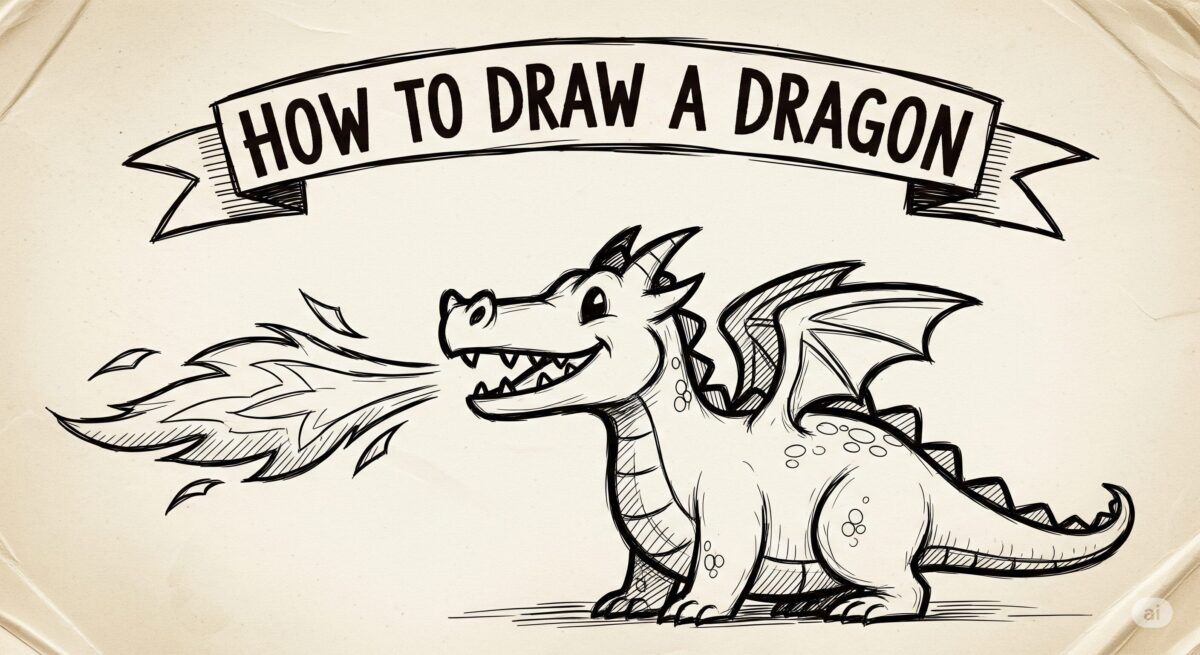
Drawing dragons has captivated artists for centuries, and now it’s your turn to bring these magnificent mythical creatures to life on paper! Whether you dream of creating fierce, fire-breathing Western dragons or elegant, serpentine Eastern dragons, learning how to draw a dragon for beginners doesn’t have to be intimidating. With the right approach, simple techniques, and a bit of practice, you can master the art of dragon drawing and create stunning artwork that showcases your creativity.
Key Points Summary
- Start with basic geometric shapes like circles and ovals to build your dragon’s foundation
- Study real animal anatomy from reptiles, birds, and bats to make your dragon look believable
- Use light pencil strokes initially so you can easily erase and refine your work
- Add details gradually, starting with the basic structure before moving to scales, spikes, and other features
- Practice different dragon types to expand your artistic skills and find your preferred style
Understanding Dragon Anatomy: Building from Reality
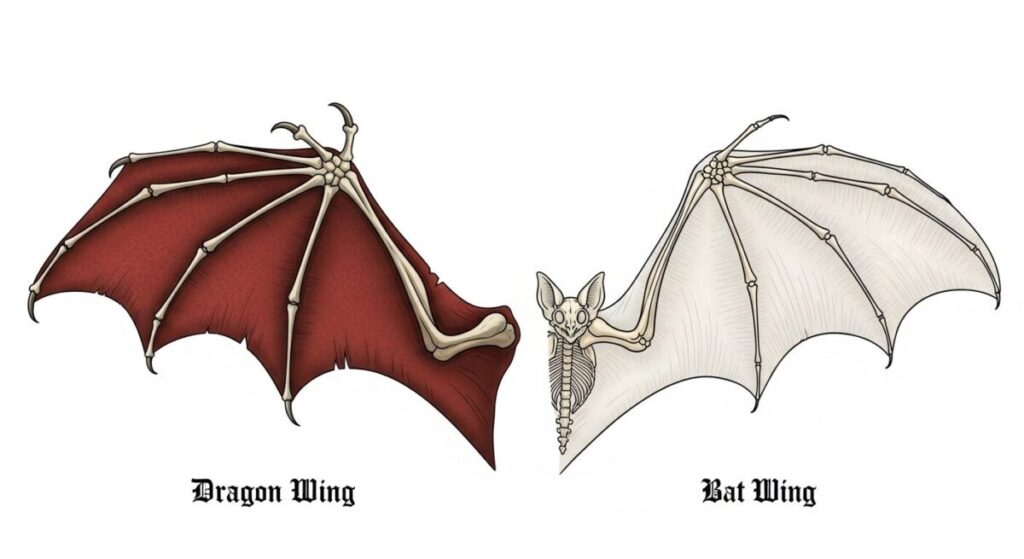
Before diving into your first dragon sketch, think of these mythical beasts as combinations of real animals. This approach makes creating believable fantasy creatures much easier! A dragon’s powerful legs might resemble those of a Komodo dragon, while their spiny backs could mirror an iguana’s distinctive features. The leathery wings? Think bat anatomy.
Start by observing how different animals move and position their bodies. This foundation knowledge will help your dragons look natural and dynamic, even in fantastical poses. Remember, the best fantasy art often roots itself in reality before taking creative flights.
How to Draw a Dragon for Beginners: Step-by-Step Process
Getting Started: Essential Materials

You don’t need expensive supplies to begin your dragon-drawing journey. Here’s what you’ll need:
- Pencils (HB and 2B work great)
- Quality eraser
- Drawing paper or sketchbook
- Optional: blending stumps for shading
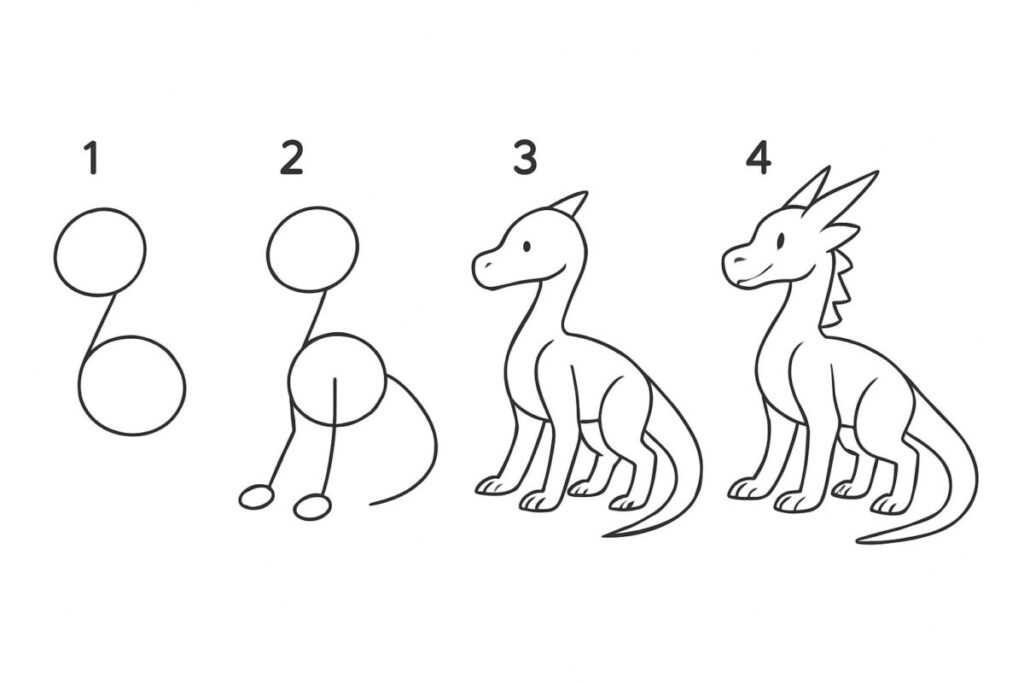
Step 1: Sketch the Basic Framework
Begin with simple shapes that form your dragon’s skeleton:
- Draw a large circle for the chest area
- Add a slightly smaller circle for the hip region
- Connect these with a curved line representing the spine
- Sketch a smaller circle for the head
- Add a guideline showing where the snout will point
This basic framework is crucial – it determines your dragon’s pose and proportions. Take time to get these foundation shapes right before moving forward.
Step 2: Building the Body Structure
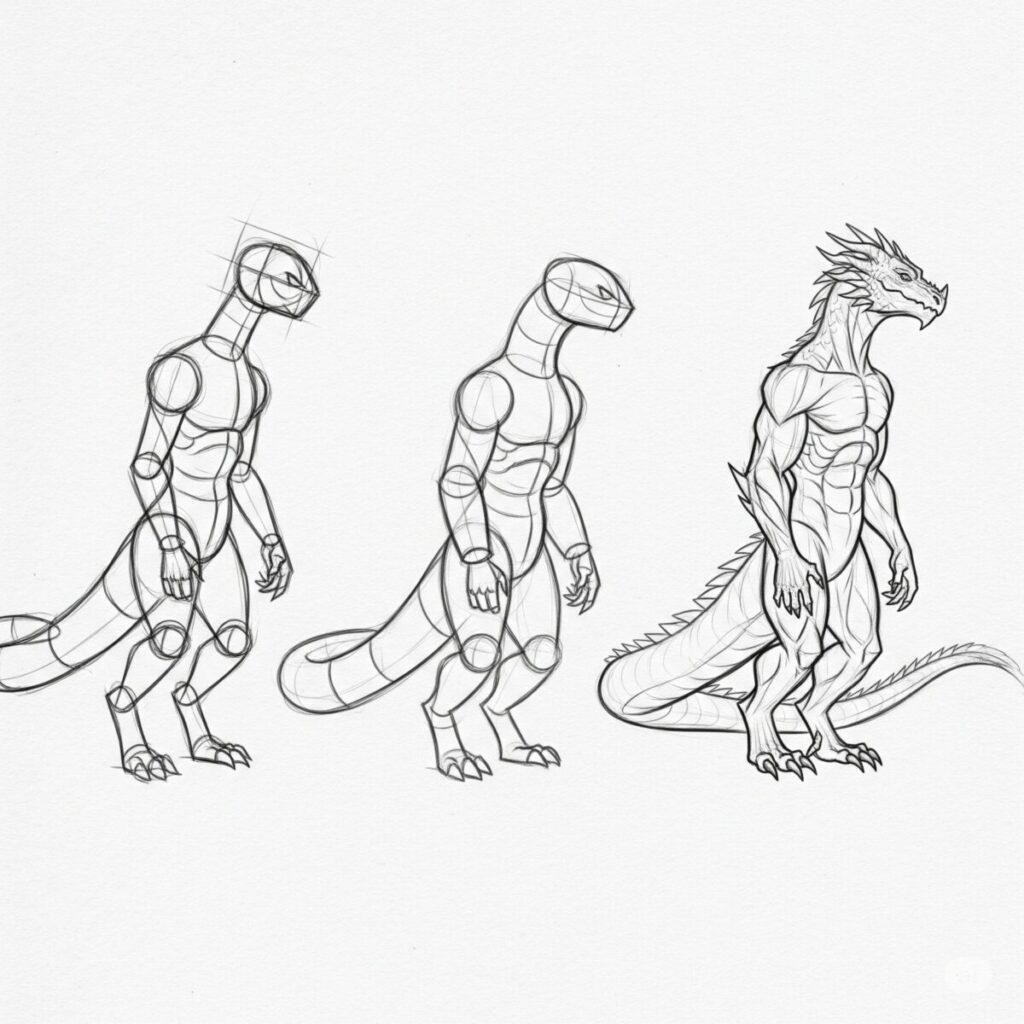
Now it’s time to flesh out your dragon:
- Use curved lines and oval shapes to sketch the limbs
- Think of legs and arms as cylinders to give them dimension
- Add the tail as a flowing curved line extending from the hip area
- Connect your basic shapes with confident, flowing lines
- Start adding muscle mass to the chest and leg areas
Step 3: Crafting the Dragon’s Head
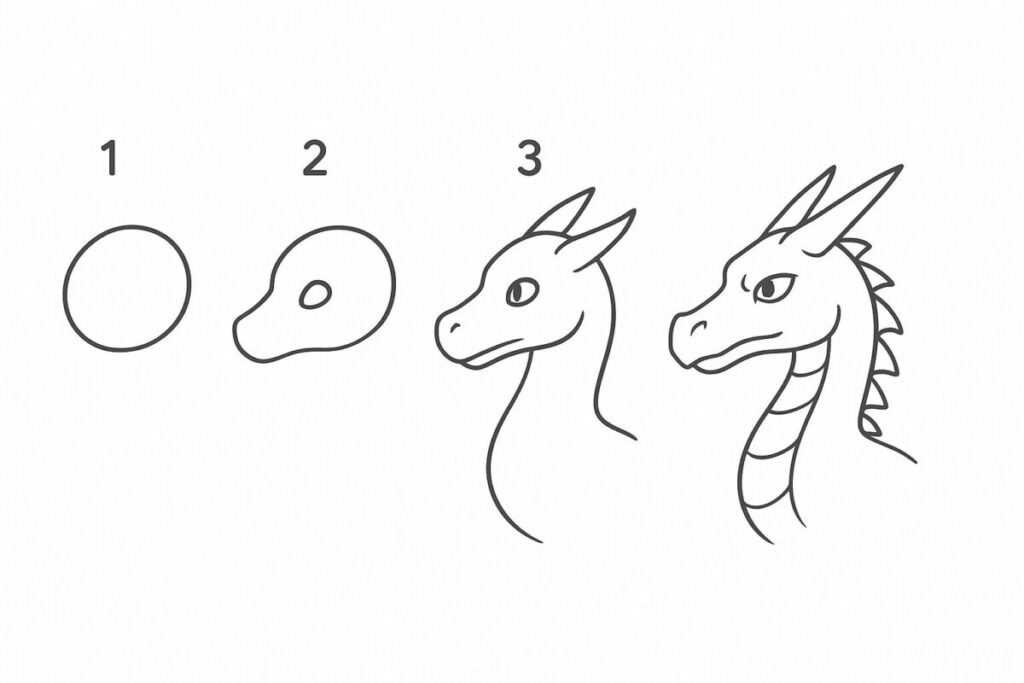
The head gives your dragon personality and character:
- Refine the skull shape from your initial circle
- Add eye sockets and position the eyes carefully
- Sketch the nostrils and mouth opening
- Include distinctive features like horns, spikes, or frills
- Consider the dragon’s expression – fierce, wise, or playful?
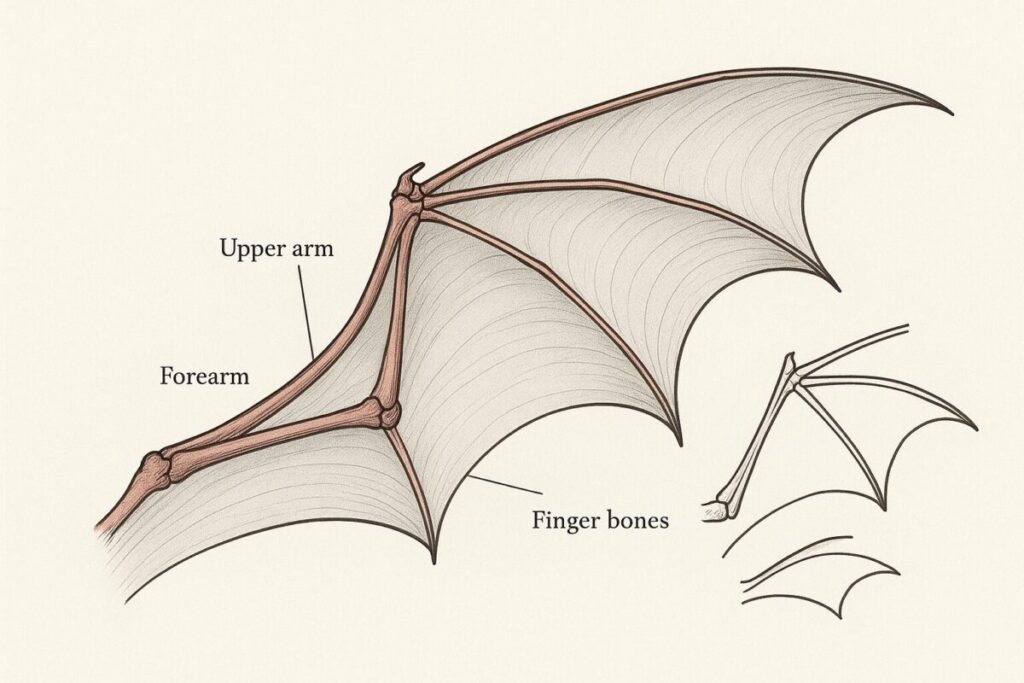
Step 4: Creating Magnificent Wings
If your dragon has wings, start with the bone structure:
- Draw the main wing bones extending from the shoulders
- Add finger-like supports similar to bat wing anatomy
- Connect these supports with curved membrane lines
- Vary the wing position – spread wide for flight or folded for rest

Step 5: Adding Details and Texture
This final step brings your dragon to life:
- Add scales of varying sizes across the body
- Include sharp claws on feet and wing tips
- Draw teeth and inner mouth details
- Add texture to horns and spikes
- Consider battle scars or unique markings
Famous Dragon Art Throughout History
Dragons have inspired countless artists across cultures and centuries. Studying masterworks can improve your own dragon drawing skills by showing different approaches to anatomy, style, and artistic interpretation.
| Artist/Culture | Artwork | Period | Style Characteristics |
|---|---|---|---|
| Chinese Imperial Art | Nine Dragons Scroll | Song Dynasty (960-1279) | Flowing, serpentine forms; cloud motifs |
| Katsushika Hokusai | Dragon in Clouds | Edo Period (1760-1849) | Bold brushstrokes; atmospheric effects |
| European Medieval | Book of Kells Dragons | 8th-9th Century | Intricate knotwork; stylized forms |
| Gustav Doré | Dante’s Inferno Illustrations | 19th Century | Dramatic lighting; detailed engravings |
| Frank Frazetta | Death Dealer Series | 20th Century | Dynamic poses; fantasy realism |
| Boris Vallejo | Fantasy Dragon Paintings | Late 20th Century | Muscular anatomy; vibrant colors |
| Contemporary Digital | Concept Art (Games/Films) | 21st Century | Photo-realistic; diverse interpretations |
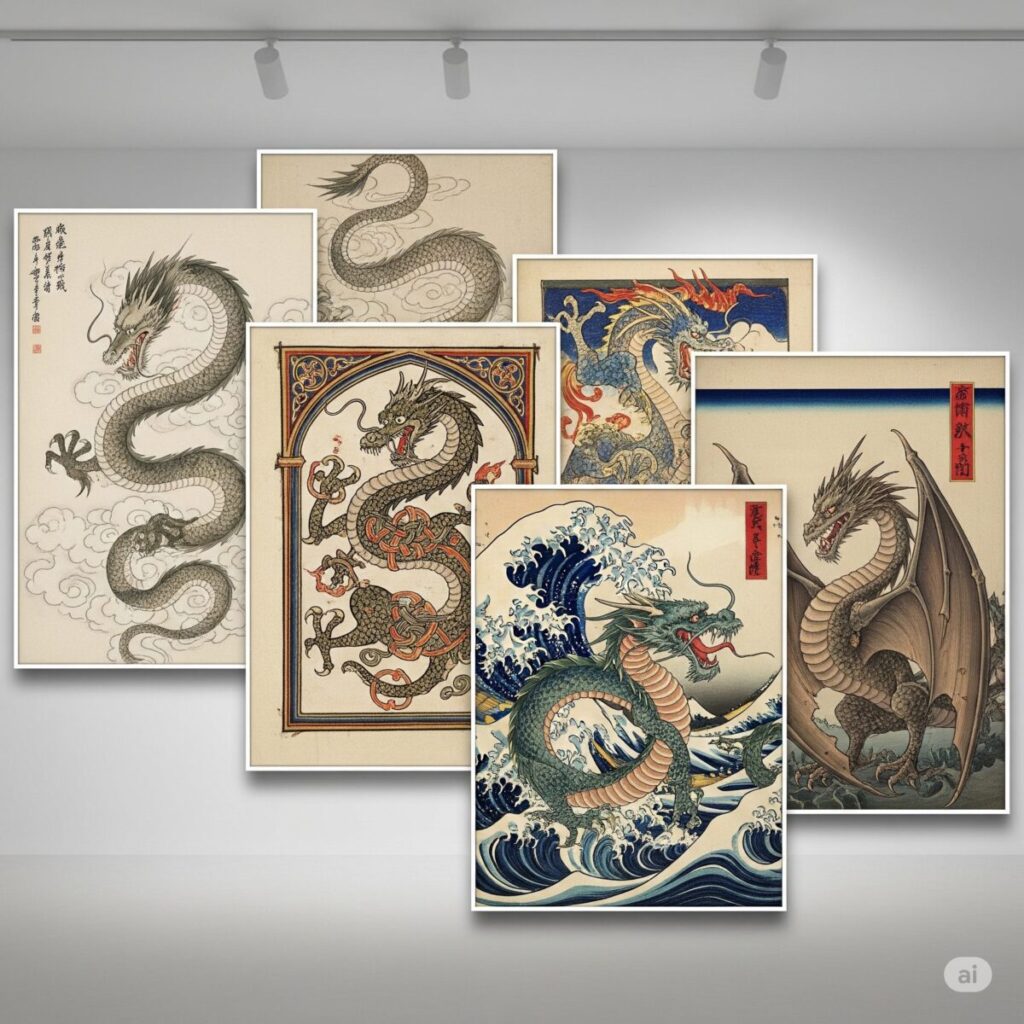
These masterpieces demonstrate how dragon art has evolved while maintaining core elements that make these creatures captivating. Notice how each culture brings unique characteristics – Chinese dragons emphasize flow and grace, while Western dragons focus on power and majesty.
Exploring Different Dragon Types
Understanding various dragon traditions helps expand your artistic repertoire:
| Feature | Western Dragons | Eastern Dragons |
|---|---|---|
| Body Type | Large, muscular, winged | Long, serpentine, graceful |
| Legs | Four powerful limbs | Four legs or none |
| Wings | Large bat-like wings | Usually no wings |
| Symbolism | Power, treasure, danger | Wisdom, good fortune, water |
| Habitat | Mountains, caves | Rivers, skies, clouds |
Each type offers unique drawing challenges and opportunities. Western dragons let you practice wing anatomy and powerful poses, while Eastern dragons teach flowing, graceful lines and movement.

Pro Tips for Better Dragon Drawings
Study Real Animals
Look at nature for inspiration:
- Komodo dragons for powerful body structure
- Iguanas for spiky back details
- Bats for wing membrane and finger placement
- Snakes for flowing tail movements
- Birds for flight poses and wing positions
Master the Basics First
Focus on getting proportions right before adding complex details. A well-proportioned simple dragon looks better than a poorly structured detailed one.
Practice Different Poses
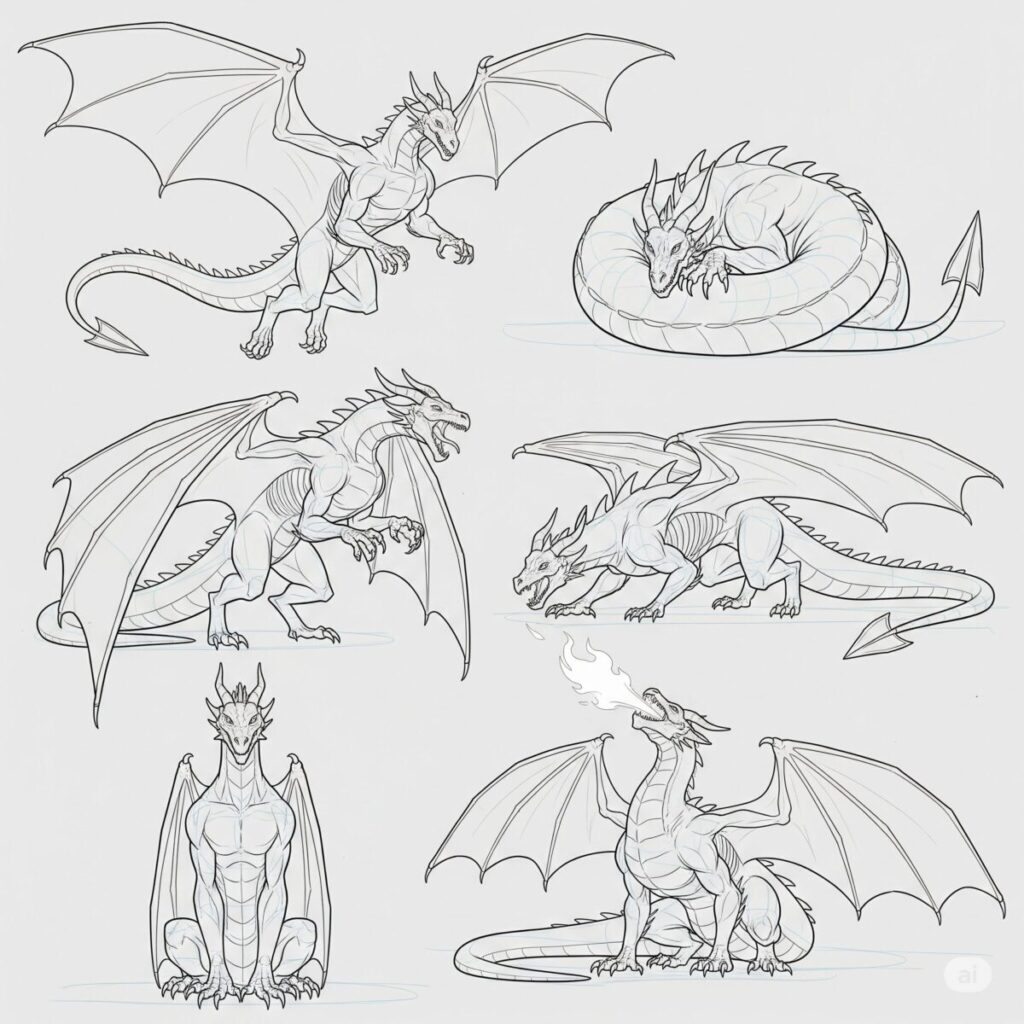
Try various positions:
- Flying dragons with outstretched wings
- Coiled sleeping dragons
- Rearing up on hind legs
- Prowling or stalking positions
Common Mistakes to Avoid
Overcomplicating Early Sketches: Keep initial drawings simple. You can always add complexity later.
Ignoring Proportions: A dragon’s head should relate properly to its body size. Use reference measurements.
Making Every Scale Identical: Vary scale sizes and shapes for more natural appearance.
Forgetting Weight Distribution: Consider how a heavy dragon body would affect leg positioning and balance.
Adding Your Personal Style
Once you master basic dragon anatomy, experiment with unique elements:
- Different scale patterns and textures
- Unique horn or spike arrangements
- Special color schemes and markings
- Environmental elements like fire, ice, or magic effects
- Personality traits reflected in facial expressions
As Pablo Picasso wisely said,
“All children are artists. The problem is how to remain an artist once he grows up.”
Embrace that childlike wonder and creativity when drawing dragons – let your imagination soar!
Building Your Dragon Drawing Skills
Consistent practice leads to improvement. Try these exercises:
- Daily sketching: Even 10 minutes helps build muscle memory
- Study different artists: See how others approach dragon anatomy
- Experiment with styles: Try realistic, cartoon, and stylized approaches
- Join art communities: Share work and get feedback from other artists
Consider exploring drawing fundamentals to strengthen your overall artistic foundation. Understanding different art movements can also inspire unique dragon designs.
Frequently Asked Questions
What’s the easiest dragon to draw for complete beginners? Start with a simple side-view Western dragon. The profile position makes proportions easier to manage, and you can focus on basic shapes before attempting complex angles.
How do I make my dragon look more realistic? Study real animal anatomy, pay attention to proper proportions, and add natural-looking details like varied scale sizes and realistic muscle definition. Proper shading also adds dimensionality.
Should I draw Western or Eastern style dragons? Try both! Western dragons help you practice wings and powerful anatomy, while Eastern dragons teach flowing, graceful line work. Each style develops different artistic skills.
What pencil type works best for dragon drawings? Start with an HB pencil for initial sketches, then use 2B for darker lines and details. Having both allows for light construction lines and bold final strokes.
How can I overcome creative blocks when drawing dragons? Try creative block solutions and experiment with different poses, expressions, or dragon types. Sometimes changing your reference material or trying a new art style helps spark creativity.
How long does it take to get good at drawing dragons? With regular practice, you’ll see improvement within weeks. Mastering dragon anatomy typically takes months of consistent drawing, but everyone progresses at their own pace.
Taking Your Art Further
Once you’ve mastered basic dragon drawing, consider expanding your skills:
- Build an art portfolio showcasing your dragon artwork
- Explore brush stroke techniques for painted dragon art
- Learn about fine art principles to elevate your work
Conclusion
Learning how to draw a dragon for beginners opens up a world of creative possibilities. By starting with basic shapes, studying real animal anatomy, and practicing regularly, you’ll develop the skills needed to create magnificent dragon artwork. Remember that every professional artist started with simple sketches, so be patient with yourself and enjoy the creative journey.
The key to success lies in consistent practice and maintaining that sense of wonder that makes dragons so captivating. Whether you prefer the mighty Western dragon or the graceful Eastern serpent, your unique artistic voice will emerge as you continue developing these fundamental skills. So grab your pencil, embrace the magic, and start bringing your own dragons to life on paper today!
Additional Resources
- WikiHow Dragon Drawing Tutorial – Comprehensive step-by-step guide with illustrations
- Winged Canvas Dragon Tutorial – Detailed art tutorial with tips
- Monika Zagrobelna’s Dragon Guide – Professional artist’s approach to dragon anatomy
- Art for Kids Hub – Mythical Creatures – Family-friendly drawing tutorials
- Pablo Picasso Quotes on Goodreads – Artistic inspiration and motivation