Colouring books are more than just child’s play — they’re a creative, calming, and confidence‑building tool for anyone. In this expanded guide to colouring books, we’ll explore what they are, how to choose them, how to use them with intention, and how they connect to deeper art practices on Prominent Painting. You’ll also find tips, examples, and supportive ideas to help you grow, regardless of whether you’re a beginner or a returning artist.
Key Point Summary:
- A colouring book presents line‑art for you to fill in using crayons, pencils, markers, or paint.
- There are many styles: children’s, adult’s, themed, therapeutic, and digital.
- Choosing the right book depends on paper quality, subject matter, binding, and medium.
- Colouring books encourage relaxation, focus, creativity, and artistic skill development.
- They can act as a bridge into deeper art skills, including painting, colour theory, shading, and composition.
- They provide a low‑pressure environment where experimentation feels safe and enjoyable.
What Exactly Is a Colouring Book?
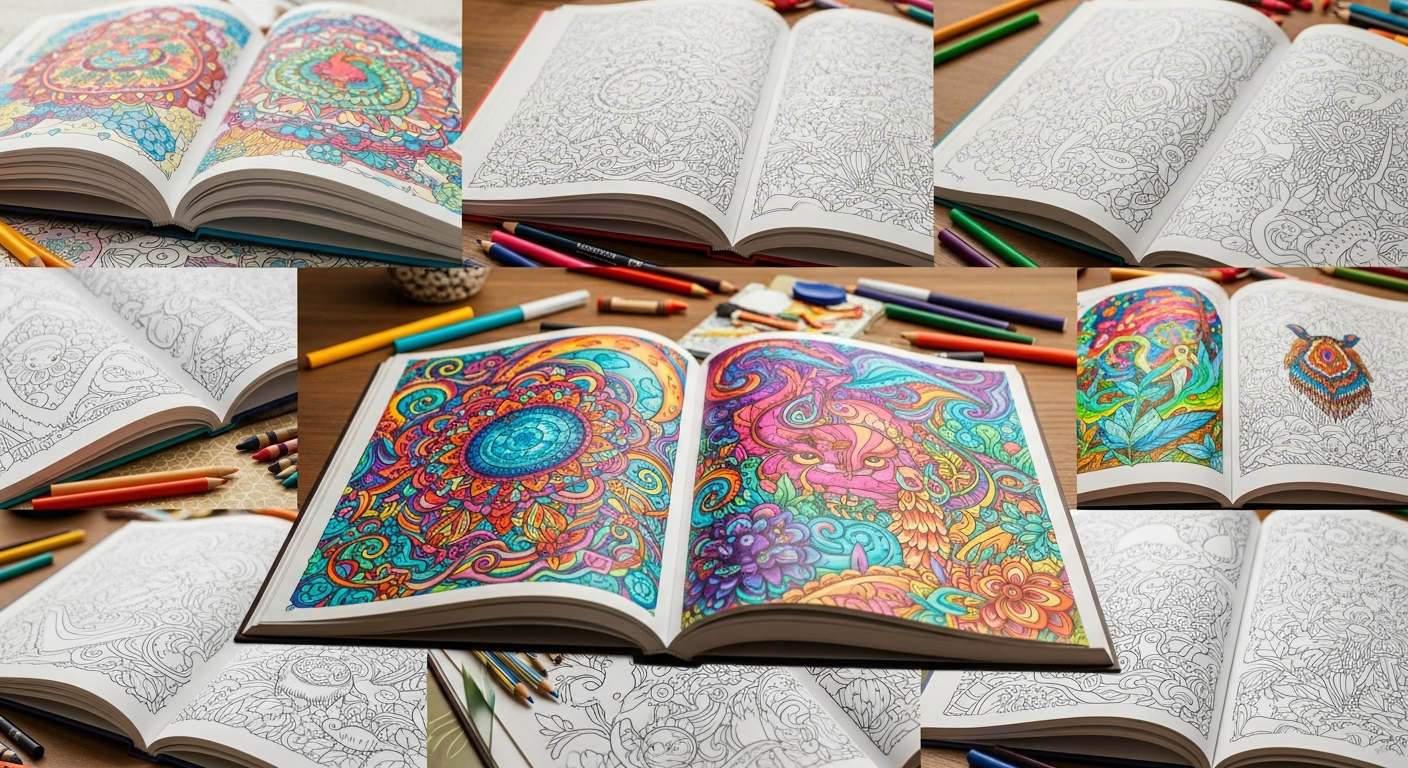
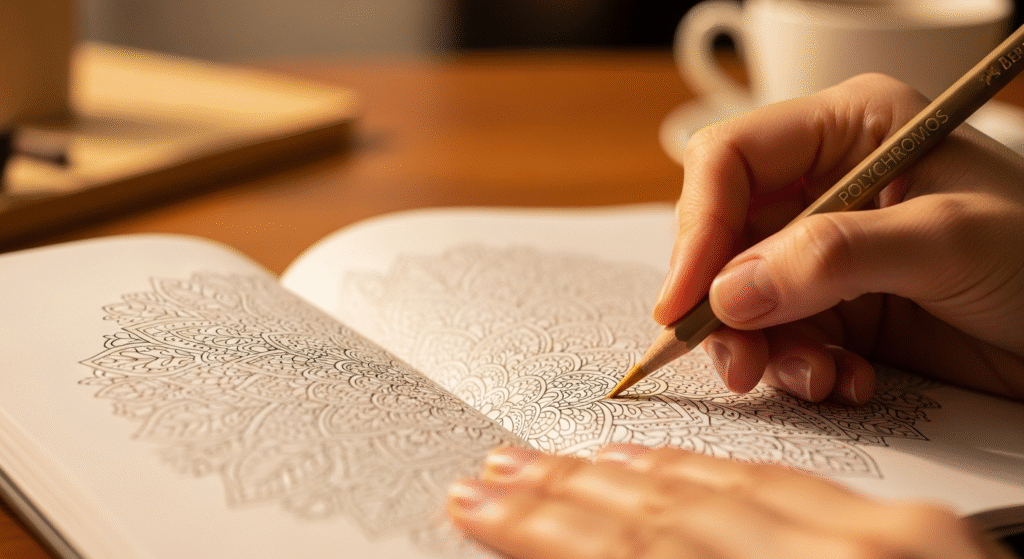
A colouring book is a collection of pre‑drawn images that you bring to life with colour, imagination, and personal style. While often seen as children’s activities, colouring books have become a powerful creative tool for people of all ages. Modern adult colouring books feature everything from nature scenes and animals to abstract patterns, mandalas, and artistic line drawings.
People use colouring books for many reasons, including:
- Relaxation and mindfulness – The repetitive, gentle motion of colouring helps quiet the mind.
- Skill‑building, such as improving hand‑eye coordination, fine motor control, and patience.
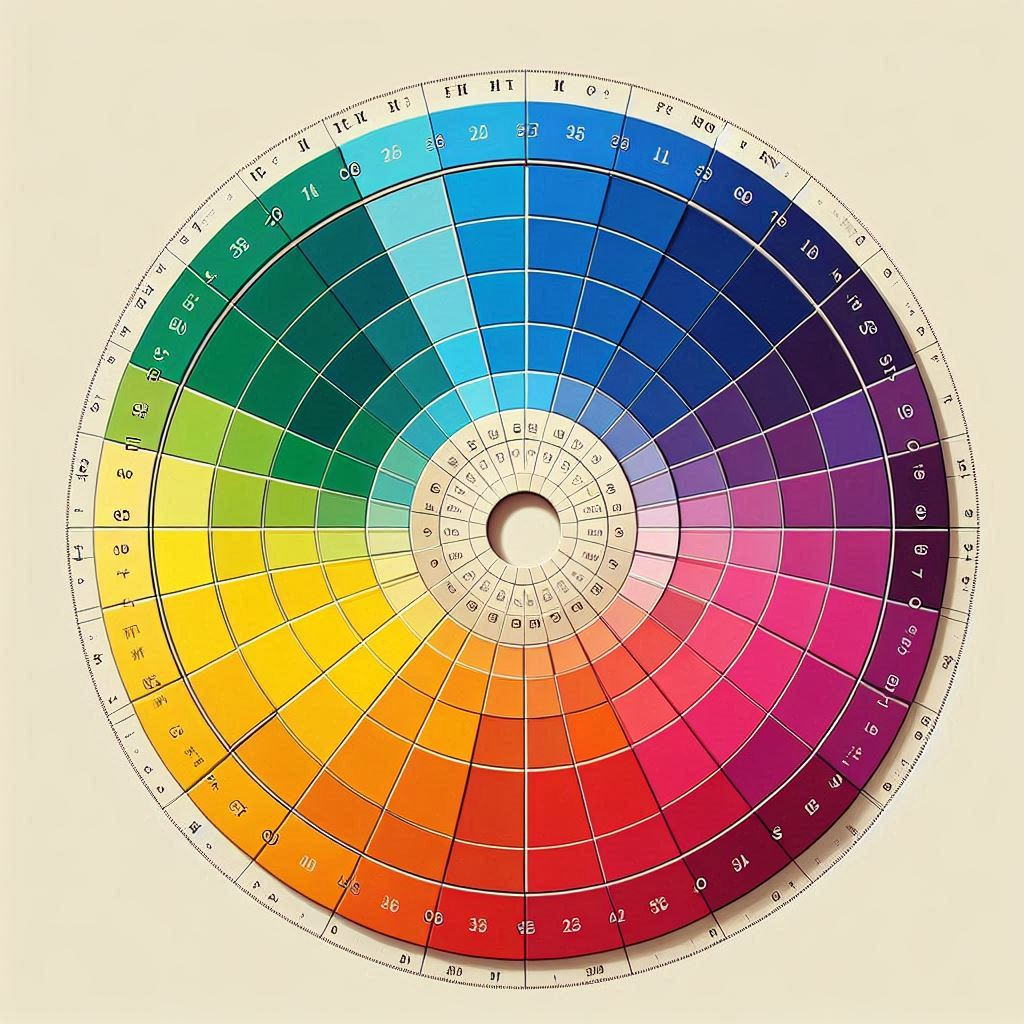
- Exploring colour theory — experimenting with palettes, contrasts, temperature, and harmony.
- Artistic expression without needing to draw from scratch.
- Creativity practice — testing shading, blending, layering, and even mixed media.
- Boosting confidence — finishing a page feels rewarding and encourages further art exploration.
Colouring books also offer structure, which makes them less intimidating than a blank page. This can be very helpful for new artists or anyone restarting their creative journey.
Types of Colouring Books
Before choosing a colouring book, it helps to understand the different categories available so you can pick one that matches your interests, skill level, and preferred art materials.
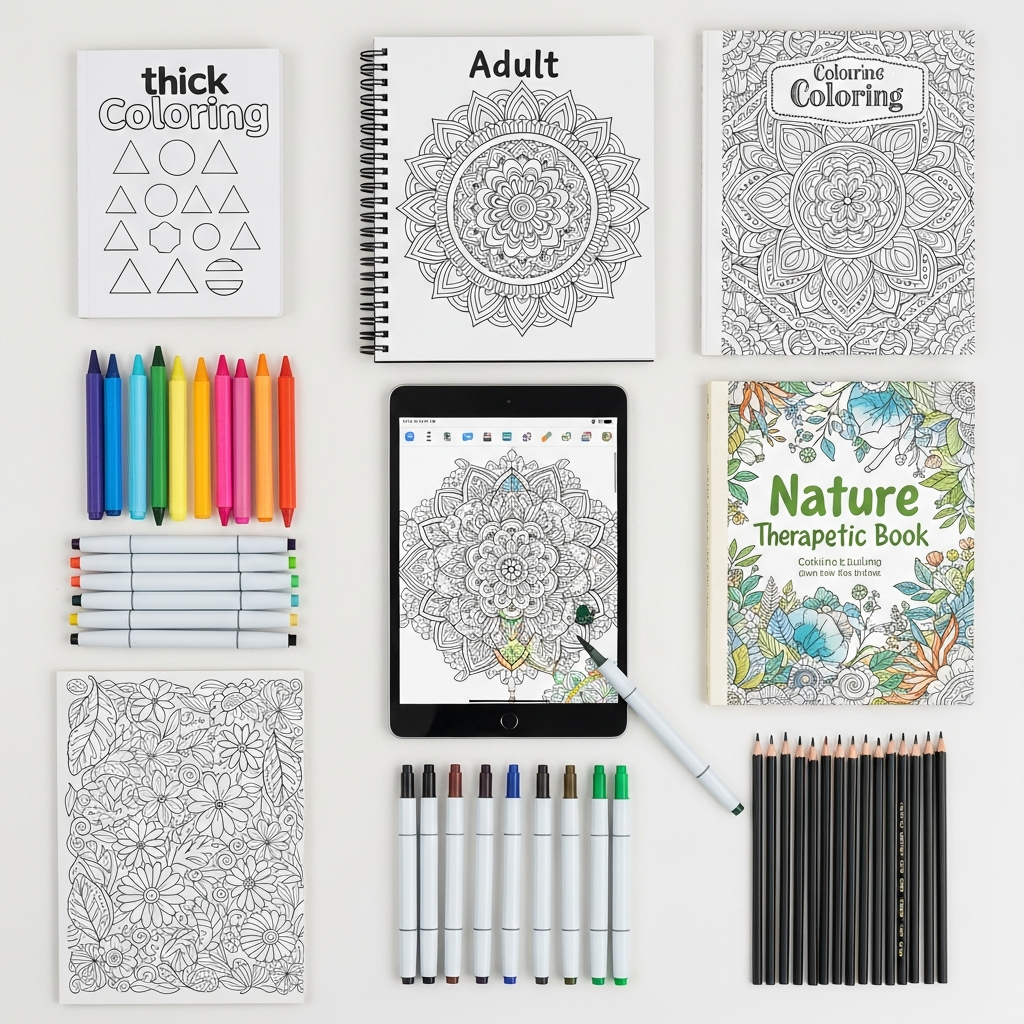
| Type | Who It’s For | Why It’s Special |
|---|---|---|
| Kids’ | Young children | Simple shapes, bold outlines, and fun characters |
| Adult | Teens & adults | Intricate patterns, mandalas, nature scenes |
| Activity/Themed | All ages | Includes puzzles, prompts, stickers, or learning elements |
| Digital | All ages | Colour on tablets or devices, unlimited undo |
| Therapeutic | Adults | Focuses on mindfulness, calmness, and slow art |
| Educational | Students & hobbyists | Teaches subjects like anatomy, plants, or animals |
| Artistic/Pro | Art learners | Complex line‑art designed for shading and blending practice |
Adult colouring books have grown especially popular because they offer comforting, screen‑free relaxation. Some artists even use them as warm‑up exercises before painting sessions.
How to Choose the Right Colouring Book
When choosing a colouring book, think about how you plan to use it and what materials you enjoy working with. Consider the following:
1. Paper Thickness and Quality
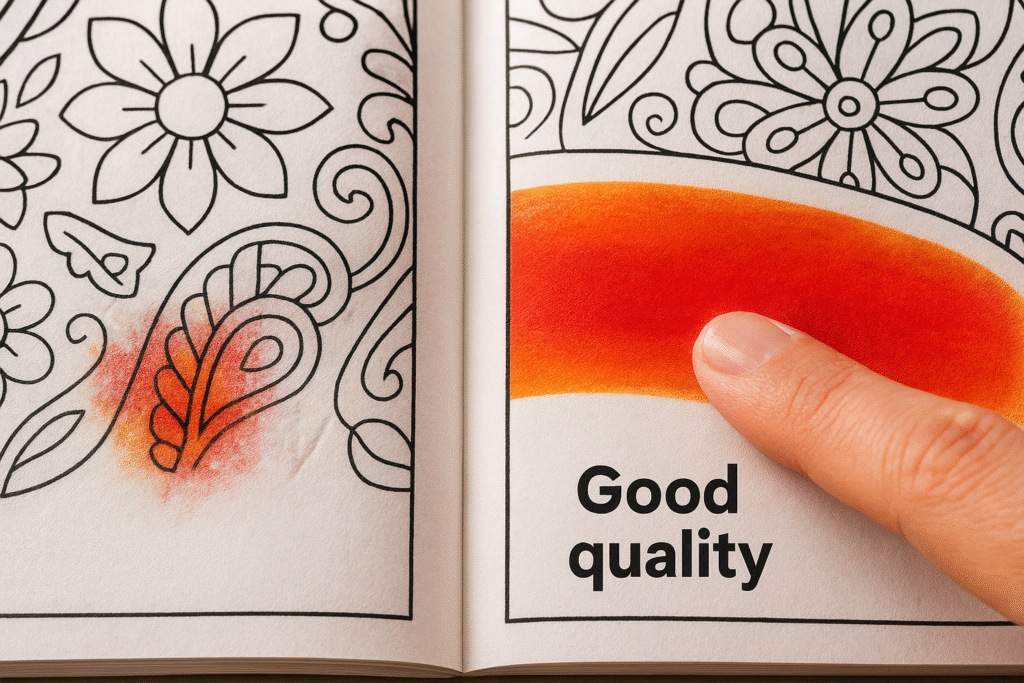
- Thin pages work best with coloured pencils, graphite, or light gel pens.
- Thicker paper lets you use markers, fineliners, brush pens, and sometimes watercolour washes.
- Look for terms like premium paper, artist‑grade, or perforated pages if you want to remove and display your work.
2. Detail Level
- Young children benefit from large, simple shapes.
- Teens and adults may enjoy intricate designs like mandalas, landscapes, or botanical drawings.
3. Theme or Subject
Choose topics that inspire you — animals, fantasy, architecture, flowers, geometric patterns, or calming mandalas.
4. Media Compatibility
Check what tools the book supports. Some books state: “For pencils only” or “Marker‑friendly.”
5. Binding Style
- Spiral binding lays flat and is easiest to work with.
- Glue‑bound books may require holding the spine.
- Hardback colouring books offer durability.
Taking a moment to pick the right book for your needs ensures you’ll enjoy each page and avoid frustration.
How to Use a Colouring Book Creatively
Colouring can be as simple or as artistic as you want. Here are ways to elevate your colouring sessions:
Use Layering to Build Depth
Start with light layers and gradually deepen colours. This is especially effective with coloured pencils.
Blend Colours for Smooth Transitions
Blend related hues — for example, yellow into orange, or blue into purple — to create gradients.
Add Shadows and Highlights
Deciding where your light source is helps add realistic shading and dimension.
Try Different Techniques
- Cross‑hatching
- Stippling
- Circular shading
- Soft gradients
- Mixed media with ink or pastel
Experiment Outside the Lines
Feel free to doodle, extend lines beyond the drawing, or add your own background.
Display Your Work
Perforated pages let you frame, gift, or save your finished art. You can also scan pages to create digital versions.
Level Up Your Coloring Game: Secrets the Pros Use!
Your coloring book is actually your personal art studio! Let’s toss out the old “fill-it-in” rules and use some pro moves to make your pictures pop off the page. These techniques are the exact same ones painters and illustrators use, and they’ll give your finished work incredible depth and dimension.
The Dimmer Switch: Mastering Pressure
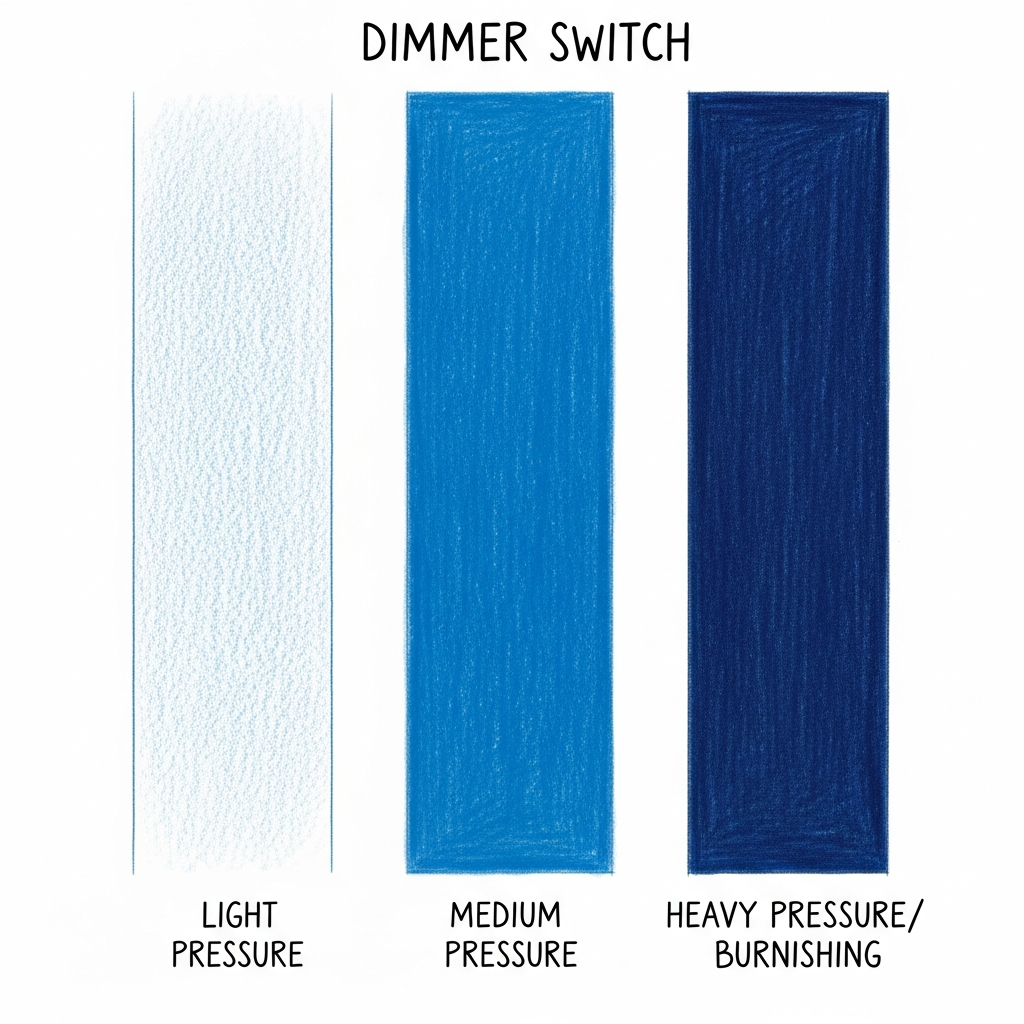
Think of your coloring pencil like a light dimmer switch. This is your secret weapon for realism!
- Light Pressure: Transparent layers, perfect for your first base coat.
- Medium Pressure: Solid, even coverage for the main color.
- Heavy Pressure (Burnishing): Saturated color that smooths out layers and creates glossy finishes. Practice changing your pressure smoothly on scrap paper. Knowing when to whisper and when to shout with your pencil makes all the difference.
Building Depth with Luminous Layers
Never use just one color—that’s flat! The secret to vibrant art is layering. Start with the brightest or lightest color you have. Then, slowly build darker colors on top, saving the darkest shades for the very end (the shadows). For a golden coin, you might start with yellow, layer orange, and finish with a touch of brown. This makes the color vibrate and look truly dimensional.
Light Logic: Find the Sun!
Before you start, decide where the light source is coming from. This one choice controls everything!
- Surfaces that face the light get highlights.
- Surfaces that turn away fall into shadow.
- The dark shape an object throws onto the surface below is called a cast shadow. Keep your light source consistent across the whole page to make your image look cohesive and believable.
Texture & Temperature Tricks
Use your strokes to fool the eye! Long, smooth strokes suggest sleek surfaces like metal or water. Short, fuzzy, overlapping scribbles are great for rough textures like concrete or fluffy animal fur. Also, use color temperature to create depth: Warm colors (reds, yellows, oranges) feel close to you, while Cool colors (blues, greens, purples) feel far away.
Blending and Signature Style
Blending is how you smooth colors together. For pencils, you can use heavy pressure (burnishing) or a colorless blender stick. For markers, work quickly, overlapping the colors before the ink dries. And don’t feel like you have to fill every spot! Leaving a few tiny areas white often looks like a beautiful, bright reflection. Once you master the techniques, start experimenting to find your own unique coloring style!
How Colouring Books Support Artistic Growth
Colouring books fit naturally into many of the learning paths offered on Prominent Painting. They aren’t just for fun — they help you build foundational art skills.
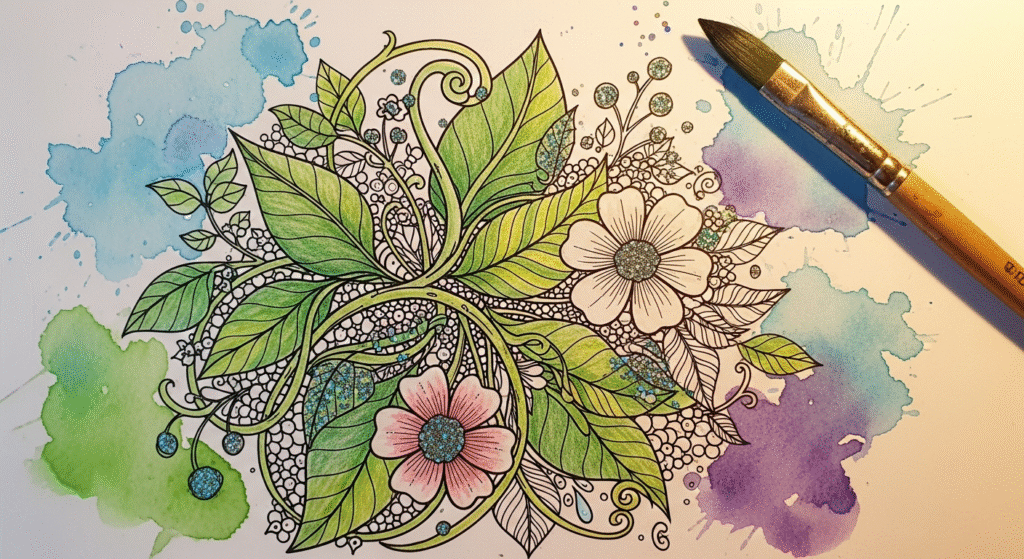
Here’s how colouring connects to deeper creative learning:
- Strengthen your colour understanding with A Beginner’s Guide to Understanding Color Theory in Art.
- Learn to mix your own paints with the Color Mixing Primer.
- Explore curated palettes using the Color Palette Generator for Artists.
- Build essential artistic instincts through the 7 Principles of Painting for Beginners.
- Get confident expressing yourself with How to Find Your Painting Style.
- Develop calm, mindful creativity with Zen Watercolor Art: Mindful Painting Techniques.
- Expand your skills with the Ultimate Guide to Painting.
- Use visual references like the Color Mixing Chart Printable for Painters.
Colouring gives you a safe, guided environment to practise, making painting and drawing feel less overwhelming.
Unique Perspective: Colouring Pages as Mini‑Canvases
One powerful idea is treating each page as a mini canvas:
- Add personal doodles or illustrated borders.
- Rewrite textures like fur, leaves, or clouds.
- Use coloured pencils first, then add ink accents or gentle watercolour washes for special effects.
- Scan your page and experiment with digital edits, filters, or recolouring.
This approach turns colouring into a starting point for original artwork rather than just staying inside the lines.
Benefits of Colouring Books
Colouring books offer benefits for kids, teens, adults, and seniors:
- Reduce stress and anxiety
- Improve focus and mindfulness
- Build fine motor skills
- Strengthen understanding of colour relationships
- Boost creativity and imagination
- Provide a calm, screen‑free activity
- Offer a sense of accomplishment when finishing pages
- Help warm up your artistic mind before painting or drawing
FAQ
Is colouring only for kids?
No — adult colouring books are widely loved for relaxation, creativity, and mindfulness.
Can colouring help me learn to paint?
Absolutely. Colouring develops colour awareness, shading ability, and confidence.
Which tools should I use?
Use coloured pencils for thin pages, markers for thicker ones, and watercolour only on compatible paper.
How do I preserve finished pages?
You can frame them, place them in a binder, laminate them, or scan them for digital storage.
What’s the next step after colouring?
Explore colour theory, painting guides, or creative prompts on Prominent Painting.
Final Thoughts
This expanded guide to colouring books shows how versatile and enriching these creative tools can be. More than anything, colouring books offer a simple, welcoming way to relax while building real artistic confidence. Their greatest benefit is how they let you explore colour, shading, and creativity without pressure — making art feel easy, enjoyable, and accessible for everyone.
Whether you’re colouring to unwind, sharpening your artistic instincts, or using each page as a stepping stone toward painting, colouring books give you a safe place to grow. The more you experiment with colours and techniques, the more you’ll discover new ideas and possibilities waiting within each page.
Let your imagination guide you — one colour at a time.
Citations
- Coloring Book – https://en.wikipedia.org/wiki/Coloring_book
- Secret Garden: An Inky Treasure Hunt – https://en.wikipedia.org/wiki/Secret_Garden:_An_Inky_Treasure_Hunt_and_Colouring_Book
- Johanna Basford – https://en.wikipedia.org/wiki/Johanna_Basford
- Creative Haven Adult Coloring Books – https://store.doverpublications.com/collections/creative-haven-coloring-books
- Using Solvent to Blend Colored Pencil – https://jennifermorrisonart.com/using-solvent-to-blend-colored-pencil/
- Colored Pencil Solvent Guide – https://www.pencil-topics.co.uk/colored-pencil-solvent.html
- Best Paper for Coloring Pages – https://coloringqueen.net/best-paper-to-print-coloring-pages-on-for-colored-pencils/
- Ultimate Guide to Coloring – https://adultcolouring.com/the-ultimate-guide-to-coloring/
- A Beginner’s Guide to Understanding Color Theory in Art – https://prominentpainting.com/understanding-color-theory-in-art/
- Color Mixing Primer – https://prominentpainting.com/color-mixing-primer-a-comprehensive-guide-for-artists/
- Color Palette Generator for Artists – https://prominentpainting.com/color-palette-generator-for-artists-master-color-theory-with-our-interactive-tool/
- 7 Principles of Painting for Beginners – https://prominentpainting.com/7-principles-of-painting-for-beginners/
- How to Find Your Painting Style – https://prominentpainting.com/how-to-find-your-painting-style/
- Zen Watercolor Art – https://prominentpainting.com/exploring-mindful-painting-techniques/
- Ultimate Guide to Painting – https://prominentpainting.com/
- Color Mixing Chart Printable for Painters – https://prominentpainting.com/color-mixing-chart-printable-for-painters/