When you stand before a painting by Eugène Delacroix, you’re witnessing more than just brushstrokes on canvas—you’re experiencing the result of a revolutionary creative process that changed art history forever. The Delacroix creative process was a fascinating blend of careful planning, explosive emotion, and technical innovation that made him one of the most influential painters of the 19th century. Understanding how this French master worked reveals secrets that can inspire artists today, whether you’re picking up a brush for the first time or looking to deepen your artistic practice.
Key Points Summary
- Delacroix revolutionized color theory through complementary colors and optical mixing techniques
- His preparatory process involved extensive sketches, drawings, and oil studies before final paintings
- Dynamic compositions featuring diagonal lines and swirling forms created emotional intensity
- Experimentation with materials and energetic brushwork defined his distinctive style
- Literary and exotic subjects fueled his imagination and narrative approach
- His journals and writings provide invaluable insights into his artistic philosophy
The Revolutionary Spirit: Delacroix and Romanticism
.jpg "Delacroix Creative Process: Unlocking the Genius Behind Romantic Masterpieces 3")
Eugène Delacroix (1798-1863) emerged as the leading figure of French Romanticism during a time when the art world was ready for change. While established Neoclassical painters favored precise lines and historical subjects, Delacroix burst onto the scene with paintings that prioritized emotion, color, and dramatic storytelling. His creative process reflected the spirit of Romanticism—a movement that valued individual expression and imagination.
Delacroix’s training began in the studio of Pierre-Narcisse Guérin, but he quickly found inspiration elsewhere. He spent countless hours at the Louvre Museum, copying works by Peter Paul Rubens and the Venetian masters. These influential artists became the foundation upon which Delacroix built his revolutionary style.
The Delacroix Creative Process: Preparation Meets Passion
The Power of Preparatory Work
One of the most distinctive aspects of the Delacroix creative process was his meticulous preparation. Unlike artists who work spontaneously, Delacroix believed in thorough planning before approaching the final canvas. His preparatory process typically involved:
- Quick gestural drawings to capture initial ideas
- Detailed compositional studies exploring different arrangements
- Figure studies to understand anatomy and movement
- Small-scale oil paintings to test color relationships
- Experiments with light effects and atmospheric conditions
This systematic approach might seem contradictory to the passionate quality of his finished works, but it’s precisely this combination that made the Delacroix creative process so effective. The preparation gave him confidence to be bold during execution, similar to how modern artists approach compositional strategies.
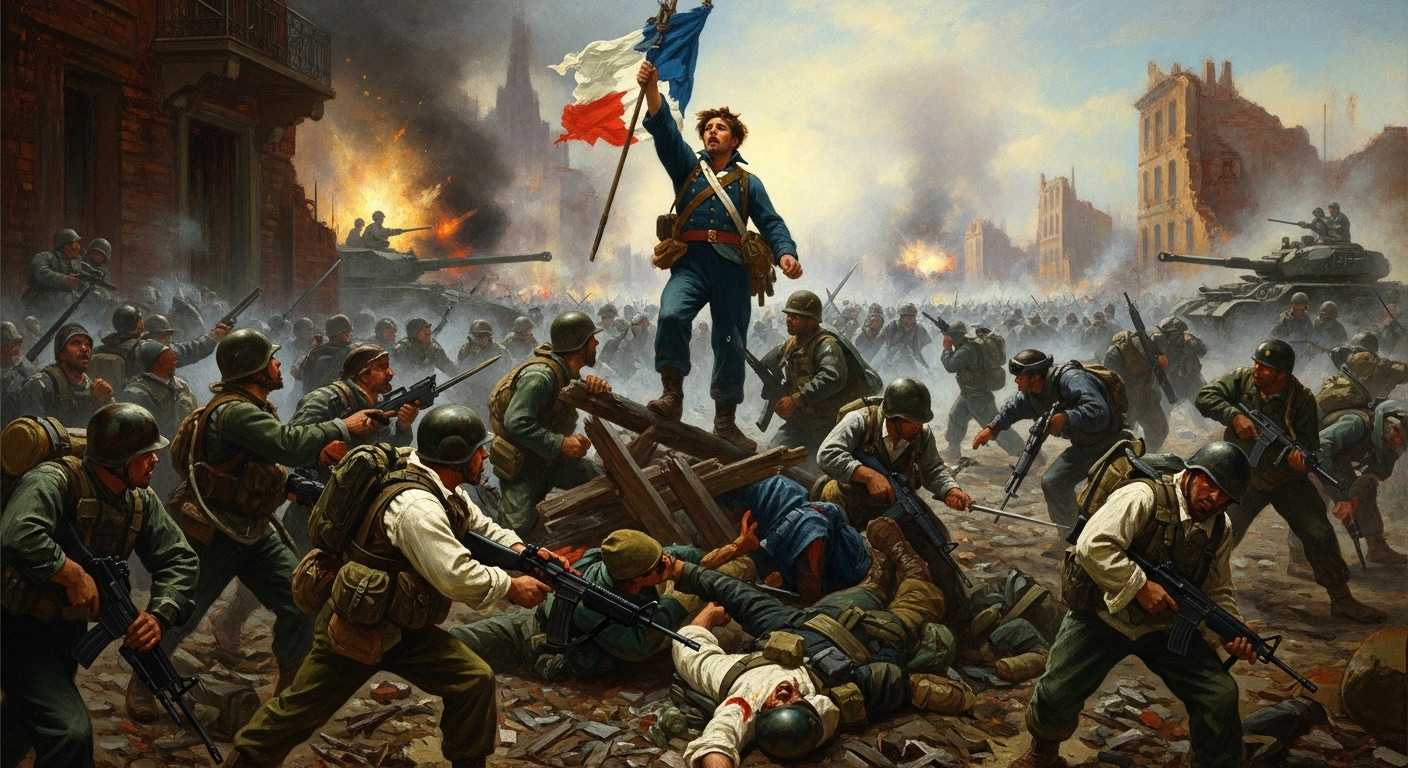
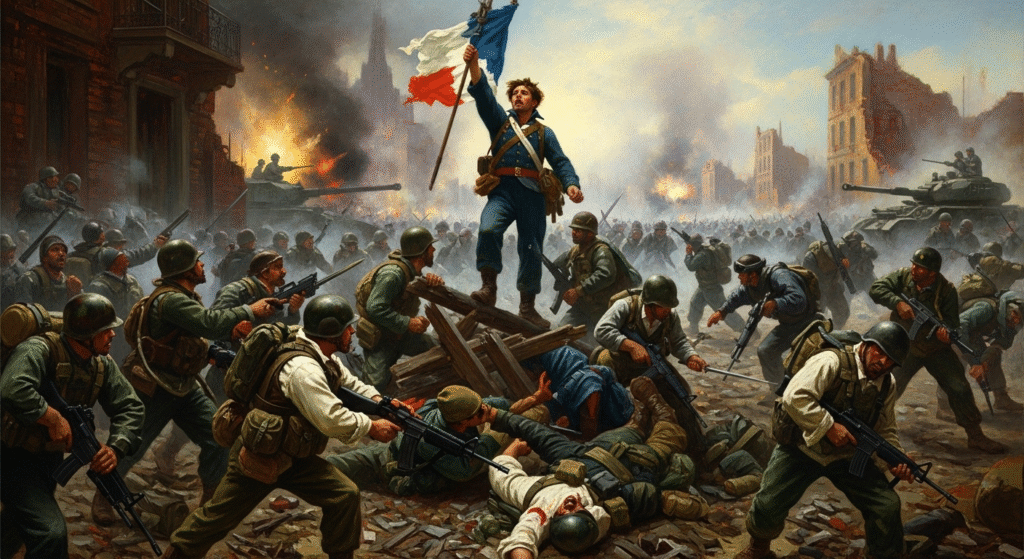
For “Liberty Leading the People” (1830), Delacroix produced numerous sketches exploring the composition and positioning of figures. These preparatory works show him working through problems and refining his vision before touching the final canvas.
Revolutionary Color Theory: The Heart of Innovation
Understanding Complementary Colors
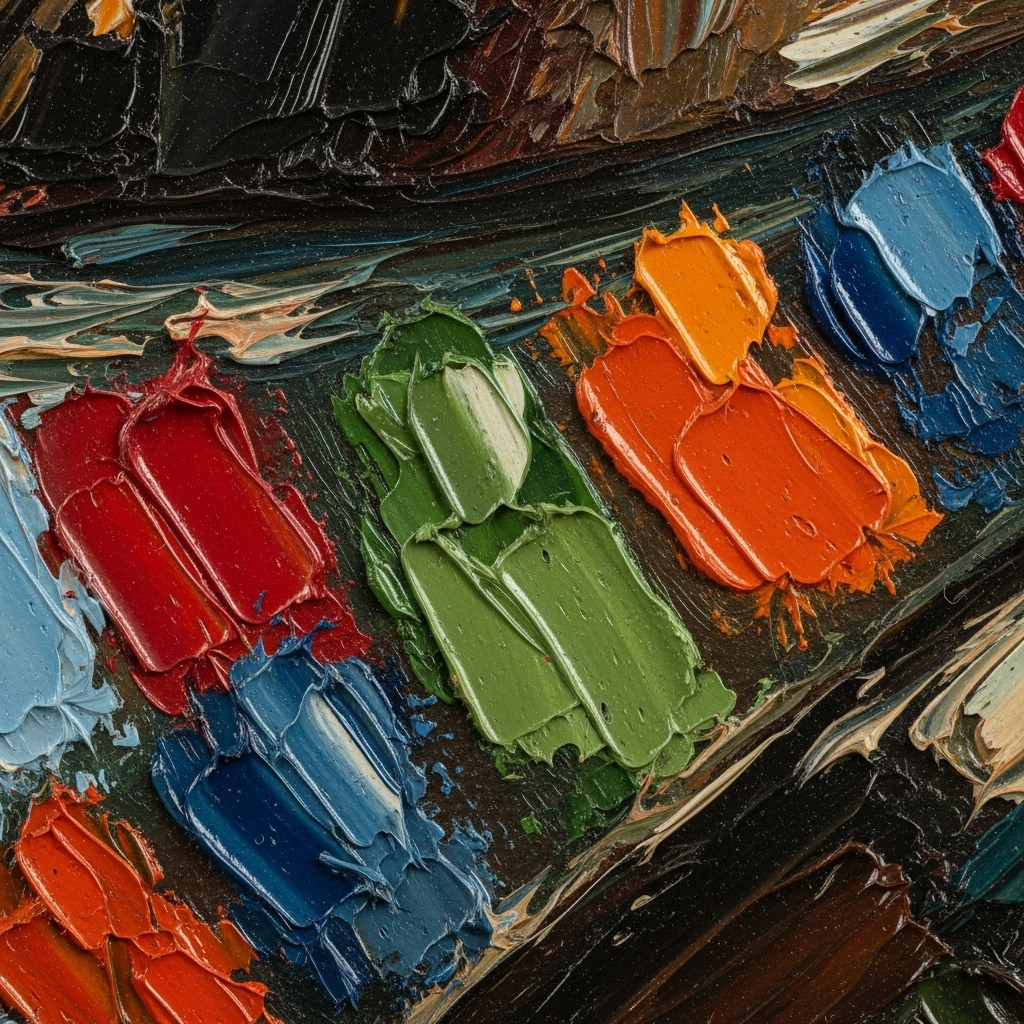
Perhaps the most groundbreaking aspect of the Delacroix creative process was his understanding of color theory. Long before scientists fully explained the optical principles, Delacroix intuitively grasped how colors interact. He was one of the first painters to systematically use complementary colors—pairs like red and green, blue and orange, yellow and purple—to create vibrant, luminous effects.
Delacroix wrote extensively about color in his journals, noting: “Give me mud, and I will paint you a woman’s skin.” This reveals his understanding that beauty comes from color relationships, not individual colors. This approach to understanding color theory influenced generations of artists.
Flochetage and Broken Color
The Delacroix creative process included innovative techniques that would later influence the Impressionists. He developed flochetage (broken color), where he applied small, separate strokes of different colors rather than mixing them on the palette. When viewed from a distance, these colors optically blend in the viewer’s eye, creating more vibrant effects than physically mixed colors.
This technique required tremendous skill. Delacroix would place complementary colors next to each other in small touches, creating color vibrations that brought his paintings to life. You can see this brilliantly executed in “Women of Algiers in their Apartment” (1834).

Glazes and Layering
The Delacroix creative process also involved sophisticated use of glazes—thin, transparent layers of paint applied over dried underlayers. This technique allowed him to build up rich, complex color effects through methodical layering that might take weeks or months. Understanding these painting techniques helps us appreciate the complexity behind seemingly spontaneous works.
Dynamic Compositions: Creating Movement and Emotion
If you examine Delacroix’s famous paintings, you’ll notice strong diagonal lines that lead the eye and create drama. Unlike stable horizontal-vertical compositions favored by Neoclassical painters, Delacroix’s diagonals suggest action and emotional intensity.
In “The Death of Sardanapalus” (1827), the composition tumbles diagonally, creating chaos that reflects the dramatic subject. This wasn’t accidental—Delacroix carefully planned these structures in his preparatory drawings. Artists today can learn from this approach when creating depth in paintings.

The Delacroix creative process also excelled at orchestrating complex, crowded scenes while maintaining visual clarity. Through careful composition and strategic use of light and shadow, he guided viewers’ eyes and told clear stories despite multiple figures and layered narratives.
Subject Matter: Imagination Meets Reality
Literary Inspiration
The Delacroix creative process was deeply influenced by literature. Shakespeare’s dramas, Lord Byron’s romantic poetry, Dante’s Divine Comedy, and Goethe’s philosophical works all provided rich narrative material. He didn’t simply illustrate these texts—he used them as springboards for imaginative interpretations.
The Exotic Other: Orientalism
A journey to North Africa in 1832 profoundly impacted the Delacroix creative process. He traveled to Morocco and Algeria, filling notebooks with sketches, watercolors, and observations. These experiences opened new subject matter and influenced his understanding of light and color.
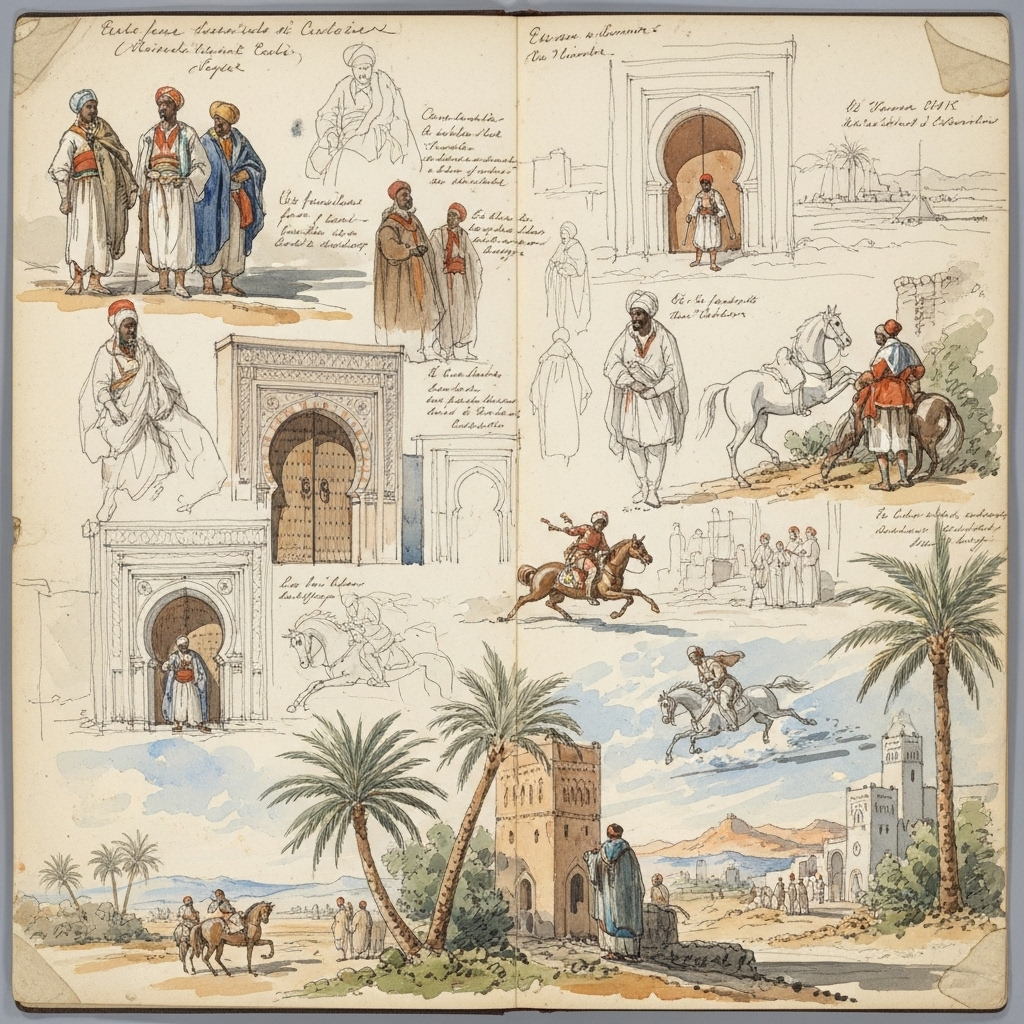
The resulting works, like “Women of Algiers in their Apartment,” combined careful observation with imaginative elaboration. While we should question the Orientalist perspective these represent, understanding this aspect provides important context for his work.
Contemporary Politics
The Delacroix creative process also engaged with contemporary events. “Liberty Leading the People” commemorated the July Revolution of 1830, combining allegory with realistic details of Parisian street fighting. Learning to appreciate art of this period requires understanding these layered meanings.
Materials and Studio Practices
Understanding the Delacroix creative process requires knowing his materials. He experimented with pigments, oil mediums, canvas preparation, and varnishes. Delacroix kept detailed notes about materials, constantly seeking improvements. This scientific approach to painting materials coexisted with his passionate expression.
Contemporary accounts describe his painting as intensely physical and energetic. When working on final canvases, he applied paint with bold, confident strokes, sometimes using fingers or palette knife. This energetic execution contrasted with careful planning—another fascinating aspect of the Delacroix creative process. This dynamic approach to brush stroke painting influenced generations.
Case Study: “Liberty Leading the People”

Let’s examine how the Delacroix creative process worked by analyzing his most famous painting.
Conception and Context
In July 1830, revolution erupted in Paris. Delacroix, deeply moved, wrote to his brother: “If I haven’t fought for my country, at least I’ll paint for her.” His preparatory work included sketches of the overall composition, studies of individual figures, and color experiments for dramatic lighting.
Compositional Strategy
The painting uses a strong diagonal rising from lower left to upper right, creating dynamic movement toward Liberty. The pyramidal composition provides stability while the diagonal creates energy. Delacroix guides your eye from dead bodies in the foreground, through the boy with pistols, up to Liberty’s face and the tricolor flag, to Notre-Dame towers in the background.
Color and Light
The Delacroix creative process shines in the color scheme. The painting is relatively dark and smoky (appropriate for battle), but Liberty is illuminated in golden light. Her yellow dress provides brilliant accent, while red, white, and blue of the flag create patriotic focal point. Complementary relationships between blues and oranges create harmony while maintaining visual interest.
Symbolic and Realistic Elements
Here Delacroix brilliantly combines allegory (Liberty as classical figure), realism (contemporary clothing, actual weapons), multiple social classes (bourgeois, worker, street child), and contrasts of life and death. This synthesis exemplifies the Delacroix creative process at its finest.
Delacroix’s Artistic Philosophy
His Journal and Writings
The Delacroix creative process is illuminated by his journal, kept from 1822 until his death in 1863. These writings provide intimate insights into his thoughts on art and creativity. He wrote:
“The source of genius is imagination alone, the refinement of the senses that sees what others do not see, or sees them differently.”
Imagination vs. Nature
A key aspect was his belief in imagination’s primacy. While he valued direct observation, he believed the artist’s imagination must transform observations into something greater. He wrote: “Nature is only a dictionary,” meaning it provides raw material the artist must organize through creative vision.
Interestingly, the Delacroix creative process often relied on memory rather than direct observation. He believed memory filtered and refined visual experiences, removing unnecessary details and emphasizing essential qualities.
Influence and Legacy
Impact on Impressionism and Beyond
The Delacroix creative process enormously influenced later artists. Impressionists like Claude Monet carefully studied his use of color, particularly complementary colors and broken color techniques. Paul Signac wrote “From Eugène Delacroix to Neo-Impressionism,” explicitly acknowledging this debt.
Post-Impressionist artists like Paul Cézanne and Vincent van Gogh also studied Delacroix intensely. Van Gogh’s understanding of how to paint with emotion owed much to Delacroix’s example.
Even today, the Delacroix creative process remains relevant. His combination of planning with bold execution, understanding of color relationships, and belief in imagination continue to inspire contemporary artists working in watercolor, acrylic, or oil painting.
Lessons for Today’s Artists
What can modern artists learn from the Delacroix creative process?
1. Don’t Skip Preparation: Delacroix’s extensive preparatory work gave him the foundation to be bold. Whether you’re working traditionally or digitally, preparation enhances final results.
2. Understand Color Relationships: It’s not about “pretty” colors but understanding how colors interact. Study complementary colors and experiment with optical mixing.
3. Balance Planning and Spontaneity: Careful planning doesn’t kill spontaneity—it enables it. By working through problems in advance, you free yourself to be expressive during execution.
4. Draw from Multiple Sources: The Delacroix creative process incorporated influences from Old Masters, literature, music, and direct observation. Finding art inspiration from diverse sources enriches your work.
5. Keep a Visual and Written Journal: Following Delacroix’s example, maintain both visual and written records. Sketch regularly and note technical discoveries.
6. Embrace Technical Knowledge: Understanding your materials empowers you to realize your vision. Whether choosing the right canvas or learning about paint mediums, technical knowledge supports creativity.
7. Trust Your Vision: Perhaps most importantly, the Delacroix creative process teaches us to trust our vision even when others don’t understand. Finding and developing your painting style requires this confidence.
Conclusion
Understanding the Delacroix creative process gives us more than historical knowledge—it provides practical insights that remain relevant for artists today. His revolutionary approach to color, dynamic compositions, balance of careful preparation with bold execution, and belief in imagination’s power continue to inspire and instruct.
Whether you’re an art student analyzing his techniques, an enthusiast deepening appreciation, or a practicing artist seeking inspiration, studying the Delacroix creative process offers valuable lessons. His paintings invite us not just to look but to feel, not just to see colors but to understand how they interact, not just to observe compositions but to experience the drama and emotion they convey.
The next time you encounter a Delacroix painting—whether in person or in reproduction—take time to appreciate not just what you see, but the complex creative process that brought it into being. Notice the color relationships, trace the compositional movements, and recognize the passion and intelligence that created these enduring masterpieces. The Delacroix creative process reminds us that great art comes from the marriage of technical skill, emotional depth, and imaginative vision—a combination as powerful today as it was in 19th-century Paris.
FAQs: Delacroix Creative Process
What techniques did Delacroix use?
Delacroix used several revolutionary techniques including flochetage (broken color application where separate color strokes optically blend), extensive use of complementary colors for vibrant effects, transparent glazes layered over dried paint, and energetic brushwork. He also employed mixed media in his preparatory work, combining pen, ink, watercolor, and pencil. His systematic layering technique involved underpainting, building color layers, applying glazes, and adding final highlights—a process that could take months for major works.
What inspired Delacroix’s paintings?
Delacroix drew inspiration from multiple sources: literary works by Shakespeare, Byron, Dante, and Goethe provided dramatic narratives; his 1832 journey to North Africa opened up exotic subjects and new understanding of light and color; contemporary political events like the July Revolution of 1830 inspired works like “Liberty Leading the People”; Old Master paintings, particularly Rubens and the Venetian school, influenced his technical approach; and classical mythology and ancient history provided timeless themes that he reimagined with Romantic passion.
What is Delacroix’s most famous painting?
“Liberty Leading the People” (1830) is widely considered Delacroix’s most famous painting. This iconic work depicts the July Revolution of 1830 in Paris, featuring an allegorical female figure of Liberty leading revolutionaries across a barricade. The painting brilliantly combines symbolic and realistic elements, contemporary and timeless themes. It hangs in the Louvre Museum and has become one of the most recognizable images in art history, even appearing on the French 100-franc note before the Euro.
What was Delacroix’s contribution to art?
Delacroix made several groundbreaking contributions: he pioneered the systematic use of complementary colors and optical mixing techniques that influenced Impressionism and later movements; he elevated the role of color over line in painting, challenging Neoclassical conventions; his expressive, emotional approach helped establish Romanticism as a major movement; his technical innovations in brushwork and paint application influenced generations of artists; his journals provided invaluable insights into artistic thinking and process; and he demonstrated that careful planning and spontaneous execution could coexist, creating a model for modern painting practice.
How did Delacroix use color?
Delacroix revolutionized color use in several ways: he understood and applied complementary colors (red-green, blue-orange, yellow-purple) to create vibrant, luminous effects; he used flochetage, placing separate strokes of different colors that optically blend when viewed from a distance rather than physically mixing them; he employed transparent glazes to build up rich, complex color relationships; he observed how colors influence adjacent colors, using this knowledge to create harmony or dramatic contrast; and he created color notes in his journals, documenting observations about natural light and color relationships. His approach was both intuitive and scientific, combining keen observation with theoretical understanding.
Additional Resources
Museums and Collections:
- The Louvre Museum – Delacroix Collection – Houses many major works including “Liberty Leading the People”
- Musée National Eugène Delacroix, Paris – The artist’s former apartment and studio
- The Metropolitan Museum of Art – Delacroix Works – Significant holdings including drawings and paintings
- National Gallery, London – Delacroix – Important works with detailed analysis
Academic Resources:
- The Art Story – Eugène Delacroix – Comprehensive overview of his life, works, and influence
- Khan Academy – Romanticism – Free educational resource
- Smarthistory – Delacroix – Art historical analysis and context
Detailed analysis of Delacroix’s most famous painting by art historians