Have you ever stood in a museum staring at a blank canvas or a pile of bricks and wondered, “Is this really art?” You’re not alone. Conceptual art ideas often spark confusion and debate because they challenge everything we think we know about painting and traditional artistic creation. But here’s the exciting truth: conceptual art isn’t just random ideas thrown together—it’s a revolutionary approach where the thought behind the artwork matters more than the finished object itself.
Key Points Summary
- Conceptual art prioritizes ideas and concepts over traditional aesthetic appeal
- Artists use diverse methods to make abstract thoughts tangible: performance, installation, text, and instructions
- The movement emerged in the 1960s as a radical challenge to conventional art forms
- Viewer participation completes the artwork, making conceptual art an interactive experience
- Understanding the process reveals why conceptual art deserves its place in art history
What Is Conceptual Art? Understanding the Paradigm Shift
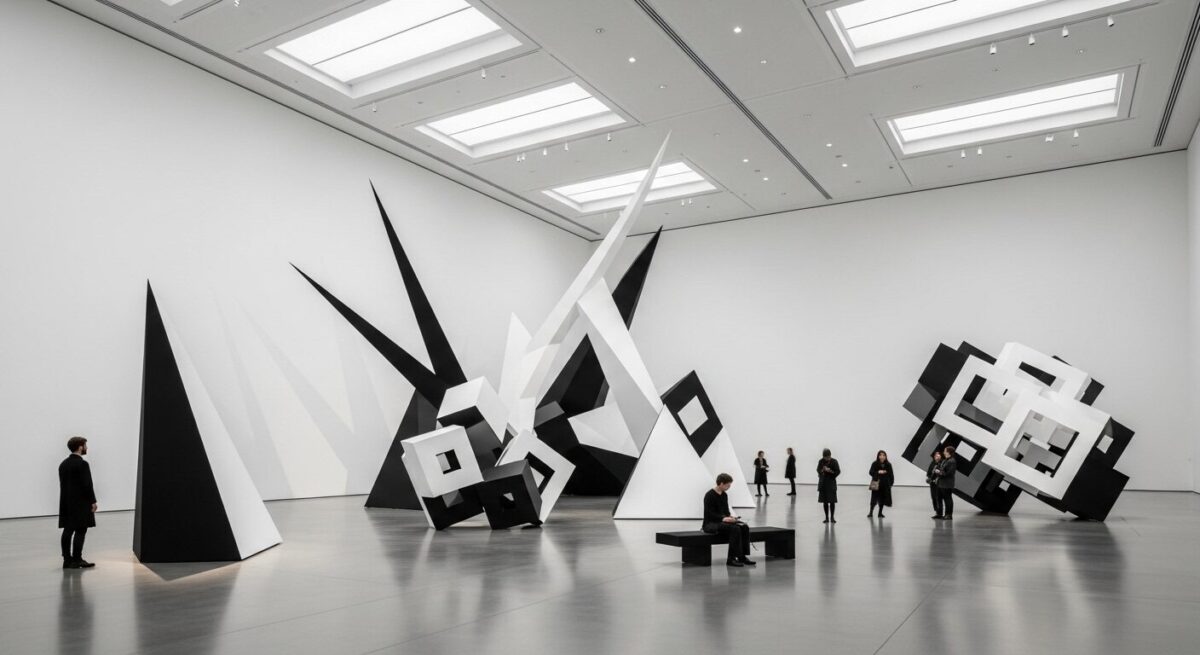
Conceptual art emerged as a movement in the 1960s, fundamentally changing how we define artistic creation. Unlike impressionism or realism, where the finished painting or sculpture takes center stage, conceptual artists believe the idea behind the work is the art itself.
Think of it this way: when you read a great book, the physical pages aren’t what matter most—it’s the story, the emotions, and the thoughts they create in your mind. Conceptual art works similarly. The physical object (if there even is one) serves only as a vehicle for delivering the deeper message or philosophical question.
The Historical Context: Why Conceptual Art Emerged
During the 1950s and 1960s, artists grew frustrated with traditional art world expectations. They questioned why a painting’s value should depend on technical skill, beautiful composition, or commercial appeal. This rebellion against formalism—the idea that art should focus on visual qualities—sparked a revolution.
| Era | Traditional Art Focus | Conceptual Art Focus |
|---|---|---|
| Pre-1960s | Technical skill, aesthetics, permanence | N/A |
| 1960s-1970s | Still focused on craftsmanship | Ideas, philosophy, social commentary |
| Contemporary | Blended approaches | Expanded to include diverse media and participation |
Key Pioneers Who Shaped Conceptual Art Ideas
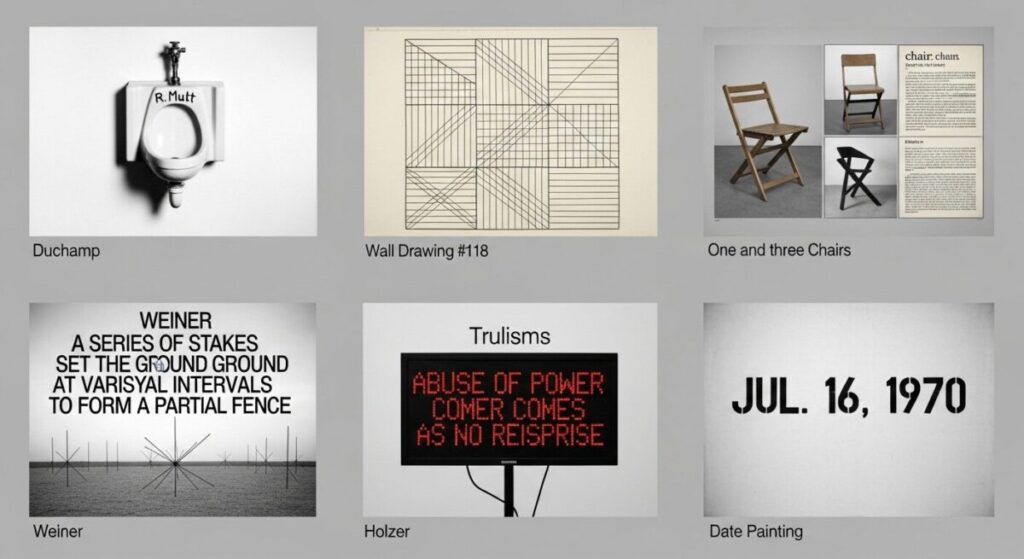
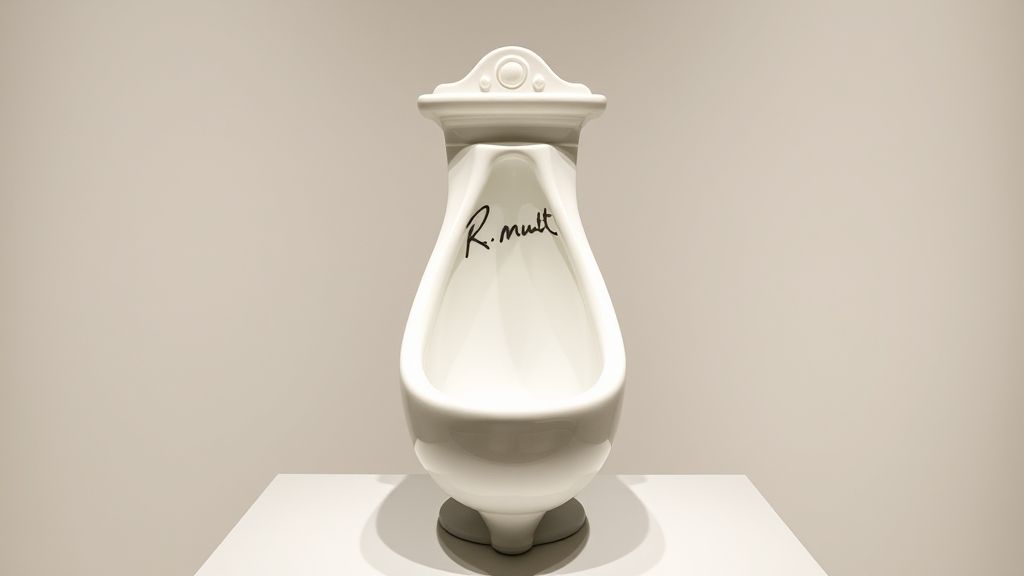
Marcel Duchamp planted the seeds decades earlier with his controversial 1917 work “Fountain”—a porcelain urinal signed with a fake name and displayed as art. This radical gesture questioned whether artists create art or simply identify and present it.
Joseph Kosuth took things further with “One and Three Chairs” (1965), displaying a physical chair, a photograph of that chair, and a dictionary definition of “chair.” This work asked viewers: which one is the “real” chair? What is the essence of “chairness”?
“Art as idea as idea.”
Joseph Kosuth, emphasizing that conceptual art exists primarily as mental concepts rather than physical objects
From Abstract Thought to Concrete Form: The Creative Process
So how exactly do conceptual art ideas transform from invisible thoughts into something we can experience? The process involves careful planning, strategic material choices, and often unexpected execution methods.
The Idea as Blueprint
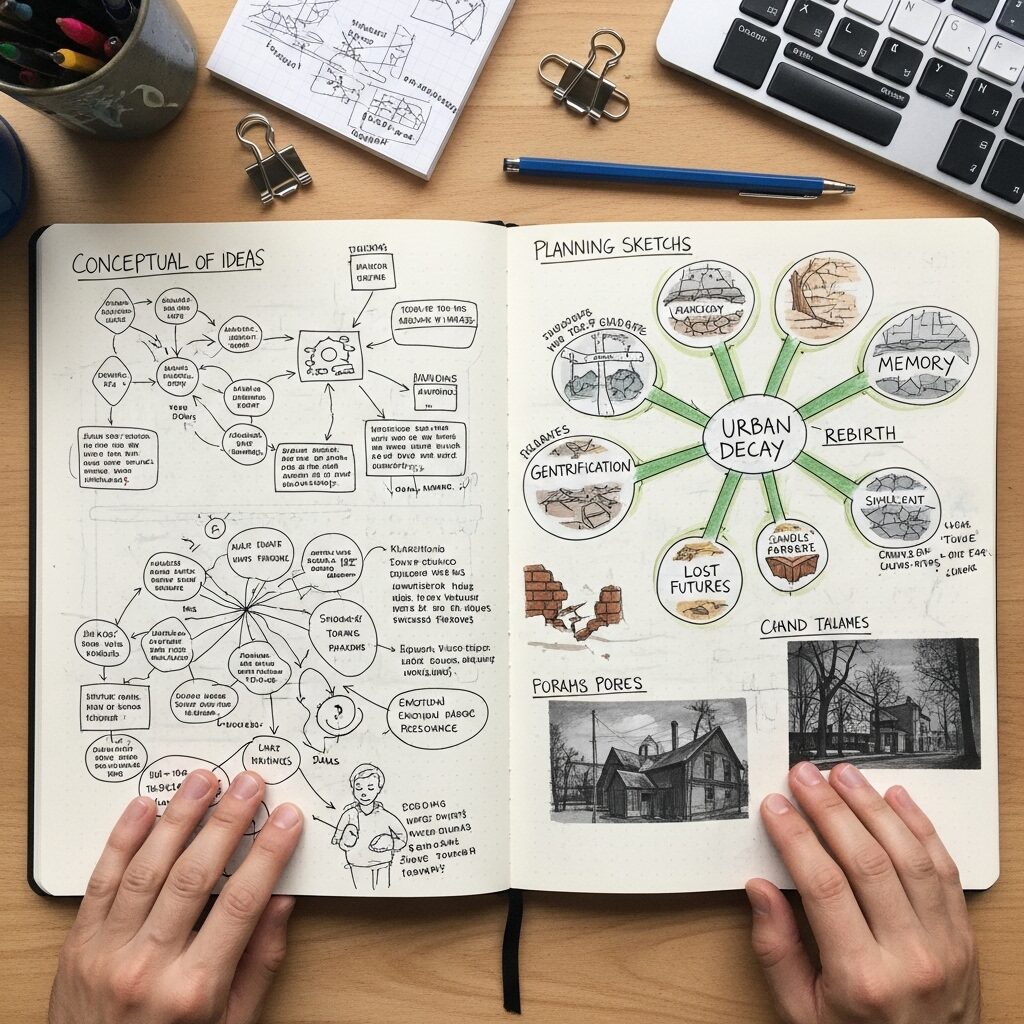
Every conceptual artwork begins with extensive research and philosophical inquiry. Artists might spend months or years developing a single concept. They explore questions about society, identity, politics, perception, or human existence. This intellectual groundwork forms the foundation—similar to how composition guides a traditional painting.
Consider how different this is from spontaneous abstract painting. Rather than letting intuition guide brushstrokes, conceptual artists methodically construct their ideas before deciding how to manifest them.
Strategic Materiality: Choosing the Right Medium
Here’s where conceptual artists get creative. The materials or methods they choose must serve the concept perfectly. Sometimes this means using unusual materials. Other times, it means using no materials at all.
Let’s break down common approaches:
- Ephemeral materials: Ice, organic matter, or temporary installations that physically disappear, emphasizing impermanence
- Found objects: Everyday items repurposed to challenge our perceptions (like Duchamp’s urinal)
- Language and text: Words become the entire artwork, creating meaning through typography and placement
- The artist’s body: Performance art uses the human form as both medium and message
- Instructions: Written directions that exist as the artwork, whether performed or not
- Nothing at all: Some conceptual works exist only as documentation or memory
Execution as Manifestation
The fascinating thing about conceptual art is that the “finished product” might look nothing like traditional art. The artwork could be:
- A set of photographs documenting an event
- A written certificate authenticating an invisible sculpture
- Video footage of a performance
- A social interaction between strangers
- A change in the viewer’s thinking
This is why conceptual art confuses people. We’re trained to look for the elements of art like color, line, and form. But conceptual art asks us to engage with ideas instead of just visual beauty.
Understanding conceptual art through examples and expert analysis
Tangible Expressions in Conceptual Art: Five Major Forms
Let’s explore how artists make conceptual art ideas real through different approaches. Each method offers unique ways to engage viewers and communicate complex thoughts.
1. Performance Art: The Body as Medium
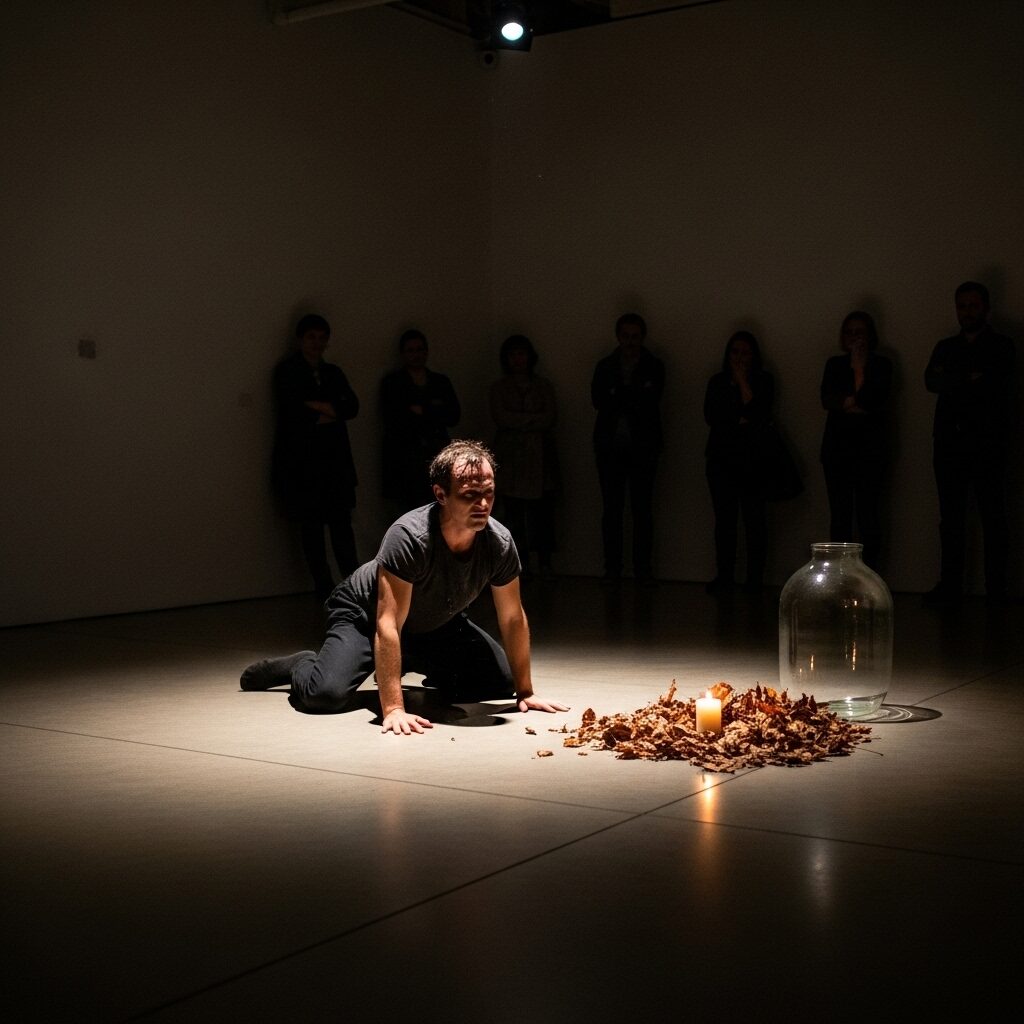
Marina Abramović, often called the “grandmother of performance art,” demonstrates how powerful the human body can be as an artistic medium. In her famous work “The Artist Is Present” (2010), she simply sat silently in a museum chair for over 700 hours, making eye contact with visitors who sat across from her.
There was no painting, no sculpture—just presence, time, and connection. Yet this work profoundly affected thousands of people, some moved to tears. The idea explored human connection, vulnerability, and shared experience. The performance itself became the tangible expression of these abstract concepts.
2. Installation Art: Creating Experiential Environments
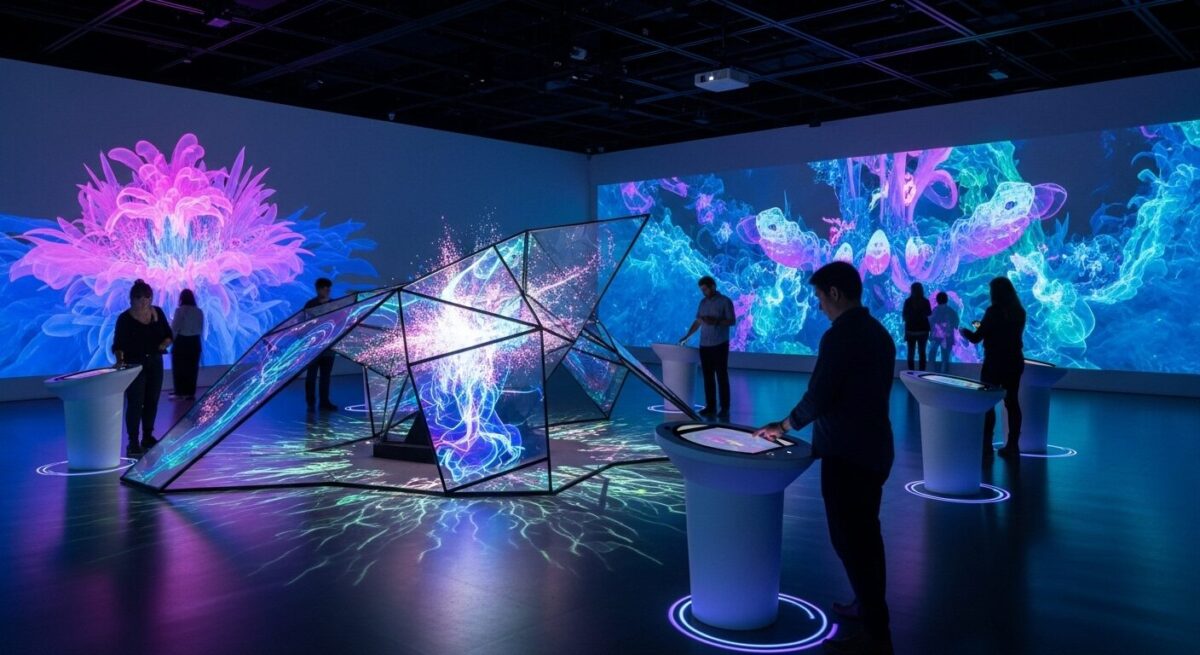
Installation art transforms entire rooms or spaces into immersive environments. Artist Olafur Eliasson’s “The Weather Project” (2003) filled the Tate Modern’s massive Turbine Hall with artificial sun and mist. Visitors lounged on the floor, staring up at the glowing orb, contemplating nature, atmosphere, and perception.
The installation didn’t hang on a wall like a traditional landscape painting. Instead, visitors walked through and became part of the artwork itself. The concept—our relationship with natural phenomena and manufactured experiences—became tangible through spatial design, light, and viewer participation.
3. Text-Based Art: Words as Visual and Conceptual Elements
Jenny Holzer projects provocative statements onto buildings and monuments. Her “Truisms” series features short, declarative sentences like “ABUSE OF POWER COMES AS NO SURPRISE” displayed in LED lights. These works exist at the intersection of graphic design, poetry, and visual art.
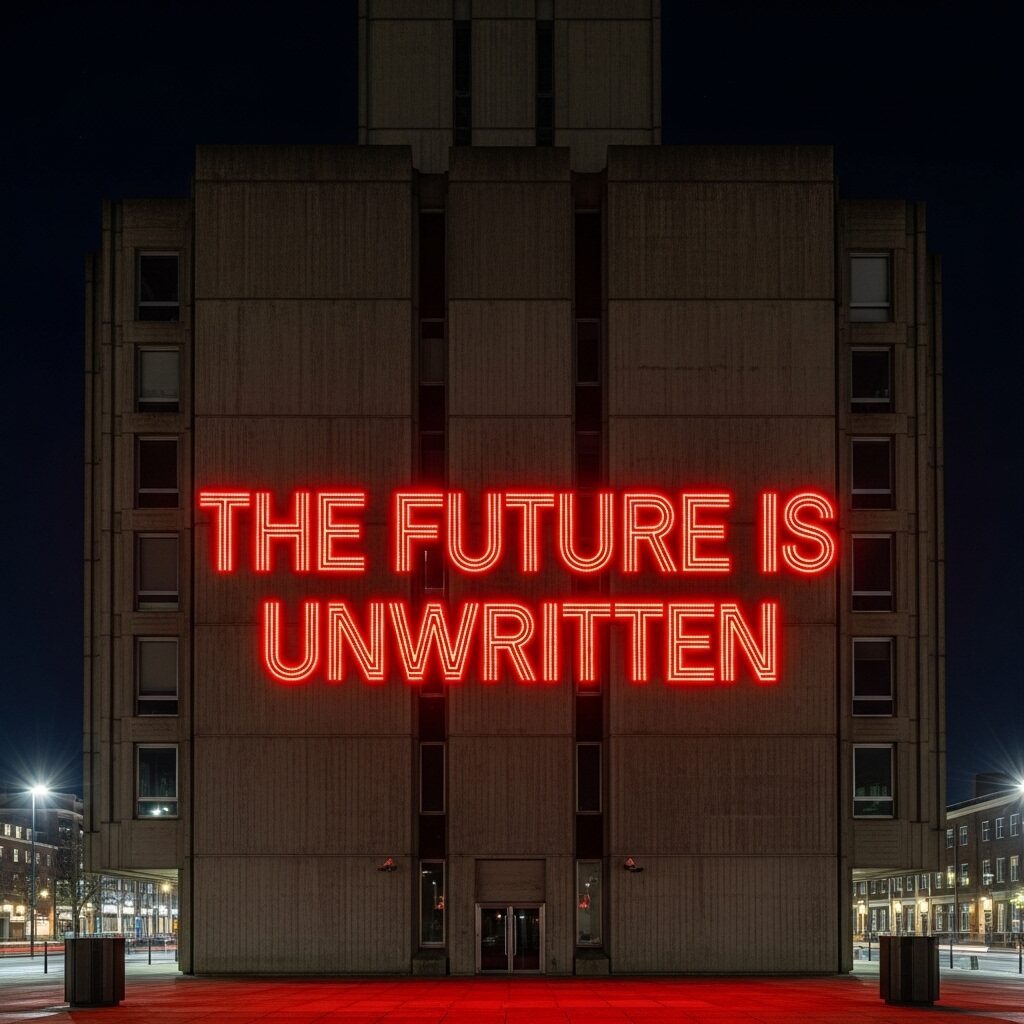
The words themselves become the artwork. Their placement, typography, and context transform language into a tangible artistic expression that makes viewers stop, read, and think.
4. Instruction-Based Art: Concepts as Recipes
Sol LeWitt pioneered instruction-based art, creating detailed directions for others to execute. His wall drawings consist of written instructions like “Draw a line from the center to each corner” rather than finished artworks. The idea—the set of instructions—is the artwork. Anyone can follow them to create a legitimate LeWitt piece.
Yoko Ono’s “Grapefruit” (1964) collection includes poetic instructions like “Draw a map to get lost.” These conceptual scores exist as art whether performed or not. The instruction itself carries the artistic value.
This approach radically challenges art ownership and authenticity. If you follow LeWitt’s instructions, have you created an original LeWitt? These questions make the work intellectually exciting.
5. Relational Aesthetics: Art Through Social Interaction
Rirkrit Tiravanija creates situations rather than objects. In “Untitled (Free)” (1992), he converted a gallery into a kitchen and cooked pad thai for visitors. The artwork wasn’t a recipe or finished meal—it was the social interactions, conversations, and community that emerged around shared food.
This participatory approach makes viewers active collaborators rather than passive observers. The concept becomes tangible through human relationships and shared experiences.

Here’s something amazing about conceptual art ideas: they’re incomplete without you. Traditional paintings exist whether anyone looks at them or not. But conceptual art often requires viewer participation, interpretation, or intellectual engagement to become fully realized.
When you stand before Joseph Kosuth’s “One and Three Chairs,” the artwork activates in your mind as you contemplate the relationship between object, image, and definition. Your thoughts become part of the piece. This is why understanding art appreciation techniques helps unlock conceptual works.
How Active Viewing Works
Engaging with conceptual art requires different skills than analyzing a Renaissance painting:
- Read accompanying texts: Artist statements, wall labels, and documentation provide crucial context
- Consider the questions raised: What is the work asking you to think about?
- Reflect on your reactions: Confusion, frustration, or insight are all valid responses worth examining
- Connect to broader ideas: How does this work relate to philosophy, society, or human experience?
- Participate if invited: Some works explicitly require viewer involvement
This intellectual participation makes conceptual art deeply personal. Two people might have completely different experiences with the same work because they bring different thoughts, memories, and perspectives.
Addressing the Skeptics: Why Conceptual Art Matters
Let’s tackle the elephant in the room. Many people dismiss conceptual art as pretentious nonsense. Common criticisms include “my kid could do that,” “it requires no skill,” and “it’s just lazy.” These objections deserve honest responses.
The Skill Argument
Creating effective conceptual art requires tremendous skill—just not the same skills as oil painting or sculpture. Conceptual artists must:
- Develop original, intellectually rigorous ideas
- Understand philosophy, theory, and art history deeply
- Choose materials and methods that perfectly serve their concept
- Anticipate and guide viewer responses
- Execute projects that may be technically or logistically complex
Would you say a novelist has “no skill” because they use common words anyone knows? The skill lies in how they arrange ideas, not in inventing new letters.
“The idea becomes a machine that makes the art.”
Sol LeWitt, explaining how conceptual thinking drives artistic creation
The Impact on Art History
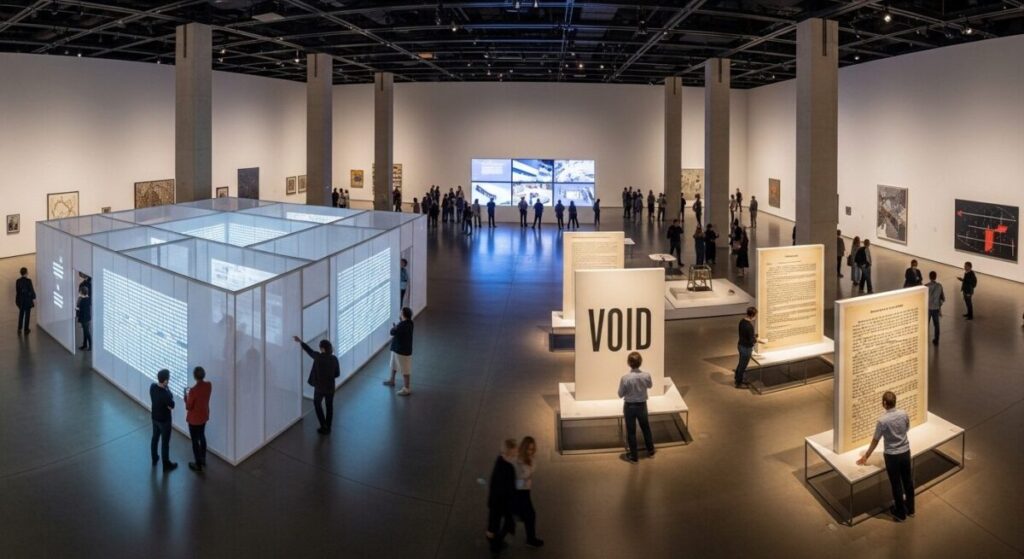
Conceptual art fundamentally changed contemporary practice. It expanded what art could be, who could make it, and where it could happen. Without conceptual art, we wouldn’t have:
- Digital and internet-based art
- Much of contemporary street art and activism
- Interactive and participatory museum experiences
- Socially engaged art practices
- Many approaches to video and new media art
The Value of Questioning
Conceptual art’s greatest contribution might be its willingness to challenge everything. By asking “What is art?” and “Who decides?”, it opens space for diverse voices and approaches. This questioning extends beyond art galleries into broader discussions about value, authenticity, and meaning in modern life.
When an artist presents an empty room as art, they’re not being lazy—they’re asking you to reconsider your assumptions. That intellectual provocation has value, even if it makes you uncomfortable.
How to Start Appreciating Conceptual Art Ideas
Ready to engage with conceptual art more deeply? Here are practical strategies that work whether you’re visiting a gallery or exploring famous artworks online:
Before Viewing
- Research the artist’s background and concerns
- Read about the historical context when the work was created
- Learn basic art history to understand what the artist is responding to
- Approach with curiosity rather than judgment
During Viewing
- Spend more time than feels comfortable—conceptual art often reveals itself slowly
- Read all available information, including artist statements
- Notice your emotional and intellectual reactions
- Ask yourself what questions the work might be posing
- Consider how the presentation method relates to the concept
After Viewing
- Discuss the work with others to gain different perspectives
- Research critical responses and analyses
- Connect the work to your own experiences or concerns
- Revisit the work mentally or physically—understanding often develops over time
Creating Your Own Conceptual Art Projects

Inspired to try making conceptual art ideas yourself? You don’t need expensive materials or traditional artistic skills. Here’s a simple framework:
Step 1: Identify Your Concept
What idea, question, or observation fascinates you? It might be philosophical (What is identity?), social (How do we use technology?), or personal (What does home mean?). Start with genuine curiosity.
Step 2: Research and Develop
Explore your concept thoroughly. Read philosophy, observe your surroundings, talk to people. Let the idea develop complexity and nuance. Write down your thoughts extensively.
Step 3: Choose Your Method
How can you best express this concept? Consider:
- Performance: Could acting out something communicate your idea?
- Installation: Would creating an environment work?
- Text: Would words alone convey your meaning?
- Instructions: Could a set of directions be the artwork?
- Social interaction: Would bringing people together express your concept?
- Documentation: Could photographing or recording something be the work?
Step 4: Execute Thoughtfully
Realize your concept with careful attention to how presentation affects meaning. Every choice—location, timing, materials, documentation—should serve your idea.
Step 5: Provide Context
Write an artist statement explaining your thinking. Conceptual art benefits from clear communication about intentions, even if the work itself is ambiguous.
The Future of Conceptual Art Ideas
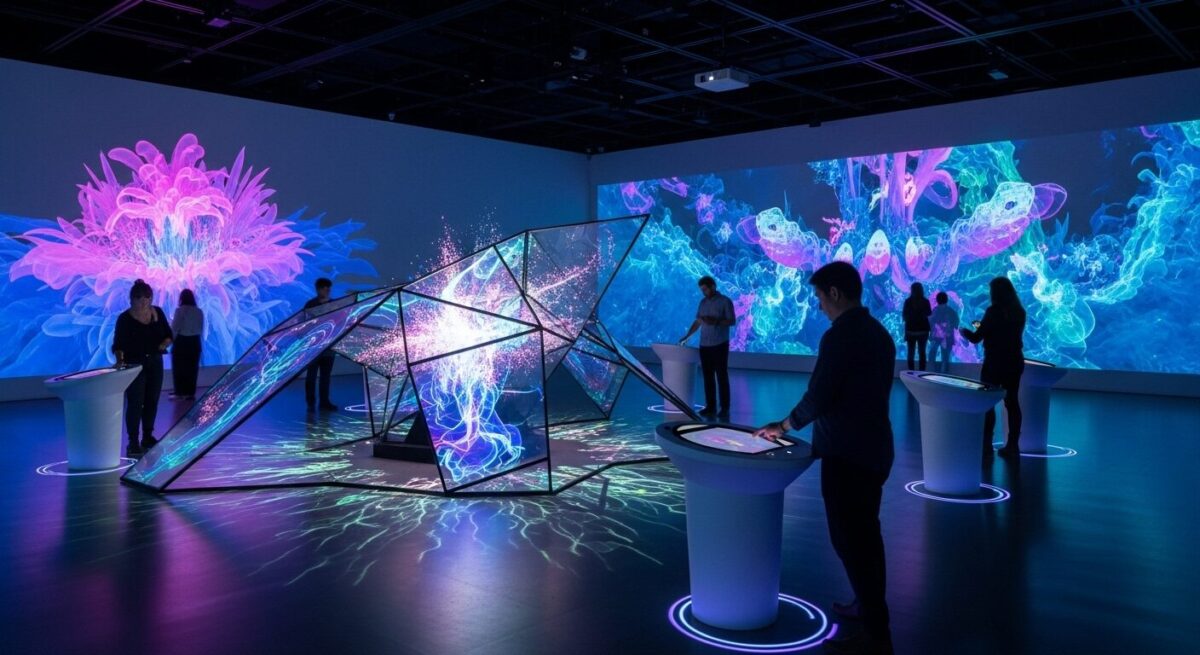
Conceptual art continues evolving alongside technology and society. Contemporary artists explore concepts through:
- Digital and internet art: Exploring virtual presence and online identity
- Artificial intelligence: Questioning authorship and creativity when machines make decisions
- Biotechnology: Using living organisms as artistic materials and subjects
- Environmental activism: Creating works that address climate change and ecological concerns
- Social practice: Developing projects that create real social change as art
As our world grows more complex, conceptual art offers tools for examining, questioning, and reimagining our experiences. The ideas artists explore today might seem radical, but they’re helping us understand our rapidly changing reality.
FAQs: About Conceptual Art Ideas
Is conceptual art solely about the idea?
Not exactly. While the concept is primary, conceptual art also involves how that idea is manifested and communicated. The presentation method, materials chosen, viewer experience, and context all contribute to the artwork’s meaning. The idea provides the foundation, but successful conceptual art requires thoughtful execution that makes abstract thoughts accessible and impactful.
What is the core principle of conceptual art?
The core principle is that the concept or idea behind an artwork is more important than traditional concerns like aesthetic beauty, technical skill, or the physical object itself. Conceptual artists believe art should primarily engage the mind rather than just the eye. This approach challenges conventional definitions of what art is and how it should be valued.
How do conceptual artists make their ideas tangible?
Conceptual artists use diverse methods including performance art (using the body as medium), installation art (creating experiential environments), text-based work (making language visual), instruction-based pieces (providing directions for others to execute), and relational aesthetics (creating social interactions). The chosen method depends on which best communicates the underlying concept to viewers.
Why is conceptual art considered art?
Conceptual art is considered legitimate art because it fulfills art’s fundamental purpose: communicating ideas, emotions, and perspectives that expand human understanding. While it abandons traditional markers like technical skill or visual beauty, it requires intellectual rigor, creative problem-solving, and meaningful communication. Art history recognizes conceptual art’s profound influence on contemporary practice and its expansion of artistic possibilities.
What defines a successful conceptual artwork?
A successful conceptual artwork effectively communicates its core idea, provokes meaningful thought or emotional response, demonstrates intellectual rigor and originality, uses materials and methods that serve the concept appropriately, and engages viewers in active interpretation. Success doesn’t require everyone to “like” the work, but the concept should be thoughtfully developed and clearly manifested in some tangible form.
Conclusion: The Enduring Power of Ideas Made Real
So, are conceptual art ideas just abstract thoughts floating in the ether? Absolutely not. They’re carefully developed concepts that find tangible expression through performance, installation, text, instructions, and social interactions. While conceptual art might not create objects you can hang above your sofa, it produces something arguably more valuable: experiences that challenge assumptions, provoke questions, and expand how we understand both art and the world around us.
The next time you encounter conceptual art that seems strange or confusing, remember that you’re looking at an invitation. The artist is inviting you to think differently, question established norms, and participate in creating meaning. That invitation—and your acceptance of it—transforms invisible ideas into very real, very tangible experiences that can change how you see everything. Whether you’re exploring traditional painting techniques or diving into cutting-edge contemporary practice, understanding conceptual art enriches your entire relationship with creative expression.
Conceptual art proves that the most powerful artworks aren’t always the most beautiful—sometimes they’re the ones that make us think the hardest and feel the deepest. And that tangible impact on human consciousness might be the most significant artwork of all.
Additional Resources
Deepen your understanding of conceptual art with these authoritative external resources:
- Tate Museum – Conceptual Art Definition – Comprehensive overview from one of the world’s leading modern art institutions
- MoMA – Conceptual Art Collection – Museum of Modern Art’s collection and educational materials on conceptual art movements
- Artspace – The Art Book: Conceptual Art – Detailed analysis of key conceptual art works and their significance
- Contemporary Art Issue – 25 Most Important Conceptual Artists – Profiles of influential artists who shaped the movement
- Artland Magazine – Conceptual Art Guide – Modern perspective on conceptual art’s evolution and contemporary practice
- Marina Abramović – Performance Art Pioneer – Biography and works of one of conceptual art’s most influential performers
- Guggenheim – Conceptual Art Movement – Historical context and key works from the Guggenheim’s collection
- The Art Story – Conceptual Art Movement – Detailed timeline, key ideas, and major artists in conceptual art history