American painters saw French Impressionism and immediately adapted it. They rebuilt the style for American subjects. They kept the brilliant colors and loose brushwork while maintaining their rigorous drawing skills. This guide covers who the major American Impressionists were and how their specific approach to light can loosen up your own painting practice today. Grab your brushes and let’s get outside.
American artists traveling to Paris in the late 1880s saw a revolution happening in real-time. Painters were hauling wooden easels outside to capture sunlight directly. They used pure color straight from the tubes to make their work vibrate.
The Americans loved the energy. They brought these radical ideas back home to places like New York and the California coast.
If you are just understanding what impressionism is, studying the American approach offers a highly practical starting point. They merged new color theories with what they already knew.
What Makes American Impressionists Different?
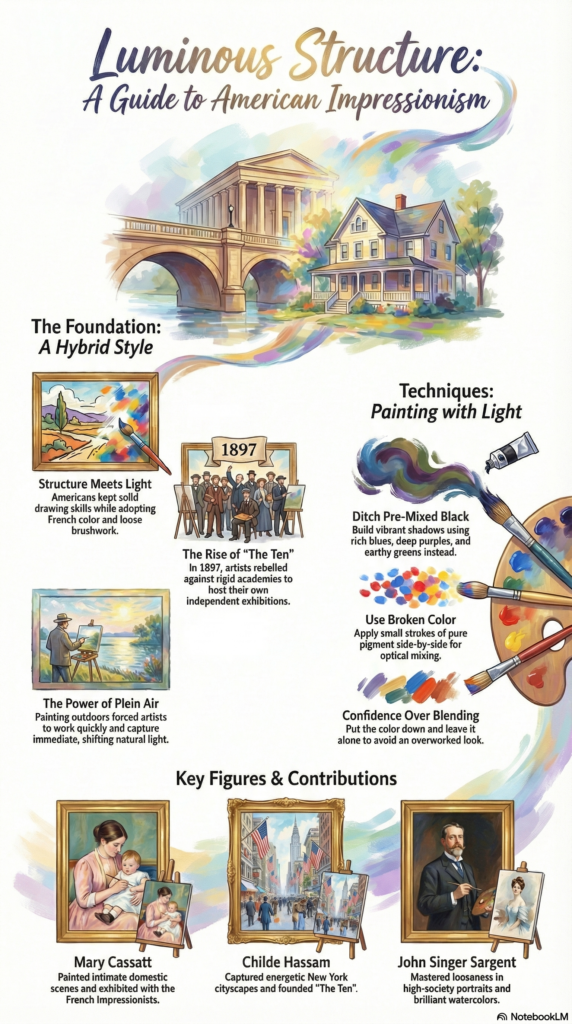
American Impressionists combined the bright colors and broken brushwork of the French style with solid structural drawing. They preferred clear forms and recognizable subjects over scenes that completely dissolved into pure light and atmosphere.
French pioneers like Claude Monet let their subjects melt into the background. The Americans refused to let go of their academic training completely. They wanted the energy of loose paint. They also wanted you to know exactly what you were looking at.
This hybrid approach is brilliant for beginners. It teaches you how to loosen up your brushstrokes without losing control of your composition. You get to play with vibrant light while keeping your subject anchored to reality.
Who Were the Leading American Impressionists?
The movement was defined by artists like Mary Cassatt, Childe Hassam, William Merritt Chase, and John Singer Sargent. Many of these painters formed groups like The Ten in 1897 to exhibit their work outside of rigid traditional academies.
Mary Cassatt is a massive figure here. She moved to Paris and exhibited directly alongside Edgar Degas. She pushed the boundaries for women in art by painting intimate domestic scenes.
Back in the States, Childe Hassam took the style to the streets. He painted characteristic neighborhoods in New York with quick, energetic marks. John Singer Sargent applied a similar looseness to high-society portraits and brilliant watercolors. You can see this mastery clearly in the top John Singer Sargent paintings.
Eventually, a group of frustrated artists broke away from the conservative Society of American Artists. They formed “The Ten American Painters”. This rebel group included Hassam, John Henry Twachtman, and J. Alden Weir. They set the standard for the movement.
Why Did They Paint Outdoors?
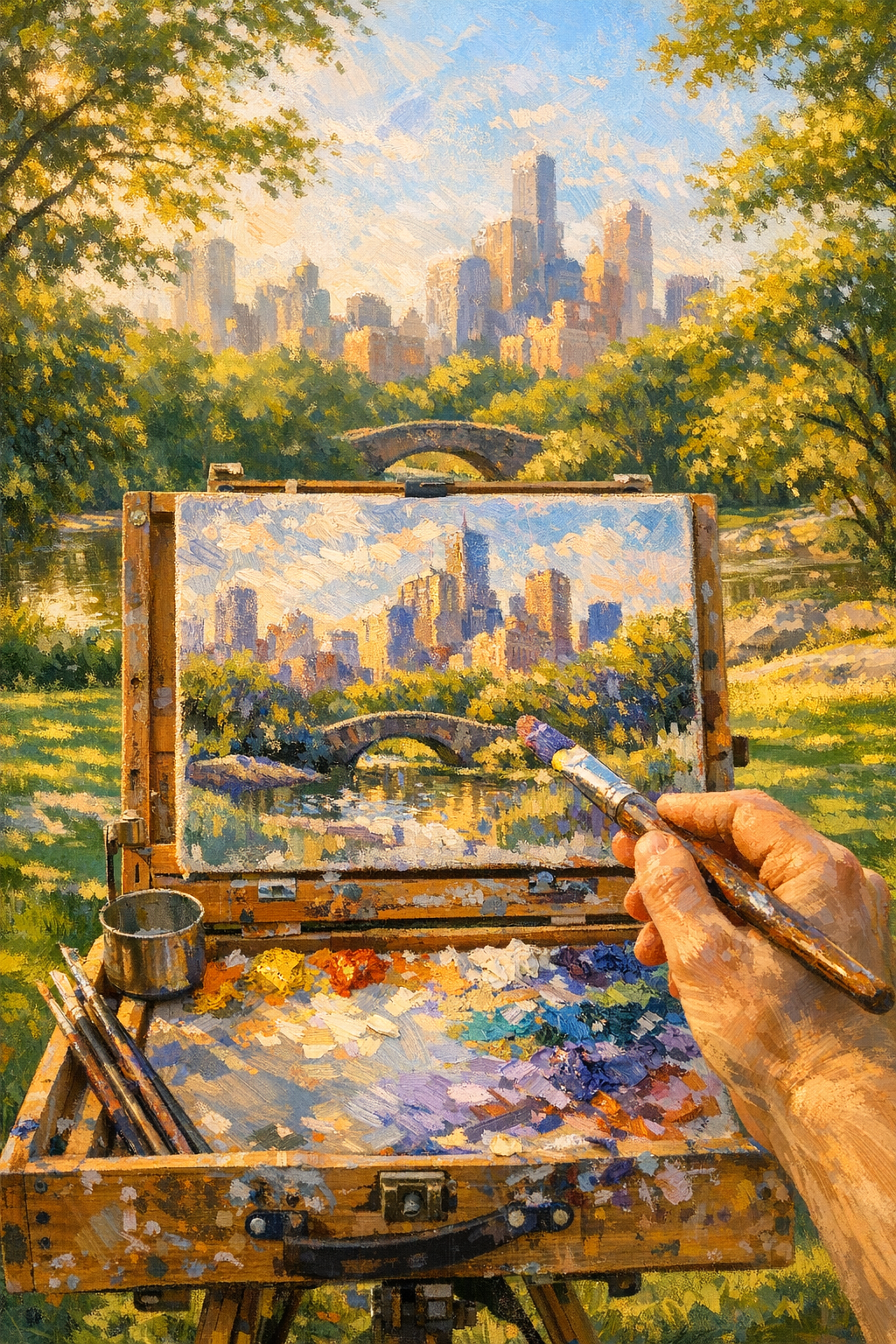
Painting outdoors forced American Impressionists to work quickly to capture changing sunlight. This time pressure naturally created the loose, spontaneous brushstrokes that define the movement.
You cannot overthink a painting when the sun is setting. Working outside requires immediate decisions. You mix a color, put it down, and leave it alone. The light shifts constantly.
If you want to break out of a stiff, overworked painting habit, grab your supplies and go outside. Following a good plein air painting guide will force you to see color instead of just painting what you think is there. It is the fastest way to train your eye to see actual light.
How to Steal Their Techniques for Your Own Canvas
Stop using pre-mixed black for your shadows. American Impressionists built their darks using rich blues, deep purples, and earthy greens. This keeps the shadows feeling alive and full of air.
Next, try the broken color technique. Apply small strokes of pure pigment side by side. Let the viewer’s eye mix them from a distance. It creates a vibration on the canvas that flat, blended paint can never match.
If you want to dig deeper into this, our guide on mastering impressionism light techniques breaks down the exact mixing process. Do not blend your brushstrokes. Put the color down confidently and let it sit.
Go buy a cheap sketchbook. Take it outside tomorrow at dawn or dusk when the shadows are long. Mix a purple shadow instead of a gray one. Put the paint down and step back. The less you fiddle with it, the better it will look.
Frequently Asked Questions
- Who were the most famous American Impressionists? Mary Cassatt, Childe Hassam, William Merritt Chase, and John Singer Sargent are among the most famous. They adapted French techniques to suit American subjects and modern city scenes.
- What is the difference between French and American Impressionism? French Impressionists often allowed their subjects to dissolve entirely into light and color. American painters maintained a stronger sense of solid form and traditional drawing structure while using the same bright colors and loose brushwork.
- Did American Impressionists paint outdoors? Yes. They heavily favored plein air painting. Working outside allowed them to capture the immediate effects of natural light and atmosphere before the sun changed position.
- What was “The Ten”? The Ten American Painters was a group formed in 1897. Artists like Childe Hassam and John Henry Twachtman rebelled against conservative art institutions to host their own independent exhibitions.
- How can I paint like an American Impressionist? Use pure colors straight from the tube and avoid black for shadows. Apply your paint in distinct, broken brushstrokes instead of blending it smoothly on the canvas.