
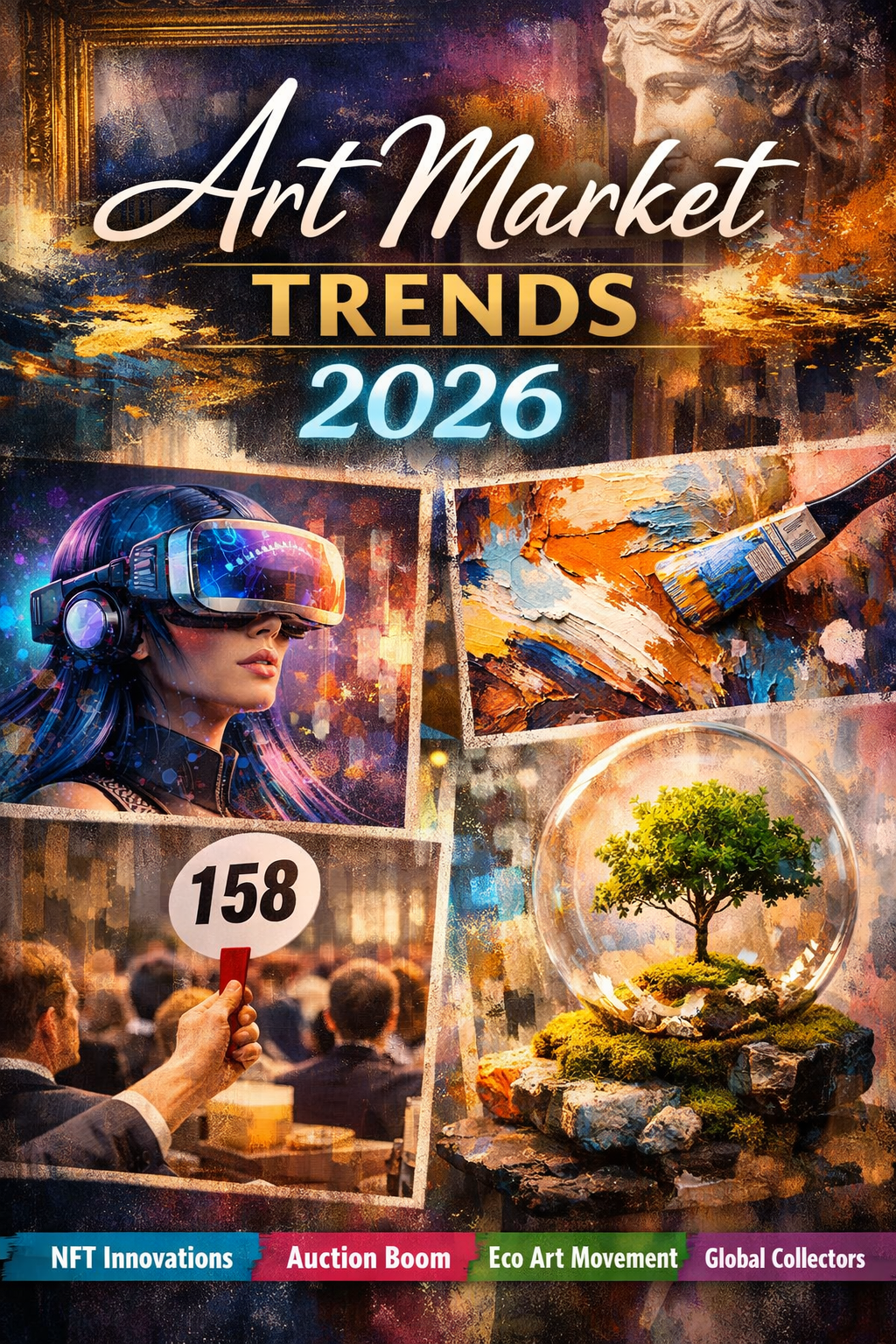
The global art market is shifting fast. Sales rebounded to $59.6 billion recently, driven entirely by new buyers and accessible price points. Artificial intelligence is changing workflows, while sustainability dictates material choices. This guide covers the data-backed trends shaping 2026. You need to understand these shifts to position your artwork where the buyers actually are.
Forget the doom and gloom. The art market found its footing again. Global sales hit $59.6 billion in 2025. That is a solid 4% increase after a tough couple of years. But the way people buy art has permanently changed.
We are seeing a massive split. The high-end market is thinning out. Transactions over $10 million dropped significantly. Instead, growth is exploding at the accessible end. Smaller dealers saw a 17% jump in annual sales. New collectors are entering the space. They are buying original pieces for their homes rather than speculative investments.
If you paint, this is excellent news. You do not need gallery representation in New York to make a living anymore. You need a solid digital presence and an understanding of what collectors actually want this year. Let us look at the hard numbers driving 2026. We can build on previous art market trends and see how things have evolved.
What are the biggest art market trends for 2026?
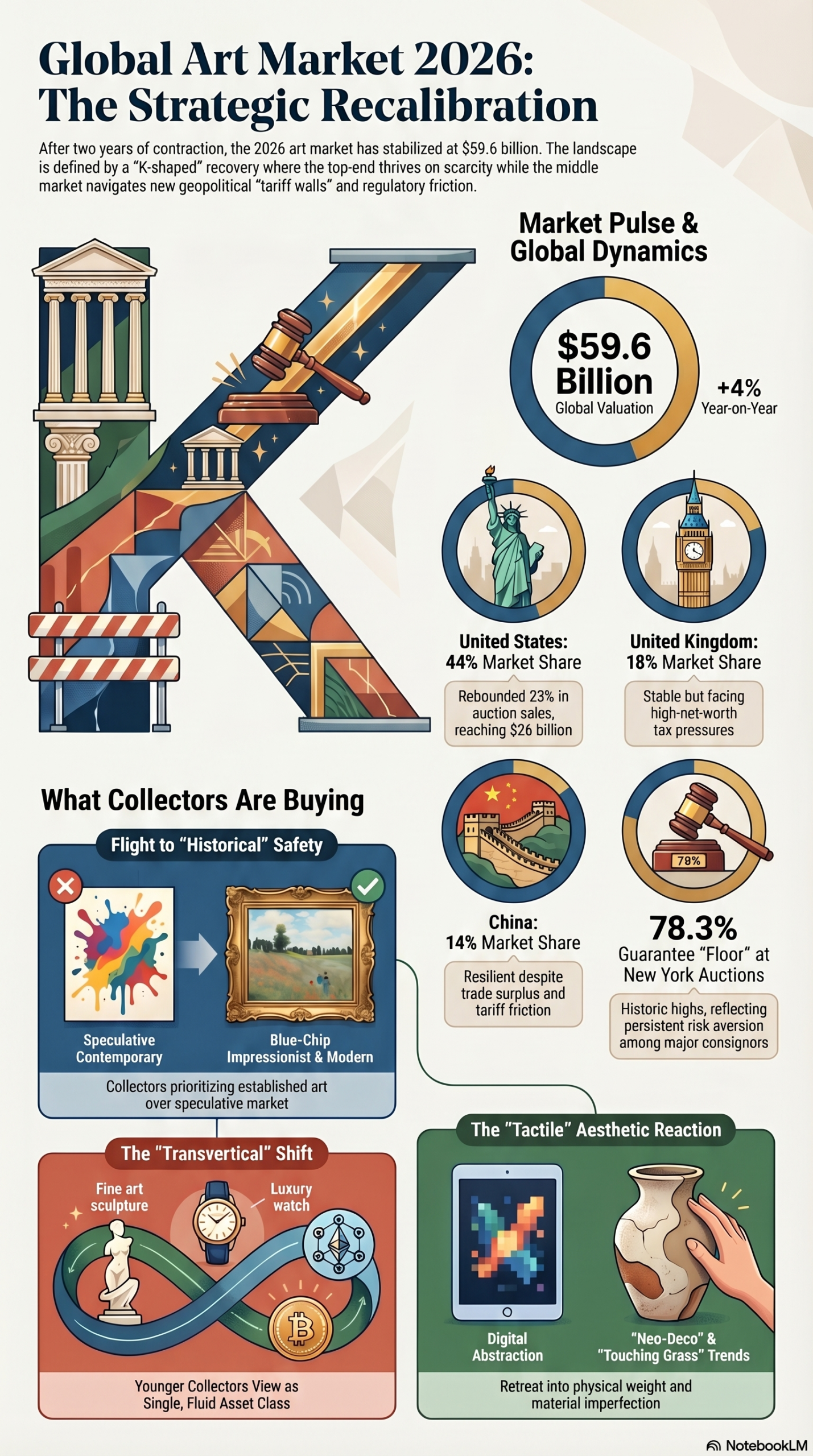
The biggest art market trends for 2026 include a surge in accessible art purchases, the rise of wellness-focused abstract paintings, and increased demand for female artists. New collectors now make up nearly half of all gallery clientele, pushing the market toward affordable physical originals.
The numbers back this up. Global transaction volume increased by 3% recently. People are buying more art, but they are spending less per piece. Nearly 50% of buyers at smaller galleries were first-time customers.
Collectors want art that makes them feel good. Demand for wellness-focused abstract pieces skyrocketed. About 70% of those purchases are tied directly to mental well-being benefits. Buyers want calming colors and realistic textures. We are also seeing a major push for equity. Gallery representation for women in art reached 41%, which is up significantly from previous years.
Will AI replace human painters?
Artificial intelligence will not replace skilled human painters. Instead, AI is replacing low-level commodity graphics while augmenting the productivity of traditional artists. Collectors in 2026 place a massive premium on verified handcrafted physical art that AI cannot replicate.
The panic is largely over. About 20% of freelance artists reported income losses due to AI automation. However, the other 80% used these tools to speed up their workflow. The market now draws a harsh line between cheap digital commodities and high-value creativity.
Transparency is also becoming law. Starting in August 2026, new EU rules require clear labeling of any AI-generated or AI-manipulated art. This legal shift protects physical painters. You can learn how AI is transforming creative processes to stay ahead, but your physical brushstrokes are your actual competitive advantage.
The rise of the Transvertical Market
The old boundaries are dead. Industry experts now call 2026 the era of the Transvertical Market. This means the strict lines between fine art, luxury collectibles, and digital assets have collapsed.
Younger affluent buyers view art differently than their parents did. They see it as fluid cultural capital. A physical painting must now carry a strong narrative that works across social platforms. You are not just selling an object. You are selling a story that the collector wants to associate with their own identity.
Are online art sales still growing?
Online art sales remain strong but require a diversified approach in 2026. A simple website is no longer enough. Successful artists and galleries now distribute their collections across multiple digital platforms to reach different collector segments simultaneously.
A massive 63% of purchasing decisions now begin online. If you want to sell your art online successfully, you have to treat your digital presence like permanent infrastructure. You cannot just post to social media and hope for the best.
Galleries that list on multiple platforms sell significantly more art than those relying on a single channel. Buyers are specific. Some shop on Artsy for contemporary works, while others browse 1stDibs for modern design pieces.
Why eco-friendly art is finally selling
Sustainability is no longer just a nice talking point. It is a strict buying criterion for many new collectors. The eco-art movement is pushing artists to adopt environmentally conscious practices.
We see this across the entire supply chain. Buyers actively seek out artists who use eco-friendly oils and sustainable canvas materials. Even digital art platforms are moving toward carbon-neutral technologies to reduce their environmental footprint. Adopting sustainable art practices gives you a distinct edge in a crowded market.
| Market Segment | 2026 Trend | Buyer Focus |
| High-End (Over $10M) | Contracting | Established estates and rare historical works |
| Accessible (Under $5K) | Expanding | Wellness, home decor, and physical originals |
How do I adapt my art business this year?
To succeed in 2026, artists must combine a strong multi-platform digital presence with in-person networking. You need to verify the authenticity of your physical work, optimize your website for search engines, and actively participate in local or international art fairs.
While digital visibility is mandatory, physical events still close the biggest deals. Art fair sales recently accounted for 35% of dealer turnover. They remain the most reliable source for finding brand new buyers.
Technological trust is also vital. You need to show your work clearly. Adding structured data to your website helps search engines classify you as a professional artist.
Conclusion
The 2026 art market is incredibly healthy if you know where to look. The speculative bubble burst. That left behind a massive wave of new collectors who just want beautiful physical art in their homes. Focus on your craft. Lean into your personal story. Diversify your sales channels.

Stop worrying about AI taking your job. Your humanity is exactly what buyers are paying for right now. Build your website, book a booth at a local fair, and start painting.
Frequently Asked Questions
1. What is the current size of the global art market?
The global art market reached $59.6 billion in sales in 2025. This reflects a 4% year-over-year growth. The recovery was driven largely by public auctions and increased buying at accessible price points.
2. Are people still buying abstract art in 2026?
Yes. Abstract art currently holds a 40% market share in global oil painting sales. Collectors heavily favor abstract pieces that promote mental clarity and stress relief.
3. How are new laws affecting AI art?
Starting in August 2026, the European Union requires clear labeling for all AI-generated or manipulated content. This aims to prevent misattribution and protect the value of human-made art.
4. Where do most art collectors find new artists now?
While 63% of purchasing decisions start online, in-person events remain vital. Art fairs account for 35% of dealer turnover. This makes them a primary discovery channel for new collectors.
5. Is the high-end art market crashing?
The high-end market is contracting. Transactions exceeding $10 million dropped by 44% in the first half of 2025. However, the lower end of the market is booming, with smaller dealers reporting 17% sales growth.

Olly
Olly Farmer M.Sc, B.Sc, PGCE 25 years experience of Watercolor Painting and AI Art; teacher for 13 years; Creator of Art Tools; Art Gallery Contributor of Art Articles to Medium.com, LinkedIn and Facebook
Continue exploring
PROMINENT PAINTING
Keep your creative momentum
Get new painting guides, practical techniques and artist stories delivered without the noise.
Occasional emails. Unsubscribe whenever you like.