
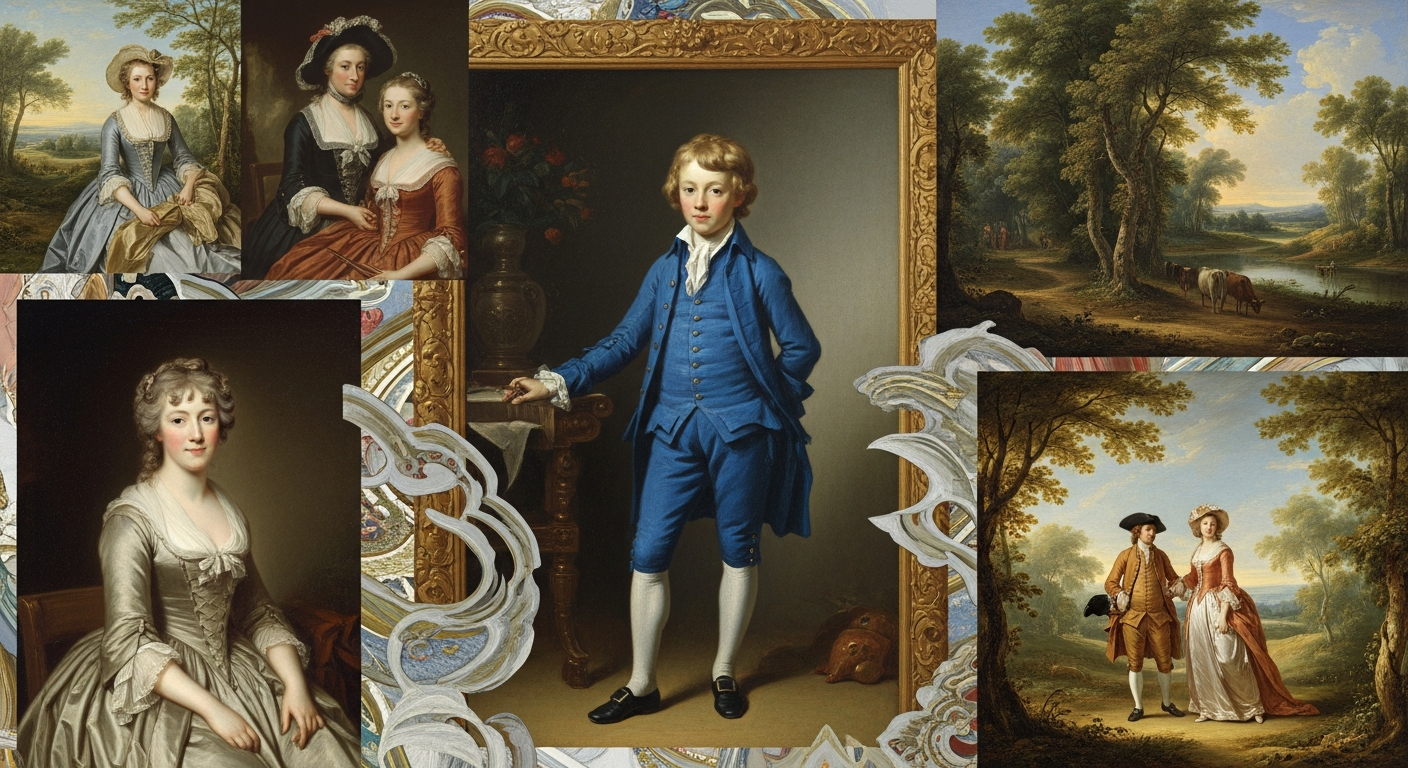
Ever wondered what it was like to be a superstar painter in the 1700s? Meet Thomas Gainsborough, one of England’s most celebrated artists. While other painters were busy with stiff, formal portraits, Gainsborough brought a breath of fresh air with his lively, natural style. He was a master of capturing not just what people looked like, but who they were, often placing them in beautiful, dreamy landscapes. The collection of Thomas Gainsborough paintings represents a pivotal moment in British art, blending elegance with a love for the countryside. He was a founding member of the prestigious Royal Academy of Arts and his work continues to dazzle art lovers centuries later.
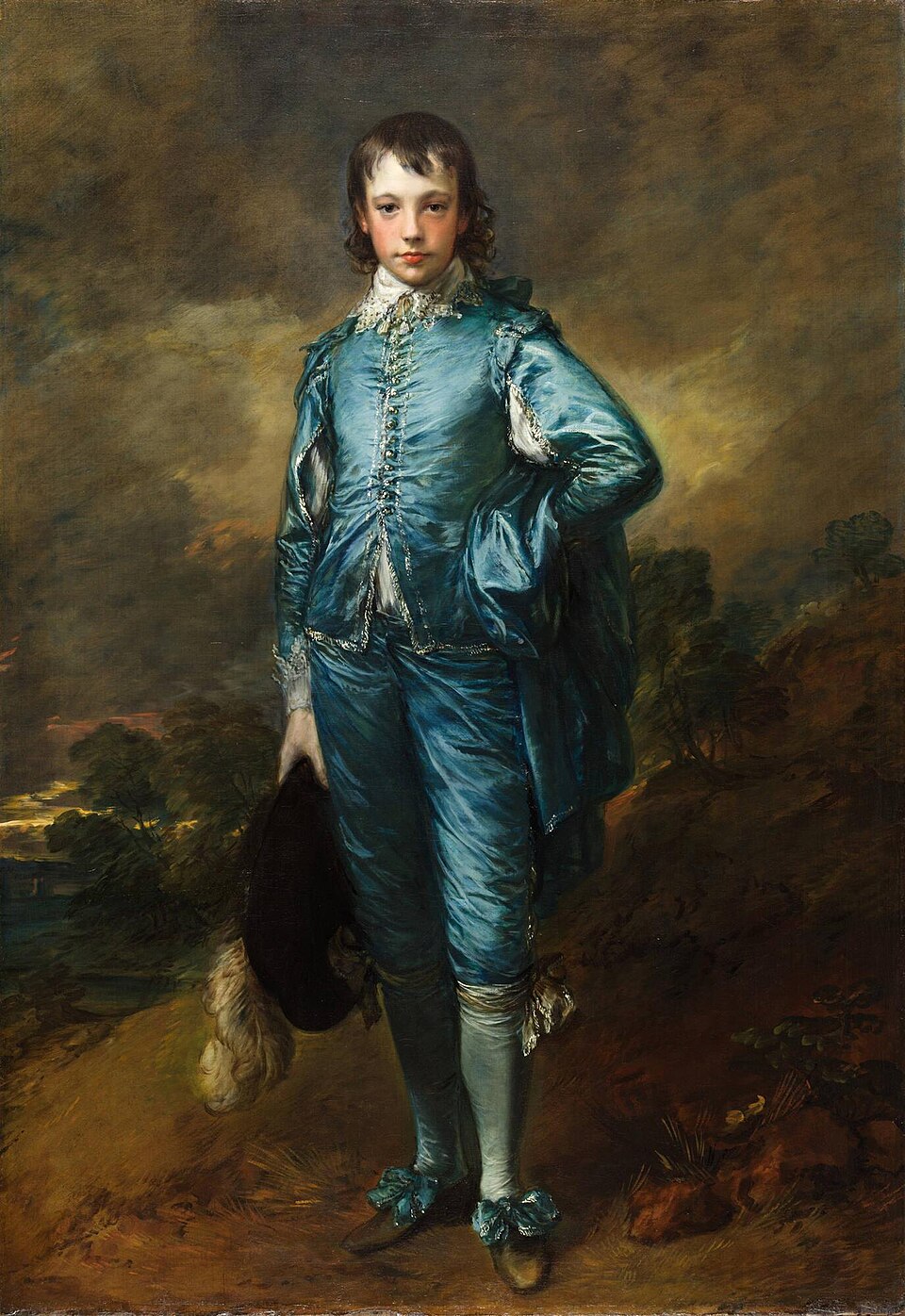
The Blue Boy (c. 1770)
The iconic ‘The Blue Boy’ by Thomas Gainsborough, a masterpiece of 18th-century portraiture.
Description: This is probably Gainsborough’s most famous work! It shows a young man dressed in a fancy, shimmering blue satin suit. His confident pose and direct gaze make him seem incredibly alive. It wasn’t a commissioned portrait of a specific person, but more of a costume study, allowing Gainsborough to show off his amazing skill. Many art historians believe ‘The Blue Boy’ was painted as a creative response to his rival, Sir Joshua Reynolds, who had claimed that blue should not be the main color in a painting.
Painting Techniques: Gainsborough used quick, feathery brushstrokes that make the fabric look like it’s actually moving. He was a master of capturing light, and you can see how it reflects off the satin, making it a stunning example of his fluid painting style.
Location: The Huntington Library, Art Museum, and Botanical Gardens, San Marino, California, USA
Estimated Value: Priceless
Mr and Mrs Andrews (c. 1750)
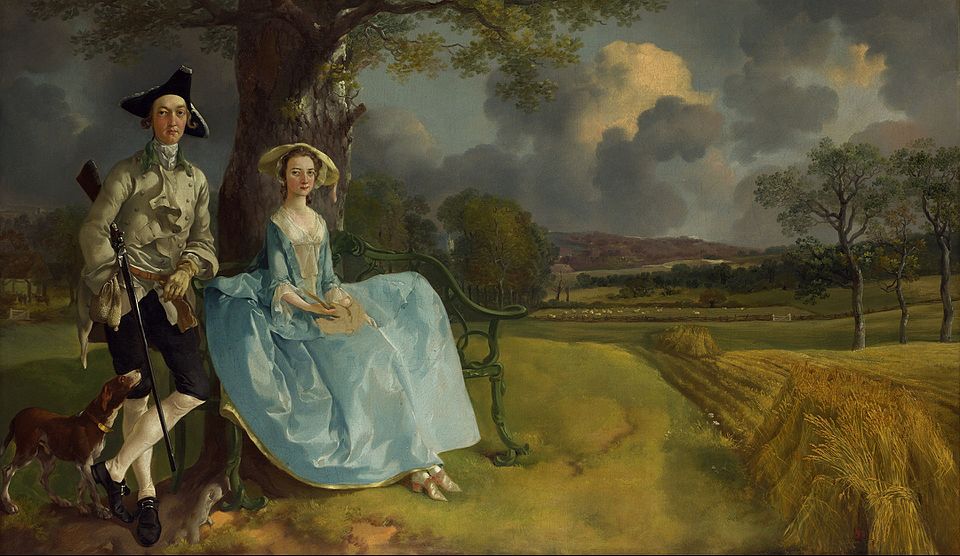
The celebrated ‘Mr and Mrs Andrews’ by Thomas Gainsborough, a stunning union of portrait and landscape.
Description: This painting is like an 18th-century Instagram post showing off a couple’s new life. It features Robert and Frances Andrews, newly married, posing proudly on their vast estate. It’s a unique blend of a portrait and a landscape, celebrating both the people and their land. There is a mysterious unfinished patch on Mrs. Andrews’s lap, and no one knows for sure what Gainsborough originally intended to paint there—perhaps a baby, a book, or a hunting bird.
Painting Techniques: Gainsborough expertly combines a detailed portrait with a sweeping, realistic landscape. He uses a cool, crisp color palette and precise brushwork to capture the textures of their clothing and the natural beauty of the Suffolk countryside.
Location: The National Gallery, London, UK
Estimated Value: Priceless
The Honourable Mrs Graham (1777)
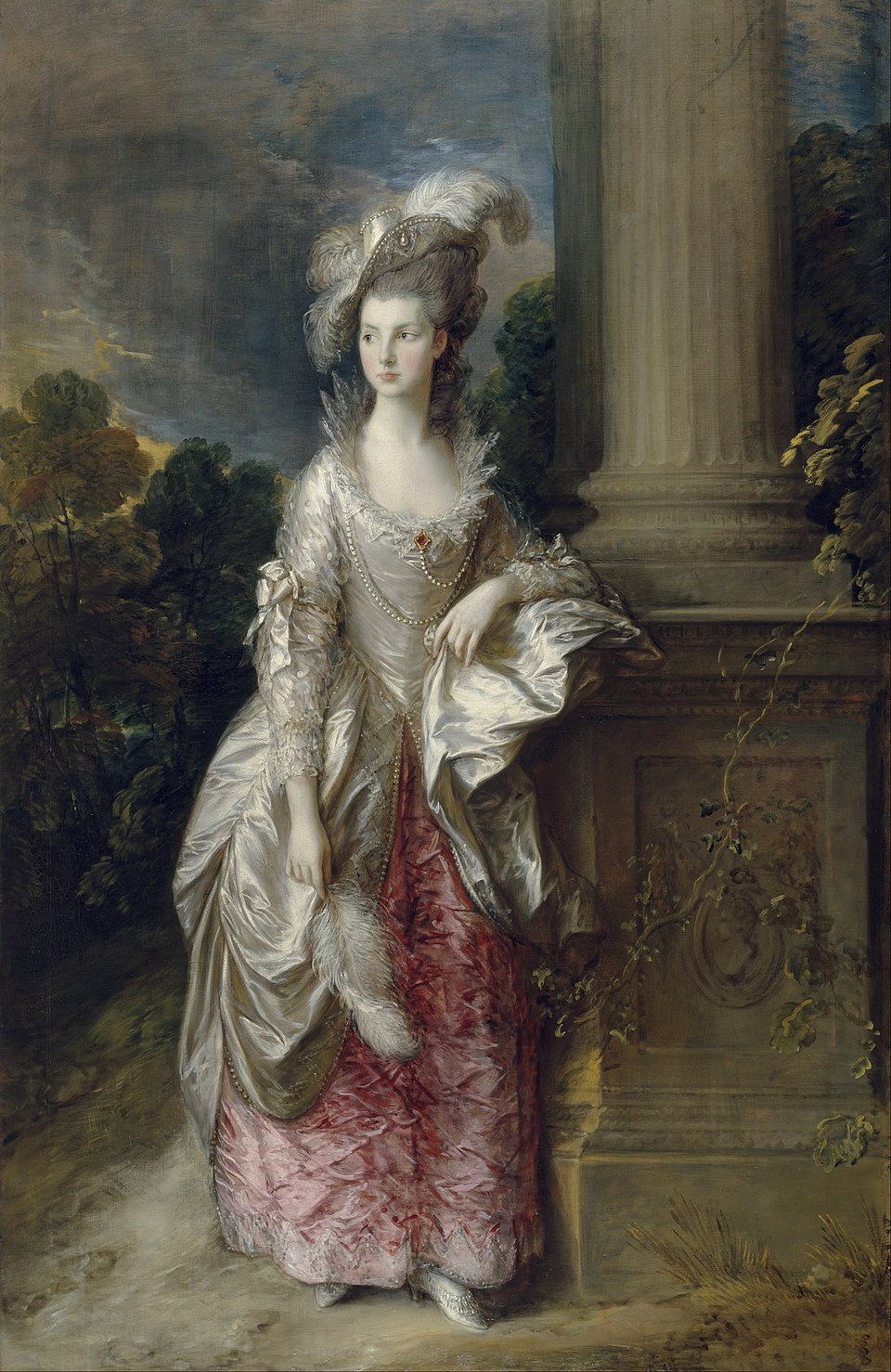
The elegant and poignant portrait of ‘The Honourable Mrs Graham’ by Thomas Gainsborough.
Description: This full-length portrait shows Mary Graham, a famous Scottish beauty, looking incredibly elegant and a little bit sad. She is dressed in a lavish silk gown and leans against a column, surrounded by a rich, atmospheric landscape. The painting captures her grace and fashionable status. After Mary Graham died young from tuberculosis, her heartbroken husband couldn’t bear to look at the portrait and had it hidden away in storage for over 50 years.
Painting Techniques: Gainsborough used long, flowing brushstrokes to create the texture of the silk dress and feathers. The background is painted with a soft, hazy quality, which makes the figure of Mrs. Graham stand out dramatically.
Location: Scottish National Gallery, Edinburgh, Scotland
Estimated Value: Priceless
The Painter’s Daughters Chasing a Butterfly (c. 1756)
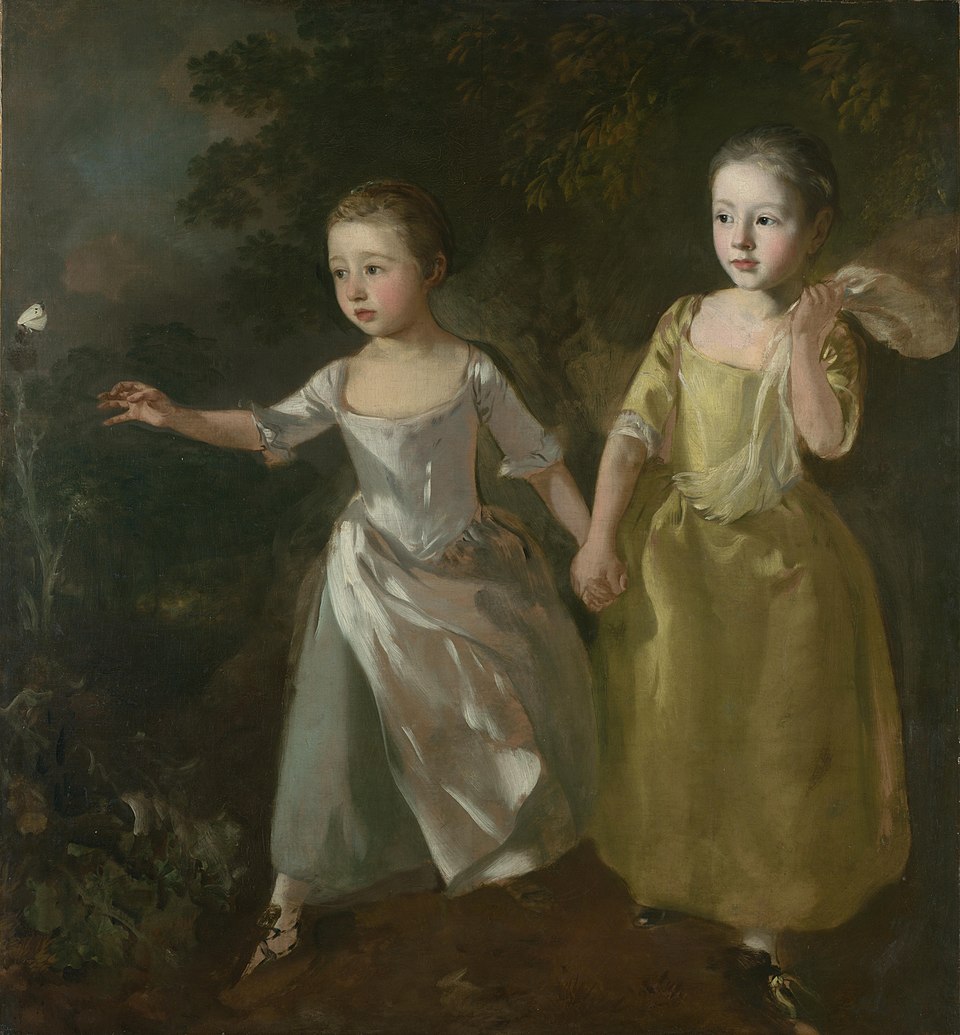
A tender moment captured in ‘The Painter’s Daughters Chasing a Butterfly’ by Thomas Gainsborough.
Description: This is a heartwarming and personal work showing Gainsborough’s two daughters, Mary and Margaret. The older sister gently holds the younger one back from catching a butterfly. It’s a beautiful snapshot of childhood innocence and the fleeting nature of life. The butterfly in the painting is often interpreted as a symbol for the fragility and short span of life, adding a deeper, more thoughtful layer to the charming scene.
Painting Techniques: The painting has a soft, delicate touch, with light brushwork that gives it a sketch-like, informal feel. Gainsborough used warm, earthy tones to create a sense of intimacy and connection to the natural setting.
Location: The National Gallery, London, UK
Estimated Value: Priceless
The Linley Sisters (1772)
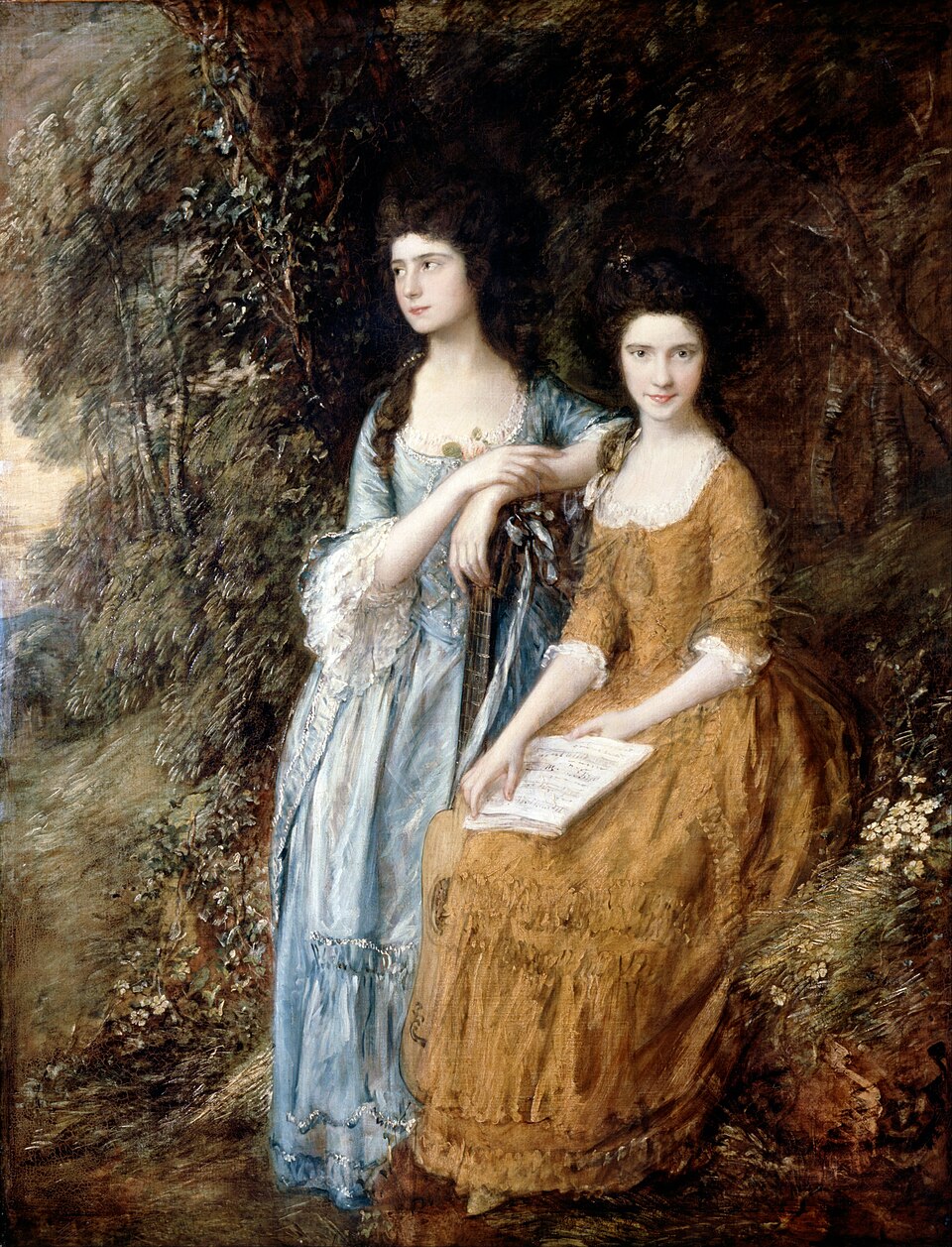
Sisterly harmony in ‘The Linley Sisters’, a beautiful portrait by Thomas Gainsborough.
Description: This painting features Elizabeth and Mary Linley, two sisters who were famous musicians and singers in their time. They are shown sitting close together in a lush, romantic landscape. Gainsborough captures their beauty as well as their close sisterly bond. Both sisters had remarkable but tragic lives; Elizabeth married the playwright Richard Brinsley Sheridan, while Mary, a talented singer, died at the young age of 25.
Painting Techniques: Gainsborough’s brushwork is characteristically light and fluid, especially in the rendering of their dresses and the surrounding foliage. The composition creates a harmonious and serene mood, reflecting the sisters’ musical talents.
Location: Dulwich Picture Gallery, London, UK
Estimated Value: Priceless
The Morning Walk (1785)
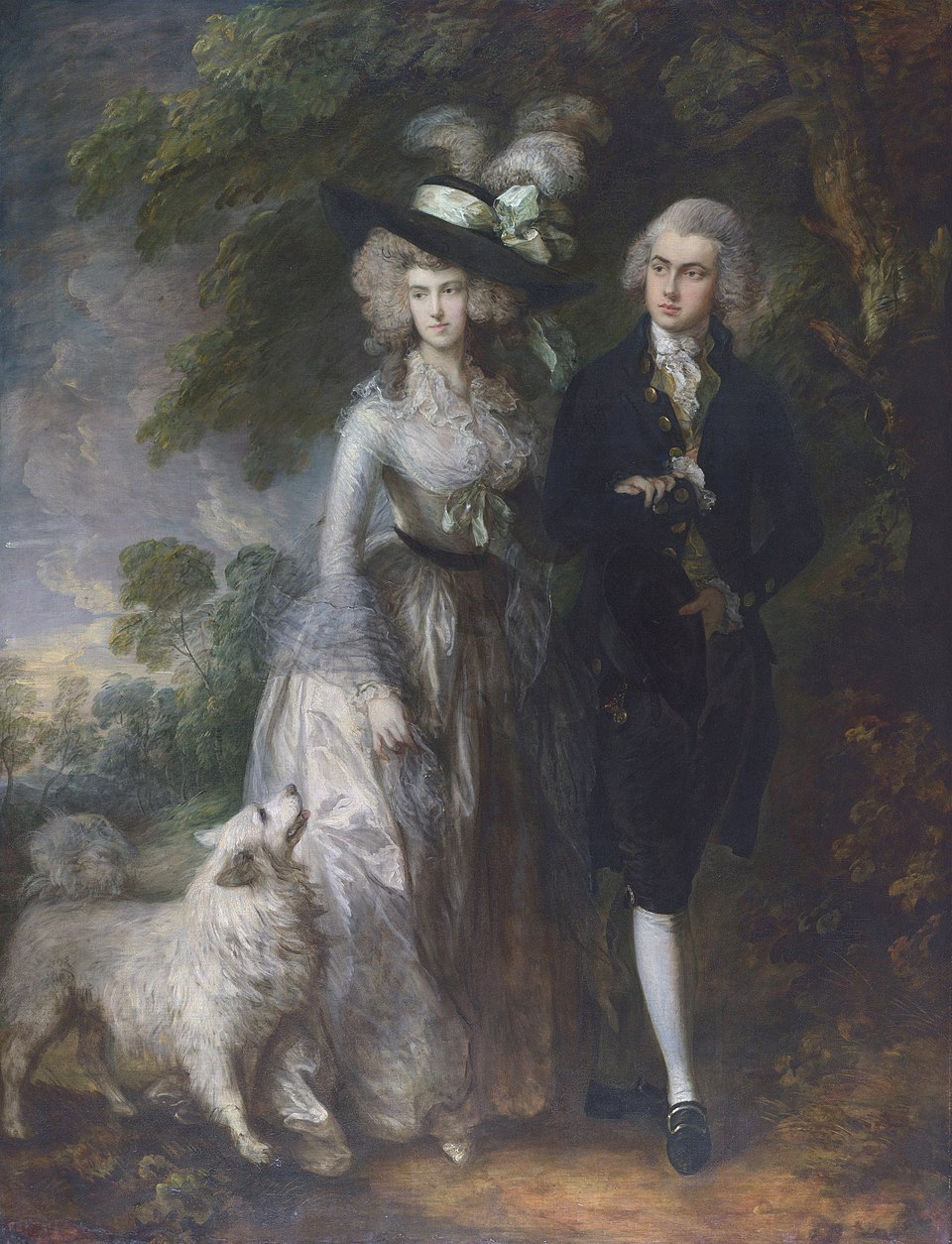
Elegance in motion: ‘The Morning Walk’ by the masterful Thomas Gainsborough.
Description: This portrait depicts William Hallett and his wife Elizabeth taking a fashionable stroll through a park with their fluffy dog. It’s the epitome of 18th-century elegance and romance. The couple seems to glide effortlessly through the landscape, perfectly in sync. The full title of the painting is ‘Portrait of William Hallett and His Wife Elizabeth, née Stephen, known as The Morning Walk’.
Painting Techniques: The artist used delicate, flickering brushstrokes to depict the shimmering silk of Elizabeth’s dress and the powdered wigs. The landscape is not a specific place but an idealized, romantic backdrop that enhances the couple’s grace.
Location: The National Gallery, London, UK
Estimated Value: Priceless
The Harvest Wagon (1784)
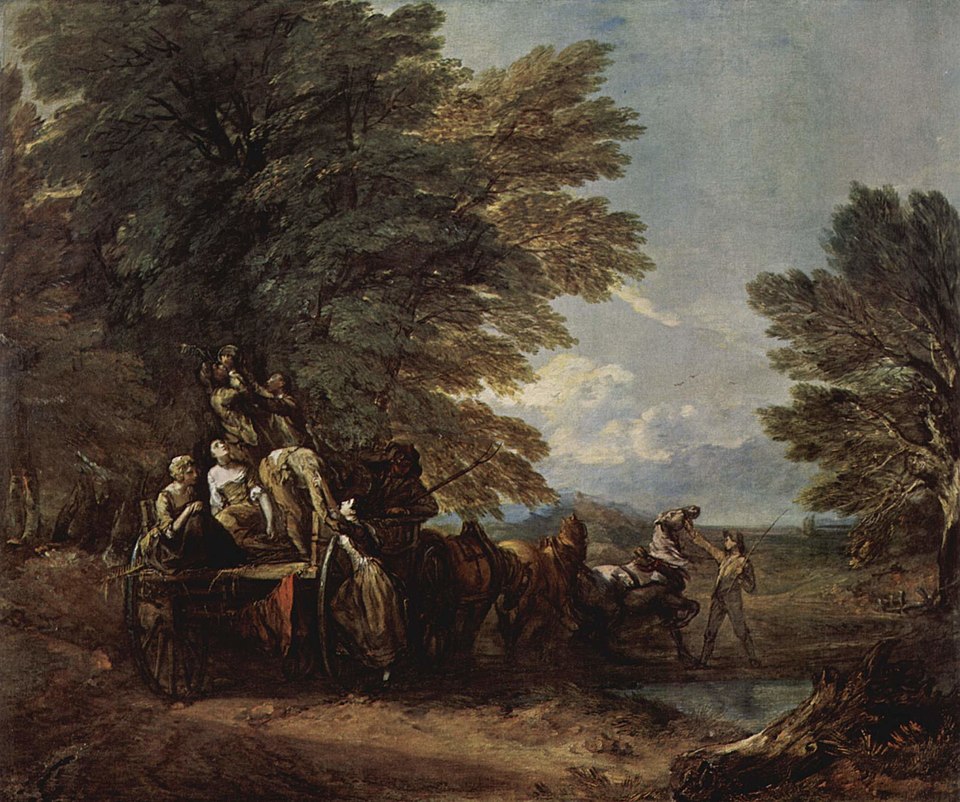
A celebration of country life in ‘The Harvest Wagon’ by landscape lover Thomas Gainsborough.
Description: While famous for portraits, Gainsborough loved painting landscapes. This piece shows a group of cheerful farm workers riding in a wagon filled with the day’s harvest. It’s a lively scene that celebrates the simple beauty of country life. Gainsborough painted two famous versions of ‘The Harvest Wagon’; this later one from 1784 is considered more dynamic and complex than the earlier one from 1767.
Painting Techniques: This painting showcases Gainsborough’s mature landscape style, influenced by the Dutch master Peter Paul Rubens. He uses swirling, dynamic brushstrokes and a warm, golden light to create a sense of movement and joy.
Location: Art Gallery of Ontario, Toronto, Canada
Estimated Value: Priceless
Mrs. Richard Brinsley Sheridan (1787)
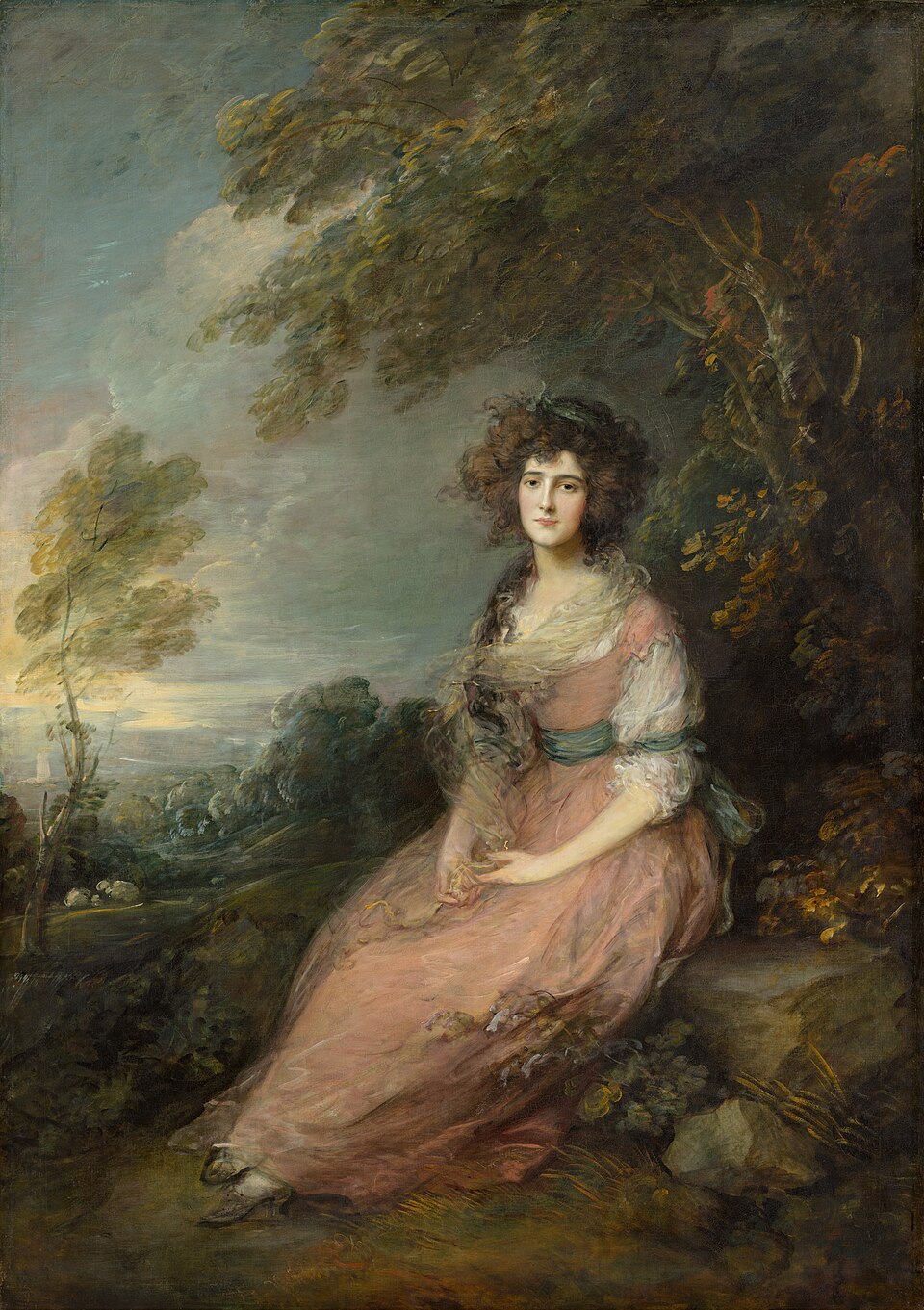
The romantic and windswept ‘Mrs. Richard Brinsley Sheridan’ by Thomas Gainsborough.
Description: This is another portrait of the talented Elizabeth Linley, now Mrs. Sheridan. She is seated outdoors, her hair blowing in the wind, looking thoughtful. The painting merges her personality with the wildness of nature, creating a deeply romantic and emotional image. Completed just a few years before both the artist’s and the subject’s deaths, the painting has a wistful quality that seems to foreshadow the end of an era.
Painting Techniques: Gainsborough’s brushwork here is loose and expressive, perfectly capturing the movement of the wind through the trees and Mrs. Sheridan’s dress. The colors are muted, which adds to the pensive and melancholic atmosphere.
Location: National Gallery of Art, Washington, D.C., USA
Estimated Value: Priceless
Portrait of Mrs. Sarah Siddons (1785)
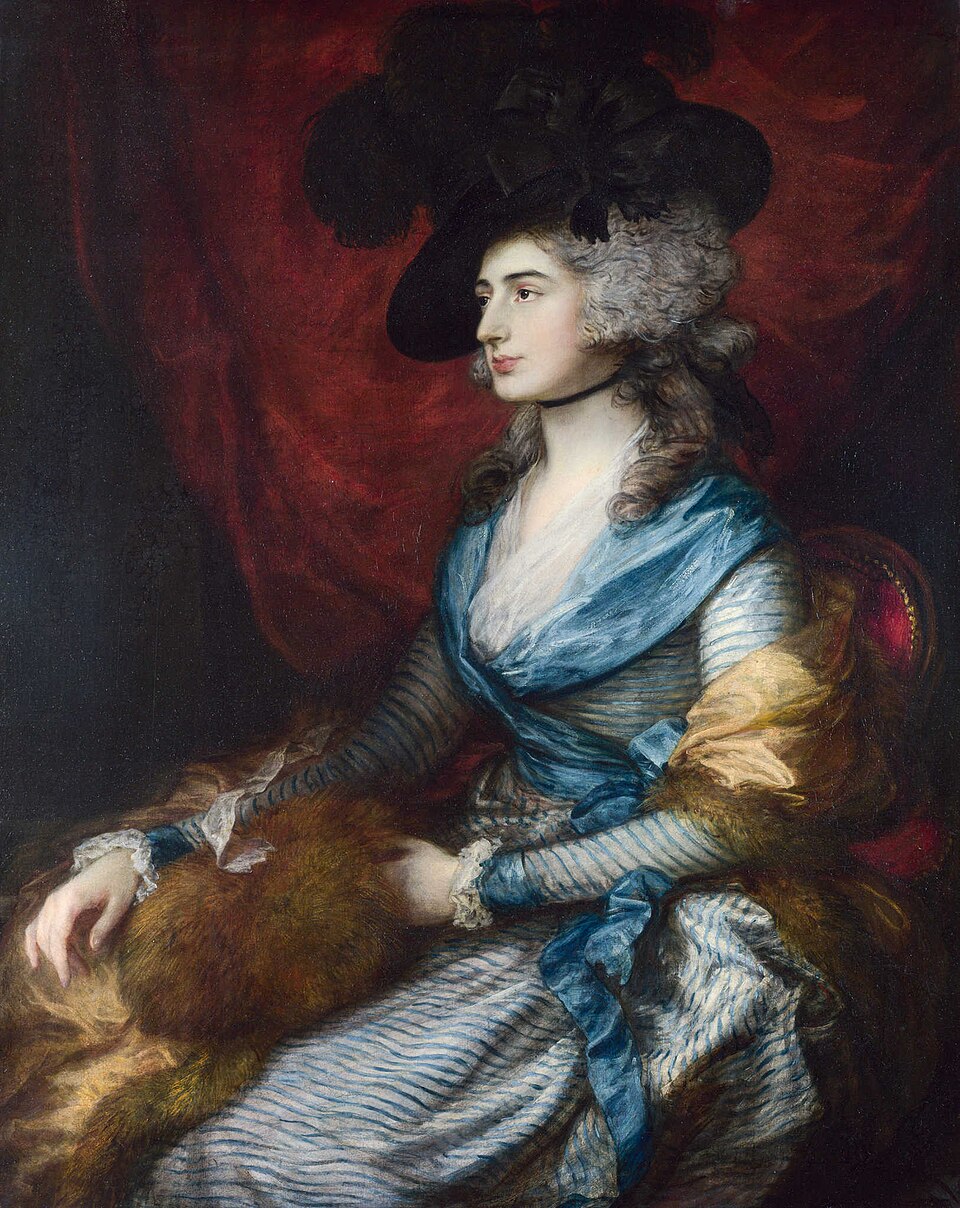
A portrait of star power: ‘Mrs. Sarah Siddons’ as captured by Thomas Gainsborough.
Description: Sarah Siddons was the most famous tragic actress of her time, and Gainsborough portrays her as a powerful and commanding figure. Seated and dressed in a striped silk gown with a large black hat, she looks directly at the viewer with intelligence and confidence. Legend has it that while painting her nose, Gainsborough became so frustrated that he exclaimed, ‘Confound the nose, there’s no end to it!’
Painting Techniques: Gainsborough famously used long brushes to maintain a distance from the canvas, resulting in a free and fluid style. Notice the bold stripes of her dress and the sharp, confident lines used to define her profile and hat.
Location: The National Gallery, London, UK
Estimated Value: Priceless
Cottage Girl with Dog and Pitcher (1785)

The rustic charm of ‘Cottage Girl with Dog and Pitcher,’ a favorite theme of Thomas Gainsborough.
Description: This painting is a perfect example of Gainsborough’s ‘fancy pictures,’ which depicted rustic, everyday scenes with a touch of sentimentality. It shows a young peasant girl with her dog, holding a pitcher, looking directly at the viewer with a sweet, innocent expression. These ‘fancy pictures’ were Gainsborough’s personal favorites to paint, as they allowed him to escape the pressures of formal portrait commissions and focus on subjects he loved.
Painting Techniques: Gainsborough used earthy tones and soft, blended brushwork to create a feeling of warmth and sympathy. The lighting is gentle, highlighting the girl’s simple clothing and her connection to the rural landscape.
Location: National Gallery of Ireland, Dublin, Ireland
Estimated Value: Priceless
Inspiration and Legacy
Gainsborough didn’t just invent his style out of thin air. He was heavily inspired by the grand, elegant portraits of the Flemish painter Sir Anthony van Dyck, whose work he studied intensely. He also had a deep love for the Dutch landscape painters of the 17th century, like Jacob van Ruisdael, which is why his backgrounds are so rich and natural. In turn, Gainsborough’s own legacy is huge. His fresh, natural approach to painting, especially his landscapes, had a massive impact on later British artists. The most famous of these was John Constable, who considered Gainsborough a foundational influence on his own revolutionary landscape paintings.
Final Thoughts
Thomas Gainsborough was more than just a painter; he was a storyteller who used his brush to capture the spirit of 18th-century England. He balanced the high-society demand for elegant portraits with his personal passion for the humble countryside, and he excelled at both. His ability to convey personality and emotion with light, fluid strokes set him apart from his contemporaries. The enduring appeal of Thomas Gainsborough paintings lies in their timeless beauty and the genuine humanity that shines through, securing his place as one of the great masters of British art.
FAQs about Thomas Gainsborough
What is Thomas Gainsborough most famous for?
Thomas Gainsborough is most famous for his elegant portraits, like ‘The Blue Boy,’ and for his beautiful, naturalistic landscape paintings. He was one of the first major British artists to excel in both.
Who was Thomas Gainsborough’s biggest rival?
His main rival was Sir Joshua Reynolds, the first president of the Royal Academy. They had very different painting styles, with Reynolds being more classical and academic, while Gainsborough was more natural and intuitive.
Why is Thomas Gainsborough’s painting style so special?
His style is special because of its light, quick, and feathery brushstrokes. He painted with a sense of speed and spontaneity that made his subjects feel alive and less formal than in other portraits of the time.
Did Gainsborough prefer painting people or landscapes?
Although he made most of his money from painting portraits, Gainsborough always said he preferred painting landscapes. He once wrote in a letter, ‘I’m sick of Portraits and wish very much to take my Viol-da-Gam and walk off to some sweet Village where I can paint Landskips.’
Citations

Olly
Olly Farmer M.Sc, B.Sc, PGCE 25 years experience of Watercolor Painting and AI Art; teacher for 13 years; Creator of Art Tools; Art Gallery Contributor of Art Articles to Medium.com, LinkedIn and Facebook
Continue exploring


PROMINENT PAINTING
Keep your creative momentum
Get new painting guides, practical techniques and artist stories delivered without the noise.
Occasional emails. Unsubscribe whenever you like.