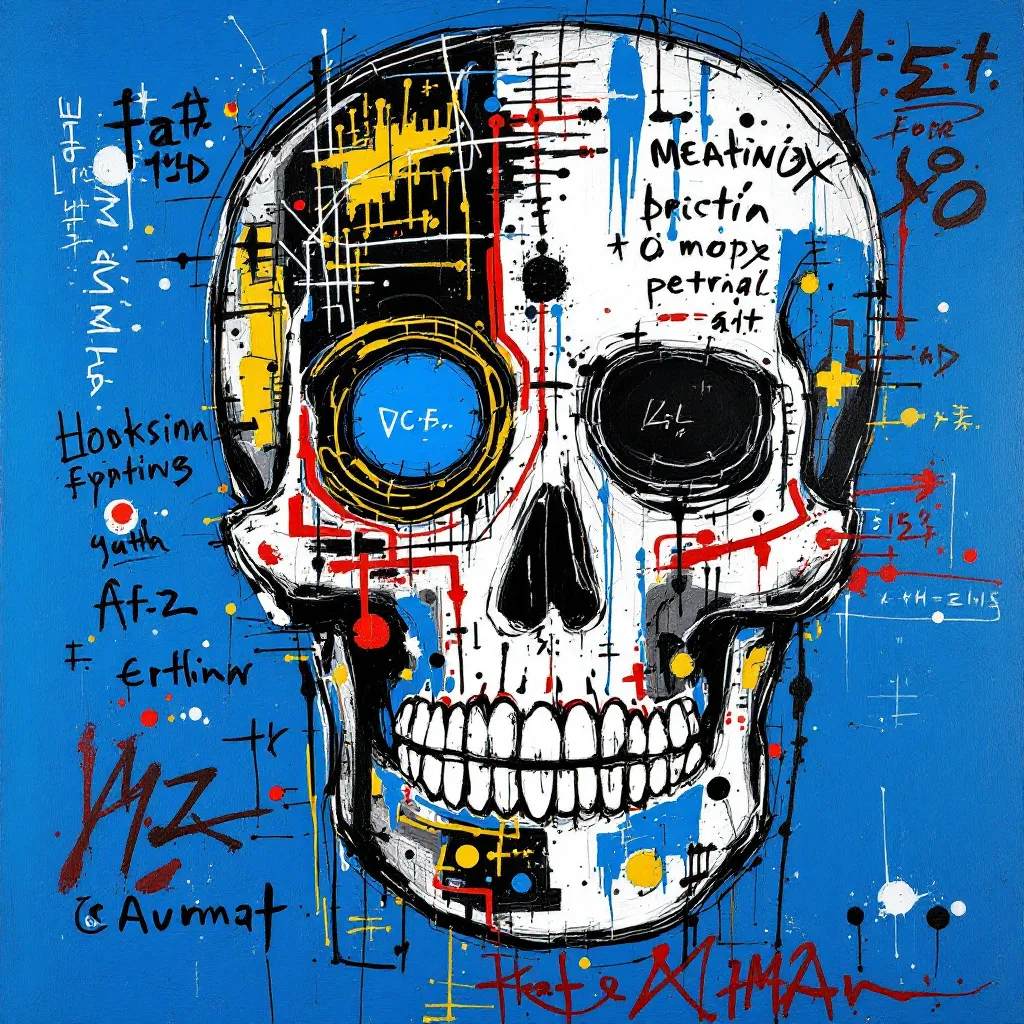
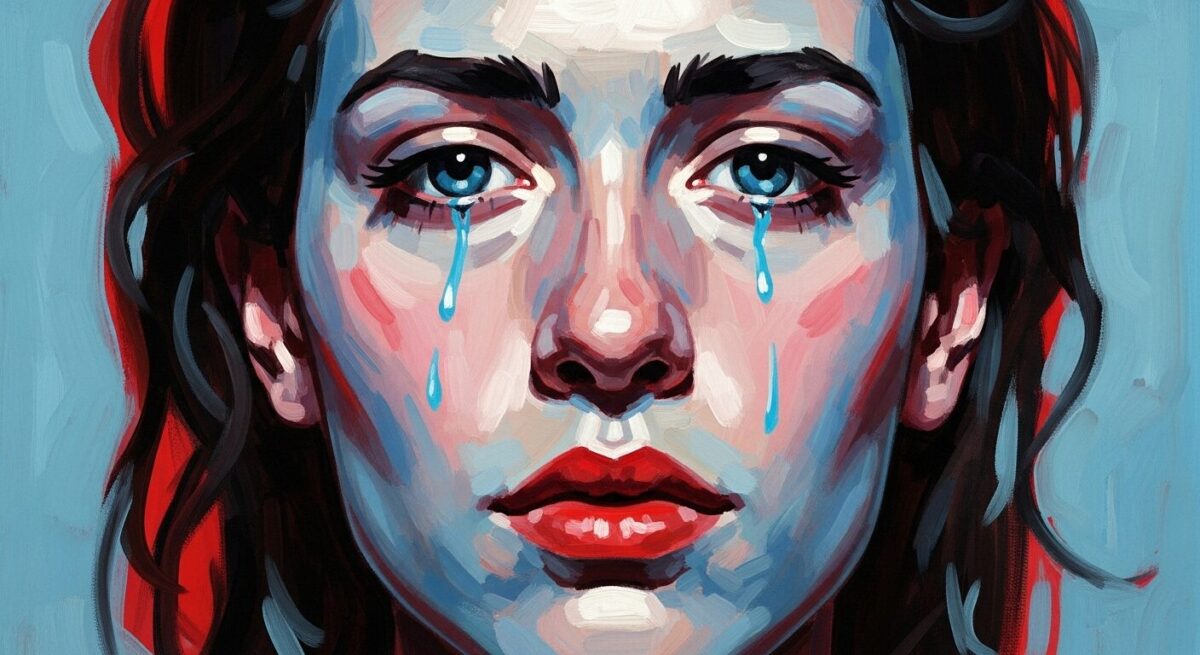
Have you ever looked at a painting and felt like you were staring straight into the artist’s soul? Like the colors were screaming, the lines were dancing, and the whole world was a little bit crooked? That’s the power of Expressionist painting techniques for beginners!
Forget what your stuffy old art teacher told you about perfect perspective and matching colors—Expressionism is where you throw the rulebook out the window and paint how you feel, not just what you see. It’s a style born from a time of wild emotions and big changes in the world (the early 1900s, mostly Germany), and it’s your perfect chance to be dramatic on canvas.
We’re going to dive into the coolest, easiest ways you can start using expressionist painting techniques for beginners today, turning your canvas into a vibrant, emotional explosion. Get ready to stop painting pictures and start painting feelings.
Key Point Summary: Your Expressionist Crash Course 🎨
- Rule-Breaker Art: Expressionism is all about painting your emotions (anxiety, joy, fear) rather than painting what’s real
- The Power of Ugliness: Artists intentionally distort forms and perspective to create strong feelings
- Color as Feeling: Use unconventional and non-natural colors (like a red sky or a blue face) to convey mood
- Brushwork is Boss: Employ jagged, visible, and spontaneous brushstrokes to show energy and movement
- Groups to Know: The main German Expressionist groups were Die Brücke (The Bridge) and Der Blaue Reiter (The Blue Rider)
- Anyone Can Do It: These techniques are perfect for beginners because they value feeling and freedom over technical skill
What is Expressionism, Really? (It’s Not a Selfie of a Sunset)
Imagine you’re having the worst, most confusing day ever. Expressionism is the art you make when you channel all that messy, raw emotion straight onto the canvas. It’s not Impressionism, which is all about capturing the light and a fleeting moment (like a pretty snap-shot). Expressionism is the opposite—it’s about the inner necessity, the stuff swirling around inside your head that you must get out.
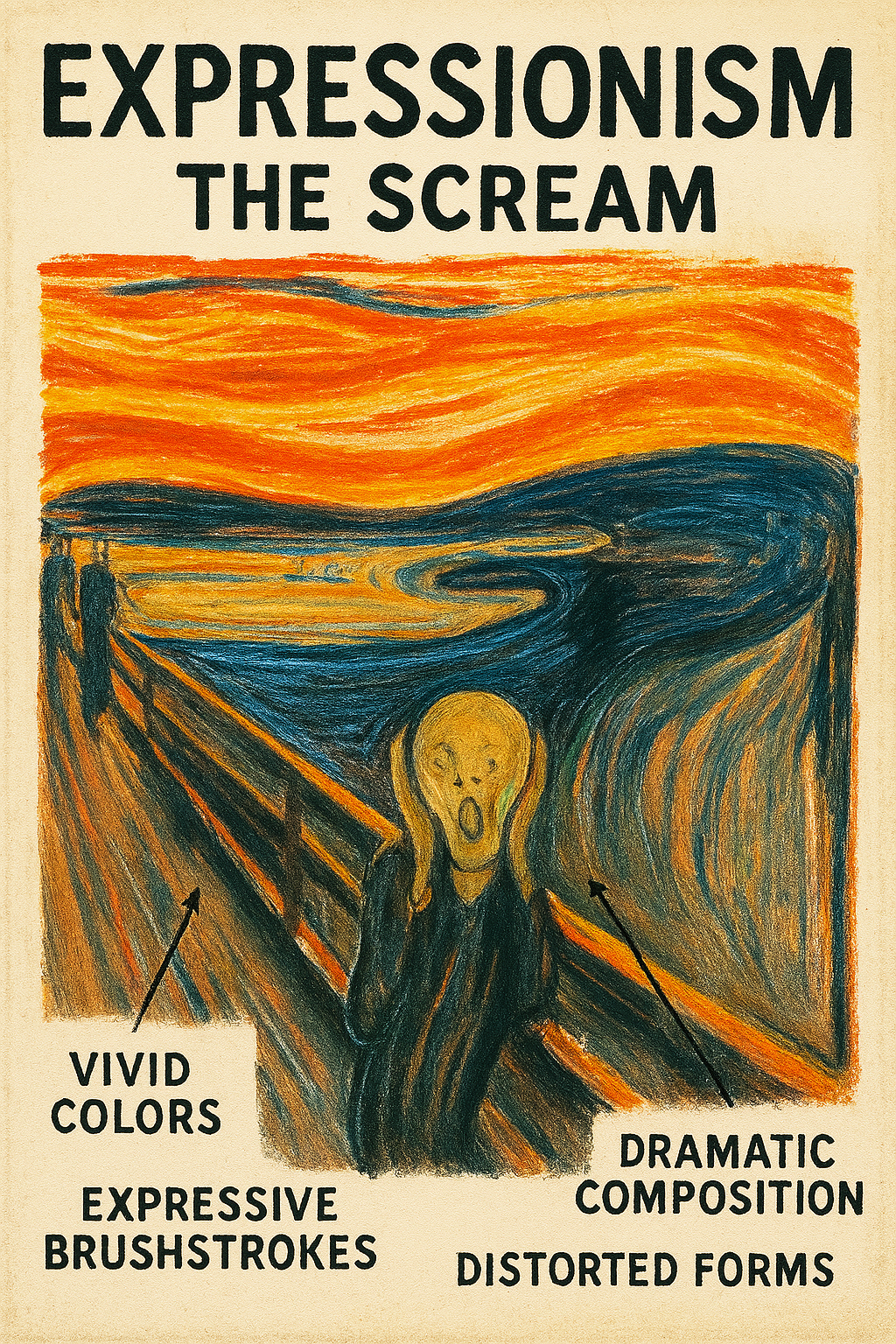
The artists of this movement, like Edvard Munch, Ernst Ludwig Kirchner, and Wassily Kandinsky, lived through a time of massive social and industrial change in the early 20th century. They felt disconnected, anxious, and intense. Their art was their scream, their protest, and their spiritual search. And the best part for you? This style welcomes mistakes because a “messy” brushstroke is just another way to show a raw, untamed feeling. This makes expressionist painting techniques for beginners the most freeing art style you can learn!
Expressionist Painting Techniques for Beginners: Master the Fundamentals
Technique 1: Color that Tells a Story (Forget the Rainbow)
In traditional painting, a tree is green and the sky is blue. Boring! Expressionists used color like a secret language to talk about feelings, making this one of the most important expressionist painting techniques for beginners to master.
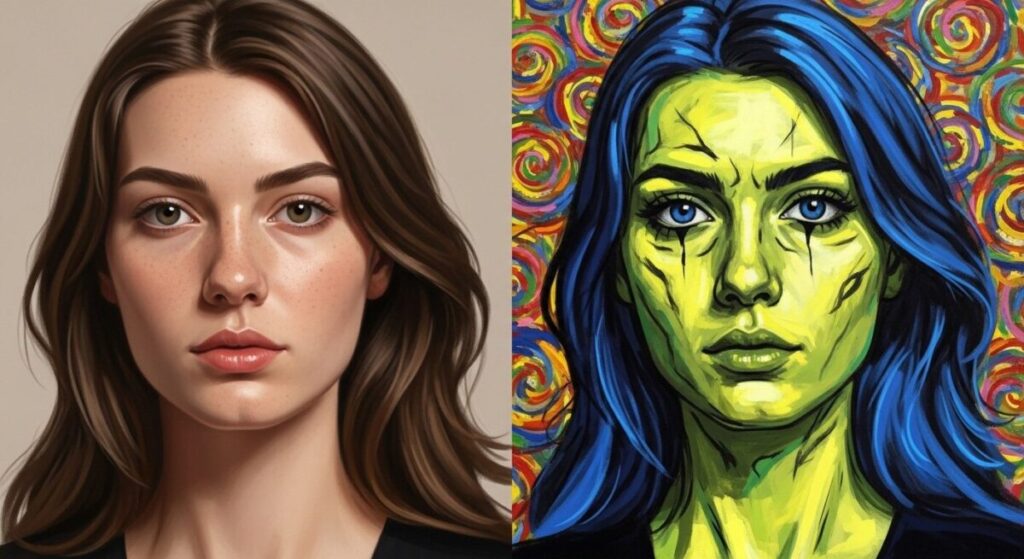
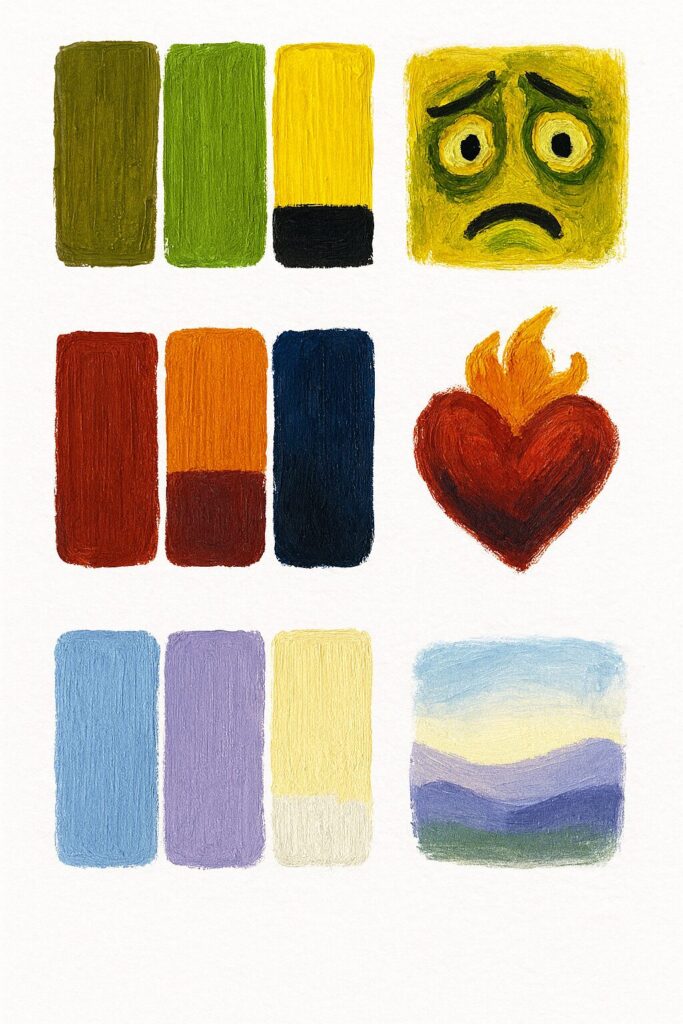
Unconventional Color: The number one rule is that colors don’t have to be natural. A person’s anxiety might be a screaming yellow-green face, or a deep sadness could be a heavy, murky purple sky. Your job is to pick colors that feel right for the emotion you want to express.
Non-Blending: Instead of gently mixing your colors until they are smooth, Expressionists often used jarring, unmixed color patches. Let the colors sit side-by-side or overlap roughly. This creates a visual tension that adds to the painting’s drama. Think of it like a shouting match between two colors on the canvas!
| Emotion You Want to Paint | Example Expressionist Color Palette | Why It Works |
|---|---|---|
| Anxiety/Fear | Sour Greens, Jagged Yellows, Black Outlines | Greens and Yellows clash unpleasantly; Black adds menace and claustrophobia |
| Anguish/Passion | Brick Reds, Muted Oranges, Heavy Blues | Reds and Oranges feel intense and feverish; Deep Blue provides melancholic contrast |
| Spiritual Calm | Lyrical Blues, Soft Purples, Floating Yellows | Blue and Purple are often seen as spiritual colors; Yellow adds touch of light and hope |
Technique 2: Brushwork with Attitude (Let Your Hand Go Wild)
Your brushwork in Expressionism isn’t polite; it’s aggressive and energetic. The goal is to make the act of painting itself visible—it’s a record of your emotion and movement. This connects beautifully with the principles of painting emotions through art.
Jagged and Angular Strokes: Use your brush, or even a palette knife, to create strokes that are rough, thick, and not perfectly smooth. This is especially good for painting people or cityscapes. Expressionist artist Ernst Ludwig Kirchner loved this, making his city dwellers look spiky and on-edge. You want the texture to be obvious!
Swirling and Wavy Lines: To show extreme emotion or motion, use brushstrokes that swirl like a fingerprint or wave like a storm. The most famous example is Edvard Munch’s The Scream. The lines in the sky look like they’re melting with anguish.
Pro Tip: A quick way to get that Expressionist texture is to mix your acrylic paint with an impasto or texture gel. This makes the paint super thick so when you apply it with a brush or knife, it stands up on the canvas, giving your work instant depth and raw physicality.
Technique 3: The Art of Intentional Distortion (Making it “Ugly”)
Expressionist painters didn’t try to make things look beautiful or realistic. They actively distorted reality to make a point about their inner world. This technique builds on the fundamental painting techniques but breaks all the traditional rules.
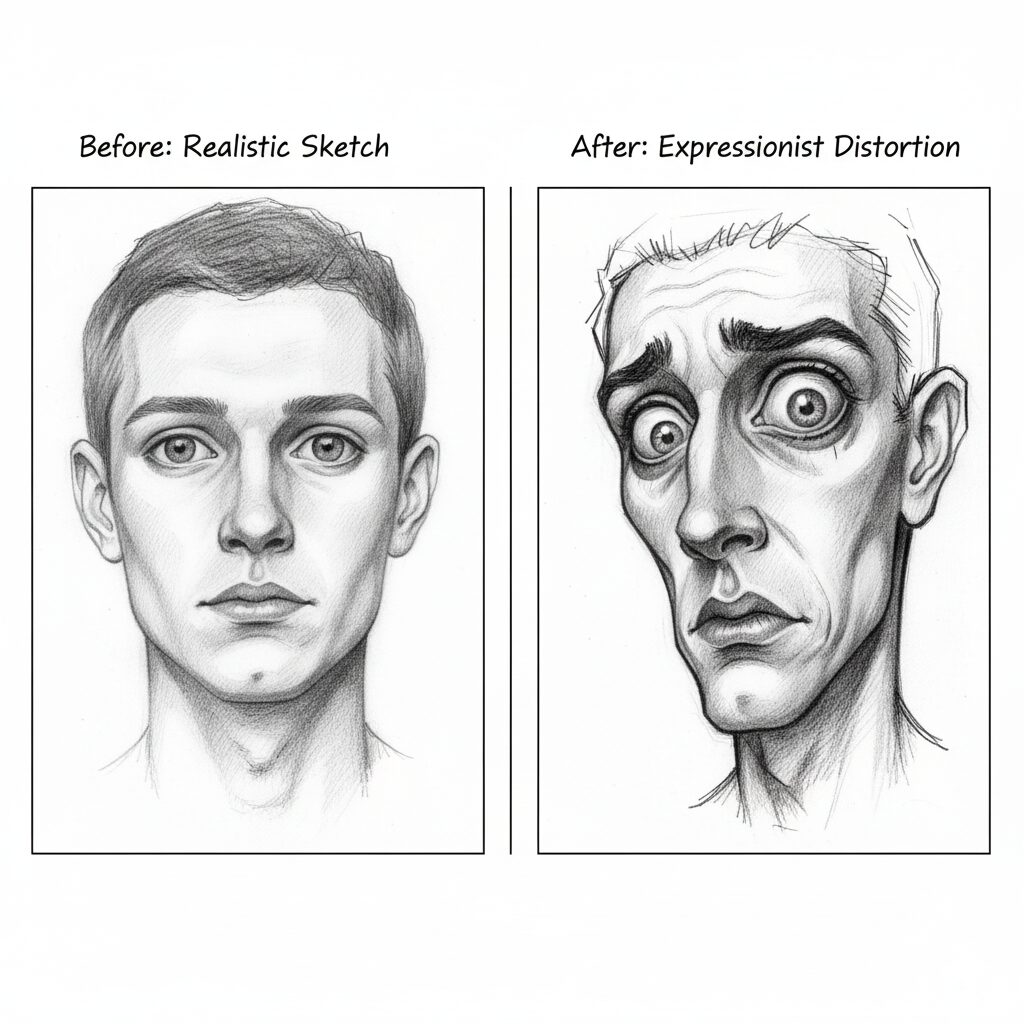
Exaggerated Forms: If a person is your subject, make their hands huge to show their struggle, or their eyes massive to show their fear. Egon Schiele was a master of this, creating self-portraits where his body was twisted and thin, reflecting his own psychological turmoil. This exaggeration is a core part of expressionist painting techniques for beginners because it’s so freeing—you don’t have to measure or be perfect!
Collapsed Perspective: Forget your rules of linear perspective where things perfectly shrink the further away they get. Expressionists often used a jarring, flattened, or multiple perspective that makes the scene feel unstable, much like the feeling of anxiety or confusion.
Expressionist Artists: A Look at the Pioneers
The Expressionist movement was built on two main groups in Germany: Die Brücke (The Bridge) and Der Blaue Reiter (The Blue Rider). Both are crucial to understanding expressionist painting techniques for beginners.
| Group Name | Core Focus/Feeling | Key Techniques | Notable Artists |
|---|---|---|---|
| Die Brücke (The Bridge) | Raw emotion, urban anxiety, shocking colors. Bridge to a new art. | Jagged strokes, dark outlines (like woodcuts), harsh distortions | Ernst Ludwig Kirchner, Emil Nolde |
| Der Blaue Reiter (The Blue Rider) | Spirituality, music, color theory, moving toward abstraction | Lyrical lines, symbolic, less harsh color, geometric shapes | Wassily Kandinsky, Franz Marc |
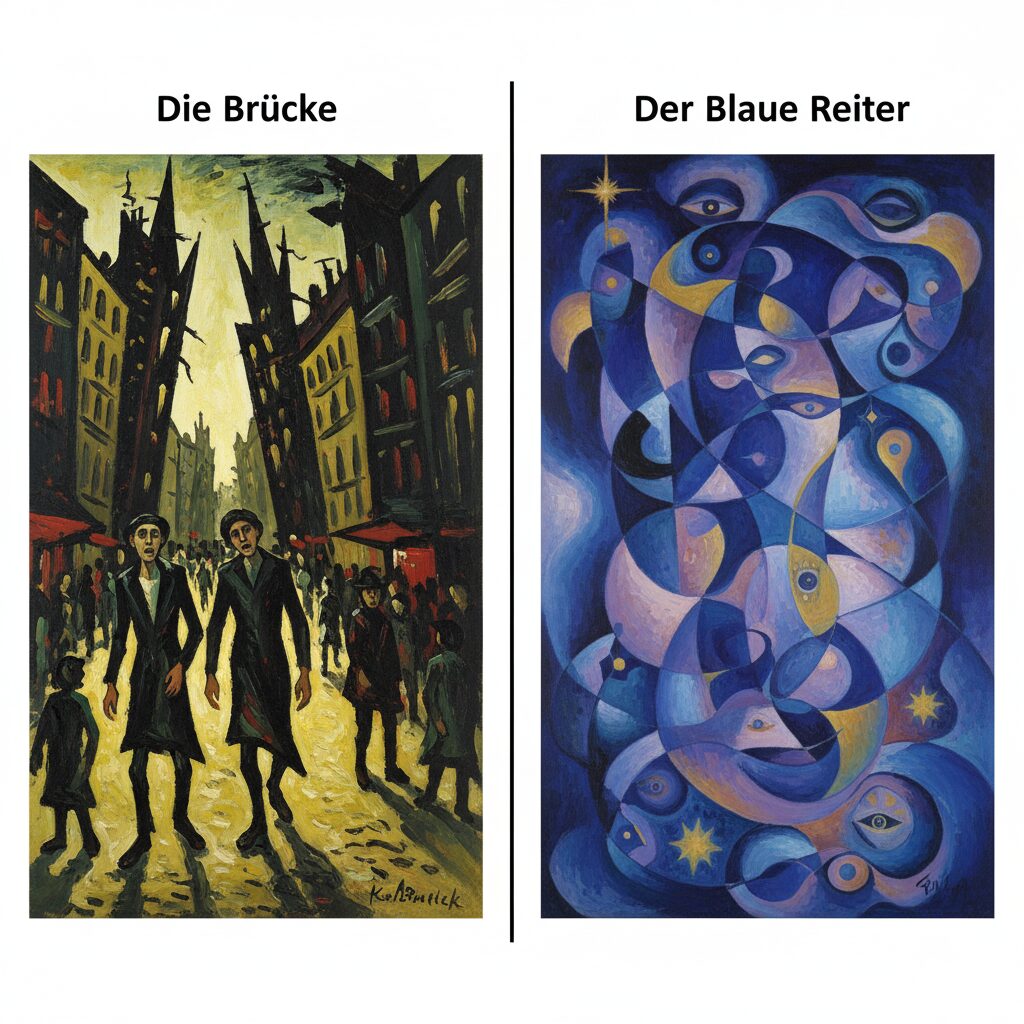
Die Brücke was like the rebellious punk-rock band of the art world, painting the gritty, ugly side of modern city life with raw intensity. Der Blaue Reiter was more spiritual and philosophical, believing that art could be like music, expressing a deep, unseen truth through pure color and form. These movements would later influence abstract expressionism artists like Jackson Pollock.
Technique 4: Dark Outlines and Primitivism (Go Back to Basics)
Many Expressionist artists were inspired by “primitive” art—works from African, Oceanic, and other non-Western cultures, as well as medieval woodcuts. They saw these styles as more direct and honest than the complicated, academic art of their time.
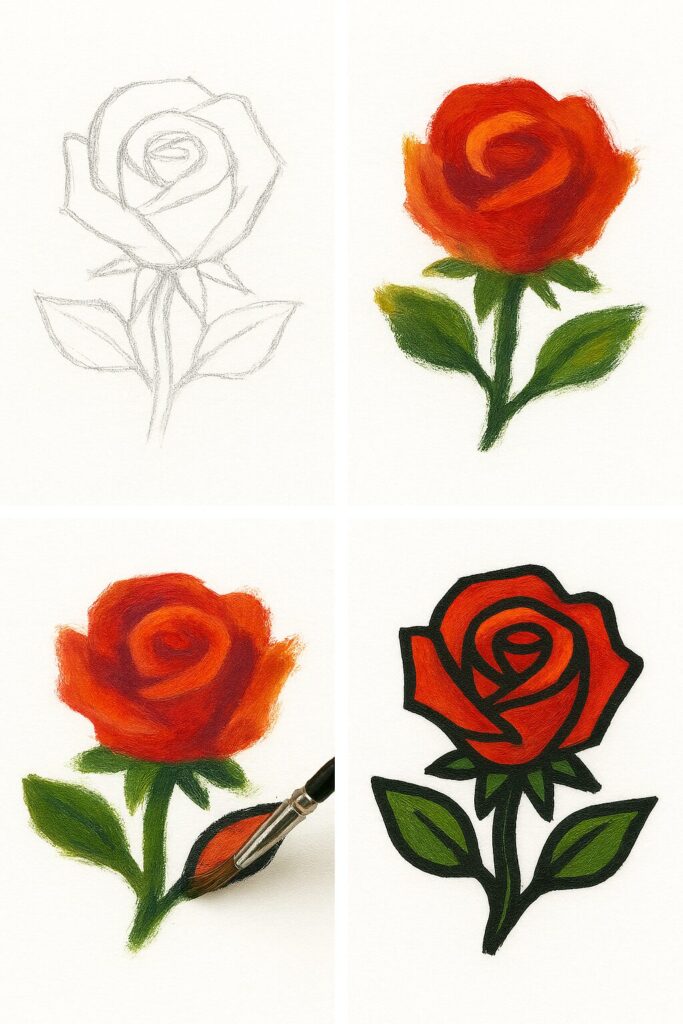
The Power of the Outline: Inspired by the bold, simple lines of woodcut prints, Expressionists often used dark, heavy outlines to define their forms. This makes figures feel more stark, isolated, and dramatic against the background. Try using a thick, black acrylic marker or a small brush with very dark paint for this.
Simplicity and Flatness: Forget about shading things perfectly to look 3D. Keep your figures flat and your backgrounds simple. This emphasizes the emotional message over the technical skill. It’s a great technique for expressionist painting techniques for beginners because it simplifies the drawing process.
“The purpose of art is not to portray the outward appearance of things, but their inner significance.”
Aristotle (A quote that Expressionists would have loved, even though he lived ages ago!)
YouTube Tutorial Recommendation
Video:
Watch this hands-on demonstration of creating your first expressionist piece using the color and brushwork techniques discussed above.
Putting It All Together: Your First Expressionist Painting
Ready to try one of the best expressionist painting techniques for beginners? Let’s take a simple subject, like a still life (a bowl of fruit, a vase), and turn it into an emotional statement. This builds on the 7 principles of painting while breaking traditional rules.
Step-by-Step Process:
- Choose Your Emotion: Decide what you want your painting to feel like. Sadness? Frustration? Chaotic joy? This will guide your colors. Let’s say you choose Frustration.
- Pick Unconventional Colors: Use colors that feel frustrating to you—maybe muddy browns, harsh electric blues, and sharp reds.
- Sketch and Distort: Lightly draw your objects, but make them look stressed. Make the vase wobbly, the fruit squashed, or the table tilted. This is a classic expressionist technique.
- Attack the Canvas: Using a big brush or a palette knife, apply your paint with quick, energetic, and jagged strokes. Don’t blend the colors smoothly; let them fight on the canvas. Use thick, visible paint (impasto).
- Outline the Drama: Once the color is down, use a dark color to heavily outline the most important parts—the figures, the edges of the objects. This locks in the drama.
That’s it! Your finished piece might look “wrong” or “messy” to a traditional painter, but to an Expressionist, it’s a success because it’s a raw, honest expression of feeling.
Understanding Art Movements Context
To better appreciate expressionism’s place in art history, explore how it fits within the broader context of painting styles and movements. Understanding this timeline helps you see how expressionist painting techniques for beginners evolved from and influenced other artistic movements.
The movement also relates to identifying different approaches in art, which you can learn more about in our guide on how to identify different art movements.
Frequently Asked Questions (FAQs)
What is the most important characteristic of Expressionism?
The single most important characteristic is the emphasis on the artist’s subjective, inner emotional experience rather than the objective reality of the outside world. Artists used their work to express feeling, not to record what they saw.
Who is a famous Expressionist painter?
One of the most famous is Edvard Munch, the Norwegian painter of The Scream (1893). Other major Expressionist painters include German artists like Ernst Ludwig Kirchner and the more abstract-focused Wassily Kandinsky. You can explore more about these masterpieces in our collection of hidden meanings in famous paintings.
What is the difference between Expressionism and Abstract Expressionism?
Expressionism (early 1900s, mostly Europe) still paints recognizable subjects (people, cityscapes) but distorts them for emotional effect. Abstract Expressionism (mid-1900s, mostly America) took it a step further, with artists like Jackson Pollock focusing mainly on pure abstraction to express universal human emotion.
Why do Expressionist paintings look “ugly” or “badly drawn”?
They are intentionally so! The artists used distortion, exaggerated angles, and non-natural colors to reject the idea of traditional beauty and to convey a sense of unease, anxiety, or emotional intensity. The ‘ugliness’ is a deliberate artistic choice to create a stronger, more honest emotional impact on the viewer.
What materials are best for Expressionist painting techniques for beginners?
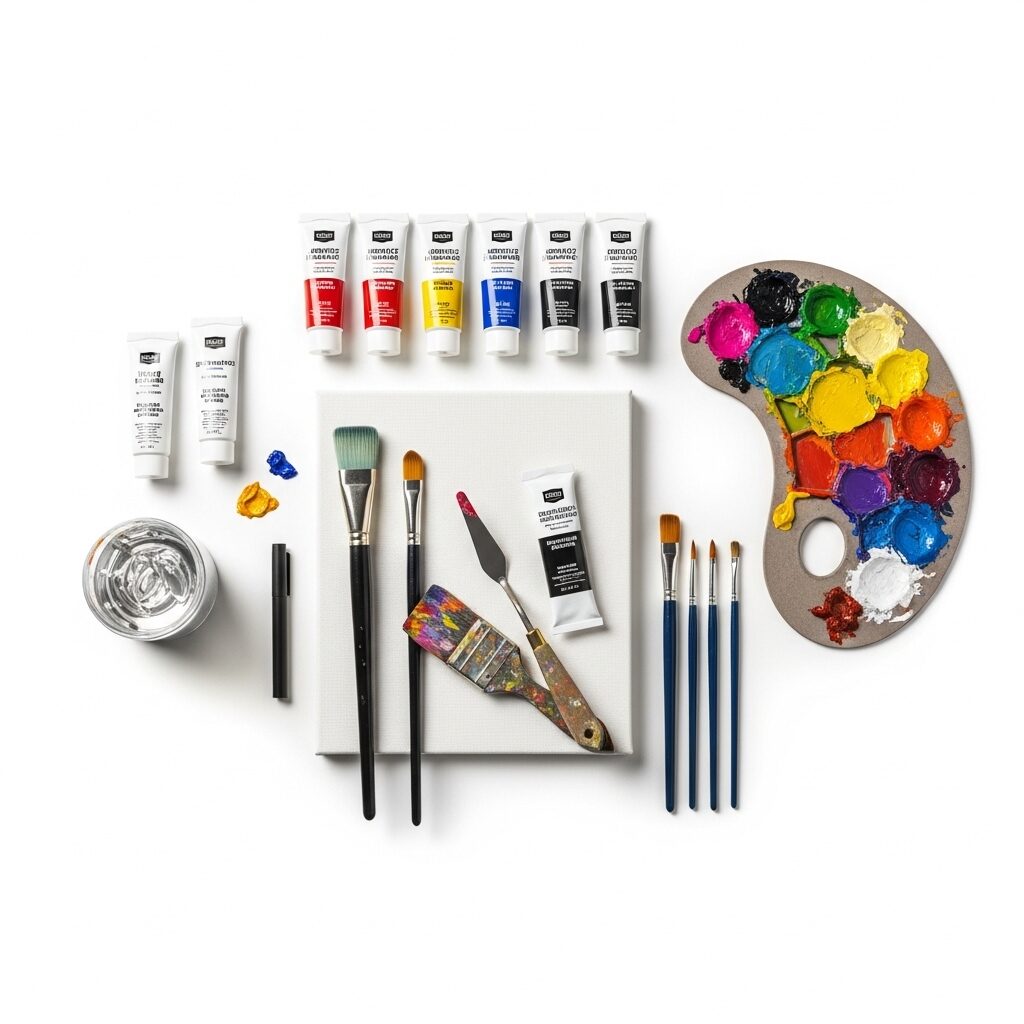
You don’t need fancy materials! Acrylic or oil paints on canvas or board are perfect. Use a mix of brushes (big, cheap ones are great for big strokes), a palette knife for thick paint application, and maybe even charcoal or dark markers for bold outlines.
How do Expressionist techniques differ from Impressionist techniques?
While Impressionism focuses on capturing light and momentary effects in nature, Expressionism prioritizes emotional content over visual accuracy. Expressionists use distortion, bold non-naturalistic colors, and aggressive brushwork to convey feelings rather than fleeting visual impressions.
Conclusion
Expressionist painting techniques for beginners offer an incredible gateway into the world of emotional art-making. Unlike other painting styles that demand technical perfection, Expressionism celebrates the raw, the imperfect, and the deeply personal. By mastering these fundamental techniques—unconventional color use, aggressive brushwork, intentional distortion, and bold outlining—you’re not just learning to paint; you’re learning to communicate your innermost feelings through visual art.
The beauty of expressionist painting techniques for beginners lies in their accessibility. You don’t need years of training to start creating emotionally powerful artwork. Whether you’re channeling anxiety through jagged yellow-green strokes or expressing joy with swirling, vibrant colors, these techniques give you permission to break the rules and paint from the heart. Remember, in Expressionism, there are no mistakes—only authentic expressions of your inner world waiting to burst onto the canvas.
Additional Resources
- The Art Story: German Expressionism – Comprehensive overview of the German Expressionist movement
- Metropolitan Museum of Art: Expressionism Collection – Museum quality examples and analysis
- Tate Modern: Expressionism Guide – British perspective on the movement
- MoMA Learning: Abstract Expressionism – Transition from Expressionism to Abstract Expressionism
- Khan Academy: Expressionism Course – Free educational content on art movements