
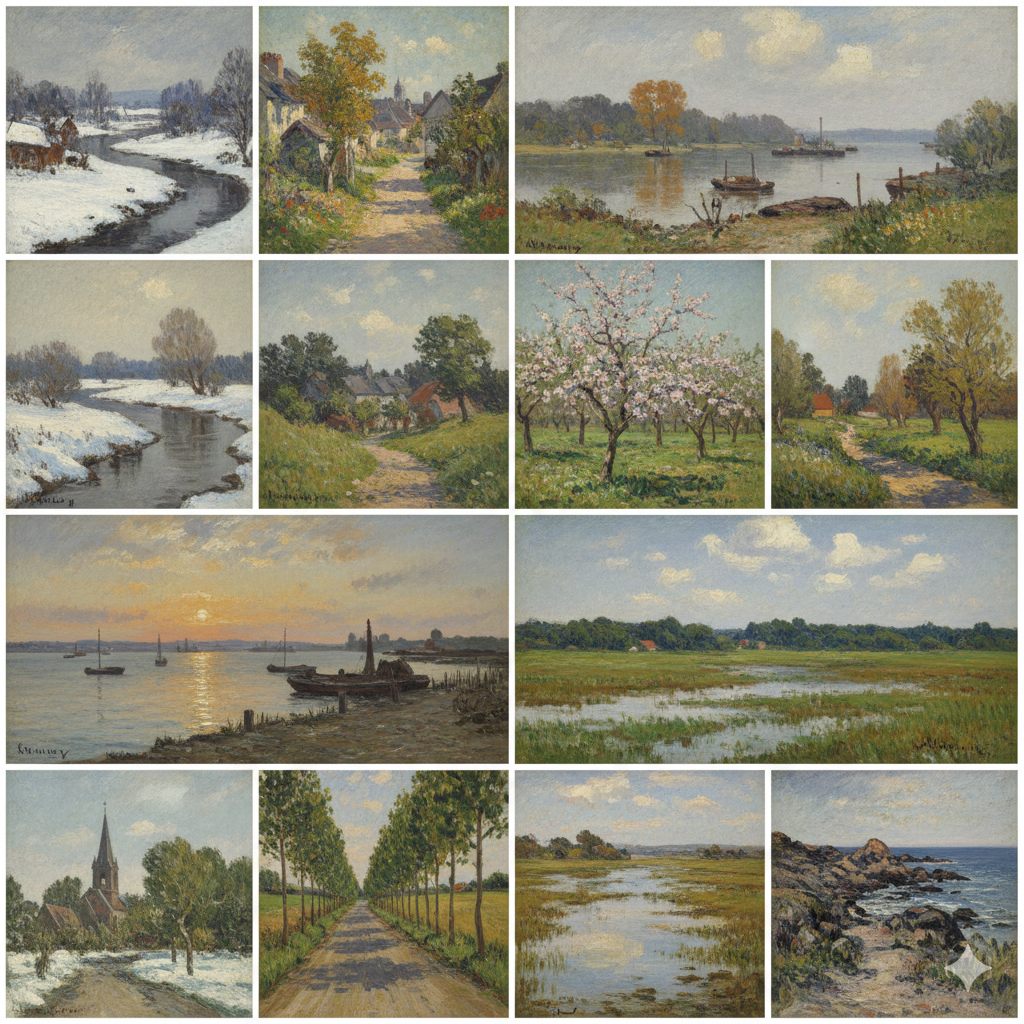
Imagine being able to freeze a perfect moment in time—the sparkle of sunlight on water, the crisp air of a snowy day, or the gentle rustle of leaves in a spring breeze. This was the magic of Alfred Sisley, one of the most dedicated Impressionist painters. While he was born in Paris to British parents, his heart belonged to the French countryside. This guide will take you on a journey through the top 10 Alfred Sisley paintings, showcasing his incredible talent for capturing the fleeting beauty of nature. Unlike some of his friends who painted portraits or city scenes, Sisley was a landscape artist through and through, and his work invites us to see the world around us with new eyes.
The Flood at Port-Marly (1876)
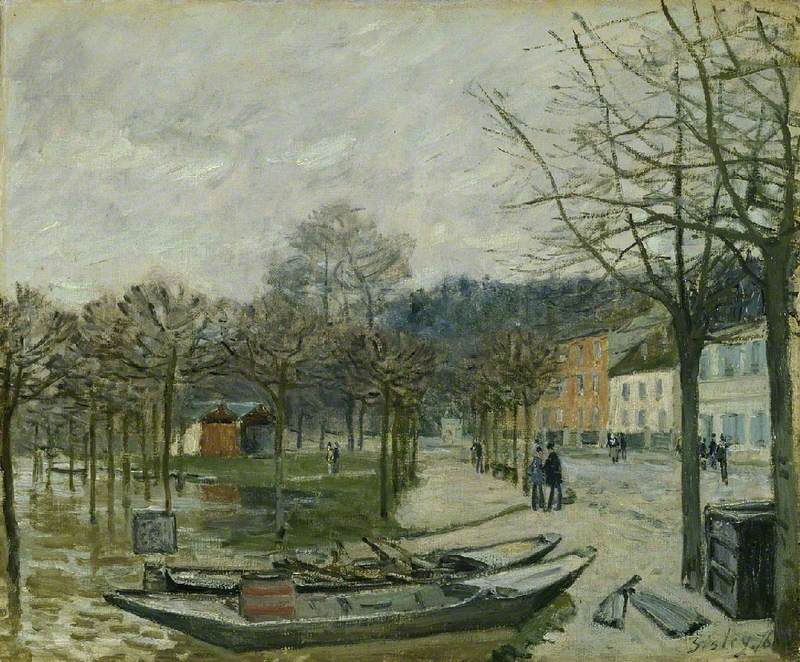
The dramatic and beautiful ‘The Flood at Port-Marly’ by Alfred Sisley, 1876.
Description: This is one of Sisley’s most dramatic works, showing the river Seine overflowing its banks and flooding a small town. Instead of chaos, Sisley finds a strange quiet and beauty in the scene, with the calm, reflective water taking over the streets. The sky and water almost merge into one, creating a powerful atmosphere. To capture the scene’s urgency and changing light, Sisley actually painted this from a boat. To capture the scene’s urgency and changing light, Sisley actually painted this from a boat.
Painting Techniques: Sisley used quick, fluid brushstrokes to capture the shimmering reflections on the water’s surface. He applied layers of cool blues, grays, and whites to convey the damp, overcast atmosphere of the flood.
Location: Musée d’Orsay, Paris, France
Estimated Value: Priceless
The Bridge at Villeneuve-la-Garenne (1872)
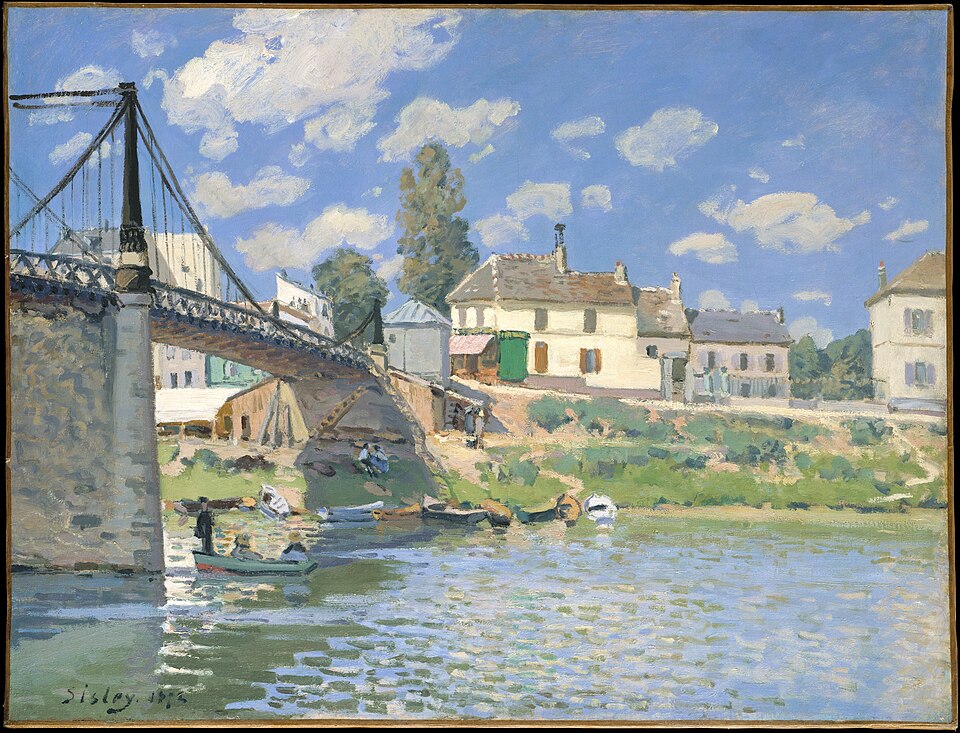
A sunny day captured in ‘The Bridge at Villeneuve-la-Garenne’ by Alfred Sisley, 1872.
Description: Look at the incredible light in this painting! Sisley captures a perfect, breezy day on the river. The modern bridge, a symbol of new technology, contrasts with the timeless beauty of the river and sky. You can almost feel the warmth of the sun and the gentle wind. The painting has a wonderful sense of depth, with the bridge leading our eyes into the distance. This painting was exhibited at the very first Impressionist exhibition in 1874, a groundbreaking event in art history.
Painting Techniques: Sisley used a bright, high-key palette with vibrant blues and greens. His short, distinct brushstrokes, a hallmark of Impressionism, create a sense of movement in the water and clouds, making the entire scene feel alive.
Location: The Metropolitan Museum of Art, New York, USA
Estimated Value: Priceless
The Loing Canal (1892)
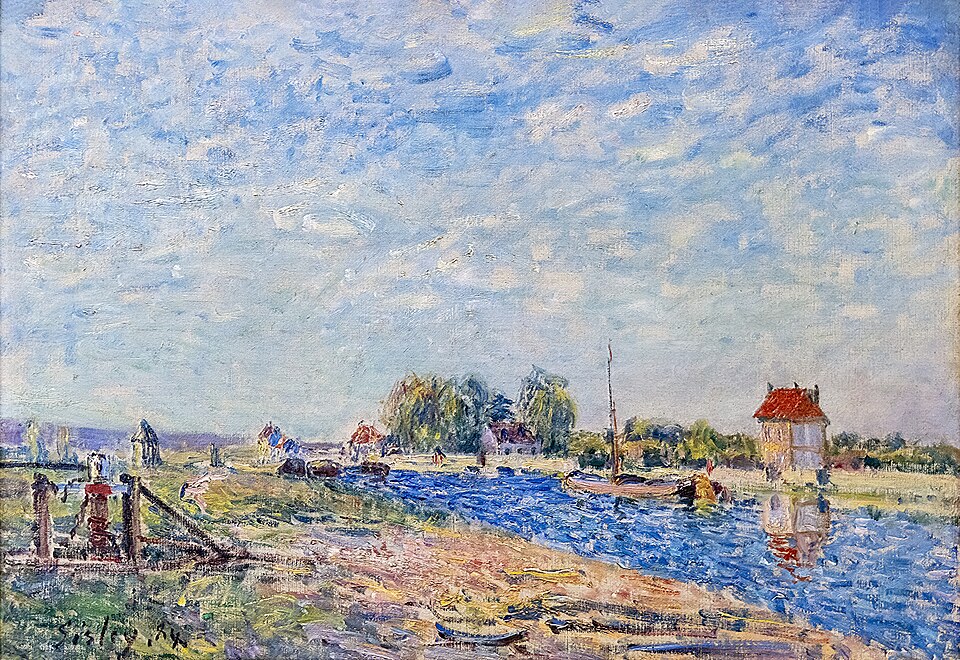
The peaceful and orderly ‘The Loing Canal’ by Alfred Sisley, 1892.
Description: In his later years, Sisley moved to the area around Moret-sur-Loing, and the Loing canal became one of his favorite subjects. This painting is a masterful example of perspective, with the lines of the trees and the canal path drawing you deep into the landscape. The calm, orderly scene feels peaceful and timeless, a perfect slice of French country life. Sisley painted the Loing Canal many times, exploring how its appearance changed with the seasons and the time of day.
Painting Techniques: Sisley employed a more structured composition here, using strong diagonal lines to create a sense of deep space. The brushwork is controlled yet expressive, beautifully rendering the textures of the trees and the glassy surface of the canal.
Location: Musée d’Orsay, Paris, France
Estimated Value: Priceless
Snow at Louveciennes (1878)
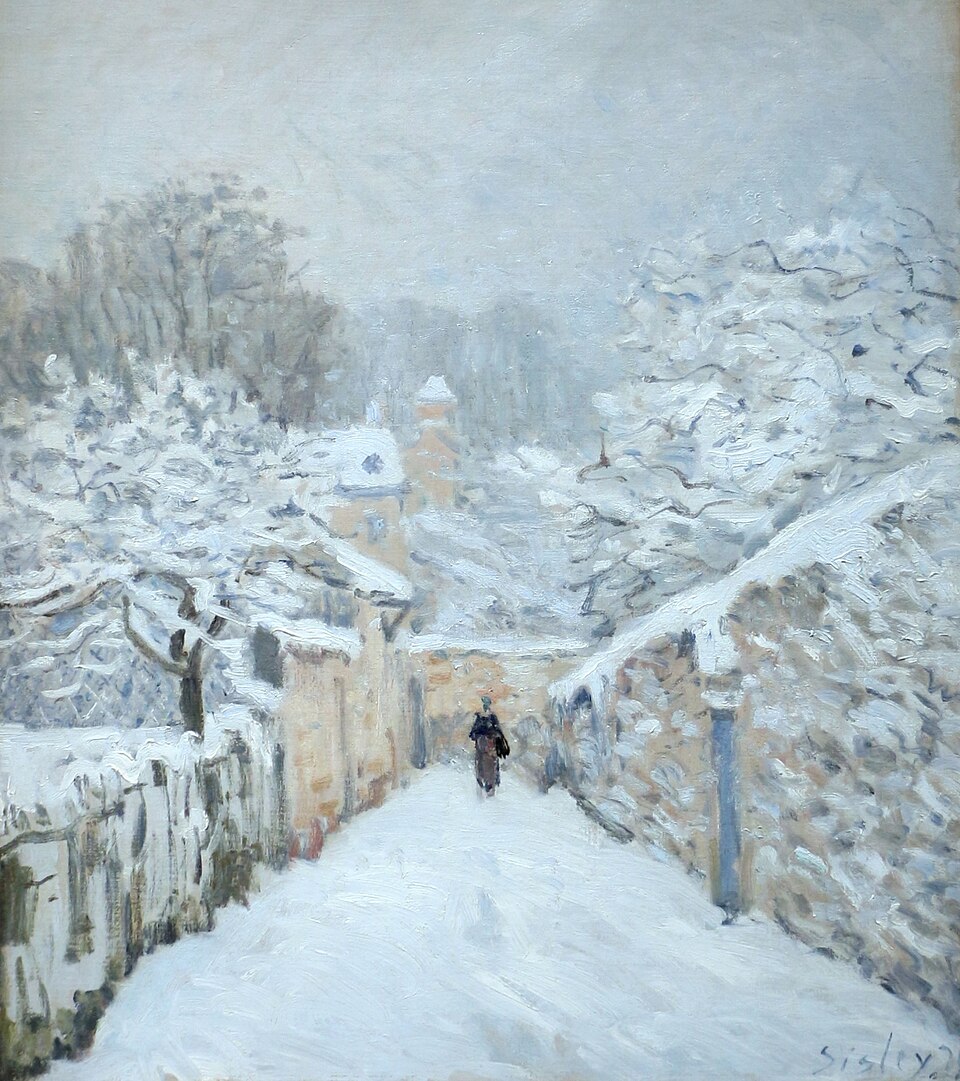
A masterful winter scene, ‘Snow at Louveciennes’ by Alfred Sisley, 1878.
Description: Sisley was a master of painting snow, and this work is one of his best. Instead of just white, he saw a world of color in the snow—pinks, blues, and yellows reflected from the sky. The lone figure walking down the path adds a touch of human story to the quiet, wintry landscape. You can almost feel the cold, crisp air and hear the crunch of snow underfoot. While many artists found snow difficult to paint, Sisley was fascinated by it and created nearly 140 snowscapes during his career.
Painting Techniques: He used a subtle and varied palette to depict the snow, avoiding pure white and instead using a mix of colors to show light and shadow. The soft, delicate brushstrokes create the texture of freshly fallen snow.
Location: Musée d’Orsay, Paris, France
Estimated Value: Priceless
Regatta at Molesey (1874)
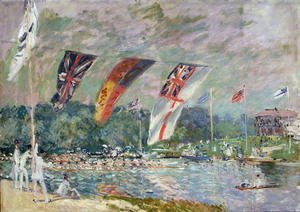
The lively ‘Regatta at Molesey’ by Alfred Sisley, painted in 1874.
Description: This painting captures the fun and energy of a sailing race, or ‘regatta’. Sisley painted this during a visit to England, near Hampton Court. The scene is full of life, with flags fluttering in the wind and sailboats gliding across the water. It’s a snapshot of a perfect summer afternoon, filled with light and motion. This work shows Sisley’s skill at capturing the lively atmosphere of a social event within a landscape. This painting is one of the few that depicts a lively, populated event, as Sisley usually preferred more tranquil and solitary landscapes.
Painting Techniques: Sisley used quick, flickering brushstrokes, especially on the flags and the water, to create a sense of rapid movement and excitement. The bright colors and open composition give the painting a spontaneous, joyful feel.
Location: Musée d’Orsay, Paris, France
Estimated Value: Priceless
Allée of Chestnut Trees (1878)
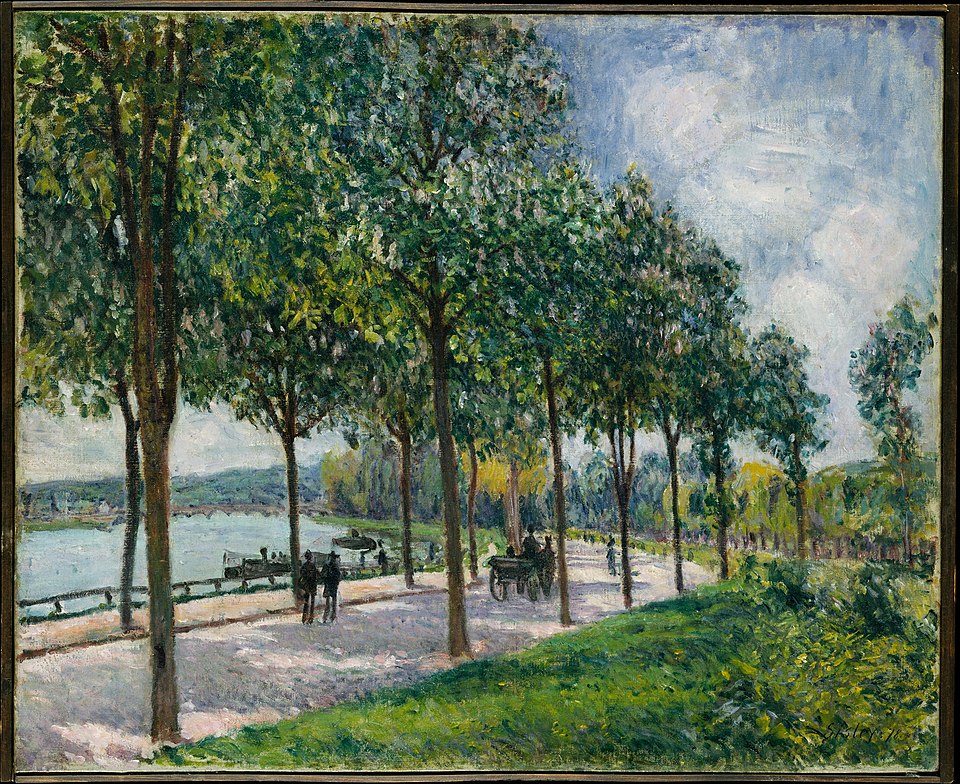
A walk through nature in ‘Allée of Chestnut Trees’ by Alfred Sisley, 1878.
Description: Here, Sisley creates a beautiful rhythm with a row of towering chestnut trees. The path leads the viewer’s eye into the painting, creating a feeling of walking right into the scene. The play of light and shadow on the path and through the leaves is the real star of the show. It’s a simple subject, but Sisley turns it into a mesmerizing study of nature’s patterns. The location is near the small village of By, close to the Forest of Fontainebleau, an area beloved by landscape painters.
Painting Techniques: The composition is dominated by the strong vertical lines of the trees, which are balanced by the horizontal bands of shadow on the path. Sisley’s varied brushwork captures both the roughness of the tree bark and the softness of the sunlit leaves.
Location: Petit Palais, Paris, France
Estimated Value: Priceless
The Church at Moret in the Morning Sun (1894)
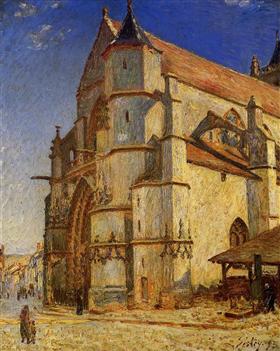
The glowing ‘The Church at Moret in the Morning Sun’ by Alfred Sisley, 1894.
Description: Similar to how his friend Monet painted haystacks and cathedrals over and over, Sisley painted the church in the town of Moret-sur-Loing many times. This version captures the church as it’s bathed in the warm, golden light of a morning sun. The solid, ancient stone of the church seems to glow against the bright blue sky. Sisley was interested in how the same building could look completely different as the light changed throughout the day. Sisley created a series of at least fourteen paintings of the Church at Moret, capturing it from different angles and in various weather conditions.
Painting Techniques: Sisley used thick dabs of paint, a technique called impasto, to convey the rugged texture of the church’s stone facade. The warm yellows and oranges contrast beautifully with the cool blues and purples in the shadows.
Location: Musée des Beaux-Arts de Rouen, Rouen, France
Estimated Value: Priceless
The Terrace at Saint-Germain, Spring (1875)
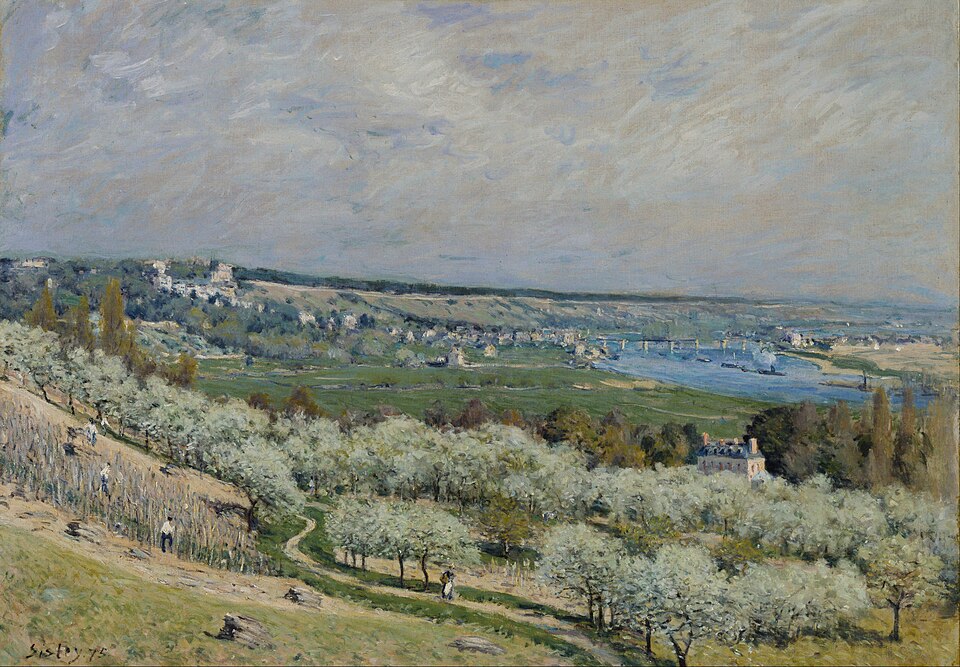
A panoramic spring view in ‘The Terrace at Saint-Germain, Spring’ by Alfred Sisley, 1875.
Description: This painting offers a breathtaking panoramic view of the Seine valley in springtime. From a high vantage point, Sisley shows us a vast landscape dotted with trees just beginning to bloom. The tiny figures on the terrace help give a sense of the immense scale of the scene. It’s a celebration of spring and the feeling of a wide-open world. The location is the Grande Terrasse at Saint-Germain-en-Laye, which was designed by the famous landscape architect André Le Nôtre in the 17th century.
Painting Techniques: Sisley used a delicate touch and a palette of fresh, light colors—soft greens, pinks, and blues—to evoke the feeling of early spring. The hazy, atmospheric quality of the distant landscape is a testament to his skill in depicting depth.
Location: The Walters Art Museum, Baltimore, USA
Estimated Value: Priceless
Footbridge at Argenteuil (1872)
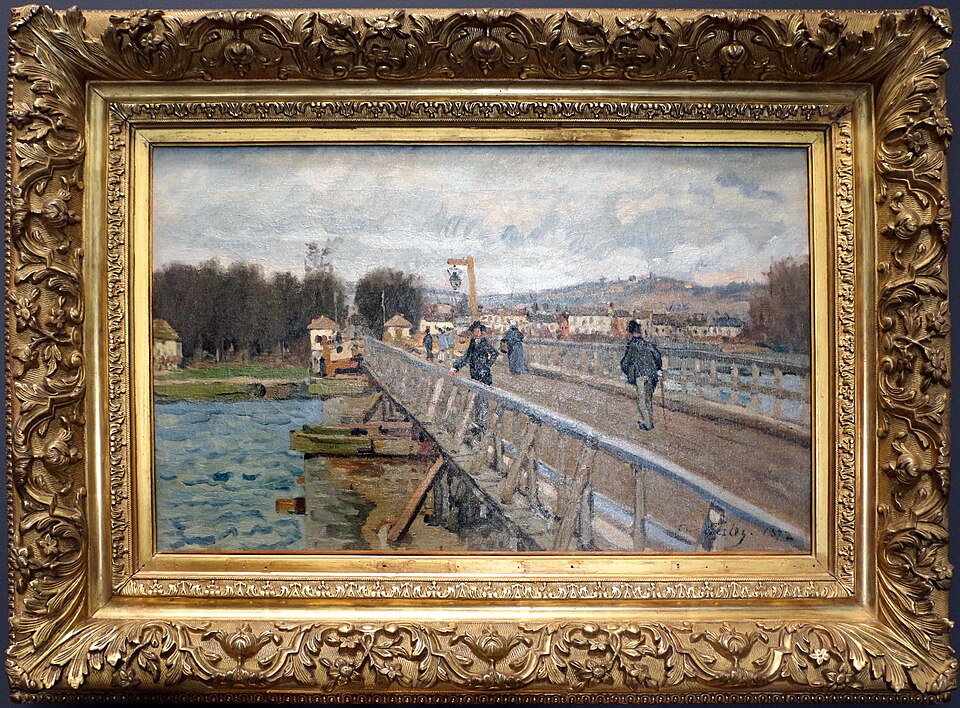
Masterful reflections in ‘Footbridge at Argenteuil’ by Alfred Sisley, 1872.
Description: Argenteuil was a popular spot for the Impressionists, and here Sisley captures a simple wooden footbridge. The real subject, however, is the water. Look closely at the reflections—Sisley has painted the bridge, the sky, and the trees again, but this time they are shimmering and broken on the water’s surface. This focus on light and reflection is pure Impressionism. This very same footbridge was also painted by his friend and fellow Impressionist, Claude Monet, offering a fascinating comparison of their styles.
Painting Techniques: He used parallel, horizontal brushstrokes to paint the water, creating a realistic sense of its calm, flowing movement. The composition is balanced and serene, with the strong horizontal line of the bridge anchoring the scene.
Location: Musée d’Orsay, Paris, France
Estimated Value: Priceless
Village on the Banks of the Seine (1872)
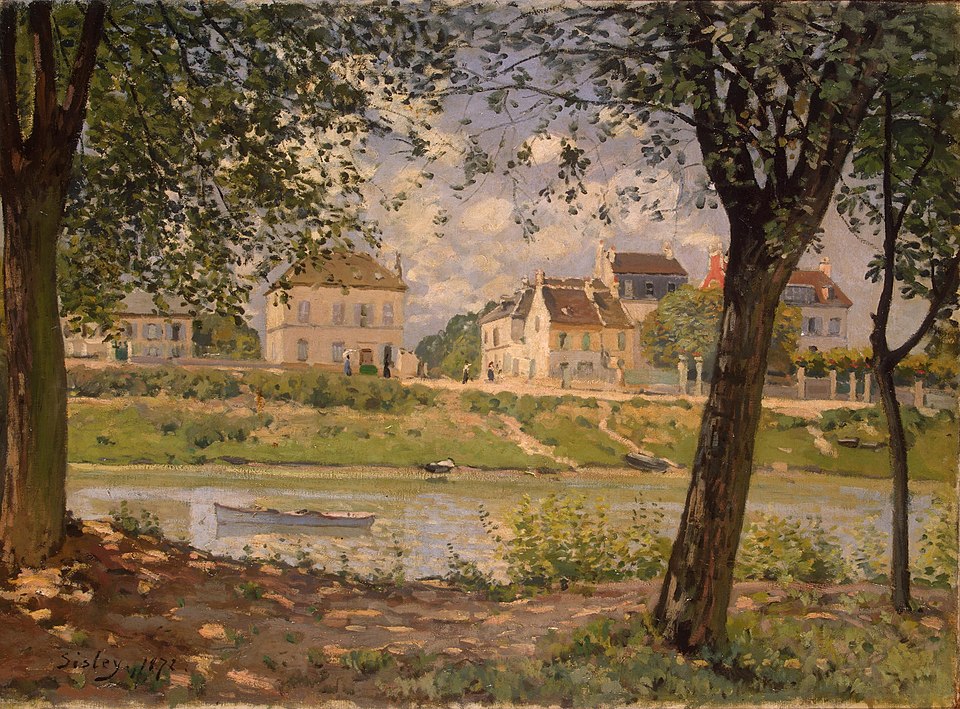
A tranquil ‘Village on the Banks of the Seine’ by Alfred Sisley, 1872.
Description: This painting, also known as ‘The Machine at Marly’, shows a peaceful village scene next to the river. The row of trees creates a screen between the viewer and the houses, adding depth and structure to the landscape. The calm water perfectly mirrors the sky and trees, creating a feeling of perfect harmony and tranquility. It’s a classic example of Sisley’s love for quiet, riverside scenes. The village depicted is Villeneuve-la-Garenne, the same location as his famous painting of the bridge from the same year.
Painting Techniques: Sisley’s composition is carefully balanced, using the vertical trees to contrast with the horizontal lines of the riverbank. His application of paint is calm and controlled, reflecting the peaceful mood of the scene itself.
Location: Musée d’Orsay, Paris, France
Estimated Value: Priceless
Inspiration and Legacy
Alfred Sisley’s artistic journey was shaped by the painters he admired. He was deeply inspired by the early French landscape painters of the Barbizon School, especially Jean-Baptiste-Camille Corot, from whom he learned to appreciate subtle tones and atmospheric effects. He also admired the English landscape masters like J.M.W. Turner and John Constable. As a core member of the Impressionist group, he worked alongside friends like Claude Monet and Pierre-Auguste Renoir, sharing their passion for painting outdoors (‘en plein air’) and capturing the effects of light. Sisley’s legacy lies in his unwavering dedication to landscape painting. He is often considered one of the ‘purest’ Impressionists because he rarely strayed from this subject. His sensitive and poetic depictions of the French countryside, particularly his snow and water scenes, cemented his reputation as a master of atmosphere and light.
Final Thoughts
Alfred Sisley may not have achieved the same level of fame as some of his contemporaries during his lifetime, but his contribution to art is immeasurable. He was a poet of the landscape, using his brush to capture not just what a place looked like, but what it felt like to be there. He found endless beauty in the simple, everyday views of the rivers and villages around Paris. The stunning collection of Alfred Sisley paintings remains a testament to his unique talent for capturing the quiet, fleeting moments of nature, leaving a legacy of peace and beauty that continues to inspire art lovers today.
FAQs about Alfred Sisley
What is Alfred Sisley most famous for?
Alfred Sisley is most famous for being one of the key figures of the Impressionist movement. He is especially celebrated for his landscape paintings of the French countryside, with a particular mastery of capturing the effects of water, snow, and light.
Was Alfred Sisley successful during his lifetime?
Unfortunately, no. Despite his incredible talent and creating hundreds of beautiful paintings, Alfred Sisley struggled financially for most of his life. He sold very few paintings and did not achieve widespread recognition until after his death.
Why did Alfred Sisley paint so much water and snow?
Sisley was fascinated by the challenges and opportunities that water and snow presented. Both surfaces are highly reflective and constantly changing, allowing him to explore the fleeting effects of light and atmosphere, which was the central goal of Impressionism.
Was Alfred Sisley French or British?
This is a great question! He was born in Paris to wealthy British parents and spent almost his entire life in France. However, he remained a British citizen throughout his life. He is considered a painter of the French Impressionist school.