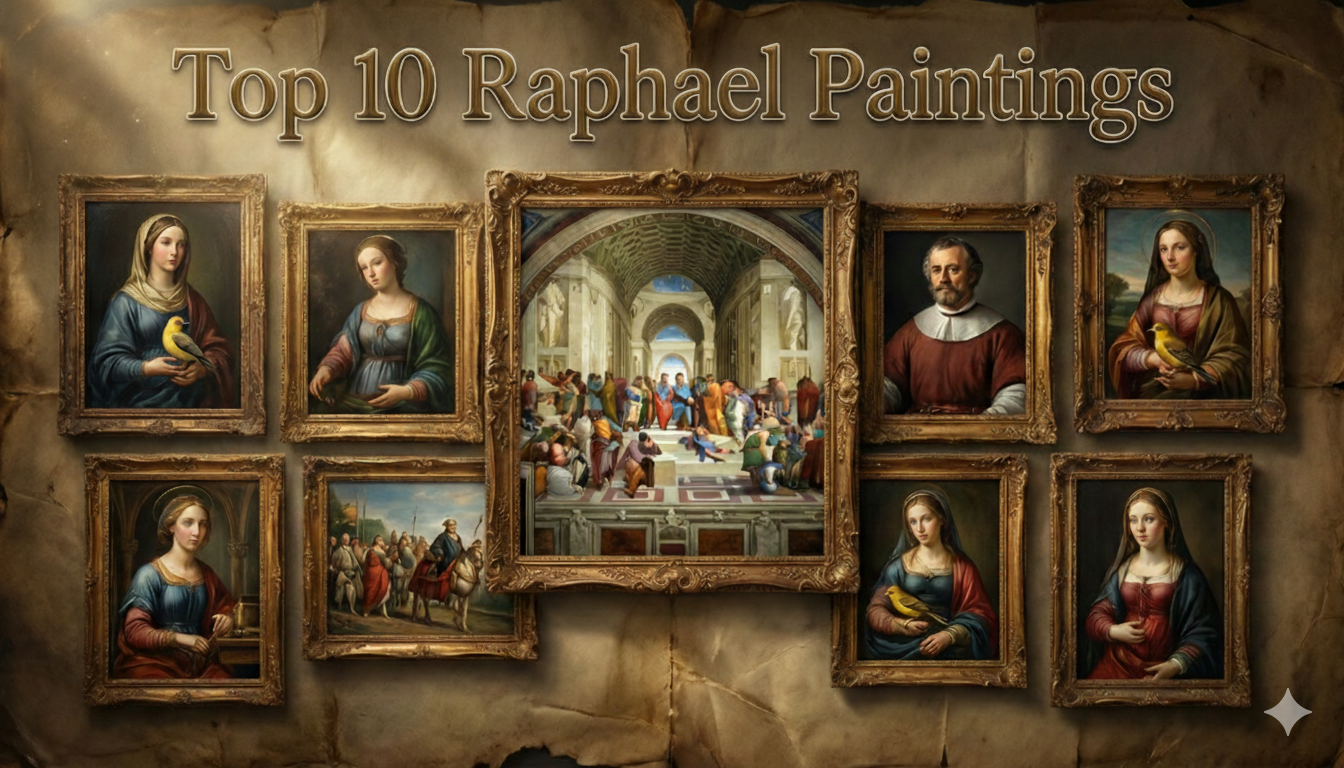
Imagine being so good at something that you’re considered one of the three greatest masters of all time, alongside legends like Leonardo da Vinci and Michelangelo. That was Raffaello Sanzio da Urbino, or as we know him, Raphael! Living during the Italian High Renaissance, a time of incredible artistic creativity, Raphael was like a rock star of the art world. His work is famous for its perfect harmony, beautiful colors, and serene grace. In this journey, we’ll explore the most famous Raphael paintings, uncovering the stories and secrets that make them timeless masterpieces. These amazing Raphael paintings show a level of skill that continues to inspire people hundreds of years later.
The School of Athens (1511)
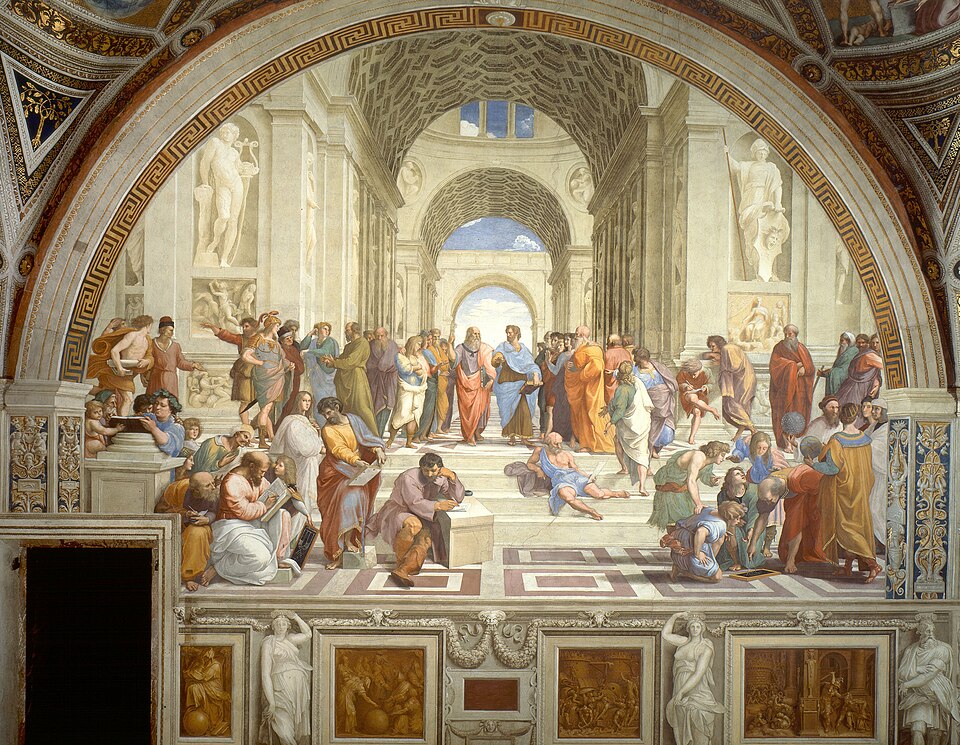
The School of Athens by Raphael: A masterpiece of High Renaissance art showcasing philosophical giants.
Description: This isn’t just a painting; it’s the ultimate superhero team-up of ancient Greek philosophers and thinkers! In the center, you have Plato pointing to the heavens and his student Aristotle gesturing to the earth, representing their different philosophies. Raphael filled this grand hall with every major thinker you could imagine, creating a vibrant scene of intellectual energy and debate. Raphael cleverly painted a self-portrait into the crowd; he’s the young man in a black beret looking directly at the viewer from the far right.
Painting Techniques: Raphael used the fresco technique, painting directly onto wet plaster, which makes the colors become a permanent part of the wall. He was also a master of one-point perspective, creating a stunningly realistic illusion of deep space.
Location: Apostolic Palace, Vatican City
Estimated Value: Priceless
Sistine Madonna (c. 1513–1514)
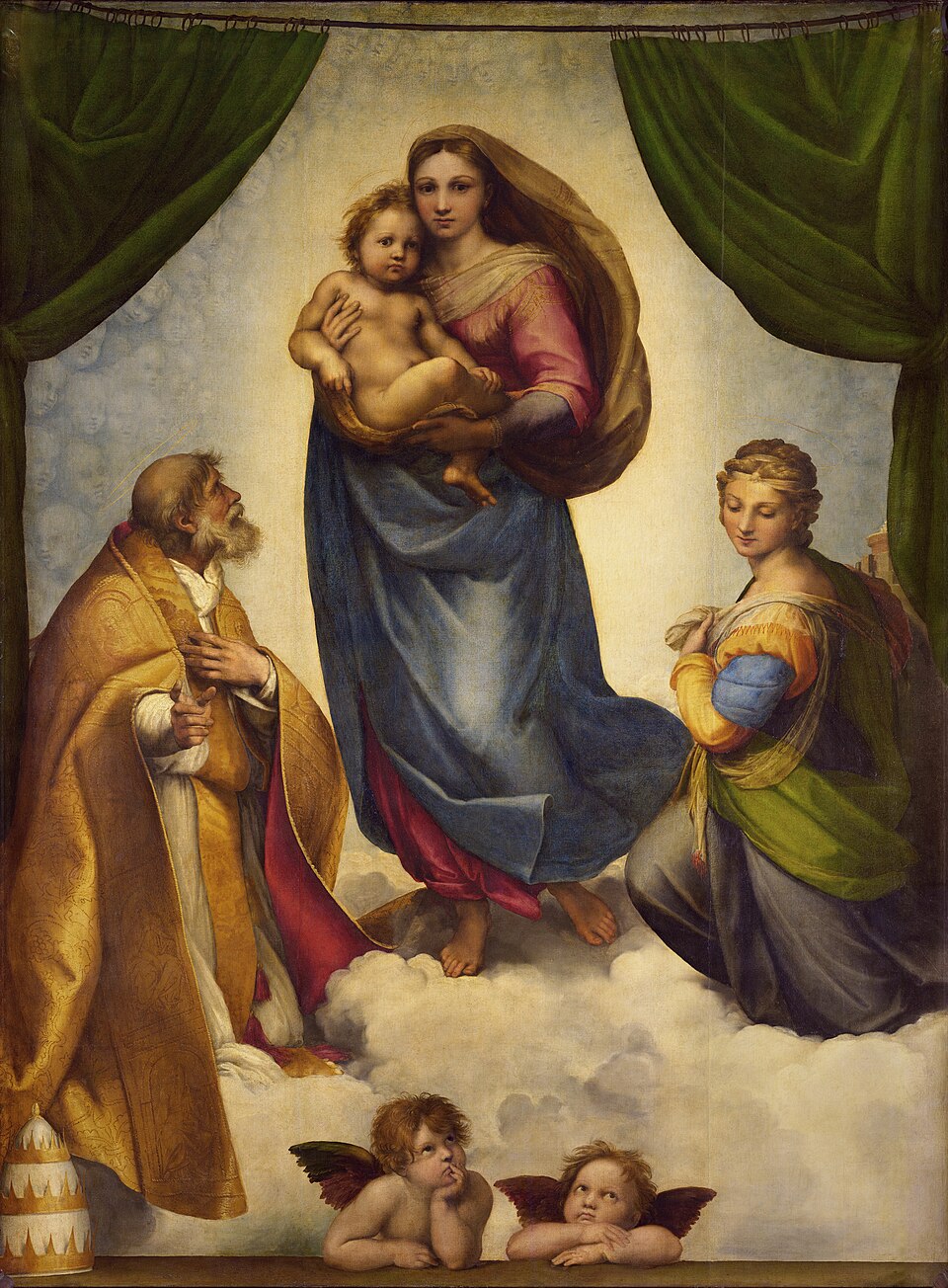
Raphael’s iconic Sistine Madonna, featuring the world-famous contemplative cherubs.
Description: At first glance, this painting shows a serene Madonna holding the Christ child as they float on a sea of clouds. But look closer at the bottom, and you’ll find the two most famous cherubs in art history! Their pouty, slightly bored expressions have made them icons in their own right, appearing on everything from posters to coffee mugs. The two cherubs at the bottom of the painting are so famous they are often reproduced by themselves, becoming a standalone work of art.
Painting Techniques: This is an oil on canvas painting. Raphael used soft, hazy outlines, a technique known as sfumato, to give the figures a gentle, divine glow and make them appear almost dreamlike.
Location: Gemäldegalerie Alte Meister, Dresden, Germany
Estimated Value: Priceless
The Transfiguration (c. 1516–1520)
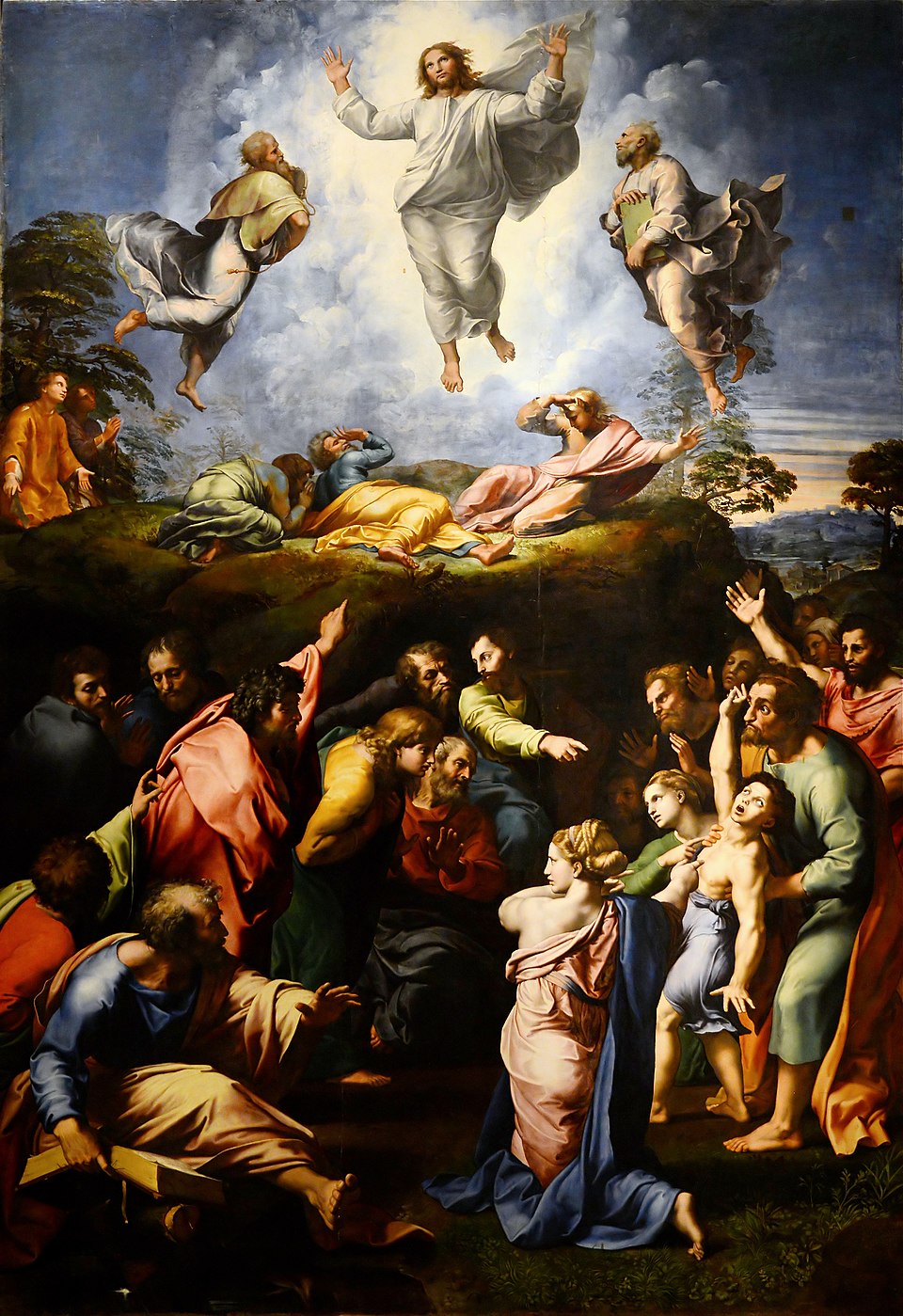
The dramatic final masterpiece, The Transfiguration, a testament to Raphael’s genius.
Description: This painting is like two movies playing at once. The top half is serene and heavenly, showing Christ’s divine transformation. The bottom half is chaotic and dramatic, with the apostles struggling to heal a possessed boy. The contrast between the divine calm above and human turmoil below creates an incredibly powerful story. This was Raphael’s final painting, found in his studio after his death at the young age of 37.
Painting Techniques: An oil on wood panel, this work showcases Raphael’s mastery of chiaroscuro, the dramatic use of light and shadow to create intensity and focus. The poses of the figures are full of emotion and movement.
Location: Vatican Museums, Vatican City
Estimated Value: Priceless
Portrait of a Young Woman (La Fornarina) (c. 1518–1519)
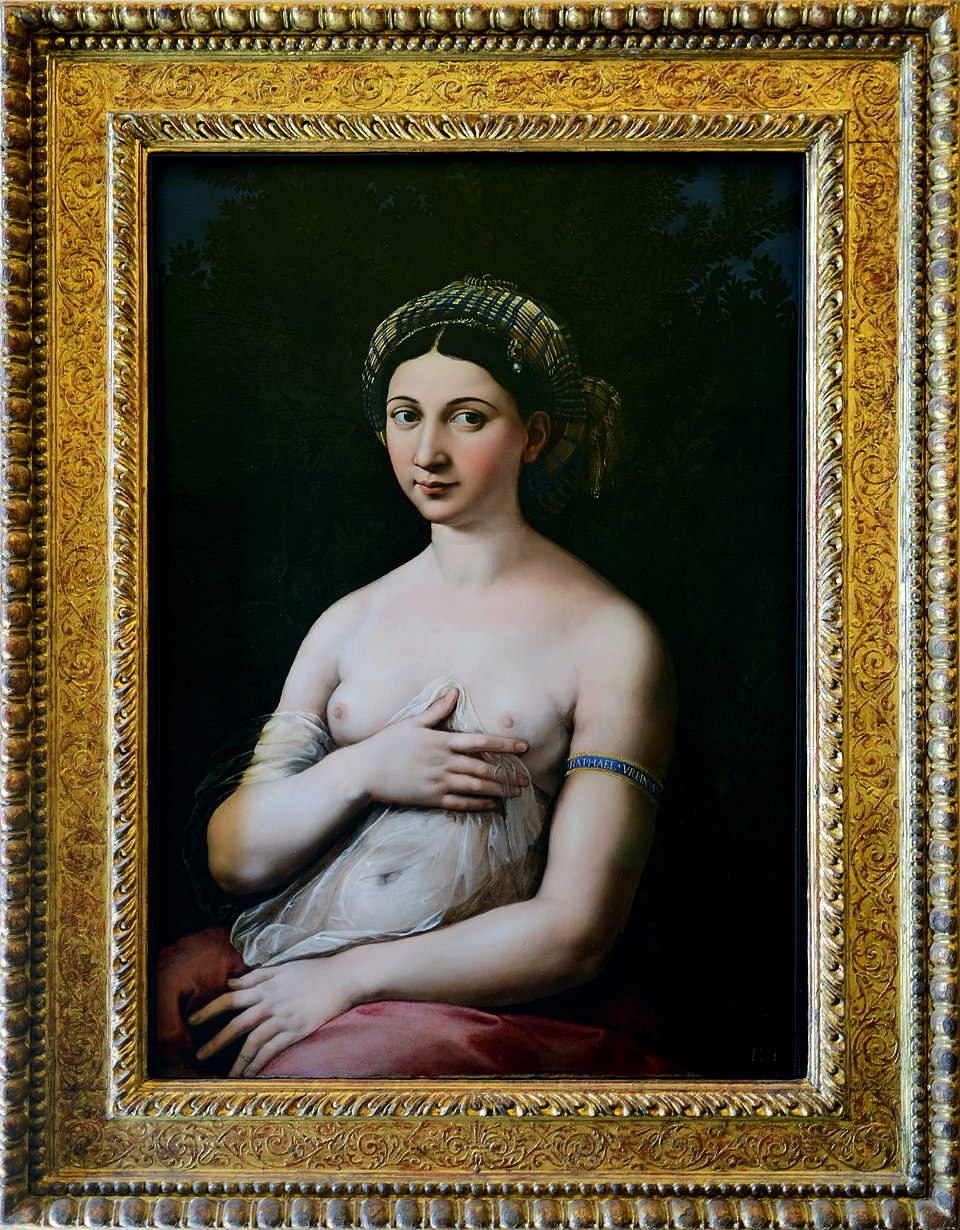
The enigmatic Portrait of a Young Woman (La Fornarina) by Raphael, a famous and intimate work.
Description: This is one of the most mysterious and personal Raphael paintings. It’s believed to be a portrait of his great love, Margherita Luti, the daughter of a baker (‘fornarina’ means ‘the baker’s daughter’). Her direct gaze and the intimate way she is painted suggest a deep connection between the artist and his subject. The woman wears an armband signed with Raphael’s name, ‘RAPHAEL URBINAS,’ a bold and personal declaration of their connection.
Painting Techniques: Raphael’s skill with oil on wood is on full display here, especially in the luminous, realistic rendering of skin tones and the soft texture of the fabrics.
Location: Palazzo Barberini, Rome, Italy
Estimated Value: Priceless
Disputation of the Holy Sacrament (c. 1509–1510)
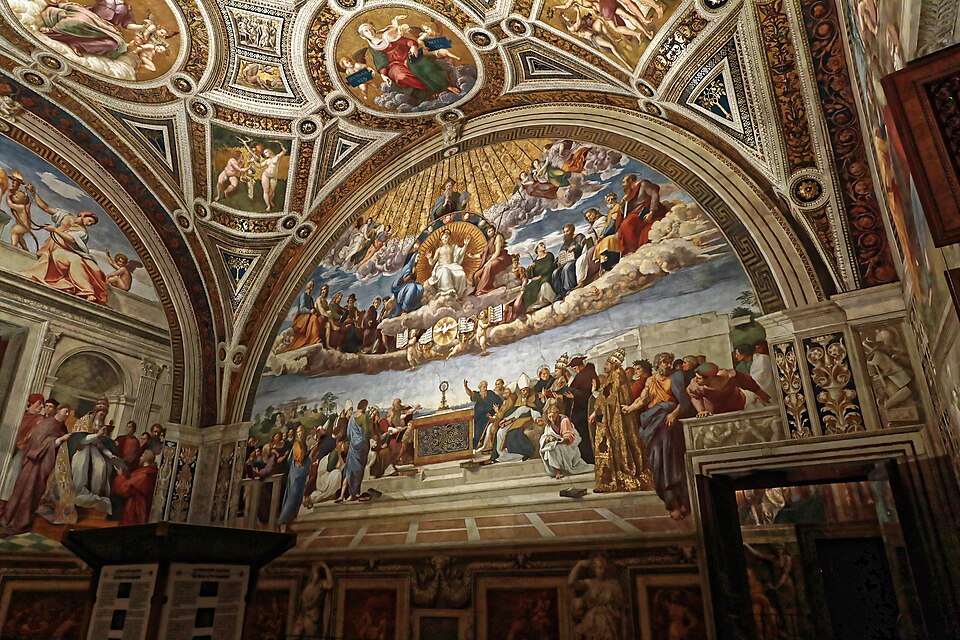
Raphael’s Disputation of the Holy Sacrament, a theological masterpiece in the Vatican.
Description: Imagine a grand meeting between heaven and earth to discuss a single, profound idea. That’s what Raphael captures in this massive fresco. Above, you have Christ, Mary, and saints in the heavens. Below, theologians, popes, and scholars debate the meaning of the Eucharist. It’s a visual symphony of faith and intellect. This painting is located directly opposite ‘The School of Athens’, creating a thematic dialogue between divine faith and human reason.
Painting Techniques: Another brilliant fresco, this work demonstrates Raphael’s genius for composition. He arranged dozens of figures in a harmonious and orderly way, using the architecture to draw our eyes to the central point.
Location: Apostolic Palace, Vatican City
Estimated Value: Priceless
The Marriage of the Virgin (1504)
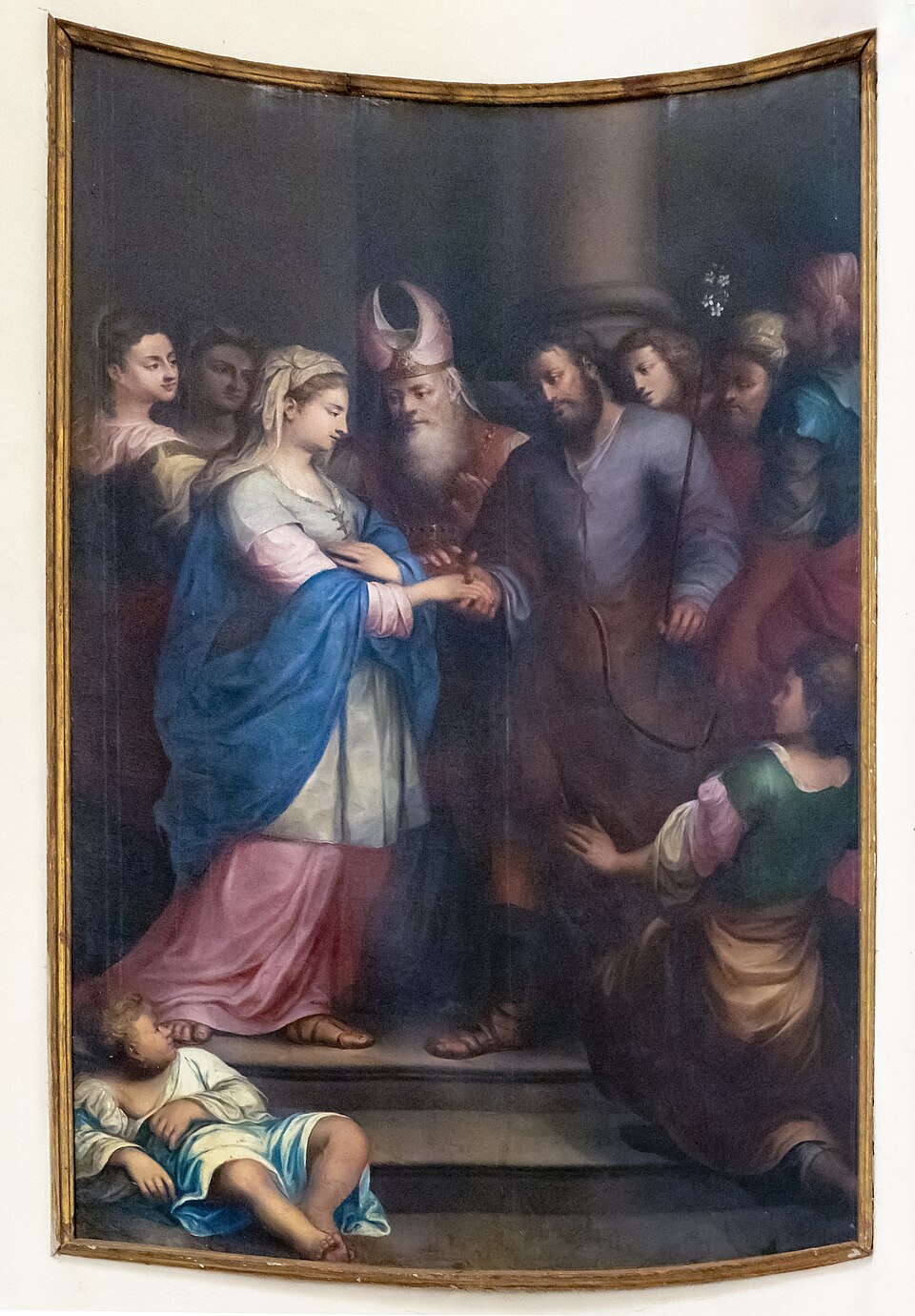
The harmonious and elegant Marriage of the Virgin, an early masterpiece by Raphael.
Description: Painted when he was only 21, this work shows that Raphael was a prodigy from the start. The scene depicts the marriage of Mary and Joseph with perfect symmetry and grace. The temple in the background is a masterclass in perspective, making the whole scene feel calm, ordered, and divinely blessed. One of the unsuccessful suitors for Mary’s hand is shown breaking his rod over his knee in frustration, a symbolic detail from religious tradition.
Painting Techniques: This oil on wood painting is celebrated for its perfect linear perspective and balanced, pyramidal composition, techniques Raphael learned from his teacher Perugino and then perfected.
Location: Pinacoteca di Brera, Milan, Italy
Estimated Value: Priceless
Triumph of Galatea (c. 1514)
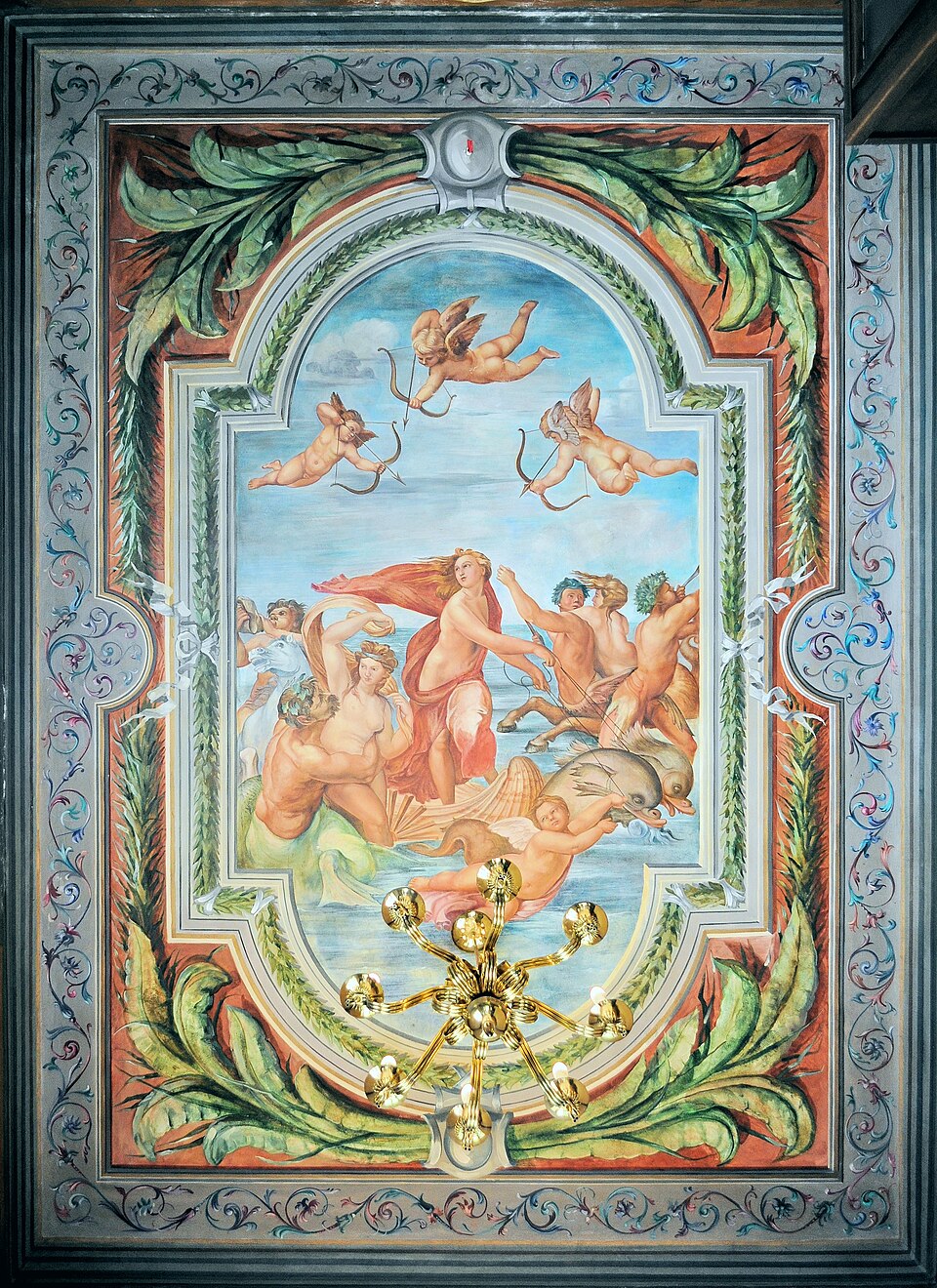
The vibrant and mythological Triumph of Galatea fresco by Raphael in Rome.
Description: This fresco is pure joy and energy! It depicts the beautiful sea nymph Galatea riding a shell chariot pulled by dolphins, surrounded by other mythological sea creatures. Unlike his more serious religious works, this painting is a celebration of life, love, and classical mythology, bursting with movement and vibrant color. Raphael famously claimed he did not model Galatea on any single person, but on a certain idea of perfect beauty that he held in his mind.
Painting Techniques: A fresco that captures incredible dynamism. Raphael created a swirling, circular composition that makes the scene feel like it’s spinning with joyous energy.
Location: Villa Farnesina, Rome, Italy
Estimated Value: Priceless
Portrait of Baldassare Castiglione (c. 1514–1515)
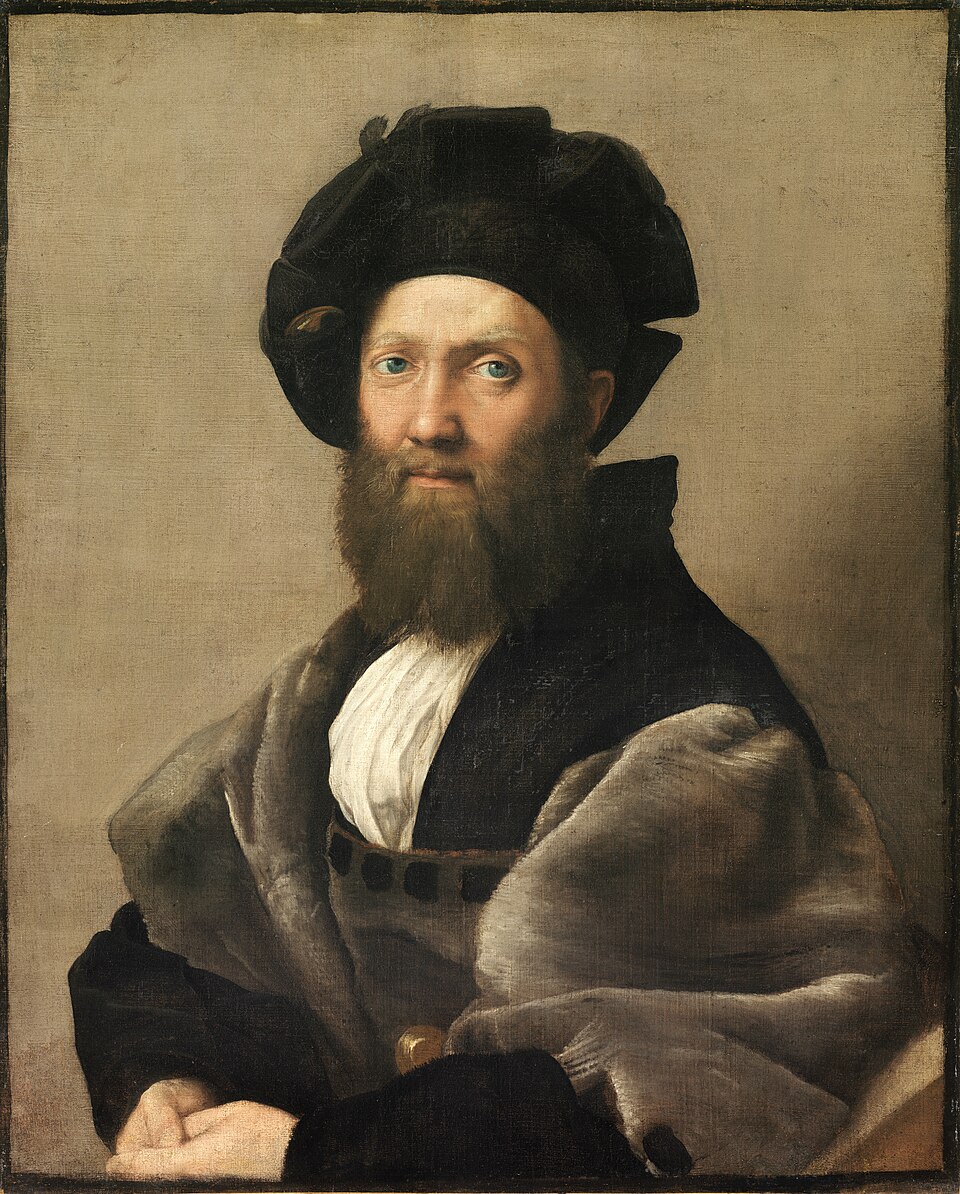
Raphael’s lifelike Portrait of Baldassare Castiglione, a masterclass in Renaissance portraiture.
Description: This is more than just a portrait; it’s a conversation with a friend. Raphael painted his close friend, the diplomat and author Baldassare Castiglione, with such sensitivity that you feel you know him. His gentle eyes, calm expression, and elegant clothes paint a picture of the ideal Renaissance gentleman. This portrait’s intimate and realistic style deeply influenced later masters, including Rembrandt, who sketched it when he saw it.
Painting Techniques: Raphael’s use of oil on canvas here is revolutionary. The subtle palette of grays, blacks, and whites, along with the soft lighting, creates a deeply personal and psychologically insightful portrait.
Location: Louvre Museum, Paris, France
Estimated Value: Priceless
La Belle Jardinière (1507)
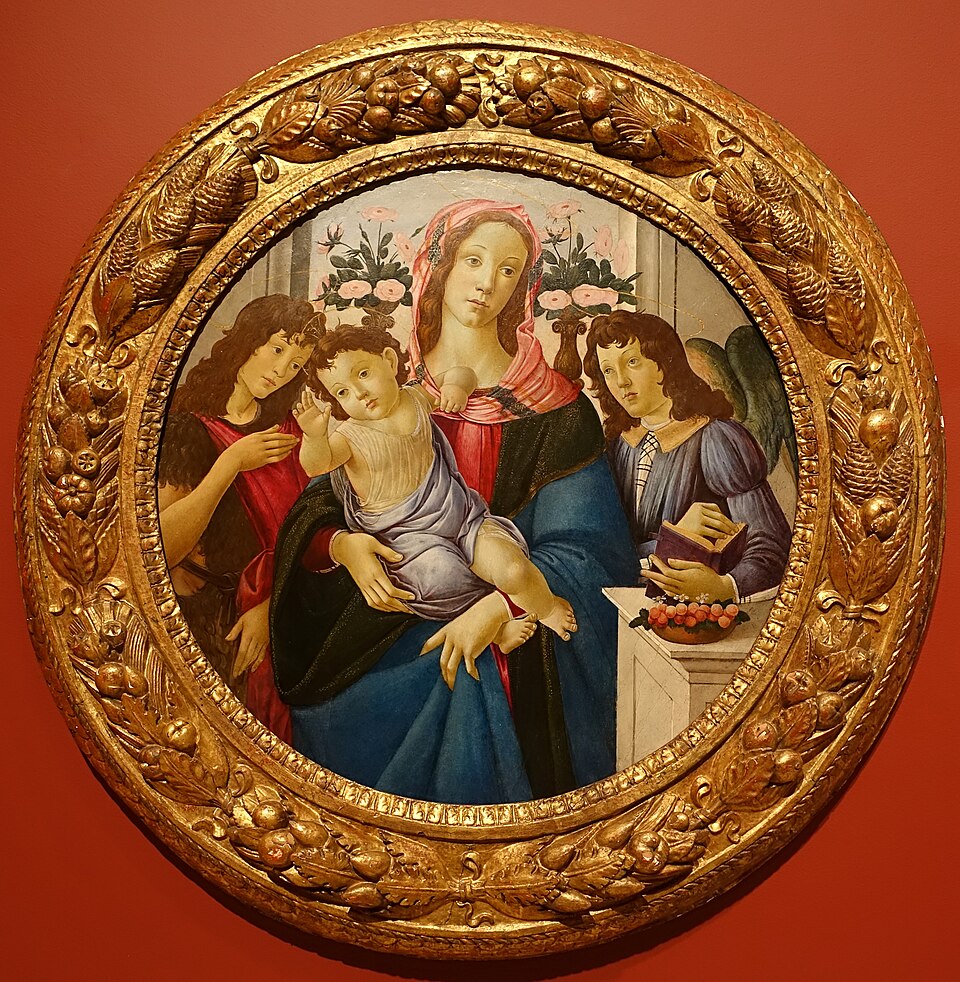
The serene and beautiful La Belle Jardinière by Raphael, a highlight of the Louvre.
Description: This painting is the definition of grace and tranquility. It shows the Virgin Mary sitting in a beautiful, lush meadow with the young Jesus and John the Baptist. The figures are arranged in a stable pyramid shape, a favorite technique of Raphael’s, which gives the scene a sense of perfect harmony and balance. The name ‘La Belle Jardinière’ means ‘The Beautiful Gardener’ in French, a title given to the painting later in reference to the Virgin Mary seated in the lush landscape.
Painting Techniques: An oil on wood panel, this painting is a prime example of Raphael’s famous Madonnas. He uses a clear, bright color palette and gentle modeling to create figures that are both idealized and touchingly human.
Location: Louvre Museum, Paris, France
Estimated Value: Priceless
The Fire in the Borgo (c. 1514)
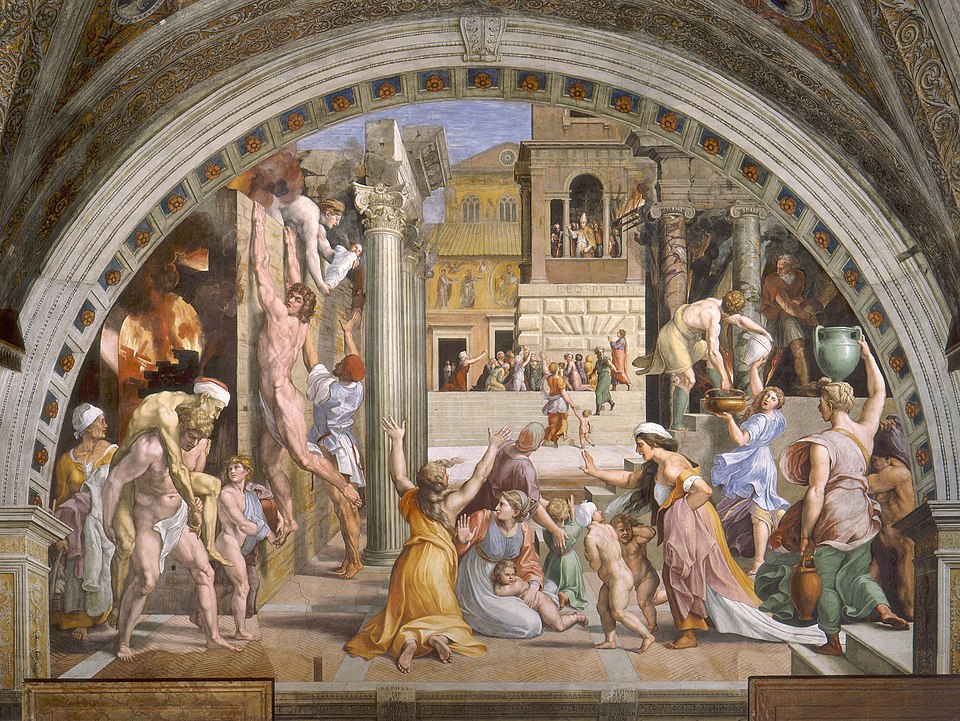
The dramatic and action-packed fresco The Fire in the Borgo by Raphael.
Description: This fresco is pure action! It tells the story of Pope Leo IV miraculously stopping a raging fire in Rome with a simple sign of the cross. The scene is filled with dramatic, muscular figures running, carrying others to safety, and reacting in terror. It’s like a scene from an action movie, Renaissance-style. The muscular figures in this painting show Raphael responding to the powerful style of his contemporary, Michelangelo, proving he could master drama as well as grace.
Painting Techniques: In this fresco, Raphael shows the influence of his rival, Michelangelo. The powerful, twisting bodies and dramatic poses are a clear nod to Michelangelo’s work on the Sistine Chapel ceiling, but with Raphael’s own sense of order.
Location: Apostolic Palace, Vatican City
Estimated Value: Priceless
Inspiration and Legacy
Raphael didn’t create in a vacuum. His early style was heavily shaped by his teacher, Pietro Perugino, whose influence is clear in the gentle harmony of ‘The Marriage of the Virgin.’ Upon moving to Florence, he soaked up the innovations of Leonardo da Vinci, adopting his sfumato technique and pyramidal compositions. He also engaged in a friendly but intense rivalry with Michelangelo in Rome, whose powerful, muscular figures inspired Raphael to add more drama and energy to his later works. Raphael’s own legacy is immense. For centuries, his work was considered the absolute pinnacle of artistic achievement. His emphasis on idealized beauty, clarity, and grace became the foundation for European art academies, influencing countless artists, most notably the French Neoclassical painter Jean-Auguste-Dominique Ingres, who revered Raphael above all others.
Final Thoughts
Raphael worked fast. Thirty-seven years. Dead before he could watch his technique ossify into dogma.
His paintings don’t breathe – they calculate. Every Madonna pose refined to mathematical grace. Every apostle positioned like a chess piece in divine geometry. This is what the Renaissance gave us: technical mastery so complete it suffocated spontaneity. Perfection without fracture. Harmony without human weight.
But here’s what matters: Raphael set a standard. Five centuries of painters have measured themselves against The School of Athens, against those impossible flesh tones, against compositional balance so pure it feels architectural. He proved you could synthesize everything – Florentine line, Venetian color, Roman monumentality – and make it look effortless. That’s not nothing.
The work endures because the craft is undeniable. Strip away the serenity, the celestial calm, the bloodless piety – what remains is a painter who understood structure at the subcutaneous level. He knew how fabric falls. How light carves form. How to orchestrate fifteen figures without visual chaos.
Modern painting had to kill this. Had to choose Caravaggio’s violence over Raphael’s equilibrium. But before we could fracture form, someone had to prove form could be perfect. Raphael did that. Then he died, and painting got interesting.
FAQs: Top 10 Raphael Paintings
Who was Raphael?
Raphael (Raffaello Sanzio da Urbino) was an Italian master painter and architect of the High Renaissance, active from roughly 1497 to 1520. He is considered one of the three great masters of the period, along with Leonardo da Vinci and Michelangelo.
What is Raphael most famous for?
Raphael is most famous for his many serene and beautiful paintings of the Madonna and Child, and for his large-scale fresco paintings in the Vatican Palace, especially ‘The School of Athens’.
How did Raphael die?
Raphael died on his 37th birthday in Rome in 1520. The cause was a short, acute illness, which historical sources say was a fever. His death was widely mourned, as he was incredibly famous and beloved.
Where can I see the most famous Raphael paintings?
Many of Raphael’s most important works, particularly his frescoes, are located in the Raphael Rooms at the Apostolic Palace in Vatican City. Other major paintings are housed in top museums like the Uffizi Gallery in Florence, the Louvre in Paris, and the Gemäldegalerie in Dresden.