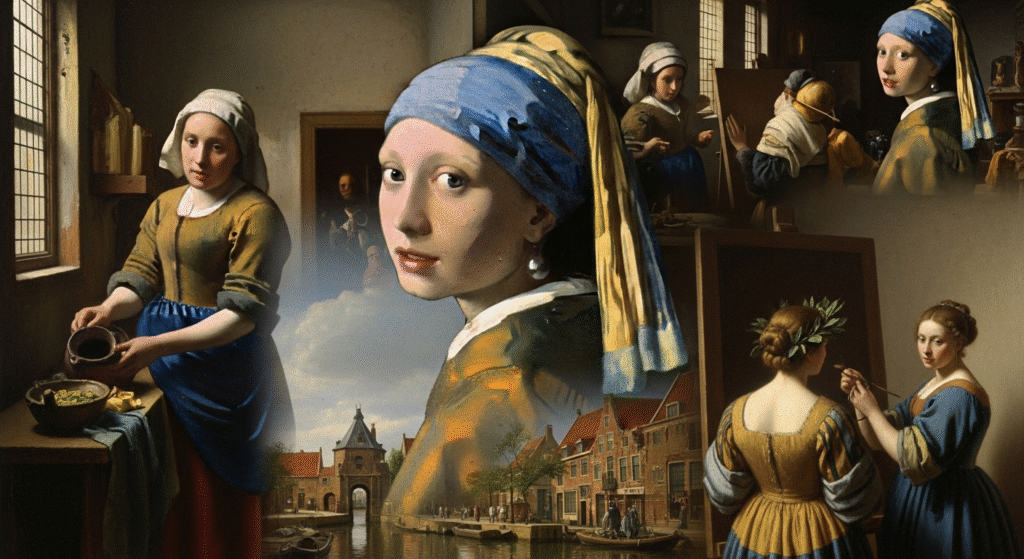
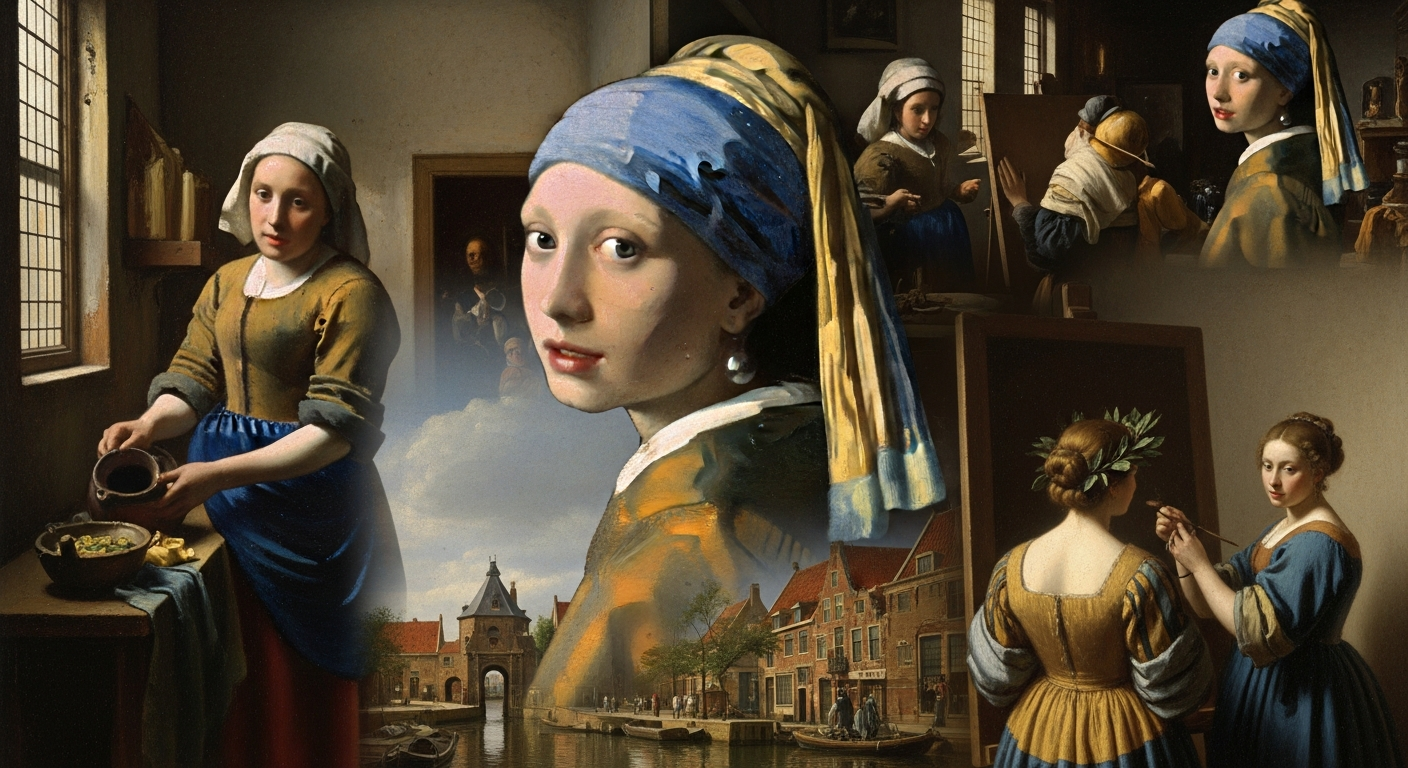
Have you ever seen a picture of someone that makes you feel like you know them, even though you’ve never met? You look into their eyes and a million questions pop into your head. Who are they? What are they thinking? That’s the exact feeling millions of people get when they see one of the most famous paintings in the world: the Girl with a Pearl Earring.

She’s often called the “Mona Lisa of the North.” With her curious glance, soft lips slightly parted, and that one, luminous pearl, she has captivated audiences for centuries. But what is the girl with a pearl earring painting mean? Is she a real person? And what secrets are hidden in the brushstrokes?
In this deep dive, we’re going to act like art detectives. We’ll explore the history, symbolism, and techniques behind this iconic artwork by Johannes Vermeer. Get ready to unlock the mysteries of the girl who continues to enchant the world.
Meet the Master of Light: Johannes Vermeer
To understand the painting, we first need to meet the artist. Johannes Vermeer (1632-1675) was a Dutch painter who lived during a spectacular period known as the Dutch Golden Age.
Imagine a time in the Netherlands when trade, science, and art were booming. Cities were bustling, and for the first time, regular people – not just kings or popes – could afford to buy paintings to hang in their homes. Vermeer was a master of capturing quiet, everyday moments from this era. He was obsessed with how light fell on objects, how it bounced off a silk dress or streamed through a window.
Vermeer worked slowly and meticulously, likely producing only about 35 paintings in his entire life. His genius lies in making simple scenes feel incredibly important and full of emotion. The Girl with a Pearl Earring is perhaps the most famous example of his incredible skill.
Is She a Real Person? The Portrait vs. Tronie Debate
One of the first questions everyone asks is, “who is the girl in the pearl earring painting?” Was she Vermeer’s daughter? A maid who worked in his house? The truth is… we have no idea. And it’s likely Vermeer never intended for us to know.
This is because the Girl with a Pearl Earring is probably not a portrait. A portrait is a painting of a specific, identifiable person. Instead, art historians believe this is a classic example of a Tronie.
What’s a Tronie?
A tronie (a 17th-century Dutch word for “face” or “expression”) was a type of painting popular during the Dutch Golden Age painting era. In a tronie, an artist would paint a model with an interesting expression or in exotic clothing to study character, emotion, or different facial types.
So, the girl in the painting was likely a model Vermeer used to explore a specific mood—that fleeting, intimate moment where she turns to look at us. This answers the question, “is girl with a pearl earring a portrait?” It’s more of a character study than a personal portrait. This very mystery is what inspired author Tracy Chevalier to write her famous historical novel, Girl with a Pearl Earring, which was later turned into a movie starring Scarlett Johansson.
A Closer Look: Girl with a Pearl Earring Painting Analysis and Interpretation
Let’s put on our magnifying glasses and examine the clues Vermeer left for us on the canvas. The true meaning of the girl with the pearl earring by vermeer is found in the details.
The Gaze That Stops You in Your Tracks
Her expression is everything. She’s turned her head over her shoulder as if we just called her name. Her eyes are wide and bright, looking directly at you. Her lips are parted, as if she’s about to speak. This creates an incredible sense of connection and immediacy. It’s not a formal, posed smile; it’s a captured moment, frozen in time. This is one of the key elements of the art historical interpretation of the piece – it feels modern and personal despite being over 350 years old.
The Star of the Show: Symbolism of the Pearl Earring
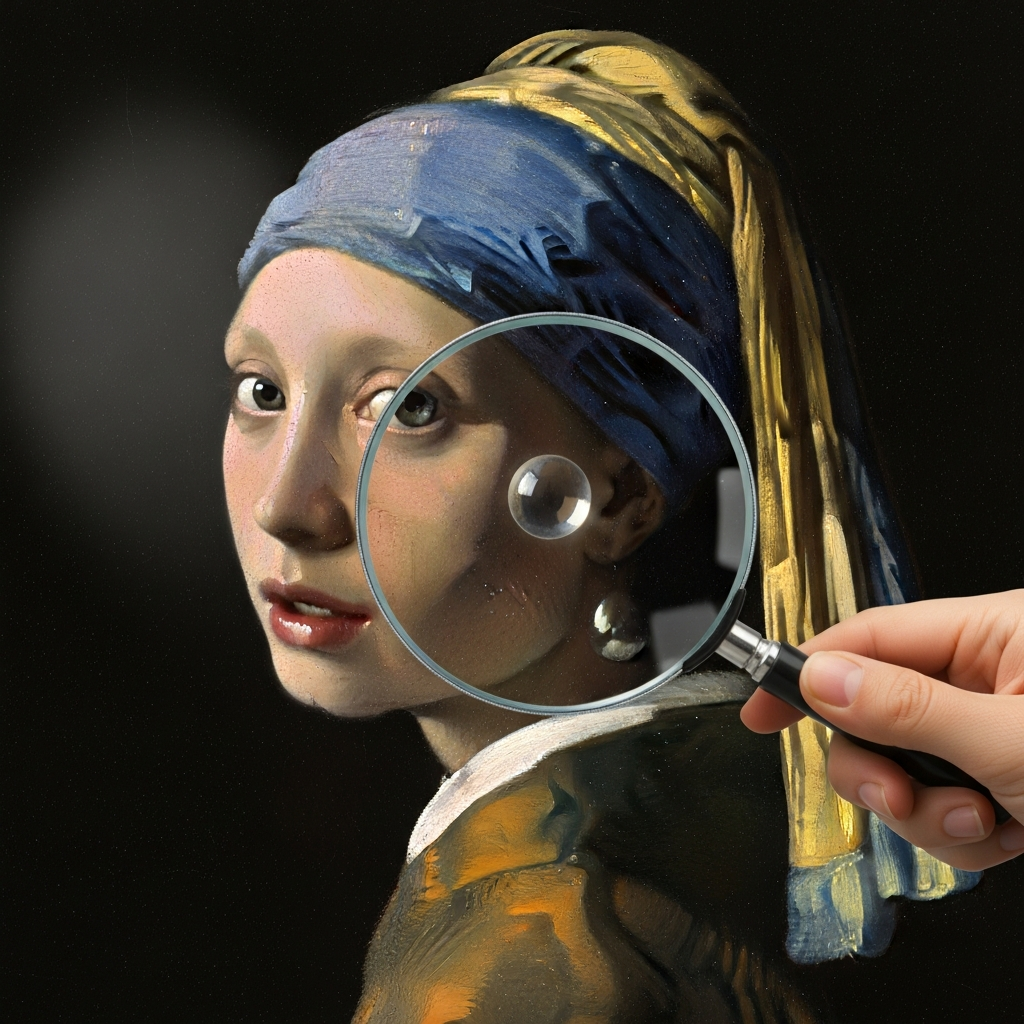
The painting is named after it, so what is the symbolism of the pearl earring in vermeer’s painting?
Pearls in Baroque art meaning often symbolized wealth, purity, and wisdom. A pearl this large would have been incredibly expensive, suggesting a certain status. However, art historians and scientists have pointed out that a pearl of this size would be impossibly heavy and astronomically costly.
Some experts now believe the “pearl” isn’t a pearl at all! It might be polished tin, glass, or even just a brilliant illusion created by Vermeer with a few masterful dabs of white paint. The pearl earring significance might not be in its material value, but in its artistic value. It serves as a brilliant focal point – a concentration of light that draws your eye and illuminates her face.
Light, Shadow, and Color: Johannes Vermeer Techniques
Vermeer’s use of light is legendary. The technique of using strong contrasts between light and dark is called chiaroscuro, and Vermeer was a master of it.
- Light and Shadow in Vermeer: Notice how the light comes from the left, illuminating the side of her face, her nose, and her eye, while the other side fades into a soft shadow. The background is completely black, making her figure “pop” out at the viewer. This dramatic lighting gives the painting depth and a three-dimensional feel.
- Blue and Yellow Colors: Vermeer was famous for his use of a vibrant and expensive pigment called ultramarine blue, made from crushed lapis lazuli gemstones. You can see it in her turban. He pairs this rich blue with a bright, lead-tin yellow in her headscarf, creating a beautiful and harmonious color contrast that has become his signature.
The Mystery of the Turban
So, what is the meaning of the turban in Girl with a Pearl earring? The exotic turban wasn’t typical everyday wear in 17th-century Holland. Its inclusion is another clue that this is a tronie. During the Dutch Golden Age, the Netherlands was a global trading hub. Turbans and other “exotic” clothing appeared in paintings to show a fascination with the wider world and to add a touch of the fantastical and theatrical to the artwork.
Painting Fact Sheet
To give you a quick overview, here are the key facts about Vermeer’s masterpiece.
| Detail | |
|---|---|
| Artist | Johannes Vermeer |
| Year Created | c. 1665 |
| Medium | Oil on canvas |
| Dimensions | 44.5 cm × 39 cm (17.5 in × 15 in) |
| Location | Mauritshuis museum in The Hague, Netherlands |
| Genre | Tronie |
From Dusty Attic to Global Icon: Why is Girl with a Pearl Earring Famous?
For almost 200 years, Vermeer’s masterpiece was lost to history. It was sold for a tiny sum in 1881, in poor condition. After being carefully restored, its true genius was revealed.
However, its explosion into pop culture fame is much more recent. The 1999 historical novel by Tracy Chevalier gave the girl a fictional backstory that captured the public’s imagination. This was followed by the 2003 film starring Scarlett Johansson, which brought the story and the painting to a massive global audience.
Today, she is an icon, reproduced on everything from mugs to posters. Her fame comes from a perfect storm: the technical brilliance of Vermeer, the enduring mystery of her identity, and her modern revival in books and film.
FAQs: What Does the Girl with a Pearl Earring Painting Mean
Here are some quick answers to common questions about this incredible painting.
What is a tronie?
A tronie is a type of painting popular in the 17th-century Netherlands. It’s not a formal portrait of a specific person, but rather a study of a character, an interesting facial expression, or a figure in costume.
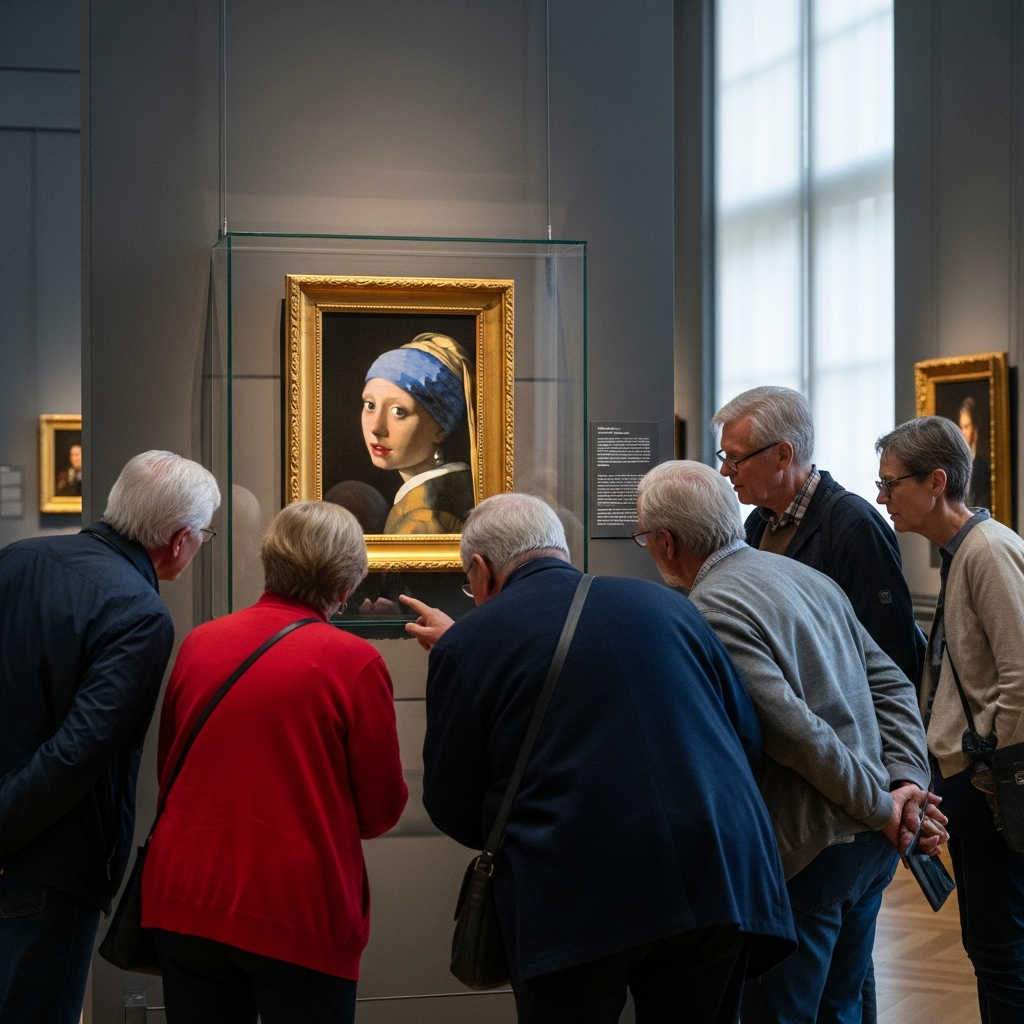
Where can I see the Girl with a Pearl Earring painting?
The original painting is on permanent display at the Mauritshuis art museum in The Hague, Netherlands. It is the star attraction of their collection.
Was the pearl in the painting real?
It’s highly debated! Given its immense size and the way it’s painted with just a few brushstrokes, most experts believe it’s not a real pearl. It could be made of glass, polished tin, or simply an invention of Vermeer’s to create a stunning highlight. The mystery is part of the hidden meanings in art.
How were the Girl with a Pearl Earring painting techniques and meaning connected?
Vermeer’s techniques are essential to the painting’s meaning. His use of soft light creates intimacy, the dark background isolates the figure to focus our emotion, and his simple brushstrokes for the pearl and lips create a sense of realism and immediacy. The technique serves the meaning, which is to capture a fleeting, personal human moment.
The Enduring Mystery
So, what does the girl with a pearl earring painting mean? The answer is both simple and complex. It means something different to everyone who sees it.
It’s a breathtaking demonstration of an artist’s skill—a masterclass in light, color, and emotion. It’s a window into the Dutch Golden Age, a time of discovery and artistic innovation. But most of all, it’s a timeless human connection. The Johannes Vermeer Girl with a Pearl Earring historical context might be centuries in the past, but the feeling of locking eyes with the girl is as real today as it was in 1665.
She remains a beautiful enigma, forever turning to look at us, a secret on her lips and a universe of light in her eyes.