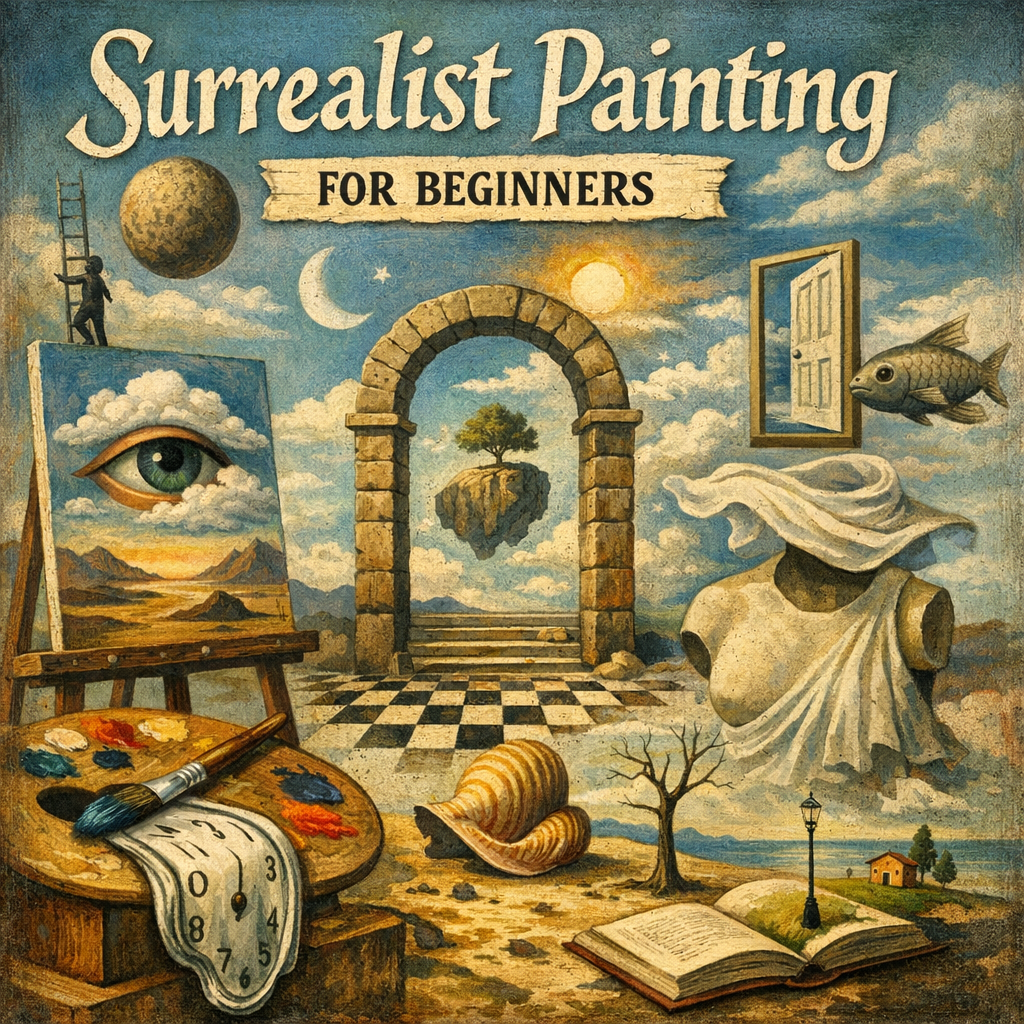
Discover how to start painting in the surrealism painting genre with easy techniques designed for beginners. This guide breaks down surrealism into simple methods like automatism and frottage. These tools help you unlock your imagination without the pressure of perfection. You will learn actionable steps to create dream-like art today. Grab your brushes and let your subconscious take the lead.
Have you ever wanted to paint your dreams but felt intimidated by the melting clocks of famous masterpieces? The surrealism painting genre can seem incredibly complex at first glance. However, the true heart of this art style is not about perfect realism. It is about total creative freedom. Surrealism allows you to bypass logical thinking and tap directly into your imagination.
For beginners, this is actually one of the most forgiving and exciting genres to explore. You do not need to worry about correct proportions or strict rules of perspective. Instead, you get to play with bizarre combinations, striking colors, and accidental textures.
In this post, we will look at the core ideas behind surrealism. We will also walk through simple, step-by-step techniques that you can use right now to create your own otherworldly paintings. Whether you are holding a brush for the first time or looking to break out of a creative rut, these methods will help you paint without fear.
What Is the Surrealism Painting Genre?
The surrealism painting genre is an art movement focused on exploring the subconscious mind and dreams. It combines unrelated objects and distorted reality to create bizarre, dream-like scenes that defy logical explanation. This movement gives artists permission to paint without strict rules or boundaries.
Surrealism officially began as a cultural movement after World War I to bypass traditional social conventions. Writers and artists wanted a way to break free from the strict rationalism of modern society. They believed that exploring the subconscious mind could unlock a deeper, more authentic truth about human desires. To do this, they relied heavily on the psychoanalytic theories of Sigmund Freud. Freud studied how dreams reveal our hidden thoughts and fears.
Unlike traditional art styles that try to copy the real world perfectly, surrealism asks you to look inward. If you want to dive deeper into the history, you can read our full breakdown of what is surrealism. You might recognize famous works by artists like Salvador Dalí or René Magritte, who famously painted everyday objects in impossible and illogical situations. The goal is never to make logical sense. It is simply to express the strange and beautiful landscape of your own mind.
Why Is Surrealism Perfect for Beginners?
Many new artists freeze up when they stare at a blank canvas. You might worry that your drawing skills are not good enough or that your painting will not look realistic. Surrealism completely removes this pressure. Because the goal is to paint dreams and the subconscious, there are no mistakes. If a tree looks like a melting hand, you are doing it right.
This style encourages play and embraces happy accidents. You are allowed to be messy. In fact, many of the best surrealist pieces start with random scribbles or paint splatters. This frees you from overthinking every single brushstroke.
Surrealism also overlaps nicely with abstract painting. Both styles focus on feeling and expression rather than strict visual accuracy. When we implemented this automatic drawing technique in our beginner workshops, we saw students immediately lose their fear of the blank canvas and create incredibly unique starting points for their paintings.
What Are the Best Surrealism Techniques for Beginners?
The best surrealism techniques for beginners are automatism, frottage, and decalcomania. These methods rely on chance and texture rather than strict drawing skills, making it easy for anyone to create fascinating, dream-like foundations for their paintings. They allow you to build an image organically.
Automatism
Automatism is a creative process designed to suppress rational thought and let your subconscious take over. To try this, grab a pencil or brush, close your eyes, and just start moving your hand across the paper. Let the lines cross and loop randomly. Once you open your eyes, look at the chaotic web of lines. You can then fill in certain shapes with color to reveal hidden monsters, faces, or landscapes.
Frottage
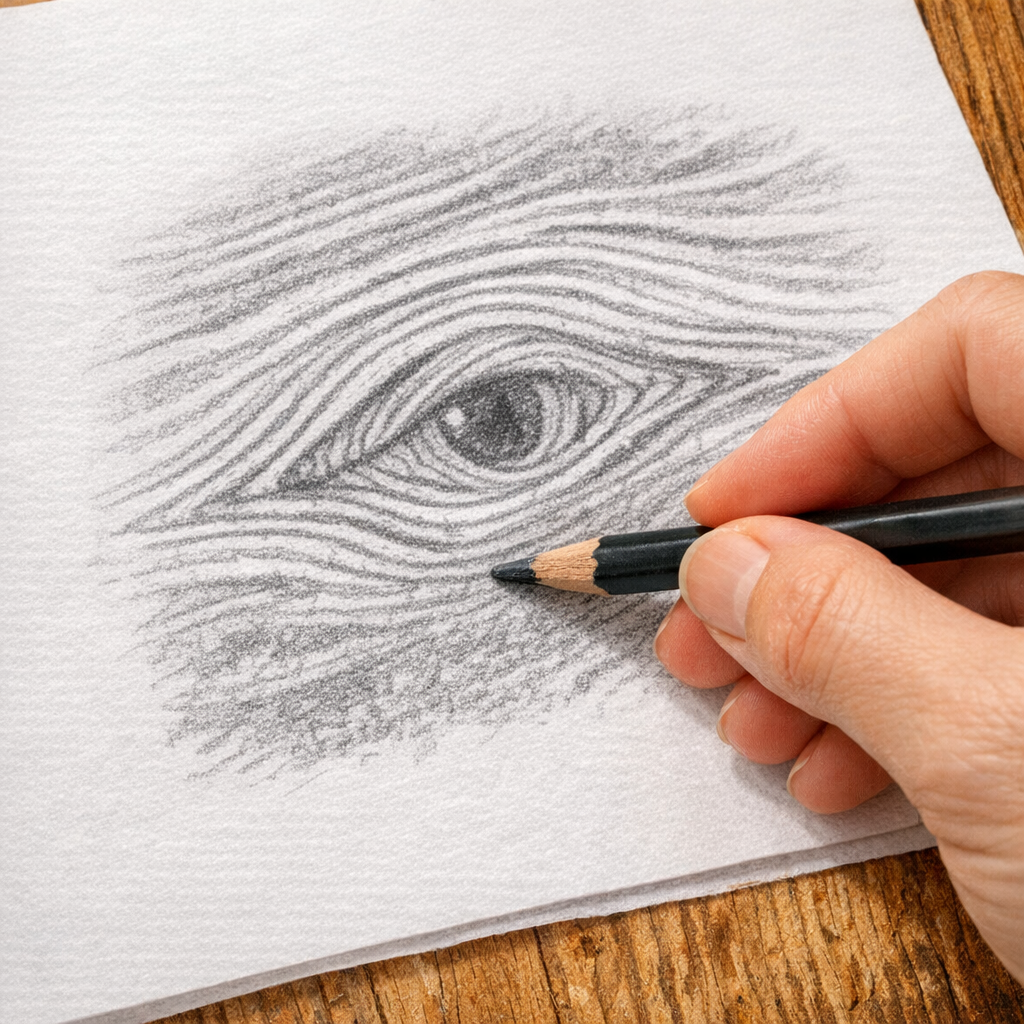
Frottage is a technique where you place a sheet of paper over a textured surface and rub it with a pencil or crayon. Artist Max Ernst invented this method when he was inspired by the worn-out grooves of an old wooden floor. The unexpected patterns that emerge can look like mystical forests or strange creatures. You can use leaves, wood, or even concrete to capture these interesting textures.
Decalcomania
Decalcomania is a simple blotting process that creates unpredictable, mirror-like patterns. You apply wet paint to a piece of paper or canvas, press another sheet on top of it, and then peel them apart. The resulting textured blots often look like coral reefs, bizarre landscapes, or alien rock formations. You can then use a small brush to add details and turn these random blots into a finished scene.
How Do You Find Ideas for Surrealist Art?
You can find ideas for surrealist art by keeping a dream journal, practicing meditation, or combining two completely random everyday objects. The goal is to let your subconscious guide you without overthinking the final visual result. Your brain already has everything it needs to create bizarre concepts.
One of the easiest ways to start is by tracking your dreams. Keep a notebook by your bed and write down whatever you remember the moment you wake up. Dreams naturally combine strange locations with impossible events. This is exactly how many artists find inspiration for Salvador Dalí’s art and other famous works.
Another great trick is forced juxtaposition. Write down a list of random nouns, like “apple,” “bicycle,” “cloud,” and “clock.” Pick two words that have nothing to do with each other and force them together. How would you paint a cloud made of apples? What does a melting bicycle look like? This simple game forces your brain to think outside the box and generates endless painting prompts.
Step-by-Step Guide to Your First Surrealist Painting
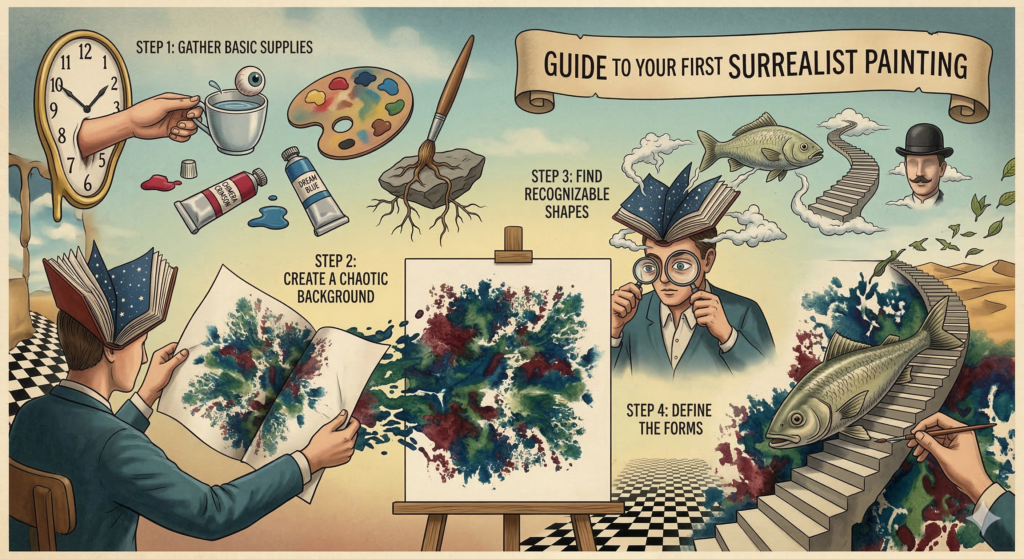
Creating your first piece in the surrealism painting genre is an exciting process. You do not need a strict plan to get started. Just gather your basic supplies, including canvas, paints, brushes, and a cup of water.
First, create a chaotic background using one of the techniques mentioned above. You could try decalcomania by pressing wet paint between two pieces of paper and unfolding it. Peel them apart and let the strange, textured patterns dry completely.
Next, stare at the dried patterns until you start to see recognizable shapes. This is similar to looking up at the clouds and seeing animals. Maybe a blob of blue paint looks like a giant fish, or a streak of red looks like a staircase.
Finally, use a smaller brush to outline and define those shapes. Paint over the background to make your new subjects stand out. Add shadows and highlights to give these bizarre forms a sense of realism. Do not worry about whether the scene makes logical sense. Just focus on making the shapes look solid.
What Are Common Mistakes to Avoid in Surrealist Art?
Common mistakes in surrealist art include overthinking the composition, trying to be too logical, and giving up when the artwork looks strange early on. Beginners often try to plan every detail, which defeats the purpose of tapping into the subconscious mind.
Many new artists get frustrated when their painting does not look like a perfect photograph. Remember that surrealism is supposed to look weird. If your painting feels confusing or illogical, you are actually moving in the right direction.
Another mistake is using too many colors at once without a clear focal point. Even in a dream world, you need some contrast to guide the viewer’s eye. Stick to a limited color palette when you first start. This will help tie your random, bizarre shapes together into one unified image.
Conclusion
Surrealism is ultimately about creative freedom and letting go of the rules. By trying these simple techniques, you give yourself permission to explore the strange and beautiful worlds inside your own mind. There is no right or wrong way to paint a dream.
Try one of these methods this week and see where your imagination takes you. Grab some paper, rub a pencil over a textured leaf, and see what hidden shapes emerge. Do not let the fear of making a mistake hold you back.
If you are ready to explore further, take some time to experiment and discover how these surrealist methods might help you find your painting style. Which automatic technique are you most excited to try first?
Frequently Asked Questions
1. What materials do I need for surrealism painting?
You can use any standard painting supplies, such as acrylics, oils, or watercolors. For techniques like frottage, you will also need paper and a soft graphite pencil or crayon. The exact materials matter less than your willingness to experiment.
2. Do I need to be good at drawing to paint surrealism?
No, you do not need advanced drawing skills to enjoy the surrealism painting genre. Many automatic techniques rely entirely on chance and texture rather than precise lines. It is more about imagination than technical perfection.
3. Who are the most famous surrealist painters?
Some of the most iconic surrealist artists include Salvador Dalí, René Magritte, and Max Ernst. You can view examples of their famous pieces by exploring iconic surrealist paintings. They each used different methods to bypass logic and paint their dreams.
4. What is automatism in art?
Automatism is a method where the artist draws or paints without conscious thought or planning. It is designed to let the subconscious mind take control of the creative process. This often results in chaotic, dream-like patterns and shapes.
5. How do I know when a surrealist painting is finished?
A surrealist painting is finished when you feel it accurately captures the mood or emotion you want to express. Because these paintings do not rely on strict reality, there is no objective stopping point. Trust your instincts and stop when the image feels complete to you.