Have you ever wondered if artists from centuries ago had a sense of humor? The truth is, many master painters weren’t just creating pretty pictures—they were embedding sharp jokes, clever critiques, and biting sarcasm right into their canvases. These artists embed sarcasm in classical paintings in ways that are both subtle and shocking, turning their artworks into visual conversations that mocked the powerful, criticized society, and challenged their viewers to look closer.
Key Takeaways:
- Artists used visual techniques like exaggeration, symbolism, and juxtaposition to hide sarcastic messages in their work
- Famous painters like Goya, Hogarth, and Bosch created paintings with multiple layers of meaning
- Understanding historical context helps us decode the hidden jokes and critiques in classical art
- Sarcasm in art served as a powerful tool for social commentary when direct criticism was dangerous
- These witty works continue to influence how artists challenge authority today
What Makes Art Sarcastic? Understanding Visual Humor
Before we dive into specific paintings, let’s understand what makes art sarcastic in the first place. Sarcasm in paintings isn’t like a comedian’s punchline—it’s more like a secret whispered between the artist and those clever enough to catch it.
Sarcasm in art means saying one thing on the surface while meaning something completely different underneath. Irony shows up when there’s a contrast between what you expect and what you actually see. Satire takes these tools and uses them to criticize or mock people, institutions, or society.
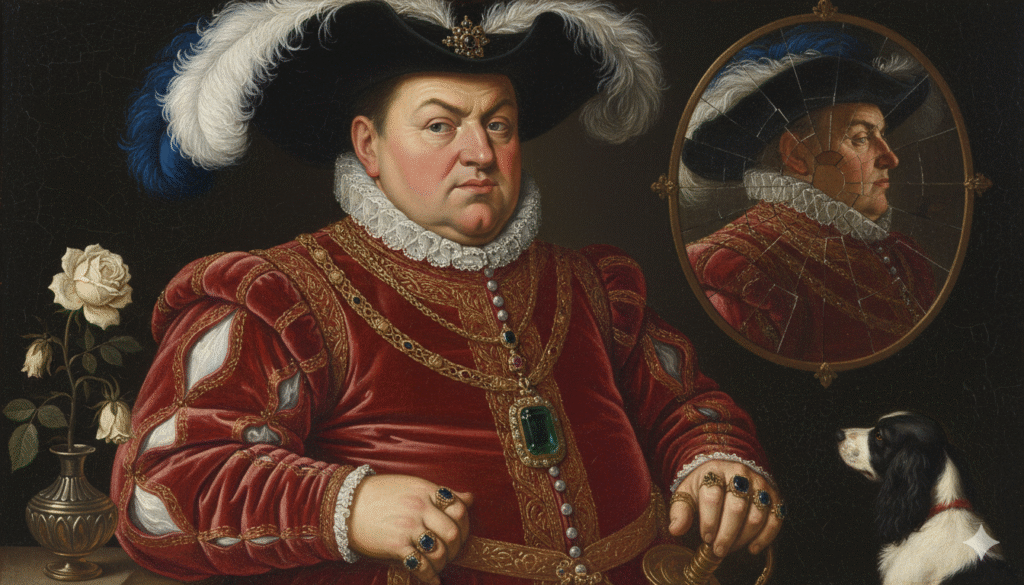
Think of it this way: if a painting shows a king looking magnificent but includes details that make him look foolish, that’s visual sarcasm at work. The artist seems to praise while actually poking fun—a dangerous but thrilling game when your subjects held the power of life and death.
Understanding the meaning behind common art symbols helps us decode these hidden messages. Artists developed a visual language where a wilting flower might represent decay, a broken chain could symbolize false freedom, or an exaggerated smile might signal contempt.
Why Artists Risked Everything to Be Witty
You might wonder why artists would risk their careers—or even their lives—to sneak jokes into their paintings. The answer lies in the unique position artists held in society.
During most of classical art history, painters depended on wealthy patrons: kings, nobles, church leaders, and rich merchants. These patrons commissioned portraits and scenes that were supposed to glorify them. But many artists saw hypocrisy, corruption, and absurdity in the world around them. Since they couldn’t openly criticize powerful people without facing serious consequences, they learned to hide their commentary in plain sight.
Art for change has always been about more than decoration. Artists found ways to document truth and challenge power structures through their work. Some did this through obvious satire, while others preferred subtle hints that only educated viewers would catch.
The Renaissance through the Baroque period saw incredible wealth inequality, religious conflicts, and political upheaval. How location influenced art during these turbulent times, with artists responding to local conditions through increasingly clever visual commentary.
Techniques Artists Used to Embed Sarcasm
Artists developed sophisticated methods to hide their wit in classical paintings. Let’s explore the main techniques:
Juxtaposition: Placing Opposites Together
Smart artists would place contradictory elements side by side in the same painting. A nobleman surrounded by symbols of virtue while decay lurked in the corners. Angels looking bored during supposedly sacred moments. These contrasts created ironic tension that observant viewers would notice.
Exaggeration and Caricature
Sometimes the best way to mock someone is to emphasize their features just slightly too much. A patron who demanded a flattering portrait might get one—but with their nose a bit too large, their posture a touch too stiff, or their expression subtly pompous. The line between flattery and mockery became deliciously thin.
Symbolic Subversion
Art symbolism provided artists with a rich vocabulary for hidden meanings. A dog traditionally represented loyalty, but in the wrong context, it might suggest someone was behaving like an animal. Flowers could symbolize beauty or decay. Even color theory in art played a role—certain color combinations could create discordant feelings that subtly undermined the painting’s official message.
Facial Expressions and Body Language
The human face can convey thousands of subtle emotions. Master painters used this to their advantage, giving subjects expressions that seemed appropriate at first glance but revealed contempt, boredom, or mockery upon closer inspection. A slight smirk, a sideways glance, or a too-perfect smile could transform a formal portrait into a savage critique.
Anachronisms and Unexpected Details
Including objects or details that didn’t belong in a scene created confusion that forced viewers to think harder about what they were seeing. A contemporary object in a biblical scene, modern clothing in a historical event, or impossible architectural elements all served to question the narrative being presented.
Francisco Goya: Master of Royal Mockery

Francisco Goya stands as one of history’s greatest artistic provocateurs. His painting Charles IV of Spain and His Family (1800) appears to be a traditional royal group portrait—but look closer, and you’ll see Goya’s devastating wit at work.
The royal family stands in elaborate clothing, but Goya painted them with brutal honesty. The king looks somewhat foolish. The queen appears calculating and domineering. The various princes and princesses seem awkward and ungainly. Goya even included himself in the shadows, painting at his canvas, perhaps suggesting he was the only one truly seeing clearly.
What makes this brilliant is that Goya fulfilled his commission—he painted the royal family—but he also documented their actual appearance and bearing rather than idealizing them. The royals apparently didn’t notice the subtle mockery, or perhaps they were so accustomed to their own grandeur that they couldn’t imagine anyone would dare critique them.
Goya’s later work became even more savage in its social commentary, particularly his Los Caprichos series of prints, which attacked superstition, corruption, and folly throughout Spanish society. Famous artists and their styles often reflected their personal political views, and Goya never shied away from controversy.
William Hogarth: Satirist of English Society
If Goya was subtle, William Hogarth was gloriously obvious. This 18th-century English painter and printmaker created entire narrative series designed to mock social climbing, moral decay, and human folly.
His Marriage A-la-Mode series (1743-1745) follows an arranged marriage between an impoverished aristocrat and a wealthy merchant’s daughter. Over six paintings, Hogarth shows us disaster unfolding: infidelity, debt, disease, and ultimately death. But he fills every scene with symbolic details that contemporary viewers would immediately understand.
Dogs fornicate in the corner during supposedly refined moments. Medicine bottles suggest venereal disease. Broken household items symbolize the broken marriage. The aristocrat’s family portraits literally look down in shame from the walls. Hogarth wasn’t just telling a story—he was creating a visual encyclopedia of everything wrong with his society.
Hogarth’s approach influenced countless later artists. Understanding the evolution of art movements shows us how satirical techniques passed from generation to generation, eventually leading to modern forms like political cartoons and street art.
Video: Understanding William Hogarth’s satirical paintings
Hieronymus Bosch: Dark Humor from Hell
Hieronymus Bosch created some of the strangest paintings in art history. His works overflow with bizarre creatures, impossible scenarios, and nightmarish visions. But beneath the weird surface lies sharp social and moral commentary—often quite funny in a dark way.
Take The Garden of Earthly Delights (c. 1490-1510). This massive triptych shows paradise on one panel, earth in the center, and hell on the third. The central panel depicts humanity indulging in every pleasure imaginable—and Bosch makes it look simultaneously appealing and absurd. Tiny naked people ride giant birds, cavort in bubbles, and engage in activities that would make anyone blush.

Bosch’s humor lies in exaggeration. He takes human desire and amplifies it to ridiculous extremes, suggesting that our appetites make us foolish. The hell panel shows musicians tortured by their own instruments and gluttons devoured by their feasts. It’s terrifying but also darkly comic—a reminder that Bosch saw human folly as both tragic and absurd.
Renaissance art typically aimed for beauty and harmony, but Bosch went in the opposite direction, using ugliness and chaos to make his point. His influence extends to Surrealism centuries later, showing how artistic wit transcends time.
Pieter Bruegel the Elder: Proverbs Come to Life
Pieter Bruegel the Elder painted ordinary people rather than nobles and saints. His works often depicted Flemish village life, but filled these scenes with multiple layers of meaning.
His painting Netherlandish Proverbs (1559) shows over 100 Dutch proverbs being acted out simultaneously. People literally “bang their heads against brick walls,” “lead each other by the nose,” and “throw their money into the water.” The overall effect is hilarious chaos—a suggestion that human behavior is predictably foolish.
Bruegel’s painting The Artist and the Connoisseur shows a painter at work while a foolish-looking patron peers over his shoulder, mouth agape. Many scholars believe this represents Bruegel’s commentary on the relationship between serious artists and wealthy but ignorant collectors. The artist focuses intently on his craft while the connoisseur merely gapes without understanding.
This theme resonates today with discussions about art market trends and what makes paintings valuable. Bruegel suggested that true art appreciation requires more than money—it demands understanding.
Giuseppe Arcimboldo: Portraits Made of Produce
Giuseppe Arcimboldo created some of the most playful works of the Renaissance. This 16th-century Italian painter specialized in portraits composed entirely of objects: fruits, vegetables, flowers, fish, or books.

At first glance, these seem like mere novelties. But Arcimboldo’s wit ran deeper. He painted courtiers and nobles as collections of their interests or professions. A librarian became stacks of books. The four seasons took the form of appropriate natural elements. These weren’t just clever visual puzzles—they were commentary on how we define identity and status.
The humor lies in the double vision. From a distance, you see a dignified portrait. Up close, you realize you’re looking at a pile of produce. This creates cognitive dissonance that makes viewers laugh while also questioning what they’re seeing. Are we just collections of our possessions and interests? Do our surfaces define us?
Arcimboldo’s approach influenced later artists and connects to modern discussions about identity in art. His work proves that how to appreciate art often involves seeing beyond the obvious to discover deeper meanings.
Édouard Manet: Scandalous Modernism
As we move closer to modern times, artistic sarcasm became less hidden and more confrontational. Édouard Manet’s Le Déjeuner sur l’herbe (1863) shocked Paris when it was first exhibited. The painting shows a nude woman sitting casually with two fully dressed men at a picnic while another woman bathes in the background.
The scandal wasn’t just nudity—classical paintings included plenty of naked figures. The problem was context. Manet’s nude woman wasn’t a goddess or mythological figure. She was contemporary, and she stared directly at viewers with a challenging expression. She knew she was being looked at, and she didn’t care.
This was Manet’s sarcastic response to artistic conventions. He took the poses and composition from Renaissance masterworks but stripped away the mythological justification that made nudity “acceptable.” In doing so, he exposed the hypocrisy of viewers who would admire ancient nudes but clutch their pearls at contemporary ones.
Manet beyond the scandal shows us an artist using irony and provocation to challenge artistic and social norms. His work bridges classical and modern art, maintaining traditional techniques while revolutionizing content.
The Viewer’s Role: Then and Now
Understanding sarcasm in classical paintings requires context. Contemporary viewers who lived in the same time and place as the artists would catch references we might miss. They knew which symbols carried subversive meanings, which people were being mocked, and what social conventions were being challenged.
Today, we need how to appreciate art without feeling overwhelmed and educational resources to decode these historical jokes. Art historians help us understand the original context, but we can also appreciate these works on our own terms.
The good news is that basic human foolishness hasn’t changed much. We can still laugh at pompous nobility, hypocritical moralists, and social climbers. The specific references might be lost, but the underlying humor remains fresh.
Modern viewers also bring their own interpretations. A painting created to mock 18th-century French aristocrats might today comment on contemporary wealth inequality. Hidden meanings in famous paintings continue to reveal themselves as each generation finds new relevance in old works.
How Artistic Wit Evolved
The tradition of sarcasm in art didn’t end with the classical period. If anything, it became more pronounced and varied as modern art movements emerged.
Dada artists of the early 20th century took artistic mockery to extremes. Understanding the Dada art movement reveals how these artists used absurdity, found objects, and provocative gestures to challenge everything art was supposed to be. Marcel Duchamp’s famous urinal titled Fountain represented the ultimate artistic joke—or profound statement, depending on your perspective.
Surrealism continued the tradition of visual humor mixed with serious commentary. Artists like René Magritte created paintings that looked realistic but showed impossible scenarios, forcing viewers to question reality itself. René Magritte the master of Surrealism demonstrates how wit can serve philosophical purposes.
Pop Art brought commercial imagery into fine art galleries, with Andy Warhol’s style using repetition and celebrity culture to comment on consumerism and fame. The vibrant legacy of Pop Art shows how this movement democratized art while also critiquing mass culture.
Contemporary artists continue this tradition through street art, memes, and digital media. Banksy represents perhaps the clearest modern heir to artists like Hogarth and Goya—using visual satire to critique power, war, consumerism, and hypocrisy.
| Art Movement | Time Period | Sarcastic Techniques | Key Artists |
|---|---|---|---|
| Renaissance | 14th-17th Century | Subtle symbolism, hidden details | Bosch, Arcimboldo |
| Baroque | 17th-18th Century | Dramatic exaggeration, contrast | Goya, Hogarth |
| Romanticism | Late 18th-19th Century | Emotional intensity, satire | Goya (later works) |
| Realism | 19th Century | Unflinching honesty | Manet, Courbet |
| Dada | Early 20th Century | Absurdity, anti-art | Duchamp, Man Ray |
| Surrealism | 1920s-1950s | Dream logic, impossible scenarios | Magritte, Dalí |
| Pop Art | 1950s-1970s | Commercial imagery, repetition | Warhol, Lichtenstein |
| Contemporary | 1970s-Present | Mixed media, social critique | Banksy, Kara Walker |
Why Sarcasm Endures in Art
Artists embed sarcasm in classical paintings—and continue to do so today—for several important reasons:
Power Dynamics: Visual sarcasm allows artists to critique powerful people and institutions while maintaining plausible deniability. “I was just painting what I saw!” becomes a defense against accusations of mockery.
Engagement: Sarcastic art demands active viewing. Audiences must look carefully, think critically, and piece together meanings. This makes the artwork more memorable and impactful than straightforward representation.
Entertainment: Let’s be honest—sarcastic art is fun. Finding hidden jokes and meanings creates a treasure hunt experience that keeps people coming back to paintings again and again.
Social Commentary: Some truths are too dangerous or uncomfortable to state directly. Wrapping them in visual metaphor, symbolism, and humor makes them more palatable while also more powerful. Art for well-being and mental health shows us how creative expression helps process difficult emotions and experiences.
Timelessness: Direct political commentary dates quickly. Sarcastic art that addresses universal human follies—vanity, greed, hypocrisy, foolishness—remains relevant across centuries. The specific targets change, but the underlying critique endures.
The tradition of embedding wit and criticism in art connects to broader questions about when does something become art and the secret language of art. These debates continue precisely because art serves multiple purposes simultaneously—aesthetic, emotional, intellectual, and social.
Learning to Spot Visual Sarcasm
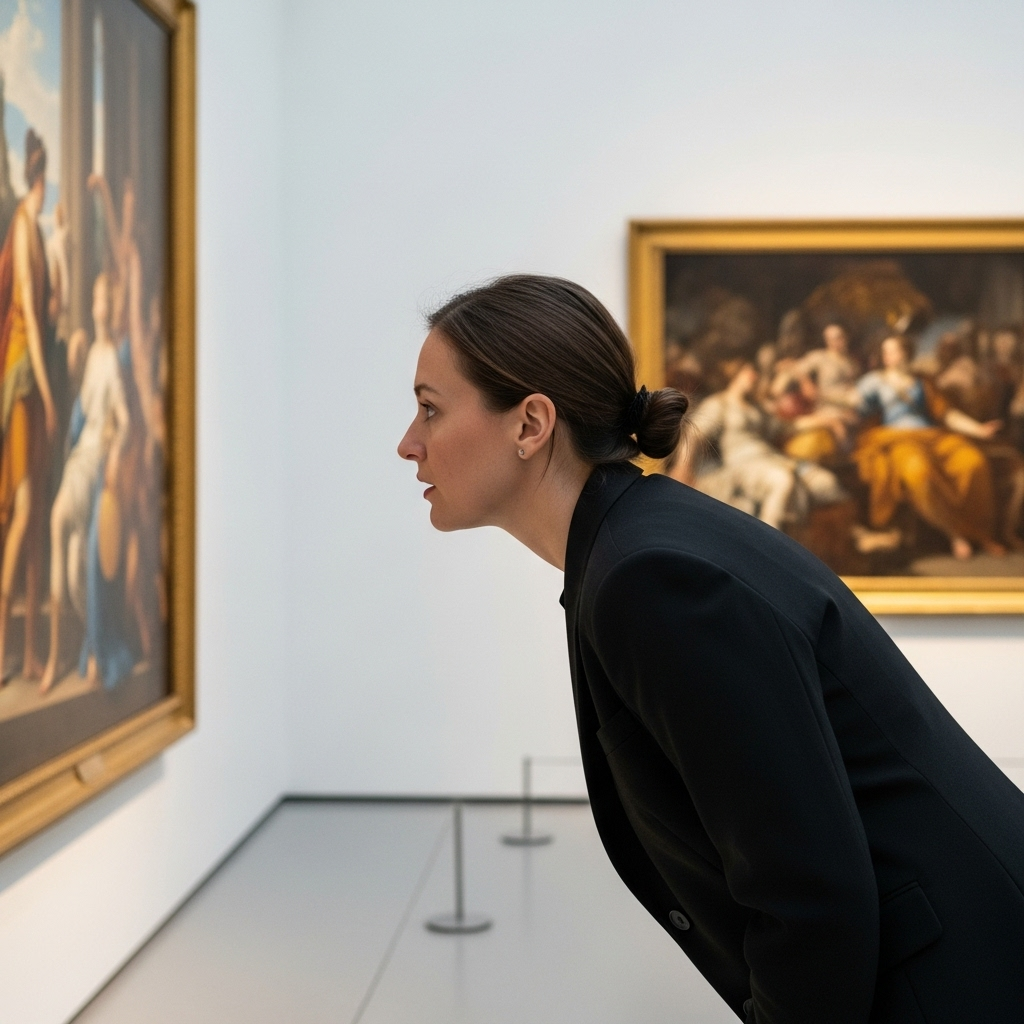
Want to become better at detecting sarcasm in classical paintings? Here are practical tips:
- Know Your Symbols: Study common symbolic meanings from different periods. Books and online resources about art symbolism can help you decode visual vocabulary.
- Consider Context: Research when and where a painting was created. What political, religious, or social conflicts existed? Who commissioned the work, and what might the artist have thought about them?
- Look at Details: Sarcasm often hides in corners, backgrounds, and minor elements. Spend time examining every part of a painting, not just the main subjects.
- Compare to Conventions: Learn what was considered “proper” in different artistic periods. Deviations from these norms often signal artistic commentary.
- Read Facial Expressions: Human faces convey subtle emotions. Look for smirks, sidelong glances, bored expressions, or exaggerated smiles that might undermine a painting’s official message.
- Visit Museums: Seeing paintings in person reveals details that reproductions miss. Take your time with artworks that interest you.
- Study Art History: Understanding the evolution of art movements from Renaissance to Postmodernism provides context for how artists challenged and built upon traditions.
For those inspired to create their own art, understanding these techniques enriches your practice. Whether you’re exploring painting techniques for beginners, mastering acrylic painting, or diving into watercolor techniques, you can incorporate layers of meaning into your own work.
Frequently Asked Questions
What’s a great example of art conveying sarcasm?
Francisco Goya’s Charles IV of Spain and His Family stands as one of the best examples. While appearing to honor the Spanish royal family with a formal group portrait, Goya painted them with unflattering realism that revealed their weaknesses. The king looks foolish, the queen domineering, and the various family members awkward—all while Goya fulfilled his official commission. It’s a masterclass in saying one thing while meaning another.
What are some examples of classical art that shows a sense of humor?
Beyond the works already discussed, look for:
- Jan Steen’s domestic scenes showing chaotic households and drunken celebrations
- Caravaggio’s Bacchus with its ambiguous, knowing expression
- Artemisia Gentileschi’s Judith Beheading Holofernes, which some scholars interpret as containing dark humor alongside its violence
- Johannes Vermeer’s The Procuress, depicting a less-than-respectable transaction with documentary clarity
- Any of Bruegel’s village scenes, which pack in dozens of proverbial jokes and observations about human nature
How can I understand allegorical art’s hidden meanings?
Start by researching the historical and cultural context of when the artwork was created. Learn common symbols from that period—books about iconography can help. Pay attention to repeated elements across multiple works by the same artist or from the same era. Museums often provide guides explaining symbolic meanings. Don’t be afraid to spend time simply looking and letting patterns emerge. Reading about famous artist styles helps you recognize signature techniques and typical symbolic vocabularies.
What is the difference between irony and sarcasm in art?
Irony in art occurs when there’s a gap between expectation and reality, or between appearance and truth. A painting might show a beautiful garden while details reveal it’s actually dying—that’s visual irony.
Sarcasm is more pointed and personal. It involves deliberately saying or showing the opposite of what you mean, usually to mock or criticize. A portrait that seems flattering but actually makes the subject look foolish is sarcastic.
All sarcasm involves irony, but not all irony is sarcastic. Irony can be tragic, humorous, or thought-provoking without carrying the cutting, mocking edge that defines sarcasm.
Which artists used satire in their classical paintings?
Many artists incorporated satire, but these stand out:
- William Hogarth (England, 18th century) – Created entire narrative series satirizing social climbing and moral hypocrisy
- Francisco Goya (Spain, 18th-19th century) – Mocked royalty and created savage prints criticizing Spanish society
- Pieter Bruegel the Elder (Flanders, 16th century) – Depicted human foolishness through village scenes and proverb paintings
- Hieronymus Bosch (Netherlands, 15th-16th century) – Used bizarre imagery to comment on sin and human folly
- Giuseppe Arcimboldo (Italy, 16th century) – Created composite portraits that were both impressive and gently mocking
- Honoré Daumier (France, 19th century) – Created thousands of satirical lithographs attacking politicians and society
- James Gillray (England, 18th-19th century) – Pioneered political cartooning with savage caricatures
Conclusion: The Lasting Power of Artistic Wit
Throughout history, artists embed sarcasm in classical paintings as a way to document truth, challenge power, entertain audiences, and process the absurdities of human behavior. From Bosch’s nightmarish visions to Goya’s unflattering royals, from Hogarth’s moral tales to Manet’s provocative modernity, these works prove that great art can be both beautiful and biting.
Understanding visual sarcasm enriches our appreciation of classical art. These paintings aren’t just pretty pictures from the past—they’re conversations across time, jokes we can still laugh at, and critiques that remain relevant. The artists who created them took real risks, used extraordinary skill, and trusted that somewhere, sometime, viewers would be smart enough to catch their meaning.
Next time you visit a museum or study a classical painting, look beyond the surface. Search for that knowing glance, that impossible detail, that symbolic element that doesn’t quite fit. You might just catch an artist from centuries ago winking at you across time, inviting you to join in their eternal joke about human nature, power, and folly.
The tradition continues today as contemporary artists use humor, irony, and sarcasm to challenge our own era’s hypocrisies and absurdities. Whether through classical oil paintings or modern street art, the impulse remains the same: to see clearly, speak truthfully, and find humor even in darkness. Understanding how artists embed sarcasm in classical paintings helps us appreciate not just historical artworks, but the entire ongoing conversation that is art history.
Citations:
- National Gallery. “Goya’s Charles IV of Spain and His Family.” https://www.nationalgallery.org.uk/paintings/francisco-de-goya-charles-iv-of-spain-and-his-family
- Tate. “William Hogarth: Marriage A-la-Mode.” https://www.tate.org.uk/art/artworks/hogarth-marriage-a-la-mode-t00571
- Khan Academy. “Hieronymus Bosch, The Garden of Earthly Delights.” https://www.khanacademy.org/humanities/renaissance-reformation/northern/hieronymus-bosch/a/bosch-the-garden-of-earthly-delights
- Metropolitan Museum of Art. “Pieter Bruegel the Elder.” https://www.metmuseum.org/toah/hd/brue/hd_brue.htm
- Musée d’Orsay. “Édouard Manet, Le Déjeuner sur l’herbe.” https://www.musee-orsay.fr/en/artworks/le-dejeuner-sur-lherbe-649
- Victoria and Albert Museum. “Giuseppe Arcimboldo.” https://www.vam.ac.uk/articles/giuseppe-arcimboldo