Have you ever looked closely at an old newspaper photo and noticed it’s made up of tiny dots? That’s the basic idea behind pointillism art ideas, a fascinating art technique where artists use small, distinct dots of color to form an image. Instead of blending colors on a palette like a smoothie, pointillist artists rely on your eyes and brain to mix the colors “optically” from a distance.
Originating in the late 19th century with pioneers like Georges Seurat and Paul Signac, Pointillism is more than just dots; it’s a scientific approach to art that creates vibrant, luminous effects. This guide will dive deep into various pointillism art ideas, perfect for artists of all skill levels, from complete beginners to those looking for advanced challenges. Get ready to explore this unique world and create your own dotted masterpieces!
Key Takeaways:
- What is it? A technique using tiny dots of pure color that blend when seen from a distance.
- Who started it? Georges Seurat and Paul Signac in the late 1800s.
- Why try it? It teaches patience, color theory, and creates incredibly vibrant light effects.
- Best for: Acrylics, markers, pens, and digital art.
The Essence of Pointillism: From History to Your First Dot
Before we dive into creative ideas, let’s understand what makes Pointillism so special. Born from the Neo-Impressionist movement, Pointillism was a revolutionary approach to painting. It rejected the messy, subjective brushwork of Impressionism for a more systematic, almost scientific method.
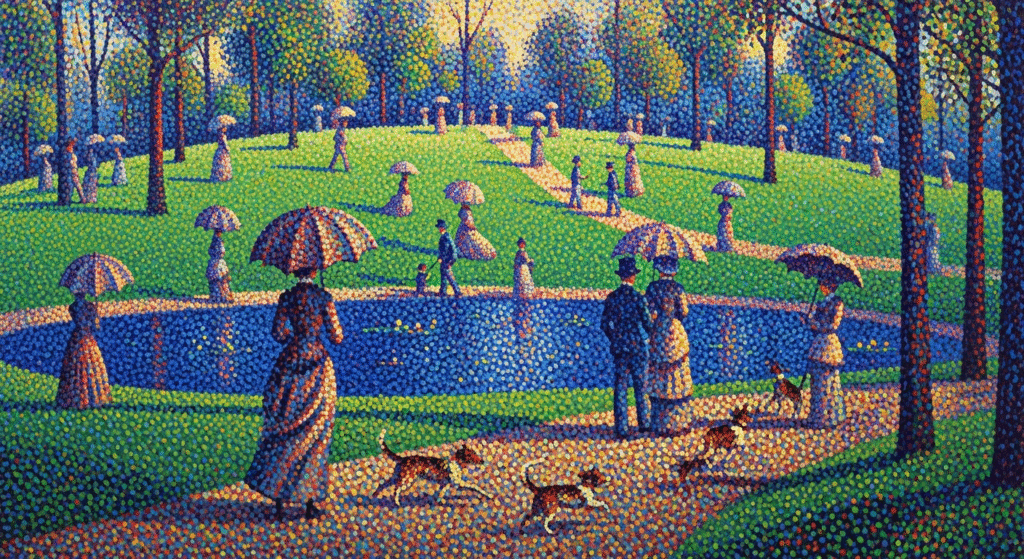
Georges Seurat is undoubtedly the most prominent figure here. His iconic painting, A Sunday Afternoon on the Island of La Grande Jatte, is arguably the most famous example, demonstrating how countless small dots can create grand, cohesive scenes. If you want to learn more about the master himself, check out our guide on Georges Seurat: Pointillism Master.
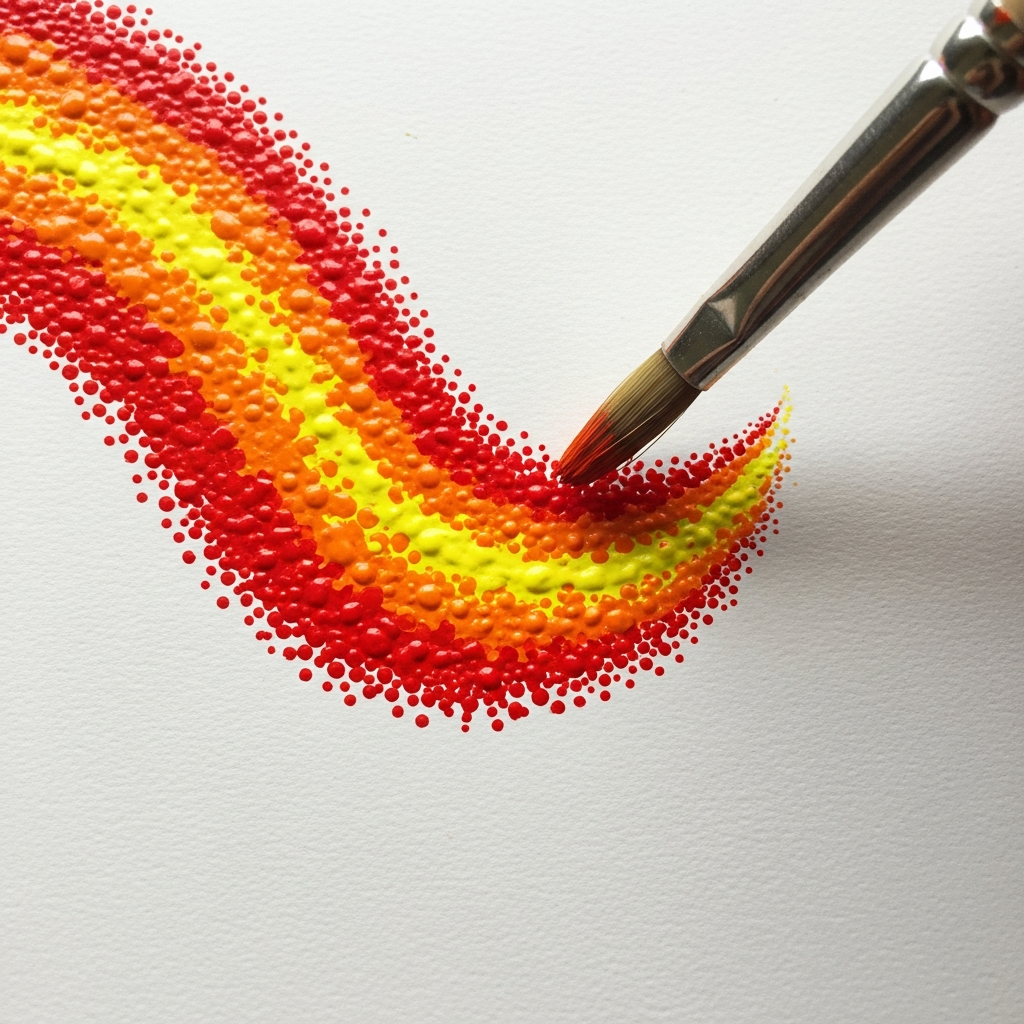
The core technique involves applying small, distinct dots or dabs of pure color to a surface. The magic happens when these dots are placed close together; your eye blends them from a distance, creating new colors and a sense of shimmer. This is called optical mixing. For example, placing red and yellow dots next to each other makes the viewer see orange. This relies heavily on understanding color theory basics, which is essential for any artist master this style.
Pointillism vs. Stippling
You might hear the word “stippling” thrown around. While similar, they aren’t exactly the same. Stippling usually refers to using dots of a single color (usually black ink) to create shading and texture. Pointillism is specifically about using color dots to build an image.
Pointillism for Beginners: Fun & Easy Starter Projects
Starting your pointillism journey doesn’t have to be intimidating. Simple projects are a fantastic way to grasp the technique without getting overwhelmed by millions of dots.
1. Monochromatic Fruit
Consider creating a basic still life object, like an apple or a simple vase. Start with just one color (monochromatic). Use markers or pens. Place dots closer together for shadows and further apart for highlights. This teaches you about value and density before you worry about complex color mixing.
2. Silhouette Sunset
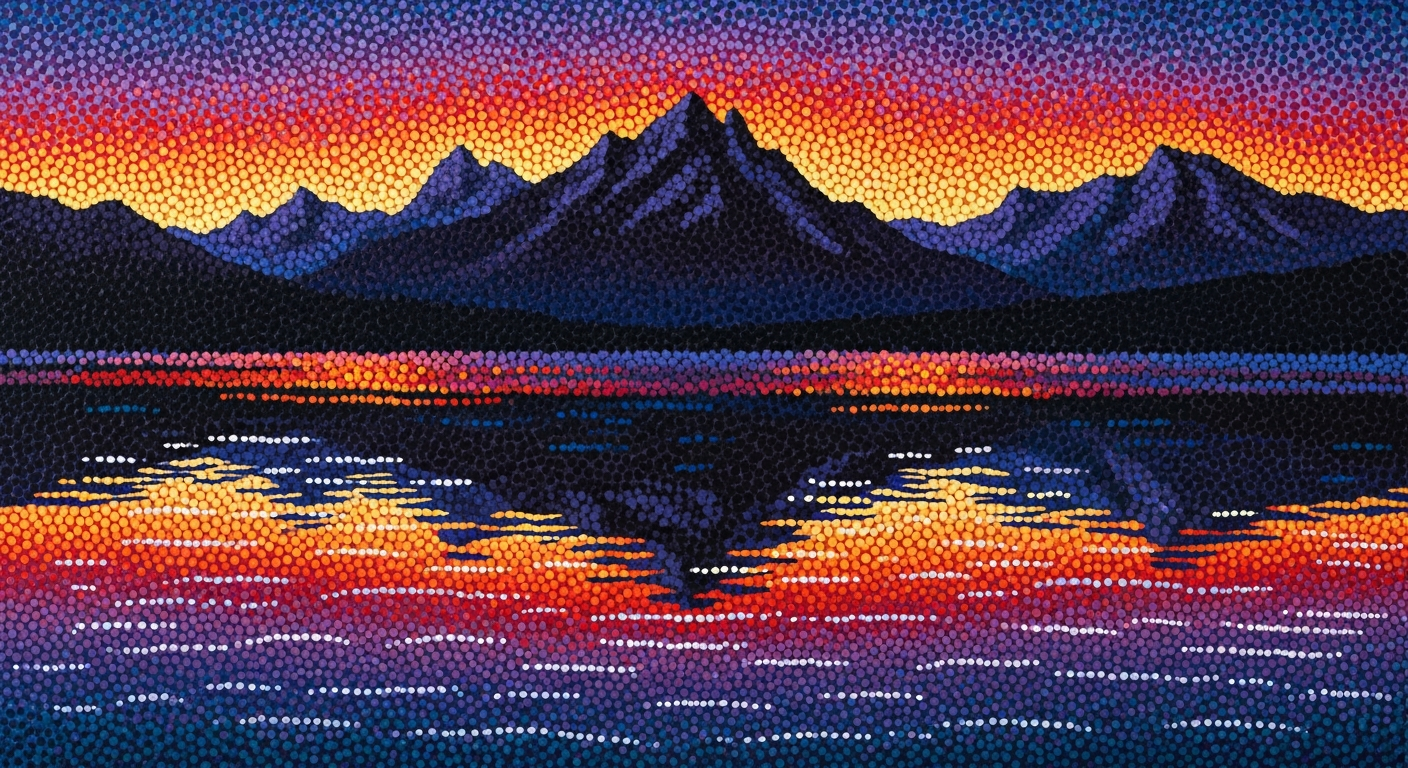
Another popular beginner idea is to recreate a simple silhouette, such as a tree against a sunset. Draw a solid black tree shape (or use black dots), and then fill the sky with dots of warm colors like yellow, orange, and red. This is one of those easy canvas art ideas that looks professional but is actually quite forgiving.
3. The “Pixel” Character
Think of video games! Old video games use pixels, which are basically square dots. Draw a favorite cartoon character using a grid and fill each square with dots of color. This is a great way to introduce pointillism for kids or students who love gaming.
“The anarchist painter is not the one who will create anarchist pictures, but the one who will fight with all his individuality against official conventions.”
Paul Signac
Advanced Pointillism: Challenging Projects for Experienced Artists
For those who have mastered the basics, advanced pointillism projects offer exciting opportunities to explore complex compositions and detailed effects.
4. Complex Landscapes
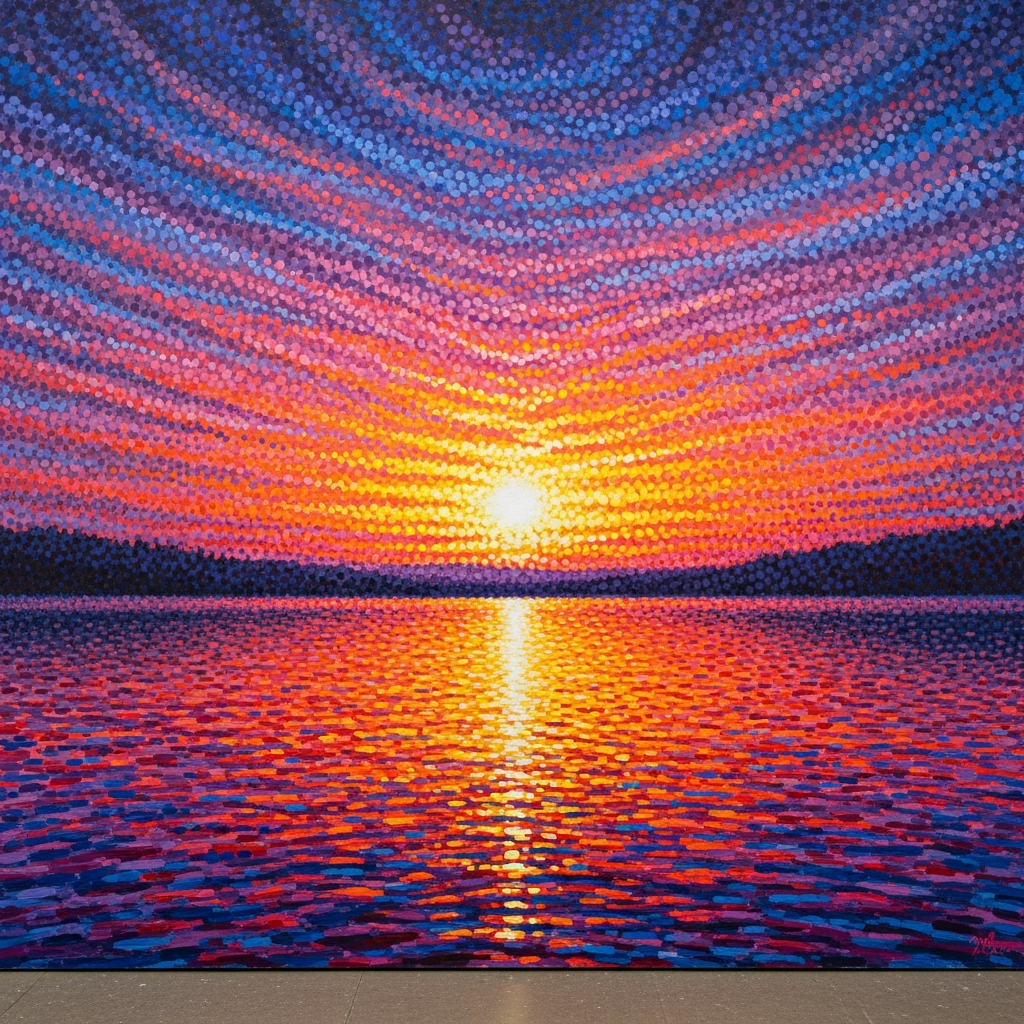
Tackle intricate landscapes, focusing on subtle shading and capturing reflections in water. You might look at realistic landscape painting guides for composition tips, but render them entirely in dots. The challenge here is patience; a small landscape can take weeks!
5. Pointillist Portraits
Portraits are incredibly difficult in pointillism because the human eye is very sensitive to weird shapes in faces. Use very fine dots to create smooth transitions in skin tone. Look at the work of Paul Signac or Vincent van Gogh’s self-portraits (he dabbled in the style!) for inspiration. You can see how even famous Van Gogh paintings used short dashes and dots to create movement.
6. Chiaroscuro Effects
Experiment with strong contrasts between light and dark (chiaroscuro). Imagine a candlelit scene where the dots fade from bright white/yellow into deep, dark blues and purples (avoiding pure black for more vibrancy).
15 Easy Pointillism Art Ideas
Nature & Landscapes
- Red Apple: Create form using dense red dots for shadows.
- Sunset Gradient: Blend yellow into orange, then red, then purple.
- Autumn Tree: Brown trunk with sparse orange and red leaves.
- Daisy: Yellow center dots surrounded by white petal outlines.
- Crescent Moon: Yellow shape glowing against a dark, dotted sky.
Animals & Objects
- Goldfish: Orange dots clustered tightly for scales, lighter for fins.
- Hot Air Balloon: Colorful stripes created with varying dot density.
- Silhouette Cat: Solid black dots forming a cat against white.
- Butterfly: Symmetrical wings using bright, contrasting dot colors.
- Mushroom: Red cap with white spots, shaded with brown.
Abstract & Shapes
- Fading Heart: Red heart fading from dark center to light edges.
- Ocean Waves: Swirling patterns using three distinct shades of blue.
- Geometric Cube: Use density to define the three visible sides.
- Rainbow: Arched lines of primary colors placed side-by-side.
- Umbrella: Colorful canopy with blue rain dots falling vertically.
Pointillism Tools and Their Effects
Your choice of tool changes the “vibe” of the artwork. This table compares common tools used in pointillism art to help you choose the right instrument for your vision. For a broader look at what you might need, check our guide to painting supplies.
| Tool Type | Best For | Effect Achieved | Skill Level |
|---|---|---|---|
| Fine-Tip Paint Brushes | Traditional Painting, Detail Work | Precise, controlled dots; smooth transitions | Intermediate to Advanced |
| Cotton Swabs (Q-tips) | Large Areas, Blending | Softer, less defined dots; good for background washes | Beginner |
| Markers/Felt-Tip Pens | Quick Sketches, Graphic Designs | Uniform, crisp dots; bold outlines | Beginner to Intermediate |
| Stylus/Dotting Tools | Mandala Art, Consistent Dot Size | Perfectly round, uniform dots; intricate patterns | Intermediate |
| Toothpicks/Dowel Rods | Very Fine Details, Textures | Tiny, delicate dots; unique textures | Intermediate to Advanced |
Modern Twists: Digital Pointillism
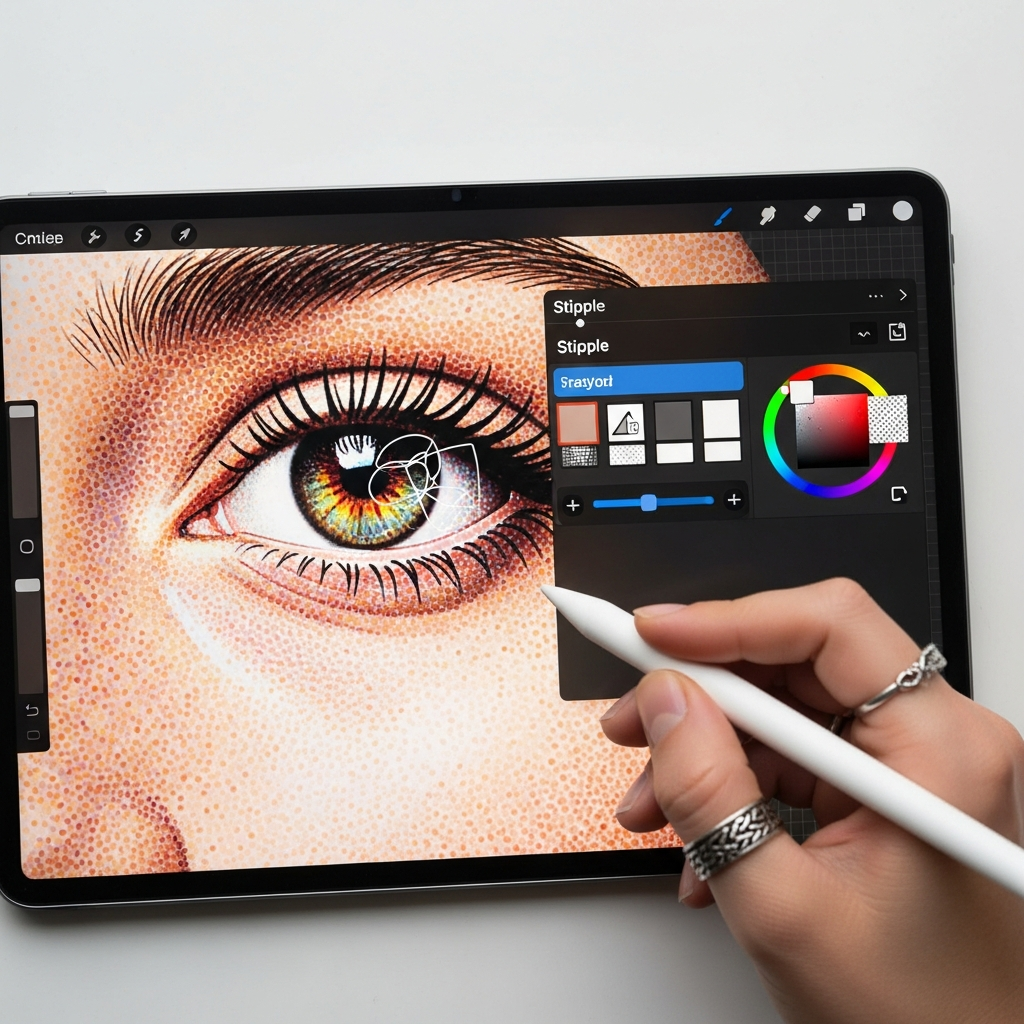
Can I do pointillism digitally? Absolutely! In fact, digital art is perfect for this. Software like Adobe Photoshop, Procreate, or Clip Studio Paint allows you to use “dot brushes” or stippling tools. You can create layers, which makes it easier to correct mistakes—no need to paint over a stray dot!
Digital pointillism opens new avenues for precision. You can zoom in 500% to place dots with pixel-perfect accuracy. If you are new to the medium, read our step-by-step guide to creating your first digital artwork.
Inspired by the Masters: Iconic Pointillist Artists
No exploration of pointillism would be complete without acknowledging the visionaries who defined the movement.
- Georges Seurat: His scientific approach to color and composition set the standard for Neo-Impressionism.
- Paul Signac: A close friend of Seurat, he helped define the theory. His work often used slightly larger, mosaic-like square dashes.
- Post-Impressionists: Many artists like Van Gogh and Camille Pissarro adopted elements of the style. To understand the wider context of this era, exploring Post-Impressionist artists is highly recommended.
FAQs: Pointillism art ideas
What is the main difference between Pointillism and Impressionism?
While both used “broken color,” Impressionists used visible, sweeping brushstrokes to capture fleeting light and emotion. Pointillists used tiny, distinct dots and a scientific approach to achieve optical blending and greater control. You can view a list of Impressionist artists to compare the styles yourself.
What materials do I need to start pointillism?
You can start with basic materials like paper, pencils, and colored markers. For painting, you’ll need acrylics (fast-drying is good for dots), fine-tipped brushes, and a canvas.
How long does a pointillism painting take to complete?
It is known for being very time-consuming! A small piece might take a few hours, while a large, complex artwork can take weeks or even months. Seurat took two years to paint La Grande Jatte!
Is Pointillism still popular today?
Yes! While the original movement was short-lived, the technique influences modern graphic design, illustration, and even tattoo art (dot work). Artists today still use pointillism techniques to create stunning, vibrating images.
Conclusion: Your Journey into the World of Dots
From its scientific origins to its vibrant visual impact, Pointillism offers a captivating way to create art. Whether you’re just starting with simple dotted shapes or tackling complex, detailed landscapes, the joy of watching individual dots merge into a cohesive image is truly rewarding.
We hope these pointillism art ideas have sparked your imagination. Don’t be afraid to pick up your brush (or cotton swab!) and explore the endless possibilities of this remarkable technique. Remember, it requires patience, but the result is a luminous masterpiece that literally vibrates with color.
YouTube Resource:
Citations:
- The Art Story: Pointillism – https://www.theartstory.org/movement/pointillism/
- Metropolitan Museum of Art: Neo-Impressionism and the Circle of Paul Signac – https://www.metmuseum.org/toah/hd/neoimp/hd_neoimp.htm
- Wikipedia: Pointillism – https://en.wikipedia.org/wiki/Pointillism