Have you ever gazed at a pastel painting and marvelled at its incredible depth, the richness of its colours, and its almost touchable texture? The secret often lies in a fundamental skill: layering. For those new to this vibrant medium, understanding pastel layering techniques for beginners is the key to transforming flat sketches into dynamic, breathtaking works of art. It’s the bridge between simply putting colour on paper and truly painting with pastels. This guide will demystify the process, showing you how to build up colours, create realistic depth, and give your artwork a professional, finished look that captures the eye and imagination.
Key Takeaways: Mastering Pastel Layers
- What is Layering? It’s the process of building up multiple coats of pastel to create depth, mix colours, and add texture.
- The Golden Rule: Work from hard to soft pastels. Start with harder pastels (like pencils or hard sticks) for initial layers and finish with soft pastels for bold, final marks.
- Paper is Paramount: The “tooth” or texture of your paper is crucial. Sanded or textured pastel paper holds more layers than smooth paper.
- A Light Touch Wins: Apply your initial layers with very light pressure. This preserves the paper’s tooth, allowing you to add many more layers on top.
- Blending and Building: You can blend layers together to create smooth transitions or scumble (lightly drag) colours over each other for a textured effect.
- Fixative is Your Friend: A “workable” fixative can be used sparingly between layers to add more tooth and secure the pigment, allowing for even more layering.
What is Pastel Layering and Why Does It Matter?
Imagine you’re trying to paint a red apple. If you just grab a single red pastel and colour it in, it will likely look flat and cartoonish. A real apple has a symphony of colours—subtle yellows where the light hits, deep purples in the shadows, and a range of reds in between. Pastel layering is the technique you use to capture this complexity. It involves applying colours in successive coats, one on top of another.
Why is this so important?
- Creates Depth and Realism: Layering allows you to build up shadows and highlights, making your subjects look three-dimensional and realistic.
- Optical Colour Mixing: Instead of mixing colours on a palette, you mix them directly on the paper. A layer of blue scumbled over a layer of yellow creates a vibrant, textured green that’s far more interesting than a pre-mixed green stick.
- Rich, Complex Colour: Layering creates a visual vibration and richness that you can’t achieve with a single coat of colour. The underlying colours peek through, adding nuance and life to your work.
- Adds Texture: The physical build-up of pastel pigment adds a tangible texture to the artwork, a quality that is unique to the medium.
To truly appreciate the foundation this technique builds upon, it’s helpful to have a grasp of the basics. If you’re just starting, exploring a simple guide to pastel painting for beginners can provide that essential groundwork before you dive deep into layering.
Gathering Your Tools for Layering Success
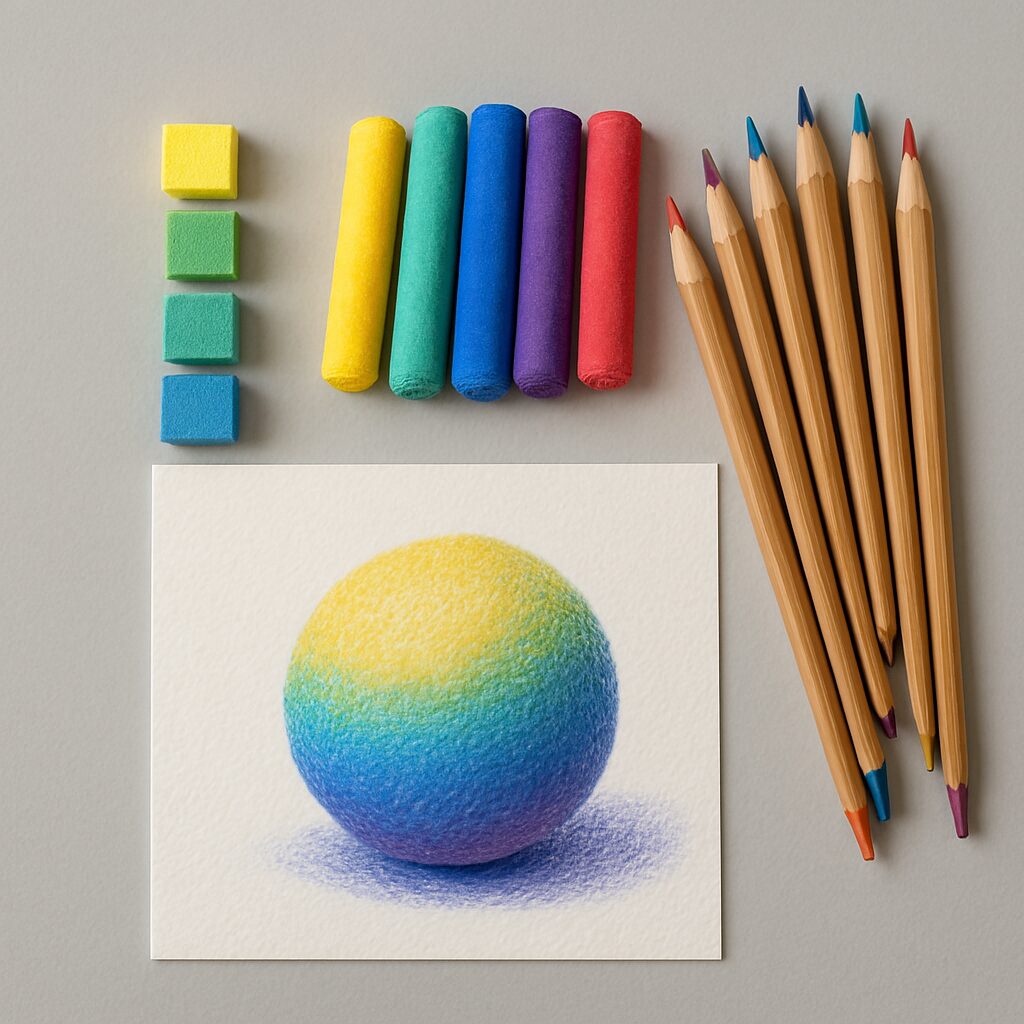
Before you start, having the right supplies is crucial. Not all pastels and papers are created equal when it comes to layering. Think of it like building a house—you need a strong foundation and the right materials for each stage of construction. For a comprehensive look at what artists need, our essential guide to painting supplies is a great resource. For now, let’s focus on what you’ll need for layering pastels.
- Pastels: You’ll ideally want a range of pastels with different hardness levels.
- Pastel Pencils & Hard Pastels: These are perfect for your initial sketch and the first few layers. They have more binder and less pigment, so they don’t fill the tooth of the paper as quickly.
- Soft Pastels: These are pigment-rich and buttery. They are best for the middle and final layers, as they go on thick and blend beautifully. Using them too early will clog your paper.
- Oil Pastels: These have a waxy, oil-based binder and behave differently. You can still layer them, but they blend by being pushed around on the surface. You can layer oil pastels over a light base of soft pastels, but not the other way around.
- Paper: This is perhaps the most critical element for layering. You need paper with “tooth”—a textured surface that grabs and holds the pastel dust.
- Sanded Paper/Pastel Board: This is the best choice. It has a gritty surface, like very fine sandpaper (e.g., UArt, Canson Mi-Teintes Touch, or Clairefontaine Pastelmat). It can hold dozens of layers.
- Textured Pastel Paper: Papers like Canson Mi-Teintes (the side with the honeycomb texture) or Ingres paper have a lighter tooth. They are good for lighter work but won’t hold as many layers as sanded paper.
- Workable Fixative: This is a light spray that can be applied between layers. It provides a new, slightly toothy surface over a saturated area, allowing you to add more layers. Use it in a well-ventilated space and spray lightly from a distance to avoid creating dark spots.
| Pastel Type | Role in Layering | Best Used For | Pro Tip |
| Hard Pastels | First Layers, Underpainting | Sketching the composition, blocking in large areas of initial colour. | Their sharp edges are great for creating defined lines at the start. |
| Pastel Pencils | Initial Sketch, Fine Details | Drawing precise outlines, adding details like whiskers or eyelashes. | Keep them sharp for the best results in your final layers. |
| Soft Pastels | Middle and Final Layers | Building up rich colour, creating soft blends, adding bold highlights. | These are your “power” pastels for finishing the piece. Use them last! |
| Oil Pastels | Building Texture | Creating thick, impasto-like effects, expressive marks. | Can be blended with a solvent or scratched into (sgraffito). |
Your Step-by-Step Guide to Beautiful Pastel Layering
Ready to get some dust on your hands? Follow these steps to build layers like a pro.
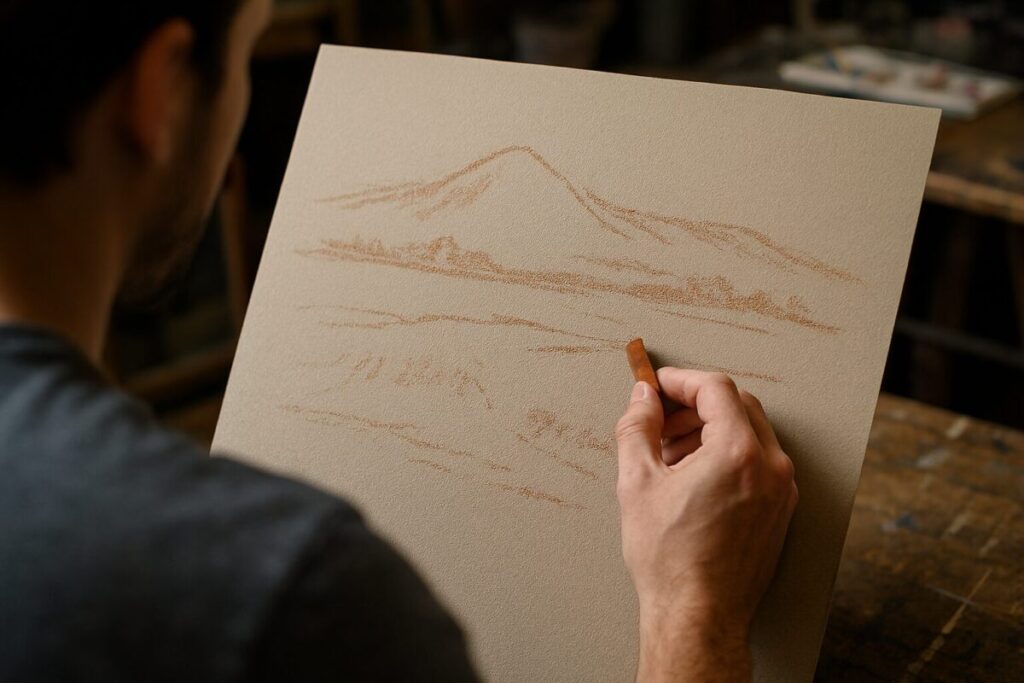
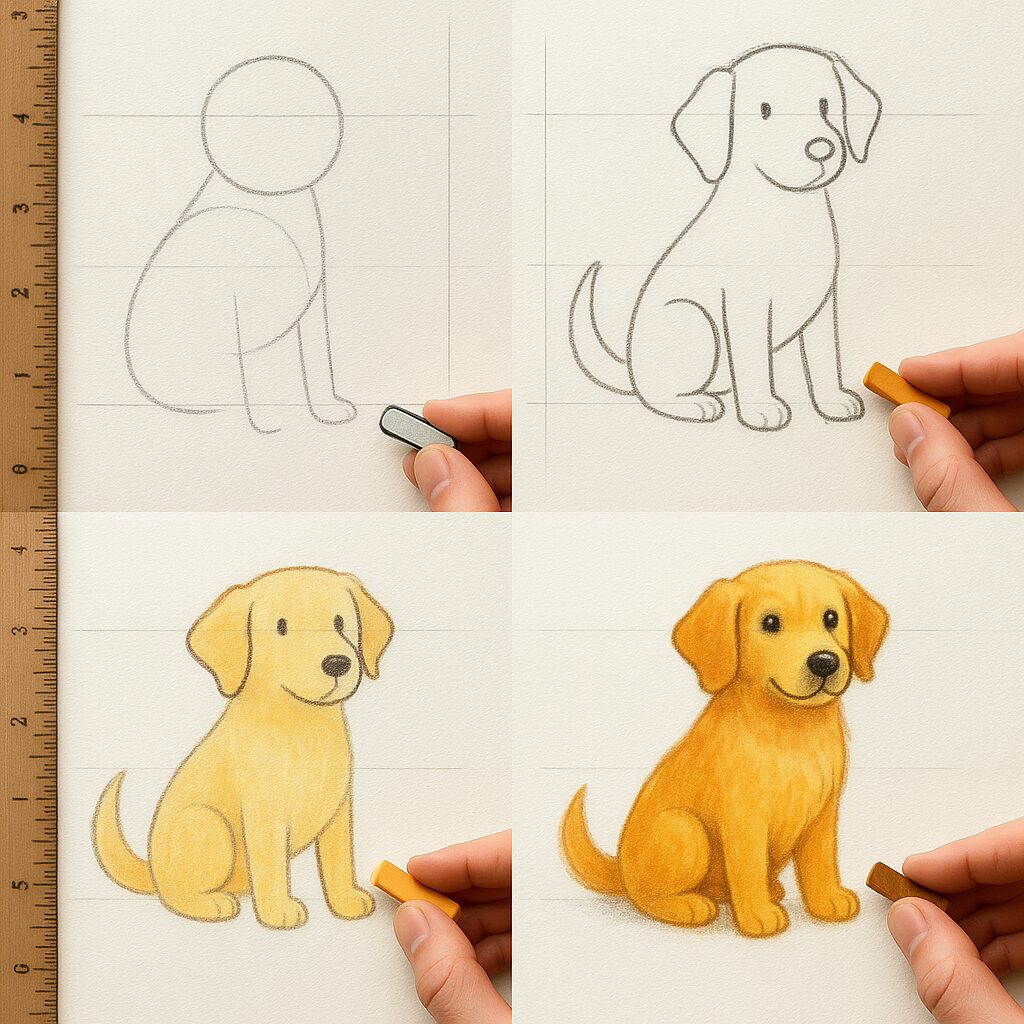
Step 1: The Initial Sketch (The Foundation)
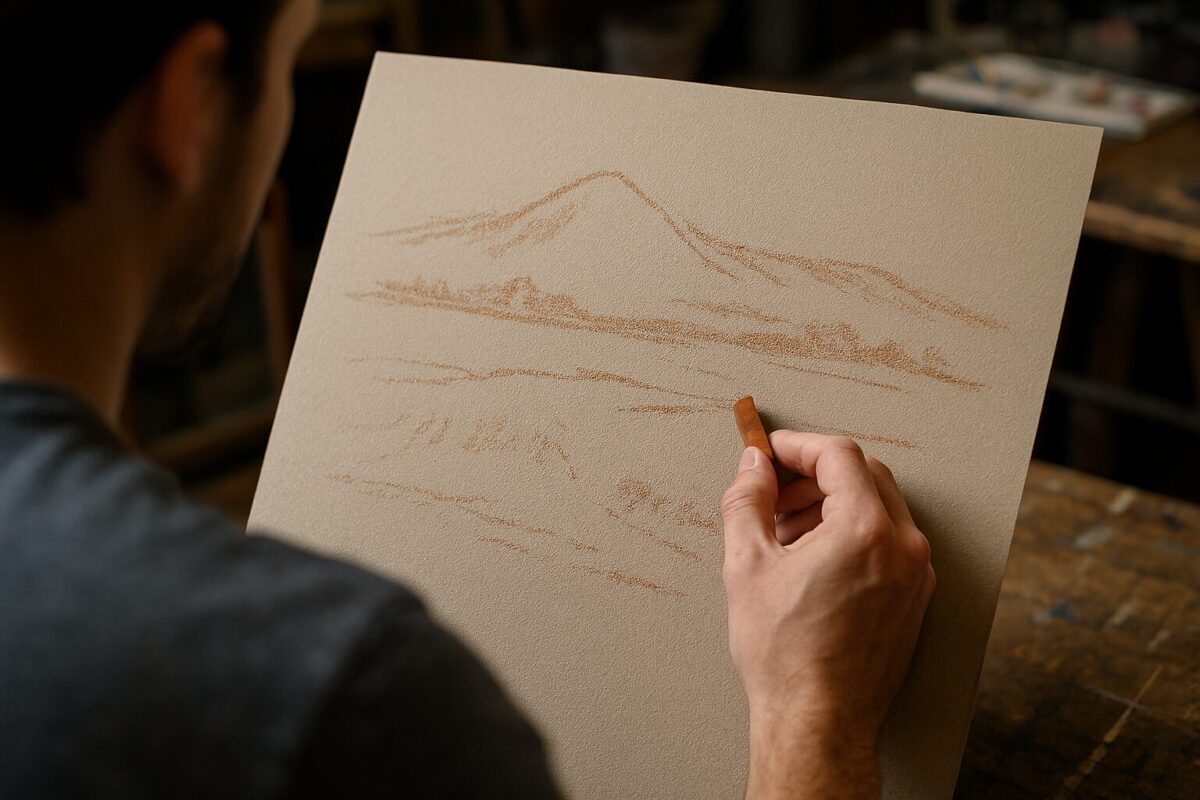
Start with a pastel pencil or a hard pastel stick in a light, neutral colour. Sketch your composition onto your textured paper. Keep your lines light! Heavy graphite or dark pastel lines at this stage can become muddy and hard to cover later. The goal is to create a simple roadmap for your painting.
Step 2: Blocking In the First Layer (A Light Touch is Key!)
Using the side of a hard pastel stick, lightly block in the main colour shapes of your subject and background. Don’t worry about details. The key here is light pressure. You should still see plenty of the paper’s colour and texture showing through. This thin initial layer is often called an “underpainting.” It establishes your colour harmony and value structure (the lights and darks).
Step 3: Building the Mid-Tones (From Hard to Soft)
Now, begin building on your foundation. Switch to slightly softer pastels. Continue to use a light touch as you add the next layer of colour. Follow the “hard over soft” rule. You can gently blend this layer into the one below it with your finger or a blending stump. As you add more layers, you can gradually increase the pressure. This is where you start to refine the shapes and colours, moving from general to specific. For a deep dive into blending, check out our guide to mastering the blending painting technique.
“Art is not what you see, but what you make others see.”
Edgar Degas
This quote by Degas, a master of pastel, perfectly captures the magic of layering. You aren’t just copying a subject; you’re using layers of colour to guide the viewer’s eye and evoke a feeling.
Step 4: Adding Highlights and Details (The Final Flourish)
This is the final and most exciting stage! Grab your softest, most pigment-rich pastels and your sharpest pastel pencils. This is where you add your brightest highlights and your darkest darks. Because you have preserved the tooth of the paper by working from hard to soft and using a light touch, this final layer of soft pastel will glide on beautifully, creating bold, vibrant marks that sit right on top. Use the sharp point of a pastel pencil to add those final crisp details that make your painting pop. This is also where you can create bold, thick marks that add texture, similar in spirit to the Impasto technique.
Using Fixative to Extend Your Layers
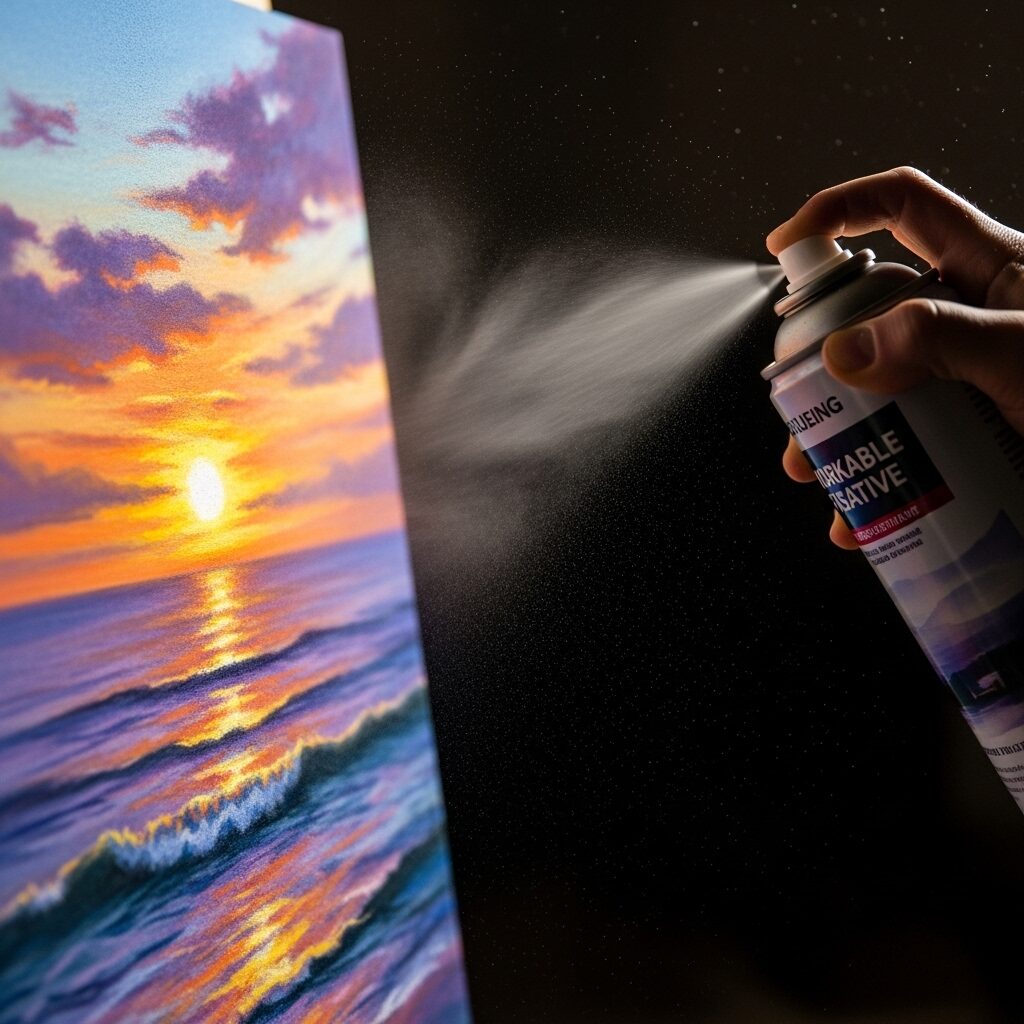
What happens when you’ve applied several layers and the pastel just won’t stick anymore? This means you’ve filled the tooth of the paper. This is where workable fixative comes in.
Take your artwork to a well-ventilated area and lightly spray it from about a foot away. A light, even mist is all you need. Let it dry completely (it only takes a few minutes). The fixative will bind the existing pastel dust to the paper and create a new, slightly toothy surface, allowing you to add more layers. Be warned, however: fixative can slightly darken your colours, so always use it sparingly and test it on a scrap piece first. This is different from a final fixative, which is meant to seal the finished painting. The final sealing process is an important step you can learn more about in our guide to framing and varnishing.
Common Layering Mistakes and How to Fix Them
Everyone makes mistakes! The good news is that pastels are very forgiving.
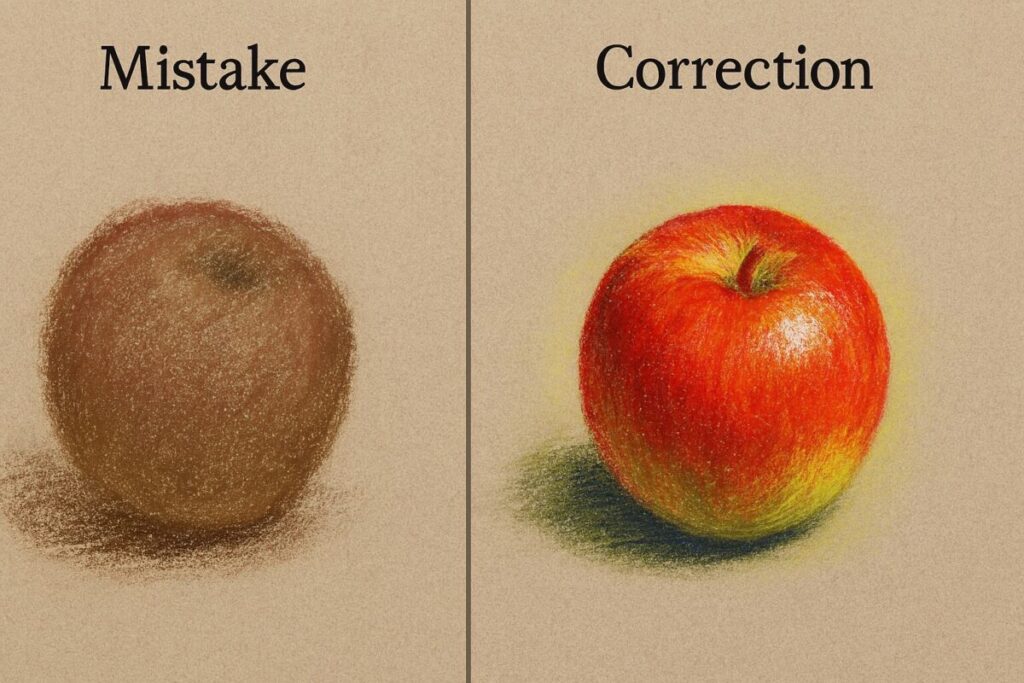
- Mistake 1: Using Soft Pastels Too Soon. This is the most common error. It clogs the paper’s tooth instantly, making it impossible to add more layers.
- The Fix: If it’s a small area, you might be able to gently lift some pigment with a kneaded eraser. For larger areas, it’s often a lesson for the next piece. Always remember: hard to soft.
- Mistake 2: Pressing Too Hard at the Beginning. This flattens the paper’s tooth and makes it slick.
- The Fix: You can try to revive the area with a light spray of workable fixative. Otherwise, embrace the “happy accident” and work with it.
- Mistake 3: Over-blending. Blending too much can turn your vibrant, separate layers into a dull, muddy mess.
- The Fix: Let the layers sit! You can often go back over a muddy area with a new, brighter layer of unblended pastel to bring it back to life. Or, if you need help salvaging your work, our general guide on fixing painting mistakes has some great universal tips.
Conclusion: Embrace the Layers
Learning pastel layering techniques for beginners is a journey of patience and practice. It’s about learning to trust the process, to build your painting from a whisper of colour to a final, confident shout. Don’t be afraid to experiment. See how many layers your paper can take. Play with different colour combinations. Every painting is a chance to learn and grow. So grab your pastels, embrace the dust, and start building your own vibrant, layered masterpieces.
Frequently Asked Questions (FAQs)
How many layers can you do with pastels? This depends almost entirely on your paper. On a smooth drawing paper, you might only get 2-3 layers. On a high-quality sanded paper or pastel board, you can apply 20, 30, or even more layers, especially if you use workable fixative between some of them.
Do you layer light or dark pastels first? Generally, you start by blocking in your mid-tones first. After that, a common approach is to establish your darks and then work towards your lights, saving the brightest highlights for the very last layer. This is because light colours will sit on top of darks more cleanly than the other way around, preventing muddying.
Should you use fixative between pastel layers? You can, but it’s not always necessary. Many artists only use it when they have filled the tooth of the paper but still want to add more layers. A light spray of workable fixative can restore the texture. However, it can alter the colours slightly, so it’s a tool to be used with intention, not on every single layer.
How do you keep pastels from smudging when layering? Work from top to bottom and, if you’re right-handed, from left to right (or the opposite if you’re left-handed). You can also rest your hand on a piece of glassine paper or plain copy paper placed over an area you’ve already worked on. Finally, using a light touch prevents excess dust that is more prone to smudging.
Citations
- The Sydney Art Store. “How To Layer Colors With Pastels?” https://www.google.com/search?q=thesydneyartstore.com.au, Accessed August 2, 2025.
- Irish Artmart. “The Delicate Beauty of Pastel Art: Blending and Layering Techniques.” irishartmart.ie, June 3, 2024.
- Ploeg, Sophie. “How to Paint with Soft Pastel.” sophieploeg.com, Accessed August 2, 2025.
- Art Pandemic. “Oil pastels vs soft pastels, and a review of Mungyo Gallery Artists’ Soft Oil Pastels.” artpandemic.blogspot.com, November 27, 2020.
- The Virtual Instructor. “Oil Pastels vs. Soft Pastels – A Comparison.” thevirtualinstructor.com, Accessed August 2, 2025.
- University of Glasgow. “Pastel and Fixative.” whistlerpastels.gla.ac.uk, Accessed August 2, 2025.