I often find a quiet discipline in medieval art that contrasts with my loose watercolors. We search museums for paintings with deep meaning, yet often overlook these ancient masterpieces. They weren’t decoration, but visual encyclopedias of spiritual truth. Every gold leaf and brushstroke unlocked secrets about the human condition. It reminds me that art is how we’ve always asked life’s biggest questions.
Key Insights: Why Medieval Paintings Carry Such Deep Meaning
- Art as Universal Language: Medieval painters created paintings with deep meaning that could speak to anyone, regardless of their ability to read or social status.
- Layers Upon Layers: Each element—from facial expressions to background details—contained multiple levels of meaning, making these works endlessly fascinating to explore.
- Emotional and Spiritual Depth: These artists mastered the art of conveying complex emotions and spiritual concepts through visual storytelling.
- Timeless Themes: Love, loss, redemption, mortality, and hope—the universal human experiences that make paintings with deep meaning resonate across centuries.
- Revolutionary Storytelling: Medieval illuminated manuscripts and frescoes pioneered narrative techniques that influenced storytelling for generations.
The Philosophy Behind Meaningful Art
To understand why medieval works rank among history’s most paintings with deep meaning, we must understand the worldview that created them. Medieval artists weren’t painting for art galleries or wealthy collectors—they were creating visual theology, psychology, and philosophy all rolled into one.
The medieval mind saw reality as layered. The physical world was just the surface; beneath lay spiritual truths, moral lessons, and cosmic principles. This is why a simple painting of a mother and child could simultaneously represent divine love, human tenderness, the relationship between heaven and earth, and the promise of redemption. Artists deliberately chose symbolism over realism because symbols could carry meaning that realistic representation simply couldn’t achieve.
This approach created paintings with deep meaning that function like visual poetry. Just as a poem can say more in twenty lines than a novel might in twenty pages, medieval painters compressed profound truths into single images that viewers could contemplate for a lifetime.
Decoding the Language of Meaningful Art
Medieval painters developed a sophisticated visual vocabulary that transformed ordinary objects into profound symbols. Understanding this language is key to appreciating these paintings with deep meaning:
| Symbol | Deep Meaning | Why It Resonates Today |
|---|---|---|
| The Rose | Divine love, earthly beauty, the fleeting nature of life | Still represents love and beauty, but with added poignancy about life’s brevity |
| The Hourglass | Time’s passage, life’s precious moments | Universal anxiety about time and mortality |
| The Mirror | Self-knowledge, vanity, truth vs. illusion | Modern struggles with identity and social media personas |
| The Labyrinth | Life’s journey, spiritual seeking | Contemporary search for meaning and purpose |
| The Tree | Growth, rootedness, the connection between heaven and earth | Environmental consciousness and spiritual grounding |
| The Bridge | Transition, connection, crossing from one state to another | Life changes, relationships, personal transformation |
The Emotional Architecture of Meaningful Paintings
What makes certain paintings with deep meaning so emotionally powerful? Medieval artists understood that true meaning comes not just from symbols, but from emotional architecture—the way visual elements work together to create feelings that transcend language.
The Science of Sacred Emotion: Medieval painters pioneered techniques that modern neuroscience now explains. They used specific color combinations to trigger emotional responses, positioned figures to create psychological tension, and employed light and shadow to guide viewers through emotional journeys. The result? Paintings with deep meaning that affect viewers on both conscious and subconscious levels.
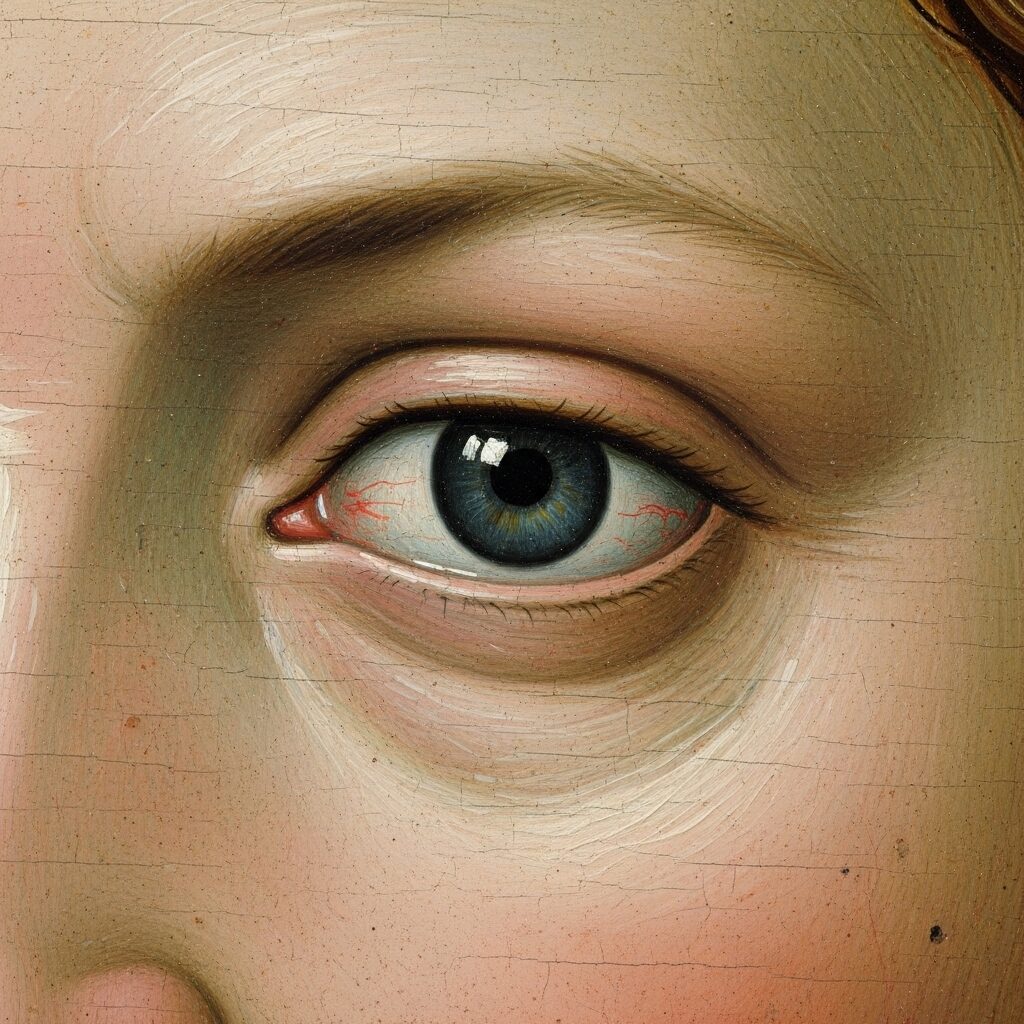
Consider how these artists portrayed human faces. Instead of perfect beauty, they showed raw human emotion—grief that makes your chest tighten, joy that makes you smile involuntarily, contemplation that makes you pause and think about your own life. This emotional honesty is what transforms a painted image into a profound human experience.
Why Medieval Art Looks “Different”—And Why It Matters
Many people find medieval paintings with deep meaning visually strange compared to later realistic art. But this “strangeness” is actually intentional sophistication. Medieval artists deliberately distorted proportions, elongated figures, and used unrealistic colors to create psychological and spiritual effects.
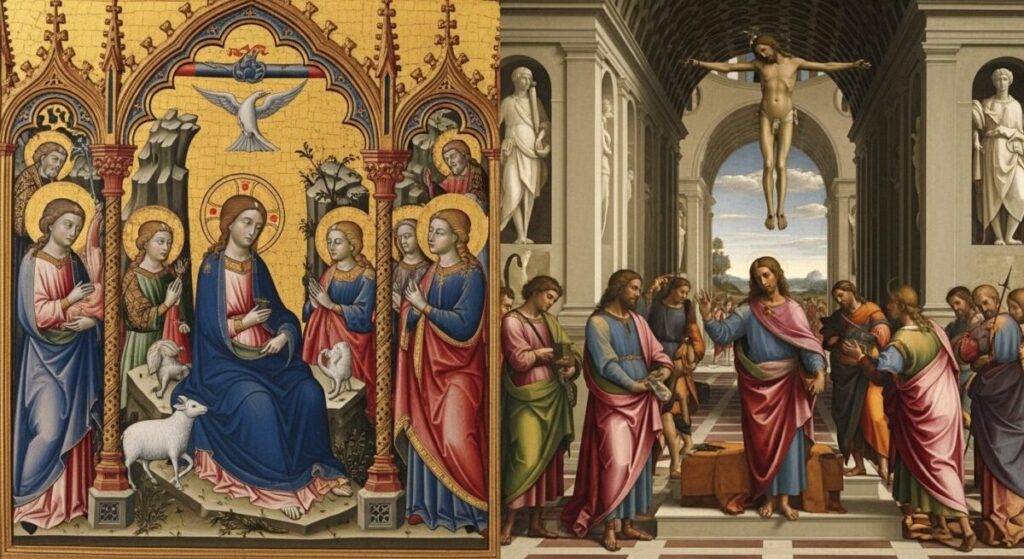
The Revolutionary Approach: While Renaissance artists would later focus on making paintings look like photographs, medieval artists were creating something more ambitious—paintings that felt like dreams, visions, and revelations. They understood that realistic representation often limits meaning, while symbolic representation can expand it infinitely.
This is why babies in medieval paintings often look like tiny wise men, why saints seem to glow with inner light, and why landscapes bend and curve in impossible ways. These aren’t artistic mistakes—they’re sophisticated techniques for creating paintings with deep meaning that operate on multiple levels of consciousness.
The Color Psychology of Meaningful Art
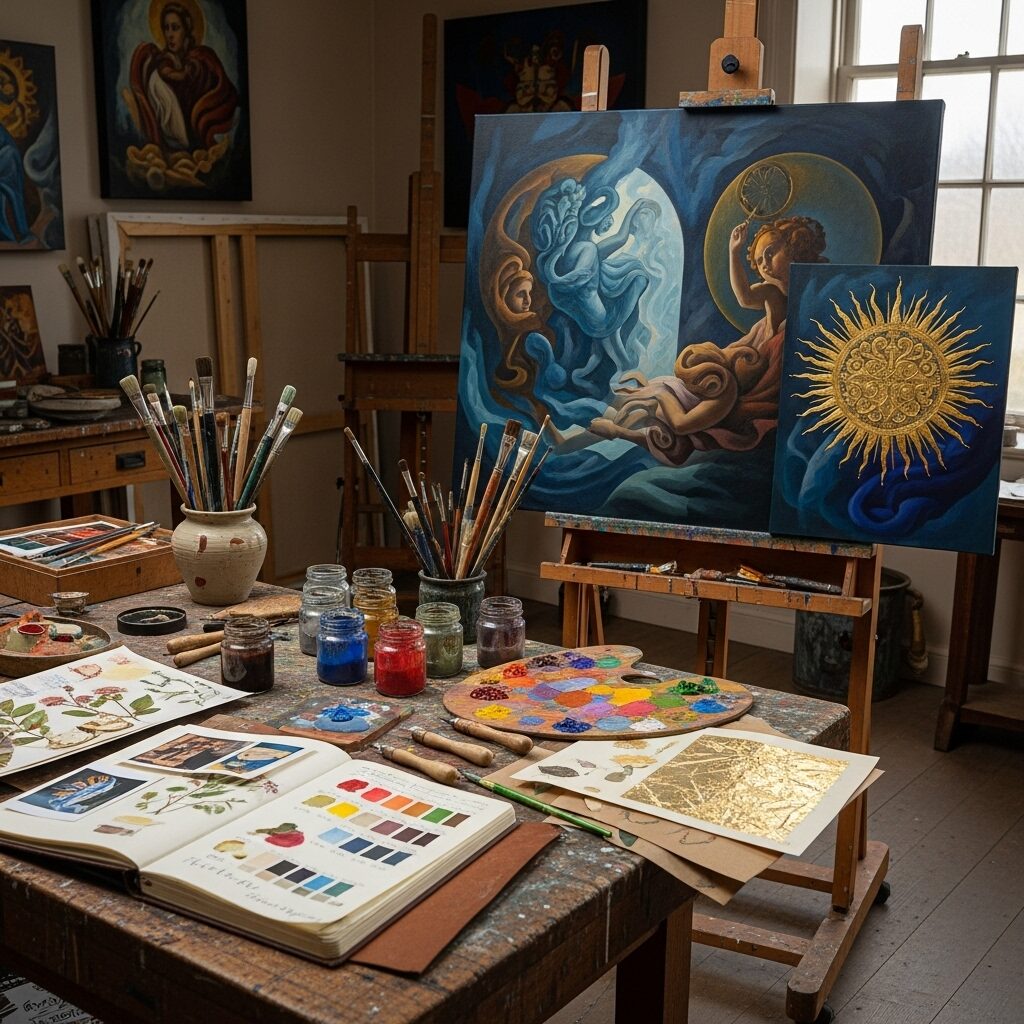
Medieval painters were master psychologists who understood how color affects human emotion and cognition. Their use of color in creating paintings with deep meaning was both systematic and revolutionary:
- Ultramarine Blue: Made from expensive lapis lazuli, this color represented not just divinity but the preciousness of truth itself. Its rarity made every blue passage a statement about what the painter considered most valuable.
- Vermillion Red: More than passion or blood, red represented the intensity of human experience—love, sacrifice, courage, and the full engagement with life that gives existence meaning.
- Gold Leaf: Beyond representing divine light, gold created a sense of timelessness, suggesting that the truths depicted transcend historical moment and speak to eternal human concerns.
- Deep Green: Symbolized renewal, growth, and the persistence of life through death—themes that make paintings with deep meaning so emotionally resonant.
Masterpieces That Changed How We See Art

Several medieval works stand as perfect examples of paintings with deep meaning that continue to affect viewers centuries after their creation:
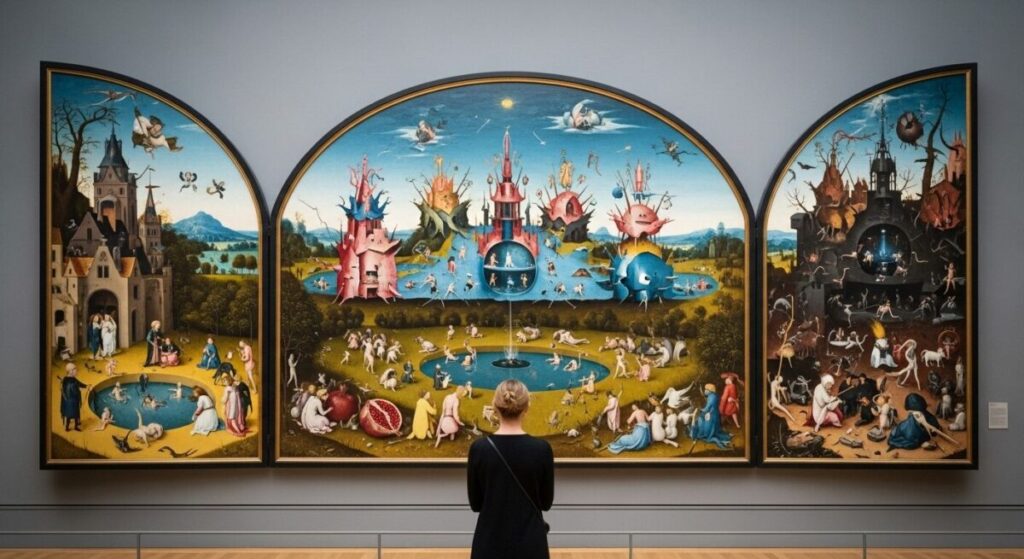
Hieronymus Bosch’s The Garden of Earthly Delights remains one of art history’s most profound meditations on human nature, desire, and consequence. This triptych functions like a visual novel, with each panel representing different stages of human experience. The left panel shows innocence, the center depicts indulgence, and the right portrays consequence. What makes it one of the greatest paintings with deep meaning is how it refuses simple moral judgments, instead presenting human complexity with both compassion and unflinching honesty.
The Wilton Diptych demonstrates how medieval artists could pack entire philosophical systems into portable artworks. This small painting explores themes of power, humility, earthly versus heavenly authority, and the relationship between political and spiritual leadership—themes that remain relevant today.

These works succeeded as paintings with deep meaning because they don’t just illustrate ideas—they embody them. Viewers don’t just look at these paintings; they experience philosophical and emotional journeys.
The Legacy: How Medieval Deep Meaning Influences Art Today
The medieval approach to creating paintings with deep meaning established principles that continue to influence meaningful art today:
Symbolic Density: The best contemporary paintings with deep meaning still use the medieval technique of layering multiple meanings into single images.
Emotional Authenticity: Modern artists creating paintings with deep meaning often return to the medieval emphasis on genuine emotion over surface beauty.
Universal Themes: The most powerful paintings with deep meaning today, like their medieval predecessors, address timeless human concerns rather than temporary trends.
Frequently Asked Questions About Paintings with Deep Meaning
Q: What makes a painting have deep meaning? A: Paintings with deep meaning typically combine emotional authenticity, symbolic richness, technical skill, and universal themes that speak to fundamental human experiences. They invite contemplation and reveal new layers of meaning over time.
Q: How can I learn to see deeper meaning in art? A: Start by spending more time with individual pieces. Look for symbols, consider the artist’s historical context, and pay attention to your emotional responses. Many paintings with deep meaning reward patient, repeated viewing.
Q: Why do medieval paintings often look unrealistic? A: Medieval artists prioritized meaning over realistic appearance. They understood that paintings with deep meaning often require symbolic rather than literal representation to convey complex truths.
Q: Are there modern paintings with deep meaning? A: Absolutely. Contemporary artists continue creating paintings with deep meaning by addressing current issues through the lens of timeless human experiences, often drawing inspiration from medieval symbolic techniques.
Q: How do I start collecting meaningful art? A: Focus on pieces that speak to you emotionally and intellectually. Paintings with deep meaning don’t have to be expensive or famous—they just need to offer genuine insight into human experience. Check out our guide on how to be an art collector for practical advice.
Citations Section
- London Art College. “How to Decode Symbols in Medieval and Renaissance Art.”
- Number Analytics. “Decoding Symbolism in Art History.”
- Mavenart.com. “Medieval Art: History, Characteristics, and Examples.”
- Invaluable.com. “Decoding the Secret Symbolism in Famous Paintings.”
- Royal Museums Greenwich. “Symbolism in portraits of Queen Elizabeth I.”
- Artistcloseup.com. “Explaining Weird Mediaeval Art.”
Discover the world’s most profound paintings with deep meaning from medieval masters. Learn how ancient artists created visual masterpieces that continue to speak to modern souls through powerful symbolism and emotional truth.