In today’s fast-paced world, finding moments of calm can feel impossible. Between work deadlines, digital notifications, and daily responsibilities, stress accumulates quietly but powerfully. What if the solution wasn’t another app or productivity hack — but a brush, some paint, and five minutes of intentional creativity?
Painting for stress relief isn’t about creating masterpieces. It’s about using the rhythmic, sensory experience of art-making to quiet a racing mind, process emotions, and reconnect with the present moment. Whether you’ve never held a paintbrush or you’re returning to art after years away, this guide will show you how to start a simple, sustainable practice that supports your mental wellbeing.
Why Painting Helps Reduce Stress (The Science-Backed Benefits)
Before diving into techniques, it helps to understand why painting works as a stress-relief tool:
- Activates the relaxation response: Repetitive brushstrokes and focused attention lower cortisol levels and shift your nervous system from “fight-or-flight” to “rest-and-digest.”
- Encourages mindfulness: Painting anchors you in the present—observing color, texture, and movement—which interrupts anxious thought loops.
- Provides non-verbal emotional release: Sometimes words aren’t enough. Color and form let you express feelings that are hard to articulate.
- Builds a sense of accomplishment: Completing even a small painting boosts dopamine, reinforcing positive mood and self-efficacy.
- Creates a digital detox zone: Stepping away from screens to work with physical materials gives your brain a necessary reset.
Research in art therapy consistently shows that creative expression reduces symptoms of anxiety and depression. You don’t need clinical training to benefit—just willingness to begin.
Getting Started: Your Minimal Stress-Relief Painting Setup
You don’t need a studio or expensive supplies. In fact, simplicity reduces decision fatigue and helps you start faster.
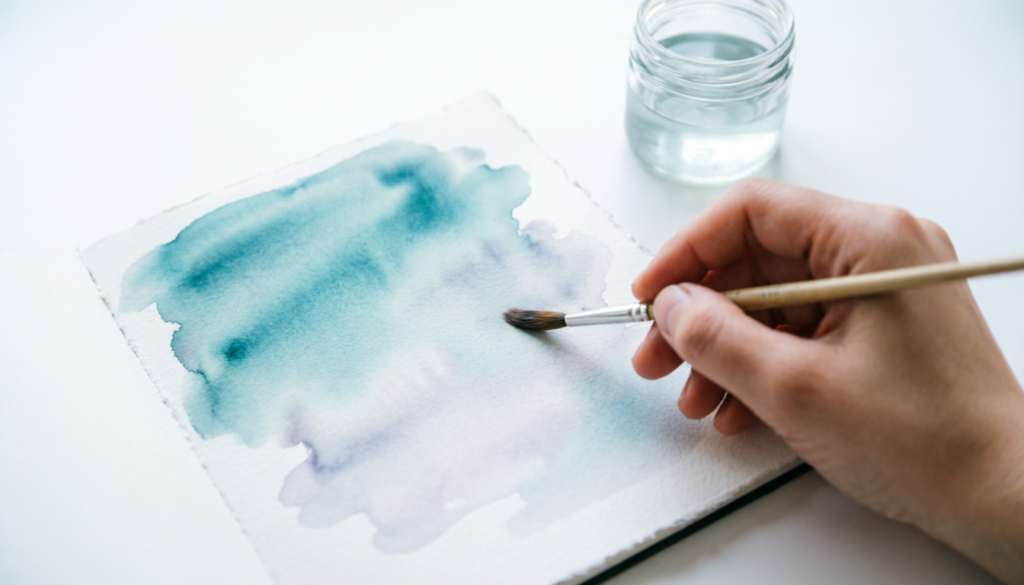
Essential Supplies for Calming Painting Sessions:
- One surface: A small watercolor pad, mixed-media sketchbook, or even recycled cardboard
- One medium: Start with what feels least intimidating—watercolors for flow, acrylics for coverage, or soft pastels for tactile comfort
- Two to three colors: Limiting your palette reduces overwhelm. Try calming combinations like blue + white, or earth tones
- One brush or tool: A medium round brush, a sponge, or even your finger
- Water + paper towel: For cleanup and blending
Pro Tip: Keep your supplies visible and accessible. A dedicated “calm corner” with your materials ready removes friction when stress hits.
5 Beginner-Friendly Painting Techniques for Instant Calm
These approaches prioritize process over product. There are no mistakes—only exploration.
1. Breath-Stroke Painting
Sync your brushstrokes with your breath to create a moving meditation:
- Inhale slowly while lifting your brush
- Exhale gently as you lay down a stroke
- Repeat for 5–10 minutes, letting the rhythm guide you
- Use a single color to deepen focus
This technique combines breathwork with creative action, amplifying relaxation.
2. Color Washing for Emotional Release
Let color express what words cannot:
- Wet your paper lightly with clean water
- Choose a color that matches your current emotion (blue for sadness, yellow for hope, green for balance)
- Let the pigment flow freely—no shaping, no controlling
- Add a second color if it feels right, watching how they blend
This method is especially helpful for processing complex or overwhelming feelings.
3. Simple Shape Repetition
Repetition soothes the nervous system. Try painting:
- Rows of soft circles
- Gentle waves or hills
- Abstract leaf or petal shapes
- Dots in a gradient pattern
Focus on the motion, not perfection. Let your hand move intuitively.
4. Nature-Inspired Mini Landscapes
Connect with calming natural imagery without pressure:
- Paint a simple horizon line (sky above, earth below)
- Add one element: a sun, a tree silhouette, a distant mountain
- Use soft blends for sky; keep details minimal
This taps into biophilia—our innate connection to nature—which research shows lowers stress.
5. Gratitude Color Journaling
Combine reflection with creation:
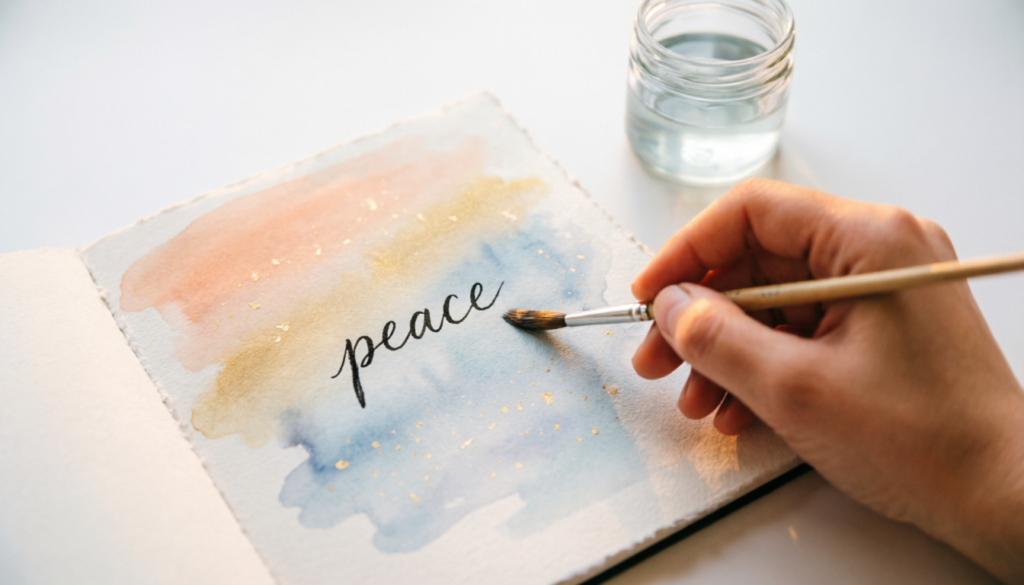
- Write one word you’re grateful for (e.g., “peace,” “connection,” “rest”)
- Paint around it using colors that evoke that feeling
- Let the background flow freely; keep the word legible but soft
This practice reinforces positive neural pathways while engaging creativity.
Creating a Sustainable Painting-for-Calm Routine
Consistency matters more than duration. Aim for micro-sessions:
- Start small: 5–10 minutes, 2–3 times per week
- Pair with existing habits: Paint after morning coffee, during lunch breaks, or before bedtime
- Remove judgment: Cover your work afterward if it helps you stay focused on process
- Track how you feel: Jot one word post-session (e.g., “lighter,” “centered,” “hopeful”) to reinforce benefits
Remember: The goal isn’t a gallery-worthy piece. It’s the nervous system reset that happens while you create.
Troubleshooting Common Beginner Concerns
“I’m not artistic.”
Stress-relief painting isn’t about skill. It’s about sensation. If you can hold a brush and make a mark, you can do this.
“I don’t have time.”
Five minutes counts. Keep supplies ready so you can start instantly when a stressful moment arises.
“I feel silly or self-critical.”
Try painting with your non-dominant hand. It lowers expectations and often sparks playful curiosity.
“My mind won’t quiet down.”
Start with breath-stroke painting (above). The physical rhythm helps anchor a wandering mind.
When to Seek Additional Support
While painting is a powerful self-care tool, it complements—not replaces—professional mental health care. If stress, anxiety, or low mood significantly impacts your daily life, please reach out to a licensed therapist or counselor. Many art therapists integrate painting techniques into clinical practice for deeper support.
Frequently Asked Questions
Q: What’s the best paint for stress relief?
A: There’s no single “best.” Watercolors encourage flow and acceptance; acrylics offer control and coverage; pastels provide tactile comfort. Choose what feels inviting.
Q: Do I need to clean up right away?
A: Not necessarily. Sometimes leaving your setup visible invites you to return. Just cover wet work to protect it.
Q: Can I paint digitally for stress relief?
A: Yes—if screens don’t increase your stress. However, many find the tactile nature of physical materials more grounding.
Q: How do I know if it’s working?
A: Notice subtle shifts: slower breathing, softer shoulders, a quieted inner critic. Benefits accumulate over time.
Final Thought: Your Brush Is a Tool for Peace
You don’t need permission to create. You don’t need talent. You only need a willingness to show up for yourself, one gentle stroke at a time. In a world that constantly demands more, painting for stress relief is a quiet act of rebellion—a declaration that your peace matters.
Start small. Be kind to yourself. Let the colors speak when words fall short. Your calm is worth the brushstroke.
Ready to deepen your practice? Explore our guides on watercolor techniques for beginners or discover how color theory basics can enhance your emotional expression through art. For more on creativity and wellbeing, visit our painting and mental health resources.