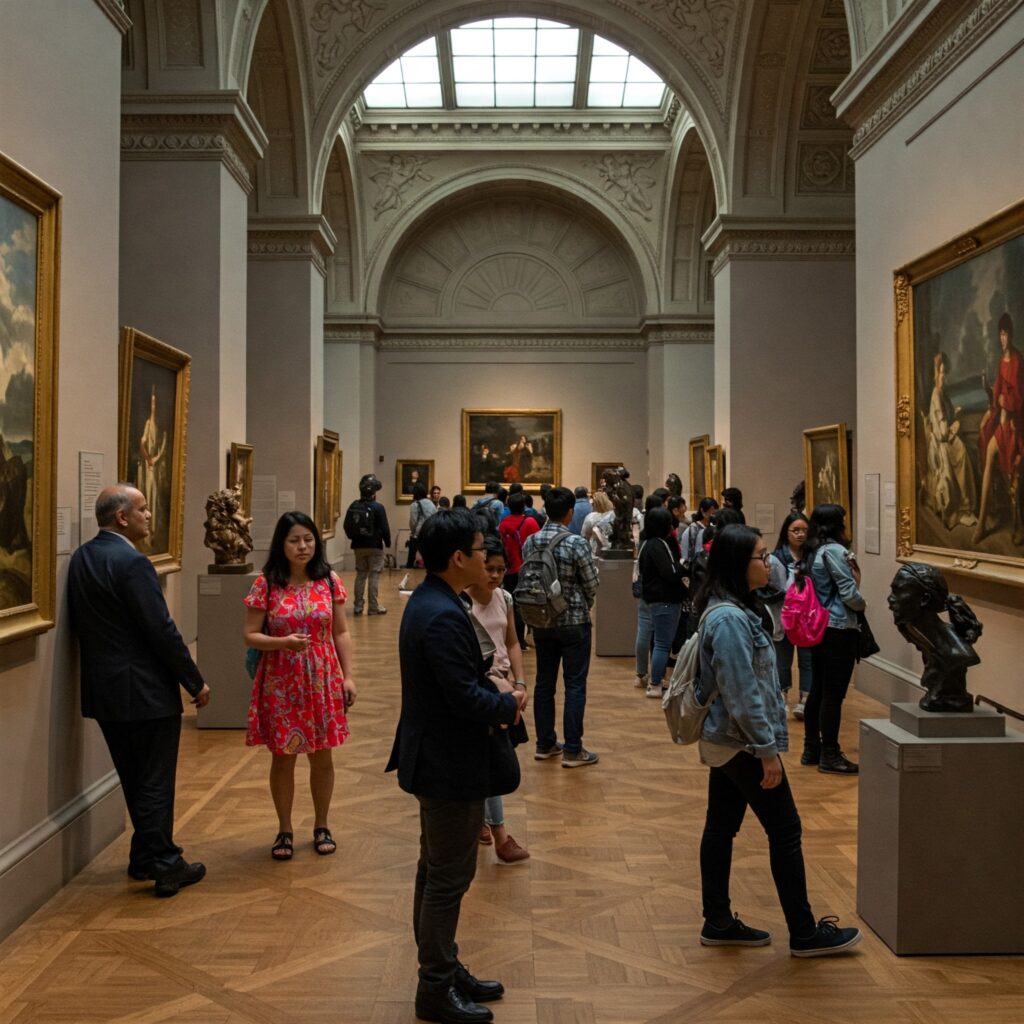
Welcome to one of the world’s greatest treasure chests! The Metropolitan Museum of Art in New York City is home to over two million works of art spanning 5,000 years. It’s a place where you can travel through time and across the globe just by walking through its galleries.
I’ve always had a soft spot for Renoir’s bold use of color; there’s an emotional honesty in his work that I constantly tried to capture in my own watercolor practice. That specific craving for genuine connection is exactly why I’d love to visit this guide on the Met’s masterpieces. You see, after thirteen years in the classroom, I know that staring at a massive institution like the Metropolitan Museum of Art can feel overwhelming – a bit like facing a blank canvas without a brush.
This guide appeals to me because it promises to filter out the noise. Instead of dry dates and academic lectures, I’m hoping it offers those accessible, sensory details – like explaining the theatrical, high-contrast light of a Caravaggio or the quiet, domestic stillness of a Vermeer – in a way that feels like chatting with a friend over coffee. (And here’s the thing: art history could always use a little less jargon and a little more wonder) .
If this article can help break down those barriers and make the “greats” feel approachable again, it’s doing the most important job in art education. It brings me back to that feeling of discovery I mentioned with Renoir – finding a resource that helps you stop looking and start seeing is always worth a click
Washington Crossing the Delaware (1851) by Emanuel Leutze

Description: This gigantic painting is pure Hollywood-style history. It shows General George Washington leading his troops across the icy Delaware River on Christmas night in 1776 for a surprise attack. It’s not perfectly historically accurate, but it’s a powerful and inspiring symbol of American determination and courage. The sheer size of the canvas, over 21 feet wide, makes you feel like you’re right there in the boat. A fire in the artist’s studio once damaged the canvas, but Leutze was able to restore it and complete this iconic masterpiece.
What to Look For: Look closely at the people in the boat; they represent a cross-section of the American colonies, including a Scottish-American and an African American man. Notice the dramatic sky, which shifts from dark storm clouds to a bright, hopeful morning star, symbolizing the dawning of a new day for the country. Also, check out the flag—it’s an early version of the ‘Stars and Stripes’ that wasn’t actually designed until after the crossing!
Techniques: Leutze used a technique called academic painting, which focuses on realistic details, dramatic composition, and a smooth, polished finish. He carefully arranged the figures in a pyramid shape with Washington at the top to create a sense of stability and importance.
Location in Museum: Gallery 760
Estimated Value: Priceless
The Death of Socrates (1787) by Jacques-Louis David
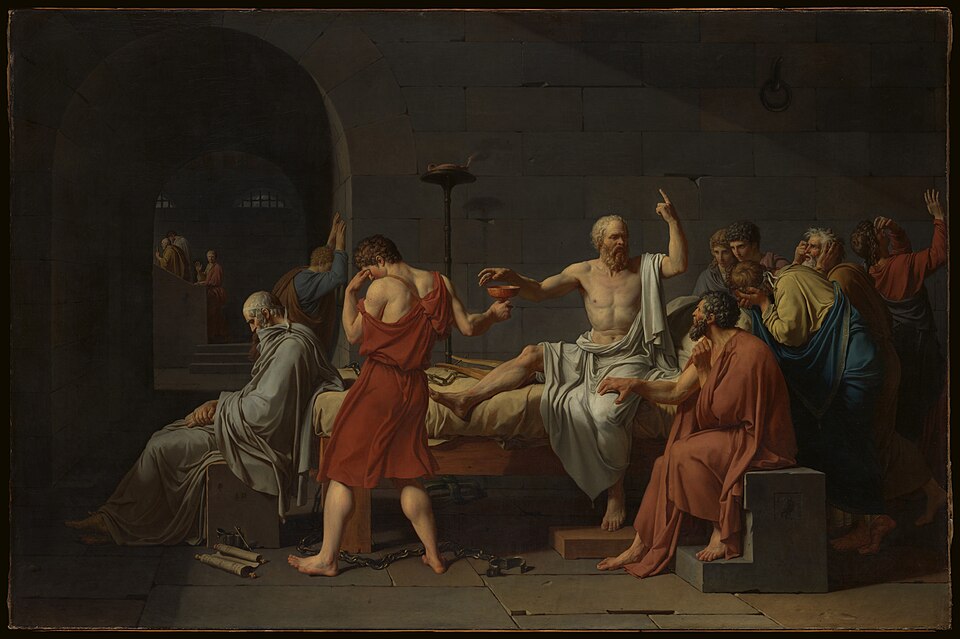
Description: This painting is like a freeze-frame from a tragic play. It captures the final moments of the ancient Greek philosopher Socrates, who was sentenced to death for his radical ideas. He calmly reaches for a cup of poison hemlock, surrounded by his grieving friends and followers. The painting is a powerful statement about sticking to your principles, even when it costs you everything. The man handing Socrates the cup of poison can’t bear to look at him, turning his face away in shame and sorrow.
What to Look For: Notice the strong contrast between light and shadow, a technique called chiaroscuro. The light shines directly on Socrates, highlighting him as the calm, heroic center of the story. Look at the different reactions of his followers: one man is so distraught he covers his face, while another, Plato, sits with his back to the scene, lost in thought. Socrates’s finger points upward, suggesting he’s thinking about higher ideals and the immortal soul.
Techniques: David was a master of Neoclassicism, a style inspired by ancient Greek and Roman art. This is visible in the balanced composition, the muscular, statue-like figures, and the clear, logical storytelling.
Location in Museum: Gallery 614
Estimated Value: Priceless
Self-Portrait with a Straw Hat (1887) by Vincent van Gogh
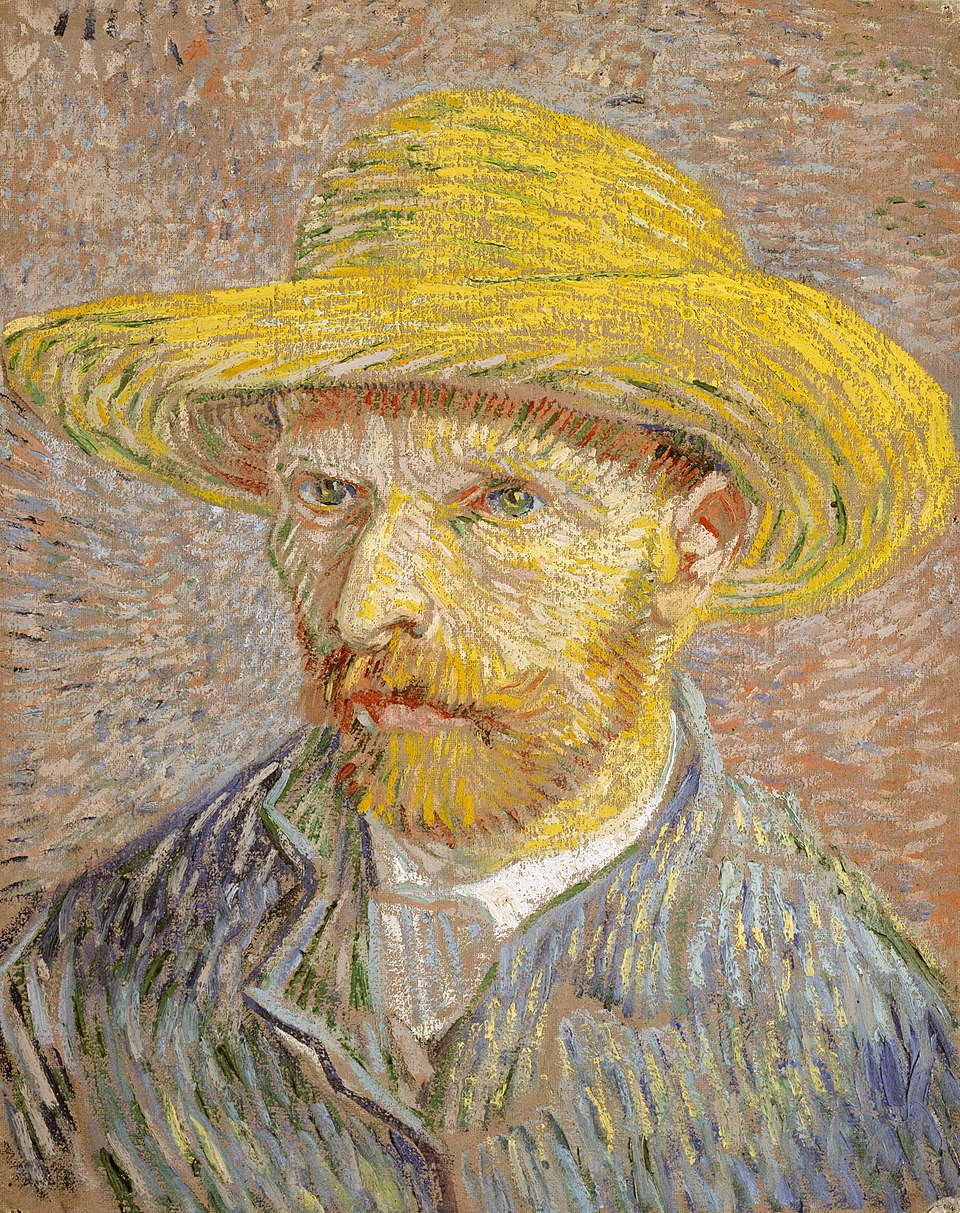
Description: Step into the mind of a genius with this intense self-portrait. Van Gogh painted over 30 pictures of himself, often because he couldn’t afford to hire models. Here, he presents himself as a modern city-dweller, using bright, energetic colors that seem to vibrate right off the canvas. His gaze is direct and piercing, giving us a glimpse into his passionate and often troubled soul. This portrait was painted on the back of an earlier, less-finished painting of a peasant, as Van Gogh often reused canvases to save money.
What to Look For: Look at the brushstrokes. They aren’t smooth and blended; they are short, thick dashes of pure color placed side-by-side. This technique, called impasto, gives the painting incredible texture and energy. Notice how the colors in the background radiate around his head like a halo, suggesting his brilliant and active mind.
Techniques: Van Gogh combined elements of Impressionism and Pointillism. He used short, distinct brushstrokes and complementary colors (like the orange of his beard against the blue background) to make the painting feel more vibrant and alive.
Location in Museum: Gallery 825
Estimated Value: Priceless
Bridge over a Pond of Water Lilies (1899) by Claude Monet
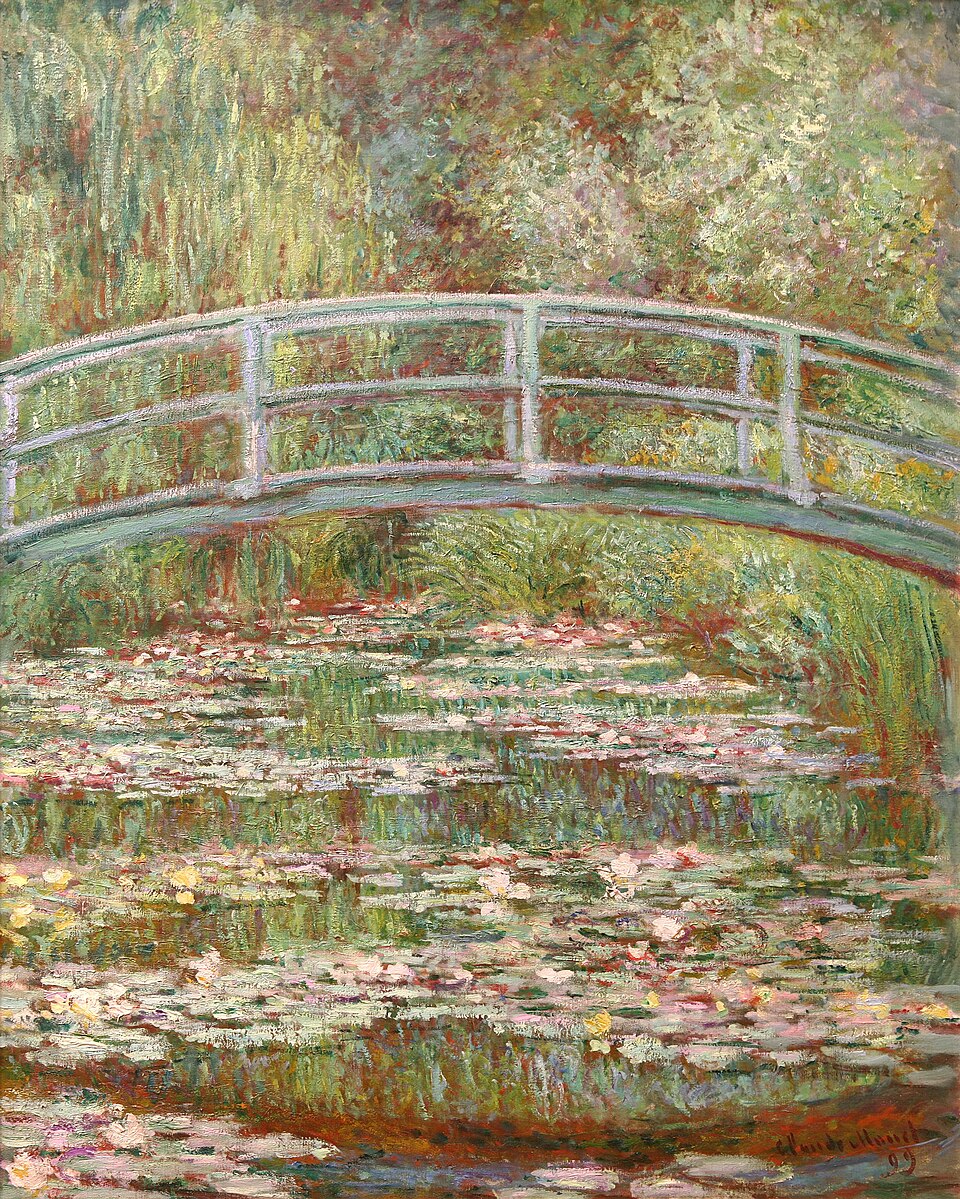
Description: This painting is like a beautiful dream you can step into. It’s one of about 250 paintings Monet made of his beloved water lily pond at his home in Giverny, France. He was obsessed with capturing the changing light and reflections on the water’s surface. The result is a peaceful, shimmering scene that feels both real and magical at the same time. Monet had a Japanese-style bridge built over his pond specifically so he could paint it, inspired by his collection of Japanese prints.
What to Look For: Forget sharp outlines! Monet was an Impressionist, so he was more interested in capturing the ‘impression’ of a scene. Look at how the water lilies are just dabs of color, and the reflection of the sky and trees merges with the pond itself. Notice the thick, visible brushstrokes that create a sense of movement and the shimmering quality of the light.
Techniques: Monet used the classic Impressionist technique of painting outdoors (‘en plein air’) with rapid, broken brushstrokes to capture the fleeting effects of sunlight. He built up layers of color to create a rich, textured surface.
Location in Museum: Gallery 819
Estimated Value: Priceless
The Harvesters (1565) by Pieter Bruegel the Elder
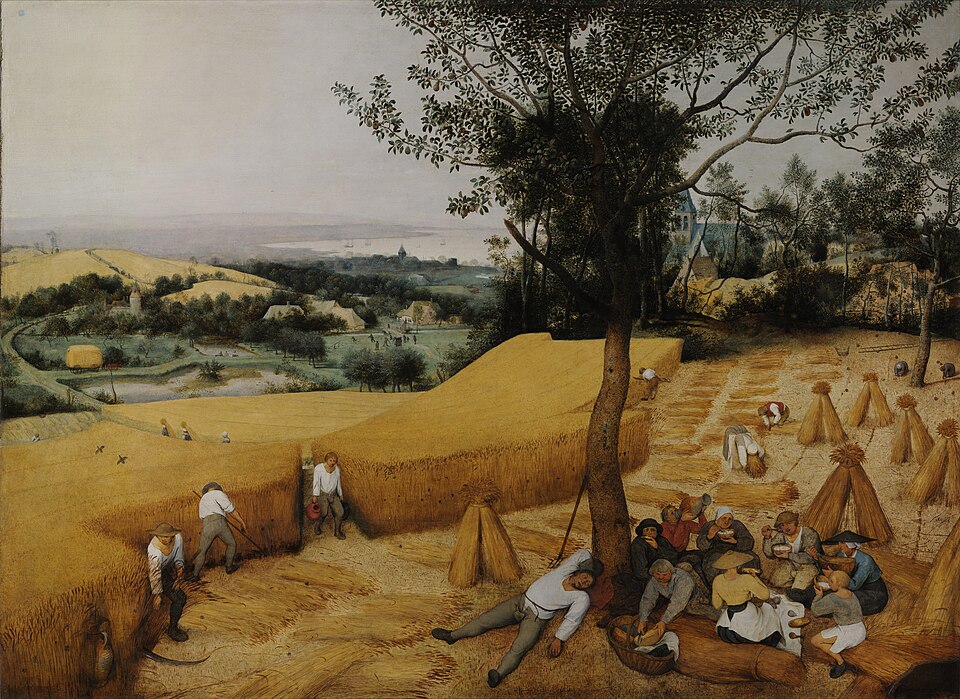
Description: This painting is like a time machine back to a hot, late summer day in the 1500s. It’s not about kings or gods, but about the everyday lives of ordinary people. Bruegel shows peasants cutting and bundling wheat, taking a lunch break under a pear tree, and swimming in a distant pond. It’s a celebration of the rhythm of life and labor. This work is part of a famous series of six paintings showing the seasons of the year; only five of them survive today.
What to Look For: Bruegel was a master of perspective. Notice how he leads your eye from the tired workers in the foreground, down a path, through the wheat fields, and all the way to the tiny ships in the harbor in the background. This creates an incredible sense of deep space. Look for all the little details: the person sleeping under the tree, the women carrying sheaves of wheat, and the church steeple in the village.
Techniques: This is an oil on wood panel painting. Bruegel used a high viewpoint, as if looking down from a hill, to fit this expansive landscape and all its activities into one scene. His use of warm, golden colors enhances the feeling of a sweltering summer day.
Location in Museum: Gallery 642
Estimated Value: Priceless
Madame X (Madame Pierre Gautreau) (1883-84) by John Singer Sargent
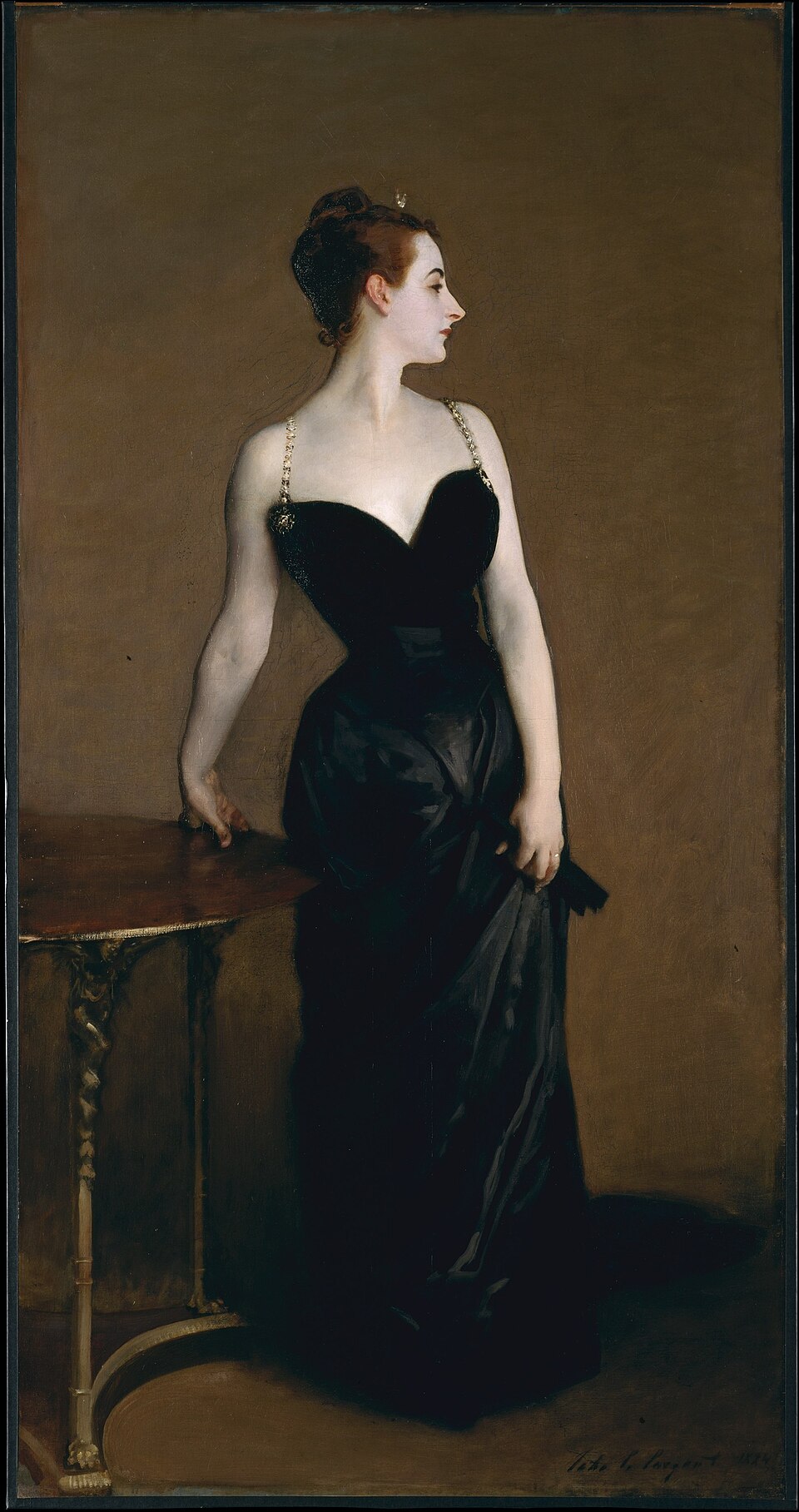
Description: Meet the ‘It Girl’ of 1880s Paris. This portrait of the glamorous Virginie Gautreau was a massive scandal when it was first shown. People thought her pale skin, bold pose, and elegant black dress were way too daring. Sargent hoped it would make his career, but the controversy almost ruined it! Today, it’s admired as a masterpiece of style and attitude. After the scandal, Sargent kept the painting for over 30 years, calling it ‘the best thing I have ever done.’
What to Look For: The painting is a study in contrasts. Notice her ghostly white skin against the deep black of her dress and the warm brown background. Her profile is sharp and aristocratic, like a classical statue. The most controversial part was originally one of the dress straps, which Sargent had painted slipping off her shoulder. He later repainted it to be securely in place to calm the public outcry.
Techniques: Sargent was known for his fluid, confident brushwork. You can see his long, sweeping strokes in the folds of the dress and the background. He masterfully used a limited color palette to create a powerful and dramatic effect.
Location in Museum: Gallery 771
Estimated Value: Priceless
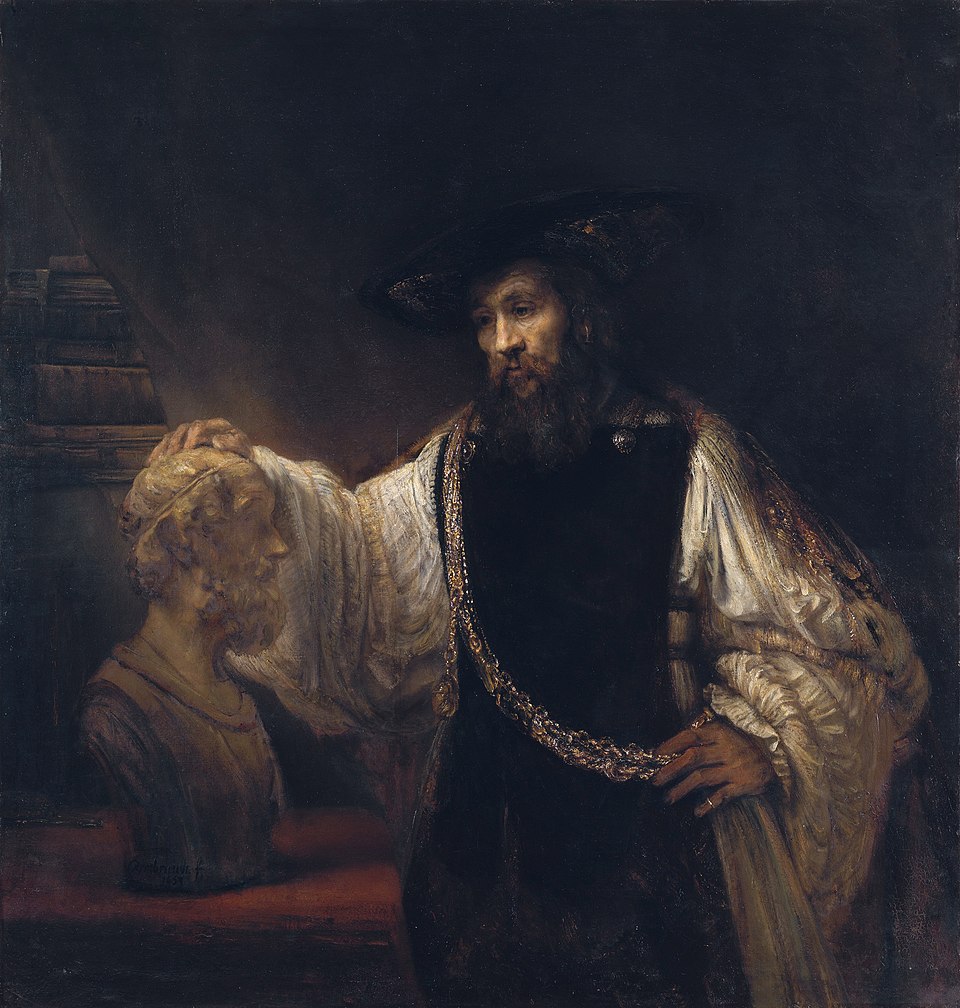
Aristotle with a Bust of Homer (1653) by Rembrandt van Rijn
Description: This is a painting about a deep and difficult choice: wealth or wisdom? The great philosopher Aristotle, dressed in rich, fancy clothes, rests his hand on a bust of the blind poet Homer. His other hand touches a gold chain given to him by his famous student, Alexander the Great. It’s a quiet, thoughtful moment where a great mind ponders what truly matters in life. The Met bought this painting in 1961 for $2.3 million, which at the time was the highest price ever paid for a painting at a public or private sale.
What to Look For: Rembrandt was a genius with light. See how the light seems to come from within the painting, illuminating Aristotle’s face, his hand, and the forehead of Homer’s bust. This creates a powerful, contemplative mood. The contrast between the textures is amazing—feel the difference between the soft velvet of Aristotle’s sleeve, the cold marble of the statue, and the heavy gold of the chain.
Techniques: Rembrandt used a technique called tenebrism, which is an extreme version of chiaroscuro with very dark shadows and bright, focused highlights. He applied thick layers of paint to create a rich, physical texture on the canvas.
Location in Museum: Gallery 964
Estimated Value: Priceless
Young Woman with a Water Pitcher (c. 1662) by Johannes Vermeer

Description: Johannes Vermeer was a master of capturing quiet moments of everyday life and making them feel magical. In this painting, a young woman starts her day, opening a window to let in the morning light as she holds a water pitcher. It’s a simple, peaceful scene, but Vermeer’s incredible skill with light and composition turns it into something truly special and timeless. The map on the wall behind the woman was a real map of the Seventeen Provinces of the Netherlands, showing Vermeer’s pride in his home country.
What to Look For: The star of this painting is the light. Follow the light as it streams in from the leaded-glass window on the left. See how it gently illuminates the woman’s face and white head covering, reflects off the polished silver pitcher, and creates soft shadows on the wall map behind her. Vermeer creates a perfect sense of balance and harmony in the scene.
Techniques: Vermeer was known for his masterful use of light and color, particularly his love for blues and yellows. He may have used a camera obscura, an early camera-like device, to help him achieve his incredibly realistic sense of perspective and light.
Location in Museum: Gallery 964
Estimated Value: Priceless
Venus and Adonis (c. 1550s) by Titian
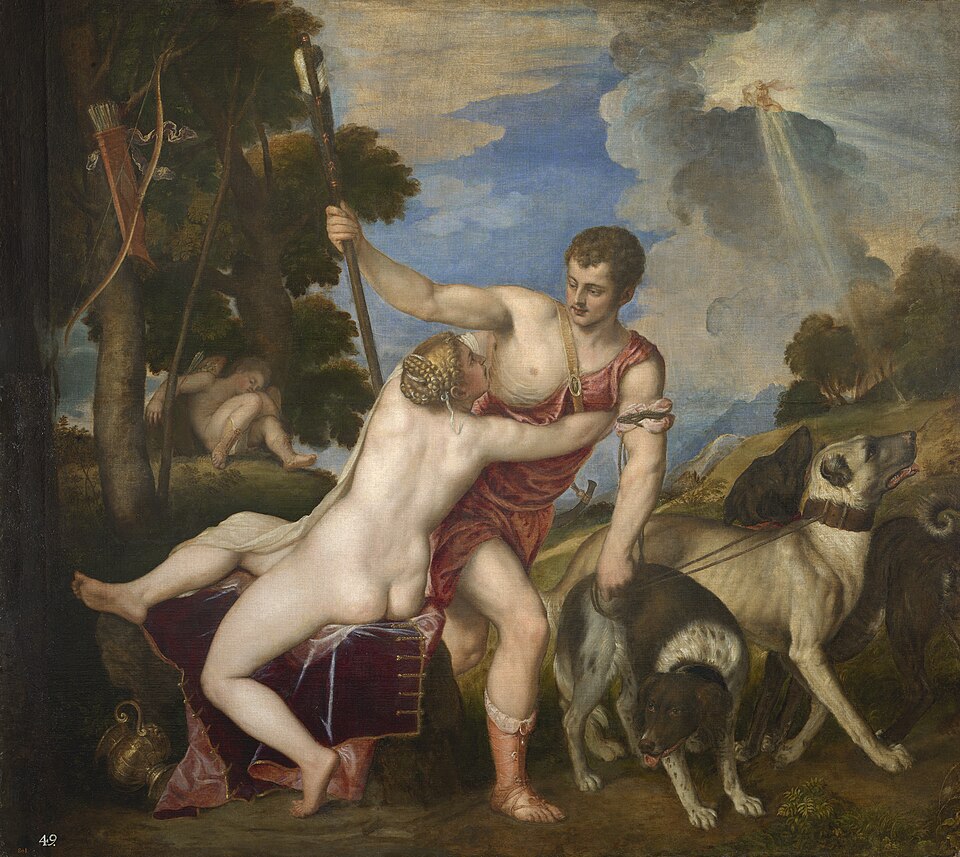
Description: This painting tells a dramatic story from Roman mythology. The beautiful goddess Venus is desperately trying to stop her lover, the handsome mortal Adonis, from going on a hunt. She knows he will be killed by a wild boar, but he pulls away, more interested in the hunt than her warnings. It’s a powerful and emotional scene about love, fate, and tragedy. Titian painted several versions of this scene for his wealthy patrons, slightly changing the composition each time to make each one unique.
What to Look For: Titian was a master of capturing movement and emotion. Look at the dynamic, twisting poses of the figures. Venus’s body is contorted as she clings to Adonis, while he strides away, looking back over his shoulder. Notice the rich colors, especially the reds and golds, and the soft, hazy quality of the landscape, which adds to the romantic and tragic mood.
Techniques: Titian was famous for his expressive brushwork and his use of color to build form and emotion, a technique known as ‘colorito’. He would apply paint in thin layers called glazes to create deep, luminous colors that seem to glow from within.
Location in Museum: Gallery 608
Estimated Value: Priceless
Autumn Rhythm (Number 30) (1950) by Jackson Pollock
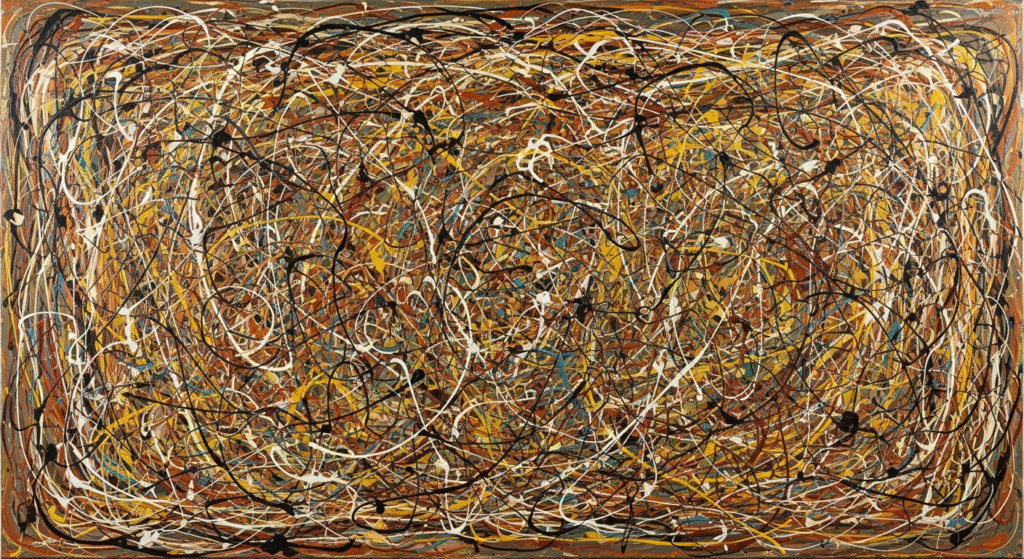
Description: Get ready for a completely different kind of art! There are no people or landscapes here. Instead, Jackson Pollock created this huge masterpiece by dripping and pouring paint onto an unprimed canvas laid on the floor. It might look random, but it’s actually a carefully controlled dance of paint, full of energy, rhythm, and emotion. It’s an artwork you feel as much as you see. Pollock gave the painting the title ‘Number 30’ at first, wanting viewers to look at it as pure art without any preconceived ideas, but later agreed to the more descriptive name ‘Autumn Rhythm’.
What to Look For: Don’t look for a specific object. Instead, let your eyes travel across the canvas and follow the lines of paint. Notice how the colors—black, brown, white, and teal—weave and intersect, creating a complex web. Think about the title, ‘Autumn Rhythm.’ Does the painting make you think of the colors and energy of the fall season? The sheer size of it is meant to envelop you.
Techniques: Pollock pioneered the ‘drip’ or ‘action painting’ technique. He used sticks, hardened brushes, and syringes to apply the paint in a continuous, flowing stream. This method emphasized the physical act of painting itself as an important part of the artwork.
Location in Museum: Gallery 919
Estimated Value: Priceless
The Collection’s Significance
The collection of The Metropolitan Museum of Art is truly encyclopedic, meaning it aims to include art from every corner of the globe and every period of human history. Unlike museums that focus on one style, like Impressionism, The Met is a ‘museum of the world.’ You can see an ancient Egyptian temple in one gallery and a groundbreaking modern painting in the next. This incredible diversity makes it a place of endless discovery, showing how art has been a fundamental part of the human experience everywhere, for everyone. Its legacy is one of education and inspiration, offering a direct connection to the creativity of our shared past.
Final Thoughts
A trip to The Met is more than just looking at old pictures; it’s a journey through the best of human creativity. Each gallery offers a new world to explore, and each masterpiece has a story to tell. Seeing The Metropolitan Museum of Art paintings in person is an experience you’ll never forget. So, whether you’re an art expert or just curious, plan your visit and get ready to be amazed by the power and beauty of these incredible works of art.
Plan Your Visit
Opening Times: Sunday–Tuesday and Thursday: 10 am–5 pm; Friday and Saturday: 10 am–9 pm; Closed Wednesday.
Ticket Prices: Adults: $30, Seniors (65+): $22, Students: $17. Free for Members, Patrons, and children under 12. General admission tickets are pay-what-you-wish for New York State residents and NY, NJ, and CT students. Booking online is recommended.
How to Get There: Subway: Take the 4, 5, or 6 train to 86th Street station. Bus: M1, M2, M3, and M4 buses run along Fifth Avenue.
FAQs about art at The Metropolitan Museum of Art
What is the most famous painting at The Metropolitan Museum of Art?
While it’s hard to pick just one, ‘Washington Crossing the Delaware’ by Emanuel Leutze is arguably the most famous and recognizable painting in the Met’s collection due to its massive scale and iconic place in American history.
Can I take photos of the paintings?
Yes, photography without flash is permitted in most of the permanent collection galleries for personal use. However, flash photography, tripods, and video cameras are not allowed.
How long does it take to see the museum?
The Met is huge! You could spend an entire week and still not see everything. For a first visit focusing on the highlights, plan for at least 3-4 hours.
Is The Met a good museum for kids and teenagers?
Absolutely! The Met has something for everyone, from Egyptian mummies and suits of armor to famous modern art. The variety keeps it exciting, and seeing famous paintings from history class in real life is a great experience.
Citations
- The Metropolitan Museum of Art – Official Website
- Wikipedia, The Free Encyclopedia (most images via Wikipedia Commons)