What is landscape drawing?
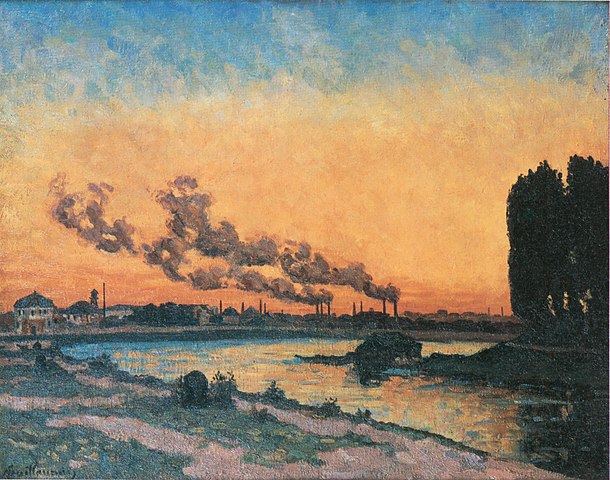
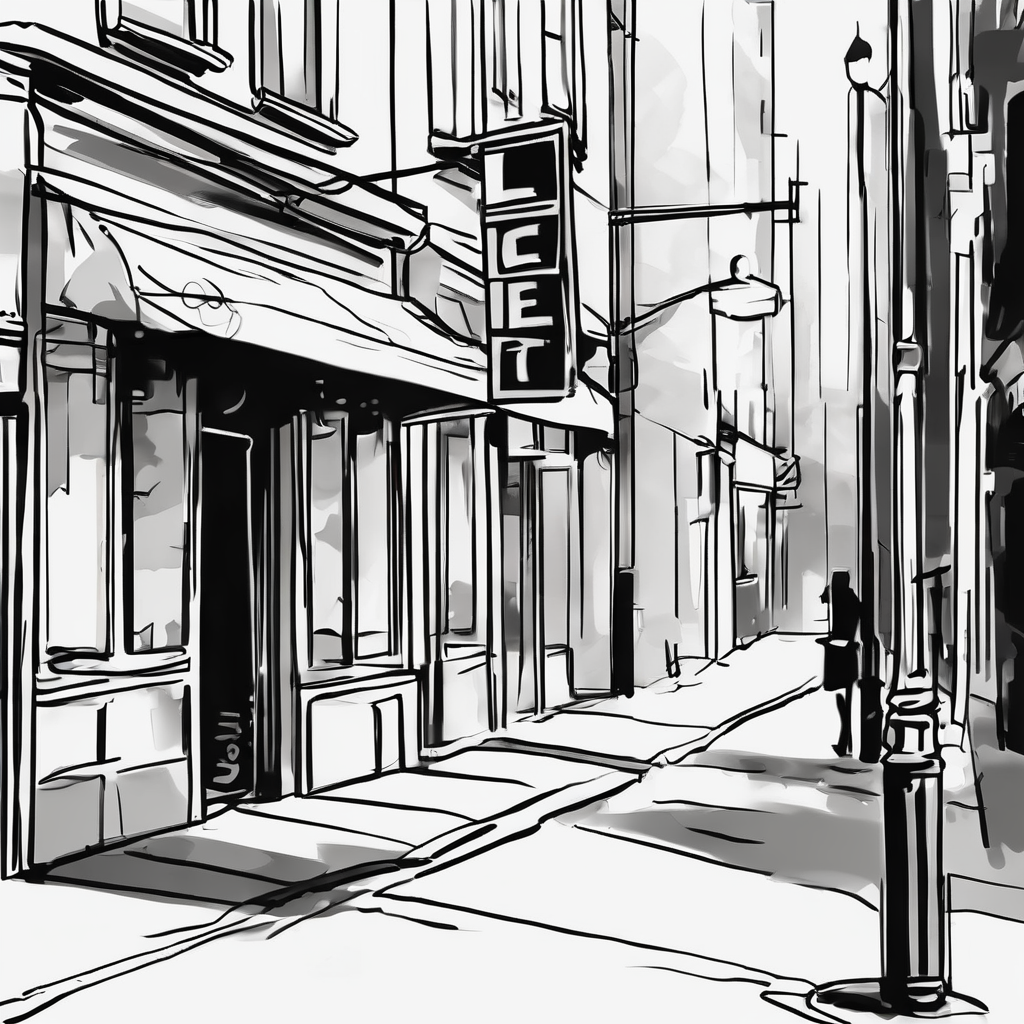
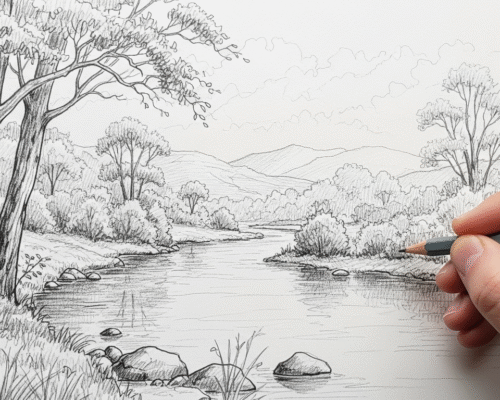
Landscape drawing is the practice of depicting natural or urban outdoor scenes using lines, shapes, and values to convey space, mood, and depth.
Landscape drawing goes beyond copying scenery. It trains observation, teaches perspective, and helps artists translate real-world environments into expressive visual stories. Beginners benefit most by focusing on structure and value rather than fine detail.
What is landscape composition in drawing?
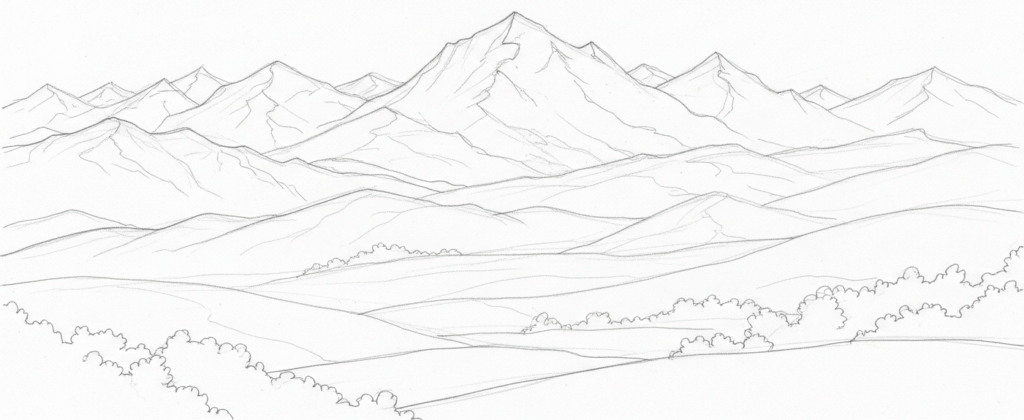
Landscape composition is arranging foreground, middle ground, and background elements to guide the viewer’s eye and create balance and depth.
Strong composition makes a drawing readable and engaging. Artists use visual hierarchy to decide where viewers look first and how their eyes move through the scene.
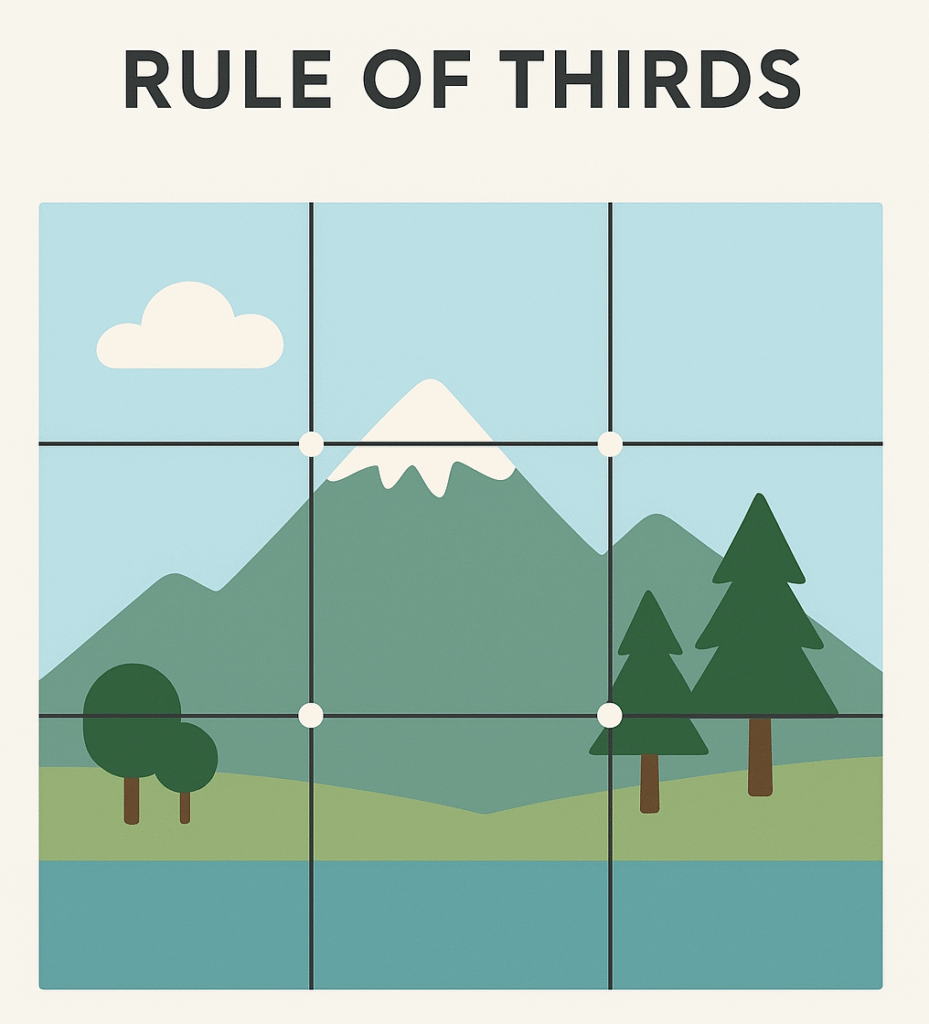
Core composition principles
- Rule of thirds: Place focal points off-center for visual interest
- Foreground, middle ground, background: Establish depth
- Leading lines: Direct attention through the drawing
- Clear focal point: Gives the scene purpose
Thumbnail sketches help test compositions before committing to a full drawing.
What art supplies do you need for landscape drawing?
Beginners need graphite pencils (HB–6B), a quality sketchbook, kneaded erasers, and blending stumps to create clean values and textures.
You don’t need many tools—just reliable ones. Quality materials make learning easier and reduce frustration.
Essential supplies
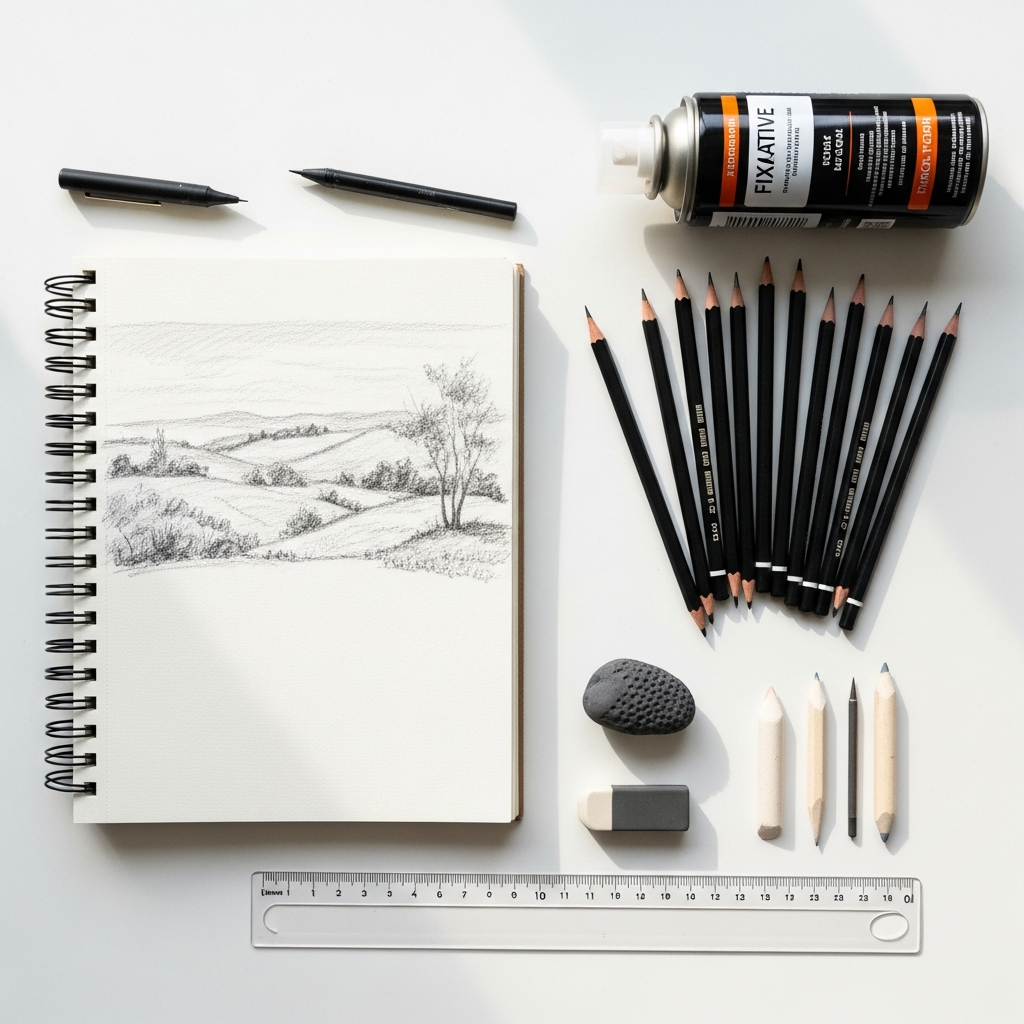
- Graphite pencils: HB for sketching, 2B–6B for shading
- Sketchbook: Medium tooth paper for grip and durability
- Kneaded eraser: Lifts highlights without damaging paper
- Blending stumps: Smooth value transitions
From teaching beginners, artists using fewer, higher-quality tools progress faster than those overwhelmed by large supply sets.
How does perspective create depth in landscape drawing?
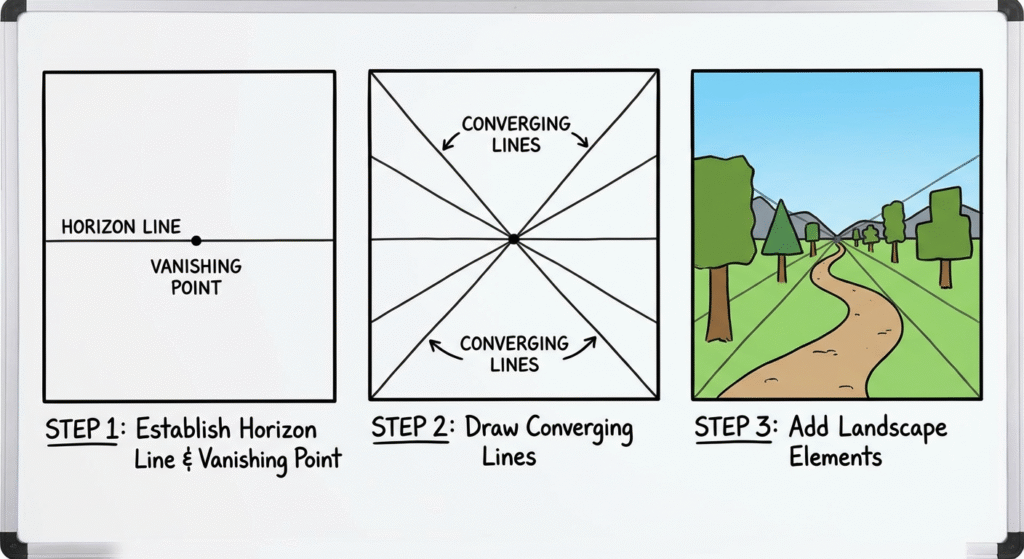
Perspective creates depth by scaling objects, aligning them to the horizon, and reducing detail and contrast as distance increases.
Perspective turns flat drawings into believable spaces.
Types of perspective
- One-point perspective: Objects recede toward one vanishing point
- Two-point perspective: Useful for buildings and angled forms
- Atmospheric perspective: Distant objects appear lighter and softer
Distant mountains should be lighter and less detailed, while foreground objects remain darker and sharper.
What shading techniques work best for landscape drawing?
Hatching, cross-hatching, stippling, blending, and scumbling create value changes that suggest texture, light, and form in landscapes.
Shading controls realism more than outlines. Values define form, texture, and atmosphere.
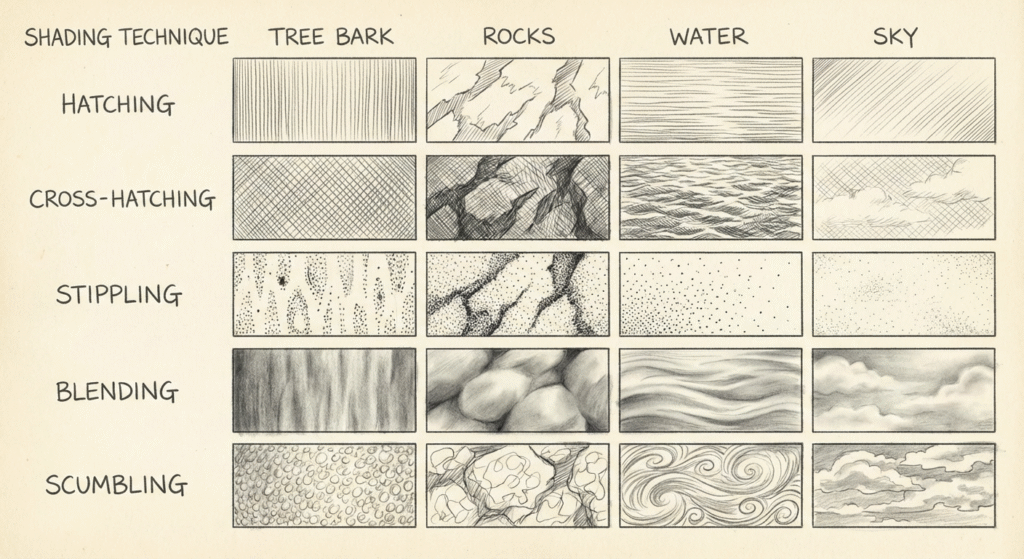
Common shading methods
- Hatching: Parallel lines for controlled tone
- Cross-hatching: Layered lines for darker values
- Stippling: Dots for subtle texture
- Blending: Soft transitions and smooth surfaces
- Scumbling: Loose marks for organic textures
Practicing value scales trains your eye to see light accurately.
How do you draw a realistic landscape step by step?
A realistic landscape starts with simple shapes, strong composition, correct perspective, and gradually layered values and textures.
Breaking the process into steps keeps complex scenes manageable.
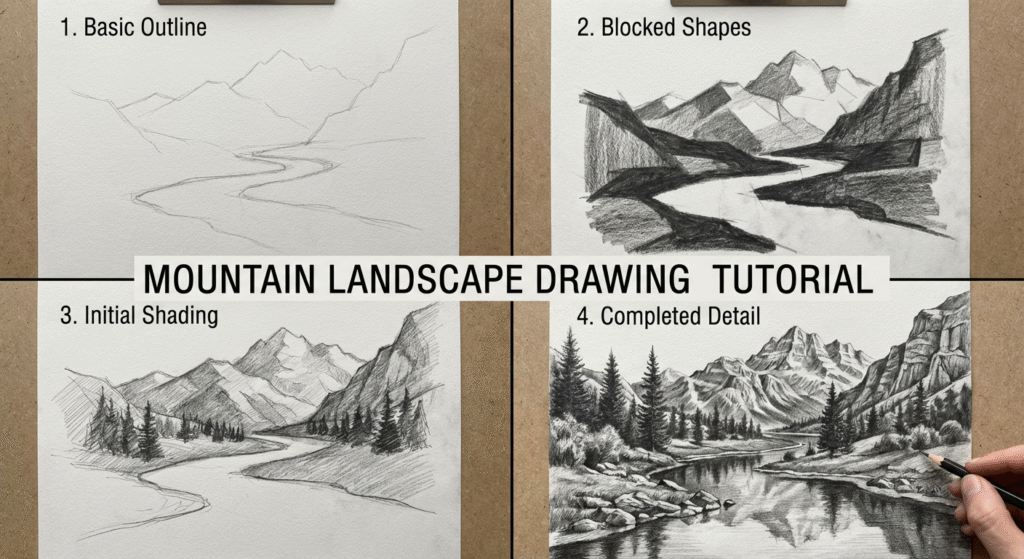
Step-by-step process
- Choose a simple scene
- Sketch thumbnail compositions
- Block in major shapes
- Establish horizon and perspective
- Build mid-tones and shadows
- Add textures from background to foreground
- Refine contrast and highlights
Most beginners improve fastest by working from general shapes to specific details.
How do you draw atmospheric landscapes?
Atmospheric landscapes use softened edges, lighter values, and reduced contrast to suggest distance, weather, and mood.
Mood separates technical drawings from expressive ones.
Techniques for atmosphere
- Soften distant edges
- Reduce contrast in the background
- Study light at different times of day
- Adjust values based on weather conditions
Low contrast creates calm scenes, while high contrast feels dramatic.
What common mistakes do beginners make in landscape drawing?
Beginners often struggle with flat values, weak composition, inconsistent lighting, and over-detailing background elements.
Awareness prevents frustration and accelerates improvement.
Common pitfalls
- Overworking the drawing
- Ignoring value structure
- Skipping thumbnail planning
- Inconsistent light direction
- Giving every object equal detail
In beginner critiques, value mistakes cause more realism issues than inaccurate outlines.
What are the best tips for outdoor sketching?
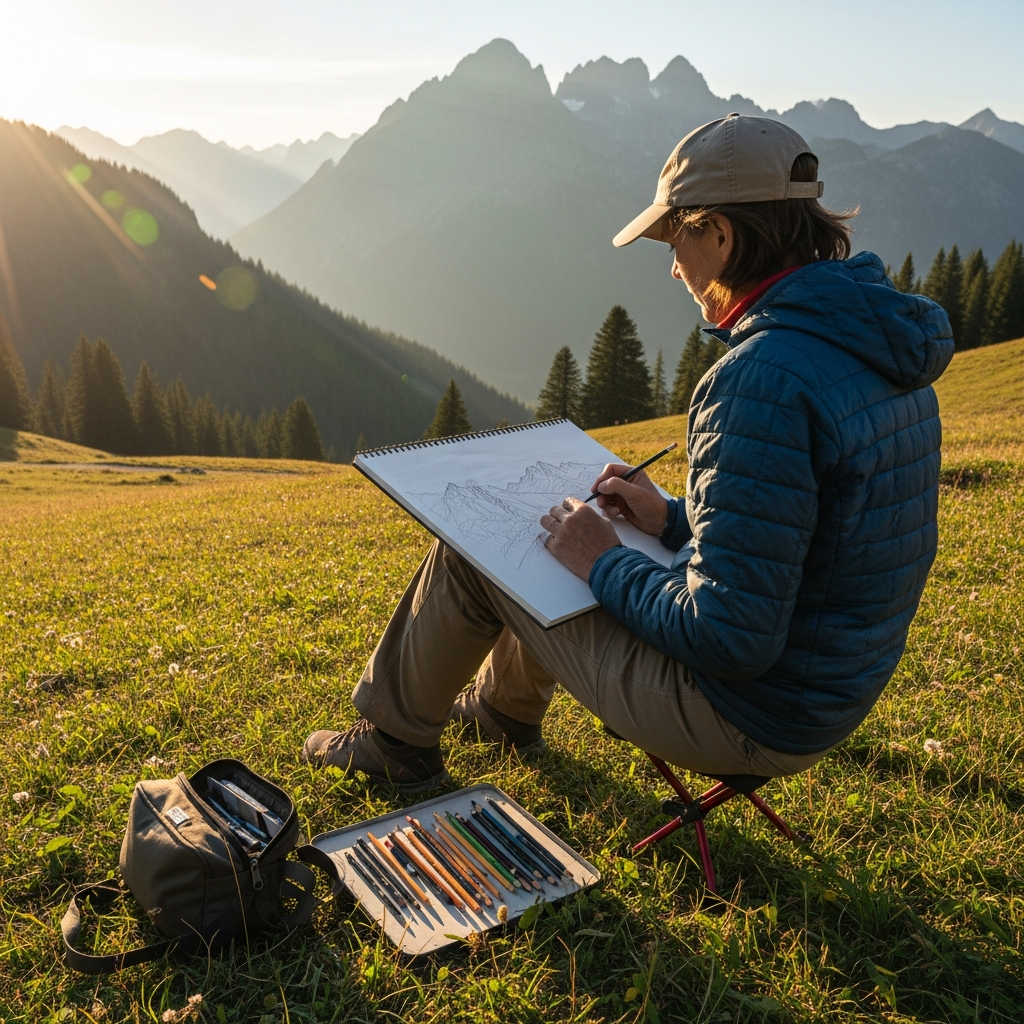
Outdoor sketching improves observation by forcing artists to simplify scenes and capture light and form quickly.
Drawing from life builds skills photos can’t.
Outdoor sketching tips
- Pack light
- Work quickly as light changes
- Start with 15–20 minute studies
- Accept imperfections
- Sketch the same scene multiple times
Even short outdoor sessions dramatically improve depth perception.
What advanced techniques help improve landscape drawings?
Advanced landscape techniques include mixed media, expressive mark-making, master studies, and working in focused series.
Once basics feel natural, experimentation accelerates growth.
Advanced approaches
- Combine graphite with watercolor or ink
- Use loose, gestural marks
- Study master landscape artists
- Draw the same location across seasons
- Document your drawing process
Focused repetition leads to faster improvement than random practice.
What’s the best way to start drawing landscapes as a beginner?
Beginners should start with simple scenes, focus on shapes and values, and practice short daily sketches to build confidence.
Simple subjects teach fundamentals faster than complex scenes.
How can I make my landscape drawings look more realistic?
Realism comes from accurate perspective, strong value contrast, and simplified backgrounds with detailed foregrounds.
Correct values matter more than fine lines.
What’s the difference between foreground, middle ground, and background?
Foreground contains the most detail and contrast, middle ground connects forms, and background is lighter and less detailed.
These layers create visual depth and spatial clarity.
Should I draw landscapes from photos or real life?
Drawing from life trains observation, while photos offer convenience; combining both produces the strongest results.
Most artists sketch outdoors, then refine indoors.
How long does it take to get good at landscape drawing?
With consistent 20–30 minute daily practice, most beginners see noticeable improvement within three to six months.
Consistency matters more than talent or long sessions.
What’s the most challenging part of landscape drawing?
Creating convincing depth through values and atmospheric perspective is the most common challenge for beginners.
This skill improves with targeted practice and patience.
Conclusion: Why landscape drawing is worth learning
Landscape drawing builds observation, creativity, and technical skill while deepening your connection to the world around you.
Every sketch sharpens your eye and strengthens your artistic voice. Whether you draw outdoors or from photos, progress comes from curiosity, consistency, and enjoyment of the process.
Your landscape drawing journey doesn’t end—it evolves with every scene you explore.
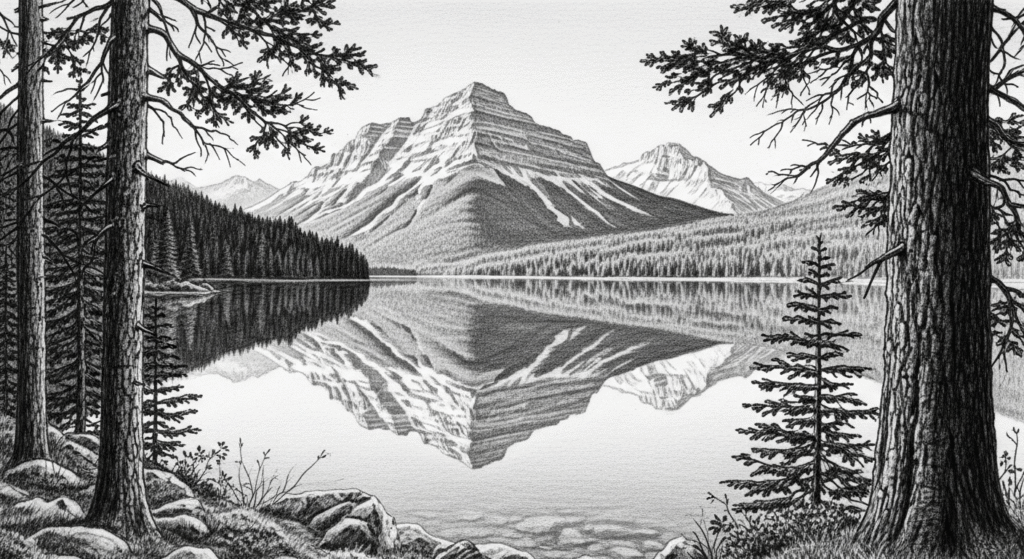
Learn More: Helpful YouTube Tutorial
Search YouTube for “landscape drawing tutorial for beginners” to find excellent step-by-step video demonstrations showing perspective, shading, and composition techniques in action.
Citations:
- How to Draw a Landscape: A Step-by-Step Tutorial – Skillshare Blog – Beginner-friendly landscape steps, perspective, and foreground–background depth.
- Graphite Drawing Tools You Need – Artist Harshpreet Kaur – Essential graphite, kneaded erasers, and realistic drawing materials overview.
- How to Create Atmospheric Perspective in a Landscape – Samuel Earp – Explains atmospheric perspective for believable distance and landscape depth.
- Value Scales and Shading Techniques – Art With Ross – Clear breakdown of hatching, cross-hatching, stippling, and shading values.
- Doodlewash Outdoors: Starting Plein Air Sketching – Practical tips for lightweight plein air sketching and simplifying complex scenes.
- Beginners Guide to Sketching Outdoors – Orla Stevens – Advice on outdoor sketching, observing textures, and loosening mark-making.