Forget the romanticized stench of turpentine and the passive waiting for “fleeting light.” We are not here for the “happy accidents” of watercolor or the slow decay of oils. Standing at the easel is a visceral act. It is a fight. It is the deliberate imposition of the artist’s will upon the canvas, building the face up through heavy-body layers rather than washing it out. But while we grind out hours in the studio, a mechanical question rots the floorboards: Is photography art?
For the working artist, this isn’t a polite debate for a coffee shop. It is an autopsy of our relevance. Before we were losing commission revenue to the hollow perfection of AI algorithms, we were fighting the shutter. Understanding the history of photography isn’t about “broadening horizons.” It is about survival. It requires grit to understand how a machine challenged the trembling, human hand.
In this dissection, we will strip back the layers of this visual war. We will examine how the camera forced the brush to fracture reality rather than copy it. We will see if masters like Stieglitz and Richter were true artists, or just technicians hiding behind a lens. We aren’t looking for glamour. We are looking for the psychology beneath the skin.
The Historical Shock: When the Machine Entered the Studio
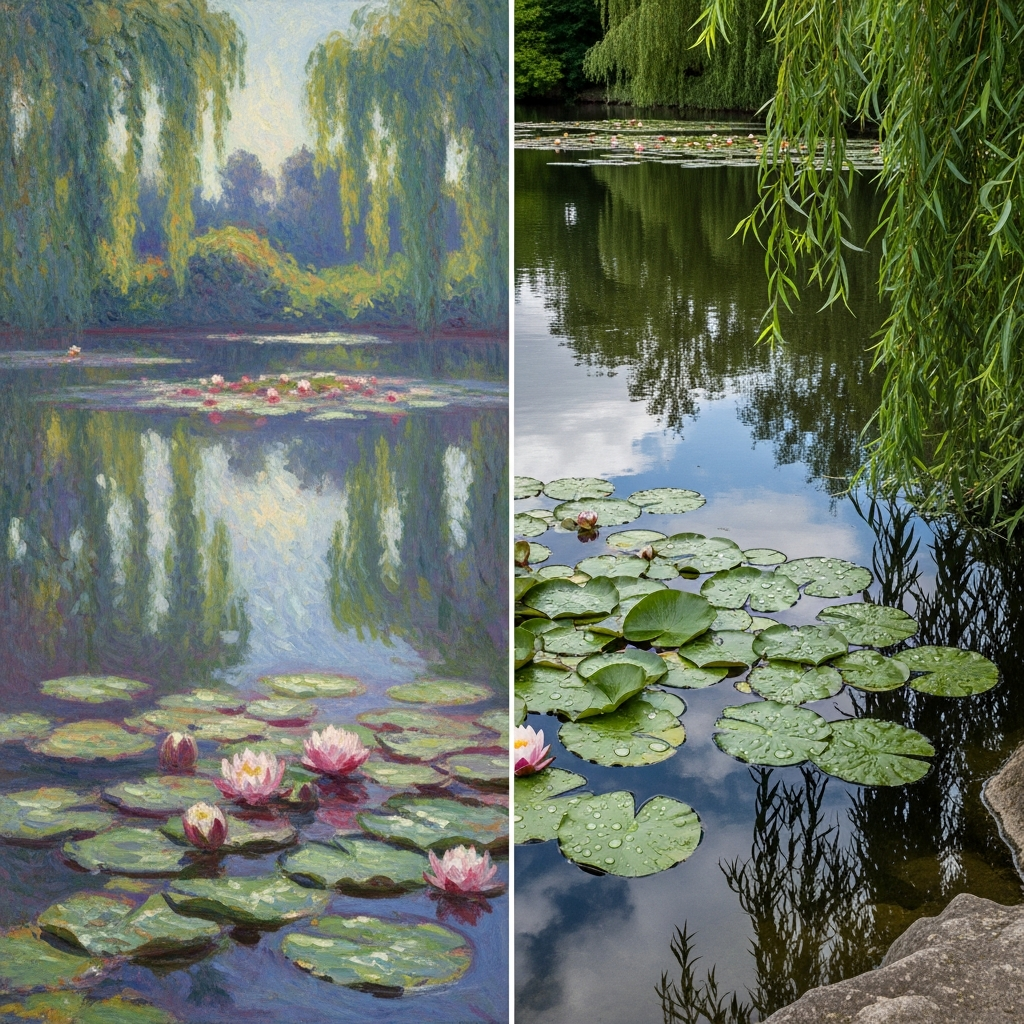
To understand the arguments for and against photography as fine art, we must travel back to the 19th century. Before the invention of the daguerreotype, painting had a monopoly on mimesis—the representation of reality. If you wanted a portrait of your grandmother or a record of a landscape, you hired a painter.
How did photography influence painting in the 19th century? It caused an existential crisis. Suddenly, a machine could capture a likeness with a level of detail no brush could rival, and in a fraction of the time. French painter Paul Delaroche famously exclaimed, “From today, painting is dead!“
He was wrong, of course. Photography didn’t kill painting; it liberated it. Because photography took over the burden of strict documentation, painters were free to explore what the camera couldn’t see: emotion, movement, and the psychological experience of color. This shift directly birthed Impressionism. Monet and Renoir stopped trying to be human photocopiers and started painting the feeling of light.
Defining Art in the Era of Photographic Reproduction
The core of the criticism against photography was the lack of the “artist’s hand.” Critics argued that art required physical manipulation of materials—glazing, scumbling, impasto. Photography was seen as a chemical accident, a product of science rather than soul. This touches on originality in art and Walter Benjamin’s famous concept regarding the “aura” of a unique work of art versus a reproducible image.
Pictorialism: When Photographers Wanted to Be Painters
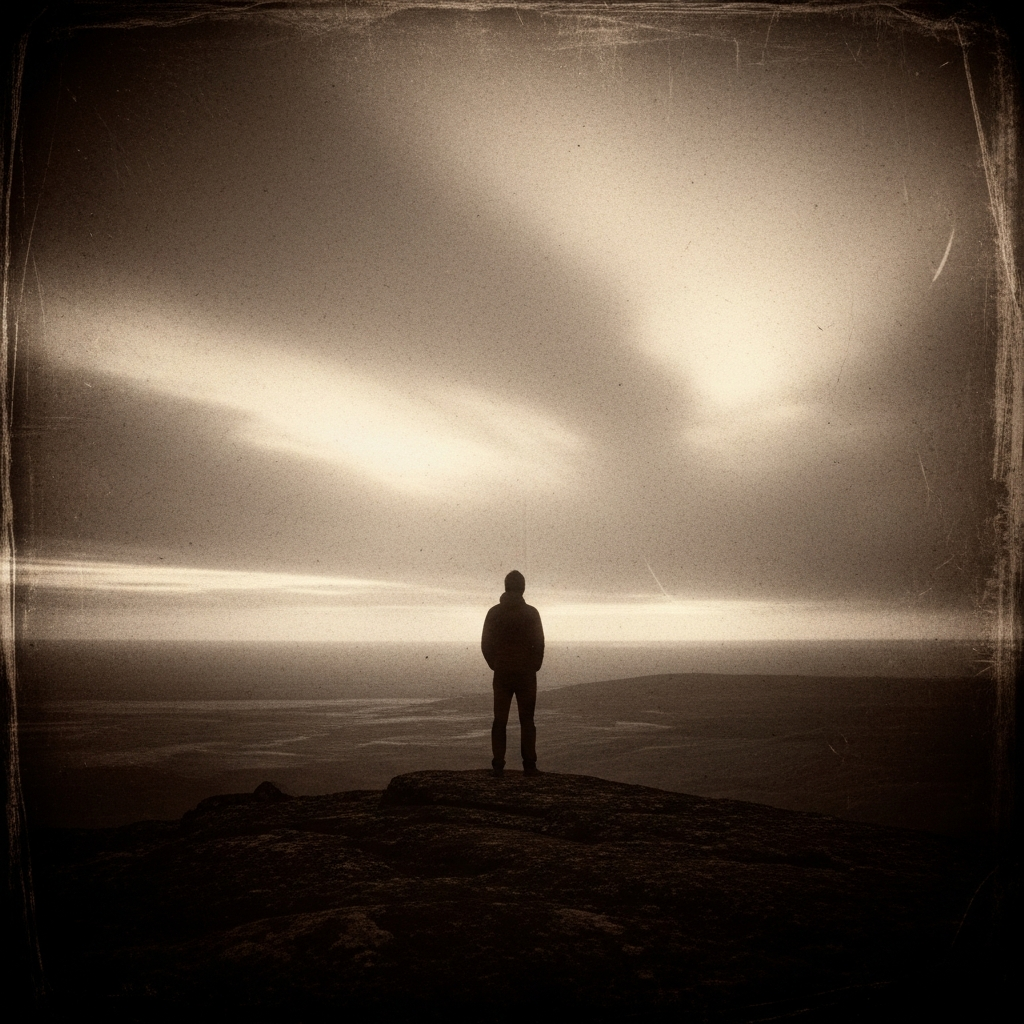
When did photography gain acceptance as an art form? It wasn’t immediate. To prove their worth, early photographers engaged in Pictorialism. This movement, championed by Alfred Stieglitz in his early years, involved manipulating negatives and prints to mimic the texture and atmosphere of drawings and etchings.
They used soft focus, special chemical washes, and textured papers to hide the mechanical nature of the photograph. They wanted the aesthetic value photography lacked in its “raw” state. For a painting student, looking at Pictorialist works is a lesson in composition and tonal value. These photographers weren’t just snapping pictures; they were constructing images with the same rigor as a charcoal artist.
Straight Photography and The Zone System
Eventually, the medium matured. Artists like Ansel Adams and the later work of Stieglitz rejected the idea that photography needed to look like a painting to be art. They embraced medium specificity—the idea that each art form should adhere to the unique characteristics of its medium.
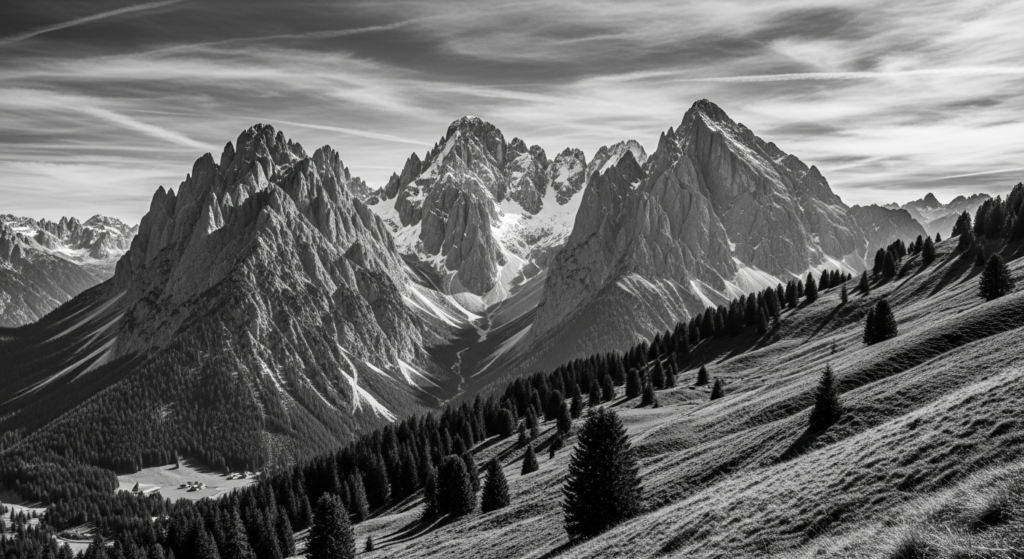
For Adams, this meant extreme sharpness, infinite depth of field, and a full tonal range.
What Painters Can Learn from Ansel Adams
Adams developed the Zone System, a technique to control exposure and development to ensure detail in both the deepest shadows and brightest highlights.
- For the Painter: This is exactly what we do when we create a value scale. Adams’ landscapes are masterclasses in Chiaroscuro. When you struggle with the contrast in your oil paintings, look at an Adams photograph. His “f/64” approach teaches us that photography artistic merit lies in the mastery of light, a goal shared by every painter since Rembrandt.
The Surreal, The Abstract, and The Conceptual
As we moved into the 20th century, the lines blurred further. Dadaism and Surrealism utilized photography not to document reality, but to subvert it.
Man Ray, a pivotal figure who worked across mediums, created “Rayographs” (photograms) by placing objects directly onto light-sensitive paper. There was no camera involved. These works were pure abstractions of light and shadow. Abstract photography art challenged the notion that a photo must “be of something.”
This era solidified photography as craft vs art into a unified concept: the medium is secondary to the vision.
Conceptual Art and Cindy Sherman
In the later 20th century, Conceptual Art took center stage. Here, the idea is paramount. Cindy Sherman revolutionized fine art photography by turning the camera on herself, not as self-portraits, but as characters in fictitious movies. Her work isn’t just about lighting; it’s about deconstructing identity, gender, and the history of cinema. For the portrait painter, Sherman’s work is a masterclass in narrative and costume—showing how impact of photography on portrait painting techniques evolved from capturing likeness to capturing archetypes.
The Blur: Photorealism and The Richter Effect
Perhaps the most fascinating intersection for us painters is Photorealism. In the 1960s and 70s, painters began using photographs not just as references, but as the *subject* of the painting itself.
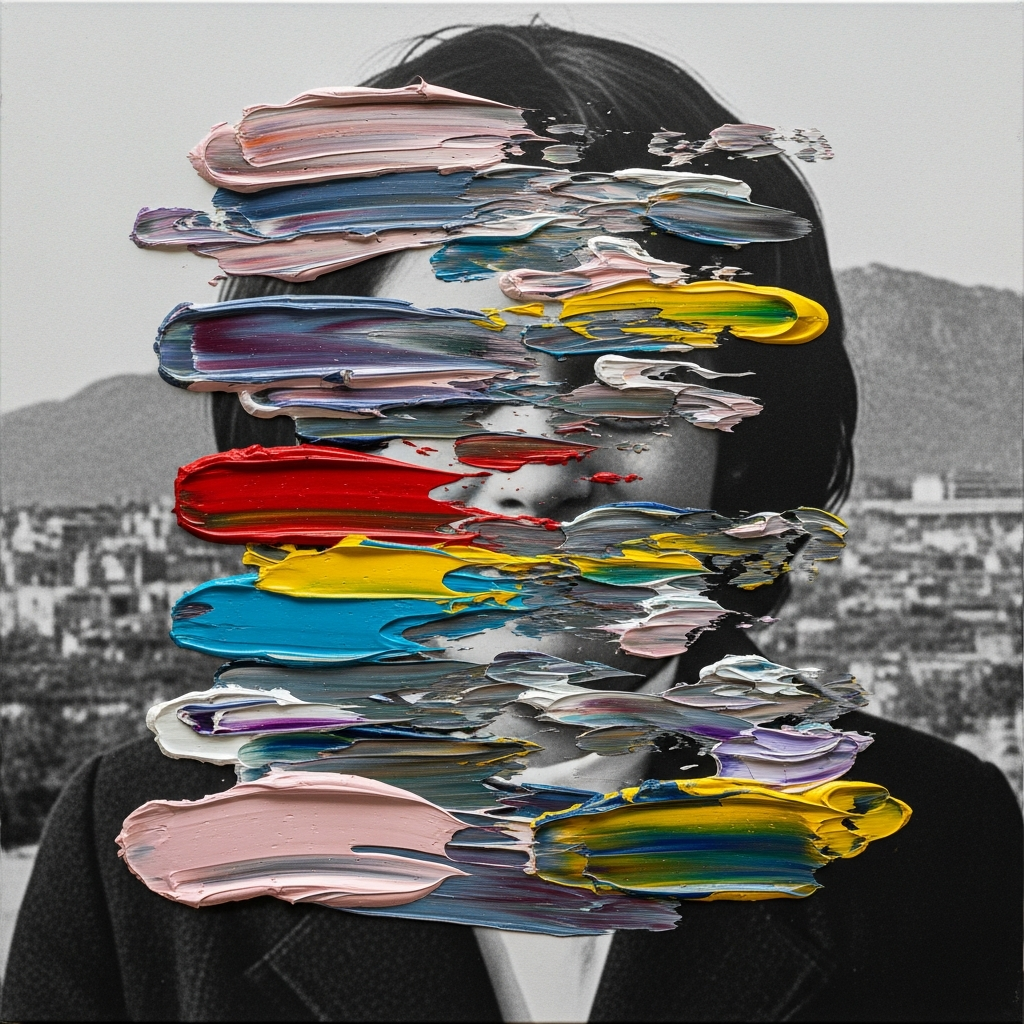
Gerhard Richter, a titan of contemporary art, famously blurred the lines. He would paint from photographs but then drag a squeegee across the wet canvas to blur the image, mimicking a shake or an out-of-focus snapshot. Richter posed the question: Comparing realism in painting versus photography, which is more “true”?
- David Hockney, typically known for his pop art paintings, explored photography through “joiners”—collages of Polaroid photos that attempted to capture time and space in a way similar to Cubist painting.
- Hockney argued that a single photograph is static, whereas painting captures time. His photographic experiments were an attempt to inject that “painterly time” into the camera’s lens.
The Digital Frontier: Is Digital Photography Real Art?
Today, we face a new question: Is digital manipulation in photography considered art? With tools like Photoshop and AI, the “darkroom” has become digital.
For the traditional painter, this can feel threatening. However, digital art is simply the evolution of the tool. Just as the tube of paint liberated Impressionists from the studio, digital tools liberate photographers from the laws of physics.
Art and technology have always walked hand in hand. The philosophical perspectives on photography’s artistic status remain relevant. If a digital artist spends 40 hours compositing, color grading, and painting light pixels into a scene, the artistic intent is identical to glazing oil paint.
Comparing the Craft: A Guide for Painters
To better understand the visual arts debate, let’s break down the technical differences and similarities. This table helps clarify art school curriculum debate: photography vs painting techniques.
| Feature | Traditional Painting (Oil/Acrylic) | Fine Art Photography (Analog/Digital) | Shared Artistic Principle |
|---|---|---|---|
| **Light Source** | Constructed by the artist (additive color mixing). | Captured by the sensor/film (subtractive/additive light). | **Luminosity:** Both must understand how light wraps around form. |
| **Composition** | Created from a blank canvas; additive process. | Selected from the world; subtractive process (framing). | **Rule of Thirds / Golden Ratio:** The eye must be led through the work. |
| **Texture** | Physical (impasto, brushstrokes, canvas weave). | Visual (grain, pixel depth, paper gloss). | **Tactility:** The surface quality evokes emotion. |
| **Time** | Accumulated time. A painting contains the history of its making. | “The Decisive Moment.” A slice of time frozen. | **Narrative:** Both mediums tell a story about a specific moment. |
| **Color Control** | Pigment mixing (Cadmium, Ultramarine, etc.). | White balance, color grading, gels, development time. | **Color Theory:** Warm/Cool relationships create depth. |
Why Some Traditional Painters Still Question Photography
Despite the art criticism and art history validating photography, you may still hear grumbling in life drawing classes. Why some traditional painters still question photography as art boils down to the difficulty curve.
A novice can take a lucky photo. A novice cannot paint a lucky portrait. Painting requires a high barrier of technical entry. However, Fine Art Photography – the kind practiced by Jeff Wall or Andreas Gursky—requires a mastery of composition, lighting, and theory that rivals any master painter. The “lucky shot” is not art; the consistent, intentional body of work is.
Documentary Photography Art vs. Fine Art
It is also important to distinguish between documentary photography art (journalism) and fine art. While both are valuable, fine art photography prioritizes the aesthetic and conceptual over the strictly informational. This is where the overlap with painting is strongest.
Frequently Asked Questions
Here are some common questions art students ask regarding the painting photography comparison.
1. Is photography considered a craft or an art?
It is both, just as painting is. “Craft” refers to the technical skill—mastering aperture, ISO, and printing techniques. “Art” refers to the conceptual vision and emotional impact. Without the craft, the art cannot be fully expressed. Photography as craft vs art is a false dichotomy; you need the craft to create the art.
2. Should I use photographs as references for my paintings?
Absolutely. This is a common art school curriculum debate. Masters like Gerhard Richter and Norman Rockwell used photos. However, do not copy the photo blindly. Photos often distort perspective and flatten shadows. Use the photo for geometry, but use your painter’s knowledge for color and temperature.
3. How has digital photography influenced contemporary painting?
Contemporary art photography has pushed painters to either embrace hyper-realism (competing with the lens) or move toward heavy abstraction (doing what the lens cannot). Furthermore, digital tools allow painters to mock up compositions in Photoshop before committing to canvas, saving time and materials.
4. Who are some famous artists who bridged photography and painting?
Key figures include Man Ray (Dadaism/Surrealism), David Hockney (Pop Art/Collage), Gerhard Richter (Abstract/Photorealism), and Chuck Close (Photorealism). Studying these artists shows how fluid the boundary is between the two mediums.
5. Does using a projector to trace a photo make me a “cheater”?
Vermeer likely used a camera obscura. Ingres likely used a camera lucida. Using tools to establish accurate proportions is not cheating; it is efficiency. The “art” is in your brushwork, edge control, and color mixing, not just your ability to draw a circle freehand.
Conclusion: The Sibling Disciplines
So, is photography art?
If it requires blood, sweat, and a trembling human hand, then yes.
We are not here to debate “dialects” or chase the “happy accident” of a perfect sunset. Whether you are pushing heavy-body acrylics across a canvas or adjusting an aperture, the goal remains the same: capturing the psychology beneath the skin. The camera is a tool for structure. It is an instrument of discipline, not a shortcut.
Photography didn’t just “sharpen” painting. It broke it. It liberated us from the stiff, posed boredom of the Old Masters and forced us to find the fractured, visceral truth of the Modernists. It stripped away the need for mere documentation and left us with the raw distortion of Bacon and the jagged perspectives of Picasso.
For the working artist, the camera is a weapon against the encroachment of the algorithm. Use it. But do not be passive. Use the lens to study weight, anatomy, and the flaw. Then, put the camera down. Return to the studio. Pick up your brush. Impose your will upon the canvas and build something real!
Citations
- The Museum of Modern Art (MoMA). “Photography at MoMA.” Available at: https://www.moma.org/collection/terms/photography
- The Tate. “Art Terms: and Photography. Available at: https://www.tate.org.uk/art/art-terms/p/photography/a-z
- The J. Paul Getty Museum. “The Art of Photography.” Available at: https://www.getty.edu/art/collection/media-types/photography
- More Photos and Paintings on Flickr