Have you ever looked at a beautiful painting of a sun-drenched field of poppies or a single, perfect rose and thought, “I could never do that”? Well, get ready to change your mind! The world of painting flowers for beginners is not a secret club for art school grads. It’s a welcoming, colorful playground where a few simple techniques can turn you from a nervous newbie into a confident floral artist. We’re going to dive into the art of capturing nature’s most vibrant subjects and show you how to paint flowers for beginners, proving that you have all the creativity and talent you need right at your fingertips.
Key Points: A Quick Start Guide
- Gather Your Gear: You don’t need a professional art studio. Start with a few basic supplies for your chosen medium: acrylics, watercolors, or oils.
- Master the Basics: Learn fundamental techniques like the “one-stroke” method, simple blending, and how to use different brushes.
- Start Simple, Dream Big: Begin with easy-to-paint flowers like daisies, lavender, or simple tulips to build confidence before moving to more complex blooms like roses.
- Forget Perfection: The goal is to have fun and express yourself. Every “mistake” is just a new, unique detail waiting to be celebrated.
- Find Your Inspiration: Look for inspiration everywhere—in your garden, a local florist, or even in a great photo.
The Tools of the Trade: What You Need to Get Started
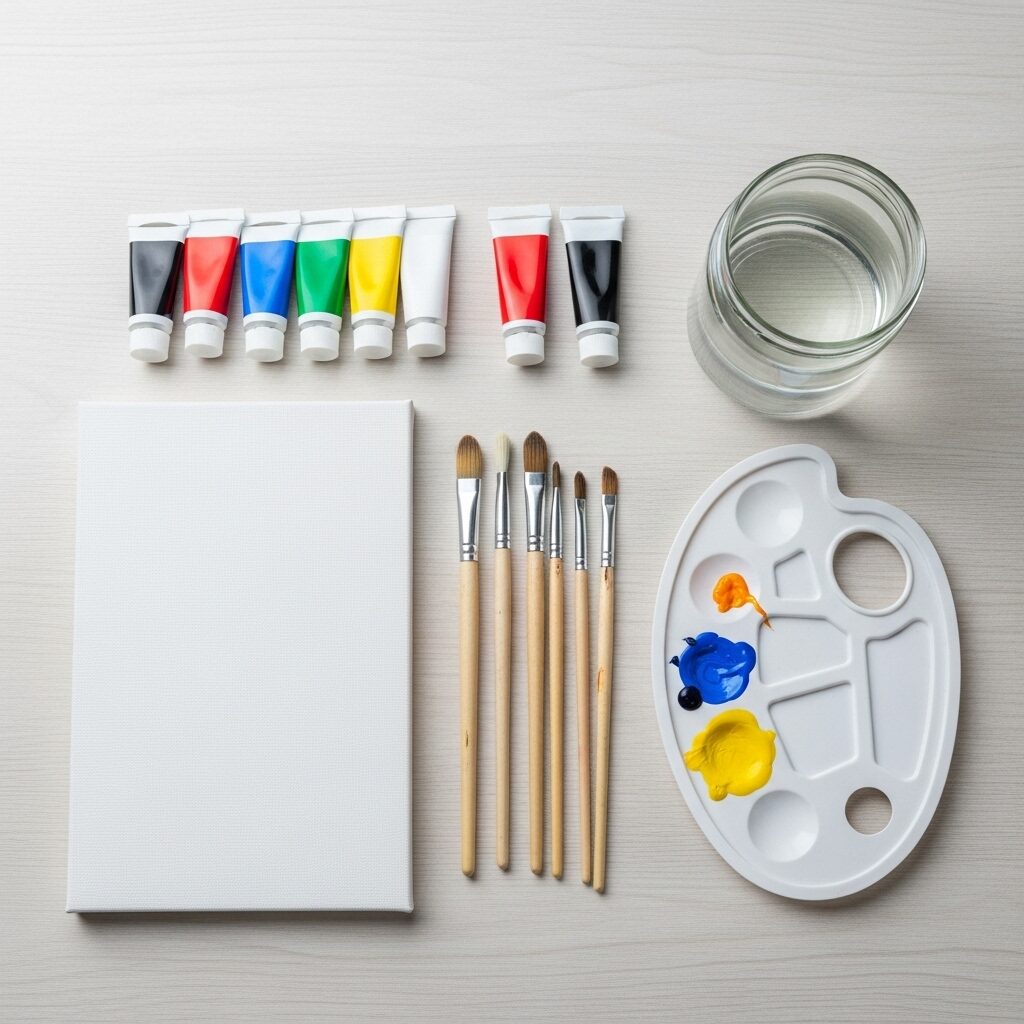
Before you start, let’s talk about supplies. Think of this as your artist’s toolkit. You don’t need to spend a fortune; a simple, quality set is all it takes to learn how to paint flowers for beginners.
For Acrylics:
- Paints: A basic set with primary colors (red, blue, yellow) plus black and white is a great start. You can mix any color you need from these.
- Brushes: A small round brush for details, a medium flat brush for petals and a large flat brush for backgrounds are perfect.
- Canvas: Small canvas boards or mixed media paper are affordable and great for practice.
- Other Essentials: A palette (a plastic plate works!), a cup of water, and some paper towels.
For Watercolors:
- Paints: A small set of watercolor pans is easy to use and portable.
- Brushes: A round brush and a flat brush are all you need. Look for one with a good point to create fine lines.
- Paper: Watercolor paper is a must! Regular paper will just wrinkle.
- Other Essentials: Two cups of water (one for clean water, one for dirty water) and a palette.
For Oils:
- Paints: A beginner’s oil paint set. Keep in mind oil paints have a longer drying time.
- Brushes: A few hog bristle brushes are good for pushing thick paint around.
- Canvas: Stretched canvas or canvas paper.
- Other Essentials: Mineral spirits or an odorless solvent for cleaning brushes, and a palette.

Simple Techniques for Stunning Results
Learning how to paint flowers is all about mastering a few key moves. Think of these as the building blocks for every bloom you’ll create. One fundamental technique in acrylic painting, for instance, is wet-on-wet blending. By applying paint and blending it while still wet, you can create smooth transitions between colors—perfect for the gentle color shifts in rose petals or the gradient effects in sunflowers.
The “One-Stroke” Wonder
This is a game-changer for beginners. You load your brush with two different colors and, with a single fluid motion, you can create a petal with a built-in highlight and shadow. For a daisy, simply load a flat brush with white on one corner and a tiny bit of yellow on the other. With one stroke, you create a petal that looks naturally shadowed. You can learn more about this and other techniques on our guide to Flower Painting Techniques: A Guide to Creating Beautiful Botanical Art.
The Art of “Scumbling”
This technique sounds complicated, but it’s just a fancy word for using a dry brush to apply paint lightly and unevenly, creating a textured, wispy effect. It’s fantastic for creating the fuzzy centers of flowers like daisies or for adding a soft, layered look to a bush of hydrangeas.
The “Wet-on-Dry” Method
For a cleaner, more defined look, this is your go-to. Apply a layer of paint and let it dry completely before you add the next layer. This is how you can create sharp, crisp edges and build up bold, opaque colors. This is especially useful for creating bold poppies or tulips with well-defined petals.
From Simple to Sensational: Easy Flowers to Paint
So, where do you begin? Start with flowers that have a straightforward shape. This will help you focus on the techniques without getting overwhelmed by complex structures.
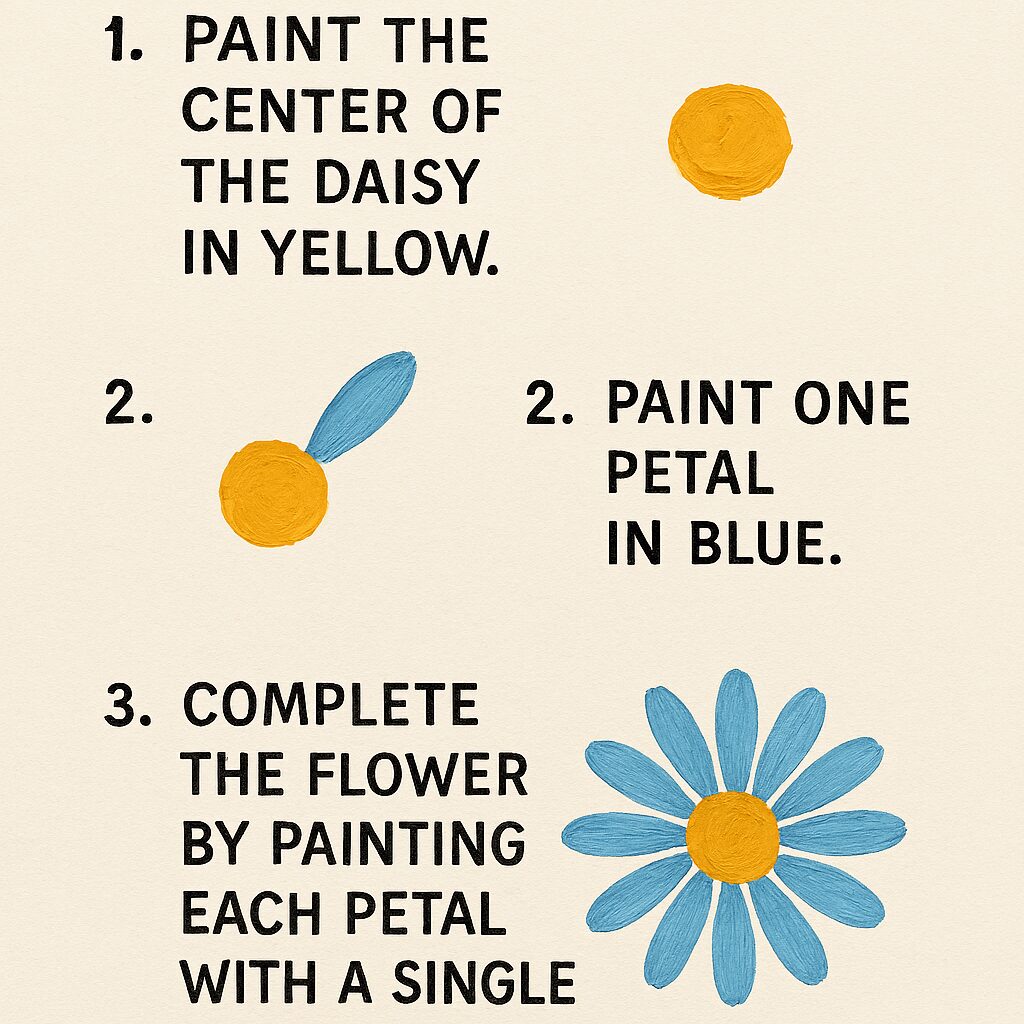
1. The Classic Daisy:
The daisy is the ultimate beginner’s flower. It’s just a circle in the middle with petals radiating outwards. You can’t go wrong!
- Start with a yellow circle for the center.
- Use a one-stroke technique with a flat brush and white paint to create the petals.
- Add a touch of darker yellow or brown to the center for a little texture.
2. Playful Lavender:
Lavender is perfect for exploring texture. You don’t need to paint every single tiny flower.
- Draw a thin green stem.
- Using a small round brush, make small dots or dabs of purple along the stem.
- Vary the pressure on your brush to create different sizes and shapes for a more organic, natural look.
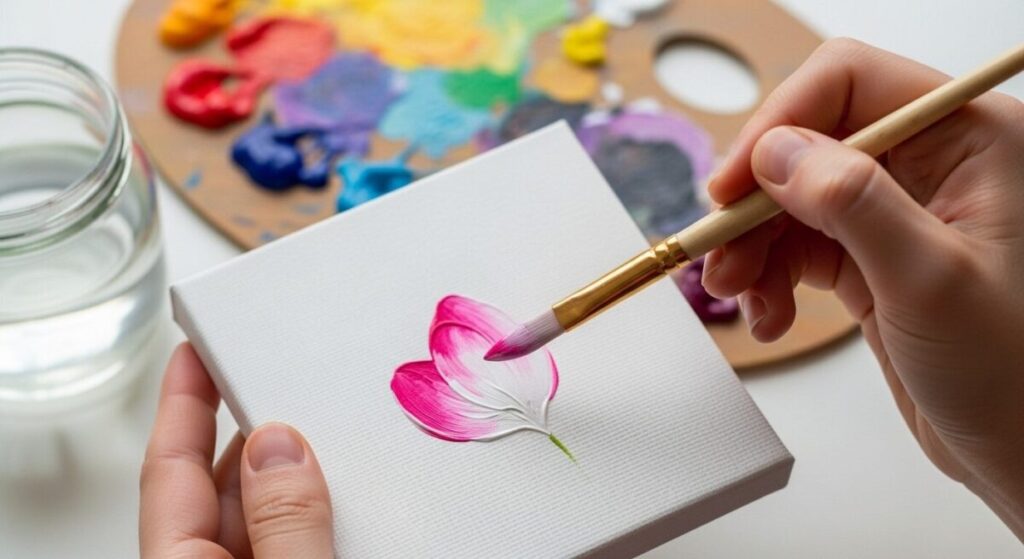
3. The Simple Tulip:
Tulips are a great lesson in shape and form.
- Draw a simple oval or cup shape for the bloom.
- Fill it in with a solid color like red or pink.
- Use a slightly darker shade to add a curve or a line for a bit of shadow, giving the tulip dimension.
Pro Tip
Don’t be afraid of the blank canvas! The most intimidating part of starting any art project is the first mark. Instead of a large canvas, practice on small pieces of paper or a sketchbook first. This removes the pressure and allows you to experiment freely with different colors and techniques. Remember what our own team believes: “Every artist starts with a single brushstroke.”
The Palette of an Artist: A Colorful Journey
Color is the heart and soul of floral painting. Understanding a bit about how colors work together can make your paintings come alive. Complementary colors, for example, sit opposite each other on the color wheel (like red and green, or yellow and purple) and create a powerful contrast when placed side-by-side.
| Flower | Base Colors | Shadows & Highlights | Pro Tip |
|---|---|---|---|
| Sunflower | Yellow, Brown | Burnt Sienna, White | Use a palette knife for a textured center. |
| Rose | Pink, Red | Crimson, White, Yellow | Blend colors while wet for a soft, layered effect. |
| Poppy | Scarlet Red, Black | Orange, Black | Use thin, watery paint for translucent petals. |
| Lily | White, Cream | Green, Purple, Ochre | Layer colors to build dimension on petals. |
| Hydrangea | Blue, Purple | White, Black, Phthalo Green | Use dabbing motions to create a cluster of small florets. |
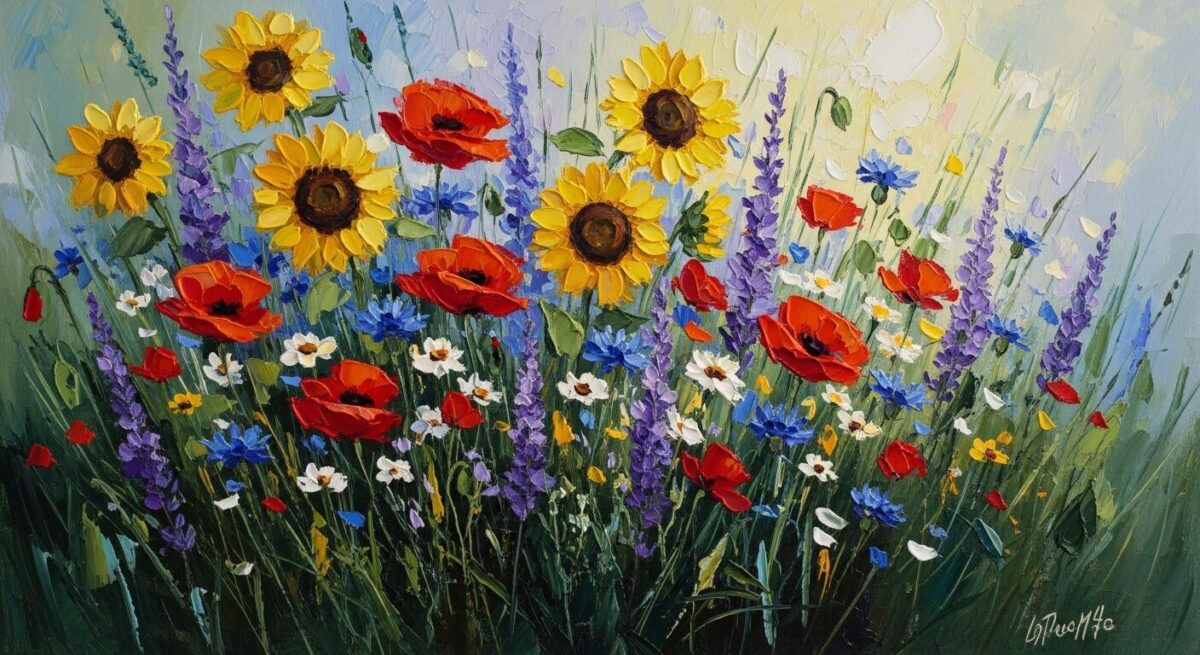
The Masters and Their Blooms: A Look at Famous Floral Paintings
| Painting | Artist | Year |
|---|---|---|
| Sunflowers | Vincent van Gogh | 1888 |
| Water Lilies | Claude Monet | 1899-1926 |
| Irises | Vincent van Gogh | 1889 |
| Still Life with Flowers | Ambrosius Bosschaert the Elder | 1617 |
| Still Life of Flowers on a Marble Ledge | Rachel Ruysch | 1716 |
| Roses | Pierre-Auguste Renoir | c. 1910 |
| Red Poppy | Georgia O’Keeffe | 1927 |
| Hibiscus | Utagawa Hiroshige | 1845 |
| Amaryllis | Piet Mondrian | 1907 |
| Flower Garden | Gustav Klimt | 1907 |
Finding Your Voice as a Floral Artist
Painting flowers is about more than just mimicking what you see. It’s about how you feel when you see them. Whether you’re drawn to the bold, sweeping brushstrokes of an impressionist or the sharp, clean lines of a botanical drawing, there are countless ways to express your unique perspective. For more inspiration, check out our article on the Different Types of Artwork Painting.
As the great painter Vincent van Gogh once said,
“I dream my painting, and then I paint my dream.”
This is the perfect mindset for a floral artist. Your canvas is a window into your imagination. Whether you want to create realistic blooms or something completely abstract, the only rule is to have fun.
Ready for more ideas? Watch this great video on creating easy flower paintings:
More Creative Avenues
Once you feel confident painting flowers, you can start experimenting with different settings. Instead of a single bloom, try painting a whole bunch in a vase. You can explore how light hits glass or how reflections play on a shiny surface. You could even use your new skills to create something completely from your imagination. For even more ways to spark your creative fire, visit our drawing prompts to unleash creativity article.
Flowers are also a beautiful way to explore different periods of art. The delicate blooms of the Renaissance are a world away from the bold, expressive florals of the Impressionists. Understanding how art styles have evolved can be a great way to inform your own work. Our article on Art Styles Explained by AI: A Visual Journey Through Styles is a fantastic resource for this. You might find that the freedom of an abstract flower is exactly what you need.
Remember that every artist, from the masters to the first-timer, has to start somewhere. The journey of learning to paint is a rewarding one, filled with discovery and joy. The world of art is waiting for you to add your unique touch to it. So pick up that brush, mix those colors, and paint your first flower.
Frequently Asked Questions
How can I make my flower painting look realistic? Realism comes from observing carefully. Pay attention to how light hits the petals, creating highlights and shadows. Use a variety of colors to create subtle shifts and blend them smoothly. Don’t be afraid to add imperfections—a few curled petals or a leaf with a bug bite will make your flower look more real!
What’s the easiest way to paint a rose? For a beginner, the easiest way to paint a rose is to not focus on every single petal. Instead, think of the rose as a series of swirling shapes. Start with a small, tight circle in the center and build outwards with loose, curved strokes. Use a slightly darker color to create a sense of depth and shadow.
How do I clean my brushes after painting flowers? For acrylics and watercolors, clean your brushes with soap and warm water until the water runs clear. For oils, first wipe off as much paint as you can with a paper towel. Then, wash the brushes in a solvent like odorless mineral spirits before a final wash with soap and water. Proper cleaning will protect your brushes and keep them ready for your next masterpiece.
Can I use any type of paper for painting? While you can technically use any paper, it’s a good idea to use paper made for your specific medium. Watercolor paper is thick and absorbs water without warping. Canvas or mixed media paper is best for acrylics and oils, as it can handle the thicker paint without bleeding or tearing.
How do I get my paint to not dry so fast? This is a common issue with acrylics! You can use a “retarder” medium, which is a liquid that you mix with your paint to slow down the drying time. You can also use a fine mist sprayer to lightly mist your canvas and palette to keep the paint wet longer.
Citations:
One‑Stroke Technique – Donna Dewberry
Learn Donna Dewberry’s one-stroke painting method, where you load a brush with two colors to deliver shading and highlighting in a single brushstroke—an essential, beginner-friendly technique.
Step‑by‑Step Flower Painting Techniques
Many beginner tutorials simplify petals to just one or two brushstrokes, often combined with wet-on-wet blending on the canvas. This approach helps you capture soft gradations easily.
Scumbling Technique for Adding Texture
Use scumbling—a method of applying a light, broken layer of paint over a dry base—to add texture and depth to floral elements like fuzzy centers or petals.
Wet-on-Wet Blending Tips in Acrylic Painting
Using water or acrylic retarder can slow drying time, allowing you to blend paints more effectively for smoother transitions—ideal for layering flower petals.
Beginner Daisy Painting Tutorial (YouTube)
For a beginner-friendly example, this video shows how to paint a daisy with acrylics, focusing on light, shadow, and simple strokes.
Loose Floral Painting Demonstration (YouTube)
Explore your creative freedom with a step-by-step tutorial on loose-style acrylic floral painting, offering an expressive, less structured approach ideal for beginners.