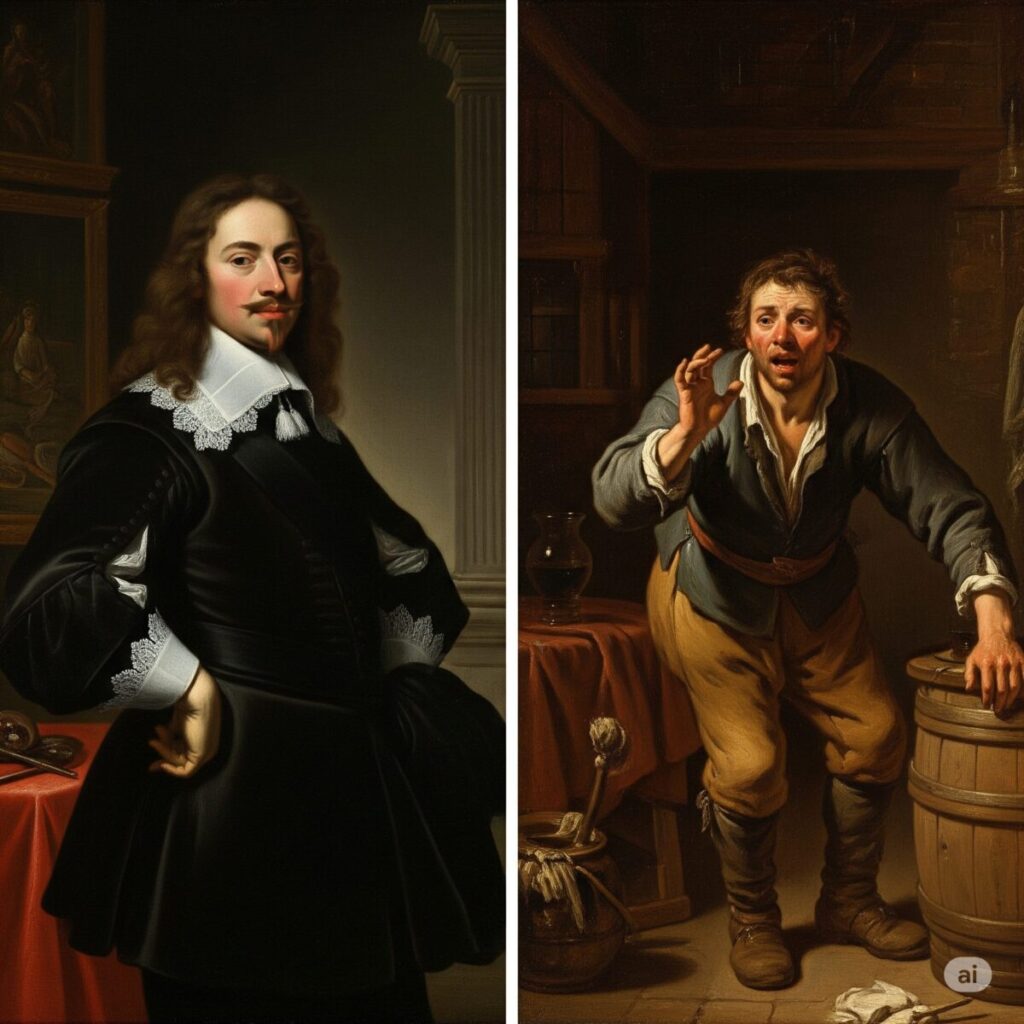
Have you ever stood in a museum, staring at a dramatic painting with intense shadows and emotional figures, wondering what makes it feel so different from other artwork? You’re not alone! Learning to identify Baroque art characteristics can transform your museum visits from confusing to captivating. The Baroque period gave us some of the most emotionally powerful and visually stunning paintings in art history, and once you know what to look for, you’ll never see these masterpieces the same way again.
Key Points Summary:
- Baroque art emerged in 17th-century Europe with dramatic emotion and movement
- Seven defining characteristics help you identify Baroque paintings instantly
- Chiaroscuro (dramatic light and shadow) is the most recognizable feature
- Understanding context helps distinguish Baroque from Renaissance and Rococo styles
- Famous artists like Caravaggio, Rubens, and Rembrandt perfected these techniques
What is Baroque Art? (And Why You Should Care)
Imagine walking into a dark room where a single spotlight illuminates a scene of intense drama—that’s essentially what Baroque art feels like. This revolutionary art movement dominated Europe from roughly 1600 to 1750, transforming how artists captured emotion, light, and movement on canvas.
But why does knowing about Baroque art matter today? Understanding this style unlocks a deeper appreciation for countless masterpieces hanging in museums worldwide. When you can identify what makes a painting Baroque, you’re not just looking at pretty pictures—you’re reading visual stories about power, faith, human emotion, and the dramatic spirit of an entire era.
By the end of this guide, you’ll possess the knowledge to walk into any art museum and confidently spot Baroque paintings, impressing your friends and enriching your own experience. Let’s begin your transformation into an art identifier!
A Glimpse into the Baroque Era: Understanding the Context
To truly grasp Baroque art characteristics, we need to rewind to 17th-century Europe—a time of religious conflict, powerful monarchies, and social transformation.
The Baroque movement was born in Rome around 1600, largely as the Catholic Church’s artistic response to the Protestant Reformation. Church leaders wanted art that could inspire awe, devotion, and emotional connection in ordinary people. They needed paintings and sculptures that spoke directly to the heart, not just the mind.
At the same time, absolute monarchs like Louis XIV of France used Baroque art to display their power and wealth. The style’s grandeur, opulence, and drama perfectly matched their desire to impress and intimidate.
This historical context explains why Baroque paintings are so theatrical and emotionally intense. Artists weren’t just creating beautiful images—they were crafting visual propaganda designed to move viewers, inspire faith, and demonstrate power. Understanding this purpose helps explain every dramatic gesture, every carefully placed shadow, and every luxurious detail you’ll encounter in Baroque masterpieces.
The 7 Defining Characteristics: Your Baroque Art Identification Checklist
Ready to become a Baroque art detective? These seven characteristics are your essential clues for identifying this dramatic style.
1. Drama and Intense Emotion
Baroque art characteristics start with pure, unfiltered drama. These paintings don’t whisper—they shout!
Look for:
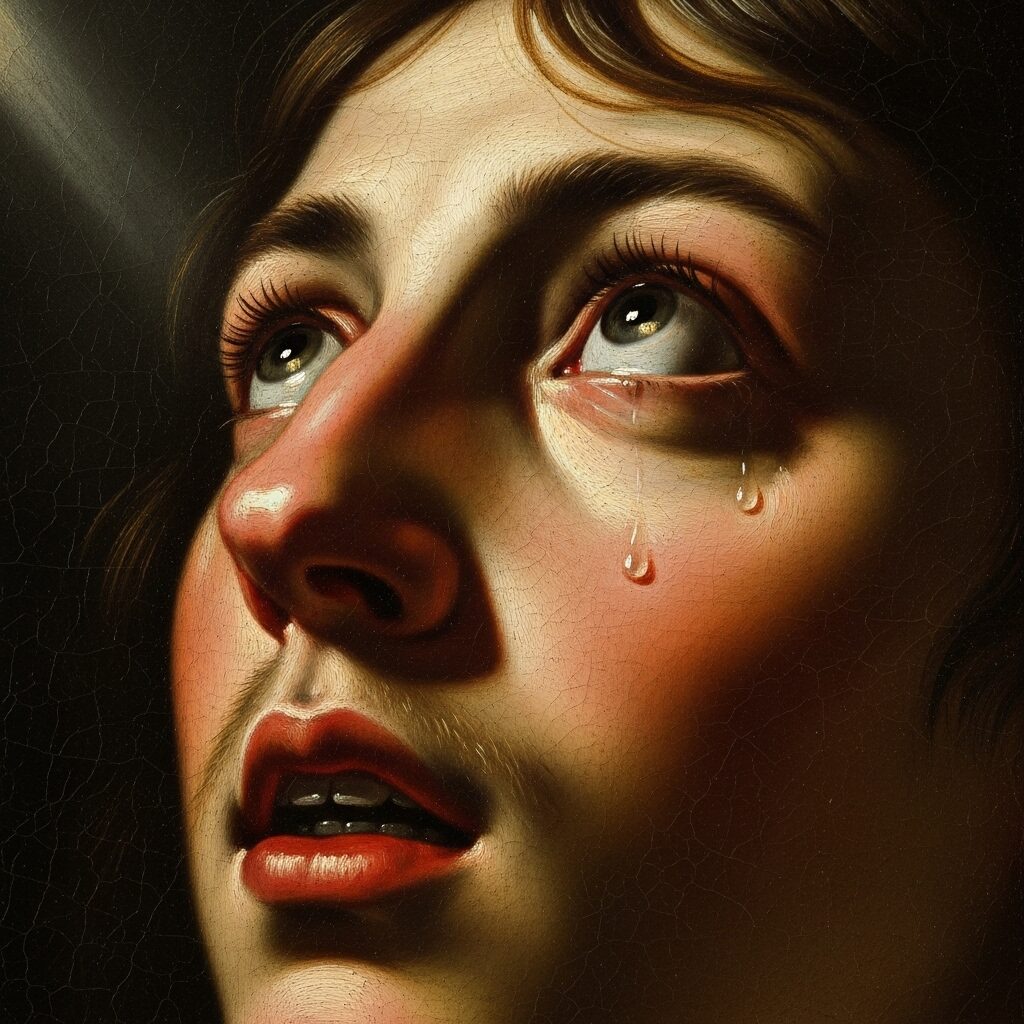
- Exaggerated facial expressions showing ecstasy, agony, or surprise
- Theatrical gestures with outstretched arms and dramatic poses
- Figures caught in climactic moments of action
- Intense eye contact or gazes directed toward heaven
Baroque artists wanted viewers to feel something powerful. Whether depicting a saint’s religious vision or a mythological battle, these paintings capture the most emotionally charged moment possible. The figures often seem frozen at the peak of action, as if you’ve pressed pause on a dramatic movie scene.
Example: In Caravaggio’s paintings, you’ll see ordinary people reacting to extraordinary events with raw, genuine emotion—no polite smiles or calm expressions here!
_-_The_Calling_of_Saints_Peter_and_Andrew_-_RCIN_402824_-_Hampton_Court_Palace.jpg "How to Easily Identify Baroque Art Characteristics in Paintings 4")
2. Light and Shadow: Chiaroscuro and Tenebrism
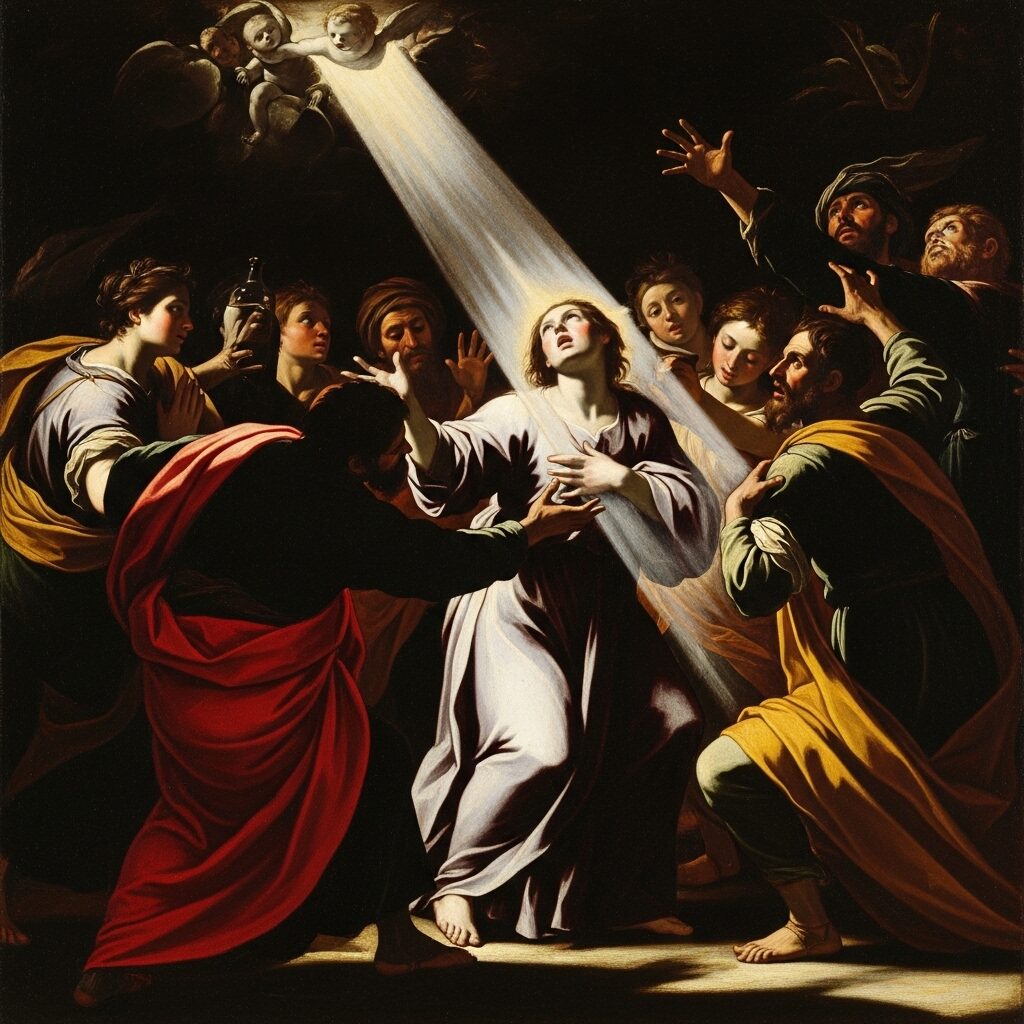
This is perhaps the most recognizable Baroque art characteristic. If a painting looks like it’s lit by a single spotlight in a dark theater, you’re probably looking at Baroque art.
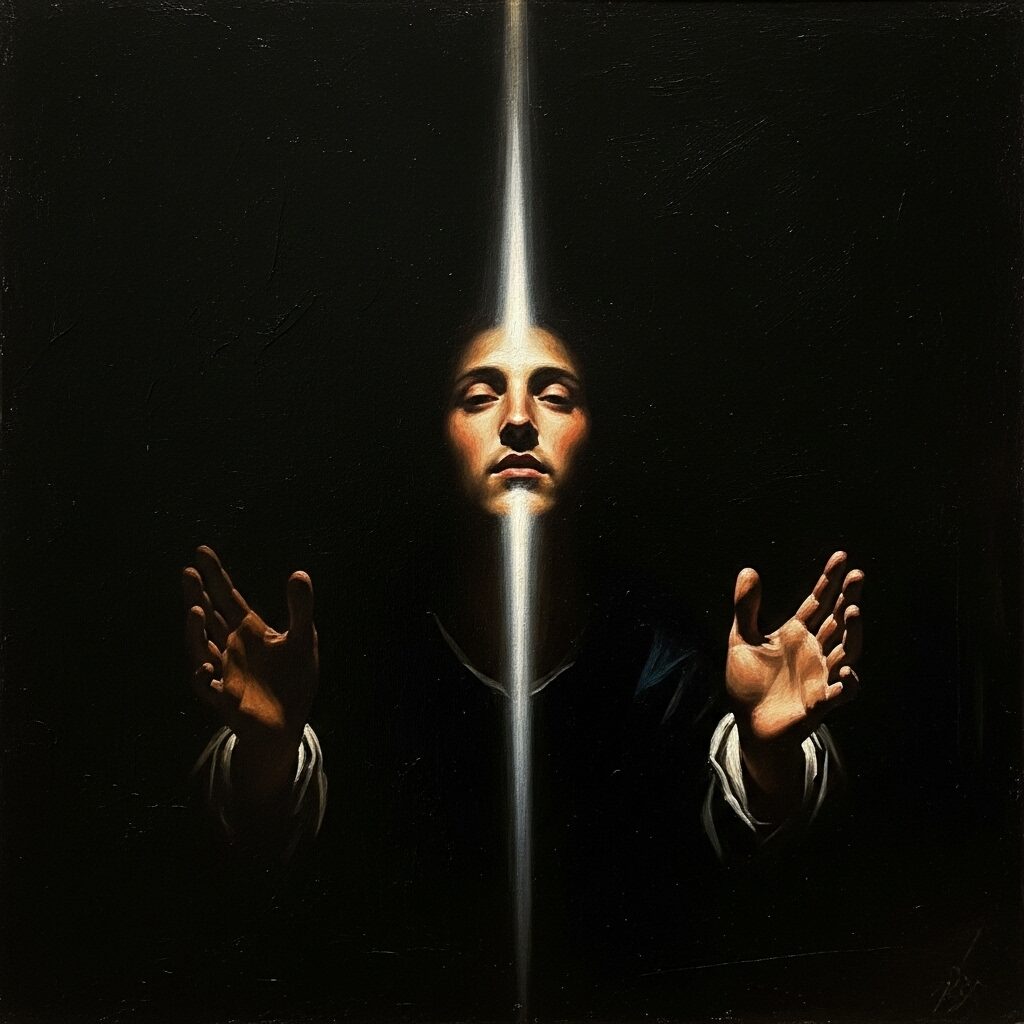
Chiaroscuro (Italian for “light-dark”) refers to the strong contrast between illuminated and shadowed areas. Baroque painters took this technique to extremes with tenebrism, where deep, dark shadows dominate the canvas, and bright light dramatically highlights only the most important elements.
Imagine a stage performance where a spotlight picks out the main actor while the background remains shrouded in darkness—that’s exactly how Baroque painters used light.
Key features:
- Sharp transitions between light and dark areas
- Figures emerging from deep shadows
- Single light source creating a “spotlight” effect
- Shadows used to add mystery and focus attention
Caravaggio pioneered this technique, and his influence spread across Europe. Art historians recognize his dramatic use of light as revolutionary for its time.
3. Movement and Dynamic Energy
Unlike the calm, balanced compositions of Renaissance art, Baroque paintings practically vibrate with energy and movement.
Look for these movement indicators:
- Diagonal lines instead of horizontal or vertical ones
- Swirling, spiraling compositions
- Asymmetrical arrangements
- Figures in mid-action—running, falling, reaching
- Flowing fabric and billowing drapery
- Multiple activities happening simultaneously
Baroque artists avoided static, stable triangular compositions. Instead, they created dynamic tension by placing elements along diagonal lines, which naturally suggests movement and action. This technique makes paintings feel alive and unstable, as if the scene might change at any moment.
4. Richness, Opulence, and Grandeur
Baroque art screams luxury! These paintings often feature:
- Lavish fabrics like velvet, silk, and brocade
- Intricate details in clothing and accessories
- Rich, deep color palettes with vibrant reds, golds, and blues
- Ornate architectural elements
- Abundant decorative details
The Baroque style emerged partly to display wealth and power, so artists packed their canvases with visual evidence of prosperity. Every fold of fabric is carefully rendered, every piece of jewelry meticulously detailed, and every surface seems to glow with richness.
This opulence wasn’t just about showing off—it created an immersive visual experience designed to overwhelm and impress viewers. Peter Paul Rubens particularly excelled at creating this sense of overwhelming abundance.
5. Realism and Naturalism (With Idealization)
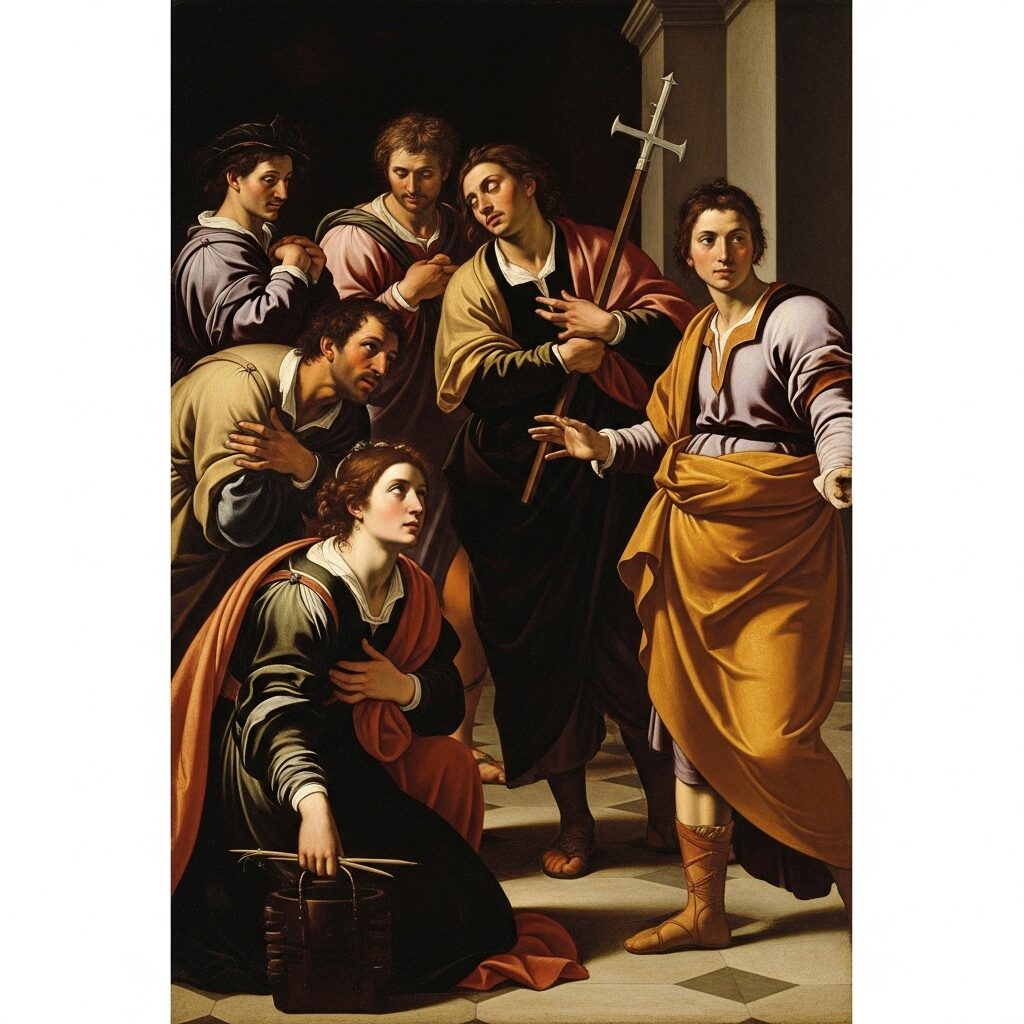
Here’s where Baroque gets interesting: these paintings look incredibly realistic, yet they’re also somewhat idealized.
Baroque artists studied real people, real emotions, and real lighting effects. They didn’t shy away from depicting:
- Wrinkled skin and imperfect bodies
- Genuine emotional expressions
- Physical details like dirt or worn clothing
- Authentic human reactions
However, they also elevated their subjects. A peasant model might be transformed into a biblical saint, their imperfections visible but their overall presentation heroic or divine. This combination of gritty realism and elevated subject matter creates a unique tension that makes Baroque paintings feel both accessible and awe-inspiring.
6. Religious, Mythological, and Grand Narrative Themes
What stories do Baroque paintings tell? Usually dramatic ones!
Common subjects include:
- Intense religious scenes (martyrdoms, conversions, visions)
- Classical mythology with emotional twists
- Historical battles and victories
- Portraits of royalty and nobility
- Allegorical scenes representing virtues or concepts
The Catholic Church commissioned much Baroque art to inspire devotion, so religious subjects dominate. However, you’ll also find plenty of mythological scenes where Greek and Roman gods experience very human emotions. Understanding religious symbolism helps decode many Baroque masterpieces.
These weren’t just pretty pictures—they were visual sermons, political statements, and displays of cultural sophistication all rolled into one dramatic package.
7. Illusionism and Monumentality
Baroque artists wanted to blow your mind with impossible visual effects!
Illusionism techniques include:
- Trompe l’oeil (French for “fool the eye”) effects
- Painted ceilings that seem to open to the sky
- Architectural elements that appear three-dimensional
- Figures that seem to break through the picture plane
- Perspectives that make spaces appear larger
Baroque painters collaborated with architects to create complete immersive environments. Churches feature painted ceilings where angels and saints seem to float in actual clouds above you, breaking down the barrier between art and reality.
Even in easel paintings, figures often appear monumental—larger than life and overwhelming in their presence. This sense of scale reinforces the style’s dramatic, awe-inspiring character.
Spot the Difference: Baroque vs. Other Art Styles
Now that you know the key Baroque art characteristics, let’s compare them with similar styles to sharpen your identification skills.
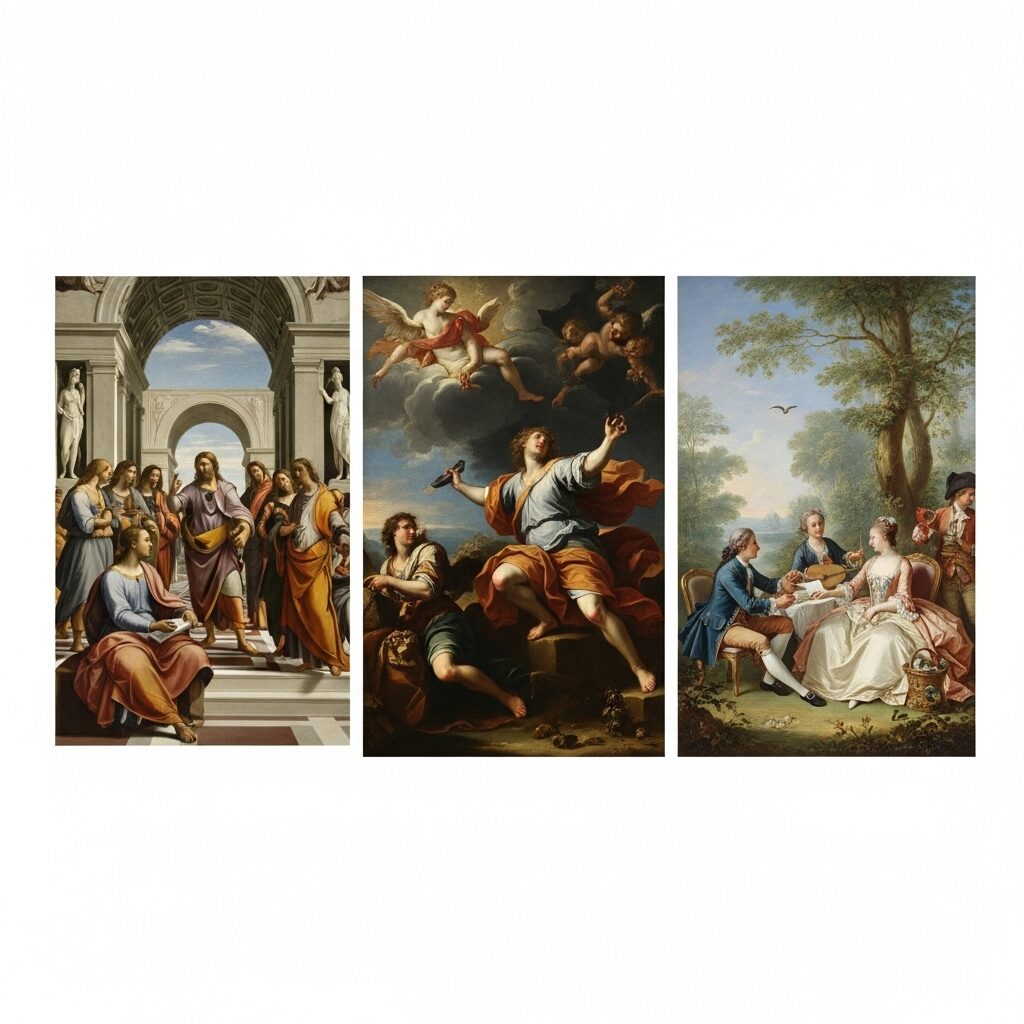
Baroque vs. Renaissance Art
Many people confuse these periods because they’re chronologically connected, but they’re artistically quite different:
| Renaissance | Baroque |
|---|---|
| Balanced, symmetrical compositions | Dynamic, diagonal compositions |
| Calm, serene emotions | Intense, dramatic emotions |
| Even lighting throughout | Strong light-dark contrasts (chiaroscuro) |
| Rational, ordered worldview | Emotional, theatrical worldview |
| Stable, triangular arrangements | Movement and energy |
| Clarity and simplicity | Complexity and ornate detail |
Think of it this way: Renaissance paintings are like classical music—harmonious and balanced. Baroque paintings are like rock concerts—loud, emotional, and thrilling!
Baroque vs. Rococo Art
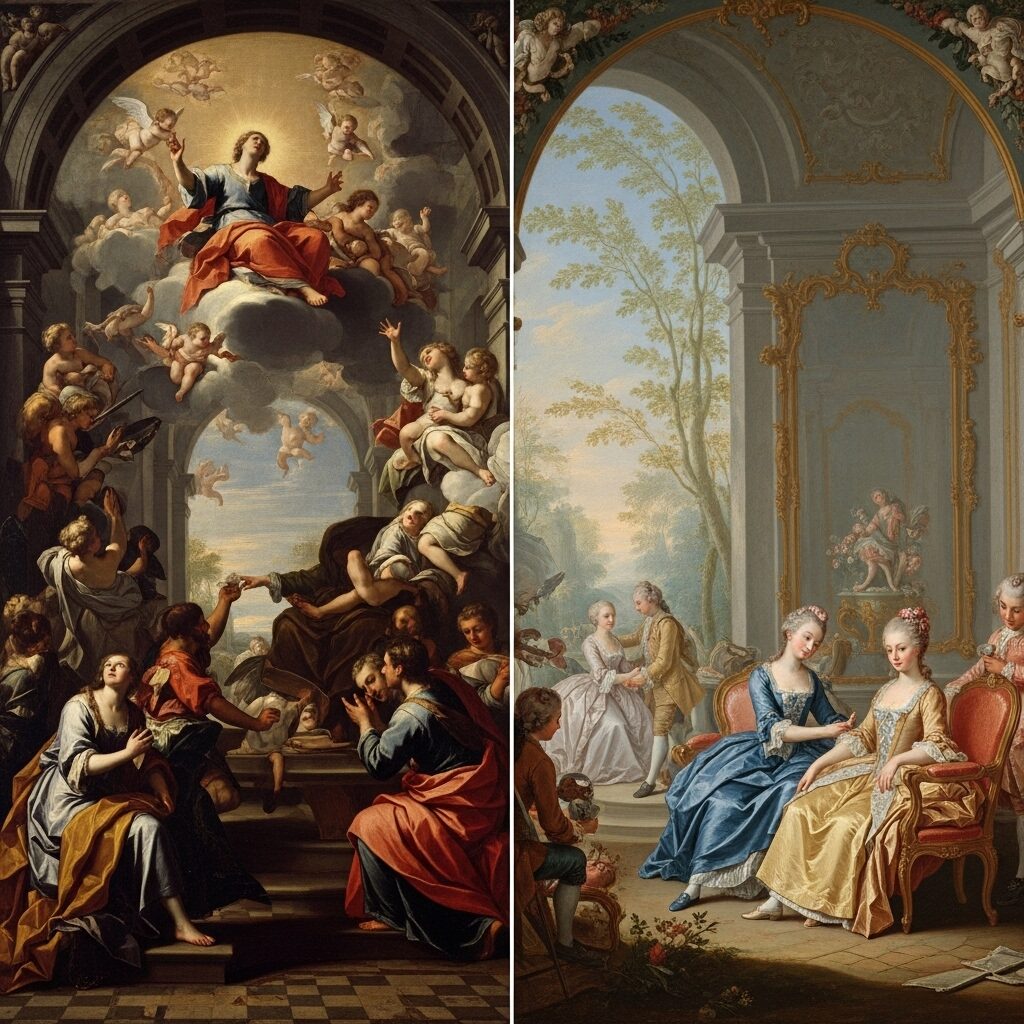
Rococo came after Baroque (roughly 1730-1780), and while related, these styles have distinct personalities:
| Baroque | Rococo |
|---|---|
| Grand, monumental scale | Intimate, smaller scale |
| Dark, rich colors | Light, pastel colors |
| Serious, weighty themes | Playful, frivolous themes |
| Religious and mythological subjects | Romantic and decorative subjects |
| Dramatic and intense | Lighthearted and charming |
| Overwhelm and awe | Delight and entertain |
If Baroque art is a dramatic opera, Rococo art is a flirtatious dance. Baroque takes itself seriously; Rococo wants to have fun!
Famous Baroque Painters You Should Know
Let’s meet the masters who perfected these Baroque painting techniques.
Caravaggio (1571-1610)
The rock star of Baroque art! Caravaggio revolutionized painting with his radical use of chiaroscuro. His religious scenes feature ordinary people with dirty feet and weathered faces, making biblical stories feel immediate and real. Look for his signature dramatic lighting and gritty realism.
What to notice: Single light source creating theatrical spotlighting, deep shadows, common people as models, raw emotional intensity.
Famous works: The Calling of Saint Matthew, Judith Beheading Holofernes, The Conversion of Saint Paul
Peter Paul Rubens (1577-1640)
If you see a painting bursting with energetic figures, swirling movement, and luxurious flesh tones, you’re probably looking at Rubens. This Flemish master specialized in dynamic compositions featuring robust, curvaceous figures (the term “Rubenesque” comes from his work).
What to notice: Multiple figures in complex arrangements, diagonal compositions, warm color palette, movement and energy, mythological subjects.
Famous works: The Descent from the Cross, The Garden of Love, The Consequences of War
Rembrandt van Rijn (1606-1669)
The Dutch master of psychological depth and emotional lighting. Rembrandt’s portraits reveal inner character through subtle expressions and masterful use of light. His work shows Baroque characteristics combined with profound human insight.
What to notice: Warm golden light, emotional depth, incredible detail in faces, ordinary moments made profound, masterful brushwork.
Famous works: The Night Watch, The Return of the Prodigal Son, numerous self-portraits
Diego Velázquez (1599-1660)
Spain’s greatest painter brought Baroque realism to court portraiture. Velázquez combined the drama of Baroque with incredible technical skill and psychological insight.
What to notice: Realistic portrayal without excessive flattery, masterful handling of space, subtle lighting, court life scenes.
Famous works: Las Meninas, The Surrender of Breda, Portrait of Pope Innocent X
Artemisia Gentileschi (1593-1656)
One of the most accomplished painters of her era, Artemisia brought powerful female perspectives to Baroque art. Her work features strong, complex female characters and dramatic narratives.
What to notice: Powerful female protagonists, intense drama, Caravaggio-inspired lighting, psychological complexity.
Famous works: Judith Slaying Holofernes, Self-Portrait as the Allegory of Painting, Susanna and the Elders
“Without atmosphere a painting is nothing.”
Rembrandt van Rijn
This quote perfectly captures the Baroque emphasis on mood, lighting, and emotional impact over mere technical accuracy.
Practice Makes Perfect: How to Apply Your New Skills
Theory is great, but now it’s time to put your knowledge into action! Here’s how to practice identifying Baroque art characteristics in real-world settings.
Museum Visit Tips
1. “Look for the Drama” Enter each gallery asking yourself: “What’s the most emotionally intense painting here?” That’s often your Baroque piece. Scan for exaggerated expressions, dramatic gestures, and climactic moments.
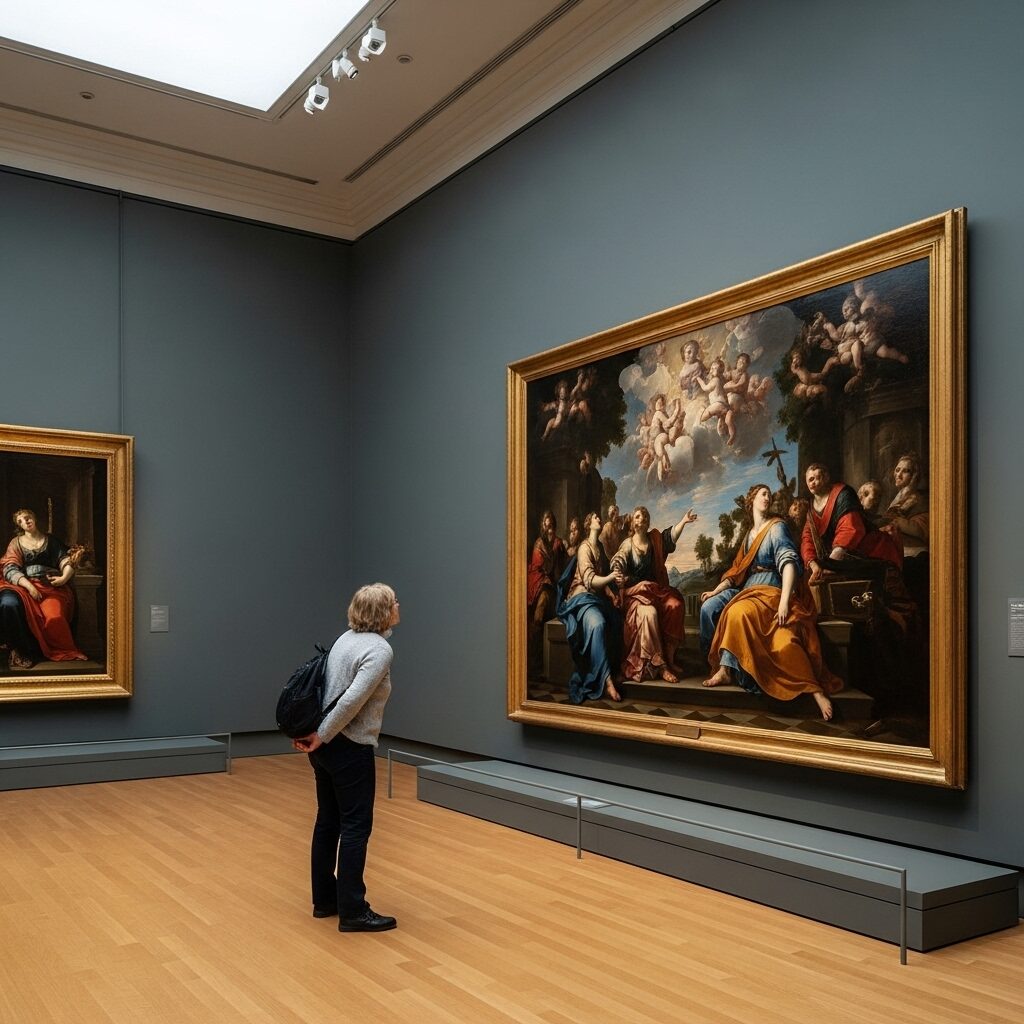
2. “Follow the Light” Train your eyes to notice lighting. Does one painting have dramatically different lighting than others nearby? Check for strong shadows and highlighted areas that create a “spotlight” effect—classic Baroque!
3. “Feel the Movement” Step back and notice which paintings seem to have energy and motion. Are figures arranged along diagonal lines? Does the composition feel unstable or dynamic? That suggests Baroque style.
4. “Check the Mood” Pay attention to the overall atmosphere. Baroque paintings typically feel serious, dramatic, or awe-inspiring rather than peaceful or decorative.
5. Trust Your Gut Does the painting make you feel something intense? Does it seem theatrical or dramatic? Your emotional response is often your best guide to identifying Baroque art!
Online Practice Resources
Can’t get to a museum? No problem! These online collections let you practice from home:
- The National Gallery, London – Extensive Baroque collection with detailed information
- The Prado Museum, Madrid – Incredible Spanish Baroque masterpieces
- Google Arts & Culture – Virtual tours of museums worldwide
Try this exercise: Browse a museum’s online collection and create two lists—”Definitely Baroque” and “Probably Not Baroque.” Then check the dates and descriptions to see how accurate your identifications were. You’ll improve quickly with practice!
Common Mistakes When Identifying Baroque Art
Even experienced art lovers sometimes misidentify styles. Here are common pitfalls to avoid:
Mistake #1: Assuming All Old Religious Art is Baroque Religious art spans centuries! Medieval art, Renaissance art, and Baroque art all feature religious subjects but look completely different.
Mistake #2: Confusing Dark Paintings with Baroque Style Not all dark paintings are Baroque. Some later artists used dark palettes without the characteristic chiaroscuro or dramatic composition of true Baroque work.
Mistake #3: Overlooking Northern Baroque Variations Dutch and Flemish Baroque art sometimes looks different from Italian Baroque. Northern artists often focused on everyday scenes and landscapes with more subtle drama. Understanding Dutch Golden Age painting helps recognize these variations.
Mistake #4: Focusing Only on Subject Matter The subject doesn’t determine the style! A painting of a religious scene could be from any period. Focus on how it’s painted—the lighting, composition, and emotional treatment—not just what it depicts.
Quick Reference: Baroque Art Characteristics Cheat Sheet
Print this handy checklist for your next museum visit:
✓ Drama & Emotion – Exaggerated expressions, theatrical gestures, intense moments
✓ Chiaroscuro Lighting – Strong light-dark contrasts, single light source, dramatic shadows
✓ Movement & Energy – Diagonal compositions, dynamic poses, swirling elements
✓ Rich Opulence – Lavish details, luxurious fabrics, deep colors
✓ Realistic Yet Idealized – Natural details with heroic presentation
✓ Grand Narratives – Religious, mythological, or historical themes
✓ Illusionistic Effects – Trompe l’oeil, monumental scale, spatial tricks
Dating: Approximately 1600-1750
Geography: Started in Rome, spread throughout Catholic Europe
Historical Context: Counter-Reformation, absolute monarchies, theatrical culture
Frequently Asked Questions About Baroque Art
What are the 5 main characteristics of Baroque art?
The five most recognizable Baroque art characteristics are: (1) dramatic lighting through chiaroscuro and tenebrism, (2) intense emotional expression and theatrical drama, (3) dynamic movement and diagonal compositions, (4) rich opulence and lavish detail, and (5) realistic yet idealized representation of figures. These characteristics work together to create the overwhelming, emotionally powerful experience that defines Baroque style.
What is the easiest way to identify Baroque art?
The easiest identification method is checking for dramatic chiaroscuro lighting—strong contrasts between light and dark areas that create a “spotlight” effect. If a painting looks like it’s lit by theater lights with deep shadows and brightly illuminated figures, it’s likely Baroque. Combine this with checking for intense emotions, diagonal compositions, and dramatic subject matter for confident identification.
How is Baroque art different from Renaissance art?
While Renaissance art emphasizes balance, harmony, and rational order, Baroque art focuses on drama, emotion, and dynamic movement. Renaissance compositions are typically symmetrical and calm with even lighting, while Baroque works feature asymmetrical arrangements, strong light-dark contrasts, and theatrical intensity. Think of Renaissance as classical and serene versus Baroque as dramatic and emotional.
Who are some famous Baroque painters?
The most influential Baroque painters include Caravaggio (revolutionary chiaroscuro pioneer), Peter Paul Rubens (dynamic compositions and movement), Rembrandt van Rijn (psychological depth and lighting mastery), Diego Velázquez (Spanish court painter), Artemisia Gentileschi (powerful female perspectives), and Gian Lorenzo Bernini (sculptor and painter). Each brought unique interpretations to core Baroque painting techniques while maintaining the style’s dramatic essence.
What are the main themes of Baroque art?
Baroque art predominantly features religious subjects (saints, martyrdoms, biblical scenes), classical mythology, historical events, and portraits of royalty and nobility. The Catholic Counter-Reformation heavily influenced thematic choices, resulting in emotionally intense religious narratives designed to inspire devotion. Grand, dramatic storytelling was essential—artists chose moments of maximum emotional impact and theatrical potential.
Where did Baroque art originate?
Baroque art originated in Rome, Italy, around 1600 as the Catholic Church’s artistic response to the Protestant Reformation. Church leaders wanted emotionally powerful art that could inspire faith in ordinary people and demonstrate Catholic grandeur. From Rome, the style spread throughout Catholic Europe, including Spain, Flanders, France, and parts of Germany, with each region developing its own variations while maintaining core Baroque characteristics.
Why is it called Baroque art?
The term “Baroque” likely comes from the Portuguese word “barroco,” meaning an irregularly shaped pearl. Initially used as a criticism implying the art was overly ornate or bizarre, the term eventually became the standard name for this period’s distinctive dramatic style. Today, Baroque describes art that emerged from roughly 1600-1750 characterized by emotional intensity, dramatic lighting, and theatrical grandeur.
Your Journey as a Baroque Art Identifier Begins!
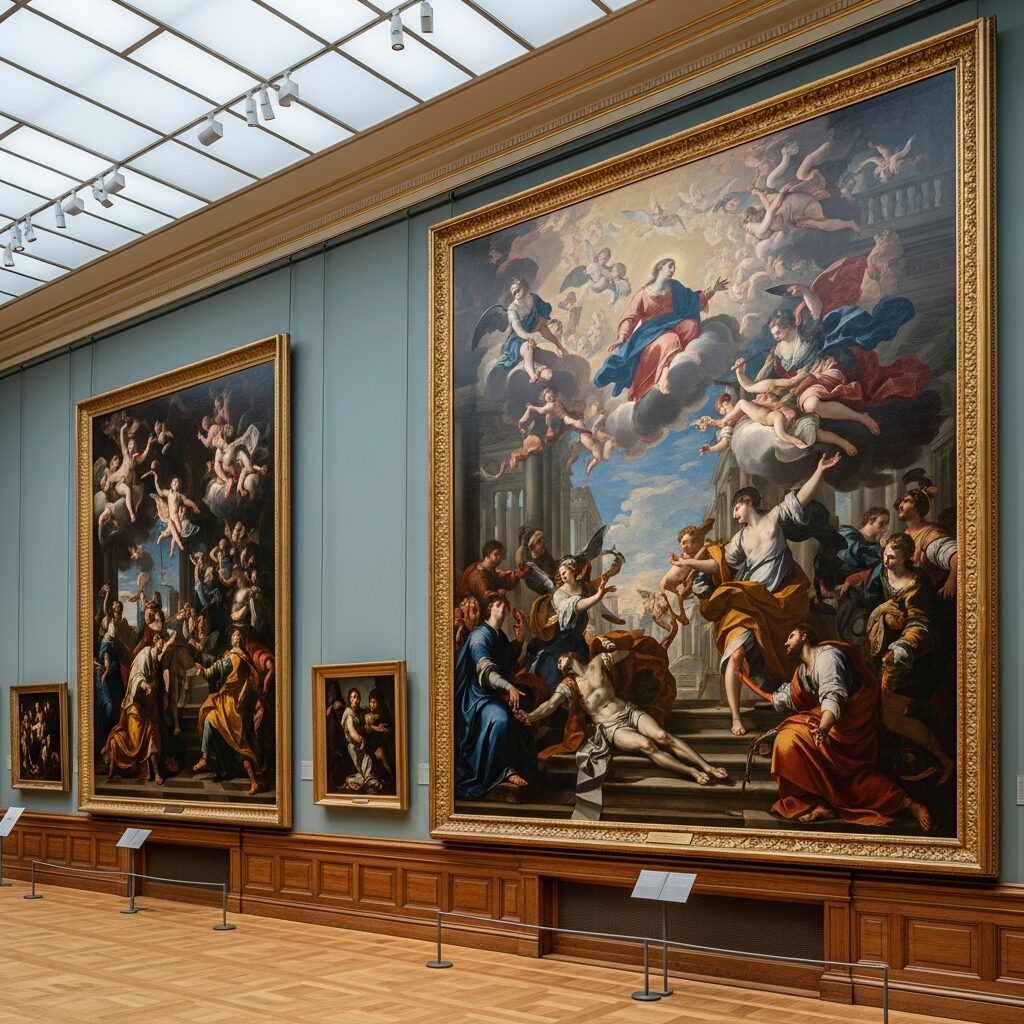
Congratulations! You now possess the knowledge to confidently identify Baroque art characteristics in paintings. You’ve learned to recognize the dramatic chiaroscuro lighting, intense emotional expressions, dynamic movement, and rich opulence that define this revolutionary artistic period.
Remember, becoming skilled at identifying art styles takes practice. The more Baroque paintings you observe—whether in museums, books, or online galleries—the more intuitive this recognition becomes. Soon, you’ll spot that theatrical lighting and dramatic composition from across a gallery!
Your new understanding of Baroque art opens doors to deeper appreciation of hundreds of masterpieces created during this passionate, dramatic period. Next time you’re in a museum, use your identification checklist and enjoy the satisfaction of recognizing Baroque works with confidence. You’re no longer just looking at paintings—you’re reading the visual language of an entire artistic era!
Ready to expand your art identification skills further? Explore how other art movements created their own distinctive styles, and you’ll soon navigate any art museum like an expert. The world of art history awaits your informed eye!
Citations
Deepen your understanding of Baroque art with these authoritative sources:
- The Metropolitan Museum of Art – Baroque Art Guide – Comprehensive overview of Baroque art history and characteristics
- National Gallery of Art – Caravaggio and His Followers – Detailed exploration of Caravaggio’s revolutionary techniques
- The Rijksmuseum – Dutch Golden Age Collection – Extensive collection of Northern Baroque masterpieces
- Khan Academy – Baroque Art History – Free educational videos and articles about Baroque art
- The Getty Museum – Art & Artists – Searchable collection with excellent educational resources
- Smarthistory – Baroque Art – Art history content written by expert scholars