
Are you looking to buy your first piece of art at an auction but feel intimidated by the process? This beginner’s guide breaks down exactly how art auctions work. We will go from registering and researching artwork to placing your winning bid. Learn how to navigate hidden fees, understand auction jargon, and bid confidently online or in person. Ready to start your collection? Let us dive into the exciting world of art auctions.
Many people think art auctions are only for billionaires in tailored suits. But that is simply not true. You might be wondering exactly how do art auctions work for normal people? The truth is that the art market is opening up. As an arts educator and the Founder of ProminentPainting.com, I want to demystify this process for you.
Over my decade of teaching art, I have seen so many students feel scared to buy real art. They worry about breaking unspoken rules or spending too much money. My goal is to make painting and collecting accessible to artists of all levels. You do not need a massive bank account to participate. You just need to understand the rules of the game.
Today, anyone can join a digital or live auction. The barriers are falling away fast. Let us explore the simple steps to successfully buy art at an auction without any stress.
How Do You Register for an Art Auction?
To register for an art auction, you must create an account with the auction house and provide proof of identity. Most houses require a valid photo ID and sometimes a bank reference to prove you have funds. You should complete this step several days before the event begins.
Registering is your ticket to bid. Do not wait until the last minute. The auction house needs time to verify your personal details. This keeps the buying process safe for everyone involved.
Sometimes they will ask for a financial deposit. This usually happens if you plan to bid on very expensive items. This is totally normal and protects the seller. Once approved, you will receive a paddle number for live events or an online bidding profile.
What Is a Buyer’s Premium and Other Hidden Fees?
A buyer’s premium is an additional fee added to the winning bid of an item. It usually ranges from 20% to 25% of the final price. You must also pay local taxes and shipping costs, which are never included in the auctioneer’s final call.
When the auctioneer drops the hammer, that is called the “hammer price.” But your final invoice will always be higher. The buyer’s premium goes directly to the auction house to cover their operational costs.
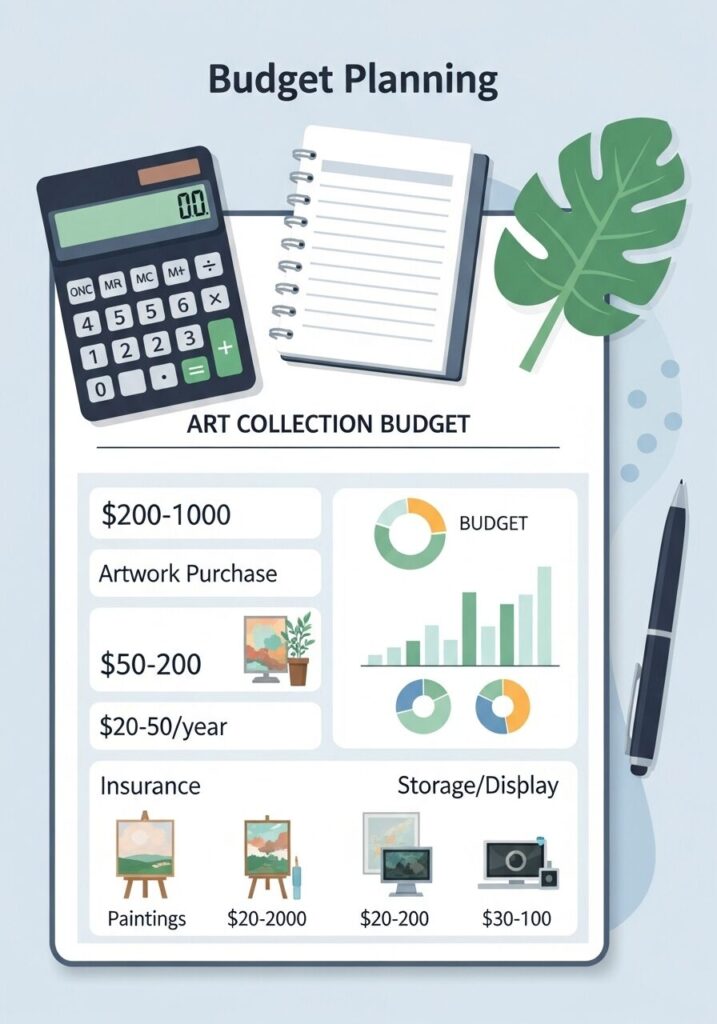
Always calculate this extra percentage before you raise your paddle. It helps to understand what makes paintings valuable so you can set a strict budget. Never bid more than you can afford after all the fees are added.
How to Research Art Before Bidding
Research is the most important step for any beginner. You should always read the auction catalog carefully. The catalog tells you the size, medium, and history of the artwork. It also gives an estimated price range to guide your budget.
Whenever possible, attend a pre-auction exhibition in person. Experts note that going to free exhibitions helps you learn from specialists firsthand. You can see the paint colors clearly and check the canvas for any damage.
Taking time to appreciate art in person trains your eye. You can also request a free “condition report” from the auction house. This document lists any flaws, scratches, or repairs the artwork has undergone over the years.
How Does the Bidding Process Actually Work?
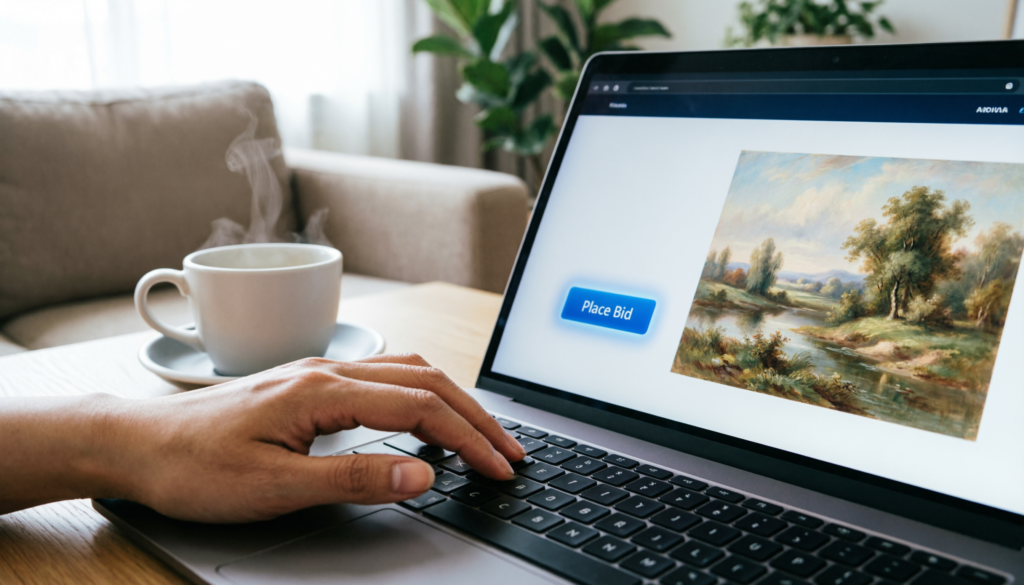
The bidding process works by an auctioneer accepting increasing price offers from participants until no one is willing to pay more. You can place bids in person with a paddle, over the phone, live online, or by leaving a maximum absentee bid beforehand.
The auctioneer controls the pace of the room. They will announce the starting price and ask for bids in set increments. If you are in the room, you simply raise your numbered paddle clearly. If you are bidding online, you click a button on your computer screen.
For digital formats, timed online auctions take place over several days without a live person talking. You just enter your highest price. Using automatic bidding lets you set a maximum limit so the system bids for you safely. This stops you from getting carried away in the heat of the moment.
Online vs In-Person Art Auctions: Which Is Better?
Both formats offer a great experience, but they suit different needs. Live auctions are thrilling and full of energy. They let you see the artwork right in front of you. However, they can feel a bit fast and intimidating for first-timers.
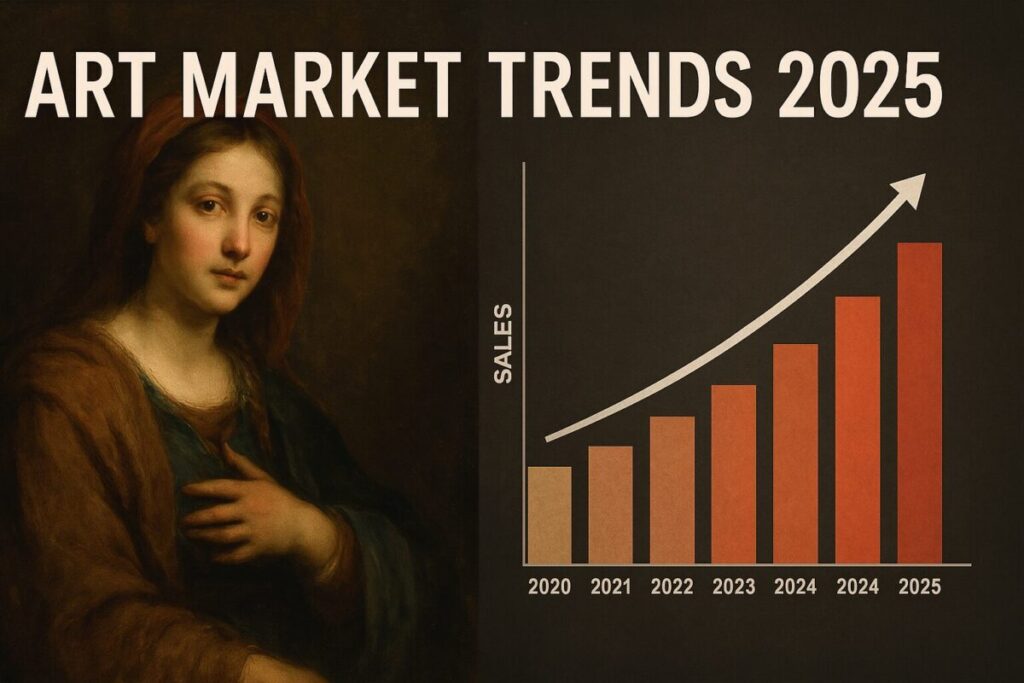
Online auctions are booming right now. Data shows that global public auction sales grew to over 20 billion dollars recently, largely driven by digital access. In fact, you can easily buy original artwork online from the comfort of your sofa.
A recent study noted that works priced below 50,000 dollars drive the highest volume, meaning the market is very accessible for new collectors.
| Feature | Online Auctions | In-Person Auctions |
| Pace | Relaxed and timed over days | Fast and highly energetic |
| Convenience | Bid from anywhere in the world | Requires travel to a specific city |
| Viewing Art | Rely on high-resolution photos | See paint textures in real life |
| Pressure | Low pressure | Can feel competitive |
If you want to read more about this digital shift, check out my thoughts on current art auction trends.
What Happens When You Win an Auction?
When you win an auction, you will receive an official invoice detailing the hammer price, the buyer’s premium, and any applicable taxes. You must pay this invoice in full before you can collect your artwork or arrange for shipping.
Winning is a very exciting feeling! Typically, buyers receive an invoice the day after the sale and have around 15 days to settle the bill. You can usually pay by bank transfer or a credit card.
Once paid, you need to get your painting home safely. Most auction houses have a list of approved art shippers who know how to pack delicate items. You will pay the shipper separately to deliver the art to your door.
Conclusion
Buying your first painting at auction is a huge milestone. Remember the three main steps. First, do your research. Second, set a strict budget with fees included. Third, bid with confidence.
I always tell my students that art is meant to be enjoyed, not feared. The auction world is open to anyone willing to learn the rules. I highly recommend watching a live auction online just to observe the rhythm before you ever spend a dime. It is great practice and completely free.
Are you ready to dive deeper into the creative world? Browse the rest of ProminentPainting.com to find your next burst of inspiration!
Frequently Asked Questions
Can anyone attend an art auction?
Yes, most public art auctions are completely free and open to anyone who wants to watch. You only need to register if you plan to bid on an item. It is a wonderful way to view rare artworks before they disappear into private homes.
What happens if a painting does not meet the reserve price?
The reserve price is the secret minimum amount the seller will accept. If bidding stops below this number, the lot is considered “bought-in” and remains unsold. The auctioneer will simply move on to the next item.
Do you have to pay immediately at an art auction?
No, you do not need to hand over cash right there in the room. You will usually receive an invoice the following day. Most auction houses give you a couple of weeks to transfer the funds.
What is chandelier bidding?
Chandelier bidding is a controversial practice where the auctioneer pretends to see a bid from the back of the room. They do this to build momentum and push the price closer to the reserve minimum. It is perfectly legal but good to be aware of.
Are online art auctions safe for beginners?
Yes, reputable online auction houses are very safe. They verify all sellers and guarantee the authenticity of the artwork. Just make sure you read the condition reports carefully before placing any digital bids.