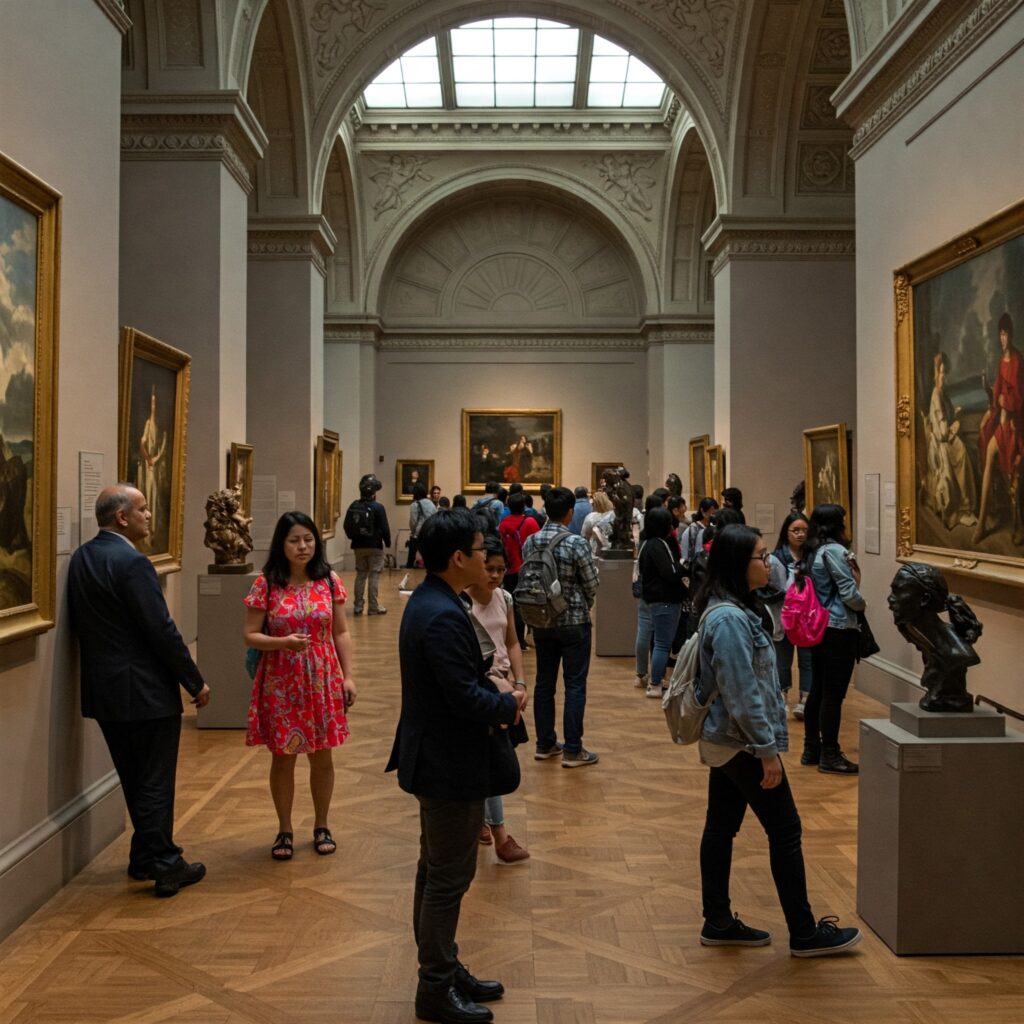
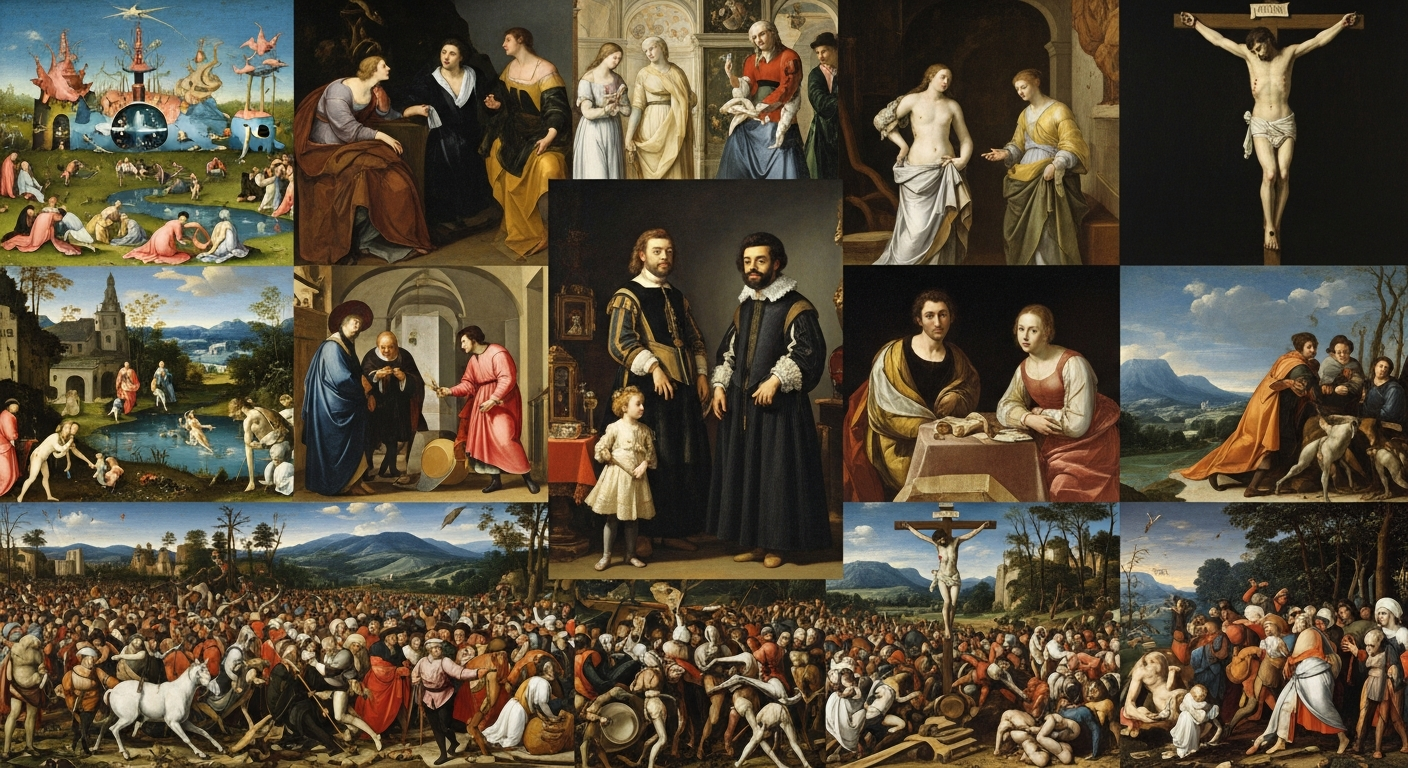
Welcome to one of the world’s greatest art treasure chests! The Museo Nacional del Prado in Madrid, Spain, is like a time machine that takes you back through centuries of incredible European art. It’s especially famous for its amazing collection of Spanish masterpieces. In this guide, we’ll explore the top 10 must-see Museo Nacional del Prado paintings, breaking down what makes them so special. Forget boring museum trips; this is an adventure into stories, emotions, and mind-blowing talent. Get ready to meet kings, witness dramatic historical moments, and explore gardens of pure imagination, all through the magic of paint.
Las Meninas (The Maids of Honour) (1656) by Diego Velázquez

Description: Imagine you’ve just walked into a room in the royal palace and surprised everyone! That’s the feeling you get from ‘Las Meninas’. It’s a snapshot of life in the Spanish court, showing the young princess, her maids, her dog, and even the artist himself, Velázquez, standing by a giant canvas. But the real trick is the mystery: who are they all looking at? It’s a painting about looking at paintings, and it’s considered one of the most brilliant and complex artworks ever made. The famous artist Pablo Picasso was so obsessed with this painting that he created 58 different versions of it in his own unique style.
What to Look For: Look for the king and queen, Philip IV and Mariana, reflected in the small mirror on the back wall. This is the painting’s biggest secret, suggesting they are standing where you are, making you the center of the scene! Also, notice how Velázquez uses loose, almost blurry brushstrokes up close that magically become sharp and realistic from a distance.
Techniques: Velázquez was a master of the oil on canvas technique, using a method of applying paint in visible, fluid brushstrokes called ‘alla prima’ (wet-on-wet) to create a sense of realism and light.
Location in Museum: Room 012
Estimated Value: Priceless
The Third of May 1808 (1814) by Francisco de Goya
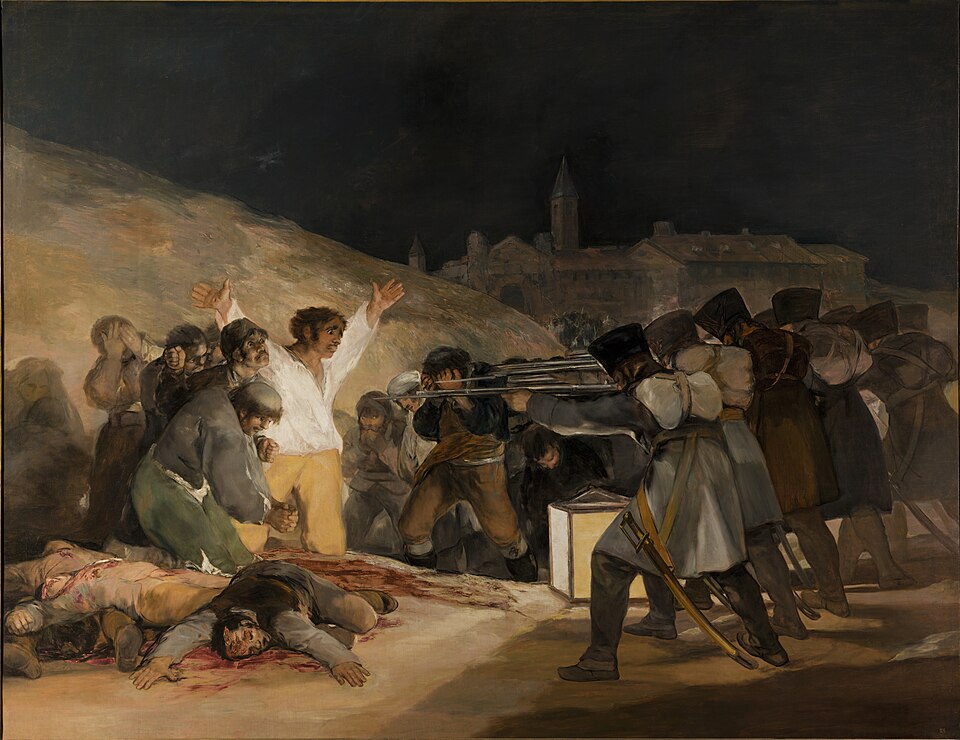
Description: This isn’t just a painting; it’s a gut-punch of history. Goya shows the moment after a rebellion in Madrid when Spanish citizens were executed by Napoleon’s French soldiers. It’s dark, chaotic, and incredibly powerful. You can feel the fear of the man in the white shirt, who stands with his arms thrown wide like a martyr, facing a faceless firing squad. Goya didn’t glorify war; he showed its brutal, human cost. This artwork is considered one of the very first paintings of the modern era because it depicted a real, current event with raw emotion rather than a classical or religious story.
What to Look For: Focus on the man in the white shirt. Goya uses a lantern to shine a dramatic light on him, making him the undeniable center of the story. His white shirt symbolizes innocence, and his outstretched arms can be seen as a symbol of sacrifice. Notice how you can’t see the soldiers’ faces, which makes them seem like a heartless killing machine.
Techniques: Goya used oil on canvas with dramatic lighting contrasts, a technique called chiaroscuro, to heighten the emotion. His brushwork is rough and expressive, conveying the chaos and horror of the moment.
Location in Museum: Room 064
Estimated Value: Priceless
The Garden of Earthly Delights (c. 1490–1510) by Hieronymus Bosch

Description: Get ready for the weirdest, most wonderful painting you’ve ever seen! This giant three-panel artwork, called a triptych, is like a fantasy movie on wood. The left panel shows the Garden of Eden with Adam and Eve. The huge center panel is a wild party of tiny naked people, giant birds, and bizarre fruits. The right panel is a terrifying, fiery vision of Hell. No one knows for sure what it all means, but it’s an unforgettable trip into a wildly creative mind. When the triptych is closed, the outside panels show a grayscale painting of the Earth during the Third Day of Creation, before any life was formed.
What to Look For: Spend time exploring the details in the central panel. Can you find the man with a strawberry for a body, the people riding on giant birds, or the couple trapped inside a bubble? Each tiny scene tells its own strange story. In the right panel, look for the ‘Tree-Man’, a hollow figure with a human-like face whose body is a broken egg.
Techniques: Bosch used the oil on oak panel technique with incredible precision. He applied thin layers of paint, called glazes, to create luminous colors and microscopic details that still fascinate viewers today.
Location in Museum: Room 056A
Estimated Value: Priceless
The Annunciation (c. 1426) by Fra Angelico
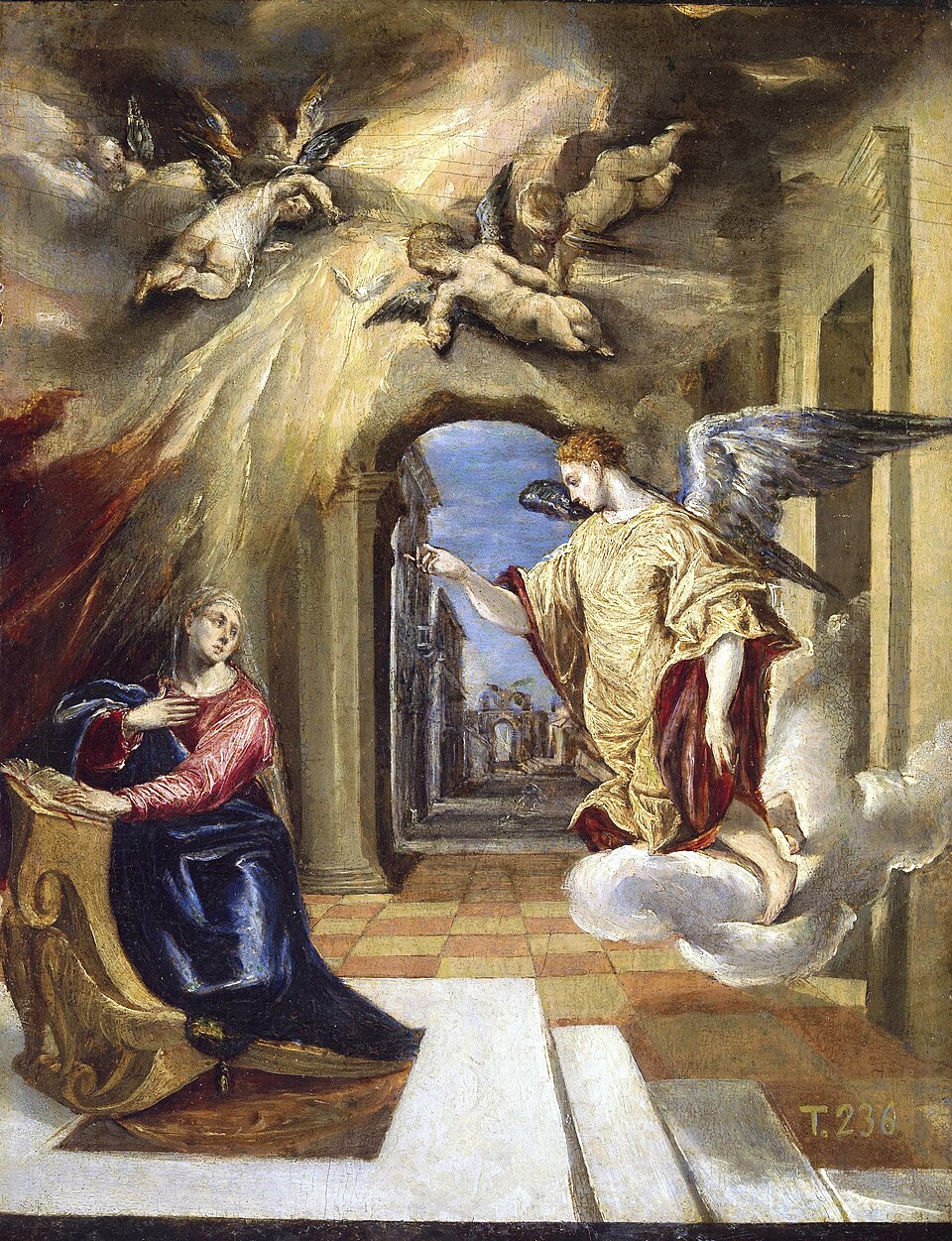
Description: This painting is like a beautiful, golden dream. It tells the story of the moment the Archangel Gabriel tells the Virgin Mary that she will be the mother of Jesus. Everything about it feels calm, pure, and holy. The artist, Fra Angelico, was a monk, and you can feel his deep religious faith in the gentle figures and glowing colors. It’s a masterpiece of the early Italian Renaissance. Fra Angelico included a tiny snail in the foreground, which some art historians believe is a symbol of the Incarnation, as snails were thought to be fertilized by the dew from heaven.
What to Look For: Notice the use of real gold leaf on the angel’s wings and the rays of light, which makes the painting literally shine. Look to the left, outside the main scene, where you can see Adam and Eve being expelled from the Garden of Eden. This links the story of humanity’s fall with its salvation through Christ.
Techniques: This work was created using tempera—a paint made by mixing pigment with egg yolk—on a wood panel. The technique allows for very fine details and brilliant, jewel-like colors.
Location in Museum: Room 056B
Estimated Value: Priceless
The Nobleman with his Hand on his Chest (c. 1580) by El Greco
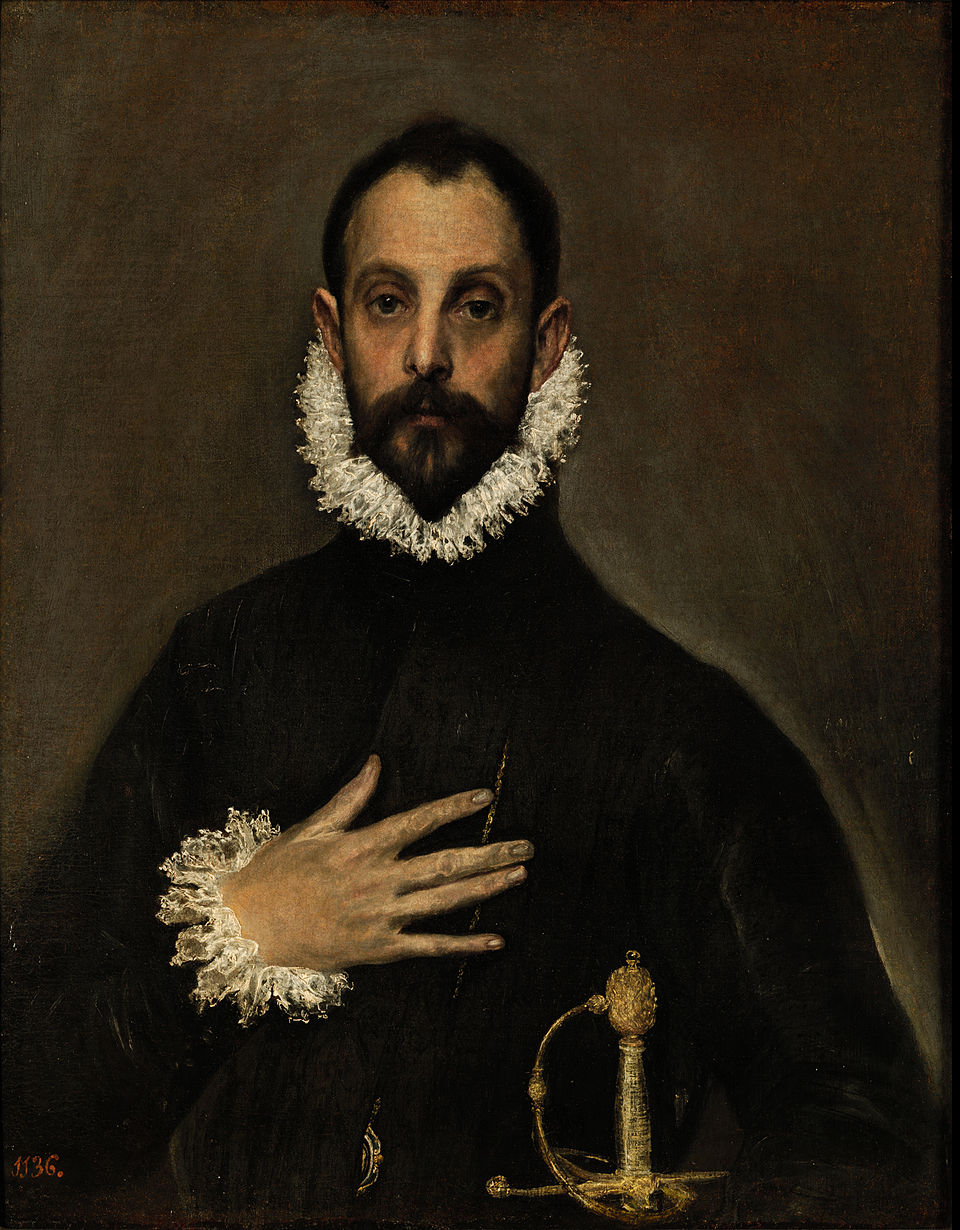
Description: This isn’t just a portrait; it’s a window into a man’s soul. El Greco was a master at capturing personality, and this painting of an unknown Spanish nobleman is his most famous portrait. The man looks directly at us with a serious, dignified expression. His hand is placed over his heart as if making a solemn vow. The dark background makes him pop out of the canvas, making the connection with the viewer feel incredibly personal and intense. The identity of the nobleman is still a mystery, though some believe it could be a self-portrait of the artist or a portrait of the Spanish writer Miguel de Cervantes.
What to Look For: Pay attention to the man’s elegant hand and long, slender fingers—a signature style of El Greco. Also, look closely at the incredible detail on the golden hilt of his sword and the delicate white lace of his ruff collar, which show his high social status.
Techniques: El Greco used oil on canvas with a unique style characterized by elongated figures, dramatic lighting, and expressive brushwork that broke from the strict realism of his time.
Location in Museum: Room 009B
Estimated Value: Priceless
The Three Graces (c. 1630-1635) by Peter Paul Rubens
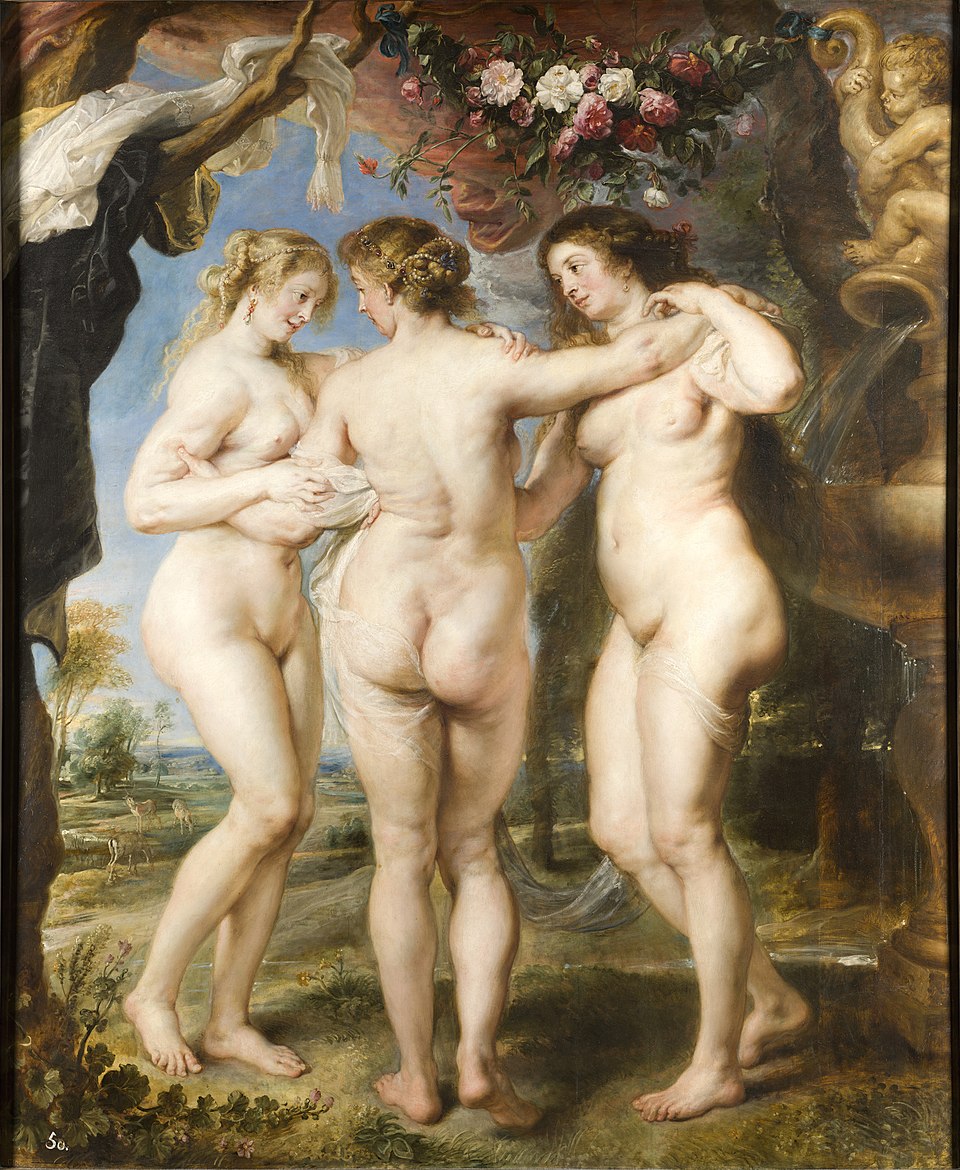
Description: This painting is a joyful celebration of life, beauty, and friendship. It shows three goddesses from classical mythology who represented charm, beauty, and creativity. Rubens painted them in a way that feels full of energy and movement. Their bodies are soft and realistic, not like perfect, cold statues. It’s a warm, lush scene set in a beautiful landscape, showing off Rubens’ incredible skill at painting the human form. The figure on the left is believed to be a portrait of Rubens’ second wife, Hélène Fourment, whom he married when she was 16 and he was 53.
What to Look For: Notice how Rubens painted the skin. It seems to glow with light and has a soft, fleshy quality that feels incredibly real. Look at the composition—the way the figures are linked together by their arms and gazes creates a feeling of harmony and connection. The rich landscape in the background adds to the painting’s vibrant mood.
Techniques: Rubens was a master of the Baroque style, using oil on wood panel. He was famous for his dynamic compositions, rich colors, and his ability to create a sense of movement and life in his figures.
Location in Museum: Room 029
Estimated Value: Priceless
David with the Head of Goliath (c. 1600) by Caravaggio
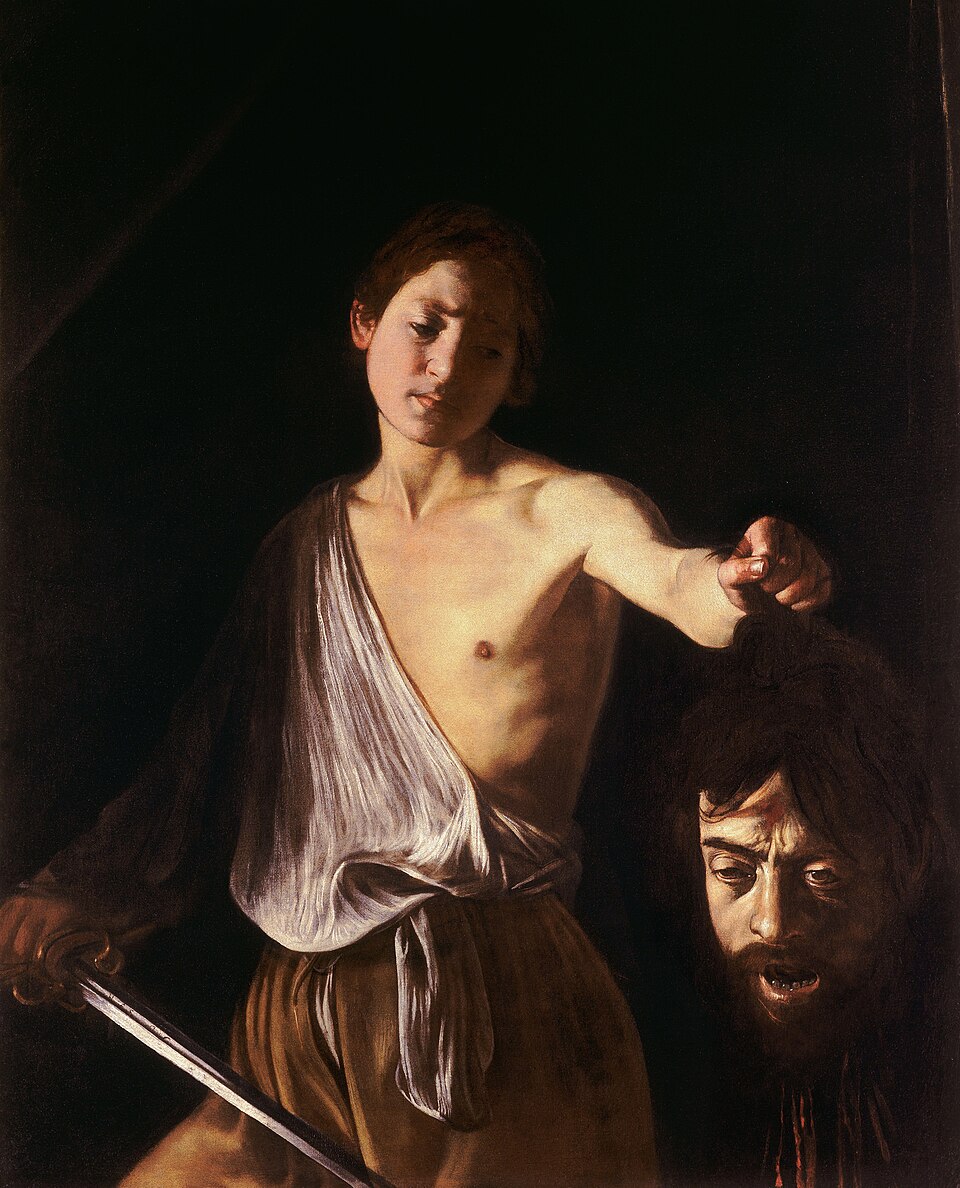
Description: This is pure drama. Caravaggio captures the intense moment right after the young shepherd David has defeated the giant Goliath. But instead of showing David as a triumphant hero, Caravaggio paints him as thoughtful, almost sad, as he looks at the giant’s severed head. The painting is famous for its extreme use of light and shadow, which makes the scene feel like it’s happening right in front of you in a dark room. It is widely believed that Caravaggio used his own face as the model for the severed head of Goliath, adding a dark, personal touch to the biblical story.
What to Look For: This painting is a perfect example of ‘chiaroscuro’, the dramatic use of light and dark. See how the light falls on David’s shoulder and face, pulling him out of the deep black background. The look on David’s face is complex—a mix of victory, pity, and exhaustion. The realism is so strong you can almost feel the weight of Goliath’s head.
Techniques: Caravaggio pioneered the use of tenebrism, an extreme form of chiaroscuro where darkness dominates the image and light is used for dramatic effect. He painted with oil on canvas, often directly onto the canvas without preliminary drawings.
Location in Museum: Room 006
Estimated Value: Priceless
The Descent from the Cross (c. 1435) by Rogier van der Weyden
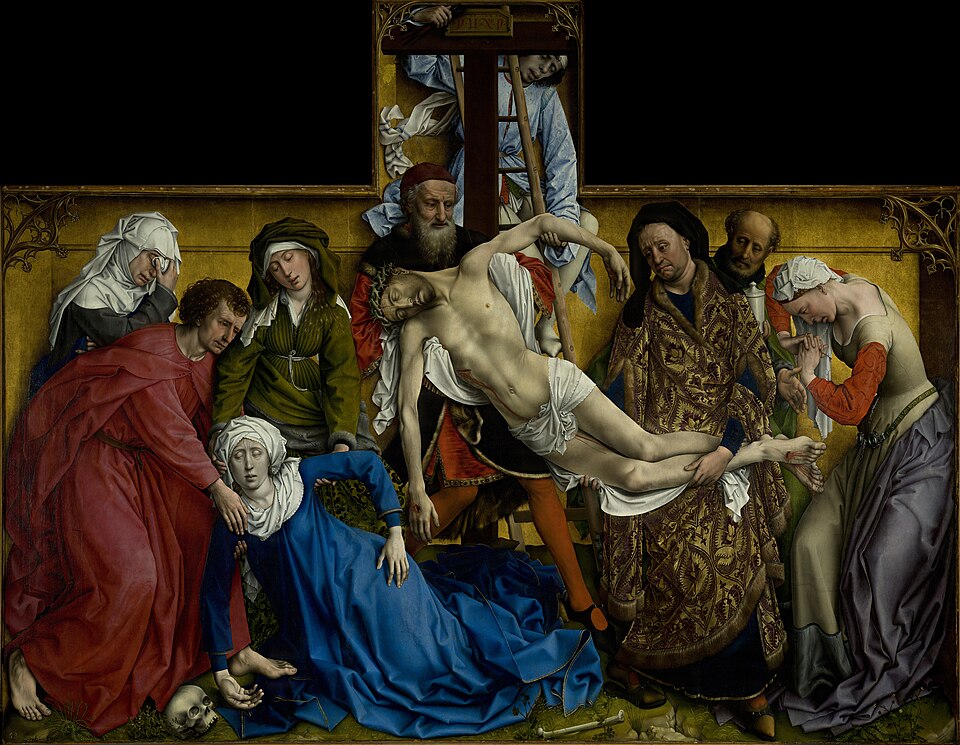
Description: Prepare to feel some serious emotion. This painting shows the moment when Jesus’s body is taken down from the cross. It’s one of the most powerful and heartbreaking paintings of the 15th century. The artist packed a group of grieving figures into a tight, box-like space, making their sorrow feel overwhelming. The detail is incredible, from the tears rolling down their cheeks to the rich textures of their clothes. The painting was commissioned by the Great Crossbowmen’s Guild of Leuven, and the artist subtly included tiny crossbow shapes in the corners of the composition as a nod to his patrons.
What to Look For: Look at the parallel poses of Jesus and his mother, Mary, who has fainted from grief. Her body echoes the shape of his, connecting their suffering. Also, examine the incredible realism of the emotions; you don’t just see their sadness, you feel it. Van der Weyden was a master at painting details like the golden threads of the robes and the texture of the wooden cross.
Techniques: This is a masterwork of Early Netherlandish painting, created with oil on oak panel. The technique allowed for rich color, deep detail, and a smooth, almost enamel-like surface finish.
Location in Museum: Room 058
Estimated Value: Priceless
Jacob’s Dream (1639) by José de Ribera
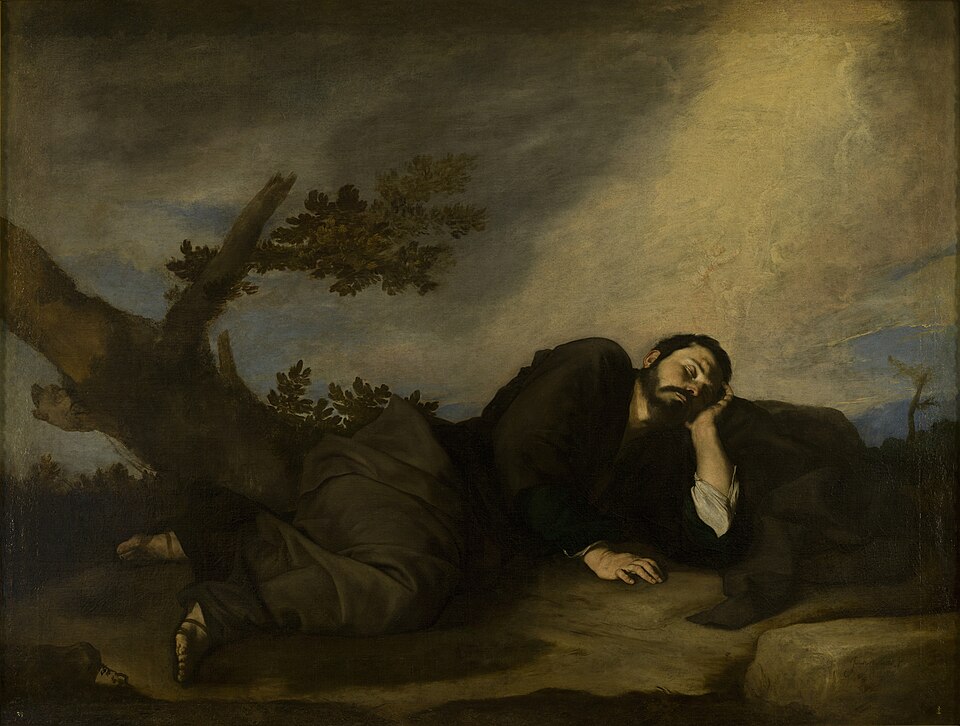
Description: This painting shows a story from the Bible where Jacob, sleeping on a rock, dreams of a ladder reaching up to Heaven with angels climbing it. But instead of a grand, heavenly scene, Ribera makes it feel very real and down-to-earth. Jacob looks like an ordinary shepherd taking a nap, and the ladder of light is subtle and mysterious. It’s a powerful mix of the everyday and the divine. The painting’s composition, with the strong diagonal line of Jacob’s body and the tree, creates a stable, earthly foundation for the supernatural vision of the ladder.
What to Look For: Notice the contrast between the rough, earthy reality of Jacob—his weathered face, simple clothes, and the hard ground he sleeps on—and the magical, golden light of the ladder in the background. Ribera was a master of realism, and you can almost feel the texture of the tree trunk and the stone under Jacob’s head.
Techniques: Ribera was a Spanish Baroque painter heavily influenced by Caravaggio. He used oil on canvas with strong chiaroscuro, emphasizing the contrast between the dark, earthly foreground and the divine, light-filled background.
Location in Museum: Room 009
Estimated Value: Priceless
Equestrian Portrait of Charles V (Charles V at Mühlberg) (1548) by Titian

Description: This is the ultimate ‘power portrait’. It shows Charles V, the most powerful ruler in Europe at the time, as a victorious Christian knight. He’s on a massive warhorse, dressed in gleaming armor, holding a lance, looking calm and in complete control after winning the Battle of Mühlberg. The painting wasn’t just a portrait; it was a piece of political propaganda designed to show the emperor’s absolute authority and divine right to rule. This painting set the standard for future equestrian portraits of rulers, influencing countless artists, including Velázquez and Goya, who also have works in the Prado.
What to Look For: Observe the incredible detail Titian painted on the emperor’s armor, which reflects the warm light of the sunset. The deep red colors in the sky and on Charles’s sash symbolize the battle and his power. Despite the chaos of war, the emperor’s expression is serene, projecting an image of unwavering strength.
Techniques: Titian was a Venetian master who used oil on canvas. He was renowned for his use of color (a style known as ‘colorito’) and his visible, expressive brushwork, which influenced generations of artists.
Location in Museum: Room 027
Estimated Value: Priceless
The Collection’s Significance
The collection of the Museo Nacional del Prado is a mirror reflecting the history of Spain and Europe. Originally the personal collection of the Spanish monarchy, it became a public museum in 1819. Its core strength lies in its unparalleled assembly of works by Spanish masters like Diego Velázquez, Francisco de Goya, and El Greco, offering the most comprehensive look at their careers anywhere in the world. Beyond Spain, its holdings of Italian and Flemish art, with masterpieces by Titian, Rubens, and Bosch, are extraordinary. The Prado’s legacy is its role as a ‘museum of painters, not paintings,’ a place where artists have come for centuries to study the techniques and genius of the old masters, making its impact on art history immeasurable.
Final Thoughts
A trip to the Prado is more than just a walk through a museum; it’s a conversation with some of history’s greatest creative minds. Each gallery offers a new story, a new emotion, and a new reason to be amazed by what a person can create with just a brush and some paint. We hope this guide helps you navigate the incredible collection and find your own favorites among the world-class Museo Nacional del Prado paintings. It’s an experience that will stick with you long after you’ve left its hallowed halls.
Plan Your Visit
Opening Times: Monday to Saturday: 10:00 AM – 8:00 PM. Sundays and holidays: 10:00 AM – 7:00 PM. Closed on January 1, May 1, and December 25.
Ticket Prices: General Admission: €15. Free for visitors under 18 and students up to 25. It is highly recommended to book your tickets online in advance to secure your spot.
How to Get There: Metro: Banco de España Station (Line 2) or Estación del Arte/Atocha Station (Line 1). Bus: Lines 9, 10, 14, 19, 27, 34, 37, and 45 stop nearby.
FAQs about art at Museo Nacional del Prado
What is the most famous painting in the Prado Museum?
While there are many famous works, ‘Las Meninas’ by Diego Velázquez is widely considered the most famous and significant painting in the Museo Nacional del Prado.
Can I take photos inside the Museo del Prado?
No, photography and video recording are not permitted in the galleries to protect the artworks and ensure a better experience for all visitors.
How much time should I spend at the Prado?
To see the main masterpieces without rushing, you should plan for at least 2 to 3 hours. If you are a serious art lover, you could easily spend a full day exploring.
Is it better to buy tickets online or at the museum?
It is highly recommended to buy tickets online in advance. This allows you to choose a specific time slot, skip the long ticket lines, and guarantee your entry, especially during peak tourist season.