Have you ever walked past a huge, colorful mural on a brick wall and seen a cartoon-like figure with a huge personality staring back at you? That’s a graffiti art character, and they are a huge part of the street art world. While some people only think of letters when they hear ‘graffiti,’ the truth is that these expressive figures are an incredible way for artists to tell a story and share their style with the world.

They’re like the mascots of a city’s streets, each with its own vibe and message. Whether it’s a mischievous creature, a soulful-looking person, or a superhero, these characters bring life and emotion to urban spaces. In this guide, we’ll dive deep into what makes a great graffiti art character and how you can start creating your own.
Before we dive in, here is a quick summary of what we’ll cover:
Key Points Summary
- Graffiti art characters are a key element of street art, bringing personality and storytelling to murals and walls.
- The style of these characters evolved from the early days of New York City subway art in the 1970s and 80s, alongside iconic letter styles.
- Artists like Keith Haring and Jean-Michel Basquiat helped popularize the use of characters, often with simple, powerful lines.
- Creating your own character involves thinking about its personality, sketching it out, and then using techniques like layering and highlighting to make it pop.
- Characters can be a form of social commentary or just a way to add a bit of fun and color to the world.
A Brief History of Graffiti Characters
The history of graffiti art characters is as vibrant and rebellious as the art form itself. Back in the 1970s and 80s, when graffiti was booming in New York City, artists were mainly focused on “tagging” their names in unique and complex ways. But soon, they started adding little drawings and figures next to their names. These simple figures, often known as “toys,” were just a small part of the bigger piece. However, over time, these simple drawings grew into full-fledged graffiti art characters that could stand on their own. They became just as important as the lettering itself, sometimes even more so. To learn more about the broader context, you can read our comprehensive guide to painting styles and movements.
The Pioneers: From Street to Gallery
Artists like Keith Haring and Jean-Michel Basquiat, who came from the street art scene, were masters at using characters. Haring’s simple, bold line drawings, like his “Radiant Baby,” were full of energy and emotion. Basquiat’s work was more complex, with a raw, almost angry feel that often included a crown or a skull. Their art showed the world that a graffiti art character wasn’t just a simple drawing; it could be a powerful statement.
Styles and Influences
One of the most exciting things about this art form is the huge variety of styles. A graffiti character can look like a cartoon from your favorite Saturday morning show, a scary monster, a sci-fi robot, or even a realistic portrait. The style often depends on the artist’s message and their personal touch. For example, some artists prefer clean, sharp lines and bright colors, similar to abstract art, which you can learn more about by exploring how to unlock the secrets of abstract painting. Others go for a more gritty, detailed look that blends with the urban background. Each choice helps the artist communicate something unique.
How to Create Your Own Graffiti Character
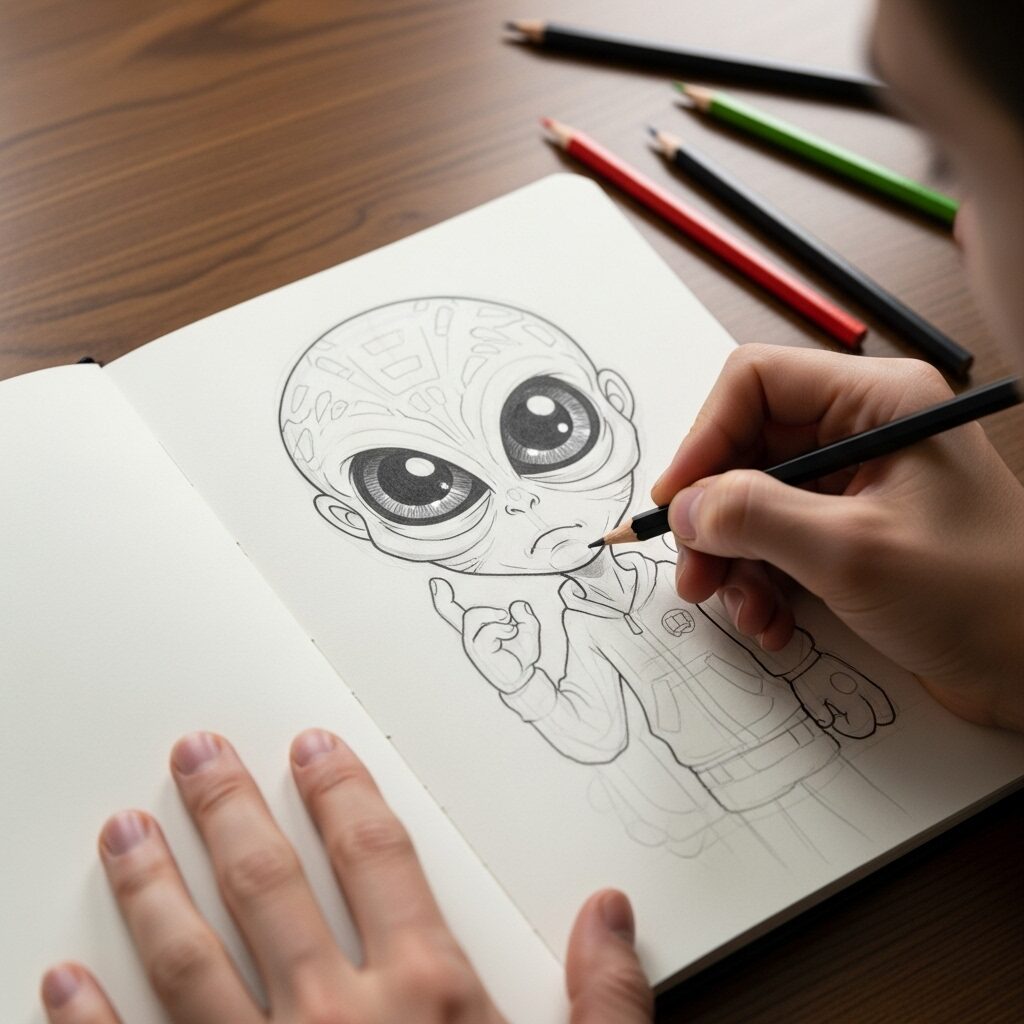
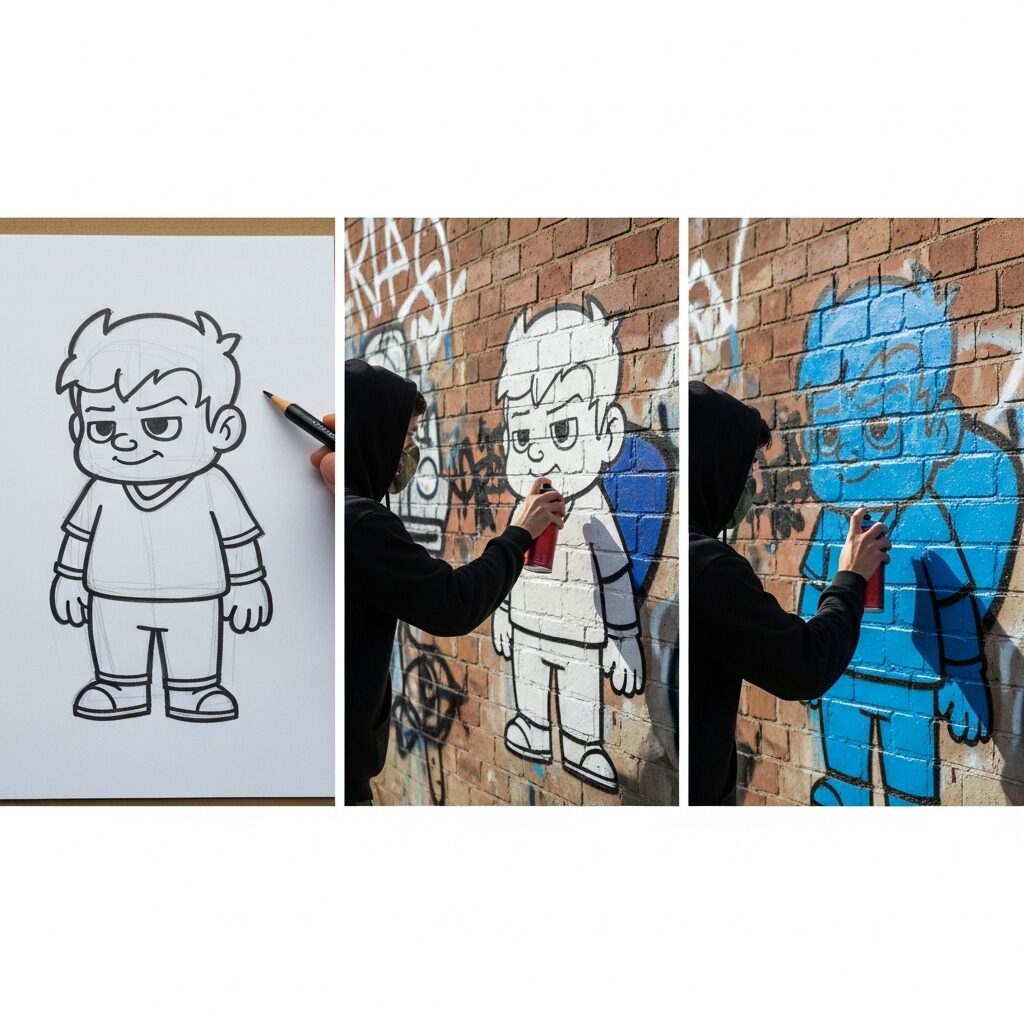
Creating your own graffiti art character might seem a little intimidating, but it’s a lot of fun. The first step is to forget about perfection and just get your ideas on paper. Think about what kind of character you want to create. What is its personality? Is it happy, sad, angry, or sneaky? A good graffiti art character starts with a strong idea. After you have the idea, start sketching in a notebook. Don’t worry about details at first. Just get the basic shape and pose down. You’ll find that practicing your drawing skills is a huge help. For inspiration, you can read about the life and art of Andrew Wyeth to see how a master artist approached their work.
Once you have your sketch, you can start adding the details that make the character feel alive. This is where you can use different techniques. You can add texture to clothing, shadows to make the character look three-dimensional, or use bold outlines to make it pop. This process is similar to how artists create characters for video games or comic books. The key is to make it your own. Your graffiti art character is your voice.
Characters That Tell a Story

Characters can be a powerful tool for social commentary, a way for artists to share a message with the world. As the famous artist Banksy once said,
“Art should comfort the disturbed and disturb the comfortable.”
This is so true for graffiti art characters. They often do more than just look cool. They can make you think about important issues, or they can just make you smile on a bad day. For instance, a character holding a flower in a war-torn area can be a powerful symbol of hope. A character with a sad face sitting alone can make us think about loneliness. These characters tell a story without saying a single word. They are a modern art form, much like the famous painting secrets and hidden stories behind classic works.
Mastering the Medium
To truly master the art, you need to understand how the medium works. Most graffiti artists use spray paint, also known as aerosol paint, because it allows for quick and large-scale work. Using a spray can isn’t like using a paintbrush. You have to learn how to control the can to get different line thicknesses and effects. A detailed guide on mastering the art of brush stroke painting can help you understand the foundational techniques of controlling a medium. This can give you a better feel for how the pros do it.
Take a look at the table below, which shows how different artistic styles influence the creation of a graffiti art character. You can see how an artist’s choice of style completely changes the character’s look and feel.
| Style | Key Characteristics | Famous Examples |
| Wildstyle | Extremely complex, often hard to read, sharp angles, and interlocking letters/shapes. Characters are usually dynamic, aggressive, and highly stylized. | Dondi White’s “Children of the Grave” |
| Cartoon Style | Simple, clear lines, bright colors, often inspired by classic animation. Characters are often friendly, comical, or whimsical. | Seen in the work of Futura 2000 and Kaws’ “Companion” |
| Realistic | Characters that look like real people or animals. Focuses on shadows, light, and detailed anatomy, often blending with surrounding imagery. | Works by artists like Smug and Case Maclaim |
| Stencil Art | Character images are created using stencils, resulting in sharp, clean lines and often black-and-white or limited-color schemes. | Banksy’s characters |
The Enduring Legacy
Whether you’re drawing on a piece of paper or dreaming of painting a large mural one day, understanding the basics of creating a graffiti art character is a fantastic place to start. It’s a blend of raw creativity and technical skill. Many digital artists today are also creating amazing graffiti art characters, showing that this style is not limited to physical walls. If you’re interested in bringing your traditional art into the digital world, you might find this guide on making digital art look traditional helpful.
Artists often draw inspiration from everything around them, from old comics to political events. A graffiti art character can be a reflection of the world, a form of rebellion, or a simple way to make someone’s day. A graffiti art character is a personal signature, and it’s a way to leave a lasting impression, not just on a wall, but on the minds of the people who see it. To see how characters can be a central part of a visual story, you can look at the timeless allure of still life painting to see how simple objects can tell a profound story. A great graffiti art character has a strong presence and tells a story just by existing. They are an essential element of the urban art landscape, adding personality and narrative.
For an even deeper look, check out this video that shows you how to draw your own graffiti character, step by step.
The impact of graffiti art characters can be seen everywhere, from major art galleries to fashion and advertising. They have transcended their rebellious beginnings to become a powerful, recognized art form. Every character, whether simple or complex, represents a piece of the artist’s soul, a story they want to share, and a message they want to spread. By learning about these figures, you are not just studying art; you are exploring a cultural movement. This rich history and the raw energy of the art form are what make graffiti art characters so captivating. They are a timeless part of urban culture. A graffiti art character can be a simple doodle or a detailed masterpiece, but it is always a statement. From the streets to the art gallery, the graffiti art character has earned its place as a significant part of art history.
Frequently Asked Questions
Q: What is the most famous graffiti character?
While it’s hard to pick just one, a strong contender is the character “Companion” by the artist Kaws. This figure, with its X-ed-out eyes and cartoonish body, started as a street art character and has now become a global icon, appearing as huge sculptures, toys, and even in fashion collaborations.
Q: What is a graffiti character called?
A graffiti character can be called many things depending on the artist and the style. Often, they are just referred to as a “character” or a “figure.” In the early days, they were sometimes called “toys” if they were simple or “productions” if they were part of a larger, more detailed mural.
Q: Who is a famous graffiti artist?
There are many famous graffiti artists, but a few key names stand out. Banksy is arguably the most well-known globally for his political and social commentary. Keith Haring is famous for his simple, energetic line drawings, and Jean-Michel Basquiat is revered for his raw, expressionistic work that began on the streets. Other famous artists include Futura 2000, Lady Pink, and Dondi White.
Q: What is a graffiti throw-up?
A “throw-up” is a quick, bubble-like version of an artist’s tag. It’s usually done in one or two colors and is meant to be completed very quickly. While a throw-up is a type of lettering, artists sometimes incorporate small characters or figures into them to add more flair and personality.
Citations:
Haring.com: The official website of the Keith Haring Foundation, offering an in-depth look at the artist’s life, work, and legacy, including his iconic characters.
Basquiat.com: The official website for the estate of Jean-Michel Basquiat, featuring a detailed biography and gallery of his works, many of which include his famous street-art-inspired characters.
The Art Story: An excellent resource for art history, with a detailed page on graffiti and street art, including information on its history and key figures.