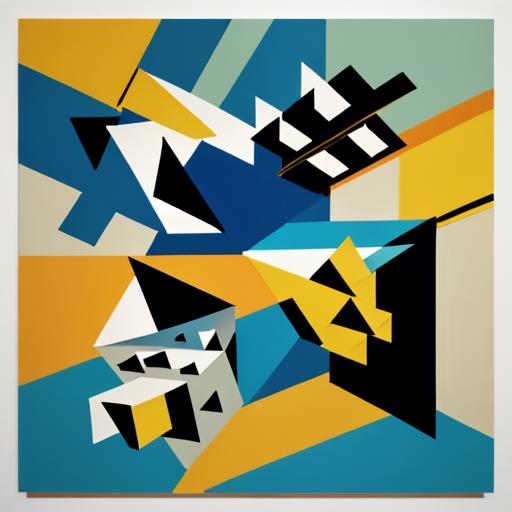
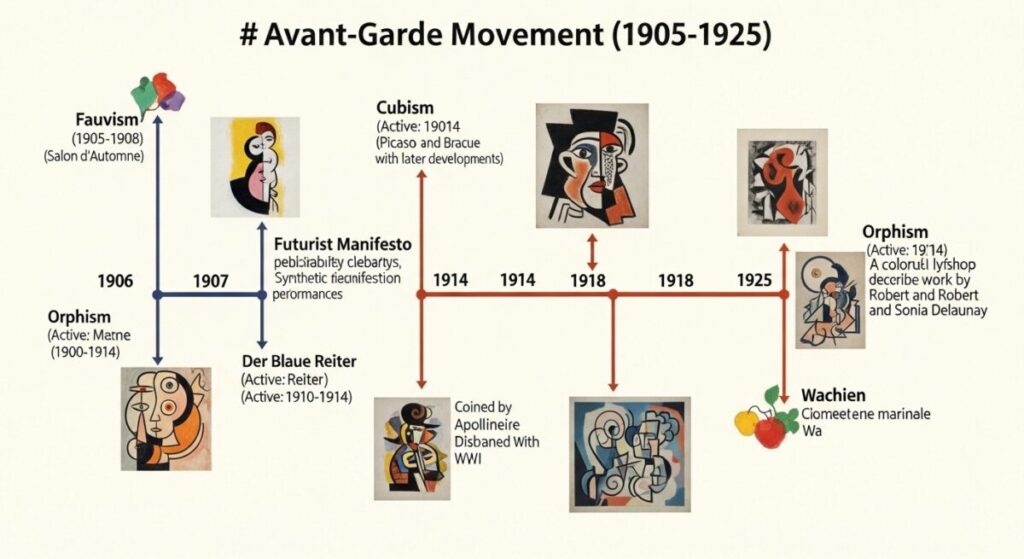
When most people think of early 20th-century avant-garde art, Cubism often comes to mind first. Pablo Picasso’s fragmented faces and Georges Braque’s geometric landscapes dominated art history textbooks for decades. However, lesser-known avant-garde art styles flourished alongside Cubism, creating a rich tapestry of innovation that deserves equal recognition. These groundbreaking movements challenged traditional artistic boundaries, experimented with new forms of expression, and laid the foundation for modern art as we know it today.
Key Points Summary
- Multiple avant-garde movements emerged simultaneously with Cubism in the early 1900s
- Each movement had unique characteristics, from Futurism’s celebration of speed to Suprematism’s geometric purity
- Geographic diversity created distinct regional approaches to modernist art
- Political and cultural factors influenced why some movements remain lesser-known today
- These styles continue to influence contemporary art, design, and architecture
Understanding the Avant-Garde Mindset
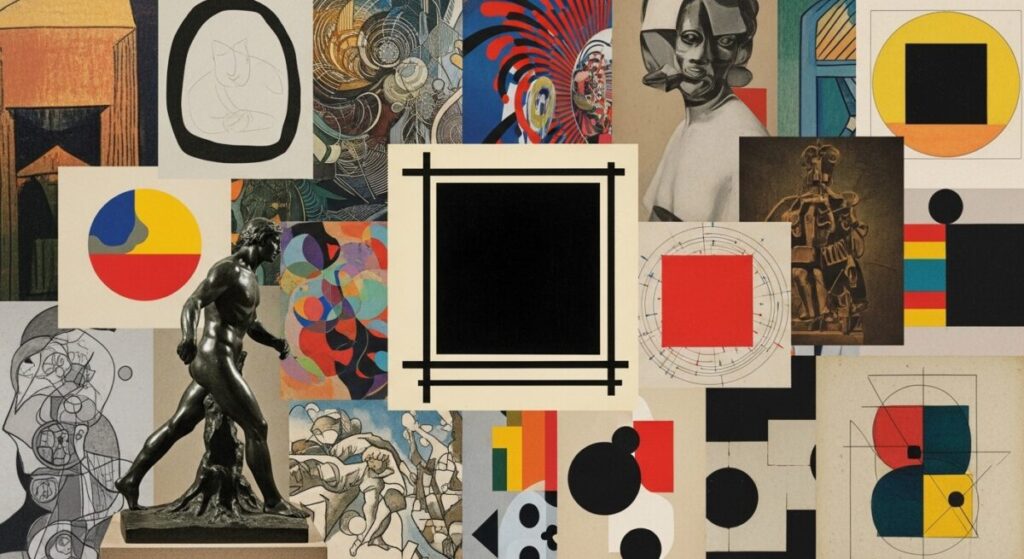
The term “avant-garde” literally means “advance guard” in French, perfectly capturing these artists’ role as pioneers pushing beyond conventional boundaries. These revolutionary creators shared common traits: they rejected academic traditions, embraced experimentation, and often held utopian ideals about art’s power to transform society.
Most avant-garde movements were surprisingly short-lived, burning brightly for just a few years before evolving or dissolving. Yet their impact resonated far beyond their brief existence, influencing everything from painting styles and movements to modern architecture and graphic design.
Beyond the Parisian Cafe: Diverse Avant-Garde Movements
Futurism: Capturing Speed and Machine Age Energy
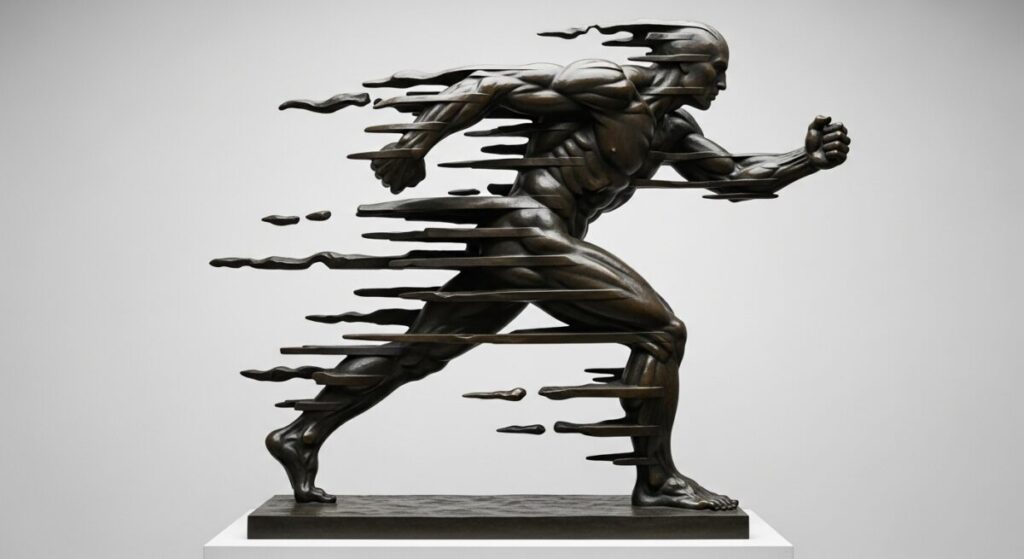
Born in Italy around 1909, Futurism exploded onto the art scene with Filippo Tommaso Marinetti’s provocative manifesto. This movement celebrated speed, technology, and urban dynamism – everything that represented the modern world’s exciting transformation.
Umberto Boccioni created sculptures that seemed to move through space, while Giacomo Balla painted light and movement in ways that anticipated both abstract art and cinema. His “Dynamism of a Dog on a Leash” (1912) shows motion through multiple overlapping images, creating a visual rhythm that captures time itself.
| Key Characteristics | Notable Artists | Famous Works |
|---|---|---|
| Dynamic movement and speed | Umberto Boccioni, Giacomo Balla | “Dynamism of a Dog on a Leash”, “Unique Forms of Continuity in Space” |
| Industrial subjects | Gino Severini, Carlo Carrà | “Dynamic Hieroglyphic of the Bal Tabarin” |
| Bold colors and angles | Luigi Russolo | “The Revolt” |
Orphism: Color as Pure Expression
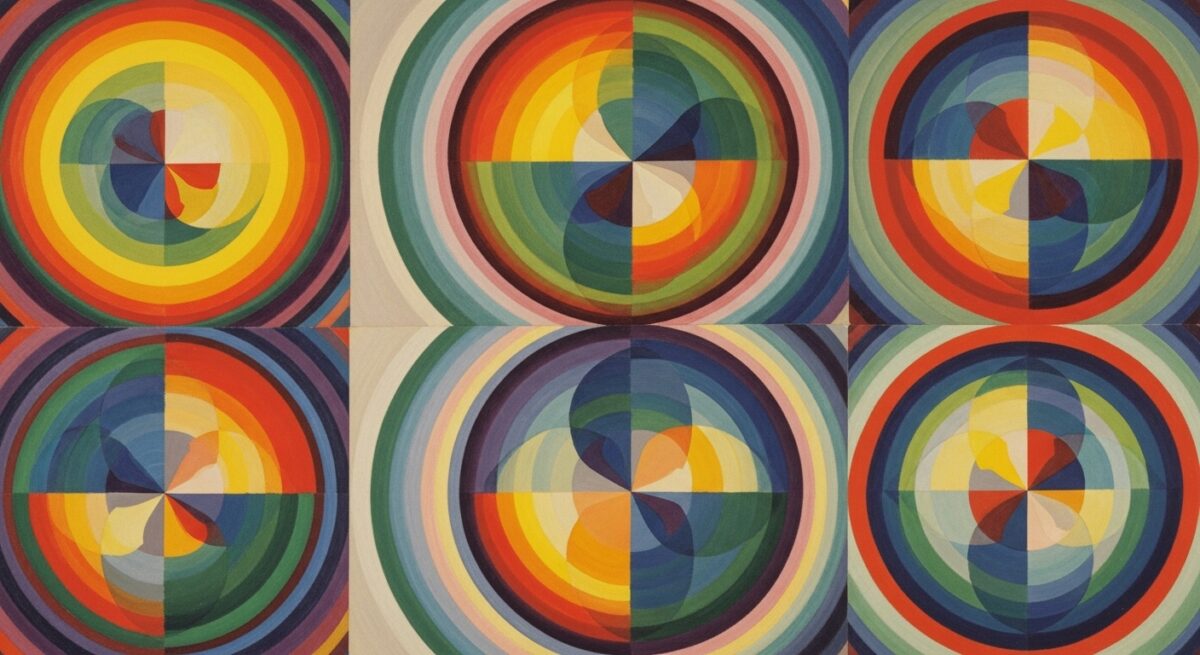
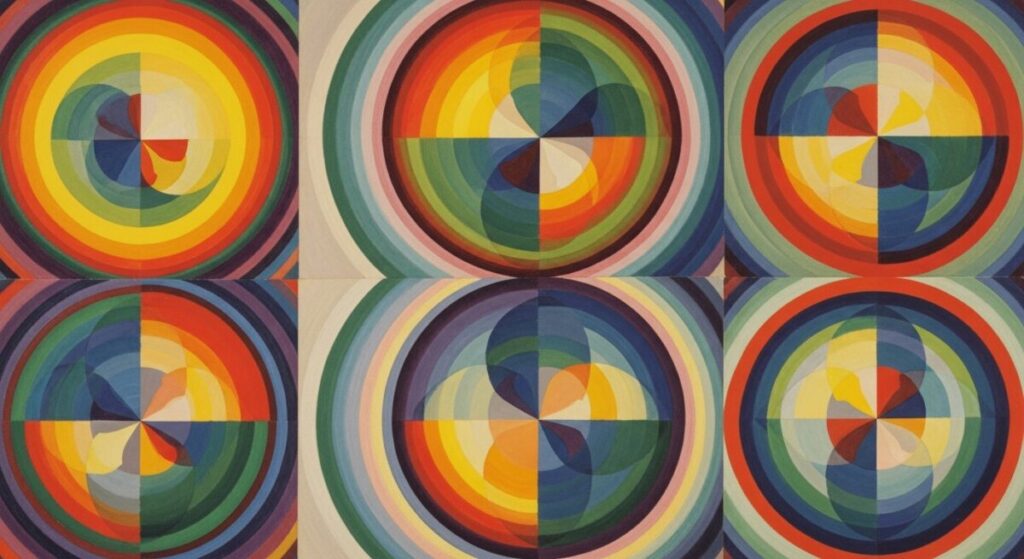
While Cubism focused on form and structure, Orphism emerged in France around 1912 as a celebration of pure color and light. Robert Delaunay and his wife Sonia Delaunay believed color could create form without relying on traditional drawing techniques.
This movement drew inspiration from music, seeking to create “visual symphonies” through color relationships. Robert Delaunay’s “Windows” series demonstrates how color alone can suggest depth, movement, and emotion without representing recognizable objects.
“Color alone is both form and subject”
Robert Delaunay
Rayonism: Russian Innovation with Light
Mikhail Larionov and Natalia Goncharova developed Rayonism in Russia around 1912-1914, creating one of the first purely abstract art movements. This style focused on intersecting rays of light and color, suggesting that objects could be understood through their light reflections rather than their physical forms.
Rayonist paintings often appear to shimmer and vibrate, creating optical effects that would later influence Op Art in the 1960s. The movement was short-lived due to World War I and the Russian Revolution, but its innovations in abstraction were groundbreaking.
Vorticism: Britain’s Angular Response
Britain’s answer to Continental avant-garde movements, Vorticism emerged around 1914 under Wyndham Lewis’s leadership. This movement combined Cubism’s geometric approach with Futurism’s energy, creating hard-edged, angular compositions that suggested machine-like power.
Henri Gaudier-Brzeska’s sculptures and Lewis’s paintings featured sharp lines and dramatic contrasts, reflecting the industrial world’s mechanical rhythms. The movement’s brief existence (1914-1918) coincided with World War I, which profoundly influenced its aesthetic of conflict and energy.
Lesser-Known Avant-Garde Art Styles: Eastern European Innovations
Suprematism: Geometric Purity and Spiritual Liberation
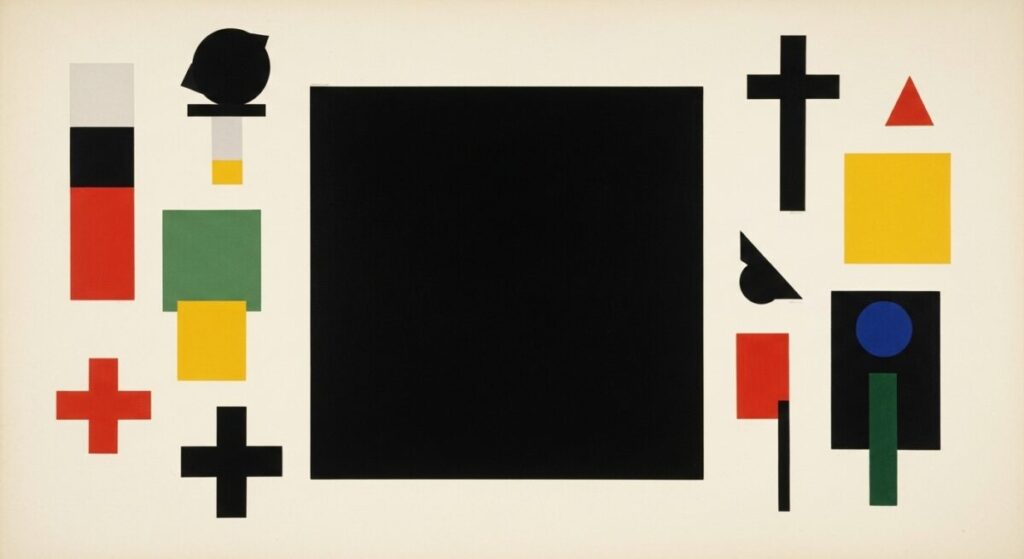
Kazimir Malevich launched Suprematism in Russia around 1915 with his revolutionary “Black Square” – a simple black square on white background that shocked the art world. This movement sought “pure feeling” through basic geometric forms, rejecting all representational elements.
Suprematist compositions used squares, circles, and rectangles in primary colors plus black and white. Malevich believed these simple forms could express profound spiritual truths better than realistic paintings ever could. His influence on famous artists and their styles continues today.
Constructivism: Art for Social Purpose
Following the Russian Revolution, Constructivism emerged as art with a mission. Vladimir Tatlin and Aleksandr Rodchenko rejected “art for art’s sake,” instead creating functional designs using industrial materials and geometric precision.
Constructivists designed everything from propaganda posters to furniture, believing art should serve society’s needs. Their bold typography and photomontage techniques influenced modern graphic design and advertising throughout the 20th century.
De Stijl: Dutch Harmony and Universal Balance
The Netherlands contributed De Stijl (The Style), founded around 1917 by Theo van Doesburg. This movement, featuring Piet Mondrian’s famous grid paintings, sought universal harmony through pure abstraction.
De Stijl artists used only horizontal and vertical lines, primary colors (red, blue, yellow), and non-colors (black, white, gray). They believed this restricted palette could express universal truths and create perfect balance. Their influence extended to architecture, furniture design, and even urban planning.
American Contributions: Precisionism
Clean Lines Meet Industrial Subjects
While Europe experimented with radical abstraction, American artists developed Precisionism around 1920. Charles Demuth and Charles Sheeler combined Cubist structural analysis with uniquely American subjects – factories, skyscrapers, and industrial landscapes.
Precisionist paintings featured clean, smooth surfaces and sharp edges, celebrating American industrial progress while maintaining artistic sophistication. This movement influenced American impressionist art characteristics by introducing geometric clarity to landscape painting.
Connecting the Dots: Influences and Divergences
These movements didn’t develop in isolation. Futurism influenced Vorticism, while Orphism inspired German Expressionism. Russian Constructivism emerged partly as a response to Suprematism’s spiritual focus, preferring practical applications over pure aesthetics.
Geographic differences created distinct flavors: Russian movements often carried political weight, Dutch artists sought philosophical purity, while Americans celebrated industrial progress. Yet all shared the avant-garde spirit of experimentation and boundary-breaking innovation.
Why Are Some Avant-Garde Movements “Lesser-Known”?
Several factors explain why these innovative movements remain overshadowed by Cubism and Surrealism:
- Political Suppression: Soviet authorities later rejected Constructivism and Suprematism as “bourgeois decadence”
- Limited Geographic Reach: Some movements remained regional rather than international
- Short Duration: Many lasted only a few years before World War I disrupted artistic communities
- Complexity: Movements like Orphism required sophisticated understanding of color theory
- Market Forces: Collectors and museums favored more recognizable styles
The Enduring Legacy of Innovation
These lesser-known avant-garde art styles continue influencing contemporary creativity. Suprematist geometry appears in minimalist architecture, Futurist dynamism lives on in digital art, and Constructivist design principles shape modern branding and web design.
Understanding these movements enriches our appreciation of top popular paintings and reveals the incredible diversity of early 20th-century innovation. Each movement contributed unique insights to the ongoing conversation about art’s possibilities and purposes.
FAQs: Exploring Lesser-Known Avant-Garde Art Styles
What avant-garde art movements emerged in the early 20th century besides Cubism? Major movements included Futurism (Italy), Orphism (France), Rayonism (Russia), Vorticism (Britain), Suprematism (Russia), Constructivism (Russia), De Stijl (Netherlands), and Precisionism (America). Each developed unique approaches to modern artistic expression.
What defines an “avant-garde” art style, and how did these movements challenge tradition? Avant-garde styles rejected academic traditions, embraced experimentation, and often carried revolutionary social or political messages. They challenged tradition by abandoning realistic representation, using new materials and techniques, and questioning art’s fundamental purposes.
Why are some groundbreaking avant-garde movements considered “lesser-known” compared to others? Factors include political suppression, limited geographic reach, short duration, complexity requiring specialized knowledge, and market preferences for more accessible styles. Some movements were also overshadowed by more sensational or widely promoted contemporaries.
How did Futurism and Suprematism differ in their approach to abstraction? Futurism celebrated movement, speed, and modern technology while maintaining some connection to recognizable subjects. Suprematism sought pure abstraction through basic geometric forms, completely abandoning representational elements to achieve spiritual expression.
Which avant-garde movements emphasized the use of geometric forms and primary colors? Suprematism, Constructivism, De Stijl, and to some extent Vorticism all emphasized geometric forms. De Stijl specifically limited itself to primary colors plus black and white, while Suprematism used similar color restrictions for spiritual purposes.
The world of lesser-known avant-garde art styles reveals the incredible creativity and innovation that flourished in the early 20th century. While Cubism may have captured the spotlight, these diverse movements each contributed essential elements to modern art’s development. By exploring beyond the familiar, we discover a richer, more complex story of artistic revolution that continues inspiring creators today.
Additional Resources
- Museum of Modern Art – Avant-Garde Collection – Extensive collection of avant-garde works with detailed analysis
- Tate Modern – Art Movements – Comprehensive guide to art movements and terminology
- Guggenheim Museum – Russian Avant-Garde – Specialized collection of Russian modernist works
- Centre Pompidou – European Avant-Garde – Major collection of European modernist movements
- Whitney Museum – American Modernism – Focus on American avant-garde contributions including Precisionism
- National Gallery of Art – Online Collection – Digital access to major avant-garde works with scholarly commentary