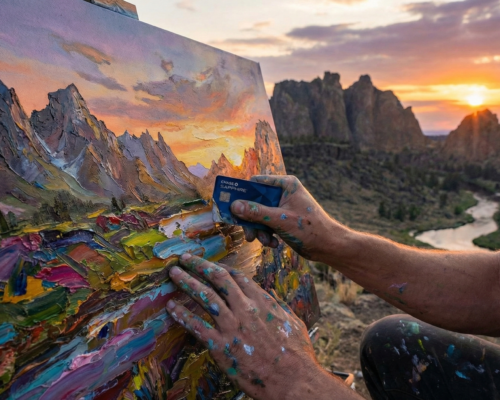
You might think you need expensive brushes, palette knives, and professional studio gear to create breathtaking art. But what if I told you that the secret to creating professional-looking abstract landscapes is sitting in your wallet right now? Credit card scrape art landscapes are taking the art world by storm, offering a bridge between messy experimentation and high-end Abstract Expressionism.
Inspired by masters like Gerhard Richter and Willem de Kooning, this technique uses the rigid edge of an expired credit card (or gift card) to drag, scrape, and layer paint. The result? Stunning, atmospheric textures that are impossible to replicate with a brush. Whether you are looking to save money on supplies or simply want to loosen up your painting style, this guide will teach you how to master the scrape.
Your Attractive Heading
Key Takeaways:
- Cost-Effective: Upcycle old plastic cards instead of buying expensive metal palette knives.
- Texture Master: Achieve “impasto” (thick texture) effects instantly.
- Freedom: This method forces you to let go of perfectionism, resulting in expressive, loose art.
- Versatile: Works for acrylics, oils, and mixed media.
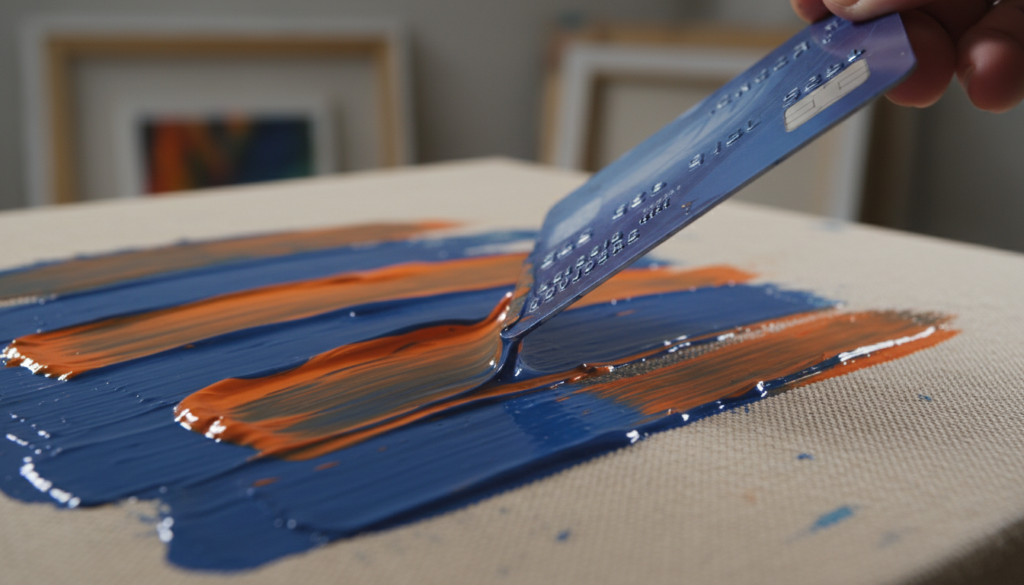
Why Your Wallet Holds Your Best Art Tool
It sounds like a “life hack” you’d see on social media, but painting with plastic cards is a legitimate fine art technique rooted in the history of abstract art. It transforms the painting process from a careful, wrist-heavy activity into a full-arm, sweeping motion.
The ‘Happy Accident’ Philosophy
In the world of abstract art movements, control is often the enemy of creativity. When you use a brush, you are tempted to fiddle with details until the life is sucked out of the painting.
A credit card is a blunt instrument. It covers large areas quickly and unpredictably. This lack of precision creates “happy accidents”—moments where colors blend or break in ways you didn’t plan. This is the heart of the “loose painting style.” You aren’t painting every leaf on a tree; you are scraping a texture that suggests a forest.
From Trash to Treasure
Artists are notoriously resource-conscious. Why throw away a stiff piece of plastic when it can become a permanent part of your studio? Using expired gift cards is an environmentally friendly way to upcycle. However, unlike flimsy cardboard, plastic cards are durable, waterproof, and can be wiped clean.
If you are interested in exploring other unconventional tools for watercolor or acrylics, the credit card is the best starting point.
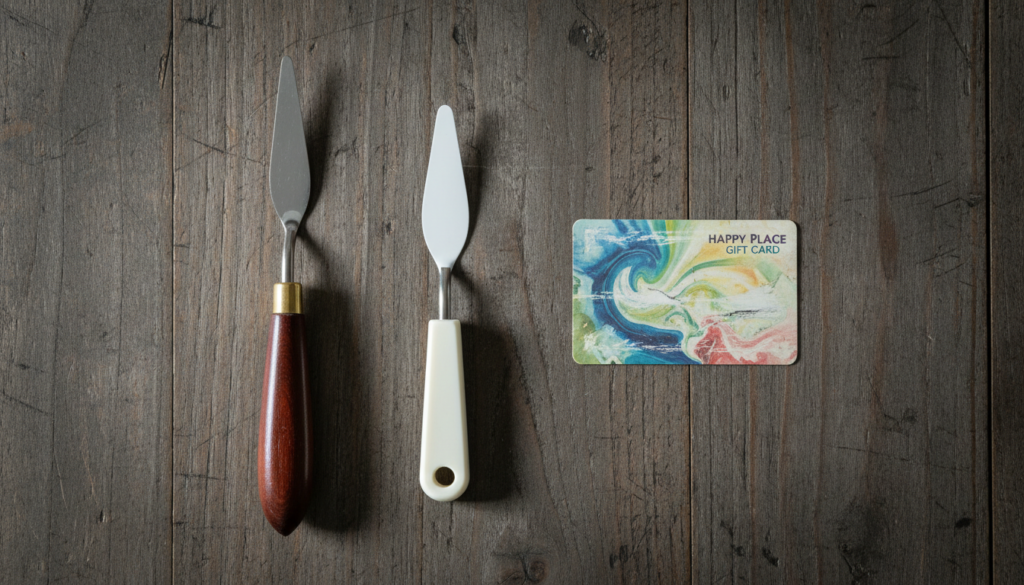
Credit Card vs. Palette Knife
Is a credit card just a cheap substitute for a palette knife, or does it offer something different? Let’s look at the data.
| Tool Type | Est. Cost (USD) | Lifespan | Pros | Cons |
|---|---|---|---|---|
| Expired Credit Card | $0.00 | Weeks/Months | Free, flexible, smooth application, wide surface area | Corners wear down, hard to clean dried oils |
| Plastic Palette Knife | $4 – $7 (Set) | Short (Snaps easily) | Cheap, varying shapes | Brittle, jagged edges develop over time |
| Metal Palette Knife | $8 – $25 (Each) | Years/Lifetime | Precise, durable, springy | Expensive, sharp edges can accidentally cut canvas |
As you can see, the credit card offers a unique “wide surface area” that most standard palette knives lack, making it superior for creating wide horizon lines in landscapes.
Essential Materials for Scrape Landscapes
To get professional results with credit card scrape art landscapes, you can scrimp on the tools, but you cannot scrimp on the paint.
Choosing the Right Paint
This is the most critical rule of scrape art: Texture requires thickness.
If you use fluid acrylics or cheap craft paints, the color will just smear into a transparent, muddy mess when you scrape it. You need Heavy Body Acrylics (brands like Golden Heavy Body or Liquitex Professional). These paints have a high viscosity (thickness) similar to soft butter. They hold the “peaks” and ridges created by the card.
If you are on a tight budget, you can buy Liquitex Basics and mix them with a “Gel Medium” or “Modeling Paste” to thicken them up without losing color intensity.
Surface Matters
Because you are applying heavy pressure and thick paint, your surface needs to be sturdy.
- Canvas: A stretched canvas is great, but ensure it is tight. If it’s loose, the card won’t scrape evenly.
- Paper: Use 300gsm (140lb) Watercolor Paper. Anything thinner will buckle under the moisture of the acrylics. Tape your paper down to a board on all four sides to keep it flat.
- Wood Panels: These are arguably the best surface for scraping because they are completely rigid.
For a deeper dive on choosing the right base, check out our guide on acrylic painting surfaces.
The Tool Kit
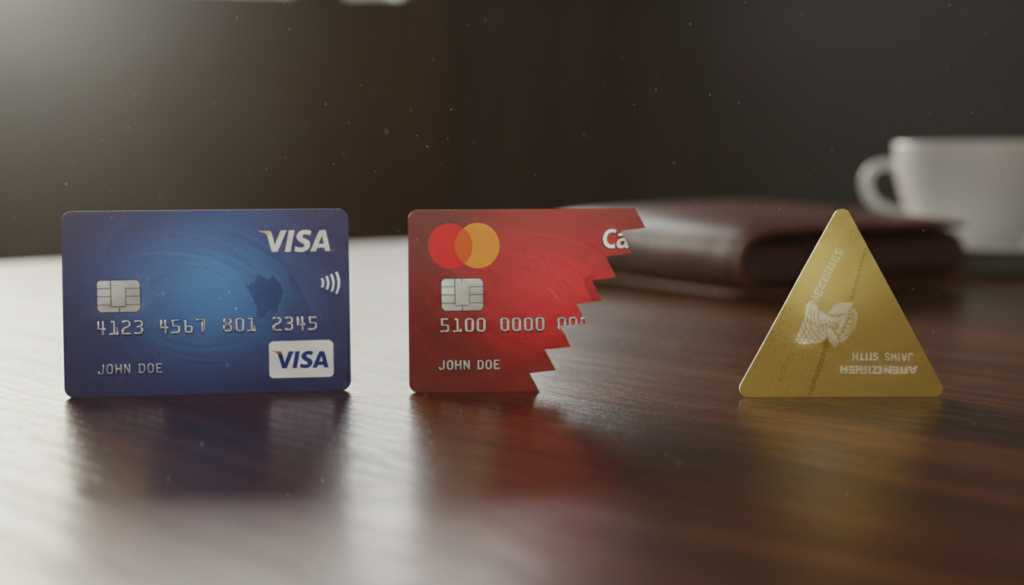
You don’t just have to use the card “as is.” You can modify your tools to create different textures:
- The Standard Scraper: The uncut long edge of the card (for horizons and skies).
- The Rake: Use pinking shears (zigzag scissors) or cut small notches into the edge of a card. This creates parallel lines when scraped, perfect for painting plowed fields or grass textures.
- The Detailer: Cut a card into a small triangle for more precise work.
Step-by-Step Tutorial: Your First Abstract Scrape Landscape
Ready to paint? Let’s create a simple sunset landscape using the “wet-on-wet” scraping technique.
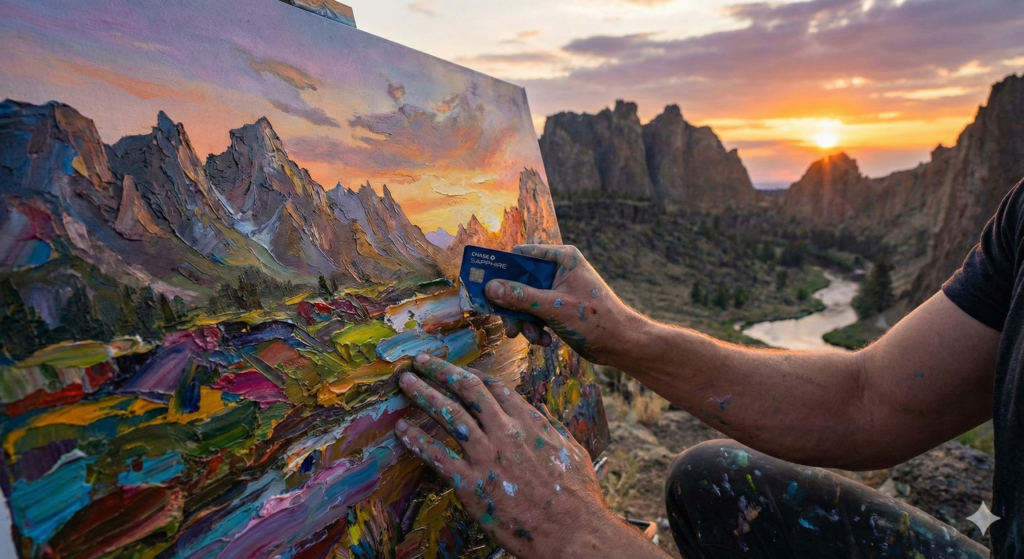
Step 1: Priming and Underpainting
Start by covering your white paper or canvas with a thin layer of fluid color (perhaps a warm yellow or ochre). This removes the “fear of the white canvas” and ensures that if your scrape skips a spot, a nice color shows through instead of bare paper. Let this dry completely.
Step 2: The ‘Loading’ Technique
Do not squeeze paint directly onto the canvas yet. Squeeze your heavy body acrylics onto a palette or paper plate.
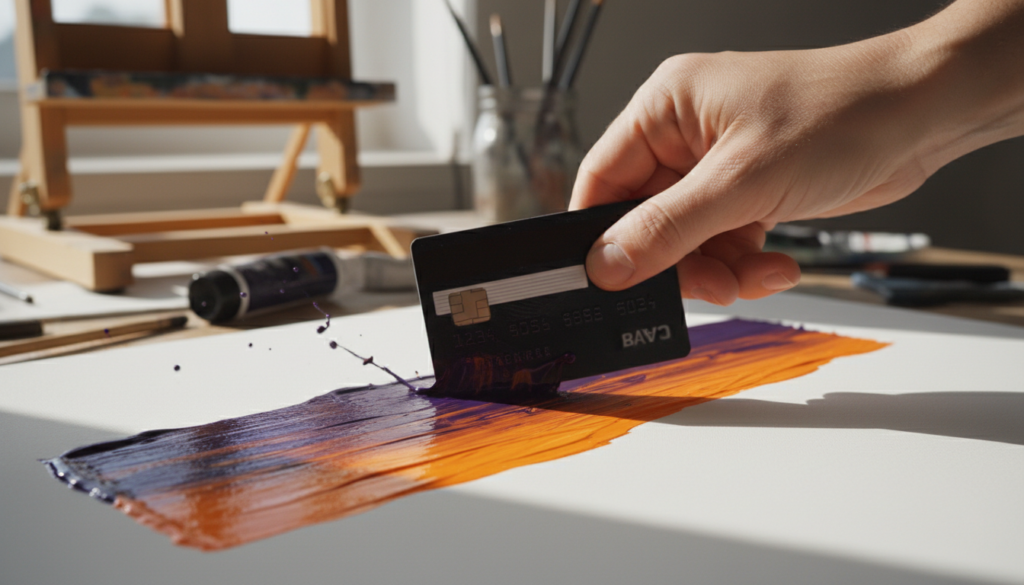
Dip the edge of your credit card into the paint, similar to how you would load a knife to butter toast. You want a bead of paint running along the edge of the card.
Tip: For a multi-colored swipe, load blue on one half of the card and white on the other half.
Step 3: The Horizon Line Swipe
This is the money shot. Place your loaded card on the paper where you want the horizon line to be.
- Press down firmly.
- Drag the card sideways (horizontal) across the paper.
- Lift off at the end of the stroke.
You will see the colors blend naturally, creating a streak that looks remarkably like a distant horizon or a calm sea. This single motion creates instant depth.
Step 4: Layering and Pulling
Once your horizon is established, start building the landscape.
- The Sky: Use vertical or diagonal scrapes with blues and whites above the horizon.
- The Foreground: Use short, choppy downward scrapes with greens and browns to simulate grassy texture.
The key here is layering acrylics. Let the bottom layers dry slightly (about 5-10 minutes) before scraping a lighter color over the top. This technique, often called “paint pulling,” allows the top color to “skip” over the texture of the bottom color, revealing the layers beneath. This is similar to the impasto technique used in oil painting.
Step 5: Sgraffito Details
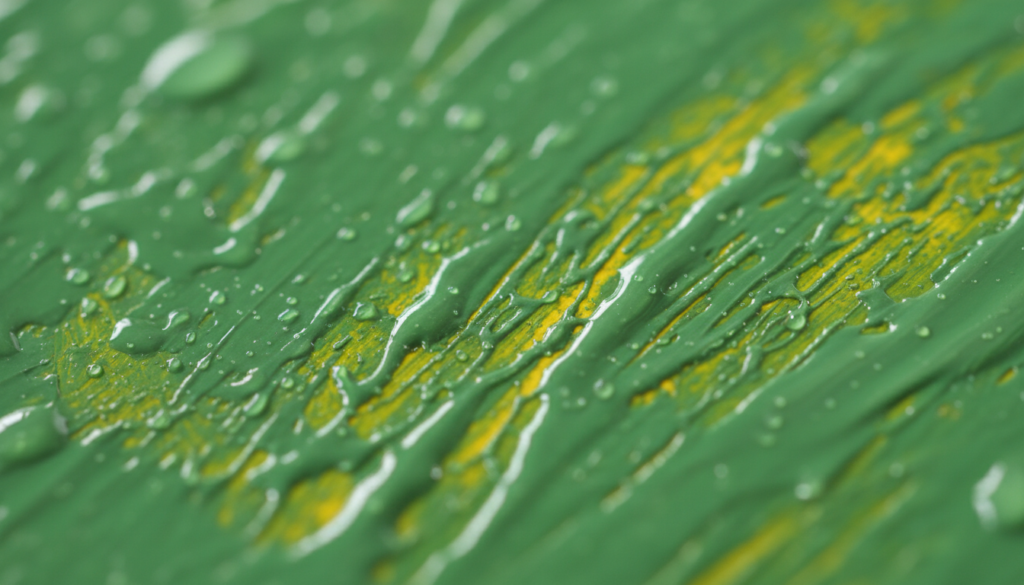
“Sgraffito” is an Italian term for scratching away surface layers to reveal the color underneath.
- Use the sharp corner of the card to scratch thin lines into wet paint. This is perfect for suggesting tree trunks, tall grasses, or fence posts.
- Use the “Rake” card (the one with notches) to drag texture through the foreground.
If you are struggling with composition, remember the rule of thirds when placing your horizon line.
Advanced Techniques: Channeling Gerhard Richter
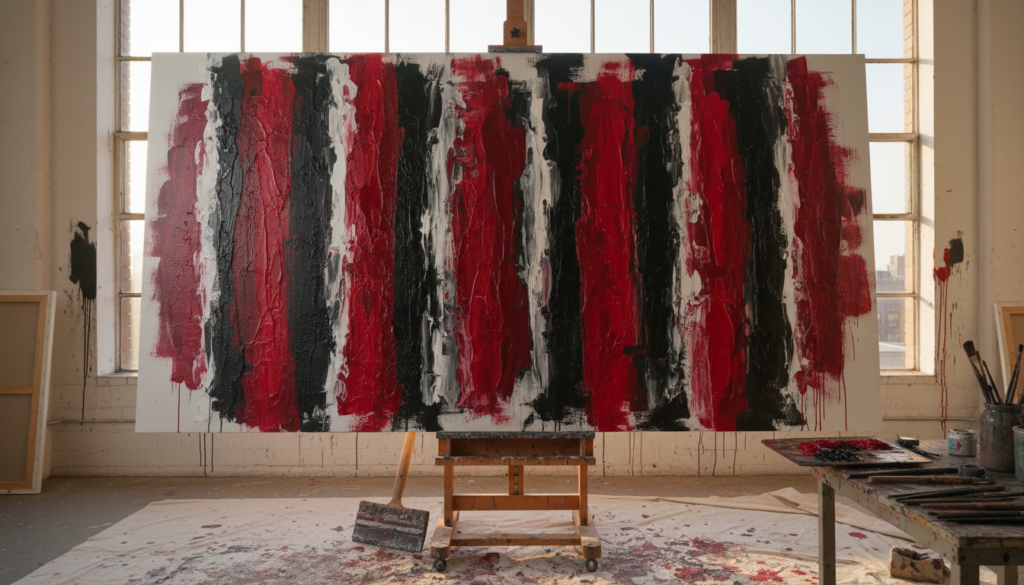
Once you master the basic landscape, you can look to the masters for inspiration. Gerhard Richter is the godfather of the “squeegee” painting technique. His massive abstract paintings are essentially giant versions of credit card art.
The ‘Squeegee’ Method
Richter uses massive, custom-made squeegees, but you can replicate this on a smaller scale.
- Apply blobs of different colors all over the canvas.
- Take your credit card (or a larger piece of plastic/plexiglass) and drag it from the very top of the canvas to the very bottom in one continuous motion.
- Stop and clean the card.
- Repeat.
This creates a “blurred” photographic effect that is hauntingly beautiful. It creates what is known as optical mixing, where the eye blends the colors together rather than the brush mixing them physically.
Wet-on-Wet Scraping
Instead of letting layers dry, apply wet paint over wet paint. When you scrape, the colors will physically mix on the canvas. This is risky! It can create beautiful atmospheric skies, but if you overwork it, you get brown mud. It requires confidence and speed.
Masking and Revealing
To add structure to the chaos, use masking tape. Tape off a square or a horizon line. Scrape your paint wildly over the tape. When you peel the tape away, you will have a crisp, hard edge contrasting with the organic, scraped textures. This contrast is often found in modern abstract art.
Troubleshooting Common Scrape Art Problems
Even with a simple tool, things can go wrong. Here is how to fix them.
Avoiding the ‘Mud’ Trap
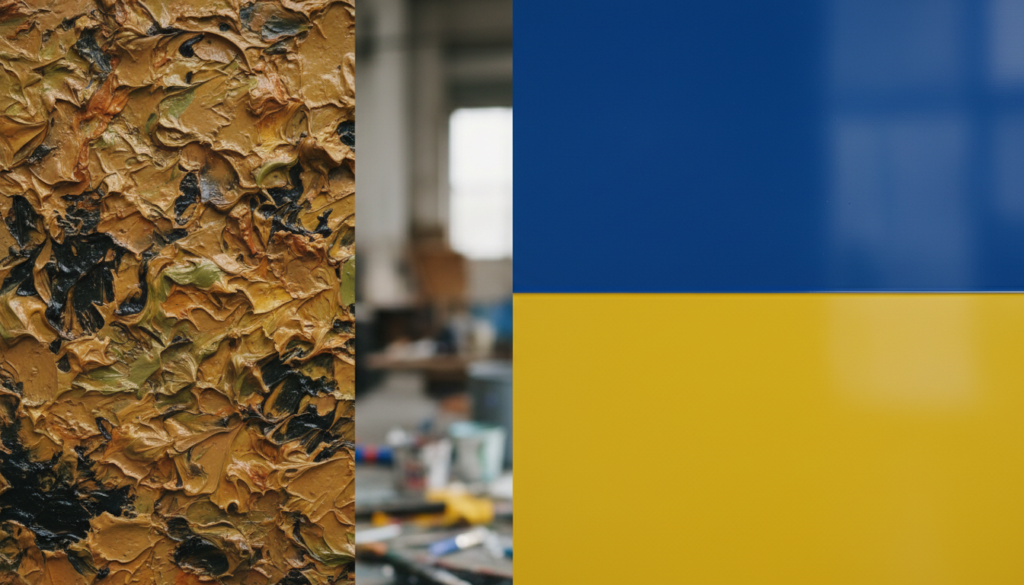
Mud happens when you mix warm colors (like orange) with cool colors (like blue) too thoroughly while they are wet.
- The Fix: Stop dragging! The more you pass the card over the same spot, the muddier it gets. Limit yourself to one or two swipes per area.
- The Science: Understand your color mixing chart. If you want vibrant colors, scrape analogous colors (colors next to each other on the wheel) together.
Fixing Tears and Scratches
If you are scraping on paper, pressing too hard with the corner of a card can tear the surface.
- The Fix: Sand the edges of your credit card with a nail file or fine sandpaper before painting to remove sharp burrs. If a tear happens, patch it with a dab of heavy gel medium or modeling paste, let it dry, and paint over it.
Drying Time Management
Because you are using thick layers of paint (impasto), the drying time is different than standard acrylic painting.
Drying Time for Heavy Body Acrylics (at 70°F / 50% Humidity)
- Thin Brush Layer: 20 – 30 minutes to touch dry.
- Thick ‘Scraped’ Layer (1-2mm): 2 – 4 hours to touch dry.
- Full Cure (Hardened): 3 – 5 days.
Note: Do not varnish your painting until it is fully cured (at least 3-5 days).
Beyond Acrylics: Experimenting with Mediums
While heavy body acrylics are the standard, your credit card can handle other media.
Watercolor Scrape Art
You might not think of watercolor for scraping, but it works! Apply a wash of watercolor to high-quality paper. While it is still wet, use the credit card to “push” the pigment around. You can scrape pigment off the paper to create light areas (like sunbeams) or push pigment into piles to create darker edges. This creates a semi-abstract, misty look perfect for nature journal ideas.
Oil Painting with Cards
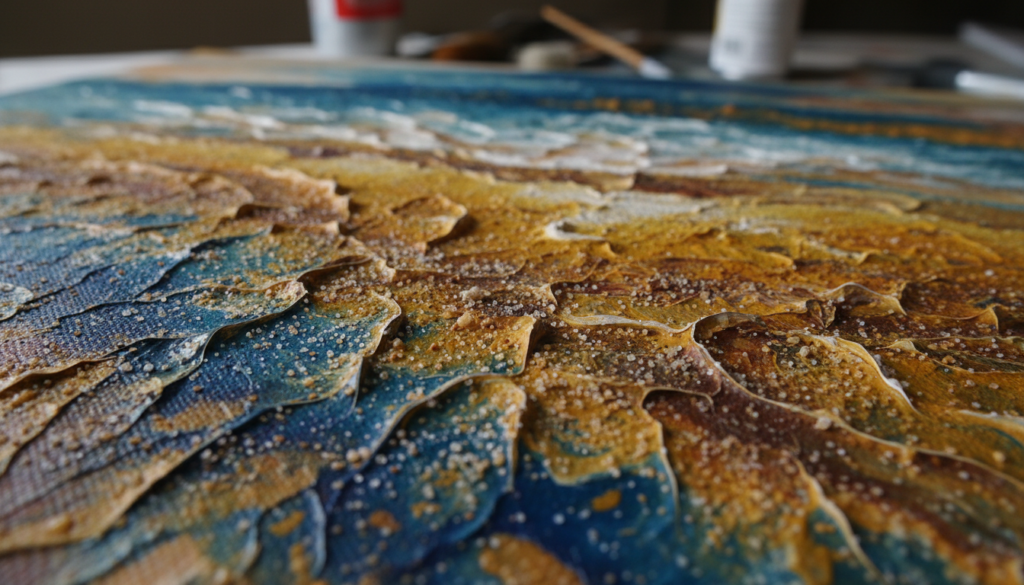
Can you use credit cards for oil painting? Absolutely. In fact, many oil painters prefer plastic cards to metal knives because they are gentler on the canvas.
- Cleanup: Wipe the card with a paper towel and a little odorless mineral spirits or baby oil. Unlike brushes, you don’t have to worry about damaging bristles.
- Solvents: Plastic cards are generally resistant to solvents, but don’t leave them soaking in turpentine overnight.
Adding Media
To get truly gritty textures, mix sand, sawdust, or dried coffee grounds into your acrylic paint before scraping. This creates a rustic, earthy texture that is perfect for painting mountains or rocks. For more on this, read about coffee painting for beginners.
FAQs About Credit Card Painting
Can I use fluid acrylics?
Technically yes, but it is much harder. Fluid acrylics will drip and won’t hold the texture marks left by the card. If you only have fluid paints, lay your paper flat (horizontally) so the paint doesn’t run down the page, and expect a smoother, less textured result.
How do I clean dried paint off my cards?
If the paint is acrylic and has dried completely, soak the card in warm soapy water for 20 minutes. The acrylic “skin” should peel right off the plastic. If it’s stubborn, use a window scraper or another credit card to scrape it off!
Is this archival?
Some artists worry about the archival quality of using plastic cards. The main concern is residue from the card (printed ink or plasticizers) transferring to the canvas.
- The solution: Wash your old credit card thoroughly with dish soap and scrub away any dirt or loose lamination before you start painting. Once clean, the PVC plastic is chemically stable and unlikely to affect your paint layers.
How do I prevent the paper from buckling?
When you pile thick paint on paper, it absorbs water and expands. Always use heavy paper (300gsm/140lb or higher). Tape the paper down to a board using painter’s tape or gummed tape. Leave it taped until the painting is 100% dry. This forces the paper to dry flat.