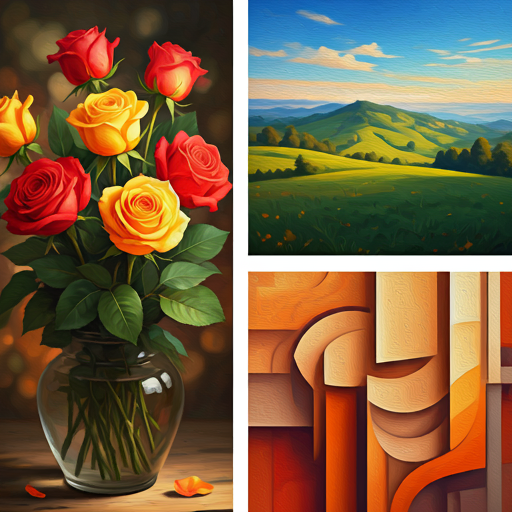
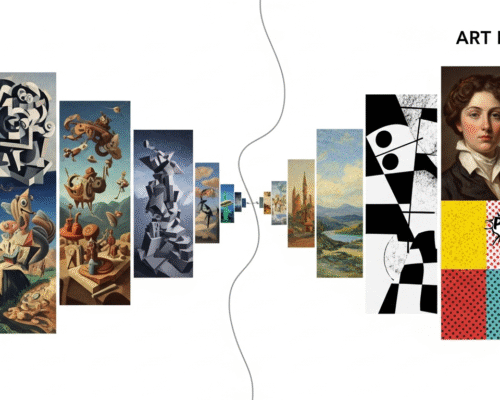
Have you ever walked through an art gallery, admiring paintings, and found yourself wondering about the labels? You might see terms like ‘Impressionist’ or ‘Baroque,’ and then others like ‘Abstract’ or ‘Realistic.’ It can get pretty confusing, making you wonder: what’s the difference between an ‘art style’ and an ‘art movement’? Understanding art styles vs art movements is essential for anyone looking to deepen their appreciation of visual arts and develop their artistic knowledge.
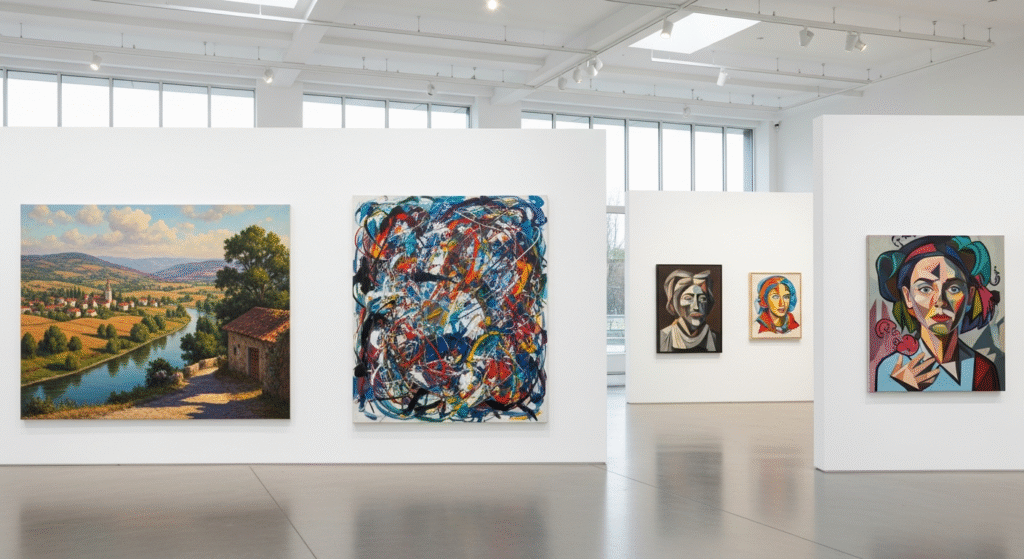
Key Points Summary:
- Art styles describe the visual characteristics and techniques used in artwork
- Art movements represent groups of artists with shared philosophies during specific periods
- Styles can be timeless; movements are historically bound
- Many movements contain multiple styles, and styles can span multiple movements
- Understanding both enriches your art appreciation and historical context
What Is an Art Style in Art History?
An art style is the visual way art looks, defined by technique, color, and form rather than a historical group or movement.
For example, ‘realistic’ is a style where artists try to make things look exactly like they do in real life. This approach has been used throughout history, from ancient Greek sculptures to contemporary painting artists. On the other hand, ‘abstract’ is a style where artists use shapes, colors, and lines to create an image that doesn’t represent reality directly.
Personal vs. Universal Styles
Styles can be very personal to an individual artist, or they can be shared by many artists across different times and places. When you learn how to find your painting style, you’re developing your own unique visual language. For instance, an artist might have a very distinct personal style that makes their work recognizable – like John Singer Sargent’s watercolor technique or Andrew Wyeth’s approach.
However, ‘realism’ itself is a broader style that has appeared in many different historical periods. Styles focus on the aesthetic choices and the visual outcomes, emphasizing the techniques and methods employed by the artist to achieve a particular look or feel.
What Is an Art Movement and How Is It Defined?
An art movement is a group of artists sharing a philosophy and goals within a historical period, shaping art trends together.
These artists often work together, exhibit together, and even write manifestos explaining their beliefs. Art movements often emerge as a reaction to previous art forms or to the social and political changes happening in the world.
Think of Impressionism, for example. It wasn’t just a style; it was a movement of artists like Monet and Renoir who challenged the traditional art of their time. They wanted to capture fleeting moments and the effects of light, often painting outdoors. This wasn’t just a choice of technique; it was a whole new way of thinking about what art should be and how it should be made, creating a significant shift in the art world.
The Historical Context of Movements
Movements are usually tied to a specific time and place, and they have a distinct ideology behind them. Understanding the evolution of art movements from Renaissance to Postmodernism helps you see how each movement built upon or rebelled against what came before. Cubism, pioneered by Picasso, completely revolutionized how we perceive space and form in painting.
How Do Art Styles and Movements Differ?
Styles describe how art looks; movements are collective art trends rooted in shared ideas and time periods. This table highlights the fundamental distinctions between art styles and art movements, focusing on their definition, scope, driving force, and examples.
| Feature | Art Style | Art Movement |
|---|---|---|
| Definition | A particular manner, look, or technique of art. How something is created visually. | A trend or group of artists with a shared philosophy, goals, and often a specific period of influence. |
| Scope | Focuses on visual characteristics, techniques, and aesthetic qualities. Can be timeless. | Broader; encompasses shared ideologies, societal reactions, historical context, and a collective identity. |
| Driving Force | Individual artistic choices, aesthetic preferences, or technical approach. | Collective philosophy, manifesto, social/political commentary, and often a rebellion against norms. |
| Timeframe | Can be adopted across various periods and cultures (e.g., realism in different eras). | Usually bound to a specific historical period, often with a clear beginning and end (e.g., Cubism: early 20th century). |
| Examples | Realistic, Abstract, Impressionistic (as a visual technique), Minimalist, Surreal (as a visual effect). | Renaissance, Baroque, Impressionism, Cubism, Surrealism, Pop Art, Abstract Expressionism. |
“A movement is like a school of thought, and styles are the different languages spoken within that school, or even outside it.”
The Overlap: How Styles and Movements Intersect

It’s easy to see why these two terms get confused because they often overlap! A specific art movement will usually have one or more dominant art styles associated with it. For instance, the Impressionist movement largely featured an ‘impressionistic’ style, characterized by visible brushstrokes and a focus on light. You can explore these characteristics of Impressionist art to understand this connection better.
However, not every artist in a movement strictly followed one style, and not every style belongs exclusively to one movement. An artist within the Cubist movement, for example, might have had their own unique ‘cubist style’ that still fit the movement’s broader principles. How to identify Cubist art can help you recognize these variations.
Cross-Movement Styles
Think of it this way: a movement is like a school of thought, and styles are the different languages spoken within that school, or even outside it. Realism, as a style, has been present in various movements throughout history, from the Renaissance to 19th-century Realism. Even contemporary artists continue to work in realistic styles today.
Conversely, a movement like Surrealism adopted a range of styles, from the hyper-realistic dreamscapes of Dalí to the abstract forms of Miró, all united by their exploration of the subconscious. This diversity shows how movements can embrace multiple visual approaches while maintaining ideological unity.
Why Does This Distinction Matter for Art Lovers?
Understanding art styles vs art movements isn’t just an academic exercise; it enriches your entire experience with art. When you can identify a style, you’re better equipped to appreciate the techniques and visual language an artist uses. You can see how an artist uses color mixing or line to create emotion or impact.
Deeper Appreciation Through Knowledge
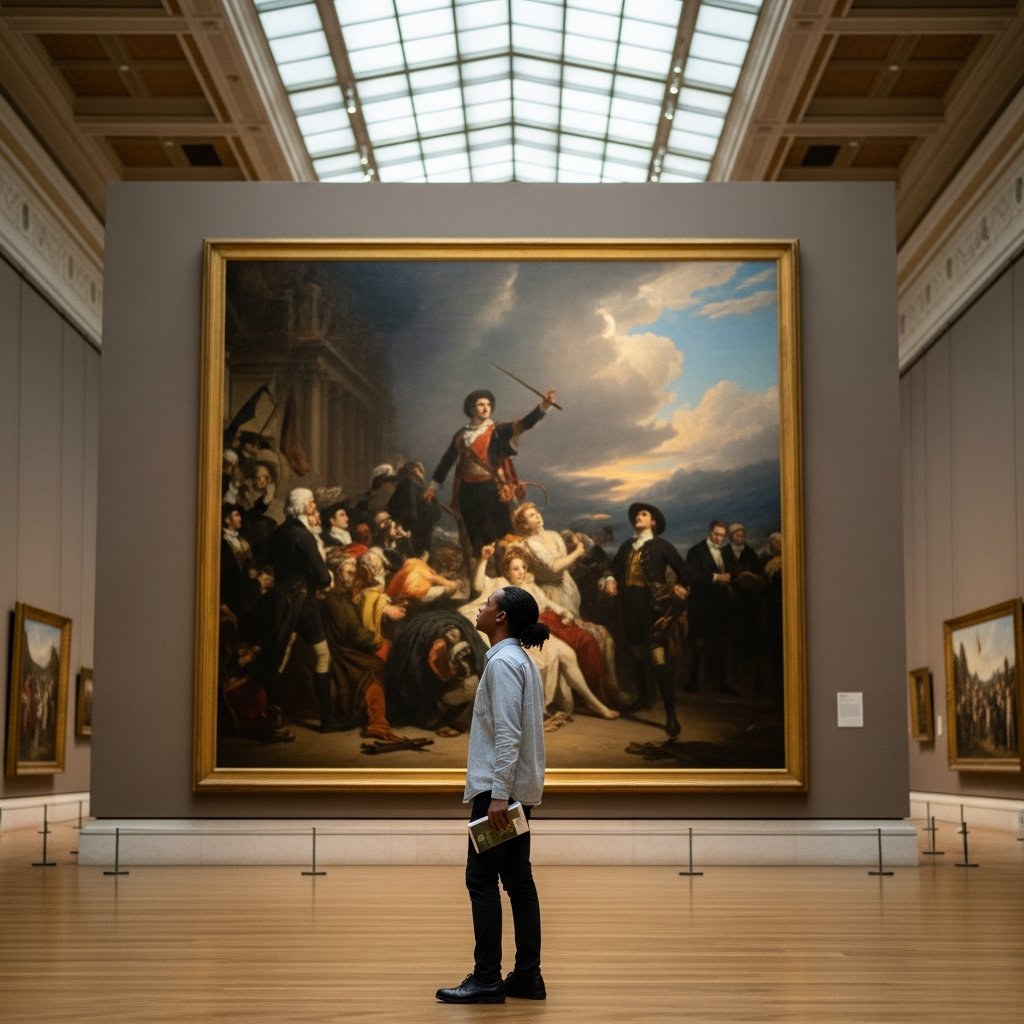
When learning how to appreciate art, knowing about movements gives you a deeper insight into the ‘why’ behind the art – the historical context, the ideas artists were exploring, and the societal conversations they were part of. For instance, understanding how the Fauves revolutionized color usage helps you appreciate their bold choices.
This knowledge allows you to connect with art on a more profound level. Instead of just seeing a painting, you see a piece of history, a reflection of a philosophy, or a deliberate choice of technique. You can explore famous artists and their styles to see how individual creators contributed to larger movements.
Practical Benefits for Artists
For practicing artists, understanding these distinctions is even more valuable. If you’re just starting your painting journey, knowing about different styles and movements can:
- Help you find inspiration for your own work
- Guide your technical development through painting techniques for beginners
- Inform your artistic choices about color, composition, and subject matter
- Position your work within contemporary artistic conversations
It empowers you to talk about art with confidence, compare different periods and artists more accurately, and truly appreciate the vast and complex story that art tells us about human creativity and culture.
Navigating Different Artistic Periods
When you start identifying different art movements, you’ll notice patterns in how artistic innovation unfolds. From the evolution of portrait painting to 20th-century art movements, each period builds a visual and conceptual legacy.

Major Movement Examples
Let’s look at some key movements to illustrate the difference:
Impressionism – This movement, featuring artists like Monet and Renoir, revolutionized how artists depicted light and moment. Learn about mastering Impressionism light techniques to understand their innovations.
Abstract Expressionism – Post-WWII American movement emphasizing spontaneous, automatic, or subconscious creation. Jackson Pollock’s drip painting exemplifies this movement’s revolutionary approach.
Pop Art – Emerged in the 1950s-60s, incorporating imagery from popular culture. Andy Warhol’s style perfectly captures this movement’s essence.
Dada – An anti-art movement born from WWI disillusionment. Understanding the Dada art movement reveals its radical rejection of traditional aesthetics.
Each of these movements had distinct philosophies and historical contexts, but artists within them employed various styles to express their ideas.
Art Styles vs Art Movements: Modern Implications

Today’s art world is more complex than ever. Contemporary painting artists often work across multiple styles and don’t necessarily align with traditional movements. The rise of AI art and digital art has created entirely new stylistic possibilities.
Cultural and Regional Variations
It’s also worth noting that cultural influences in modern art mean that movements and styles develop differently around the world. What happens in how location influenced art shows that geography plays a crucial role in artistic development.
Understanding these distinctions helps when building your art brand or selling art online, as collectors and galleries often categorize work by both style and movement affiliation.
Conclusion: A Deeper Appreciation of Art
Navigating the world of art can feel like learning a new language, but understanding the distinction between art styles and art movements is a powerful key. Art styles give us the vocabulary to describe the visual ‘how’ – the techniques, colors, and forms that make each piece unique. Art movements, on the other hand, provide the grammar, explaining the ‘why’ – the shared ideas, historical contexts, and collective ambitions that shaped entire eras of creativity.
By appreciating both art styles and art movements, you unlock a richer, more nuanced understanding of art’s vast and fascinating story. Whether you’re an artist yourself or simply someone who loves viewing art, this knowledge transforms how you experience galleries, museums, and artistic expression in all its forms.
Understanding the difference empowers you to trace the evolution of art, recognize innovative techniques, and connect with the human stories behind every brushstroke. Start exploring painting styles and movements today, and discover how this knowledge enriches every encounter with visual art.
Common Questions About Art Styles & Movements
Why does the difference between style and movement matter for art lovers?
Knowing the difference helps art lovers understand whether visual traits come from personal technique or shared historical ideas. Understanding styles versus movements helps viewers interpret art more accurately. Styles explain how something looks, while movements explain why it was created in a specific historical or cultural context.
Can an art style exist without an art movement?
Yes, absolutely! An art style is a way of creating art that focuses on visual techniques and appearance. Many styles, like ‘realism’ or ‘abstract,’ have existed for centuries and can be found in different art movements or even by individual artists who aren’t part of any specific movement. For example, realistic painting has been used from ancient times through the Renaissance to contemporary art.
Is Cubism an art style or an art movement?
Cubism is primarily an art movement. It was started by artists like Picasso and Braque with a shared philosophy about breaking down objects into geometric shapes and showing multiple viewpoints at once. Within the Cubist movement, there were also specific ‘Cubist styles,’ but the broader concept refers to the movement itself with its revolutionary approach to representing reality.
Do art movements always have a clear beginning and end?
While many art movements are associated with specific historical periods (like Impressionism in the late 19th century), their influence can linger, and artists might continue to work in a ‘post-movement’ way. However, the period of intense activity, shared goals, and collective identity usually has a more defined timeframe. Understanding the evolution of art movements shows these transitions.
What’s an easy way to remember the difference?
Think of it this way: An ‘art style’ is how the art looks (its visual recipe), while an ‘art movement’ is why a group of artists made art that way (their shared mission or idea). Style is about technique and appearance; movement is about philosophy and historical context.
How can you identify whether a painting belongs to a style or a movement?
If a painting shares visual traits, it reflects a style; if it shares ideas, goals, and time period, it reflects a movement. Look at technique, color, and form to identify style. Research the artist’s peers, philosophy, and historical era to determine whether the work belongs to a movement.
Can modern artists belong to multiple movements or styles?
Yes, modern artists often blend multiple styles and may participate in several movements or reject movements altogether. Contemporary art is highly flexible. Artists frequently mix styles, draw from past movements, or work independently without aligning to a formal movement.
Are there styles that don’t fit into any movement?
Absolutely. Many individual artists develop highly personal styles that don’t align with any organized movement. Finding your painting style is often about developing your unique visual voice rather than joining a collective movement.
How has social media affected art styles and movements?
Social media’s influence on painters and how TikTok is shaping contemporary painting styles show that digital platforms have accelerated the spread and evolution of styles. While making it easier for micro-movements to form, they’ve also made it harder for cohesive, long-lasting movements to dominate as they did in the past.
Citations
- The Met Museum – Heilbrunn Timeline of Art History: Comprehensive resource covering art movements and styles throughout history.
- Khan Academy – Art History: Educational platform offering in-depth lessons on artistic periods, movements, and techniques.
- Tate – Art Terms: Authoritative glossary defining art movements, styles, and terminology used in contemporary art discourse.