Imagine you handed in a homework assignment you worked on for weeks, but your teacher’s new computer program scanned it and said, “Hmm, this doesn’t look like your writing.”
That is exactly what is happening to some of the world’s most famous museums right now.
For hundreds of years, art experts—called connoisseurs—have used their eyes and historical knowledge to decide who painted what. But in 2026, a new sheriff is in town: Artificial Intelligence. And this week, this digital detective dropped a massive bombshell that has the art world buzzing.
The Van Eyck Bombshell: A Tale of Two Paintings
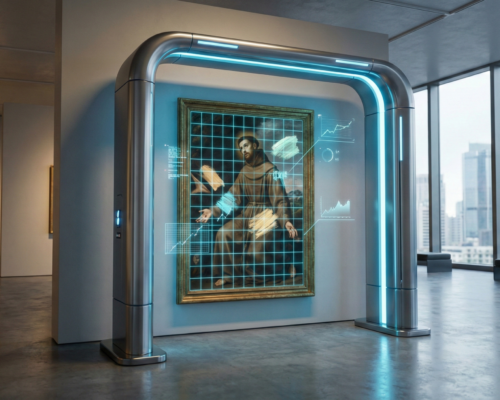
Jan van Eyck was a superstar painter from the 1400s. He is famous for painting tiny details so perfectly that you almost need a magnifying glass to see them. Two museums—one in Philadelphia (USA) and one in Turin (Italy)—both own versions of a painting called Saint Francis Receiving the Stigmata. For a long time, experts debated: “Did Van Eyck paint both? Just one? Or neither?”
Enter Art Recognition, a Swiss technology company. They used their AI program to scan high-resolution photos of both paintings. The results released this week were shocking:
- The Philadelphia Painting: The AI is 91% sure Van Eyck did not paint it.
- The Turin Painting: The AI is 86% sure Van Eyck didn’t paint that one either!
To prove the robot wasn’t just broken, they tested a painting everyone knows is real—the famous Arnolfini Portrait in London. The AI gave that one a big “thumbs up” (89% positive).
“It’s not good news… I’m guessing the museums won’t be happy.”
Dr. Carina Popovici, CEO of Art Recognition
How Does the “Robo-Sherlock” Work?
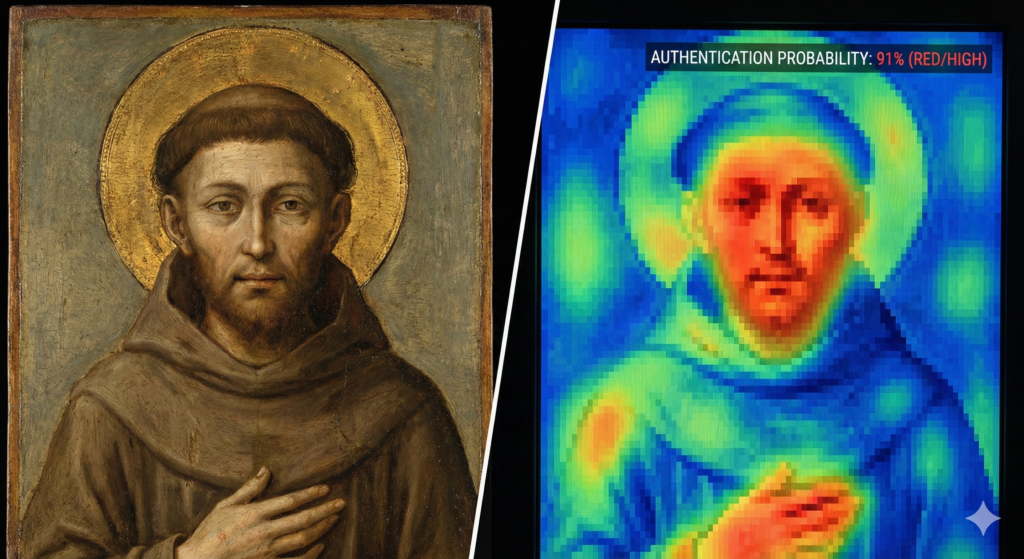
You might be wondering, how can a computer tell who painted a picture? It’s not looking at the pretty colors or the subject matter like we do. It’s looking at math.
Here is the simple version of how it works:
- Grid Mode: The computer breaks a photo of the painting into hundreds of tiny squares.
- Fingerprint Hunt: It analyzes the brushstrokes in each square. Every artist moves their hand differently—like a unique fingerprint.
- The Match: The AI compares these strokes to a database of “verified” real paintings. If the brushstrokes don’t match the pattern it learned, it flags them as “not authentic.”
Wait… Is It a Fake?
Not exactly! When the AI says “Not Van Eyck,” it doesn’t mean a criminal painted it yesterday to trick people.
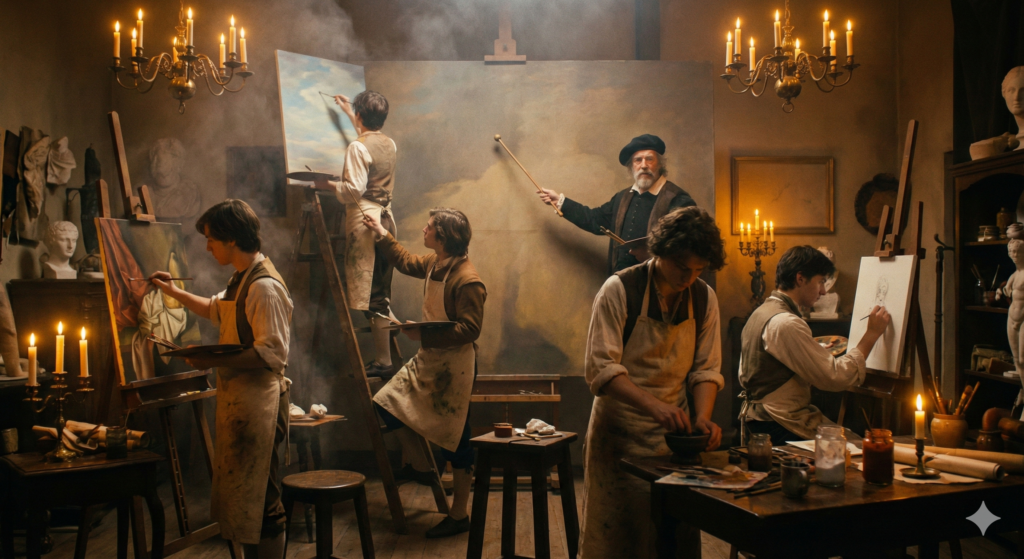
Back in the 1400s and 1600s, famous artists were like brand names. They ran huge workshops (studios) with lots of assistants. A “Master” like Van Eyck might sketch the design, but then let his students paint the trees, the sky, or the robes.
So, the AI isn’t saying these paintings are worthless trash. It’s likely saying they are “Studio Works”—paintings made by the artist’s team, not the artist himself. But in the art market, that difference matters. A painting by the Master might be worth $50 million. A painting by his “studio” might only be worth $1 million. That is a very expensive difference!
The AI vs. The Experts
This isn’t the first time AI has caused drama.
- The Rubens Mystery: In 2021, the AI looked at a famous painting called Samson and Delilah in London’s National Gallery. It gave it a 91% negative score, suggesting the great Peter Paul Rubens never touched it. The museum still says it’s real, but the computer disagrees.
- The Dueling AIs: Sometimes, even the robots fight! Recently, one AI from a university said a painting called the de Brécy Tondo was definitely by Raphael. But the Art Recognition AI said, “Nope, definitely not Raphael.”
What Happens Next?
We are entering a new era where science meets art history. Museums might have to change the labels on their walls. Rich collectors will start demanding “AI Reports” before they spend millions of dollars.
But can we trust the machines completely? Computers are only as smart as the data we feed them. If we teach them using the wrong paintings, they will give us the wrong answers. For now, the best approach is probably a team-up: human experts working with AI to solve the mysteries of history.
Frequently Asked Questions (FAQ)
1. Can AI prove a painting is 100% real? No. AI deals in probabilities, not absolute facts. It can say, “There is a 95% chance this matches the artist’s style,” but it cannot go back in time and witness the painting being made. It is a tool to help experts, not replace them.
2. Why do artists have “studios” painting for them? Think of it like a modern movie director or a fashion designer. They have a vision, but they need a huge team to build the set or sew the clothes. Old Masters like Rubens and Rembrandt were busy celebrities with more orders than they could handle, so they hired talented assistants to help finish the work.
3. Will museums take down paintings if the AI says they are fake? Probably not immediately. Museums move slowly. They will likely do more scientific tests (like X-rays or chemical analysis of the paint) to see if those results agree with the AI. If all the evidence points to “fake,” they might eventually change the label to “Attributed to…” or “Workshop of…”
Citations
- The Guardian, “AI analysis casts doubt on Van Eyck paintings in Italian and US museums,” February 7, 2026.
- ArtNet News, “A New Rubens Attribution Reignites Debate Over A.I. Authentication,” March 20, 2025.
- Art Recognition, “Raphael and the de Brécy Tondo Madonna: When One AI Gets Ahead of the Evidence,” Case Study, 2025.