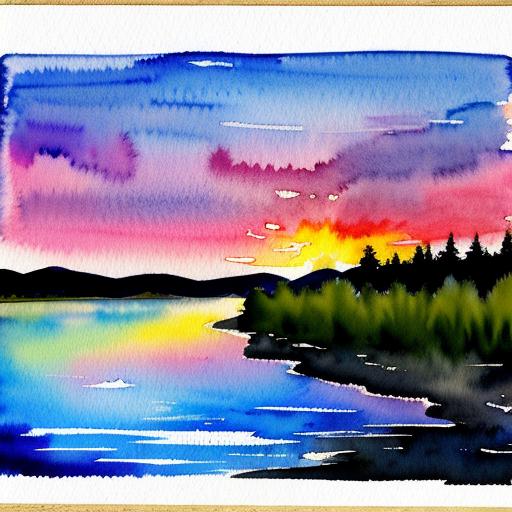
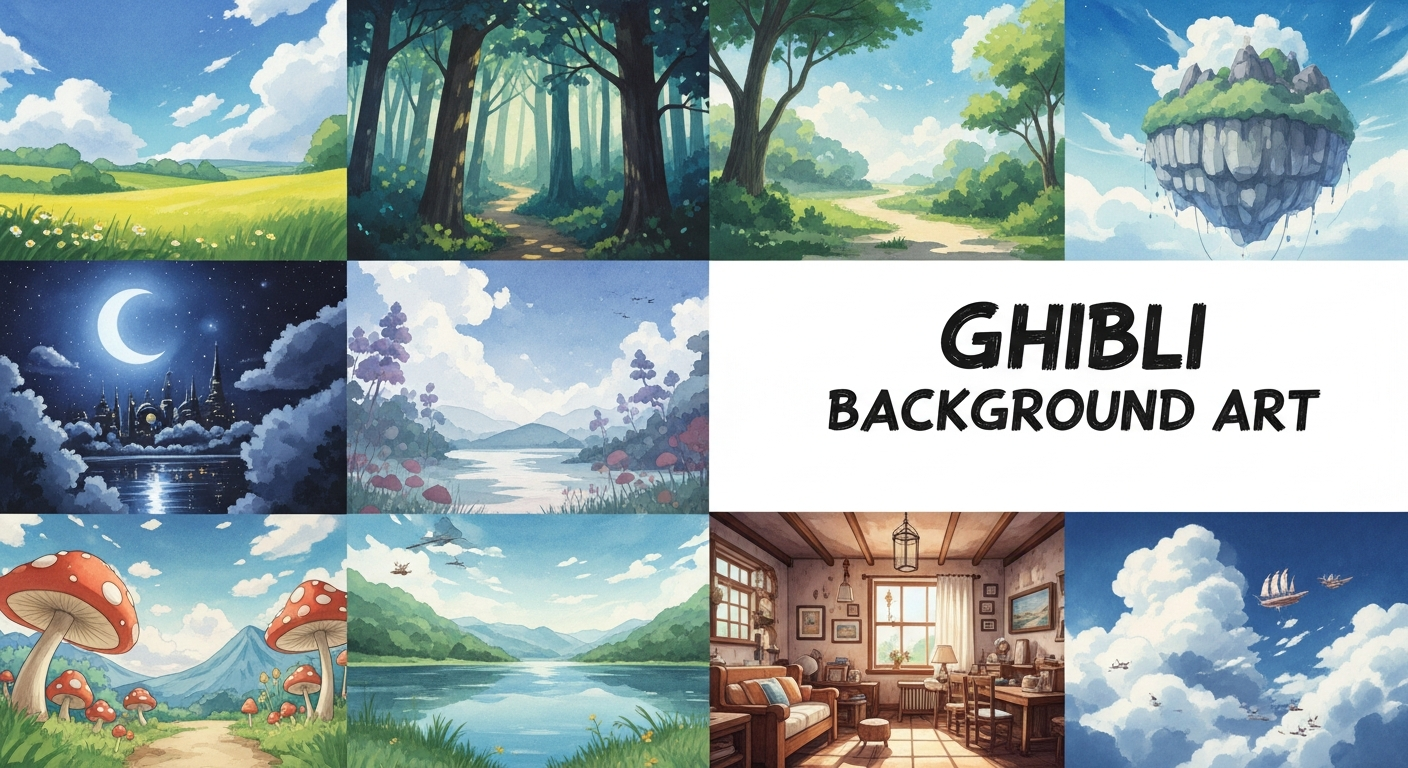
Studio Ghibli films are celebrated worldwide not just for their heartwarming stories and memorable characters, but also for their absolutely stunning visual artistry. At the heart of this visual splendor lies the incredible ghibli background art. Far from being mere backdrops, these hand-painted landscapes, bustling cities, and serene natural settings are characters in themselves, brimming with life, detail, and emotion. From the lush forests of My Neighbor Totoro to the mysterious bathhouse in Spirited Away, every frame demonstrates the breathtaking beauty of ghibli background art.
Key Points:
- Ghibli background art uses traditional hand-painted watercolor techniques that create warmth and organic beauty
- Master artists like Kazuo Oga pioneered the distinctive Ghibli aesthetic through meticulous attention to detail
- Backgrounds actively contribute to storytelling by reflecting character emotions and foreshadowing events
- The unique blend of realism and fantasy makes Ghibli worlds feel both believable and magical
- Each film features carefully chosen color palettes that establish mood and atmosphere
The Unique Signature: What Sets Ghibli Background Art Apart?
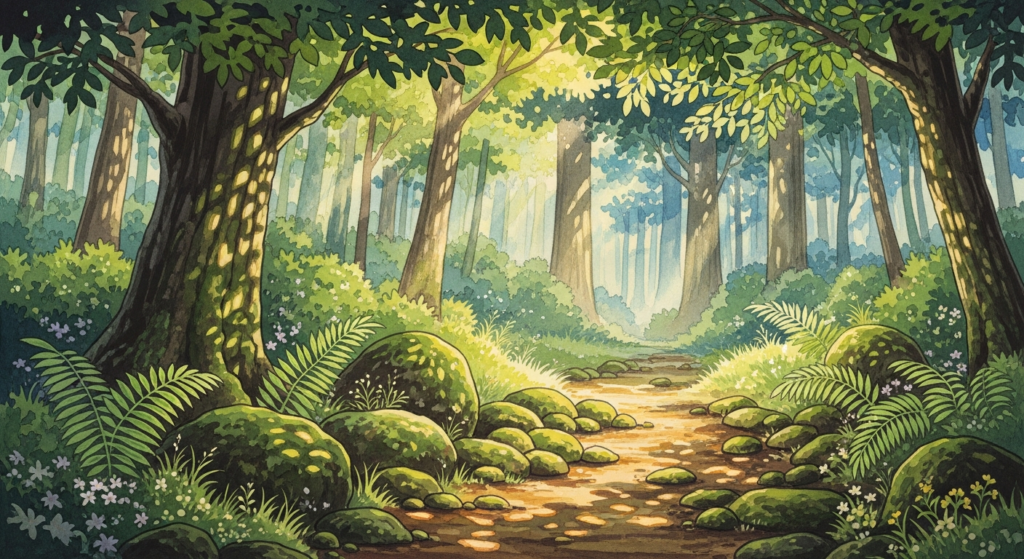
Ghibli background art possesses a distinct charm that is instantly recognizable. Unlike many modern animations that rely heavily on digital effects, Ghibli famously champions traditional, hand-painted watercolor methods. This dedication gives their backgrounds a warmth, texture, and organic feel that digital art often struggles to replicate. Every tree, cloud, and cobblestone street is crafted with incredible precision and a deep understanding of natural beauty.
A key element is the studio’s unparalleled attention to detail and realism, even within fantastical settings. Artists carefully observe real-world environments, light, and weather patterns, then infuse these observations into their imagined worlds. This blend of meticulous realism with imaginative fantasy creates landscapes that feel both believable and utterly magical, inviting viewers to truly immerse themselves in the film’s universe.
The signature style relies heavily on techniques perfected over decades. Artists employ wet-on-wet watercolor techniques to create soft, atmospheric effects in skies and water, while also using precise brushwork for architectural details. This combination of loose and controlled painting creates dynamic scenes that feel alive rather than static.
Master Artists Behind the Scenery: The Architects of Ghibli’s Worlds
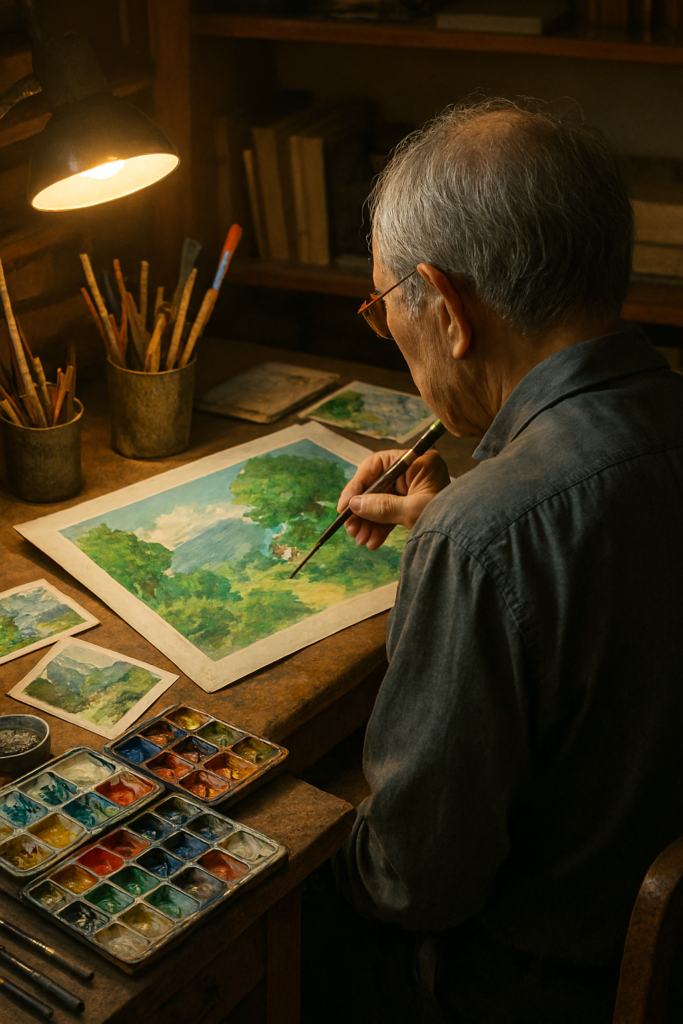
While Hayao Miyazaki and Isao Takahata are the celebrated directors, the unsung heroes of Ghibli’s visual tapestry are often the background artists, particularly the legendary Kazuo Oga. Oga’s distinctive style, characterized by his masterful use of watercolor, meticulous brushstrokes, and ability to evoke profound moods, has become synonymous with the Ghibli aesthetic. He pioneered many of the techniques that give ghibli background art its iconic look.
These artists draw inspiration from a diverse range of sources, from the serene beauty of Japanese countryside and ancient European villages to the vibrant colors of Impressionist paintings. They don’t just paint scenery; they craft entire ecosystems, complete with atmospheric effects, changing seasons, and dynamic lighting, making each frame a work of art in itself. The influence of Impressionist art characteristics is particularly evident in how Ghibli artists capture fleeting moments of light and atmosphere.
Oga’s approach to environmental design draws from real-world observation combined with imaginative interpretation. He often spent time studying actual locations, photographing and sketching landscapes before transforming them into fantastical settings. This grounding in reality gives even the most magical Ghibli worlds a sense of believability that resonates with audiences.
Ghibli Background Art Across Iconic Films
This table highlights specific Studio Ghibli films and the unique characteristics or emotional impact of their background art.
| Film Title | Key Art Style/Elements | Emotional Impact of Backgrounds |
|---|---|---|
| My Neighbor Totoro | Lush, vibrant rural Japanese landscapes; emphasis on natural light and gentle greens | Evokes nostalgia, innocence, and wonder; creates a sense of comfort and childlike adventure |
| Spirited Away | Intricate, fantastical bathhouse architecture; eerie yet beautiful spirit world; dramatic lighting | Creates a world of mystery, fear, and wonder; enhances the journey of self-discovery and transformation |
| Princess Mononoke | Wild, untamed ancient forests; stark and grand natural vistas; a balance of beauty and harshness | Emphasizes the power and majesty of nature; underscores themes of environmental conflict and reverence |
| Howl’s Moving Castle | Whimsical, detailed European-inspired towns; sprawling, often desolate battlefields; magical interiors | Reflects the characters’ personalities and the film’s themes of war, peace, and personal freedom |
| Ponyo | Bright, colorful underwater scenes; charming, simple seaside village; dynamic water effects | Conveys joy, childlike wonder, and the powerful, unpredictable beauty of the ocean |
Each film in the Ghibli catalog demonstrates how background art serves as more than decoration—it’s an essential storytelling element that shapes the viewer’s emotional experience.
Exploring the artistic process behind Studio Ghibli’s breathtaking backgrounds:
Beyond the Canvas: Techniques and Tools that Bring Worlds to Life
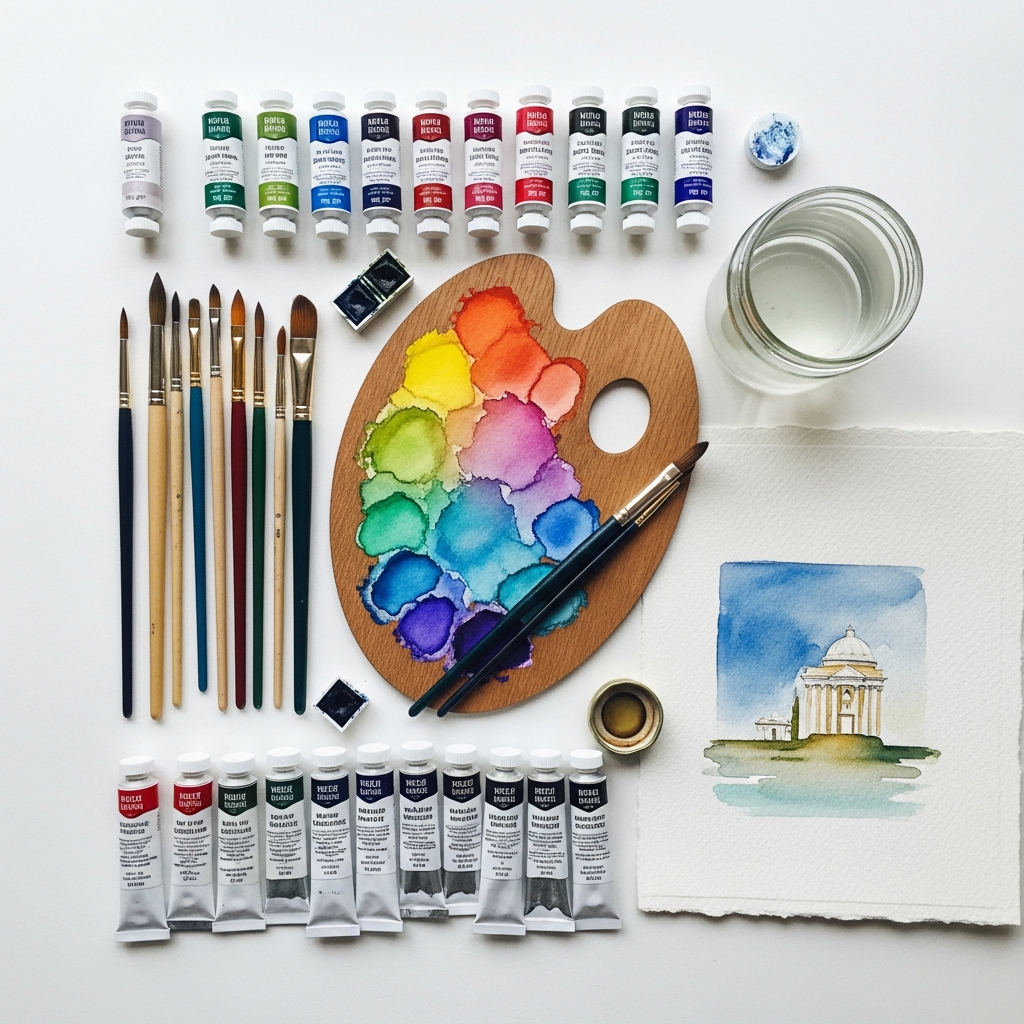
The creation of ghibli background art is a labor of love, often involving traditional tools like watercolors, gouache, and brushes. Artists layer colors, creating depth and luminosity that are hard to achieve with digital tools alone. They meticulously paint everything from the texture of a wooden floor to the shimmer of water, ensuring that every element feels tangible and real.
Understanding aquarelle painting techniques provides insight into how Ghibli artists achieve their signature transparent, luminous quality. The layering process is particularly crucial—artists build up multiple transparent washes to create rich, complex colors that seem to glow from within.
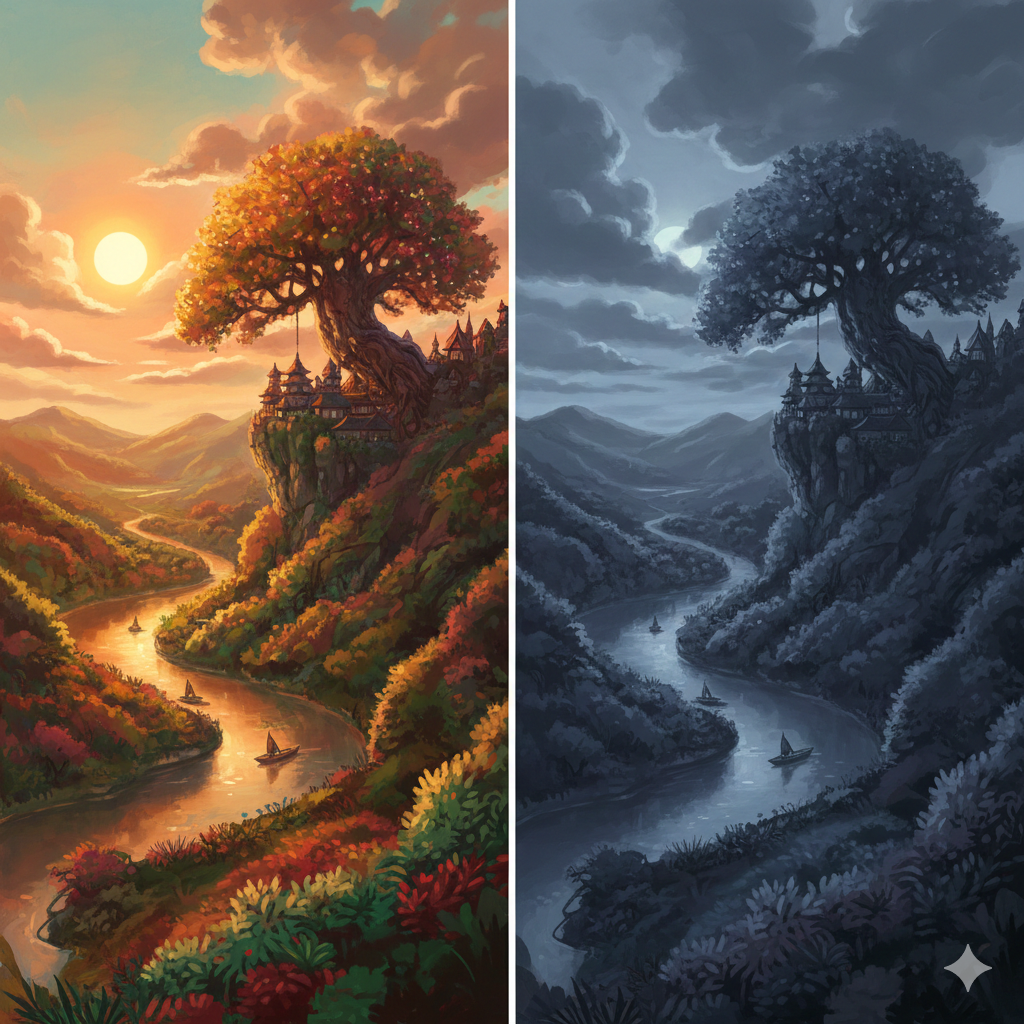
Color palettes are chosen with immense care to reflect the mood and setting. For instance, My Neighbor Totoro uses bright, earthy tones for its rural idyll, while Spirited Away employs deeper, more mysterious hues for the spirit world. The play of light and shadow is also critical, guiding the viewer’s eye and adding dramatic flair, making the backgrounds dynamic and alive rather than static.
The technical execution involves several sophisticated approaches:
- Wet-on-Wet Techniques: Creating soft, atmospheric effects in skies and water
- Layering and Glazing: Building depth through transparent color washes
- Granulation Effects: Using watercolor granulation techniques to add texture to natural surfaces like rock and bark
- Perspective Control: Employing watercolor perspective techniques to create convincing depth in landscapes
- Light and Shadow: Masterful use of watercolor light and shadows to establish time of day and mood
The Emotional Connection: How Backgrounds Tell Stories
In Ghibli films, background art is never just decoration; it’s an integral part of the storytelling. The environments often mirror the emotional states of the characters or foreshadow events. A lush, vibrant forest might reflect a character’s innocence and wonder, while a desolate, grey landscape could symbolize despair or loss.
This approach to visual storytelling through environment creates layers of meaning that enrich the viewing experience. The backgrounds work in harmony with character development, plot progression, and thematic elements to create a cohesive artistic vision.
Consider how the bathhouse in Spirited Away transforms throughout the film—appearing simultaneously welcoming and threatening, reflecting the protagonist’s emotional journey from fear to confidence. Or how the changing seasons in My Neighbor Totoro mirror the family’s emotional healing process. These aren’t accidents but carefully planned artistic choices.
The color psychology employed in ghibli background art draws from centuries of artistic tradition. Similar to how famous artists use color palettes to convey emotion, Ghibli artists carefully select hues that subconsciously affect viewer mood and perception.
“The most important thing is to create a world where characters can live and breathe. The backgrounds aren’t just settings—they’re the soul of the story.”
Kazuo Oga
The Influence and Legacy of Ghibli Background Art
The impact of Ghibli’s approach to background art extends far beyond their own films. Contemporary anime watercolor artists and animators worldwide draw inspiration from the studio’s techniques and aesthetic philosophy. The emphasis on hand-crafted beauty over digital efficiency has inspired a renaissance of traditional animation techniques.
Many modern animation studios now incorporate watercolor-style backgrounds in their work, though few achieve the same level of mastery. The Ghibli influence can be seen in everything from independent animated films to high-budget productions seeking that same organic, painterly quality.
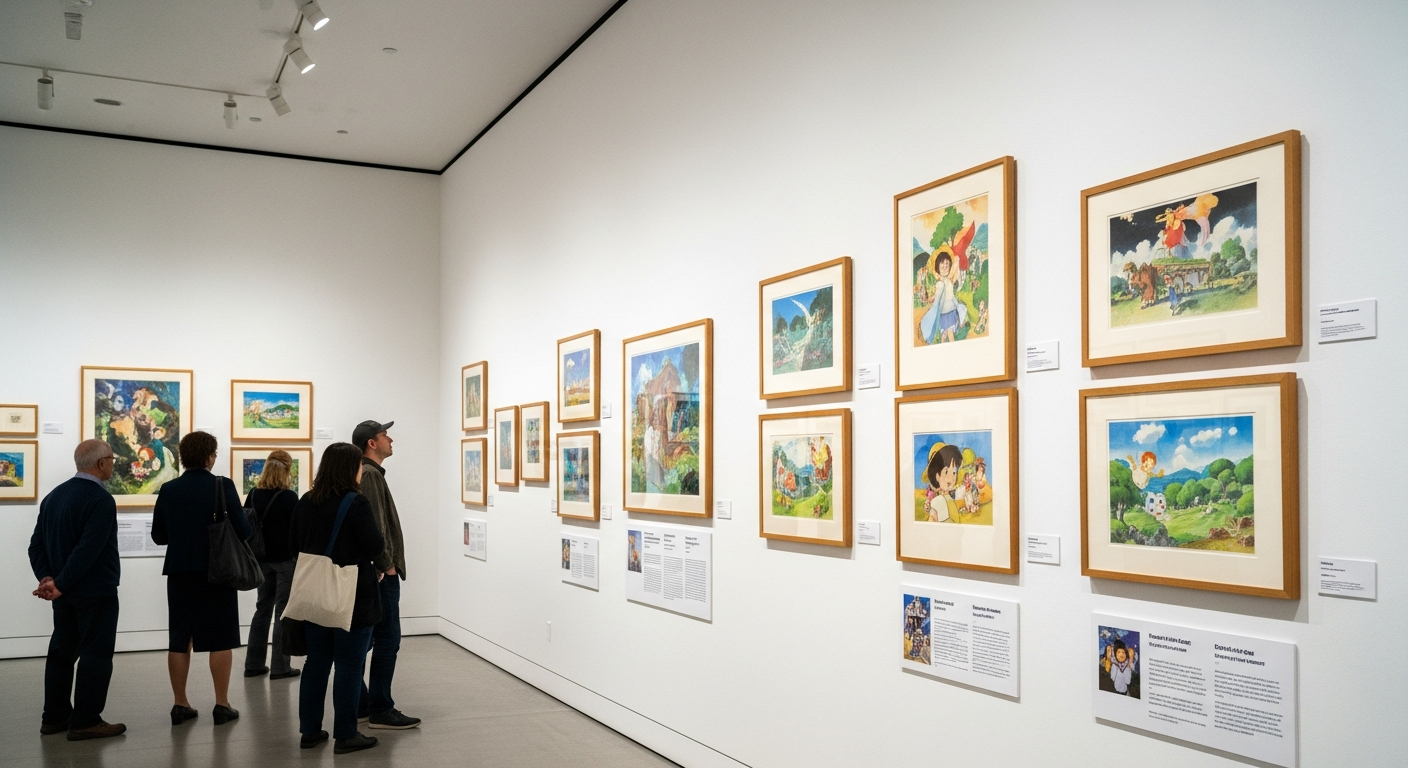
Art students and professionals alike study ghibli background art to understand principles of environmental design, color theory, and atmospheric perspective. The work has been exhibited in museums worldwide, elevating animation backgrounds from commercial craft to fine art.
The studio’s commitment to traditional methods has also sparked conversations about the value of handcrafted artistry in an increasingly digital world. Just as art evolution has always involved the interplay between tradition and innovation, Ghibli demonstrates how classical techniques remain relevant and powerful.
Learning From the Masters: Applying Ghibli Techniques
For artists inspired by ghibli background art, several key principles can be adopted:
Start with Observation
Ghibli artists spend significant time observing real environments before painting. Study how light filters through trees, how water reflects the sky, how buildings weather and age. This foundation in reality makes fantastical elements more believable.
Master Your Medium
The mastering watercolor painting techniques guide provides essential knowledge for achieving Ghibli-style transparency and luminosity. Focus on understanding water-to-pigment ratios, layering, and color mixing.
Consider Emotional Impact
Before painting, ask yourself: What should the viewer feel in this moment? How can color, composition, and lighting support that emotion? Every artistic choice should serve the story.
Practice Patience
Ghibli backgrounds often involve dozens of layers built up over hours or days. Embrace the slow, meditative process of traditional watercolor painting rather than rushing to completion.
Study Color Relationships
Understanding how colors interact—which combinations create harmony or tension—is essential. The way Ghibli uses limited but carefully chosen painting color palettes creates visual coherence while maintaining variety.
Ghibli Background Art in the Digital Age
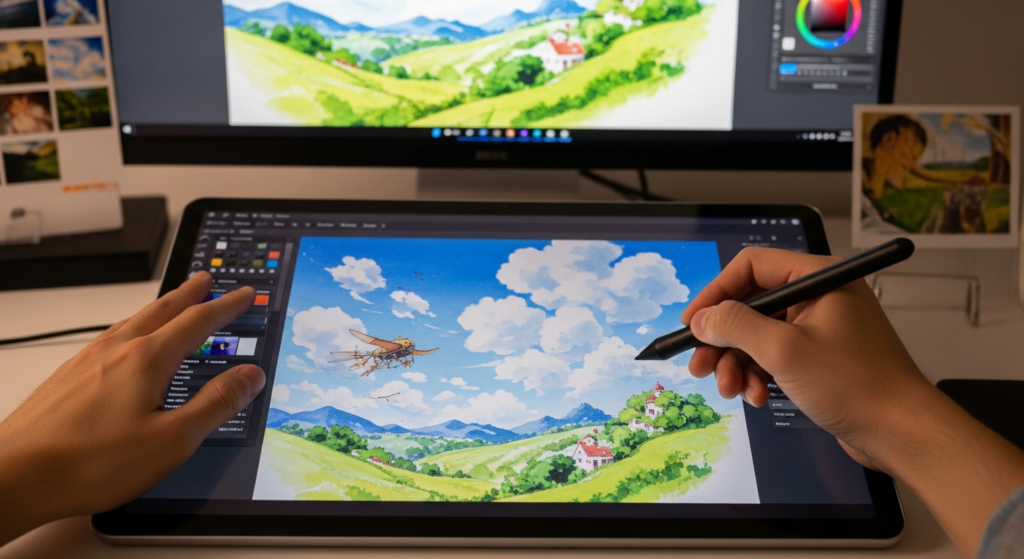
While Studio Ghibli remains committed to traditional hand-painted backgrounds, they’ve thoughtfully incorporated digital tools where appropriate. Best digital painting and drawing apps now include watercolor simulation features that attempt to replicate traditional media, though most artists agree the results don’t quite match hand-painted work.
Some Ghibli artists have experimented with creating initial sketches digitally before transferring to traditional media, or using digital tools for color correction and compositing while maintaining hand-painted backgrounds. This hybrid approach honors tradition while embracing useful technological advantages.
The question facing contemporary animators is whether to follow Ghibli’s traditional path or fully embrace digital production. Many find that hand-painted backgrounds, even when scanned digitally, possess a quality and soul that purely digital work struggles to achieve.
Conclusion: A Lasting Legacy of Visual Poetry
The background art of Studio Ghibli is more than just beautiful scenery; it is the soul of their animated worlds. Through dedicated handcraftsmanship, an unwavering commitment to detail, and the visionary talents of artists like Kazuo Oga, Ghibli has created a legacy of visual poetry. These breathtaking backdrops not only transport us to fantastical realms but also enrich our emotional connection to the characters and stories.
The influence of ghibli background art extends throughout the animation industry and into the broader art world, inspiring countless artists to value traditional craftsmanship and understand how environmental design serves storytelling. Whether you’re an aspiring animator, a watercolor enthusiast, or simply someone who appreciates beautiful art, studying Ghibli’s approach offers valuable lessons in patience, observation, and the power of hand-crafted beauty.
The magic of ghibli background art will undoubtedly continue to inspire and enchant generations to come, proving that true artistry can transform animation into timeless masterpieces. In an age of increasing digitalization, Ghibli reminds us that some things—like the warmth of a hand-painted watercolor landscape—simply cannot be replicated by algorithms.
Frequently Asked Questions
What makes ghibli background art so special?
Ghibli background art is special due to its hand-painted nature using traditional watercolors and gouache, meticulous attention to realistic detail within fantastical settings, unique blend of observation-based realism and imaginative fantasy, ability to evoke strong emotions and contribute directly to storytelling, and the distinctive artistic style pioneered by master artists like Kazuo Oga. The organic warmth and texture of hand-painted backgrounds creates an immersive quality that digital art often cannot replicate.
Are Ghibli backgrounds hand-painted or digital?
The vast majority of classic Studio Ghibli backgrounds are traditionally hand-painted using watercolors and gouache on paper, giving them their characteristic warmth, texture, and luminosity. While some modern productions may incorporate digital elements for compositing or minor corrections, the core artistic process remains rooted in traditional painting methods. This commitment to hand-crafted artistry is a defining characteristic of the studio’s work.
Who is the most famous Ghibli background artist?
Kazuo Oga is widely considered the most famous and influential Ghibli background artist. His distinctive watercolor style and masterful use of color, light, and atmospheric effects have significantly shaped the visual identity of many iconic Ghibli films including My Neighbor Totoro, Princess Mononoke, and Spirited Away. Oga pioneered many of the techniques that define the Ghibli aesthetic and trained numerous other artists who continue his legacy.
How do Ghibli backgrounds contribute to the films’ stories?
Ghibli backgrounds are crucial storytelling elements that create immersive worlds, establish mood and atmosphere, reflect and enhance character emotions, foreshadow narrative events, provide visual symbolism and metaphor, guide viewer attention through composition and lighting, and reinforce thematic elements without requiring dialogue. They function as active participants in the emotional landscape of each film rather than passive backdrops.
What techniques do Ghibli artists use to create their backgrounds?
Ghibli artists employ traditional watercolor and gouache painting with layering techniques to build depth and complexity, wet-on-wet methods for soft, atmospheric effects, precise brushwork for architectural and natural details, careful color palette selection to establish mood, strategic use of light and shadow for drama and depth, atmospheric perspective to create distance, and granulation effects for natural textures. These techniques require years of practice and deep understanding of both traditional art principles and storytelling needs.
Can I see Ghibli background art in person?
Yes, Studio Ghibli often holds exhibitions showcasing their production art, including original background paintings. The Ghibli Museum in Mitaka, Japan, features permanent displays of their artistic process and rotating exhibitions. Major museums worldwide occasionally host Ghibli exhibitions. Additionally, official art books compile high-quality reproductions of background art from various films, allowing fans to study the details of these masterpieces.
How long does it take to create a Ghibli background painting?
A single Ghibli background painting can take anywhere from several hours to multiple days depending on complexity and detail level. Simple backgrounds with minimal elements might be completed in 4-8 hours, while elaborate scenes with intricate architecture, complex lighting, or detailed natural environments can require 20-40 hours or more. The layering process requires waiting for each layer to dry before applying the next, adding to the overall timeline.
What colors and paints do Ghibli artists use?
Ghibli artists primarily use professional-grade watercolors and gouache paints, often favoring brands like Holbein and Windsor & Newton. They typically work with a carefully selected palette of earth tones (siennas, ochres, umbers), blues (ultramarine, cerulean, cobalt), greens (sap green, viridian), and accent colors chosen specifically for each film’s color scheme. The transparency of watercolors allows for the luminous quality characteristic of Ghibli work, while gouache provides opacity when needed.
How has Ghibli influenced modern animation?
Ghibli’s influence on modern animation is profound and far-reaching. They’ve demonstrated that hand-crafted traditional techniques can coexist with and enhance digital production, inspired a renewed appreciation for environmental storytelling through visual art, influenced color palette choices and lighting approaches in contemporary anime and Western animation, elevated the status of background art from technical necessity to artistic expression, trained numerous artists who’ve spread Ghibli techniques throughout the industry, and proved that audiences value artisanal quality in an increasingly digital world.
Can beginners learn to paint in the Ghibli style?
Yes, beginners can absolutely learn to paint in the Ghibli style, though mastery requires dedication and practice. Start by studying basic watercolor techniques, practice observational drawing and painting from real environments, analyze Ghibli films frame-by-frame to understand composition and color choices, begin with simple landscapes before attempting complex architectural scenes, invest in quality watercolor supplies, and be patient with the learning process. Many online tutorials and courses specifically teach Ghibli-inspired painting techniques for artists at all skill levels.
Citations
- Studio Ghibli Official Website – https://www.ghibli.jp/en/ – Official information about Studio Ghibli films, artists, and production techniques
- Ghibli Museum, Mitaka – https://www.ghibli-museum.jp/en/ – Museum dedicated to Studio Ghibli’s artistic process and exhibitions of original artwork
- The Art of Studio Ghibli: The Complete Works – https://www.rizzoliusa.com/book/9780847846511 – Comprehensive art book collection featuring Studio Ghibli background art and production materials
- NHK Documentary: The Man Who Painted Totoro’s Forest – Documentary about Kazuo Oga’s artistic process and influence on Ghibli’s visual style
- Studio Ghibli Layout Designs Exhibition Catalog – Collection of original background paintings and production art from various Ghibli films