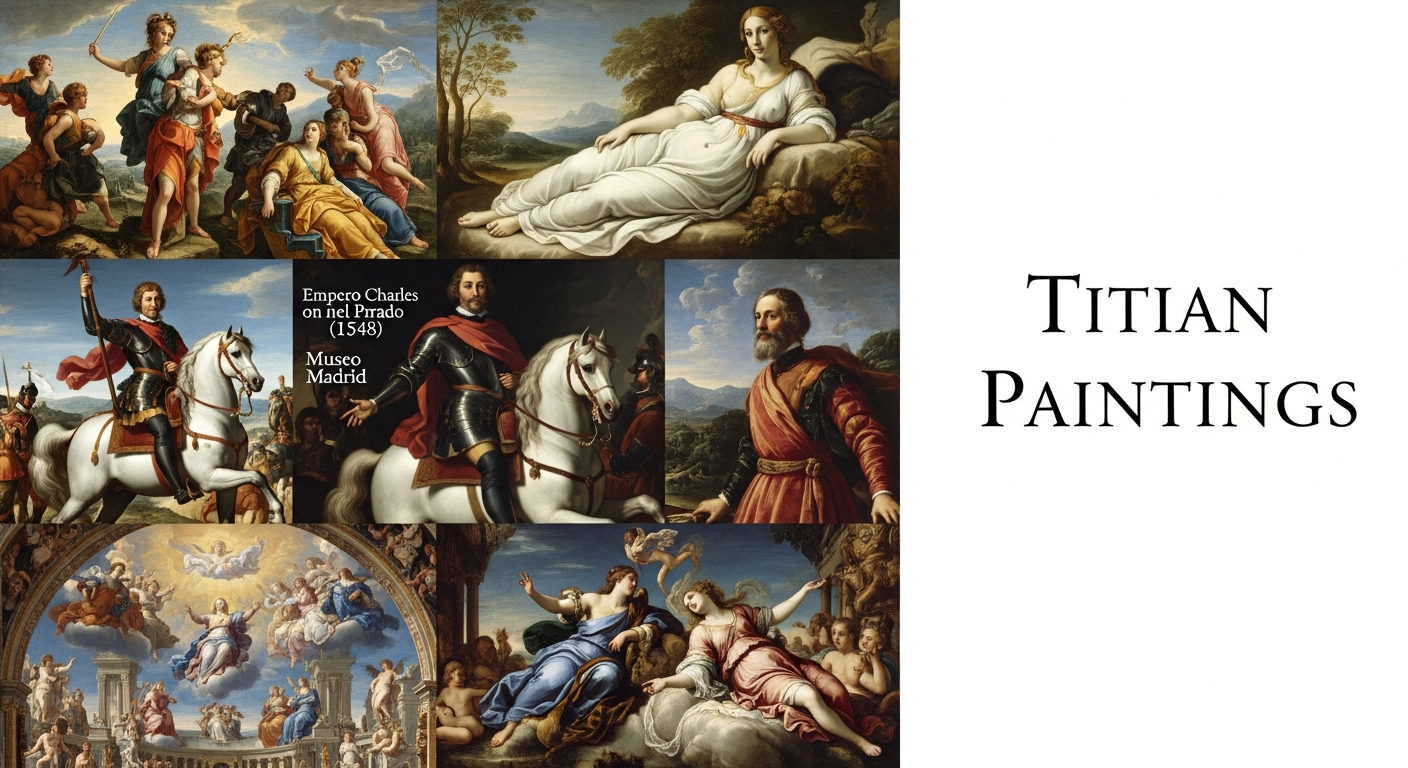
Step into the vibrant world of the Italian Renaissance and meet one of its biggest superstars: Tiziano Vecellio, known to the world simply as Titian. Imagine a painter so talented that a Holy Roman Emperor once picked up a paintbrush he dropped! That was Titian. For nearly 70 years, he created some of the most breathtaking art the world has ever seen. This post will be your guide to the top 10 Titian paintings, exploring the dramatic stories, brilliant colors, and groundbreaking techniques that made him a legend. From powerful myths to stunning portraits, get ready to explore the genius behind these iconic Titian paintings.
Bacchus and Ariadne (1520–1523)
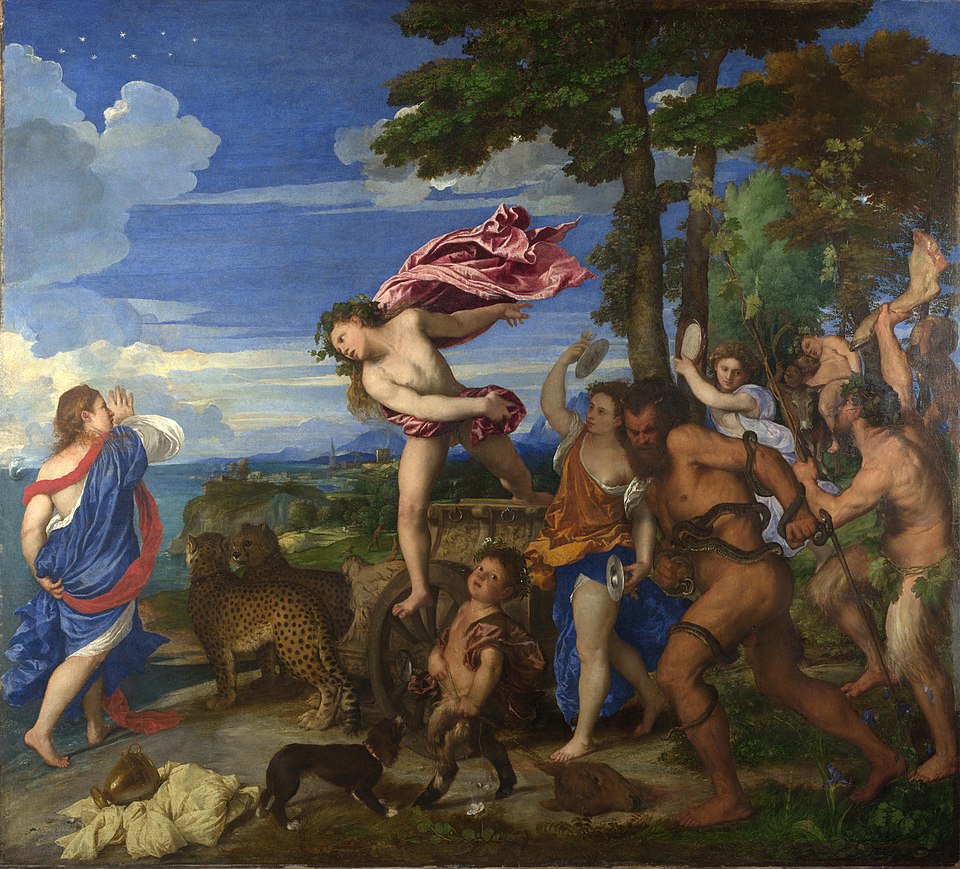
The dramatic and colorful masterpiece ‘Bacchus and Ariadne’ by Titian, a jewel of the National Gallery.
Description: Imagine stumbling upon a wild party thrown by the gods! That’s the feeling you get from ‘Bacchus and Ariadne.’ The painting captures the chaotic moment the god of wine, Bacchus, leaps from his cheetah-pulled chariot to meet Ariadne, who was just abandoned by her love, Theseus. It’s a whirlwind of color, movement, and emotion, like a freeze-frame from an epic movie. The brilliant blue pigment Titian used for the sky was ultramarine, a color so rare it was more expensive than gold during the Renaissance.
Painting Techniques: Titian was a master of color, and this painting is a prime example. He used rich, expensive pigments like ultramarine for the sky and vermilion for the reds, creating a scene that practically glows. His brushwork is energetic, perfectly capturing the dynamic action of the story.
Location: The National Gallery, London
Estimated Value: Priceless
Assumption of the Virgin (1516–1518)
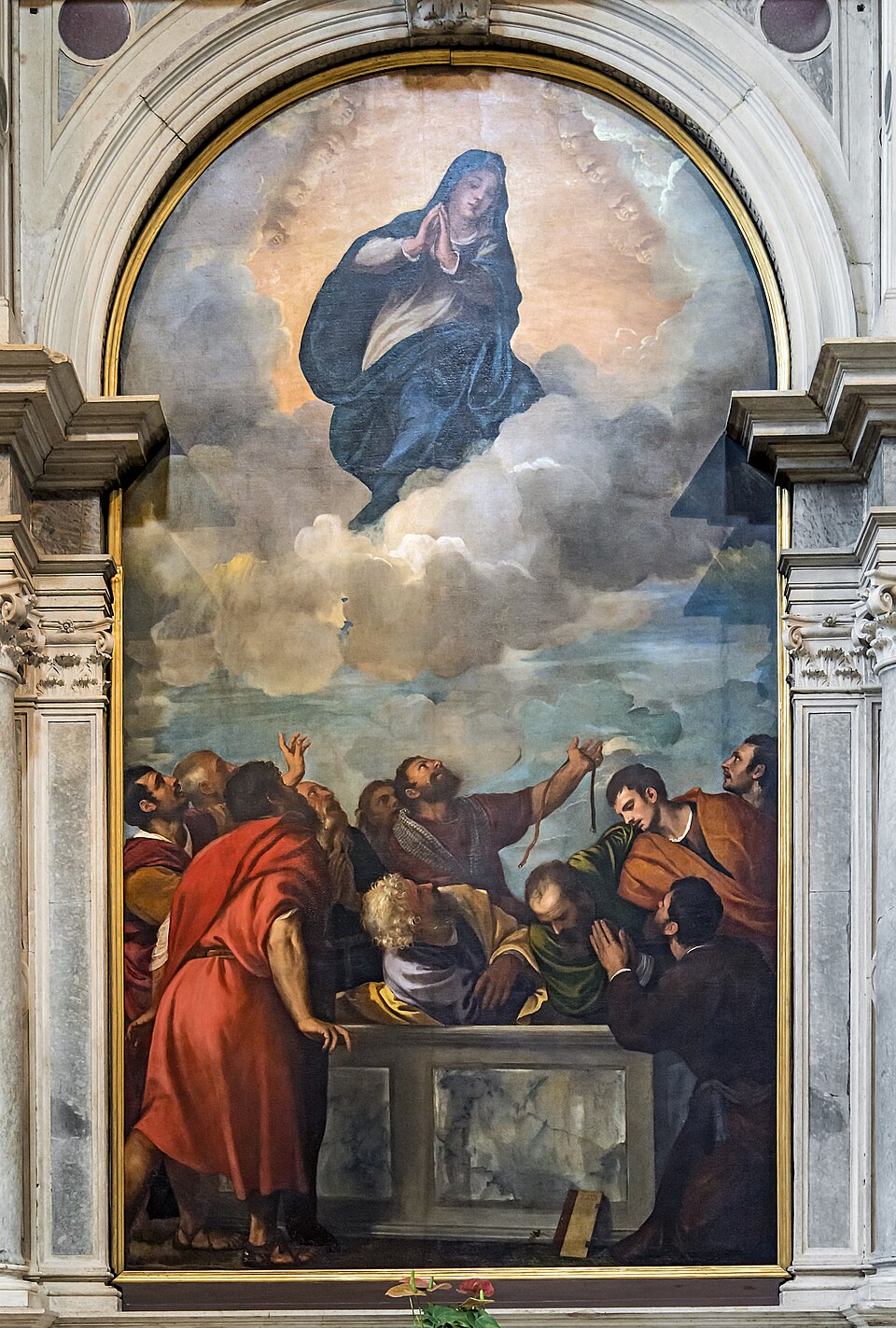
Titian’s monumental ‘Assumption of the Virgin’, a breathtaking altarpiece in Venice.
Description: This gigantic altarpiece is pure drama and spiritual energy. It shows the Virgin Mary being lifted up to heaven on a cloud of angels. Below, the apostles watch in total astonishment, reaching up towards her. It’s designed to make you look up and feel the awe of the moment, and it completely revolutionized religious art in Venice. Standing at nearly 23 feet tall, this was the largest altarpiece ever painted on canvas in Venice at the time.
Painting Techniques: Titian’s use of light and color here is revolutionary. He divides the painting into three zones: the dark, earthly realm of the apostles, Mary’s radiant ascent, and the golden light of heaven. The vibrant ‘Titian red’ of the apostles’ robes draws the viewer’s eye and adds to the emotional intensity.
Location: Basilica di Santa Maria Gloriosa dei Frari, Venice
Estimated Value: Priceless
Venus of Urbino (c. 1534)
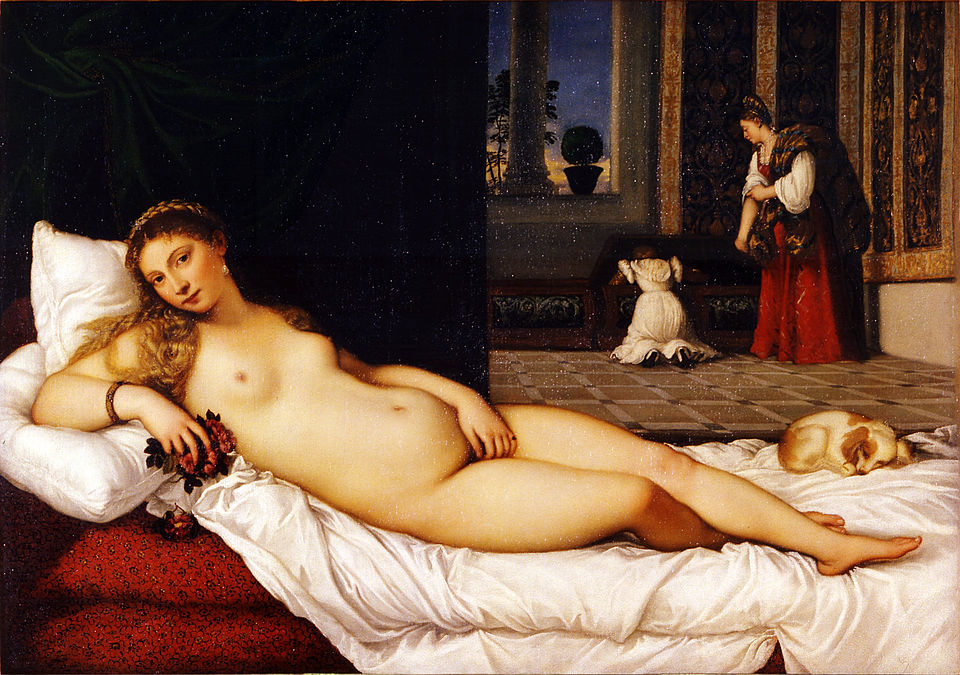
The iconic and influential ‘Venus of Urbino’ by Titian, a masterpiece of Renaissance art.
Description: This painting is one of the most famous nudes in all of art history. Titian portrays Venus (or perhaps a young Venetian bride) with a direct, confident gaze that was quite scandalous for its time. She isn’t a distant goddess; she’s a living, breathing woman, making the viewer feel like they’ve walked into a private room. The small dog sleeping peacefully at the end of the bed is a traditional symbol of marital faithfulness.
Painting Techniques: Titian’s skill in painting flesh is legendary. He used many thin layers of oil glazes to create the soft, warm, and incredibly realistic glow of Venus’s skin. This technique makes her seem both idealized and lifelike.
Location: Uffizi Gallery, Florence
Estimated Value: Priceless
The Rape of Europa (1560–1562)
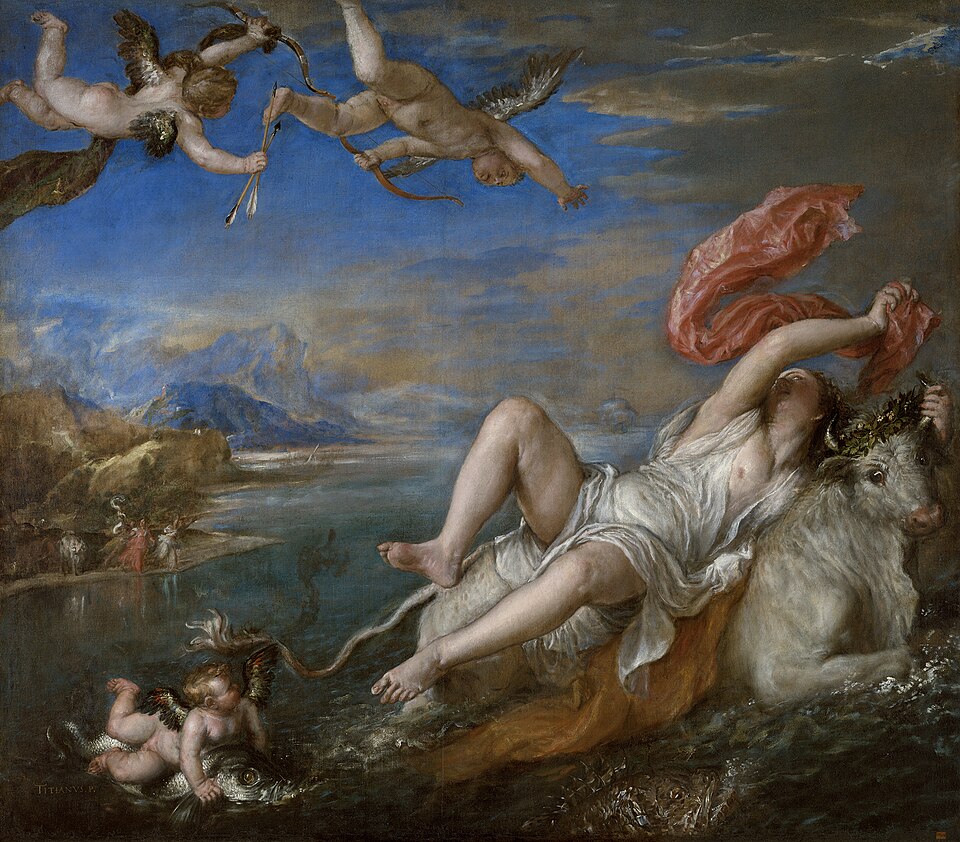
Titian’s mythical masterpiece ‘The Rape of Europa’, known for its dramatic story and expressive style.
Description: Based on a Greek myth, this painting shows the princess Europa being whisked away across the sea by the god Jupiter, who has disguised himself as a beautiful white bull. It’s a scene of chaos and beauty, with Europa clinging to the bull while cupids fly overhead. The painting is filled with a sense of frantic energy and high drama. This painting was part of one of the largest art thefts in history in 1990 and, tragically, is still missing today.
Painting Techniques: This is a great example of Titian’s late style, where his brushstrokes became much looser and more expressive. Up close, it might look like a mess of paint, but from a distance, it all comes together in a shimmering, dynamic image. This technique was centuries ahead of its time.
Location: Isabella Stewart Gardner Museum, Boston
Estimated Value: Priceless (Stolen in 1990, estimated value over $100 million)
Equestrian Portrait of Charles V (1548)
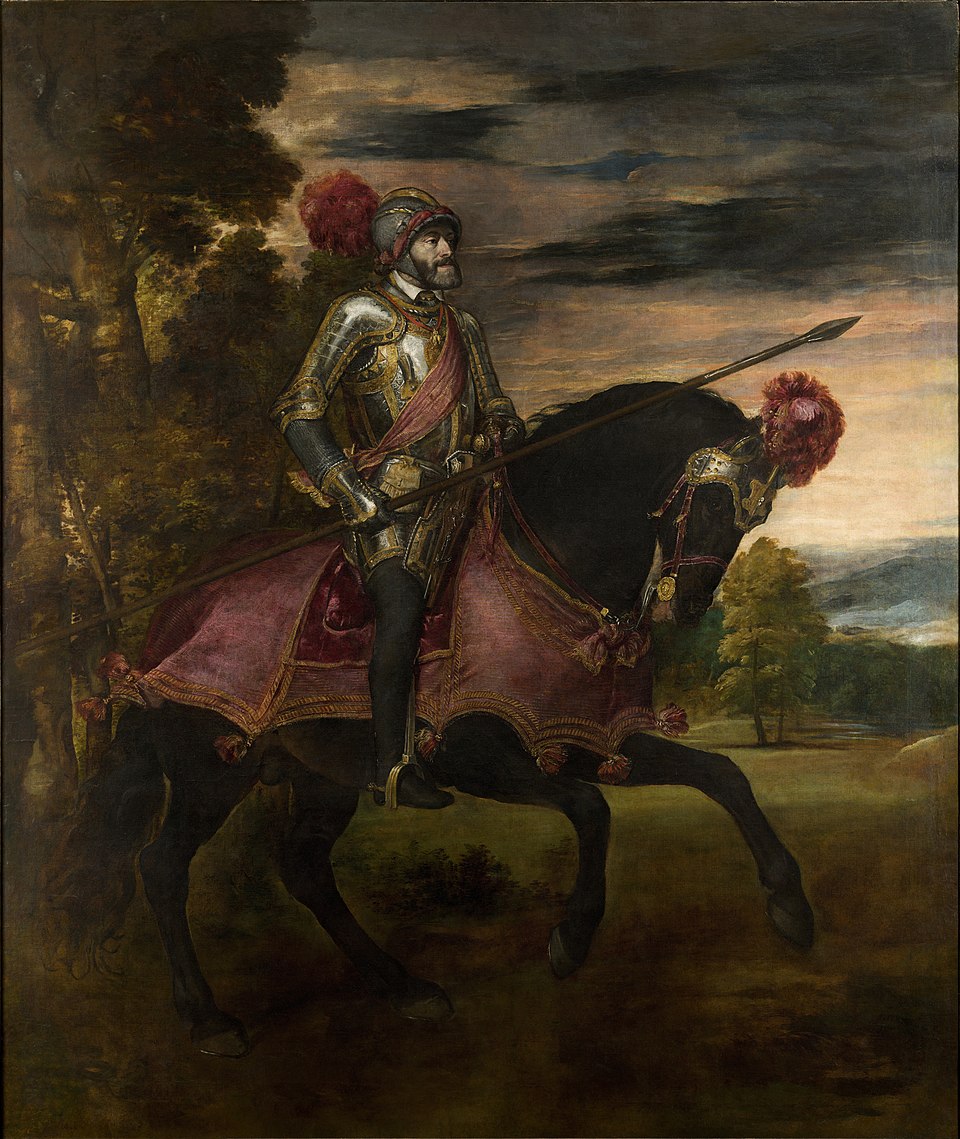
The powerful ‘Equestrian Portrait of Charles V’ by Titian, a landmark in the history of portraiture.
Description: This isn’t just a portrait; it’s a statement of power. Titian paints the Holy Roman Emperor Charles V as a triumphant Christian knight, alone and resolute after a major military victory. The emperor is calm and in control, a symbol of immense authority and strength, set against a serene landscape. This monumental work is considered the first grand equestrian portrait of a living ruler, setting the standard for royal portraits for centuries to come.
Painting Techniques: Titian masterfully combined incredible detail in the emperor’s shining armor with a more atmospheric, painterly background. The deep red sash and horse’s trappings add a flash of color that signifies royalty and power.
Location: Prado Museum, Madrid
Estimated Value: Priceless
The Flaying of Marsyas (c. 1570–1576)
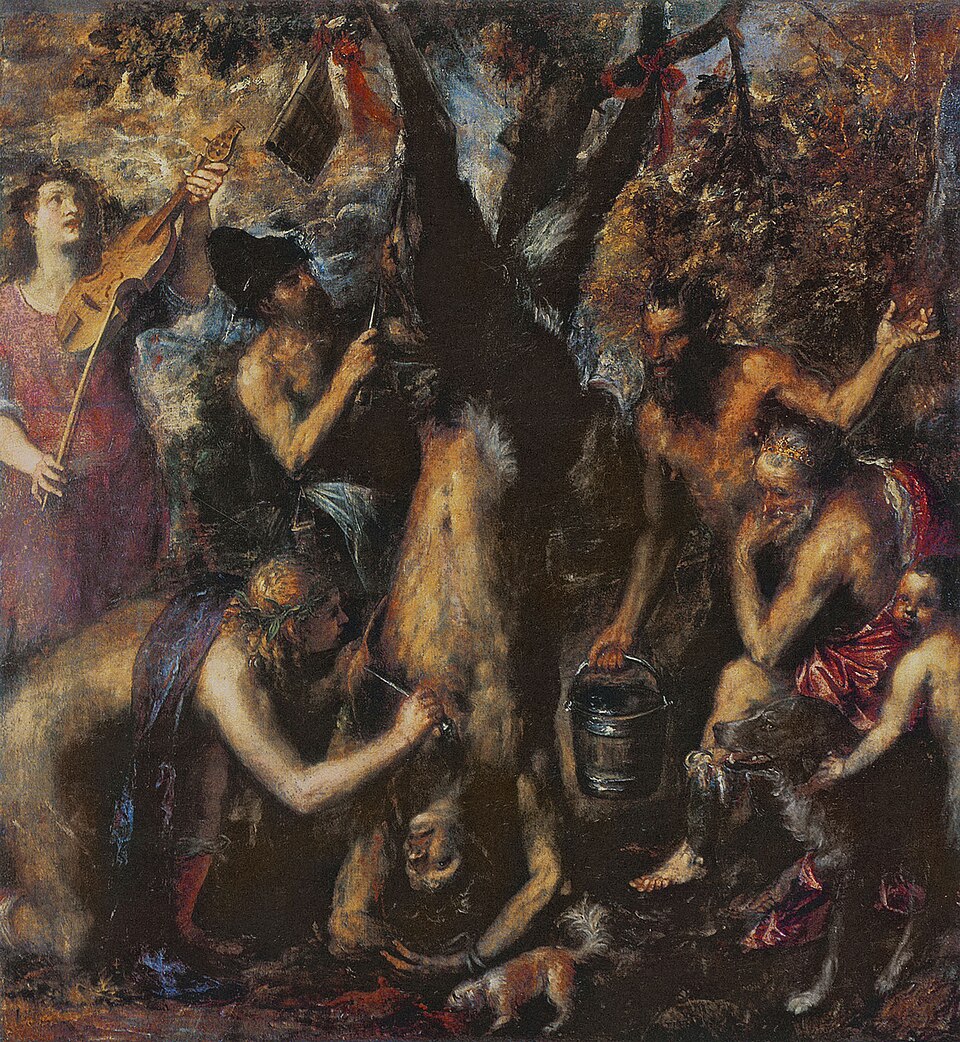
Titian’s dark and powerful late work, ‘The Flaying of Marsyas’, a masterpiece of myth and tragedy.
Description: This is one of Titian’s darkest and most challenging paintings. It depicts the brutal Greek myth where the satyr Marsyas is punished for losing a music contest to the god Apollo. It’s a violent and tragic scene, painted with a raw, emotional intensity that is both horrifying and mesmerizing. Titian hauntingly included a self-portrait in the painting; he is the figure of King Midas, watching the terrible event with a look of deep contemplation.
Painting Techniques: Created at the end of his life, this painting showcases Titian’s late style at its most extreme. The brushwork is rough and frantic, the colors are dark and muddy, and the figures seem to emerge from the chaotic paint, making the brutal scene feel even more visceral.
Location: Archbishop’s Palace, Kroměříž, Czech Republic
Estimated Value: Priceless
Sacred and Profane Love (c. 1514)
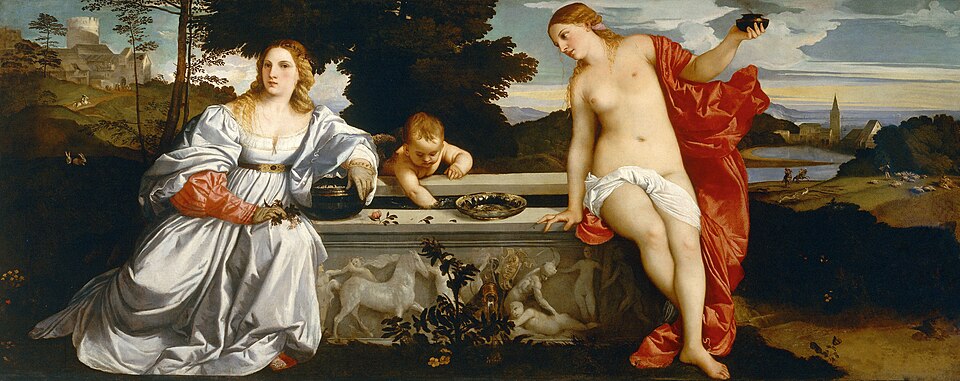
The enigmatic and beautiful ‘Sacred and Profane Love’ by Titian, a puzzle box of Renaissance art.
Description: This beautiful and mysterious painting shows two women who look almost identical sitting on a sarcophagus-like fountain. One is fully clothed, representing earthly, marital love (‘Profane Love’), while the other is nude, representing divine, heavenly love (‘Sacred Love’). It’s like a beautiful puzzle that art lovers still debate today. The true meaning of the painting is still one of the biggest mysteries in art history, with dozens of theories about what Titian was trying to say.
Painting Techniques: Painted early in his career, this work highlights Titian’s incredible skill with color and composition. The landscape is lush and detailed, and the contrast between the textures of the rich clothing and the smooth skin is handled with amazing talent.
Location: Borghese Gallery and Museum, Rome
Estimated Value: Priceless
Pesaro Madonna (1519–1526)
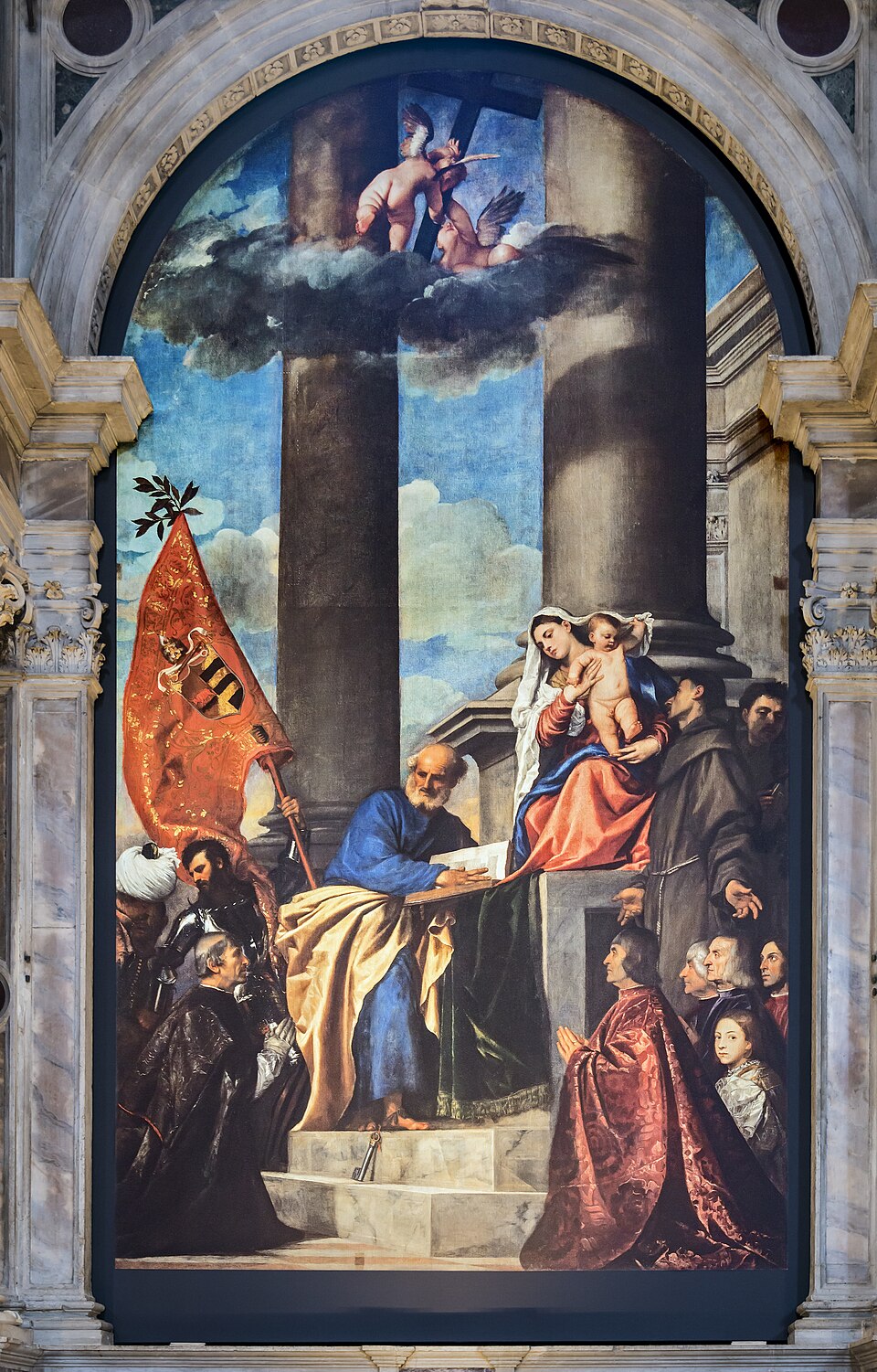
A revolutionary composition in religious art: Titian’s ‘Pesaro Madonna’ in Venice.
Description: Most altarpieces at the time were very static, with the main figures right in the center. Titian broke all the rules with this one! He placed the Virgin and Child off-center and arranged the other figures on a dramatic diagonal, creating a sense of movement that draws you right into the scene. It was a revolutionary idea. Titian painted the patrons who paid for the artwork, the Pesaro family, directly into the scene, kneeling in devotion.
Painting Techniques: The painting’s innovative diagonal composition is its most famous feature. Titian also uses light and shadow to guide the viewer’s eye up from the kneeling patrons at the bottom, past the saints, and finally to the Virgin and Child, who are the brightest point in the painting.
Location: Basilica di Santa Maria Gloriosa dei Frari, Venice
Estimated Value: Priceless
Diana and Actaeon (1556–1559)
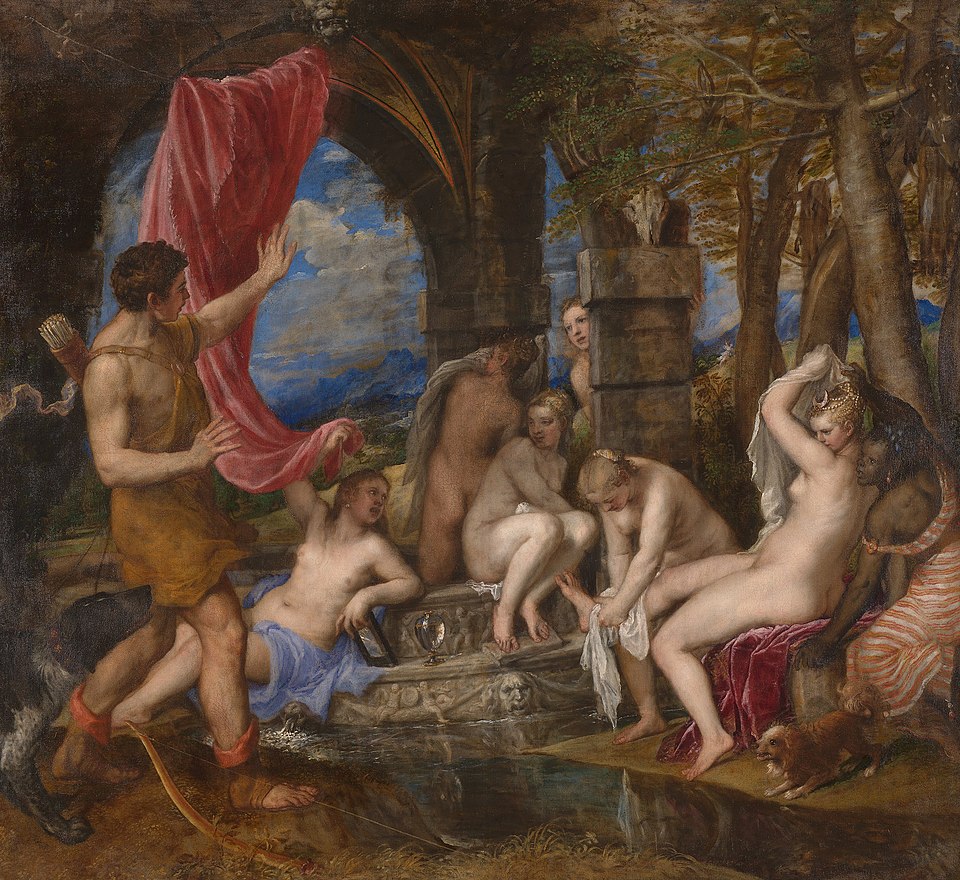
The tense mythological drama of ‘Diana and Actaeon’, one of Titian’s celebrated ‘poesie’ paintings.
Description: This painting captures the most dramatic moment in a myth: the hunter Actaeon accidentally walks in on the goddess Diana and her nymphs bathing. The tension is electric. Diana shoots him a furious glare, while Actaeon throws up his hands in shock, knowing he’s in big trouble. It’s a snapshot of a fatal mistake. To keep this masterpiece in the UK, two national galleries teamed up to purchase it for £50 million, and they now share it, rotating its location every few years.
Painting Techniques: Part of a series of mythological paintings called ‘poesie’ (or ‘painted poems’), this work showcases Titian’s mastery of storytelling. He uses gestures, expressions, and a rich, atmospheric use of color to convey the shock and drama of the moment.
Location: National Gallery, London & Scottish National Gallery, Edinburgh
Estimated Value: Purchased in 2009 for £50 million
The Death of Actaeon (c. 1559–1575)
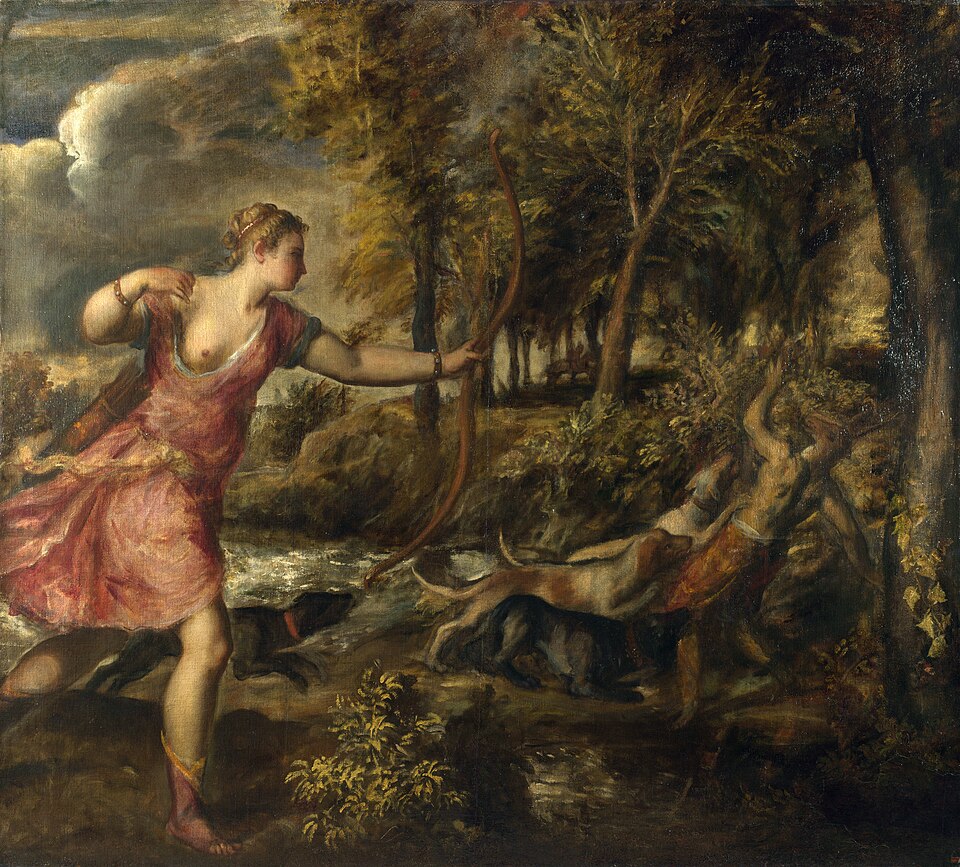
Titian’s tragic and expressive late masterpiece, ‘The Death of Actaeon’.
Description: This is the tragic sequel to ‘Diana and Actaeon.’ As punishment, Diana has turned the hunter Actaeon into a stag, and now he is being torn apart by his own hunting dogs. It’s a dark, chaotic, and emotional scene, painted with a raw energy that reflects the violence of the story. Titian worked on this painting for more than 15 years, and it was likely unfinished in his studio when he died, giving us a unique glimpse into his creative process.
Painting Techniques: Another very late work, this painting’s brushwork is incredibly loose and almost abstract up close. Titian uses swirling strokes of paint and a dark, moody palette to create a powerful sense of movement and tragedy, focusing more on the emotion of the scene than on perfect details.
Location: The National Gallery, London
Estimated Value: Priceless
Inspiration and Legacy
Titian didn’t just appear out of nowhere; he learned from the best. His early work was heavily influenced by his teachers, the Venetian masters Giovanni Bellini and Giorgione. Bellini taught him about rich color and light, while Giorgione inspired his poetic, atmospheric landscapes. But Titian took what he learned and turned it up to eleven, becoming a superstar who, in turn, influenced countless artists for centuries. His dramatic compositions, deep psychological portraits, and revolutionary use of color and loose brushwork had a massive impact on later painters like Peter Paul Rubens, Diego Velázquez, and even the great Rembrandt. In a way, Titian’s bold use of paint paved the way for future art movements, making him a true father of modern painting.
Final Thoughts
Titian was more than just a painter; he was a storyteller, an innovator, and a master of emotion. His ability to capture the softness of skin, the richness of fabric, and the drama of a single moment remains unparalleled. He showed the world that paint could be more than just a tool to copy reality—it could be used to express deep feelings and powerful ideas. The legacy of Titian paintings is immense, not just as beautiful objects, but as a turning point in art history. His work continues to inspire and captivate audiences today, proving that true genius is timeless.
FAQs about Titian
Who was Titian?
Titian (Tiziano Vecellio) was an Italian painter during the Renaissance, active from about 1500 to 1576. He was the most important artist of the 16th-century Venetian school and is considered one of the greatest painters of all time.
What is Titian most famous for?
Titian is most famous for his masterful use of color, his psychological portraits that seemed to reveal the subject’s personality, and his dramatic mythological and religious paintings. The specific color ‘Titian red’ is even named after his frequent use of a particular shade of red-gold hair.
Where can I see the most famous Titian paintings?
You can see major collections of Titian’s work in museums around the world, including the Prado Museum in Madrid, the Uffizi Gallery in Florence, the National Gallery in London, and of course, in many churches and galleries in his home city of Venice.
Why was Titian’s use of the paintbrush so important?
In his later career, Titian began using very free and visible brushstrokes. At a time when most artists aimed for a smooth, polished finish, Titian’s painterly style was revolutionary and influenced generations of artists who valued personal expression in their work.