Step into the world of Francisco Goya, a Spanish artist who wasn’t afraid to paint the truth, no matter how beautiful or terrifying. Goya was like a movie director with a paintbrush, capturing everything from sunny picnics to the darkest nightmares of war and madness. His work marks the end of the old masters and the beginning of modern art. This journey through the top 10 Goya paintings will show you why he is considered one of the most important and fascinating artists in history. These famous Goya paintings are more than just pictures; they are windows into the human soul and a turbulent time in history.
The Third of May 1808 (1814)
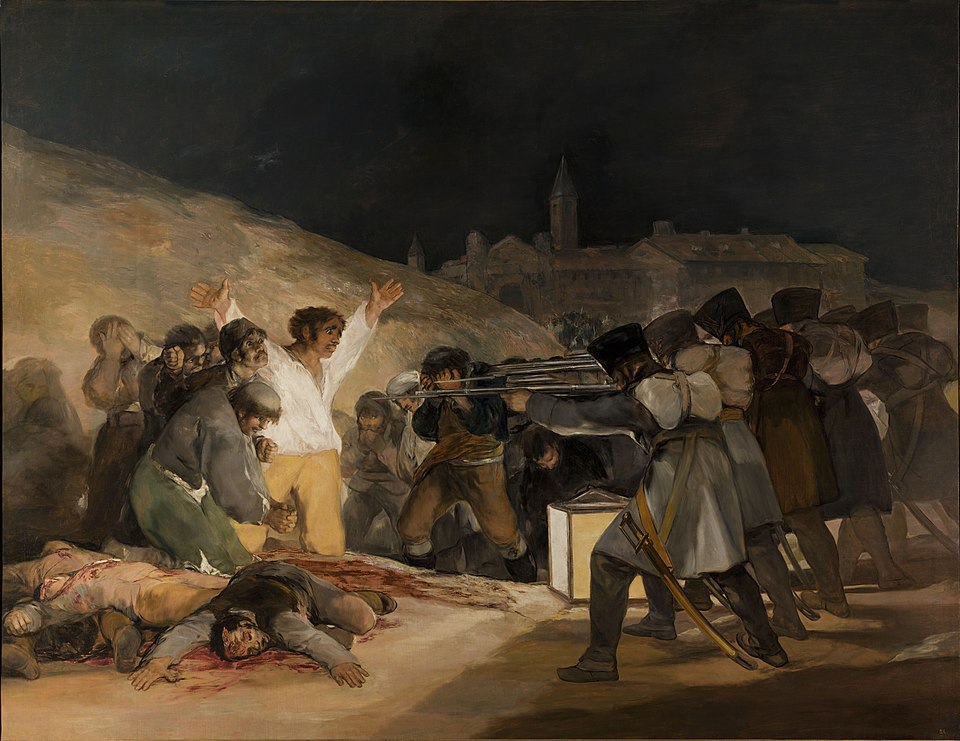
The powerful anti-war statement in The Third of May 1808 by Francisco Goya.
Description: This is one of the most powerful anti-war paintings ever created. It’s like a snapshot from a movie, showing a line of terrified Spanish civilians being executed by a faceless firing squad of French soldiers. The central figure, with his arms thrown wide in a Christ-like pose, is bathed in light from a lantern, making him a symbol of innocent suffering and defiance. Goya painted this masterpiece six years after the event, ensuring the memory of Spanish resistance would never be forgotten.
Painting Techniques: Goya used dramatic contrasts between light and dark, a technique called chiaroscuro, to focus all the emotion on the victims. His brushstrokes are loose and expressive, making the scene feel raw and immediate, almost like a news report.
Location: Museo Nacional del Prado, Madrid
Estimated Value: Priceless
Saturn Devouring His Son (c. 1819–1823)
The terrifying myth of Saturn Devouring His Son, one of Goya’s Black Paintings.
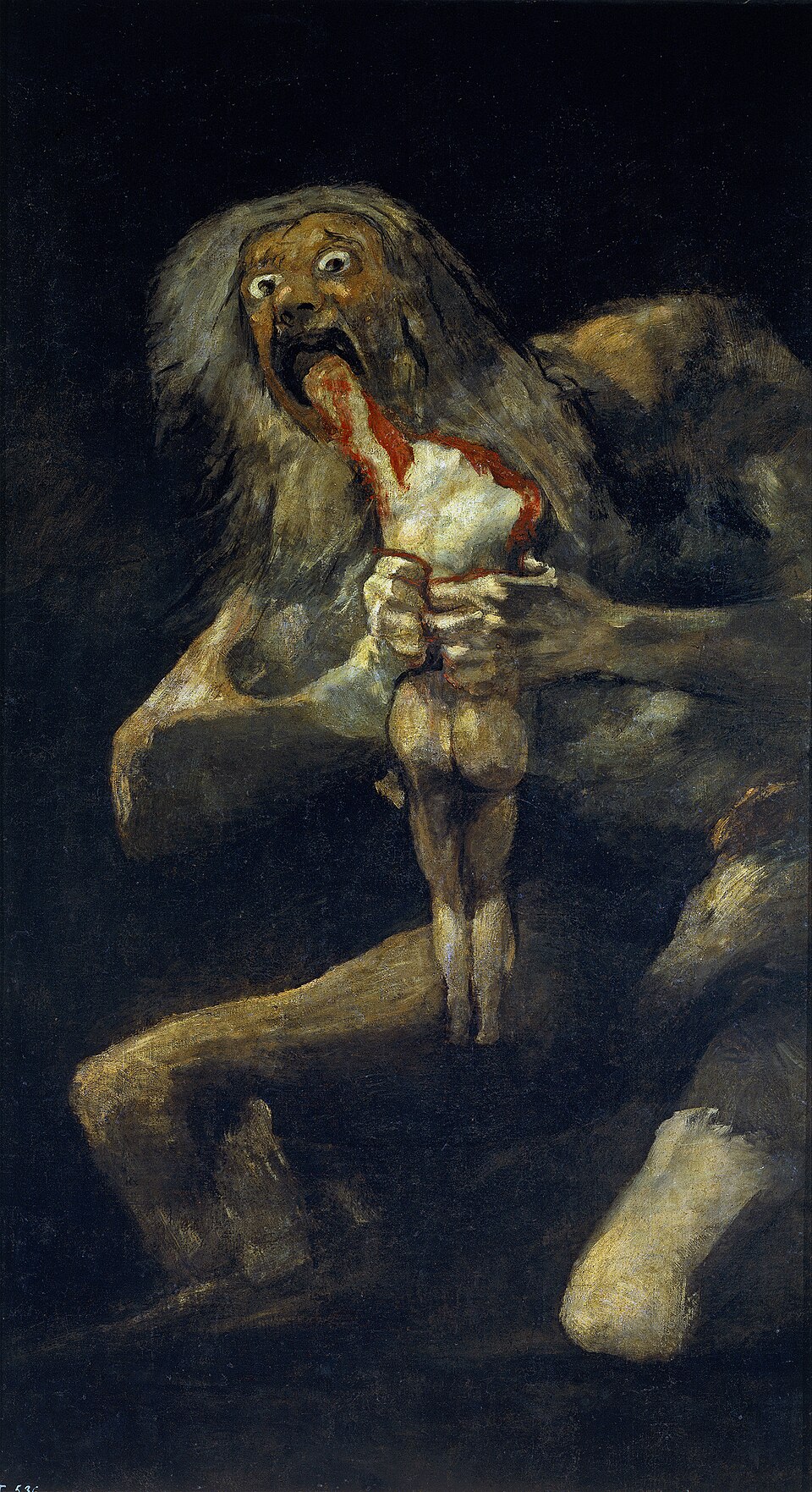
Description: Get ready for a shock! This is one of Goya’s famous ‘Black Paintings,’ which he painted directly onto the walls of his house. It shows the Roman god Saturn frantically eating one of his own children to prevent a prophecy that he would be overthrown. It’s a raw, terrifying image about time, destruction, and the fear of losing power. This painting was never meant for public display; it was a private expression of Goya’s darkest thoughts in his own dining room.
Painting Techniques: Painted with a very limited, dark palette, Goya uses rough, almost violent brushstrokes. The focus is entirely on the horrifying action, with no distracting background, making the scene feel claustrophobic and nightmarish.
Location: Museo Nacional del Prado, Madrid
Estimated Value: Priceless
The Nude Maja (La maja desnuda) (c. 1797–1800)
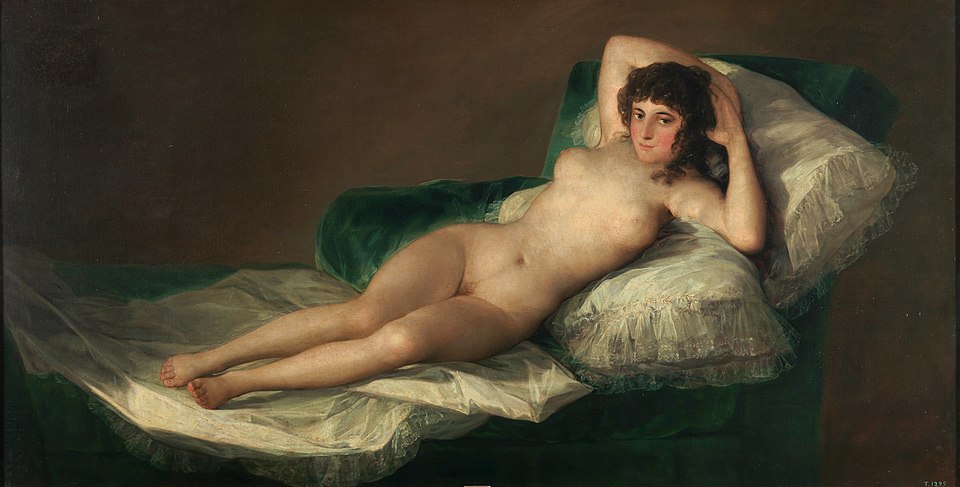
The revolutionary and direct gaze of The Nude Maja, a famous Goya painting.
Description: This painting was scandalous in its day! Unlike other nudes that were disguised as goddesses from mythology, this is a portrait of a real, confident woman looking directly at the viewer. Her gaze is bold and unapologetic, which was shocking for the time and got Goya into trouble with the Spanish Inquisition. For over a century, a popular but unproven legend claimed the model was the Duchess of Alba, a wealthy and powerful aristocrat.
Painting Techniques: Goya used delicate, smooth brushwork to paint the woman’s skin, making it look soft and realistic. This contrasts with the more loosely painted pillows and sheets, which makes her stand out even more.
Location: Museo Nacional del Prado, Madrid
Estimated Value: Priceless
The Clothed Maja (La maja vestida) (c. 1800–1807)
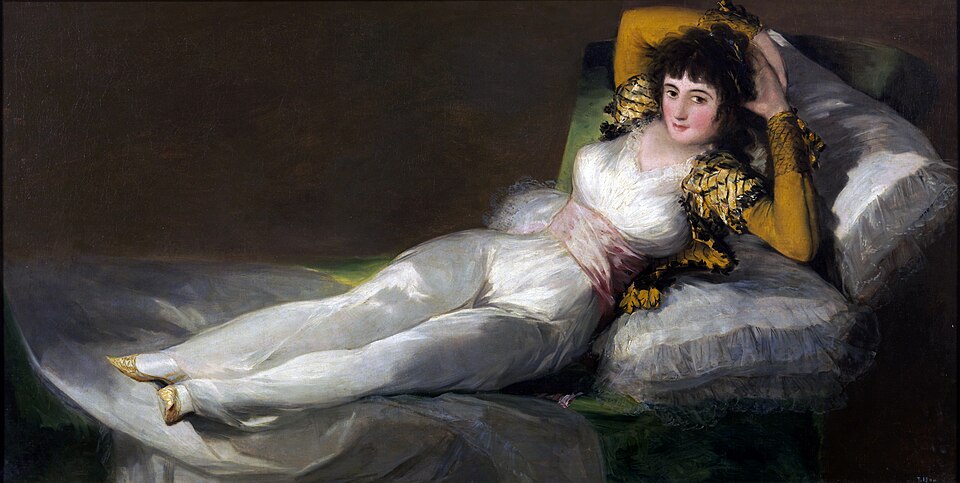
The elegant companion piece, The Clothed Maja by Francisco Goya, showcasing his skill with fabric.
Description: This is the companion piece to ‘The Nude Maja,’ featuring the same woman in the exact same pose, but fully dressed in the stylish clothes of a ‘maja’ (a term for people from the lower classes of Madrid known for their flamboyant style). The two were likely designed to be displayed together, perhaps with the clothed version hiding the nude one. The Clothed Maja was actually painted a few years after The Nude Maja, though the exact reason for its creation remains a mystery.
Painting Techniques: Here, Goya shows off his incredible skill at painting textures. You can almost feel the softness of the velvet jacket and the shimmer of the silk sash, all created with his masterful brushwork and use of color.
Location: Museo Nacional del Prado, Madrid
Estimated Value: Priceless
The Family of Charles IV (1800–1801)
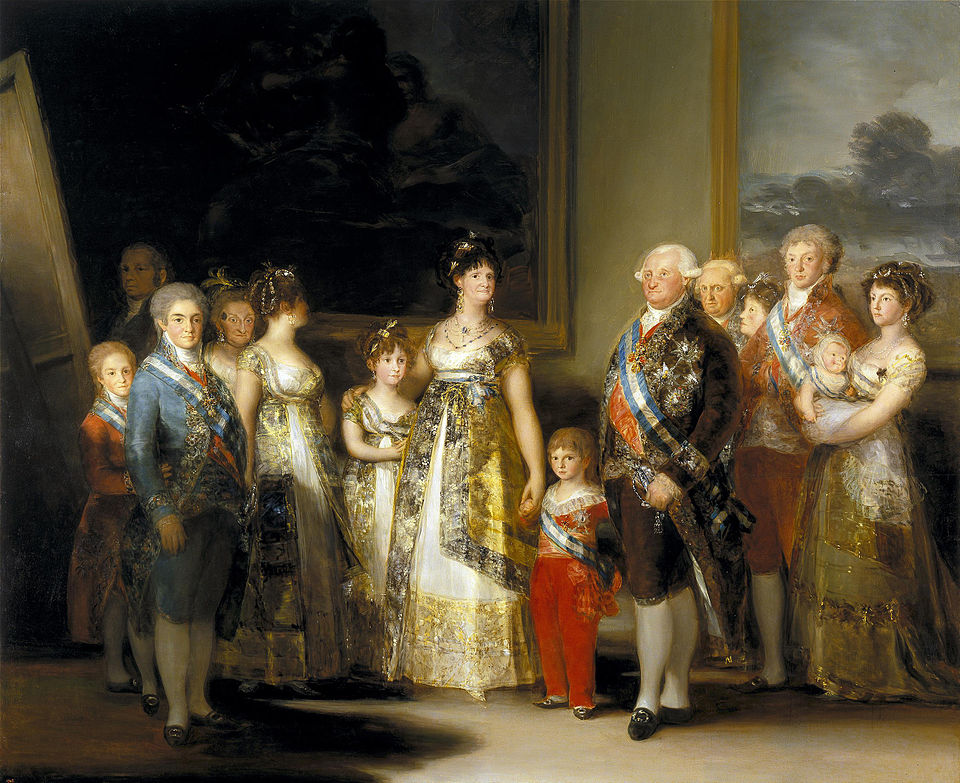
Francisco Goya’s brutally honest group portrait, The Family of Charles IV.
Description: This isn’t your typical flattering royal portrait. Goya painted the Spanish royal family exactly as he saw them: dripping in jewels and fine clothes, but looking rather plain and awkward. It’s a work of brutal honesty, showing the people behind the crowns rather than just idealized rulers. Despite the unflattering depiction, the royal family was reportedly very pleased with the portrait.
Painting Techniques: Inspired by Velázquez’s ‘Las Meninas,’ Goya places himself in the background at his easel. He masterfully captures the glittering details of the medals, silk, and jewels with quick, shimmering brushstrokes.
Location: Museo Nacional del Prado, Madrid
Estimated Value: Priceless
The Dog (c. 1819–1823)
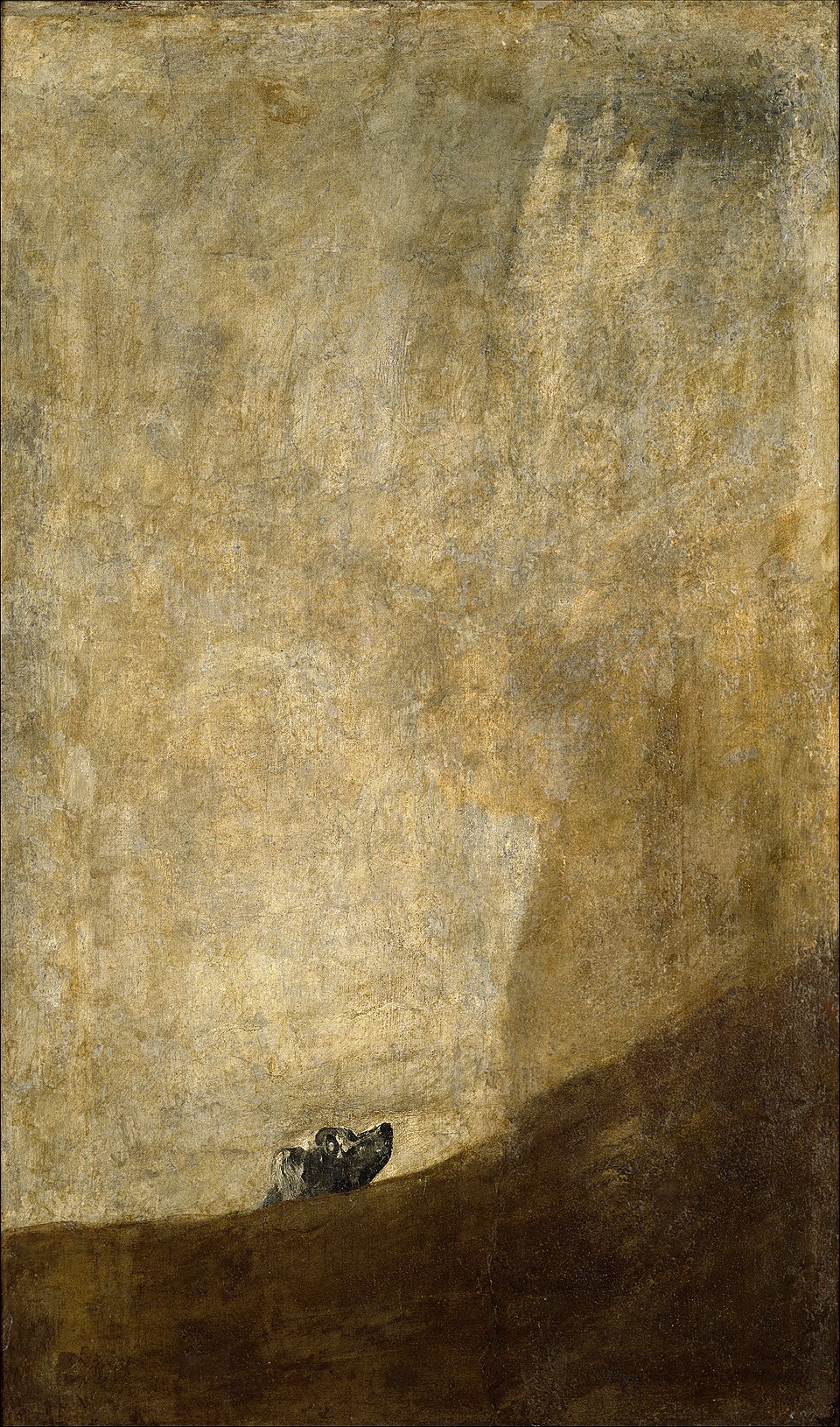
The mysterious and modern masterpiece, The Dog, one of Goya’s Black Paintings.
Description: Another of the ‘Black Paintings,’ this work is hauntingly simple. We see only the head of a small dog peering over a dark, sloping mass, with a vast, empty ochre sky above. Is the dog drowning in sand? Is it looking for its master? The painting is a powerful mystery, evoking feelings of loneliness, struggle, and hope. When the painting was transferred from the wall to canvas, the top part of the dog’s body was lost, making its situation even more ambiguous.
Painting Techniques: This painting is incredibly modern for its time. Goya used minimal elements and huge areas of empty space to create a powerful emotional atmosphere. The texture is rough, as it was painted on the plaster wall of his home.
Location: Museo Nacional del Prado, Madrid
Estimated Value: Priceless
The Parasol (El Quitasol) (1777)
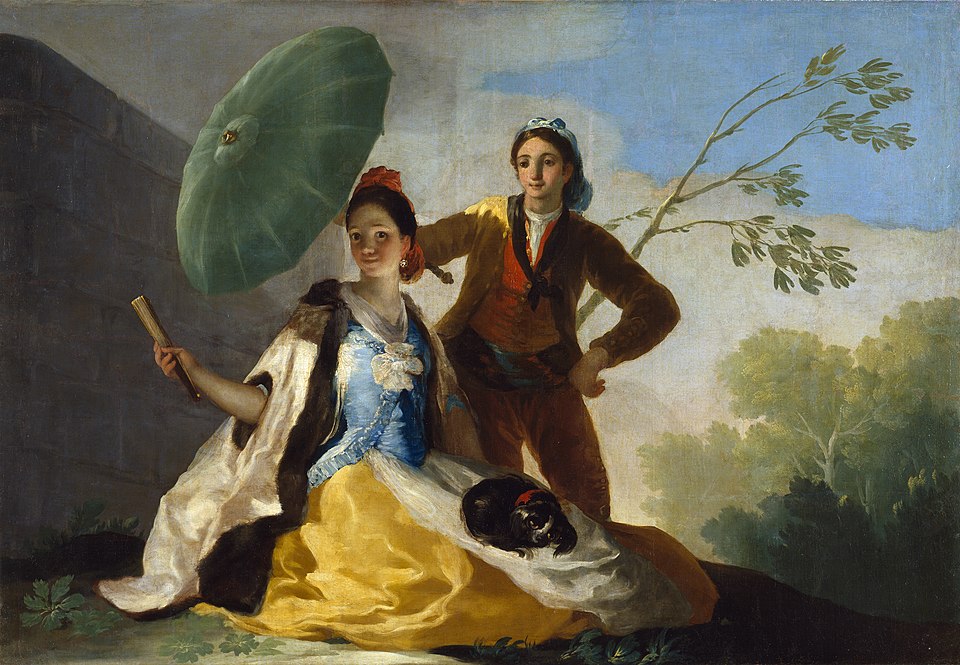
The bright and cheerful Rococo style of The Parasol by Francisco Goya.
Description: Before his dark and serious paintings, Goya created beautiful, sunny scenes like this one. It shows a fashionable young woman relaxing in the countryside while a young man holds a parasol to shade her. It’s full of light, color, and the joy of a carefree afternoon. This charming scene was designed to be hung over a door in the dining room of a prince.
Painting Techniques: This piece was a ‘cartoon,’ or a full-size design for a tapestry that would hang in a royal palace. Goya used bright, vibrant colors and a light, airy composition typical of the Rococo style popular at the time.
Location: Museo Nacional del Prado, Madrid
Estimated Value: Priceless
Witches’ Sabbath (The Great He-Goat) (c. 1821–1823)
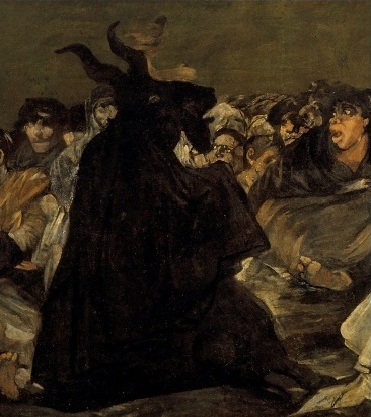
A dark vision of superstition: Witches’ Sabbath, a famous Black Painting by Goya.
Description: This is the larger and more famous of Goya’s two paintings on this theme, and it’s another chilling ‘Black Painting.’ It depicts the Devil in the form of a great black goat, preaching to a coven of terrified and grotesque-looking witches. The scene is dark, chaotic, and a powerful commentary on superstition and mob mentality. The painting was significantly wider, but it was damaged and cropped on the right side when it was removed from the wall in the 1870s.
Painting Techniques: Goya used a dark, earthy palette of black, ochre, and grey. The figures are painted with distorted, expressive features and frantic energy, creating a truly unsettling and powerful image.
Location: Museo Nacional del Prado, Madrid
Estimated Value: Priceless
The Colossus (c. 1808–1812)
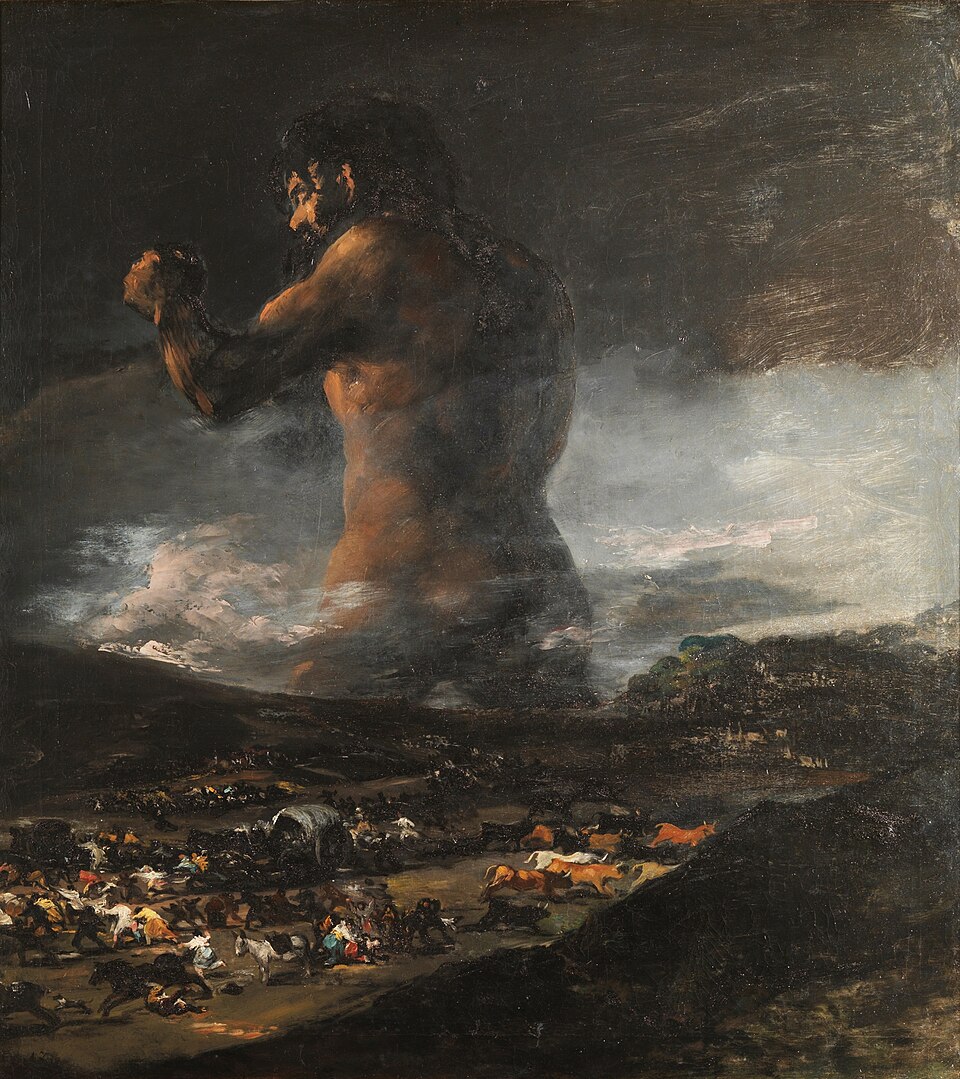
The mysterious and powerful giant in The Colossus, a painting attributed to Goya.
Description: A massive, naked giant towers over a terrified landscape, where people and animals flee in panic. This powerful painting is thought to be an allegory for the horrors of the Napoleonic Wars that were devastating Spain at the time. The giant represents the chaos and senseless violence of war. While long considered one of Goya’s masterpieces, some art historians now believe it may have been painted by one of his apprentices, though the debate continues.
Painting Techniques: The artist uses a dramatic sense of scale and dark, stormy lighting to create a feeling of doom and terror. The giant’s form is sculpted with light and shadow, making him appear both powerful and tragic.
Location: Museo Nacional del Prado, Madrid
Estimated Value: Priceless
Yard with Lunatics (1794)
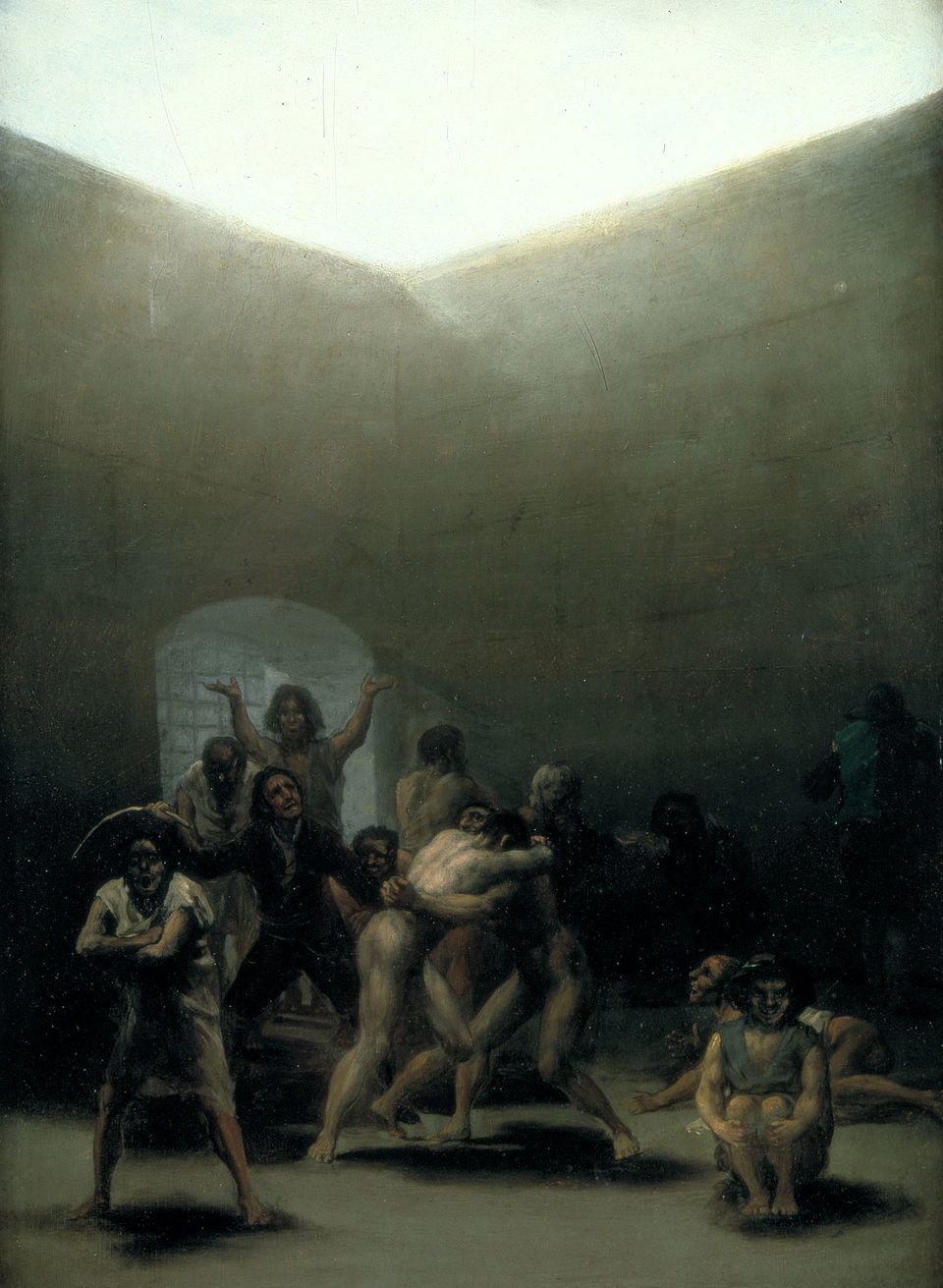
A haunting look at mental illness in Yard with Lunatics by Francisco Goya.
Description: This small but intense painting shows the inside of a mental asylum. Goya, who had recently suffered a severe illness that left him deaf, became deeply interested in human suffering. The scene is chaotic, with inmates fighting, staring into space, or being disciplined, all under a cold, high light from above. This was one of the first times in art history that mental illness was depicted with such raw, unsentimental realism.
Painting Techniques: Goya uses loose, energetic brushwork and a dark, theatrical setting to convey the sense of despair and madness. He focuses on the individual figures, showing their isolation even when crowded together.
Location: Meadows Museum, Dallas
Estimated Value: Priceless
Inspiration and Legacy
Goya was a student of history’s masters. He deeply admired the realism and dramatic lighting of Spanish painter Diego Velázquez and the emotional depth of the Dutch artist Rembrandt, and you can see their influence in his work. But Goya’s legacy is even greater. His honest, unflinching view of the world, his bold brushwork, and his exploration of dark, psychological themes were revolutionary. He broke away from old rules and paved the way for modern art movements. Artists like Édouard Manet, who echoed Goya’s compositions, and Pablo Picasso, whose masterpiece ‘Guernica’ is a direct descendant of ‘The Third of May 1808,’ were profoundly inspired by his courage and genius.
Final Thoughts
Francisco Goya was more than just a painter; he was a fearless commentator on the human condition. From the sunlit joy of his early tapestries to the profound darkness of the Black Paintings, his work explores the full spectrum of life. He showed us that art could be more than just beautiful—it could be powerful, truthful, and even disturbing. The enduring popularity of these Goya paintings proves that his voice, speaking to us from across the centuries, is as relevant today as it was in his own tumultuous time. His legacy is a challenge to see the world with open eyes and a compassionate heart.
FAQs about Goya
What are the ‘Black Paintings’ by Goya?
The ‘Black Paintings’ are a series of 14 intense, dark, and unsettling works that Goya painted directly onto the plaster walls of his house, the Quinta del Sordo, late in his life. They were his private works, not meant for public viewing, and they explore themes of fear, madness, and humanity’s dark side.
Why is Goya considered the first modern artist?
Goya is often called the first modern artist because he broke away from painting idealized, pretty pictures. He focused on his own personal vision, the truth of the world around him, and deep psychological feelings. His style and subject matter were far ahead of their time and influenced many artists who came after him.
Was Goya deaf?
Yes. In 1793, Goya suffered a severe and undiagnosed illness that left him profoundly and permanently deaf. This event had a major impact on his life and art, leading him to become more introspective and his work to become darker and more imaginative.