
For many art students and hobbyist painters, navigating the timeline of art history painting can feel like walking through a dense forest. Two specific movements often cause the most confusion: Art Nouveau and Art Deco. While they sit next to each other on the historical timeline, understanding Art Deco vs Art Nouveau is crucial for any artist wishing to master compositional elements and decorative aesthetics.
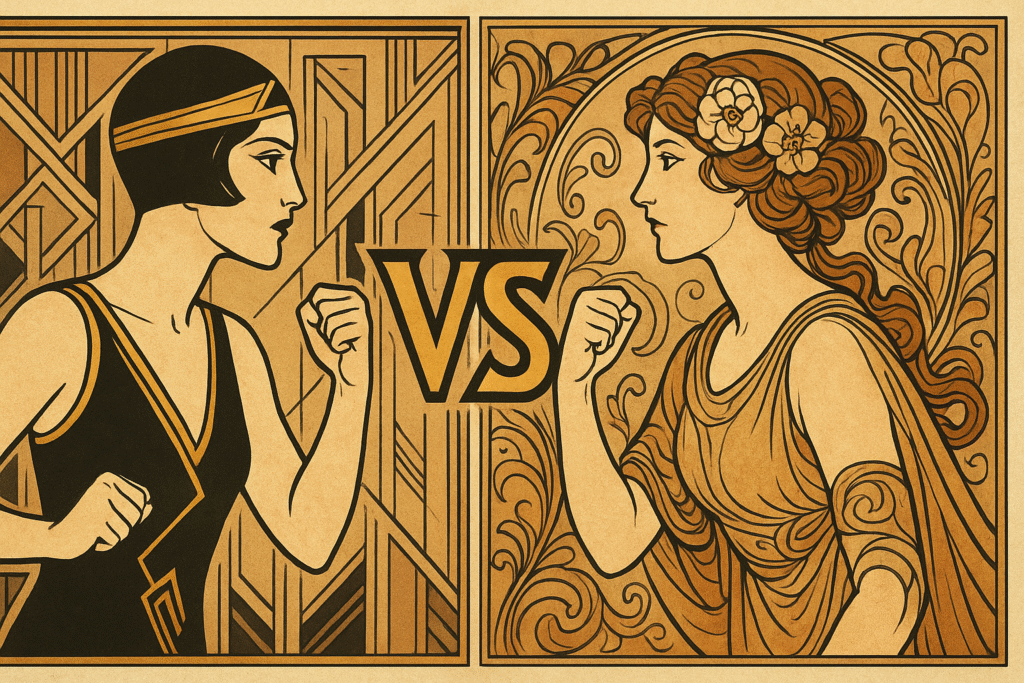
Are you looking at a painting characterized by flowing, organic vines and mythical women, or one defined by sharp angles, chrome-like gradients, and the sleekness of a machine? Distinguishing between these stylistic differences in art not only deepens your appreciation of fine art but offers a treasure trove of techniques to apply to your own canvas.
In this comprehensive guide, we will dissect the aesthetic principles of art found in these two iconic eras. We will move beyond simple definitions to explore painting techniques used in Art Nouveau art, characteristics of Art Deco painting for artists, and how to apply these concepts to create stunning, historically inspired works today.
The Flow of Nature: Understanding Art Nouveau Painting (c. 1890–1910)
Before the Roaring Twenties roared, there was the Belle Époque and the fin de siècle art period. Art Nouveau (New Art) emerged as a reaction against the academic art of the 19th century and the perceived coldness of the encroaching Industrial Revolution.
The Philosophy of the Curve
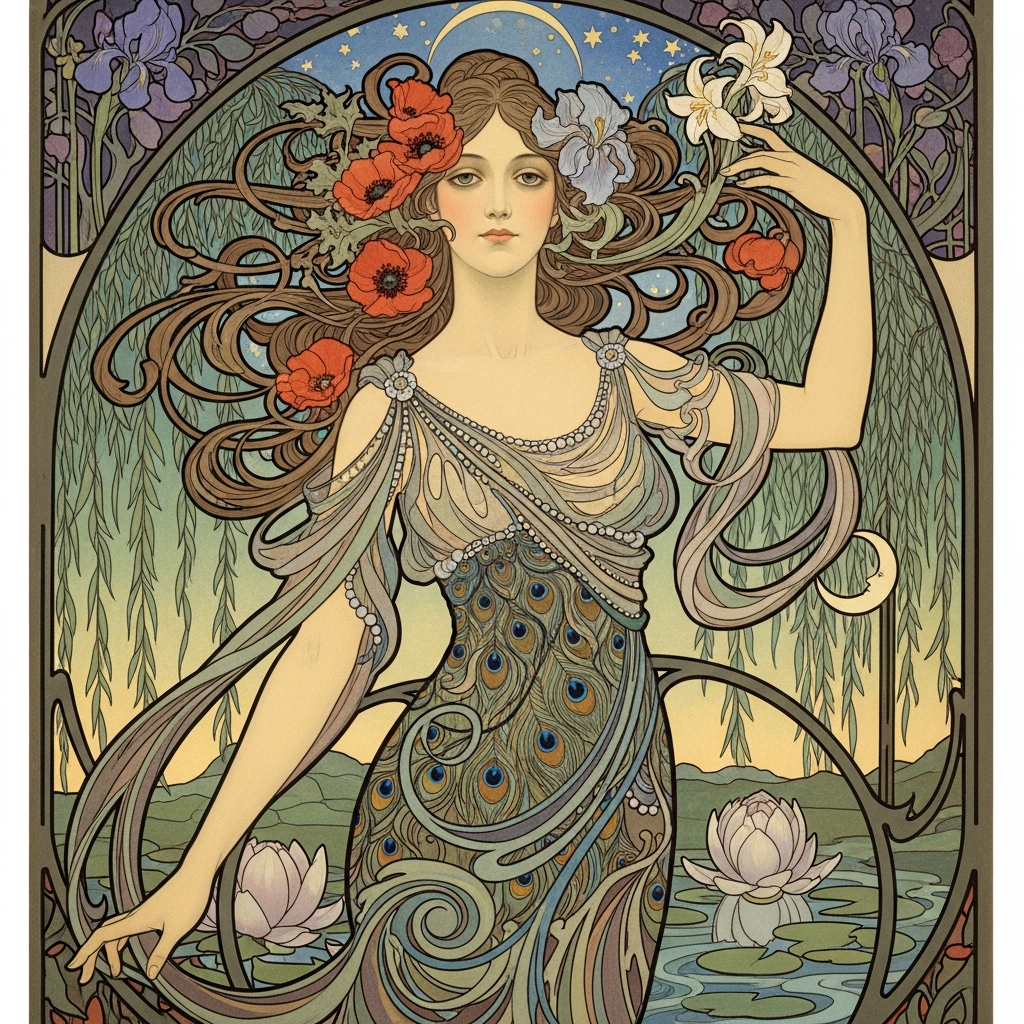
For a painter, Art Nouveau is a masterclass in the “whiplash” curve. The movement is deeply rooted in Symbolism and the study of nature. However, unlike the Impressionists who sought to capture light, Art Nouveau painters sought to capture the rhythm of nature.
When looking at famous Art Nouveau painters and their techniques, we see a rejection of straight lines. The composition is often asymmetrical, driven by undulating lines that mimic flower stems, smoke, or hair.
Key Artists and Techniques
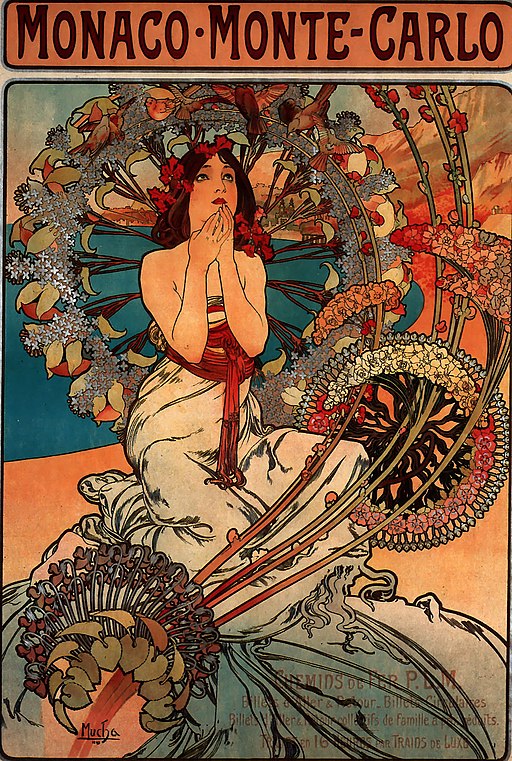
1. Alphonse Mucha: Perhaps the most recognizable figure, Mucha bridged the gap between graphic design and fine art. His poster art relied heavily on the “Halo” effect behind subjects and distinct, thick outlines—a technique heavily influenced by Japanese woodblock prints.
2. Gustav Klimt: A titan of the Vienna Secession, Klimt introduced gold leaf and Byzantine mosaics into his work. His paintings, like The Kiss, flatten the body into decorative patterns, contrasting realistic faces with abstract, ornamental robes.

3. Henri de Toulouse-Lautrec: While often associated with Post-Impressionism, his work in Montmartre defined the Art Nouveau graphic aesthetic. Influenced by Édouard Manet (who flattened the picture plane and removed the reliance on chiaroscuro), Toulouse-Lautrec utilized spattered paint and silhouette techniques.
Practical Application: Learn to Paint in Art Nouveau Style
If you want to adopt an Art Nouveau painting color palette tutorial approach, think “muted naturalism.”
- Palette: Ocher, sage green, peacock blue, antique gold, and violet.
- Line Work: Practice the *S-curve*. Your brushstrokes should be long and fluid, not short or staccato.
- Subject: Focus on the feminine, the mythical, and the integration of figure and background. In Art Nouveau, the background is not just empty space; it is a patterned extension of the subject.
The Geometry of Luxury: Understanding Art Deco Painting (c. 1920s–1930s)
If Art Nouveau was a walk through an enchanted forest, Art Deco was a drive in a fast car through a neon-lit city. Emerging after World War I, Art Deco embraced the Machine Age. This style is the visual language of the Roaring Twenties and the Great Gatsby era.
The Shift to Geometry
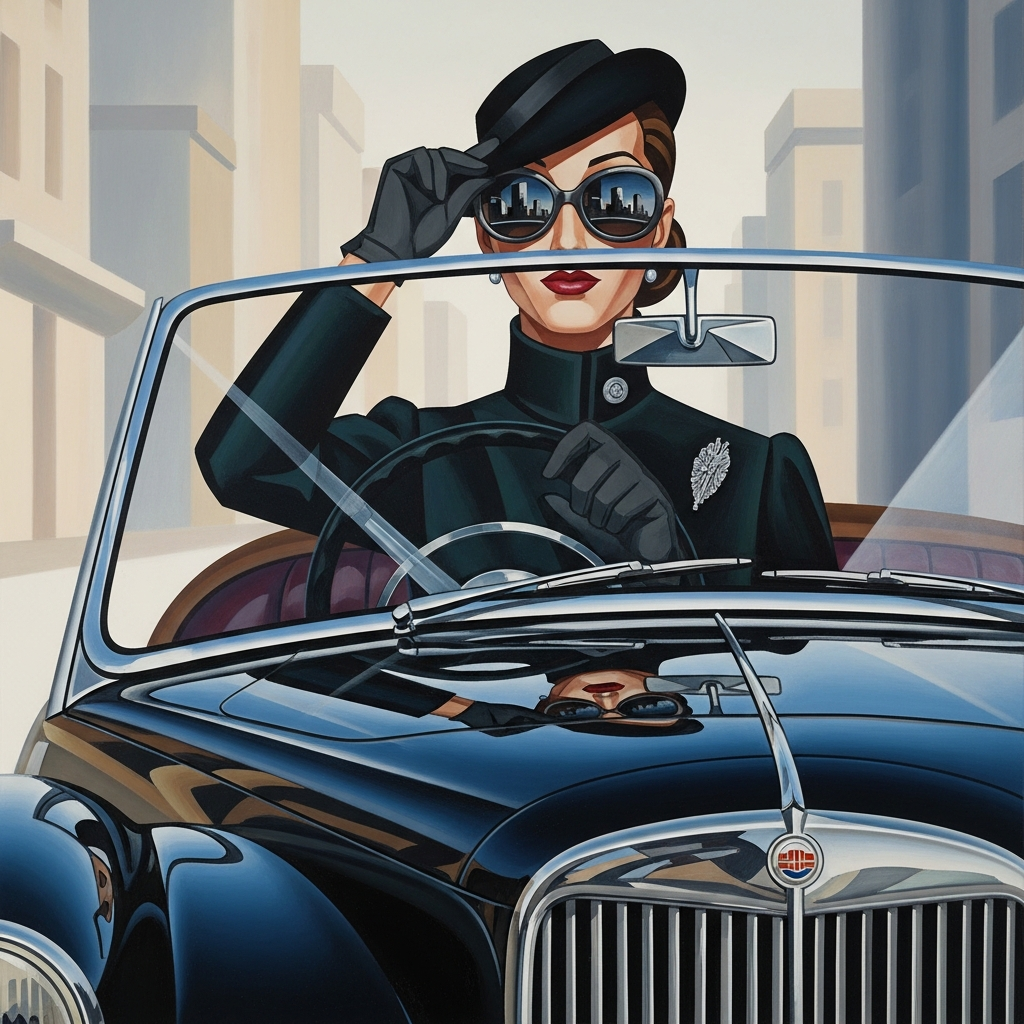
Art movements comparison becomes easiest here: Art Nouveau is curvaceous; Art Deco is angular. Influenced heavily by the fragmented planes of Cubism and the emotional intensity of Expressionism, Art Deco paintings celebrate structure, symmetry, and industry.
Key Artists and Techniques
1. Tamara de Lempicka: The queen of Art Deco painting. Her technique is often described as “Soft Cubism.” She used clean lines and highly polished, blended brushwork to make human skin look as smooth as chrome or marble. Her work epitomizes the characteristics of Art Deco painting for artists: high contrast, saturation, and luxury.
2. Mural Painting: Art Deco was heavily integrated into architecture (think Rockefeller Center). Artists drew inspiration from Art Deco architecture to create murals that celebrated the worker, the machine, and progress.
3. Poster Art & Cassandre: While painting on canvas was prominent, the airbrush gradient techniques developed for posters influenced how fine artists applied smooth layers of oil paint.
Practical Application: Characteristics of Art Deco Painting for Artists
To capture Art Deco painting inspiration for contemporary artists, you must tighten your composition.
- Palette: Unlike the muted Nouveau tones, Art Deco color palettes in art are bold, contrasting, and metallic. Think jet black, chrome silver, crimson red, and electric blue.
- Forms: Replace the vine with the sunburst. Replace the flower with the gear. Use geometric vs organic forms in painting deliberately—organic shapes (like a face) should be stylized to look almost architectural.
- Technique: Blending is key. Lempicka’s work shows very little visible brushstroke. The goal is a “manufactured” finish.

Art Deco vs Art Nouveau (Paintings): The Comparative Breakdown
For art students, the influential art styles of the early 20th century art can be distinguished by analyzing three main pillars: Line, Color, and Philosophy.
Here is a breakdown to help you visualize the modern art distinctions:
| Feature | Art Nouveau (c. 1890–1910) | Art Deco (c. 1920–1940) |
|---|---|---|
| Primary Inspiration | Nature, Biology, Folklore, The Female Form | The Machine, Industry, Cubism, Ancient Egypt |
| Line Quality | Curvy, “Whiplash,” Asymmetrical, Flowing | Angular, Zigzag, Symmetrical, Streamlined |
| Color Palette | Muted, Pastel, Complex/Murky (Sage, Mauve, Gold) | Bold, High Contrast, Primary, Metallic (Chrome, Red, Black) |
| Key Motifs | Vines, Flowers, Dragonflies, Birds, Hair | Sunbursts, Gears, Ziggurats, Chevrons, Skyscrapers |
| Painting Technique | Outlining, Flat decorative patterns, Gold Leaf | Smooth blending (polished look), Sharp geometric planes |
| Historical Context | *Belle Époque*, reaction against Industrialization | *Roaring Twenties*, celebration of the *Machine Age* |
How to Differentiate Art Deco from Art Nouveau in Painting
As an artist, you are likely asking how to differentiate Art Deco from Art Nouveau in painting when you are standing in a museum or planning your next piece.
1. Look at the Corners
Art Nouveau motifs tend to round off corners or fill them with creeping vines. Art Deco patterns, conversely, frame corners with sharp steps (ziggurats) or bold lines.
2. Analyze the Background
In Art Nouveau painting vs Art Deco painting for art history students, the background tells the story. If the subject is flattening against a backdrop of decorative floral wallpaper or mosaics (think Klimt), it is Nouveau. If the subject is placed against fragmented beams of light, skyscrapers, or solid geometric blocks, it is Deco.
3. The Influence of Architecture
Architectural influence on painting is profound in both styles. Art Nouveau paintings reflect the ironwork of the Paris Metro entrances (Hector Guimard)—organic and melting. Art Deco paintings reflect the Chrysler Building—stainless steel and aspirational height.
4. Geometric vs Organic Shapes
This is the definitive test. Geometric vs organic shapes in Art Deco and Art Nouveau paintings is the clearest divide. If you are drawing motifs from Art Nouveau for painting, you are looking for asymmetry. If you are applying Art Deco aesthetic to portrait painting, you are looking for symmetry and volume created through hard-edged shadows.
FAQs: Art Nouveau vs Art Deco Art History for Artists
Q: Can I mix Art Nouveau and Art Deco styles in one painting?
A: Absolutely. Many artists during the transition period (1910–1920) blended these styles. You might use the Art Nouveau painting color palette tutorial ideas (muted tones) but apply them to Art Deco mural painting techniques (geometric composition) for a unique contemporary look.
Q: Who are the key artists of Art Nouveau painting vs Art Deco painting?
A: For Art Nouveau: Gustav Klimt, Alphonse Mucha, Henri de Toulouse-Lautrec. For Art Deco: Tamara de Lempicka, Cassandre (Adolphe Mouron), and Jean Dupas.
Q: How did the Industrial Revolution affect these styles?
A: Art Nouveau rejected the Industrial Revolution, seeking a return to hand-craftsmanship and nature. Art Deco embraced it, using the aesthetic of the machine to define visual arts characteristics.
Q: Is Symbolism strictly an Art Nouveau trait?
A: Symbolism in art is heavily tied to Art Nouveau, where women often represented seasons, stars, or virtues. However, Symbolism in Art Nouveau paintings explained for art students often deals with mysticism. Art Deco symbolism is more about power, speed, and social progress.
Q: How do I apply Art Deco design principles to portrait painting?
A: Focus on lighting. Use “Chiaroscuro” but with hard edges. Treat the hair not as individual strands, but as solid volumes or helmet-like shapes. This is the essence of Art Deco painting inspiration for contemporary artists.
Conclusion
Mastering the distinction of art deco vs art nouveau (paintings) is more than an exercise in memorization; it is a tool for expanding your artistic vocabulary. Whether you are drawn to the romantic, vine-entangled world of the Belle Époque or the sleek, chrome-plated ambition of the Machine Age, both styles offer profound lessons in compositional elements.
For the painter, Art Nouveau teaches the power of the line and the beauty of organic chaos. Art Deco teaches the impact of contrast and the strength of geometry.
As you return to your easel, try comparing line work in Art Deco and Art Nouveau paintings through sketches. Attempt to paint a flower using the hard angles of Lempicka, or a skyscraper using the flowing lines of Mucha. By experimenting with these historical art periods, you will find your own unique voice in the vast timeline of painting styles evolution.
Citations
- 1. The Metropolitan Museum of Art. (n.d.). *Art Nouveau*. Heilbrunn Timeline of Art History. Retrieved from https://www.metmuseum.org/toah/hd/artn/hd_artn.htm
- 2. Tate. (n.d.). *Art Deco*. Art Terms. Retrieved from https://www.tate.org.uk/art/art-terms/a/art-deco
- 3. Victoria and Albert Museum. (n.d.). *Art Deco*. Collections. Retrieved from https://www.vam.ac.uk/collections/art-deco