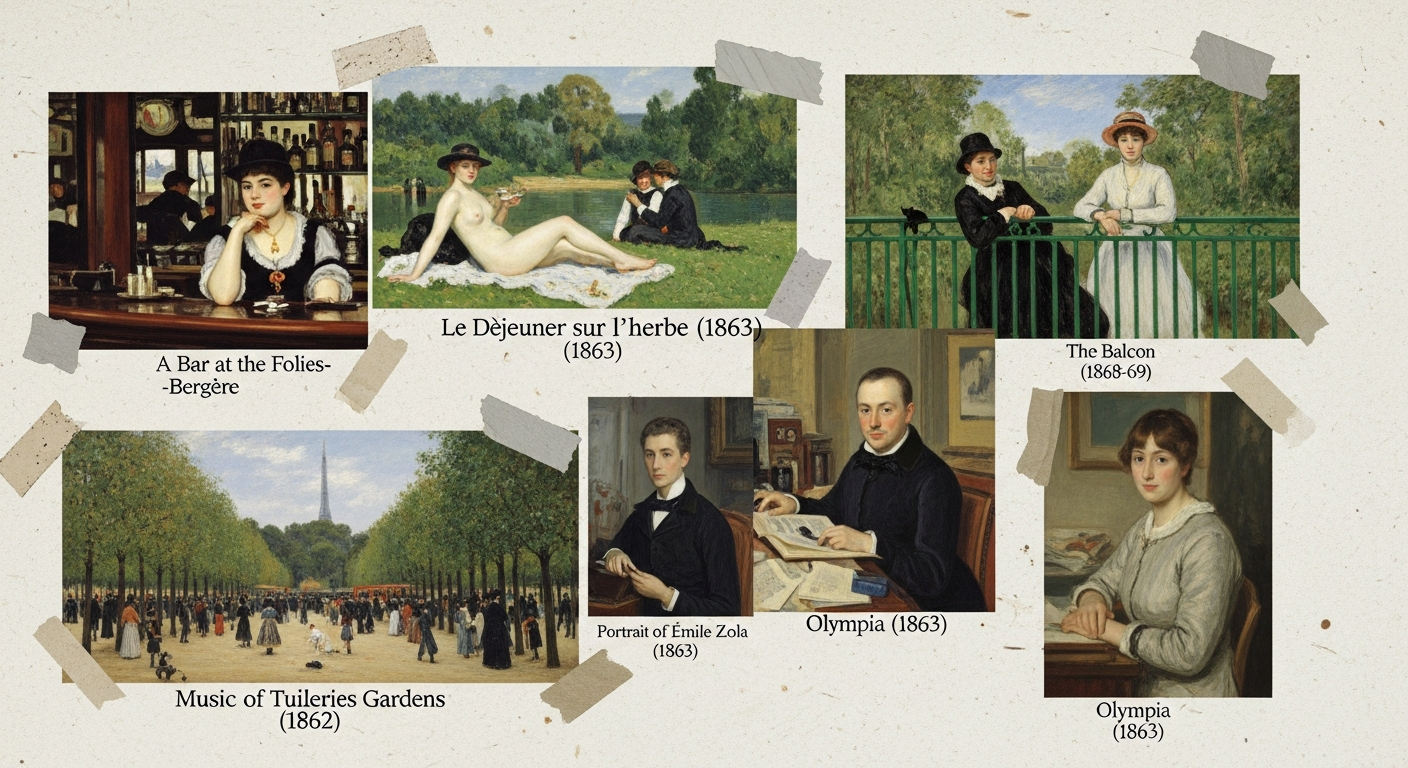
Step into the vibrant world of Édouard Manet, a true game-changer in the history of art! Manet was a French painter who shook up the 19th-century art scene by breaking all the old rules. He acted as a bridge between the realistic art of the past and the exciting new style of Impressionism. Think of him as the cool older brother to the Impressionists, showing them it was okay to paint modern life in a bold, new way. Exploring the top 10 Manet paintings is like taking a time machine back to bustling 19th-century Paris, seeing life through the eyes of an artist who wasn’t afraid to be different. His work was often controversial, but today, we see him as the father of modern art.
Le Déjeuner sur l’herbe (The Luncheon on the Grass) (1863)
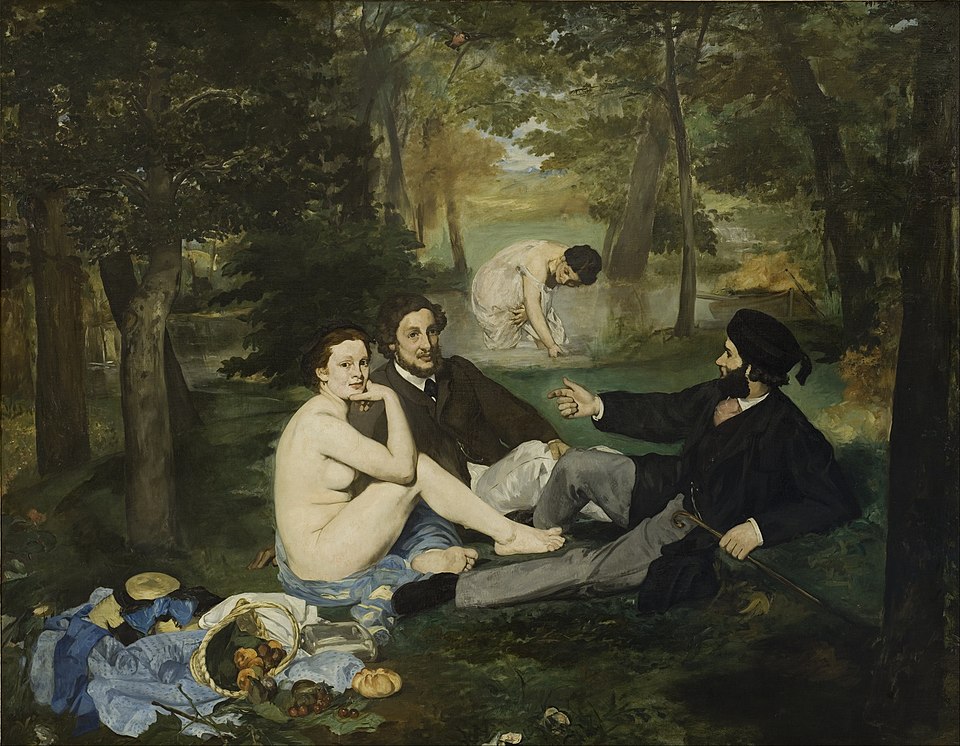
Description: Imagine having a picnic in the park, but one of your friends forgot to get dressed! That’s the shocking scene Manet painted, showing two fully clothed men with a nude woman. In the 1860s, this was a huge scandal. Manet wasn’t just trying to be rebellious; he was challenging the old rules of art, which said nudes were only okay if they were goddesses or historical figures, not regular modern women. The painting was so controversial that it was rejected by the official Paris Salon, forcing Emperor Napoleon III to create a special ‘Salon of the Rejected’ where it was first displayed.
Painting Techniques: Manet used bold, flat areas of color with very little shading, which made the figures look stark and almost pasted onto the background. This rejected the smooth, carefully blended style that was popular at the time.
Location: Musée d’Orsay, Paris, France
Estimated Value: Priceless
Olympia (1863)
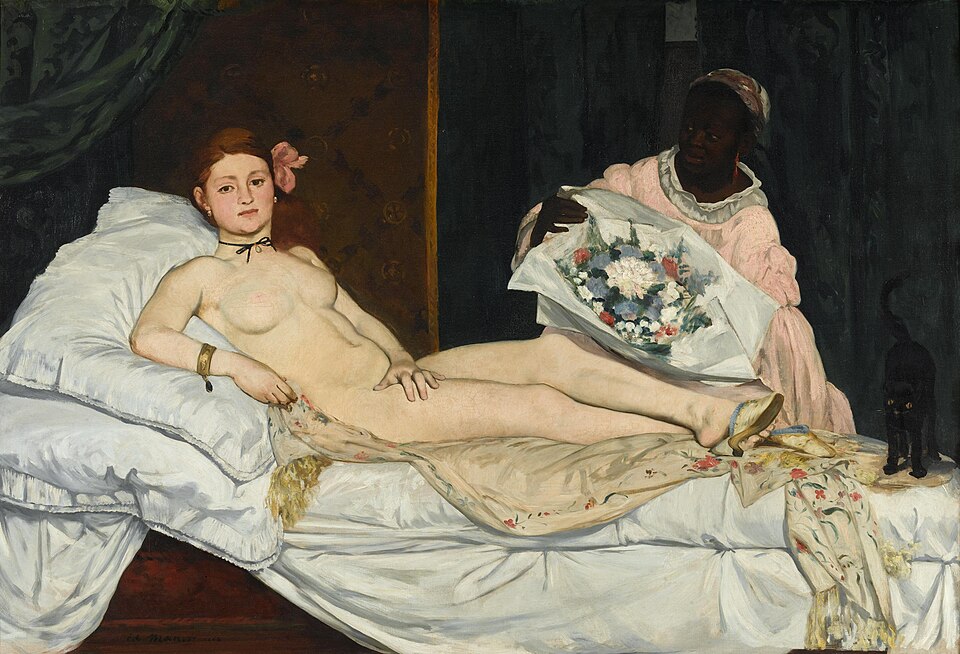
Description: If ‘The Luncheon on the Grass’ was a shock, ‘Olympia’ was an earthquake. It shows a confident, reclining nude woman, but she’s not a mythical Venus. She’s a Parisian courtesan, staring directly at the viewer without a hint of shame. Her direct, challenging gaze was seen as incredibly defiant and improper for the time, making her one of the most famous and controversial figures in art history. The black cat at the foot of the bed, a symbol of sensuality and independence, replaces the traditional sleeping dog which symbolized faithfulness in older paintings.
Painting Techniques: Manet employed stark contrasts between light and dark (a technique called chiaroscuro) and flattened the perspective. Olympia’s pale skin stands out dramatically against the dark background, a style influenced by Japanese prints.
Location: Musée d’Orsay, Paris, France
Estimated Value: Priceless
A Bar at the Folies-Bergère (1882)
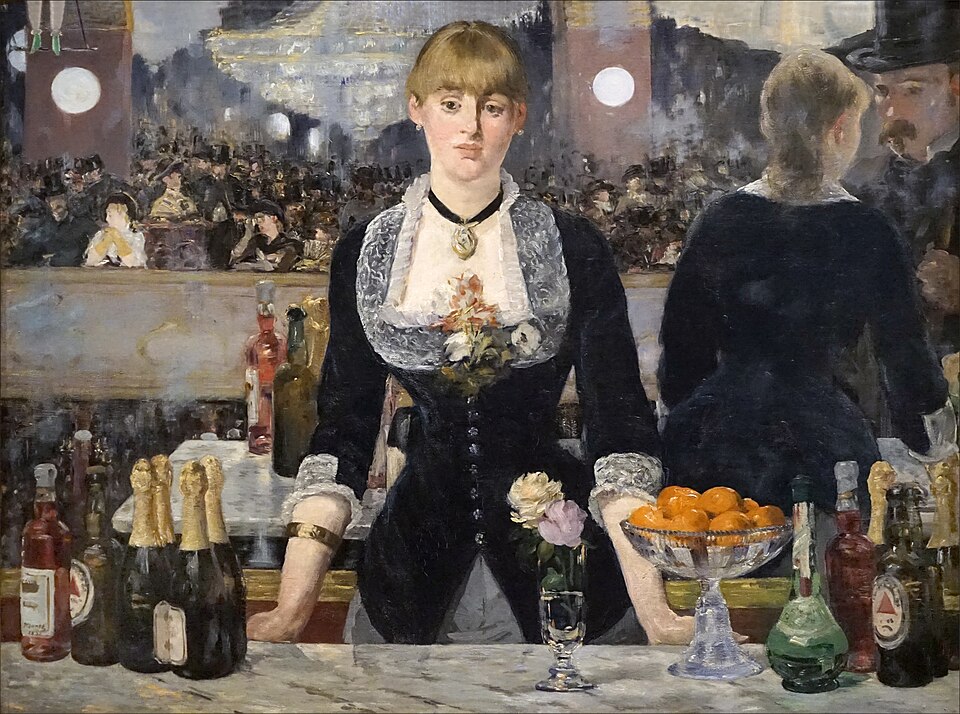
Description: This was Manet’s last major painting, and it’s like a puzzle. We see a barmaid at a famous Parisian nightclub, looking tired and a bit lonely amidst the fun. But if you look in the giant mirror behind her, the reflection doesn’t quite add up. It shows her talking to a customer, creating a mystery about perspective and reality that art lovers still debate today. High in the top-left corner, you can spot the legs of a trapeze artist performing, adding to the lively and chaotic atmosphere of the nightclub.
Painting Techniques: This painting is a masterclass in capturing light and reflection. Manet used quick, fluid brushstrokes to depict the glittering chandeliers, the bottles on the counter, and the bustling crowd in the mirror, creating a dazzling snapshot of Parisian nightlife.
Location: The Courtauld Gallery, London, UK
Estimated Value: Priceless
The Railway (Gare Saint-Lazare) (1873)

Description: This painting isn’t really about a train; it’s about a quiet moment in a changing world. A woman and a little girl are at the Gare Saint-Lazare train station in Paris. The woman looks right at us, while the girl stares into a cloud of steam from a passing train we can’t see. It captures the feeling of modern urban life, with its mix of stillness and motion. The model for the woman was Victorine Meurent, the same woman who posed for the scandalous ‘Olympia’ and ‘Le Déjeuner sur l’herbe’.
Painting Techniques: Manet combines detailed realism in the figures and the iron fence with a loose, almost abstract cloud of steam. This contrast between sharp focus and blurry atmosphere was a hallmark of his developing style.
Location: National Gallery of Art, Washington, D.C., USA
Estimated Value: Priceless
The Balcony (1868-1869)
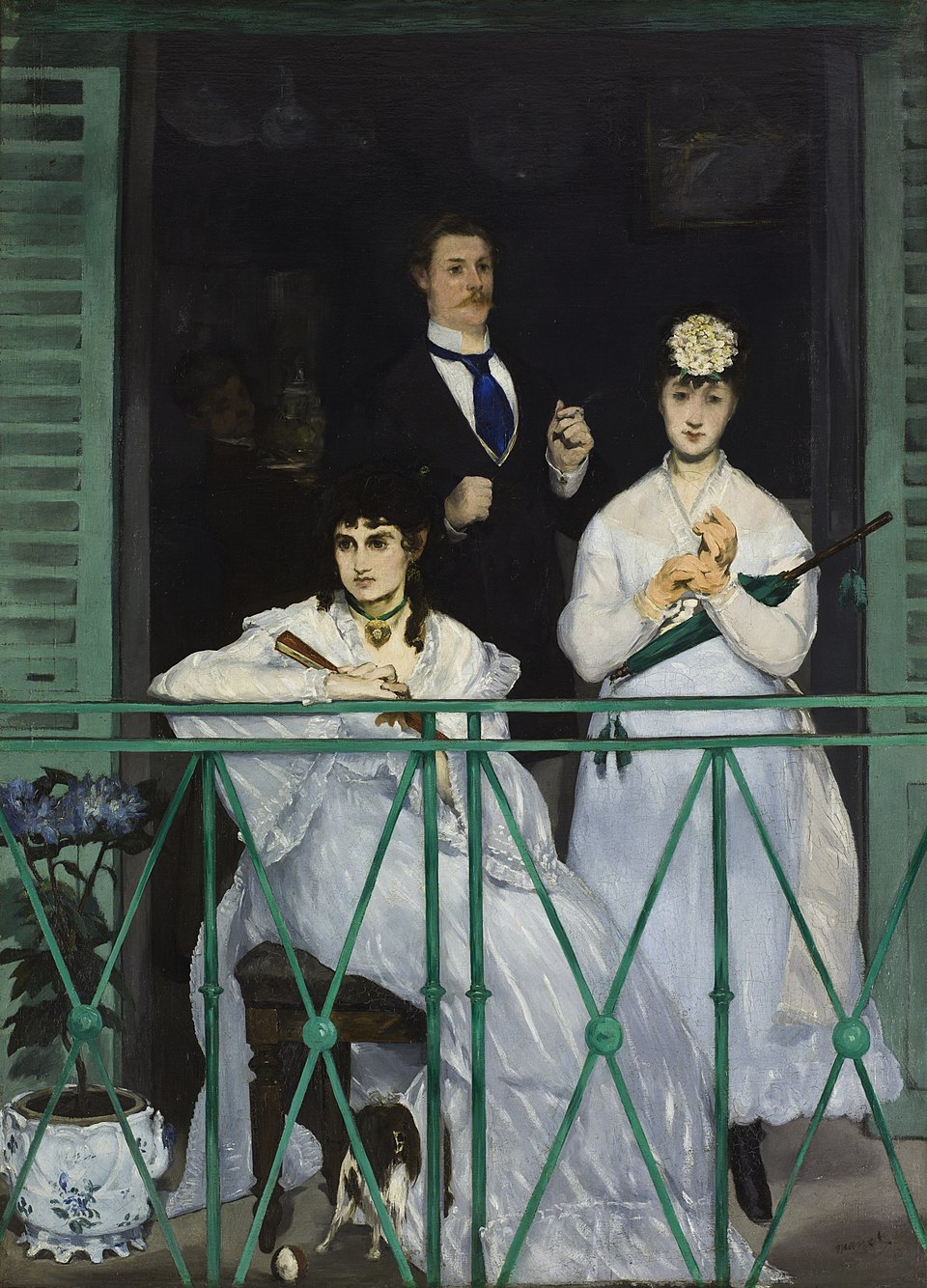
Description: This painting is like a scene from a play where we don’t know the story. Three figures stand on a balcony, but they don’t seem to be interacting. They are lost in their own thoughts, disconnected from each other. The bright green of the balcony railing is jarring and modern, grabbing your attention immediately. It’s a portrait of modern isolation, even when surrounded by others. The woman sitting on the left is the painter Berthe Morisot, who became a central figure in the Impressionist movement and a close friend of Manet.
Painting Techniques: Manet’s use of bold color, especially the striking green of the shutters and railing, was inspired by Spanish art. He flattened the space, making the figures appear almost like cut-outs against a dark interior.
Location: Musée d’Orsay, Paris, France
Estimated Value: Priceless
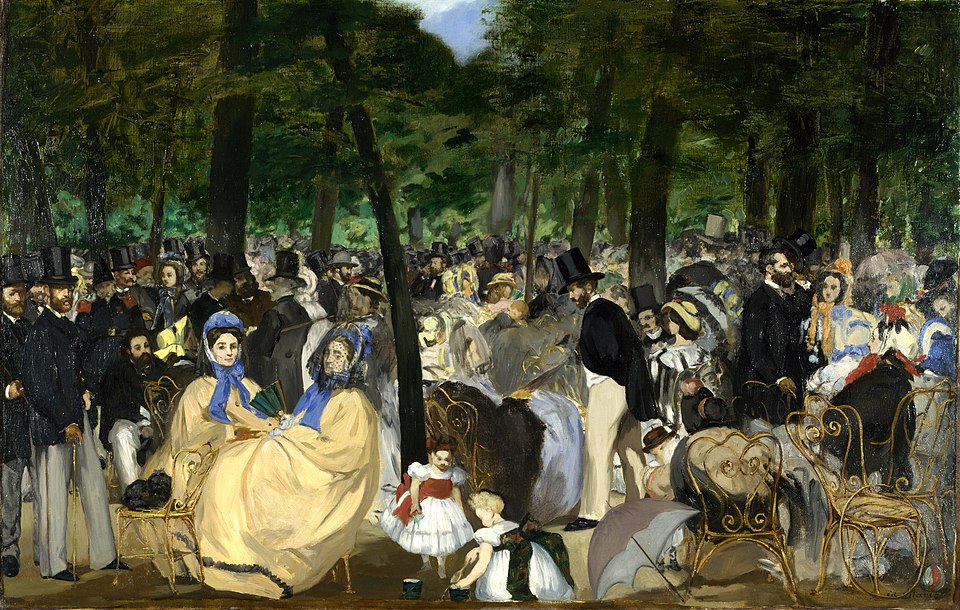
Music in the Tuileries Gardens (1862)
Description: Imagine a crowded outdoor concert, but instead of taking a photo, you paint it with quick, blurry strokes. That’s what Manet did here. He captured the feeling of a fashionable Parisian crowd enjoying music in a park. It’s not about individual portraits, but about the energy of the whole scene. Manet even painted himself and his friends into the crowd! Among the crowd, you can find portraits of famous cultural figures of the time, including the poet Charles Baudelaire and Manet himself (on the far left).
Painting Techniques: This is one of Manet’s early works showing his interest in modern life. He used rapid, sketchy brushwork to suggest the forms of people and trees, giving the impression of a fleeting moment captured in time.
Location: The National Gallery, London, UK
Estimated Value: Priceless
The Fifer (1866)
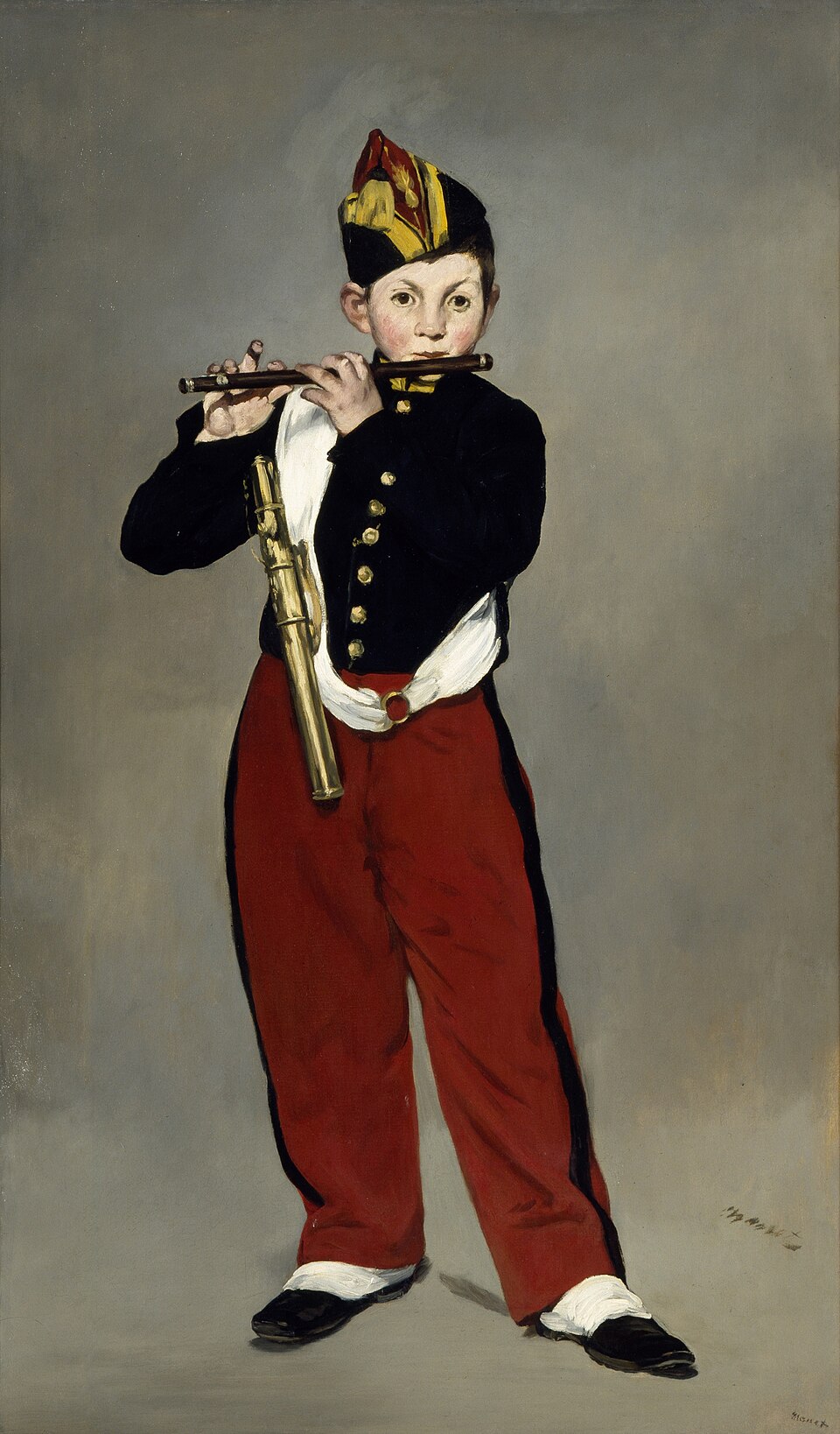
Description: This is a super simple but powerful portrait of a young military musician. Manet removed almost all background details, making the boy pop against a flat, neutral color. It’s like a spotlight is shining just on him. The bold, simple style was so radical that the judges of the Paris Salon rejected it, unable to appreciate its modern look. The writer Émile Zola was a huge fan of this painting and wrote a passionate article defending Manet’s modern style after the Salon rejected it.
Painting Techniques: Inspired by the Spanish painter Diego Velázquez, Manet used broad, flat planes of color and strong outlines. There is very little modeling or shadow, which makes the figure look almost like a playing card or a Japanese print.
Location: Musée d’Orsay, Paris, France
Estimated Value: Priceless
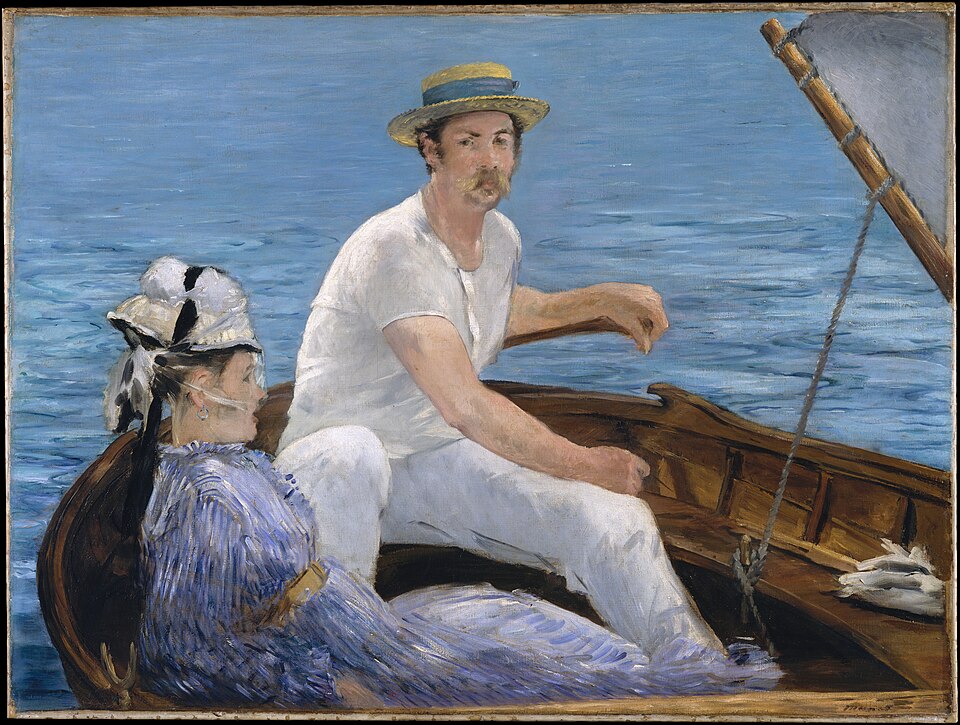
Boating (1874)
Description: This painting feels like a perfect summer day. A man and a woman are enjoying a relaxing moment on a sailboat. The bright blue of the water is so intense it almost becomes the main subject of the painting. Manet captured the feeling of sunlight and fresh air with a new, brighter color palette, showing the influence of his younger Impressionist friends. This work was painted during the summer Manet spent with Claude Monet and his family, and the brighter colors clearly show Monet’s influence on him.
Painting Techniques: Manet used a higher-key color palette and looser brushstrokes than in his earlier work. The radical cropping of the boat gives the scene a spontaneous, photograph-like quality.
Location: The Metropolitan Museum of Art, New York, USA
Estimated Value: Priceless
Berthe Morisot with a Bouquet of Violets (1872)
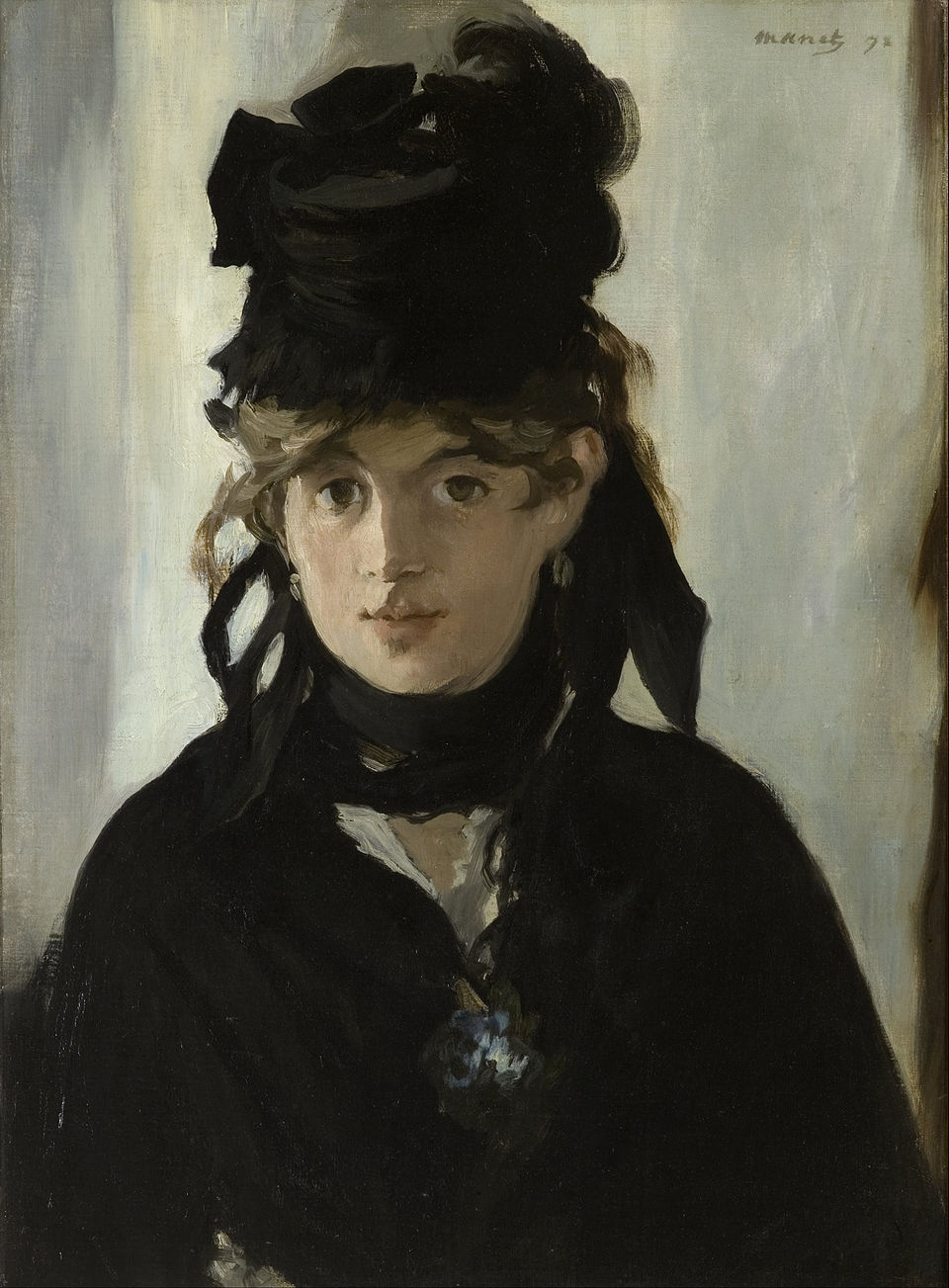
Description: This is a stunning and intimate portrait of Manet’s friend and fellow artist, Berthe Morisot. She is dressed all in black, which makes her face and the delicate violets pinned to her dress stand out. Her dark, intense eyes seem to look right through you. It’s more than just a picture of a person; it’s a portrait of a complex and intelligent personality. Manet painted Berthe Morisot eleven times, more than any other model, and this portrait was considered by many to be his finest.
Painting Techniques: Manet’s brushwork is incredibly fluid and expressive, especially in the treatment of Morisot’s face and clothing. He uses black not as a void, but as a rich and varied color, full of different tones and textures.
Location: Musée d’Orsay, Paris, France
Estimated Value: Priceless
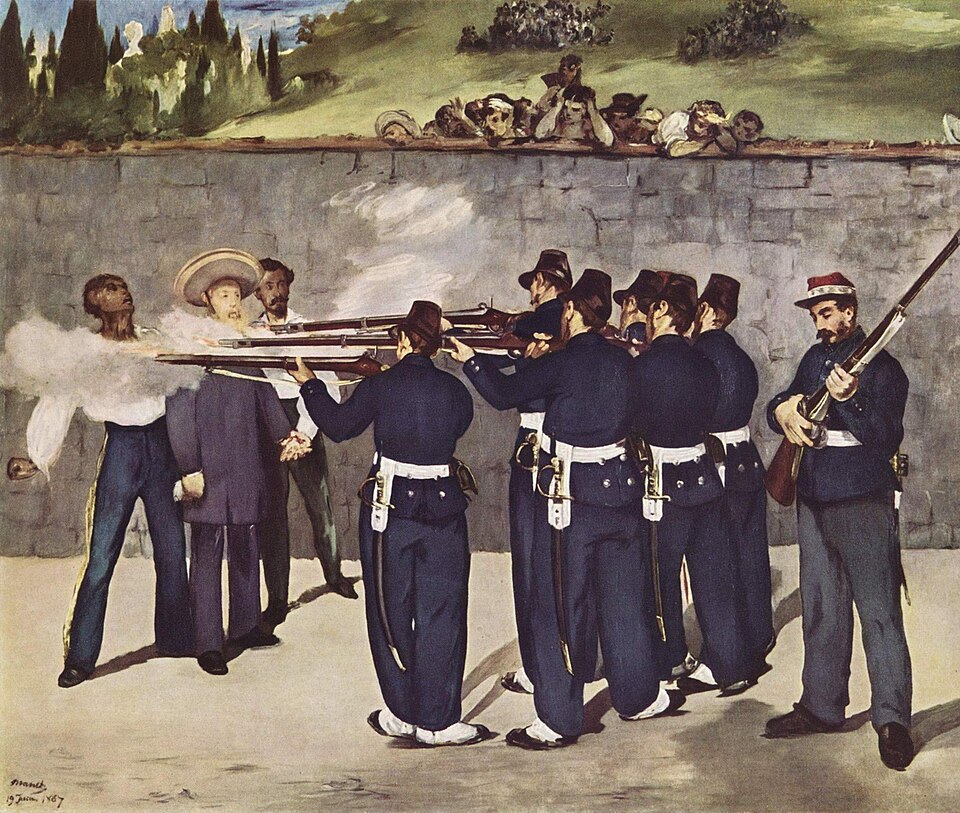
The Execution of Emperor Maximilian (1868)
Description: This painting is like a news report from history. It shows the execution of Maximilian I, an Austrian archduke who was made Emperor of Mexico and then overthrown. Manet was making a powerful political statement, criticizing France’s involvement in the affair. He painted it in a direct, unemotional style that makes the event feel even more shocking and real. The painting was politically explosive, and Manet was forbidden by the French government from exhibiting it during his lifetime.
Painting Techniques: Manet based the composition on Francisco Goya’s famous painting ‘The Third of May 1808’. He used a realistic, journalistic style, focusing on the cold, mechanical nature of the firing squad.
Location: Kunsthalle Mannheim, Mannheim, Germany
Estimated Value: Priceless
Inspiration and Legacy
Manet was a student of history, drawing immense inspiration from the old masters, especially Spanish painters like Diego Velázquez and Francisco Goya. You can see Velázquez’s influence in Manet’s use of strong contrasts and Goya’s in his willingness to tackle tough political subjects. However, Manet wasn’t just looking backward. He became a reluctant hero to a group of younger artists who would become known as the Impressionists, including Claude Monet, Edgar Degas, and Berthe Morisot. They admired his bold brushwork, his focus on modern subjects, and his courage to defy the art establishment. While he never officially exhibited with them, Manet’s revolutionary approach opened the door for Impressionism and all the modern art movements that followed.
Final Thoughts
Édouard Manet was more than just a painter; he was a revolutionary who taught the art world to see in a new way. He captured the fast-paced, changing world of 19th-century Paris with honesty and style. By breaking from tradition and painting modern life as he saw it, he laid the foundation for modern art. The legacy of Manet paintings is not just in their beauty or their controversy, but in the freedom they gave to future generations of artists to paint their own world, in their own way.
FAQs: Manet paintings
Was Édouard Manet an Impressionist?
Not officially. While Manet was a huge inspiration to the Impressionists and shared many of their interests (like painting modern life), he never exhibited his work in their independent exhibitions. He always wanted to gain recognition from the official Paris Salon. He is best described as a transitional figure between Realism and Impressionism.
Why were Manet’s paintings so controversial?
Manet’s paintings were controversial for two main reasons: his subjects and his style. He painted ordinary, modern people—sometimes in shocking situations like in ‘Olympia’—instead of historical or mythological figures. His technique, featuring flat areas of color and visible brushstrokes, looked unfinished and clumsy to audiences used to smooth, highly detailed paintings.
What is Manet’s most famous painting?
It’s a tie between ‘Le Déjeuner sur l’herbe’ (The Luncheon on the Grass) and ‘Olympia’. Both were created in 1863 and caused enormous scandals that cemented Manet’s reputation as a radical and important artist.
Who was Manet’s favorite model?
Manet worked with several models, but two are particularly famous. Victorine Meurent was the model for his scandalous early masterpieces ‘Olympia’ and ‘Le Déjeuner sur l’herbe’. Later, he frequently painted his friend and fellow artist, Berthe Morisot, in a series of deep and insightful portraits.