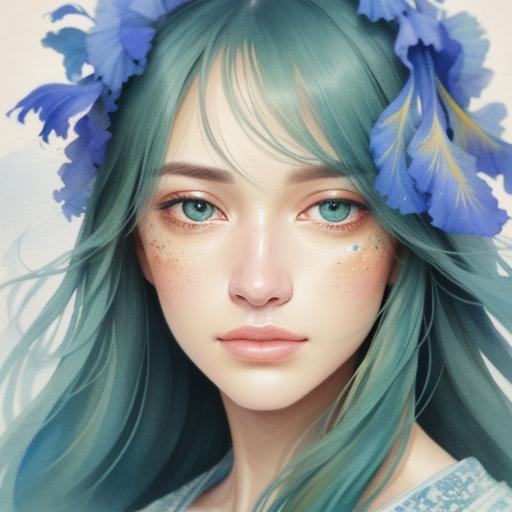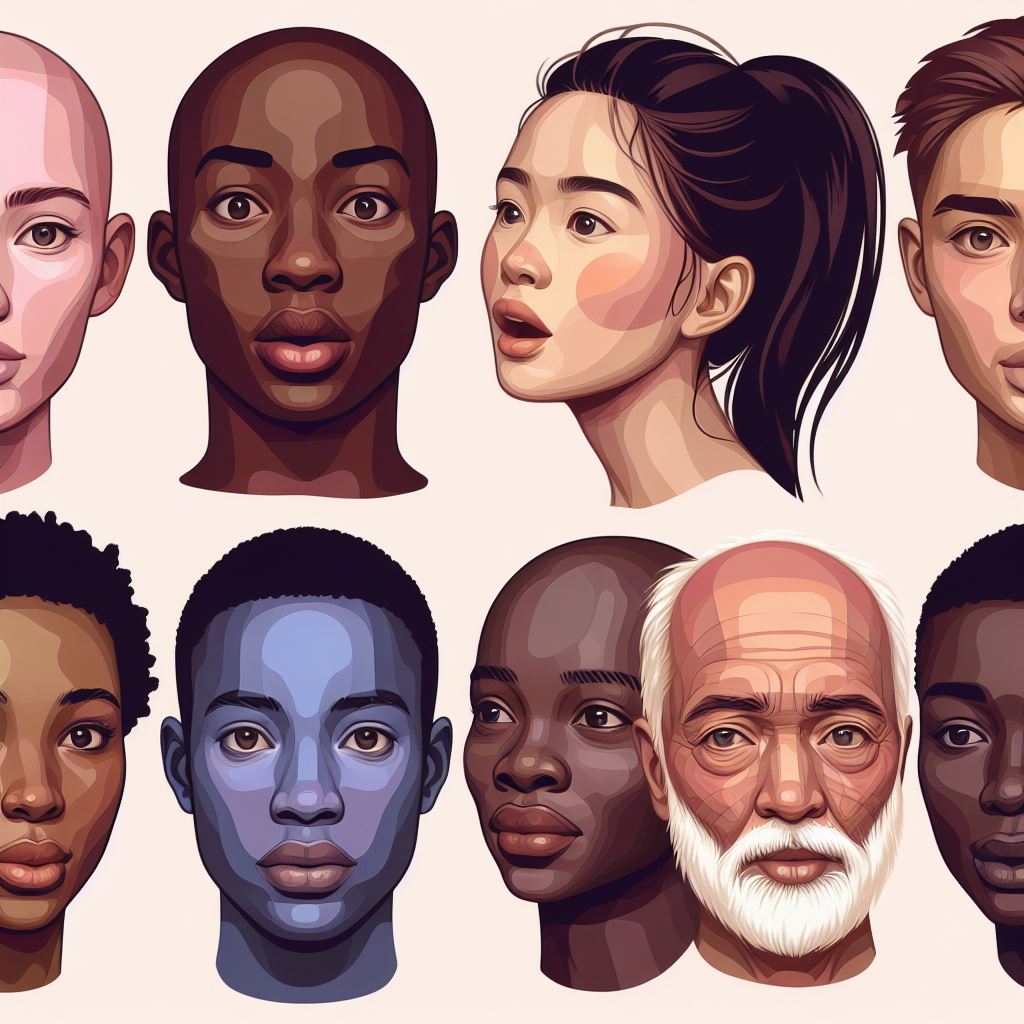
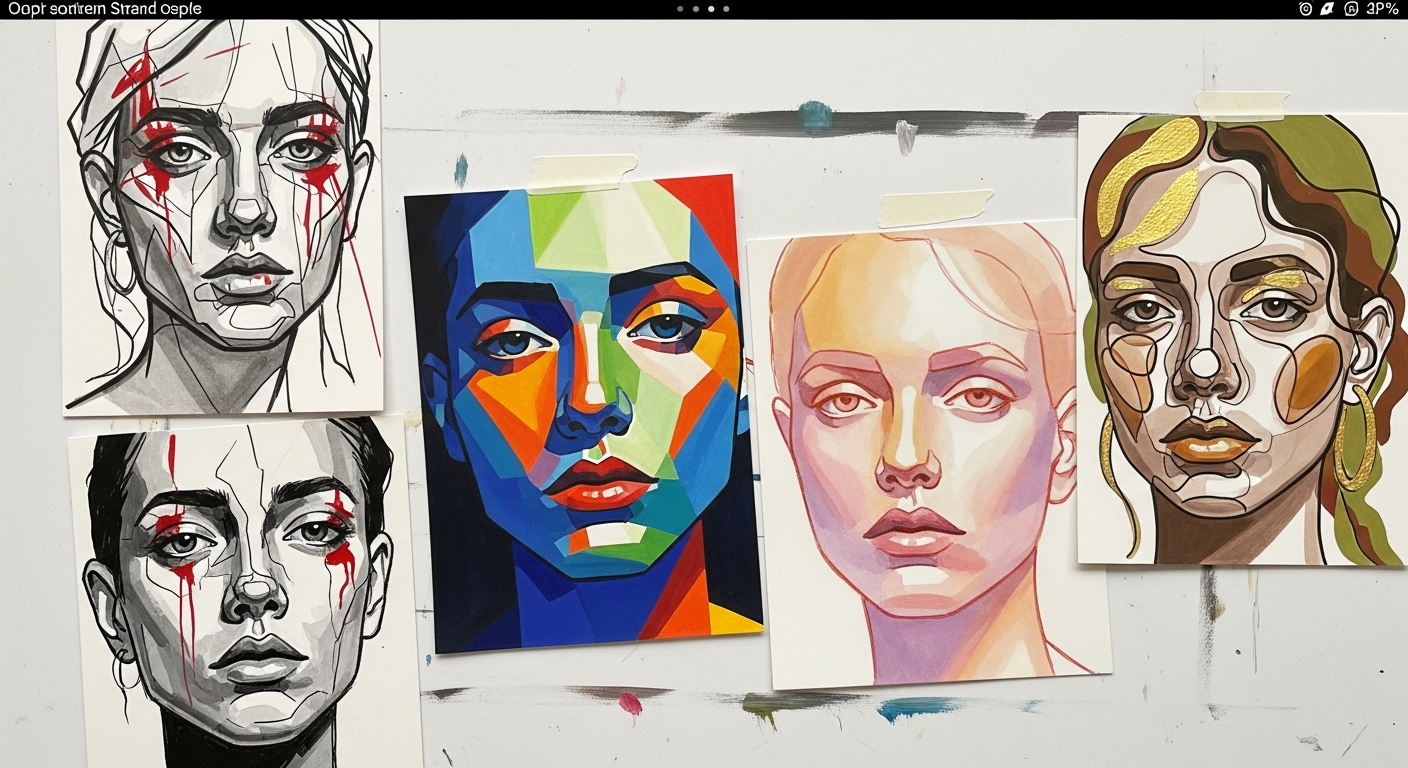
Have you ever looked at someone’s face and wondered what makes them them? Not just their eyes, nose, or smile, but the deeper essence that makes each person unique? This is exactly what abstract portrait painting identity explores—capturing the spirit of a person without relying on perfect realism. Instead of painting every detail, abstract portrait artists use colors, shapes, and textures to express identity in ways that traditional portraiture never could.
What You will Learn
- Abstract portrait painting breaks free from realistic representation to capture emotional essence and identity
- Modern techniques include color theory, deconstructed forms, expressive gestures, and mixed media approaches
- Artists can express personal, cultural, and universal aspects of identity through non-representational methods
- Historical movements like Cubism and Abstract Expressionism paved the way for contemporary identity exploration
- Anyone can create meaningful abstract portraits by focusing on emotion rather than technical perfection
What Is Abstract Portraiture and Why Does It Matter?
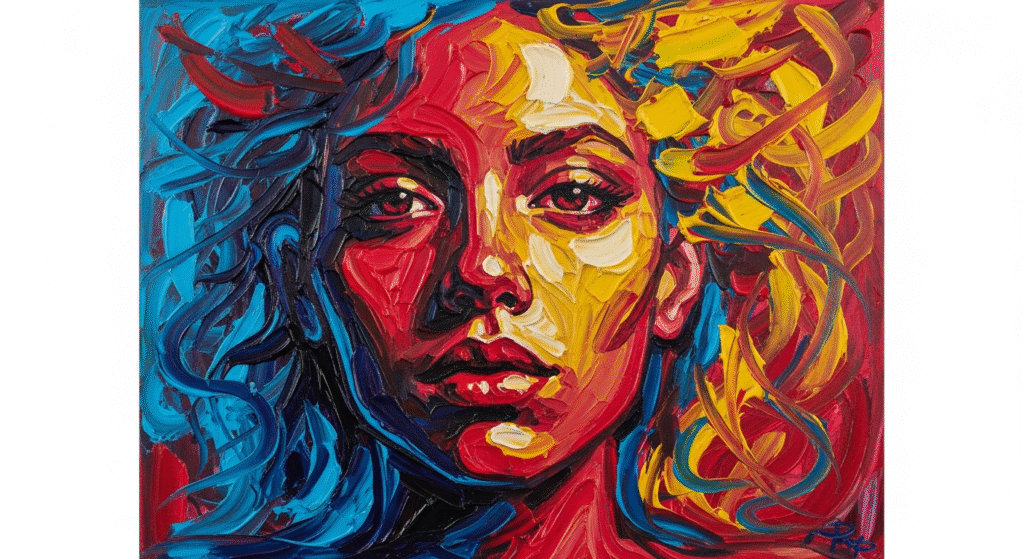
Traditional portraits aim to capture a person’s physical likeness with precision. But abstract portraiture takes a completely different approach. It seeks to reveal the invisible—emotions, personality, cultural background, and the complex layers that make up human identity.
Think about it: when you meet someone for the first time, you don’t just see their features. You sense their energy, notice how they move, feel their warmth or distance. Abstract painting captures these intangible qualities that photographs and realistic paintings often miss.
The Evolution from Traditional to Abstract Portrait Painting
The journey from realistic portraits to abstract identity representation didn’t happen overnight. In the early 1900s, artists began questioning whether art needed to mirror reality exactly. Pablo Picasso, one of the pioneers of Cubism, shattered faces into geometric fragments, showing multiple perspectives simultaneously. This revolutionary approach proved you could recognize a person without seeing a photographic likeness.
Wassily Kandinsky pushed even further, believing that colors and shapes could communicate spiritual and emotional truths more powerfully than representational art. Willem de Kooning’s work in Abstract Expressionism demonstrated how violent brushstrokes and distorted forms could convey raw human emotion and psychological depth.
These movements transformed how artists think about identity in painting. They proved that art and self-expression could operate on a deeper, more universal level than surface appearance.
Understanding Identity Through Abstract Portrait Painting
What Do We Mean by “Identity” in Art?
Identity isn’t just one thing—it’s layered and complex. When creating abstract portraits, artists might explore:
Personal Identity: Your unique experiences, memories, traumas, and joys that shape who you are as an individual. This might manifest through symbolic colors representing childhood memories or textures that evoke specific life experiences.
Cultural Identity: The traditions, values, and histories you inherit from your community. An artist might incorporate patterns from their heritage or use color palettes that reference cultural symbolism.
Social Identity: How you relate to others and how society perceives you. This could involve exploring themes of gender, class, profession, or social roles through abstract visual language.
Universal Identity: The human experiences we all share—love, loss, fear, hope. Abstract art often connects to these fundamental emotions that transcend individual differences.
Why Choose Abstraction Over Realism?
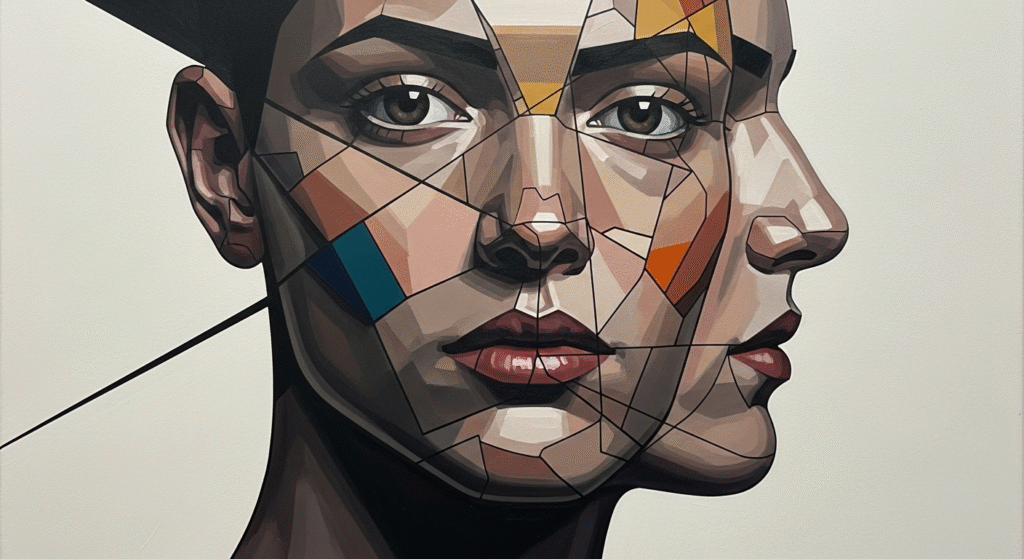
You might wonder: if you want to show someone’s identity, why not just paint them as they look? Here’s the thing—sometimes abstraction reveals more truth than realism ever could.
Traditional portraits are limited by what’s visible. They can capture a smile but not the sadness behind it. They can show a face but not the journey that shaped it. Abstract portrait painting identity breaks these constraints. It lets artists express the contradictions, complexities, and invisible forces that define us.
Contemporary artists exploring identity through abstract art often find that removing realistic constraints actually creates more emotional honesty. Without the pressure to “get the nose right,” they can focus entirely on emotional truth.
Modern Approaches and Techniques for Abstract Portrait Painting Identity
Color Theory and Emotional Expression
Color theory forms the backbone of emotional communication in abstract portraiture. Colors aren’t just decorative—they’re the primary language for expressing identity.
Warm Colors (Reds, Oranges, Yellows): These convey energy, passion, warmth, and outgoing personality traits. An artist painting someone with fierce determination might dominate their abstract portrait with burning reds and aggressive oranges.
Cool Colors (Blues, Greens, Purples): These suggest calmness, introspection, melancholy, or spiritual depth. Someone with a contemplative nature might be represented through deep indigos and serene turquoise tones.
Color Combinations: The relationship between colors creates meaning. Complementary colors (like orange and blue) create tension and vibrancy, perfect for representing internal conflicts or dynamic personalities. Understanding color mixing helps artists make intentional choices about emotional impact.
Form and Shape: Deconstructing the Human Figure
In abstract portrait painting identity, you don’t need to paint a complete face. Instead, you can:
- Fragment the form: Break the face into geometric pieces like Picasso did, suggesting complexity and multiple facets of personality
- Simplify to essentials: Reduce features to basic shapes—an oval for a head, curves for movement—focusing on essence rather than detail
- Use symbolic shapes: Circles might represent wholeness or cycles, triangles could suggest conflict or direction, organic shapes might convey natural, flowing personality traits
Contemporary abstract artists often combine recognizable elements (perhaps a suggestion of eyes or a profile) with pure abstraction, creating a bridge between representation and pure emotional expression.
Line and Gesture: The Energy of Identity

Lines in abstract portraiture carry enormous expressive power:
Bold, Aggressive Lines: Sharp, angular marks suggest strength, determination, or even aggression. Think of slashing diagonals cutting across the canvas.
Soft, Flowing Lines: Gentle curves and meandering paths convey grace, flexibility, or gentleness. These might represent someone with a calm, adaptable nature.
Gestural Marks: Quick, spontaneous strokes capture energy and movement. Abstract Expressionism championed this approach, with artists like Jackson Pollock using the physical act of painting to embody human energy.
The way you apply paint—violently, delicately, rhythmically—becomes part of the identity you’re expressing. Mastering brush stroke techniques gives you more tools for emotional expression.
Texture and Materiality: Adding Physical Dimension
Texture adds another layer of meaning to abstract portrait painting identity. Physical qualities of paint can represent:
- Rough, Heavy Texture: Built-up paint or mixed materials might suggest life experience, hardship, or emotional weight
- Smooth, Flowing Surfaces: These could represent ease, youth, or emotional fluidity
- Mixed Media Elements: Incorporating fabric, paper, sand, or other materials adds literal dimension. An artist might embed objects meaningful to the subject’s identity
Modern acrylic and oil painting techniques like impasto create dramatic texture that engages viewers physically as well as visually.
Composition and Space: The Story of Arrangement
How you arrange elements on the canvas tells its own story:
Centered Composition: Placing the abstract portrait elements centrally suggests stability, confidence, or self-assurance.
Off-Balance Composition: Elements pushed to one side might represent instability, searching, or unconventional personality.
Layered Spaces: Overlapping forms create depth, suggesting the many layers of identity beneath the surface. Understanding composition principles helps create more intentional, meaningful arrangements.
Negative Space: What you leave out matters as much as what you include. Empty areas can represent loss, potential, or the unknown aspects of identity.
Digital Tools and Contemporary Mixed Media
Today’s artists aren’t limited to traditional materials. Digital art creation and mixed media approaches expand possibilities for abstract portrait painting identity:
- Digital painting software allows for experimental approaches impossible with physical paint
- Combining traditional painting with digital manipulation
- Incorporating photography, collage, and digital printing
- Using projection and light as part of the portrait experience
These modern approaches align with our digital age, where identity itself is increasingly fluid and multifaceted.
Contemporary Artists Exploring Abstract Identity
Pioneers Who Paved the Way
While we’ve mentioned Picasso, Kandinsky, and de Kooning, many other artists have contributed to this conversation:
Francis Bacon: His distorted, tortured portraits express psychological anguish and the darker aspects of human identity. His work shows how abstraction can represent internal suffering more powerfully than realism.
Marlene Dumas: Her watery, fluid portraits dissolve the boundary between abstraction and representation, exploring race, gender, and vulnerability.
Cecily Brown: Her densely layered, energetic canvases merge figuration with abstraction, creating portraits that seem to emerge from and dissolve back into pure paint.
Today’s Abstract Portrait Innovators
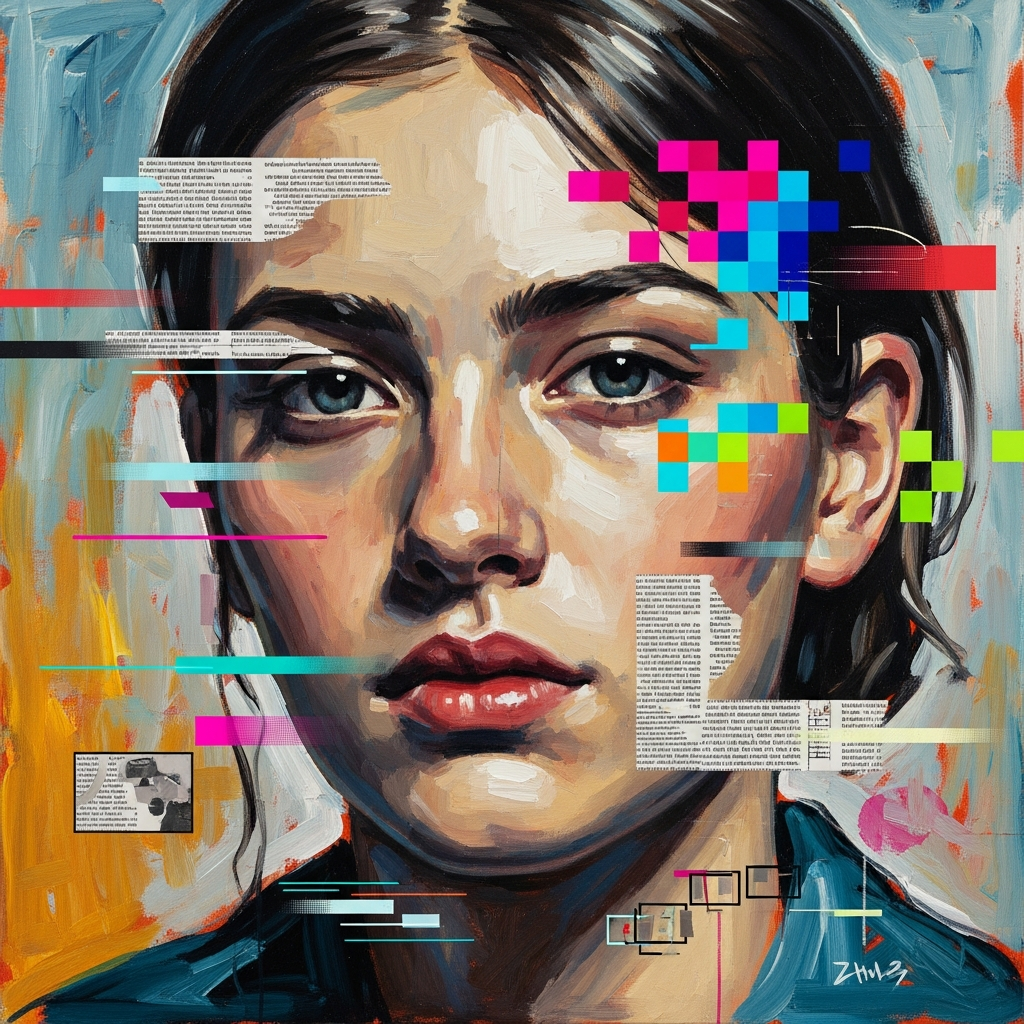
Contemporary painting artists continue pushing boundaries:
Artists are now exploring identity through the lens of social justice, gender fluidity, and digital existence. Some use AI and art collaboration to create portraits that blend human creativity with algorithmic interpretation.
Street artists bring abstract portraiture to public spaces, making statements about identity, visibility, and social commentary. The evolution of street art shows how abstract identity representation reaches beyond gallery walls.
The Viewer’s Role in Abstract Portrait Painting Identity
Interpretation and Subjective Experience
Here’s something fascinating about abstract portrait painting identity: there’s no single “correct” interpretation. Unlike a realistic portrait where everyone sees the same face, abstract portraits invite personal interpretation.
When you view an abstract portrait, you bring your own experiences, emotions, and associations. The red that suggests anger to one person might represent passion or warmth to another. This subjectivity isn’t a weakness—it’s a strength. It means the artwork can communicate different truths to different people, or even different truths to the same person at different times in their life.
This is why learning to appreciate art involves understanding your own responses, not memorizing what experts say you should see.
How Abstract Portraits Invite Connection
The best abstract portraits don’t just represent the subject—they create a space for viewers to reflect on their own identity. You might see yourself in the chaotic brushstrokes or the harmonious color scheme. You might recognize emotions you’ve felt but couldn’t name.
This is art for well-being—it helps us understand ourselves better by giving visual form to internal experience.
Practical Tips for Creating Abstract Portrait Painting Identity
Finding Your Inspiration
Starting can feel overwhelming. Here are approaches that work:
Start with Self-Portraits: Use yourself as the first subject. You know your own emotions and experiences intimately. Ask yourself: What colors represent my current emotional state? What shapes feel like my personality?
Choose Someone You Know Well: Pick a friend or family member whose personality you can describe in non-visual terms. What’s their energy like? Their typical mood? Their defining experiences?
Use Emotion as Your Guide: Instead of thinking “I’m painting John,” think “I’m painting John’s resilience” or “I’m painting Sarah’s joy.” This shift focuses you on essence rather than appearance.
Gather Visual References: Look at works by influential abstract artists for inspiration. Study how they solve problems of emotional expression.
Experimentation and Process-Driven Creation
Abstract portrait painting thrives on experimentation. Unlike realistic portraiture where mistakes are obvious, abstract work celebrates happy accidents:
- Try painting with a limited palette to force creative solutions
- Experiment with different painting techniques you haven’t tried before
- Paint quickly without overthinking—sometimes your intuitive choices reveal more truth than careful planning
- Layer and rework—abstract portraits benefit from depth and complexity that comes from multiple painting sessions
Overcoming Creative Blocks
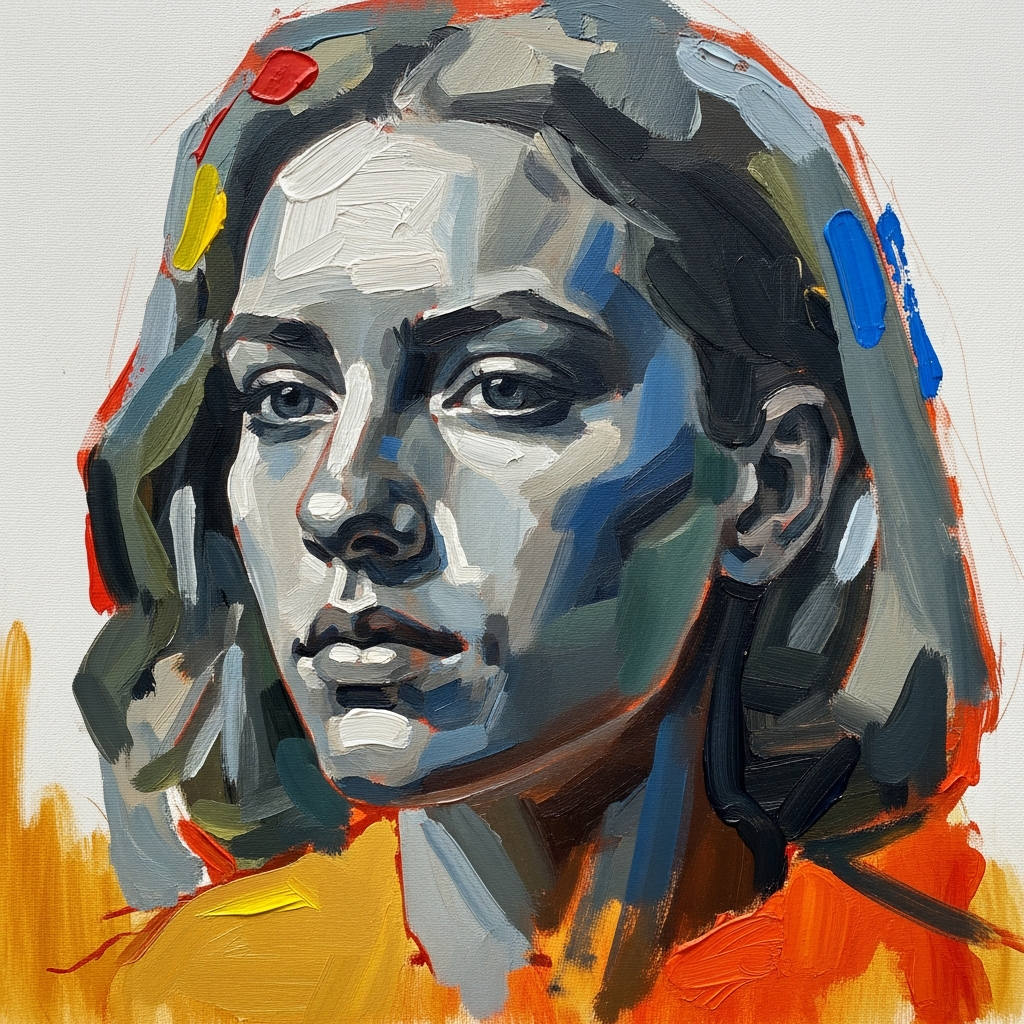
Stuck? Here’s how to push through:
Change Your Medium: If you’re working in oils, try watercolor or acrylics. Different materials spark different ideas.
Scale Up or Down: Working small can feel less precious and more experimental. Working large can help you be bolder and more gestural.
Start with Mark-Making: Don’t start with a plan. Just make marks, apply color, create texture. Sometimes the portrait emerges from play rather than planning.
Use Prompts: Creative art prompts can jumpstart your imagination when you’re feeling stuck.
Accept “Failure”: Remember, fixing painting mistakes is part of the process. In abstract work, there are no mistakes—just opportunities for new directions.
The Future of Abstract Portrait Painting
Emerging Trends and Technologies
Abstract portrait painting identity continues evolving:
AI Integration: Artists are now using AI art generation as a starting point or collaborative tool, creating hybrid works that blend human emotion with algorithmic interpretation.
Virtual and Augmented Reality: Imagine abstract portraits that change based on viewer interaction, or that exist in three-dimensional virtual space. Technology expands what “portrait” can mean.
Social and Political Identity: Art for change increasingly uses abstract portraiture to explore marginalized identities, giving visual form to experiences that dominant culture has historically ignored.
Cross-Cultural Fusion: Cultural fusion in art creates abstract portraits that blend visual languages from different traditions, reflecting our increasingly interconnected world.
The Ongoing Relevance of Identity in Art
Why does abstract portrait painting identity matter so much right now? Because we’re living in a time of identity questioning and redefinition. Traditional categories are breaking down. People are defining themselves in new ways.
Abstract portraiture offers a visual language flexible enough to represent these complex, evolving identities. It doesn’t force people into fixed categories. It celebrates fluidity, complexity, and contradiction—all essential aspects of being human.
Modern art continues evolving, but the question of identity remains central. As long as humans wonder “Who am I?” and “Who are we?”, artists will continue exploring these questions through abstract portrait painting.
Getting Started with Your Own Abstract Portrait Practice
Basic Supplies for Beginners
You don’t need expensive materials to begin. Start with:
- Paint: Choose paints for beginners based on your preference. Acrylics are forgiving and versatile.
- Brushes: A variety of sizes and shapes. Understanding brush types helps you make expressive marks.
- Surface: Canvas, canvas board, or even heavy paper works. Learn about choosing canvas options.
- Palette Knife: Essential for textured marks and non-brush application
- Mixed Media Materials: Collage papers, fabric scraps, or found objects to add dimension
Simple Exercises to Begin
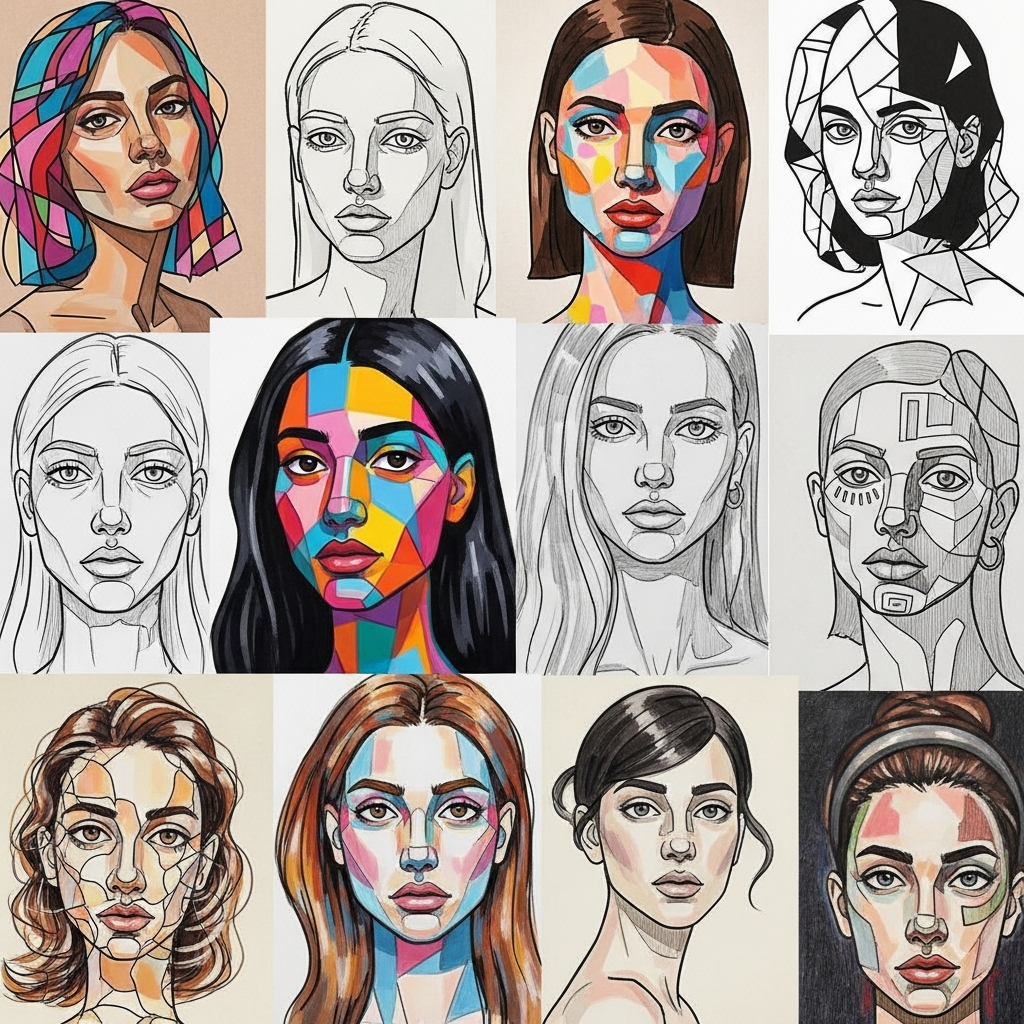
Exercise 1: Emotional Color Study Create small abstract paintings (8×10″) representing different emotions using only color and texture. Don’t try to make faces. Just ask: What does joy look like? What does anxiety feel like?
Exercise 2: Self-Portrait in Shapes Using only geometric shapes (circles, triangles, squares), create a composition that feels like your personality. Are you more angular or curved? Ordered or chaotic?
Exercise 3: Portrait from Memory Think of someone important to you. Without looking at photos, paint your emotional memory of them using abstract marks, colors, and forms.
Exercise 4: Opposite Emotions Create an abstract portrait that tries to hold two opposite qualities simultaneously—joy and sadness, strength and vulnerability, chaos and control.
These exercises help you understand how abstract portrait painting identity works without the pressure of creating finished masterpieces.
Building Your Skills Over Time
Like any art form, abstract portraiture rewards practice and study:
- Study composition principles to make stronger visual statements
- Learn color theory in depth to expand your emotional vocabulary
- Experiment with different art mediums to discover what resonates with you
- Join art communities to share work and get feedback
- Visit galleries and museums to see abstract portraits in person—reproductions never capture the full impact
Remember, improving your art skills is a journey, not a destination.
Frequently Asked Questions About Abstract Portrait Painting Identity
What is an abstract self-portrait?
An abstract self-portrait captures your essence, personality, or emotional state without creating a realistic likeness. Instead of painting your actual features, you use colors, shapes, textures, and compositional choices to represent who you are. It might show your current mood, your life journey, your cultural identity, or aspects of your personality. The beauty is that it can represent things about yourself that a photograph never could—internal experiences, contradictions, and invisible qualities that make you uniquely you.
How do artists express identity through abstract art?
Artists express identity through abstract art by translating internal experiences into visual language. They might use specific colors to represent emotions or cultural heritage, employ gestural marks to convey energy and temperament, or create textured surfaces to suggest life experiences. The process itself—how violently or gently paint is applied—can express aspects of identity. Symbolic shapes, spatial relationships, and the balance between chaos and order all communicate meaning. Abstract art freed artists from literal representation, allowing them to focus entirely on expressing the invisible forces that shape who we are.
Why do artists choose to express themselves through abstract self-portraits?
Artists choose abstract self-portraits for several compelling reasons. First, they offer freedom from technical constraints—you don’t need perfect realistic skills to express deep truths. Second, abstraction can communicate complex, contradictory feelings simultaneously in ways realism cannot. Third, abstract approaches often feel more emotionally honest because they focus on essence rather than surface. Fourth, they allow exploration of identity aspects that have no physical form—trauma, joy, cultural belonging, spiritual experiences. Finally, abstract self-portraits can evolve with you, representing different truths at different life stages without being locked into a single frozen moment.
What is the impact of abstract self-portraits on the artist and the viewer?
For artists, creating abstract self-portraits is often therapeutic and revelatory. The process of translating internal experience into visual form helps artists understand themselves better. It can be cathartic, allowing expression of feelings that have no words. Many artists report that abstract self-portraiture becomes a form of art therapy, helping them process experiences and emotions. For viewers, abstract self-portraits create space for connection and reflection. They invite viewers to recognize universal human experiences while appreciating individual uniqueness. Because interpretation is open, viewers might see aspects of themselves in the work, creating unexpected emotional resonance.
Is abstract art just for professional artists? Can anyone do it?
Absolutely anyone can create meaningful abstract art! In fact, abstraction can be more accessible than realism because it doesn’t require years of technical training to draw or paint accurately. What matters in abstract portrait painting identity is emotional honesty and willingness to experiment, not technical perfection. Children often create powerful abstract work because they haven’t learned to judge themselves harshly. Beginner painters can actually find abstract approaches liberating. You don’t need to worry about “getting it right” in the traditional sense. The question isn’t whether you have professional skills but whether you’re willing to explore, experiment, and express what you feel.
Conclusion: Your Identity, Your Canvas
Abstract portrait painting identity offers something truly special—a way to see and express the invisible aspects of being human. While traditional portraits freeze a moment in time, abstract portraits capture the fluid, complex, ever-changing nature of identity itself.
Whether you’re an artist looking to deepen your practice or someone curious about this fascinating form of contemporary art, remember that abstract portrait painting is fundamentally about connection—connecting with yourself, with the people you paint, and with viewers who bring their own experiences to the work.
The techniques we’ve explored—from color theory to gestural marks, from textured surfaces to symbolic forms—are tools, not rules. The real magic happens when you trust your intuition, embrace experimentation, and focus on emotional truth rather than technical perfection.
As we move forward in an increasingly complex world where identity itself is being redefined, abstract portrait painting identity will continue evolving. New technologies, new cultural conversations, and new artistic voices will push the boundaries of what’s possible. But at its heart, this art form will always be about the fundamental human need to say “This is who I am” and to recognize that same spark of unique identity in others.
So pick up a brush, choose some colors that speak to you, and start exploring. Your identity is waiting to be expressed on canvas, and abstract portrait painting gives you the freedom to do exactly that.
Citations
- Tate Modern — “Abstract Art”
- The Museum of Modern Art — “What Is Abstract Art?” — MoMA Learning.
- The Art Story — “Abstract Expressionism Movement Overview and Key Ideas” — The Art Story. The Art Story
- Cubism: The Revolutionary Art Movement — Royal Academy of Arts.
- Saatchi Art — “Abstract Portrait Art: A Modern Perspective” — Saatchi Art.
- Artsy — “How Contemporary Artists Are Reinventing the Portrait” — Artsy.
- National Portrait Gallery